
A look at the past and present of Suzhou's "Four Famous Gardens": a journey through the history of four dynasties.
In the Chinese language exams for middle school students in mainland China, the classical Chinese reading comprehension question "A Record of the Lingering Garden" serves as a foundation, leading to an essay prompt that explores "appreciating the Lingering Garden and discovering the stories behind Jiangnan gardens," inspiring and guiding young peo…
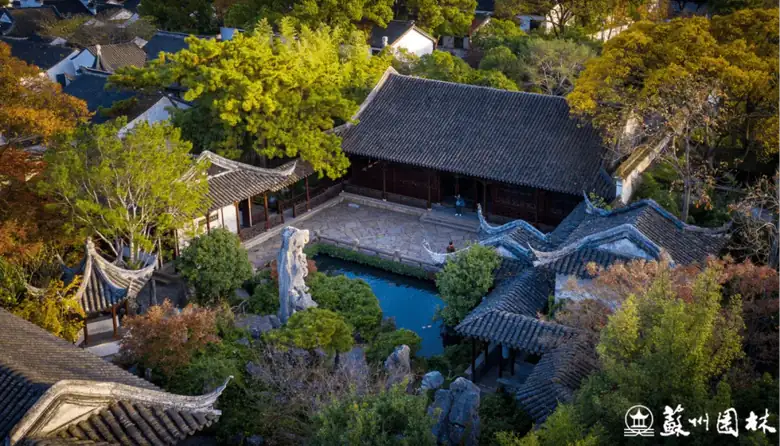
In the Chinese language exam for junior high school students in mainland China, the classical Chinese reading comprehension question "The Story of Liuyuan Garden" serves as a foundation, and the essay topic extends to "appreciating Liuyuan Garden and discovering the stories of gardens in Jiangnan," inspiring and guiding young people to explore the knowledge behind historical and cultural heritage in Suzhou gardens.
As a famous city of gardens, Suzhou boasts a vast and profound knowledge about gardens. Let's explore the historical stories behind the "Four Famous Gardens of Suzhou".
Further Reading: [Suzhou Self-Guided Tour] A Comprehensive Suzhou Travel Itinerary Guide, Including Transportation, Accommodation, Attractions, and Food
The four famous gardens of Suzhou are Canglang Pavilion, Lion Grove Garden, Humble Administrator's Garden, and Lingering Garden, which respectively represent the artistic styles of the Song, Yuan, Ming, and Qing dynasties.
Canglang Pavilion
Suzhou's oldest garden
Canglang Pavilion is the oldest existing garden in Suzhou. Originally, it was the garden of Sun Chengyou, the military governor of Wuyue during the late Tang and Five Dynasties period. In 1045, during the Northern Song Dynasty, Su Shunqin, after being demoted, lived in Suzhou and purchased this wasteland. He built a pavilion by the water, naming it after the story of "washing one's hat in the Canglang River." Later, it belonged to the Zhang and Gong families. During the Southern Song Dynasty, Han Shizhong resided here, and it was then called Han Garden. During the Yuan Dynasty, it was renamed Miaoyin Nunnery and Dayun Nunnery. In 1546, during the Ming Dynasty, the monk Wenying rebuilt it. In 1696, during the Qing Dynasty, Song Luo, the governor of Jiangsu, moved the pavilion to an earthen mound. It underwent repairs and reconstruction during the Daoguang and Tongzhi periods, resulting in its current state. Canglang Pavilion opened to the public in 1954, and in November 2000, it was inscribed on the World Heritage List as an extension of the Classical Gardens of Suzhou.
The garden covers an area of over one hectare, with an open and natural layout. It cleverly incorporates the winding Fengxi River outside the garden into the landscape; a covered corridor is built along the water's edge, with latticed windows allowing views both inside and outside, seamlessly blending the natural scenery with the surrounding landscape. This creates a captivating atmosphere, where the view is already captivating before entering the garden. The Five Hundred Worthies Shrine within the Canglang Pavilion houses 594 invaluable stone carvings of famous figures related to Suzhou's history from the Zhou to the Qing dynasties—a span of over two thousand years. There are also 108 different styles of decorative windows, each with unique patterns and lively designs.
Overall, the garden retains the original characteristics of "lush vegetation, lofty hills and expansive waters" from its founding, with natural scenery and simple, elegant architecture. Garden experts have praised it as a typical "urban forest." Throughout the long years, Canglang Pavilion has always maintained its ancient simplicity and tranquility, witnessing the steadfastness and pursuit of noble character by literati in the face of adversity.
Further Reading: [Canglang Pavilion] A Complete Guide to Visiting Canglang Pavilion in Suzhou Gardens
Business hours: 07:30-17:30
Recommended stay duration: 0.5-1 hour
Address: No. 3, Canglangting Street, Gusu District, Suzhou City, Jiangsu Province
Ticket booking: Trip
Humble Administrator's Garden
The spiritual home of hermits
Compared to the grand and imposing imperial gardens of the north, Suzhou's private gardens embody a more "culture of seclusion," with the Humble Administrator's Garden being a prime example. Covering an area of 5.2 hectares, the Humble Administrator's Garden was built in 1509 during the Ming Dynasty by Wang Xianchen, a court official who had returned to his hometown after being disillusioned with his official career. It is the largest classical garden in Suzhou.
Wang Xianchen named the garden after a line from Pan Yue's "Idle Living Ode" from the Western Jin Dynasty: "Building a house and planting trees, I am carefree and content... watering the garden and selling vegetables to provide for my daily meals... this is also the way of a clumsy person to govern." This name reflects his self-deprecating humor and reflects his desire to retire to the countryside and avoid politics. Legend has it that during the garden's construction, Wang Xianchen commissioned Wen Zhengming, a representative figure of the Wu School of painting, to design the blueprint, resulting in a garden centered on water, spacious and simple, resembling a natural landscape. The garden is divided into three parts: east, central, and west, with the central garden being its main body and essence.
After Wang Xianchen's death, his son gambled heavily one night, losing the garden to the Xu family, and his descendants subsequently declined. In 1631, the eastern part of the garden came into the possession of Vice Minister Wang Xinyi and was named "Gui Tian Yuan Ju" (Returning to the Countryside Garden Residence). The central and western parts of the garden changed hands frequently. In the early Qianlong period, the central part was restored and came into the possession of Prefect Jiang Qi. In 1860, the Taiping Army entered Suzhou, and the Humble Administrator's Garden became the residence of the Loyal Prince. It is said that the Loyal Prince Li Xiucheng used the Jianshan Tower in the central part as his place of administration. In 1877, the western part came into the possession of wealthy merchant Zhang Lüqian and was named "Bu Yuan" (Supplement Garden). After the founding of the People's Republic of China, this famous garden was protected and restored, and officially opened to the public in 1952.
Throughout history, the Humble Administrator's Garden has changed hands many times, from an official's residence to a family garden. It has witnessed dynastic changes and wars, yet it has been continuously repaired and expanded. Every pavilion and tower carries stories and emotions from different periods, like a silent history book, recording the lifestyle and aesthetic tastes of the Jiangnan literati class.
Further Reading: [A Day Trip to the Humble Administrator's Garden in Suzhou] Ticket Reservations, Introduction, and Travel Guide All Organized!
Business hours: 07:30-17:30
Recommended stay duration: 2-3 hours
Address: No. 178, Northeast Street, Gusu District, Suzhou City
Ticket booking: Trip
Lingering Garden
Experience four different landscapes in one garden
Lingering Garden, along with the Humble Administrator's Garden, is one of the four great classical gardens in China. The garden is renowned for its exquisite architectural art, with grand and magnificent halls and varied courtyards. The most famous Taihu stone is the Guanyun Peak, which allows one to "enjoy the pleasure of mountains and forests without leaving the city".
Originally the East Garden of Xu Taishi, the Vice Minister of the Court of Imperial Sacrifices during the Ming Dynasty, it was acquired by Liu Shu of Dongshan, Wu County during the Qing Dynasty. He rebuilt the garden on its original site, planting many white pines, paulownia trees, and bamboo. The bamboo's cool, elegant color and the clear, blue water created a striking contrast, leading to its name "Hanbi Villa," commonly known as "Liu Garden." Liu Shu loved stones, collecting twelve peaks of Taihu stones during the Tongzhi era and placing them in the garden. He also enjoyed calligraphy and painting, having his own writings and ancient calligraphic works engraved on stones and embedded in the garden's corridors. Later owners largely followed this tradition, gradually forming the characteristic of Liu Garden today, with its many inscribed stone tablets.
At the end of the Tongzhi reign, Liu Garden was purchased by Sheng Kang (father of Sheng Xuanhuai), the Provincial Governor of Hubei, and renamed "Liu Garden." This name was chosen partly because it was a homophone of the previous owner's surname, Liu Shu, and partly to commemorate the fact that this garden was the only one remaining amidst the ruins outside Suzhou's Changmen Gate after the Taiping Rebellion. Sheng Kang invested considerable financial and human resources in the restoration of Liu Garden, especially in the construction of the buildings and the creation of unique rock formations. Cranes, monkeys, peacocks, and deer were also kept within the garden, becoming a living part of its scenery.
After the 1930s, Lingering Garden gradually fell into disrepair. In 1953, the Suzhou Municipal People's Government decided to restore Lingering Garden and invited a group of knowledgeable garden experts and highly skilled ancient building workers. After six months of restoration, the once-famous garden regained its splendor. In the 1990s, the Sheng Family Ancestral Hall and part of the residence were also restored, further restoring the original connected appearance of the residence and garden to near completeness.
The entire garden adopts an irregular layout, allowing the garden architecture to blend with the mountains, water, and rocks to create a natural charm. The garden's covered walkways stretch for over 700 meters. Cloud walls and building complexes divide the garden into four distinct scenic areas: central, eastern, northern, and western, allowing visitors to simultaneously appreciate four types of landscapes: mountains and water, pastoral, forest, and courtyard.
Further Reading: [Lingering Garden] Lingering Garden, a Suzhou Garden: An Enduring Eastern Aesthetics
Business hours: 07:30-17:30
Recommended stay duration: 1-2 hours
Address: No. 338, Liuyuan Road, outside Changmen Gate, Gusu District, Suzhou City, Jiangsu Province
Ticket booking: Trip
Lion Grove Garden
Suzhou's only Zen garden
Many people know that the architect I.M. Pei once lived here, but its earliest owner dates back to the Yuan Dynasty's Zhizheng era, and its name comes from his teacher. At that time, the Linji sect Zen master Tianru Weize came to Suzhou to preach, and his disciples bought land and built houses for him, initially naming it "Shizilin" (Lion Grove). Because the garden had "ten thousand bamboos, and many strange rocks under the bamboos, shaped like lions," it was also called "Shizilin" (Lion Grove), and at that time it was still a Zen-inspired garden.
After the passing of Zen Master Tianru, the temple and garden gradually fell into disrepair. It wasn't until the 17th year of the Wanli reign (1618) of the Ming Dynasty that it was rebuilt and flourished once again. When the Ming Dynasty painter Ni Zan passed through Suzhou, he painted the "Lion Grove Garden Scroll," which made the Lion Grove Garden famous throughout the world, becoming a renowned scenic spot for Suzhou literati to compose poems and paint. During the Kangxi era, the temple and garden were separated. Later, it was purchased by Huang Xingzu, the father of Huang Xi and the prefect of Hengzhou, and named "Sheyuan Garden," transforming its function from a Zen-inspired garden into an independent private garden. According to historical records, Emperor Qianlong visited the Lion Grove Garden five times during his six trips to the south, showing a deep affection for it. He bestowed upon it plaques such as "Mirror of Wisdom and Perfect Illumination," "Painting Zen Temple," and "True Delight," and ordered the construction of two replicas of the Lion Grove Garden in the Yuanmingyuan Garden in Beijing and the Chengde Mountain Resort.
In the 36th year of the Qianlong Emperor's reign (1787), Huang Xi achieved the highest rank in the imperial examinations. He meticulously renovated his residence and courtyard, renaming it "Wu Song Yuan" (Five Pine Garden). By the mid-Guangxu era, the Huang family had declined, and the garden fell into disrepair. In 1917, Bei Runsheng, a pigment tycoon and the great-uncle of I.M. Pei, purchased the abandoned garden and undertook a large-scale renovation, adding structures such as Yan Yu Tang (Hall of Respect for the Jade Emperor), Xiao Fang Ting (Small Square Hall), Jiu Shi Feng (Nine Lion Peak), Hu Xin Ting (Lake Pavilion), Jiu Qu Qiao (Nine-Bend Bridge), Shi Fang (Stone Boat), and Hua Lan Ting (Flower Basket Hall), thus creating the famous garden we see today. After Bei Runsheng's death, the Lion Grove Garden was managed by his grandson, Bei Huanzhang, and was ultimately donated to the nation in 1953, opening to the public in 1954.
Further Reading: [Lion Grove Garden] A dazzling pearl of classical gardens, a cultural journey not to be missed!
Business hours: 07:30-17:30
Recommended stay duration: 1-2 hours
Address: No. 23, Yuanlin Road, Gusu District, Suzhou City
Ticket booking: Trip
Travel information can change. Check current opening hours, reservations and entry requirements before you travel.


Traveller discussion
Start the conversation with a helpful tip or a question.