
[Yuanmingyuan Park Guide] Includes a 3-hour leg-saving route and a stamp collection guide.
Yuanmingyuan, a world-renowned imperial garden of the Qing Dynasty, was first built in 1709 and has a history of over 300 years. It represents the pinnacle of Chinese garden art. Yuanmingyuan embodies rich classical Chinese philosophical thought, such as the concept of the Nine Provinces and Four Seas, the Eight Trigrams and Five Elements, histori…
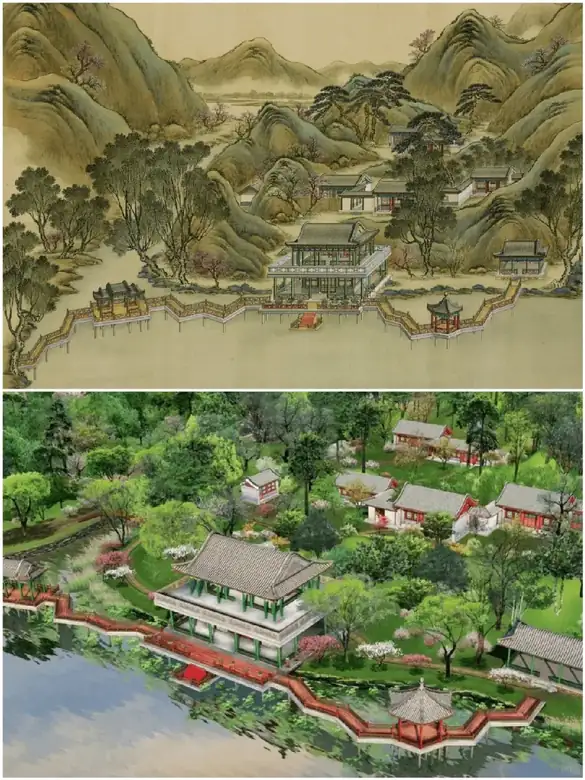
The Yuanmingyuan Garden is a world-renowned imperial garden of the Qing Dynasty. Construction began in 1709, and it has a history of over 300 years. It is a masterpiece of Chinese garden art.
The Yuanmingyuan Garden contains a wealth of classical Chinese philosophical ideas, such as the concept of the nine provinces and four seas, the Eight Trigrams and Five Elements, historical allusions, and famous scenic spots.
The Old Summer Palace (Yuanmingyuan) holds a special place among Beijing's many attractions. It's not only a must-see for tourists visiting Beijing, but also a place everyone should visit at least once!
Further Reading: Top 10 Must-Visit Attractions in Beijing and Detailed Travel Tips to Avoid Pitfalls!
If you're taking your child along, when they see the Yuanmingyuan (Old Summer Palace) from their textbooks actually in person, they'll understand that "Never forget national humiliation, revitalize China" is no longer just a simple slogan...
Yuanmingyuan Transportation and Opening Hours
Opening hours:7:00-21:00 (Last entry at 19:00)
address:No. 28, Qinghua West Road, Haidian District
transportation:
South Gate: Exit A/B of Yuanmingyuan Station, Metro Line 4
West Gate: Exit A of Xiyuan Station, Metro Line 4
East Gate: Bus routes 305/320/365/375, Yuanmingyuan East Road Station
Transportation within the park:
Sightseeing bus: Regular 20 RMB/person, Time Bus 90 RMB/person
Boat ride: 35 RMB per person (includes two transfers, boat ride approximately 20 minutes, 10 people per small boat) Not currently open.
✅️Ticket booking:Trip ticket purchase
Children under 6 years old and those over 60 years old are admitted free of charge.
I highly recommend buying a combined ticket! Otherwise you won't be able to visit the main attractions.
The combined ticket is 25 yuan per person and includes admission, the Western-style Buildings Ruins, a panoramic sand table, and Zhengjue Temple. With the Yuanmingyuan combined ticket, you can make a free reservation to see the horse head at Zhengjue Temple (avoid Mondays when the temple is closed).
Introduction to Yuanmingyuan
The park consists of three gardens: Yuanmingyuan, Changchunyuan, and Qichunyuan. It was a large-scale royal garden built and managed by six emperors from the Kangxi to the Xianfeng reigns of the Qing Dynasty over a period of more than 150 years.
In 1860, the Second Opium War broke out, and the Anglo-French allied forces stormed into Beijing and burned down the Old Summer Palace for three whole days.
In 1900, the Eight-Nation Alliance invaded China, and the Yuanmingyuan was once again looted, causing devastating secondary damage to the garden. The remaining architectural components and cultural relics were completely plundered, and ancient trees were extensively felled. This looting transformed the Yuanmingyuan from a ruin of "remaining buildings and natural landscapes" into a utter wasteland!
Originally, the Western-style buildings in the Old Summer Palace were built with huge stones, which were inconvenient to move, so the ruins were left behind and became the core history of the site park.
In 1988, the Yuanmingyuan Ruins Park was opened to the public. The park preserves authentic historical evidence, visually showcasing that painful period of history to future generations. It serves as a profound warning to the Chinese people to "never forget national humiliation and revitalize China." At the same time, it scientifically protects cultural relics. In its incomplete state, it tells a historical truth that is more profound than perfection!
Timeline of Major Events at Yuanmingyuan
| time | event |
|---|---|
| 1707 (the 46th year of the Kangxi Emperor's reign) | The garden was first built by the fourth prince, Yinzhen, and Emperor Kangxi personally attended the banquet there. |
| 1722 (the 61st year of the Kangxi Emperor's reign) | Three emperors, Kangxi, Yongzheng, and Qianlong, met at the Peony Terrace. |
| 1744 (the ninth year of the Qianlong Emperor's reign) | The forty scenic spots of Yuanmingyuan were completed. |
| 1745–1769 | Changchun Garden, the Western-style Buildings Scenic Area, and Qichun Garden were successively completed, and the layout of the three gardens was finalized. |
| October 18, 1860 | The Anglo-French allied forces burned the garden, the fire lasted for three days and three nights, and the bronze animal heads were scattered overseas. |
| 1900 | The Eight-Nation Alliance looted again, taking all remaining cultural relics with them. |
| June 29, 1988 | The Yuanmingyuan Ruins Park officially opens to the public. |
| December 1, 2020 | The bronze horse head statue has returned to Zhengjue Temple in Tibet. |
| October 2023 | The Yuanmingyuan Museum was officially opened, with 5 animal heads and 7 stone pillars on permanent display. |
How big was the Old Summer Palace (Yuanmingyuan)?
The Yuanmingyuan Garden stretches for 10 kilometers and covers an area of more than 350 hectares, of which about 140 hectares are water.
The land area of the Yuanmingyuan was 10,000 square meters larger than that of the Forbidden City, and its water area was equivalent to that of the Summer Palace. Its total area was equivalent to 8.5 times that of the Forbidden City.
The ruins of the Western-style buildings in the Yuanmingyuan, which are now a popular spot for tourists, were built between the tenth and twenty-fourth years of the Qianlong Emperor's reign, taking fifteen years to complete and covering an area of 80 mu (approximately 5.3 hectares). However, this landscape only accounts for 1.5% of the total area of the Yuanmingyuan.
What were the layout characteristics of the Yuanmingyuan?
The garden's design is largely based on water features. Hills, mounds, islands, and dikes, formed by stacked stones, are scattered throughout the garden, occupying about one-third of its total area.
The combination of waterways and rocks divides the entire garden into nearly a hundred natural spaces with winding streams and overlapping hills.
The attractions are mainly named after plants, numbering no fewer than 150, accounting for about one-sixth of all attractions.
Must-see in Yuanmingyuan
The authentic horse head sculpture at Zhengjue Temple
Western-style Buildings Scenic Area
Black Swan Viewing Area
See black swans and their chicks, mallards, mandarin ducks, and marsh tits.
Grand Panoramic Model Exhibition Area
A sand table model recreates the entire Old Summer Palace!
Beautiful scenery in all four seasons
In spring, you can't miss Peach Blossom Creek and the sacred peach tree of Fenglinzhou when you're looking for flowers.
Visit Changchun Garden and Wanqi Garden in summer to admire the lotus flowers.
Come to the Ginkgo Avenue in autumn to see the stunning ginkgo trees.
Watching ice skating at Fuhai Lake in winter is the same ice skating performance that An Lingrong put on in the TV series "Empresses in the Palace"!
Yuanmingyuan Tour Route
Leg-saving route: 3 hours
Enter through the East Gate → Black Swan Viewing Area → Panoramic Sand Table → Western-style Building Ruins → Boat or Sightseeing Bus → Wharf or Intersection of Three Parks → Zhengjue Temple → South Gate
Tips:
For those planning to study history textbooks, entering the Yuanmingyuan through the East Gate was a wise decision, as the Western-style buildings are right at the entrance.
The Yuanmingyuan subway station is at the South Gate. After arriving by subway, you can scan a QR code to rent a bicycle and ride to the East Gate. It's a 3-kilometer journey, and it took me quite a while to get there. If you're traveling with elderly people or children, I recommend taking a taxi.
After exiting from the South Gate, walk 200 meters to reach the main gate of Tsinghua University.
A route that's just in a rush: 1 hour
Enter through the East Gate → Lion Grove Garden → Western-style Buildings Ruins → Exit through the East Gate
Yuanmingyuan Scenic Spots
History of the Western-style Buildings Ruins
The ruins of the Western-style buildings include the Grand Fountain, the Water Viewing Hall, the Yuanyingguan (Viewing Pavilion), the Haiyantang (Hall of Tranquility), the Huanghuazhen Maze, the Fangwaiguan (Exterior View), the Xieqiqu (Hall of Wonders), and the Birdcage.
Stone tablet at the entrance of the Western-style Buildings scenic area:The inscription is a copy of Victor Hugo's letter to Captain Butler regarding the Anglo-French expedition to China.
Flood Control:The iconic building in the Yuanmingyuan Garden, the one illustrated in textbooks, is the "Waterworks," which is a large fountain. The entire Waterworks consists of fountains, pools, and sculptures, cleverly blending Chinese and Western styles.
Water observation method:Opposite the Great Fountain is the Emperor's throne, where he sat to admire the fountain.
The Guanshui Temple was built under the supervision of Giuseppe Castiglione. Because the emperor's throne was located in a position that was contrary to the traditional Chinese feng shui principle of "sitting north and facing south," a stone screen was built, on which were carved soldiers carrying cannons to protect the emperor.
Yuan Ying Guan:North of the Great Fountain, there once lived and entertained Emperor Qianlong and Consort Xiang.
The Twelve Zodiac Animal Heads of Haiyantang
Haiyan Hall is named after the phrase "peaceful seas and rivers, and a prosperous and peaceful nation." The twelve animal heads are also called "water clocks," which use water to tell time. The twelve zodiac animals correspond to the twelve two-hour periods of the day, and every hour on the hour, the corresponding animal head will spray water for two hours.
After the Anglo-French allied forces burned down the Old Summer Palace, the 12 bronze animal heads were lost overseas. Currently, the ox, monkey, tiger, pig, rat, rabbit, and horse heads have been returned. The rat and rabbit heads are in the National Museum of China; the horse head is in the Zhengjue Temple in the Old Summer Palace; the pig, ox, tiger, and monkey heads are now in the Beijing Poly Art Museum; while the snake, sheep, rooster, dog, and dragon heads are still missing.
Yellow Flower Formation:Also known as the Maze of a Thousand Flowers, it is a maze where the emperor would play every year on the Mid-Autumn Festival. Concubines would hold lotus lanterns, and the first to reach the center of the pavilion would receive a reward from the emperor.
The Yellow Flower Maze was so much fun!!! I walked around it almost three times before I got in. It was a bit sunny outside, but it was incredibly cool inside the pavilion. The emperor really knew how to enjoy life!
When we were navigating the maze, no one really understood what was going on, so some people in the pavilion helped guide us. It was so much fun, haha.
Square appearance:It was a mosque built by Emperor Qianlong for Consort Xiang. The reconstruction shows that it looks different from the current mosque and resembles a European palace.
Humorous and whimsical:The venue where the emperor enjoyed music and held Western-style banquets was entirely constructed of white marble, with a huge begonia-shaped fountain in front of it.
Cultural and creative product stamp
Buy a passport and get it stamped. Stamping points are available at Zhengjue Temple, Sankong Bridge, Huanghuazhen, Lotus Base shops, etc.
Enjoy Yuanmingyuan ice cream: there are many flavors and styles, including horse head, black swan, lotus flower, etc.
The Old Summer Palace is so vast! There are so many interesting things to do waiting for you to discover. Feel free to leave a comment and share your travel tips!
Travel information can change. Check current opening hours, reservations and entry requirements before you travel.

Traveller discussion
Start the conversation with a helpful tip or a question.