
[A Day Trip to the Humble Administrator's Garden in Suzhou] Ticket reservations and travel tips for the Humble Administrator's Garden are all ready!
During the Zhengde era of the Ming Dynasty, there was an imperial censor named Wang Xianchen who, due to disagreements with powerful officials at court, retired to his hometown. He purchased the ruins of Dahong Temple and built a garden there as his hermitage. Dissatisfied with the realities of the time, he named the garden Zhuozheng Garden (Humbl…
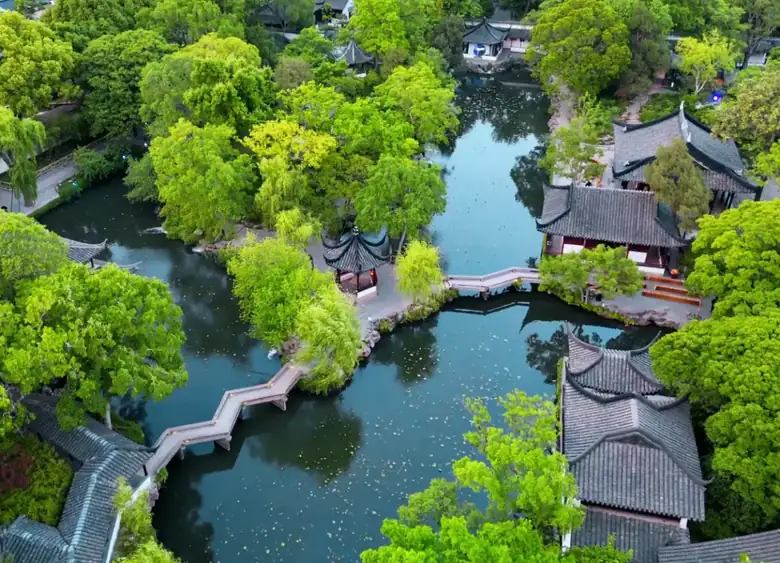
During the Zhengde era of the Ming Dynasty, there was an imperial censor named Wang Xianchen who, due to disagreements with powerful officials at court, retired to his hometown. He purchased the ruins of Dahong Temple and built a garden there as his hermitage. Dissatisfied with the realities of the time, he named the garden Zhuozheng Garden (Humble Administrator's Garden) after a line from the Jin Dynasty poet Pan Yue: "I water the garden and sell vegetables to provide for my daily meals; this is also the way of a humble administrator." In the twelfth year of the Jiajing reign, his friend Wen Zhengming wrote a record of Wang's Zhuozheng Garden (engraved on the wall of the Shenzhizhai Studio of Wen Yi), explaining his intentions. From then until now, the garden has a history of over four hundred years. In the courtyard to the left of the garden gate, there is a wisteria planted by Wen Zhengming himself, which serves as excellent historical evidence.
Further Reading: [Suzhou Self-Guided Tour] A Comprehensive Suzhou Travel Itinerary Guide, Including Transportation, Accommodation, Attractions, and Food
For over four hundred years, the Humble Administrator's Garden has experienced many periods of prosperity and decline. After Wang Xianchen's death, it was lost by his son in a gambling night and passed to Xu Shitai, where it gradually fell into disrepair. During the late Ming and early Qing dynasties (1660), it belonged to Chen Zhilin of Haining, at which time its eastern part had become Wang Xinyi's Guitian Garden Residence. After Chen surrendered to the Qing, he served as a prime minister, but was exiled to the border region by the Manchu government on charges of forming cliques and engaging in corrupt practices. The garden was confiscated and converted into the residence of a garrison general. Soon after, the Manchu army was disbanded, and the garden passed to Wang Yongning, the son-in-law of Wu Sangui. After Wu Sangui's defeat and Wang's death, the garden was again confiscated. During the Kangxi era (1684), it was converted into the Suzhou-Songjiang-Changzhou Circuit Office. After the circuit office was abolished, the garden was dispersed into private residences. During the Qianlong era (1747), Jiang Songxian renovated it and renamed it Fuyuan Garden. Shen Deqian wrote a record for it (the stone inscription is on the south wall of Yuanxiang Hall). During the Taiping Heavenly Kingdom era (1860), Prince Zhong, Li Xiucheng, conquered Suzhou and built this place as the Prince Zhong's Mansion, of which the garden was part.
According to Wen Zhengming's "Record of the Humble Administrator's Garden," this area was originally a low-lying area with a lot of stagnant water. He adapted to the local conditions, dredging it into a pond, planting trees around it, and building pavilions and terraces following the curves of the pond's banks. Therefore, its main feature is water. The garden's architecture is simple and elegant, with ancient trees and rocks, shallow water bridges, low pavilions, and winding railings, exhibiting a simple, open, and innocent style. It is a place where one can experience the charm of the mountains and fields without leaving the city, which perfectly matches his original intention in naming the garden "Humble Administrator's Garden."
The garden is divided into three sections: central, western, and eastern. The central section is the essence, centered around the Yuanxiang Hall. Surrounded by mountains and water, with lush forests, the surrounding scenery is picturesque, especially beautiful for lotus viewing in summer. The Xiaofeihong and Xiaocanglang areas feature tranquil water courtyards with innovative structures, bridges, corridors, and pavilions, all exquisitely designed. Looking east from Liu'ao towards Yihong, the flowing streams and inlets evoke the charm of a water town. Conversely, looking west from Yihong towards Liu'ao, the shimmering water and pagoda reflections evoke a sense of wandering and adventure. Both areas are renowned for their water features, each with its own unique charm. From Xuexiang Yunwei to Daishuang Pavilion, the winding mountain paths offer a rustic and charming experience. The Pipa Garden and Haitang Chunwu are quiet and secluded courtyards. The western section, renovated by the Zhang family, differs slightly in style from the central section, but the water and rock features remain similar. The Thirty-Six Mandarin Duck Pavilion is exquisitely structured and suitable for both winter and summer. The Reflection Pavilion and the Long Water Corridor are particularly outstanding. The eastern section has been expanded in recent years, featuring flat hills, distant peaks, pine forests, and green spaces, offering a unique and spacious landscape. However, the entire structure is not yet complete, and future construction is currently in the planning stages.
Humble Administrator's Garden
Lanxuetang
Lanxue Hall is named after Li Bai's poem, "Standing alone between heaven and earth, a gentle breeze sprinkles orchids and snow," and the name implies nobility and purity. The architectural style is simple and elegant, and the interior furnishings are also antique, allowing visitors to experience the refined sentiments of ancient literati.
Yuanxiangtang
Located in the central core area, overlooking the lotus pond to the south, Yuanxiang Hall is the core building of the Humble Administrator's Garden and offers the best viewpoint in the central area. It is a four-sided hall structure, unobstructed by pillars, making it exceptionally bright and spacious. Originally built in the Ming Dynasty, the existing structure is a Qing Dynasty reconstruction, and it once served as the main hall for the garden owner's banquets. Its name is derived from the phrase "fragrance spreads far and wide" in the poem "On the Love of Lotus." The large platform in front of the hall offers excellent views, and when the lotus flowers in the pond are in full bloom, their fragrance fills the air, hence the name "Yuanxiang" (meaning "far-reaching fragrance"). Leaning on the railing, one is captivated by the intoxicating aroma of the lotus blossoms.
Xiangzhou
Xiangzhou, located in the southwestern part of the central area near the water, is a boat-shaped pavilion, also known as a "dry boat." The bow is a platform, the hull a pavilion, and the stern a tower, creating a unique design. The plaque "Xiangzhou" was inscribed by Wen Zhengming of the Ming Dynasty. Originally a place for Buddhist worship and meditation, the stern is decorated with eight auspicious symbols. The name is taken from the line "Gathering fragrant herbs on the islet" in the *Chu Ci* (Songs of Chu), using "fragrance" to symbolize noble character. Floating on the water, Xiangzhou appears ready to set sail, making it a highly distinctive building within the park, offering both scenic views and a place to rest.
Xiao Fei Hong
Located in the southwest of the central section, Xiaofeihong Bridge connects Yiyuxuan and Dezhenting. It is the only covered bridge in Suzhou gardens, its vermilion railings reflected in the water like a rainbow. This, combined with the surrounding green trees, clear water, and white walls, creates a picturesque scene. Whether strolling on the bridge or gazing at it from afar, the view is breathtaking. Designed by Wen Zhengming of the Ming Dynasty and restored in the Qing Dynasty to preserve its original appearance, it serves both as a shelter from rain and a scenic viewpoint. Its name originates from the phrase "flying rainbow overlooking the Qin River" in the *Zhaoming Wenxuan*, metaphorically describing the bridge as a rainbow gliding across the water.
Liuting Pavilion
Liuting Pavilion is located on the western pond. It's a square pavilion with a rolled-up roof, inside which hangs a carved ginkgo wood canopy, intricately carved with grape and squirrel patterns (symbolizing many children and blessings). Rebuilt in the late Qing Dynasty, it was originally a place to appreciate lotus flowers and listen to the rain. The wood carvings are a masterpiece of Suzhou craftsmanship. The name comes from Li Shangyin's line, "Leaving behind withered lotus leaves to listen to the sound of rain," and the pavilion is surrounded by lotus flowers. In autumn, the withered lotus leaves and the sound of raindrops on them create a poetic atmosphere, making it a refined and elegant spot for sightseeing.
Thirty-six Mandarin Duck Hall
The Thirty-Six Mandarin Duck Hall is located in the center of the western garden. Facing ponds to the north and south, it features a rare "connected hall" structure. The north hall houses mandarin ducks, while the south hall is planted with camellias. The hall boasts blue and white glazed windows with rhombus-shaped windows and four corner rooms. Built in the late Qing Dynasty by Zhang Lüqian for Kunqu opera gatherings, the four corner rooms originally served as backstage for performances. The north hall is named for the 36 pairs of mandarin ducks in the pond, while the south hall is named for the 18 camellia (datura) trees. The architecture is exquisite and ornate, with delicate interior decorations. Cool in summer and warm in winter, the hall is a perfect place for mandarin duck watching, relaxation, and tea tasting, where mandarin ducks can often be seen playing in the pond.
Hanqing Pavilion
Hanqing Pavilion is located at the corner of the eastern wall. It is a combination of pavilion and corridor, with a thatched roof and blue stone steps leading into the pond. The pavilion railing is low and close to the water. It is a Ming Dynasty structure, originally a viewing pavilion for crops in the farmland, and later renamed. The name comes from a poem by Chu Guangxi, "The pond grass reflects the green color," implying that the pavilion reflects the clear blue water of the pond. In spring, willows brush the railing, and in summer, duckweed floats on the pond, creating a charmingly rustic atmosphere. It is the most waterfront viewing spot in the Humble Administrator's Garden.
Haitangchunwu
Located in the southern corner of the eastern garden, Haitang Chunwu is a small courtyard for a scholar's study. The ground is paved with pebbles inlaid with begonia patterns, and the latticed windows are designed in the style of mallows. Weeping begonias are planted there. It is a remnant of the Ming Dynasty residence of Wang Xinyi, reflecting the refined taste of a scholar who "accompanies flowers in his study." The name originates from the abundance of begonias in the courtyard during spring, signifying "a courtyard hiding spring colors." In spring, the begonia blossoms fall like rain, the white walls become paper, and the shadows of the flowers become a painting, creating a tranquil and serene atmosphere.
With whom to sit in the pavilion
Located at the corner of the western bay, Yu Shui Tong Zuo Xuan (与谁同坐轩) is a fan-shaped pavilion. Its doors, windows, and stone tables are all fan-shaped, and it is thatched with grass, backed by a wavy wall. Built by a late Qing Dynasty owner, it reflects the solitary and aloof spirit of a scholar, serving as a place for solitary contemplation while appreciating the moon. The name is taken from Su Shi's poem, "With whom do I sit? The bright moon and the gentle breeze are mine," subtly implying the owner's refined taste. Looking west, the pavilion resembles a canopy; looking east, the reflection tower appears in the water, the fan-shaped framed view resembling a three-dimensional scroll painting.
Wuzhu Secluded Residence
Located on the east side of the central area, Wuzhu Youju (梧竹幽居) leans against a bamboo grove to the north. The square pavilion features round moon gates on all four sides, surrounded by phoenix trees and bamboo. Inside hangs a plaque inscribed by Wen Zhengming. Originally built in the Ming Dynasty, it symbolizes the noble character of scholars and served as a place of quiet contemplation for its owner. The name originates from the phoenix tree attracting the phoenix and bamboo symbolizing a virtuous person, highlighting the concept of "a virtuous person residing in seclusion." The four door frames depict the four seasons—spring bamboo, summer phoenix trees, autumn moon, and winter snow—creating a strong sense of spatial perspective.
Jianshanlou
Jianshan Tower is located in the northwest of the central area, surrounded by water on three sides. It features a double-layered hip roof, with the ground floor's Lotus Fragrance Pavilion featuring plum blossom-patterned windows, and the second floor offering views of the mountains (in ancient times, one could see the actual mountains to the west). During the Taiping Rebellion, it served as the office of Li Xiucheng, the Loyal King, and is now a landmark building in Suzhou gardens. Its name is an adaptation of Tao Yuanming's line "Leisurely I see the Southern Mountains," reflecting a reclusive sentiment. Spring willows brush the windows, summer lotuses surround the tower, autumn moons are reflected in its walls, and winter snow blankets the eaves.
Humble Administrator's Garden Ticket Information
Peak season (April-October): Adult ticket 80 yuan
Off-season (November to March of the following year): Adult ticket 70 yuan
✅️Click to buy tickets: Trip
Humble Administrator's Garden Travel Guide
Humble Administrator's Garden Tour Route
Entrance → Lanxue Hall → Taihu Stone Rockery → Furong Pavilion → Tianquan Pavilion → Shuxiang Hall → Fangyan Pavilion → Wuzhu Youju → Daishuang Pavilion → Xuexiang Yunwei → Hefeng Simian Pavilion → Yuanxiang Hall → Xiuqi Pavilion → Yiyu Pavilion → Xiaocanglang → Xiaofeihong → Xiangzhou → Bieyou Dongtian → Yiliang Pavilion (Magnolia Hall) → Thirty-six Mandarin Duck Hall / Eighteen Datura Flower Hall → Liuting Pavilion → Yushui Tongzuo Pavilion (→ Fucui Pavilion) → Daoying Tower → Jianshan Tower → Lvyi Pavilion → Haitang Chunwu → Tingyu Pavilion → Linglong Pavilion → Jiashi Pavilion → Garden Museum → Exit
Best season to visit the Humble Administrator's Garden
March to May: There is an azalea exhibition.
Early June - Mid-October: Lotus Flower Exhibition
September - October: Chrysanthemum Exhibition
Transportation routes to the Humble Administrator's Garden
(I) External Transportation
By plane: After landing at Sunan Shuofang International Airport, take the airport bus to Suzhou North Bus Station, then transfer to a bus (such as Tourist Bus 1 or Tourist Bus 2) or take a taxi to Humble Administrator's Garden.
High-speed rail: From Suzhou Station, take tourist bus 1 or 2 and get off at "Humble Administrator's Garden" or "Suzhou Museum" stop. It's within walking distance. From Suzhou North Station, take Metro Line 2 to Line 1 and then take a bus/taxi, or take a taxi directly (about 40-50 yuan).
(II) Urban Transportation
By bus: Take tourist bus lines 1, 2, or 5, or bus lines 202 or 313, and get off at the "Humble Administrator's Garden" or "Suzhou Museum" stop.
Subway: Take Line 4 to Beisi Pagoda Station, Exit 4, and walk for about 10 minutes; or take Line 6 to Humble Administrator's Garden and Suzhou Museum Station, Exit 1, and walk for 5 minutes.
Taxi/Shared Bike: Taxi is convenient in the city, and you can enjoy the street view while riding a shared bike.
(III) Self-driving
Navigate to "Humble Administrator's Garden Parking Lot," but the old city area has narrow roads and limited parking spaces, and is prone to traffic jams during peak hours, so it is recommended to prioritize public transportation.
Travel information can change. Check current opening hours, reservations and entry requirements before you travel.

Traveller discussion
Start the conversation with a helpful tip or a question.