
[Shanghai City God Temple + Yu Garden Travel Guide] Includes transportation, travel routes, food, and shopping.
The City God Temple and Yu Garden in Shanghai are adjacent, less than 100 meters apart, so many tourists visit these two attractions together. In addition, there's the Yu Garden Bazaar between the City God Temple and Yu Garden, which is not only a large shopping and dining area, but also features mostly antique-style buildings that are beautifully…
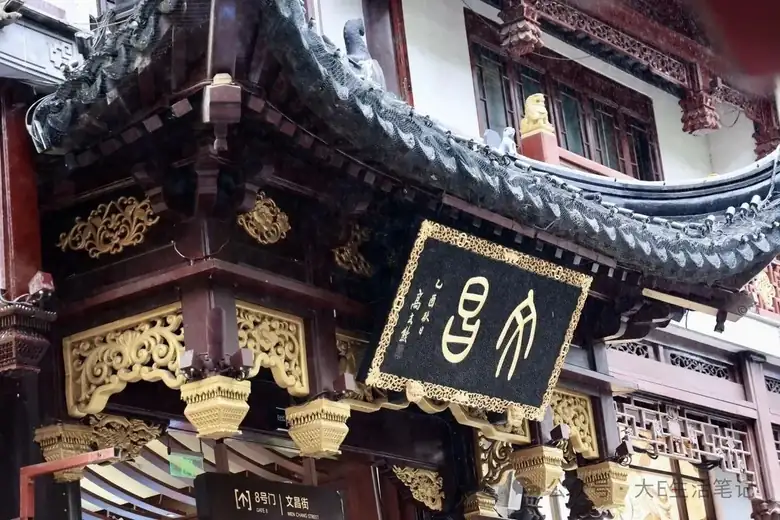
The City God Temple and Yu Garden in Shanghai are adjacent to each other, less than 100 meters apart, so many tourists visit these two attractions together.
In addition, there's the Yu Garden Bazaar between the City God Temple and Yu Garden. This is not only a large shopping and dining area, but also features mostly antique-style buildings that are beautifully illuminated at night, making it one of Shanghai's most beautiful nighttime views. Of course, the Bund area is also a must-see; you can check out our recommended itinerary for a day trip to the Bund.
Therefore, this guide will cover the City God Temple, Yu Garden, and Yu Garden Mall together, hoping to help everyone better enjoy their visit.
Further Reading: [Shanghai Self-Guided Tour] A Complete Guide to a 3-Day, 2-Night Self-Guided Trip: Transportation, Itinerary, Accommodation, and Food
Shanghai Yu Garden and City God Temple Transportation Guide
1. Subway:In Shanghai, take Metro Line 10 or 14 and get off at Yu Garden Station. Exit from Exit 1. (Taking the metro is recommended as it's fast and convenient.)
✅️Metro/bus card purchase:China Mainland Bus and Subway All-in-One Card
2. Public Transportation:
Take bus 932 and get off at Chenghuangmiao Station;
Take bus routes 64 or 715 and get off at the Fuxing East Road/Guangqi Road stop;
Take bus route 24 or 581 and get off at Yu Garden Station;
Take bus routes 11 (inner loop, outer loop), 64, 304 (night shift, air-conditioned), 736, 736 (air-conditioned), 801, 920, 926 (air-conditioned), or 930 and get off at Xinbeimen Station.
Take bus route 11 (inner loop or outer loop), route 64, or the night bus route 304 (air-conditioned) and get off at the Renmin Road/Xinkaihe Road stop.
Shanghai Yu Garden and City God Temple Tour Routes
Recommended itinerary for visiting the Yu Garden and City God Temple area in Shanghai:
Yu Garden Metro Station Exit 1 → Fuyou Small Commodities Market → Tonghanchuntang Traditional Chinese Medicine Museum → Dahuchun (Yu Garden Store) → Yu Garden South Gate (Main Gate) → Yu Garden West Gate → Nine-Turn Bridge and Lake Pavilion → Yixiu Tower → Nanxiang Steamed Bun Restaurant or Green Wave Corridor for lunch → Chocolate Museum → Shanghai Pear Garden → City God Temple → Yu Garden Mall
Shanghai Yu Garden and City God Temple Tourist Attractions
Fuyou Small Commodities Market
Next to Exit 1 of Yu Garden Metro Station is the Fuyou Small Commodities Market. You can bargain for anything there; it's advisable to be a little bold, as you'll lose out if you don't. You can browse around and pick out some souvenirs to take home.
Tonghanchuntang Traditional Chinese Medicine Museum
This century-old Chinese herbal medicine shop is decorated with various sachets, each with a different meaning for different solar terms! The museum is located on the 4th floor and is free to enter.
Dahuchun (Yu Garden Store)
Dahuchun is a time-honored brand in Shanghai, especially famous for its pan-fried buns. If you come in the morning, you can have breakfast here. Opening hours: 09:00-22:00.
Yu Garden
Yu Garden is a traditional Chinese garden with an antique charm, perfect for taking photos, and each scene is unique. A visit takes about 2 hours.
Recommended itinerary for visiting Yu Garden:
Yu Garden South Gate → Sansui Hall → Yangshan Hall → Large Artificial Hill → Yule Pavilion → Cuixiu Hall → Yifang Pavilion → Covered Corridor → Xuepu Garden → Dianchun Hall → Kuailou Pavilion → Jiushi Pavilion → Hexu Hall → Laojun Hall → Huijing Tower → Liushang Pavilion → Yuhua Hall → Library → Yulinglong Pavilion → Huanlong Bridge → Hanbi Tower → Inner Garden → Jingguan Pavilion → Dongtianfudi Pavilion → Songcui Pavilion → Keyi Pavilion → Huanyun Tower → Ancient Stage → Yu Garden West Gate
Yu Garden was first built in the 38th year of the Jiajing reign of the Ming Dynasty (1559), and has a history of more than 460 years. The owner, Pan Yunduan, was the Provincial Governor of Sichuan. He built this garden on the west side of his ancestral home so that his retired father could enjoy his later years in peace. The character "Yu" is taken from the Book of Changes and means "peace" and "tranquility". It also contains the filial piety of "pleasing the elderly father".
Today, Yu Garden covers nearly 30 acres (approximately 20,000 square meters) and is divided into six major scenic areas: Sansui Hall, Wanhua Tower, Dianchun Hall, Huijing Tower, Yuhua Hall, and the Inner Garden. The garden features pavilions, towers, rockeries, ponds, and layered dragon walls and flower corridors, earning it the reputation of "though made by man, it appears as if created by nature." #ShanghaiYuGardenTravelGuide
The Grand Artificial Hill (the most exquisite feature of Yu Garden)
Designed and stacked by Zhang Nanyang, a renowned garden designer of the Ming Dynasty, this rockery is constructed from 2,000 tons of Wukang stone and stands approximately 14 meters tall. Its layered peaks resemble real mountains, making it the largest existing Ming Dynasty Huangshi rockery in Jiangnan—climbing to the top offers a panoramic view of the entire garden.
Jade Linglong (the garden's prized possession)
One of the three famous stones of Jiangnan. Legend has it that it was a relic of Emperor Huizong of Song's "Flower and Stone Tribute"—the same "Flower and Stone Tribute" mentioned in the novel *Water Margin* during the "Clever Robbery of the Birthday Gifts." Standing about 3 meters tall, the stone has 72 holes, creating the spectacular sight of "a hundred holes flowing with spring water, a hundred holes emitting smoke." Ancient people said that "if an incense burner is placed in one of the holes, all the holes will emit smoke." Standing before the stone, you will understand what "wrinkled, leaky, slender, and translucent" truly means.
Sansui-do
The hall is 9 meters high, with five bays, and is magnificent and spacious. Looking up, you can see three gilded plaques: "Sansui Hall", "Lingtai Jingshi", and "Urban Mountain Forest"—"Urban Mountain Forest" is exactly the owner's wish: to live in the city but have the wild charm of the mountains and forests.
Inner Garden
Originally a temple ground for the City God Temple, it was built in 1709 and covers an area of only 2 mu (approximately 0.33 hectares). Despite its small size, it has the ingenuity of "making a grand ceremony in a snail shell".
Yu Garden Opening Hours:Open from 9:00 to 16:30, last entry at 16:00, closed on Mondays. Tickets are 40 yuan during peak season and 30 yuan during off-season.
Yu Garden Visiting Information:https://www.yugarden.com.cn/page/articleView/message.html
✅️Ticket booking: Klook
Nine-Bend Bridge
Exiting from the west gate of Yu Garden, you'll see the Nine-Turn Bridge and the Lake Pavilion. Take a stroll there; the winding paths and turns are said to ward off bad luck and bring good fortune. Various themed lantern festivals are also held on the lake from time to time.
Yixiu Tower
Yixiu Tower is located in the center of Yu Garden, next to the Nine-Turn Bridge. It is a Western-style European-style brick and wood structure. The tower has two floors with corridors, and its architectural style is unique, simple and elegant.
Yixiu Tower has a long history of construction. After renovation, it became the Yong'an Anti-Japanese War Cultural Figures Museum, which displays various heroic deeds.
Nanxiang Steamed Bun Shop or Green Wave Corridor (lunch)
Nanxiang Steamed Bun Shop and Green Wave Corridor are both famous time-honored brands in Shanghai. Nanxiang Steamed Bun Shop specializes in xiaolongbao (soup dumplings) and crab roe soup dumplings.
Green Wave Corridor is a state banquet-level restaurant, with signature dishes including Eight Treasure Duck, Glutinous Rice Duck, Soup Dumplings, and Crab Roe Dumplings.
Chocolate Museum
Located on the 2nd and 3rd floors of No. 69, Jiuxiaochang Road, the exhibition hall features an animal exhibit made entirely of chocolate, filled with a rich chocolate aroma, as well as bags, shoes, vases, and other items made of chocolate. Admission is free, and visitors can sample small chocolate beans afterward.
Sea Pear Garden
Originally a stage overlooking Yu Garden, it has now been transformed into a nearly 1,000-square-meter rooftop courtyard. The immersive stage presentation seamlessly blends with the traditional architecture and dining area, creating an elegant and enchanting atmosphere for enjoying music. Performances are held here periodically, and tickets are required for admission.
City God Temple
The Shanghai City God Temple is one of the main Taoist temples of the Zhengyi sect in Shanghai. The entrance fee is free, but there is a 10 yuan incense fee.
City God Temple Official Website:https://shchm.org/shchm/
The Shanghai City God Temple, originally named Jinshan Temple (also known as Huo Guang Temple), is dedicated to Huo Guang, the great general of the Western Han Dynasty. The temple was first built during the Yongle reign of the Ming Dynasty (1403-1424) and enshrines Qin Yubo, the imperial-appointed City God of Shanghai. It is a Taoist temple belonging to the Zhengyi sect.
The City God enshrined in the Shanghai City God Temple is Qin Yubo, a Jinshi (a successful candidate in the highest imperial examinations) of the Yuan Dynasty. He was revered by the people for his high moral character and outspokenness. Although he initially refused Zhu Yuanzhang's offer of service, he later petitioned the court for the sake of the country and entered officialdom. After his death, Zhu Yuanzhang praised him, saying he would not serve as a subject in life but would defend the land in death. The people then revered him as the City God of Shanghai, hoping he would protect the peace and tranquility of the city.
address:No. 249 Fangbang Middle Road, Huangpu District, Shanghai
transportation:[Metro Line 10 & 14] Exit 7 of Yu Garden Metro Station
Tickets:10 yuan (includes three incense sticks)
Opening hours:From May 1st to September 30th, the opening hours are 9:00 AM to 5:00 PM.
From October 1st to April 30th of the following year, the temple will be open from 8:30 AM to 4:30 PM. (On the first and fifteenth days of the lunar calendar, the temple will be open from 6:00 AM. During special periods such as the Spring Festival, the opening hours will be subject to announcement.)
City God Temple Location Layout
The City God Temple's halls are built in the style of southern architecture, but its architectural style still retains the layout of the Ming Dynasty.
The entire structure consists of three sections: the first section is dedicated to Huo Guang; the second to Qin Yubo; and the third to the City God's wife.
The buildings are arranged along the central axis. The main buildings of the temple include twelve halls such as the Main Hall, Yuanchen Hall, and Parents Hall. On the west side of the ground floor, from south to north, are the Three Officials Hall, the God of Wealth Hall, and the Guest Hall; on the east side, from south to north, are the Yue Lao Hall, the Cihang Hall, and the Prayer Hall. Opposite the ceremonial gate on the central axis is the Huo Guang Hall, behind which is a long corridor leading to the rear courtyard, called the Tai Sui Hall. Exiting the Tai Sui Hall is the rear courtyard, with the City God Hall in front, the Guan Sheng Hall to the west, and the Wen Chang Hall to the east.
Introduction to the various halls of Shanghai City God Temple
The main halls of the Shanghai City God Temple include the Hall of the Three Officials, the Hall of the Matchmaker God, the Hall of the God of Wealth, the Hall of Compassion, the Hall of Prayer for Blessings, the Hall of Huo Guang, the Hall of Yuan Chen, the Hall of Guan Yu, the Hall of Wenchang, the Hall of the City God, the Hall of the Goddess, and the Hall of Cultivating Virtue. When visiting, you can proceed from south to north according to the architectural layout.
Mountain Gate Screen Wall
Built in 1535 during the Ming Dynasty, it has a history of over 450 years. The four large golden characters on it, "Guarding the Coast," were originally inscribed by Feng Bin, the magistrate of Shanghai County during the Ming Dynasty.
Ceremonial Gate
The ceremonial gate was the second main gate of the government office in the past. There were two couplets in front of the ceremonial gate. Behind the couplets hung a large abacus with the four characters "不由人算" (not up to human calculation) engraved on it.
City God Temple Main Hall
The main hall enshrines the seated statue of Huo Guang, the Marquis of Bolu and General of the Han Dynasty, who is the God of Jinshan. To the left is the civil judge, and to the right is the military judge. Next are the day patrol and night patrol officers, and below them are the eight bailiffs.
Tai Sui Hall
Also known as the Yuan Chen Hall or the Sixty Jiazi Hall. Yuan means "good," and Yuan Chen refers to auspicious days and times. Because the deities of the Sixty Jiazi are star gods, they are also called Tai Sui gods.
Three Officials Hall
The Three Officials Hall enshrines the deities in charge of affairs in the heavens, on earth, and in the water, known as the Heavenly Official, the Earthly Official, and the Water Official.
The Temple of the Matchmaker
We worship the Old Man Under the Moon (who governs marriage), the Medicine King Sun Simiao (who governs health), and the God of Carriages (who governs safe journeys).
Cihang Hall
We worship the Eye Goddess [who cures eye diseases], the Compassionate Bodhisattva [who brings peace], and the Heavenly Empress [who brings safety at sea].
Temple of the God of Wealth
The hall enshrines five gods of wealth. In the center is Zhao Gongming, flanked by his subordinates, Zhao Bao Tianzun Xiao Sheng and Na Zhen Tianzun Cao Bao, to his left and right respectively. On either side of the hall are Zhao Cai Shizhe Chen Jiugong and Li Shi Xian Guan Yao Shaosi.
City God Temple
The deity enshrined here is Qin Yubo, the City God of Shanghai County, who was bestowed the title by imperial decree during the Ming Dynasty. To the west of the City God Hall is the Goddess Hall, which enshrines the wife of the City God of Shanghai County, Lady Chu. To the east of the City God Hall is the Parents Hall, which enshrines the parents of the City God of Shanghai County.
Wenchang Hall
Wenchang Dijun, also known as Zitong Dijun, is in charge of people's [fame and official rank].
Guan Sheng Temple
On the left side of the courtyard of the Shanghai City God Temple is the Guandi Hall. It enshrines Guan Sheng Di Jun (Lord Guan), with Generals Zhou Cang and Guan Ping on the left and right. Guan Di is believed to have functions such as managing destiny and blessing the imperial examinations.
Yu Garden Mall
This place offers everything you could want for eating, drinking, and entertainment, and it's absolutely stunning when the lights come on at night. Here, you can see the coexistence of ancient alleyways and skyscrapers, showcasing Shanghai's captivating charm.
2027 Shanghai Yu Garden Lantern Festival
2027 Shanghai Yu Garden Lantern Festival
The time and event details have not yet been announced.
2026 Shanghai Yu Garden Lantern Festival
The 2026 Shanghai Yu Garden Lantern Festival, themed "Celebrating the Shanghai New Year at Yu Garden," opened its doors on January 26th, kicking off the festive atmosphere of Shanghai. The Yu Garden Folk Art Lantern Area was the first to be illuminated, thus beginning a 36-day journey through the unique flavors of Shanghai's New Year celebrations. (The Yu Garden Folk Art Lantern Area will not be lit on Lunar New Year's Eve, February 16th).
This year's Yu Garden Folk Art Lantern Area will implement timed entry with tickets. Entry is from 2:00 PM to 10:00 PM on peak days (Friday to Sunday, Lunar New Year's Day to the seventh day, and the Lantern Festival) and from 4:00 PM to 10:00 PM on regular days. Adult tickets are 80 yuan, and children's, military personnel's, and senior citizen's tickets are 50 yuan. See details below ↓
This year, the Yu Garden Lantern Festival has expanded for the first time to include Gucheng Park, Fangbang Middle Road, Fuyou Road, and the Bund. Through meticulously designed Year of the Horse themed lantern displays, it cleverly connects the BFC Bund Financial Center, presenting a new "six-area integration" layout. Using "returning home for the New Year" as its narrative thread, the festival weaves a light and shadow narrative from Yu Garden to the BFC and then to the Bund, creating a comprehensive "must-visit route for celebrating the New Year in Shanghai" filled with warmth, vibrancy, and a sense of ritual.
Here, you can relive the rich festive atmosphere of old Shanghai, savor local delicacies, stroll through the Spring Festival market, enjoy cultural performances, experience interactive technology, buy creative cultural products, and purchase Shanghai gifts. It allows longtime Shanghainese to rediscover their memories, helps new Shanghainese understand tradition, and lets tourists experience a uniquely Shanghai-style Spring Festival. Locals, tourists, and international visitors are all welcome to come to Yu Garden to experience the authentic Shanghai New Year atmosphere.
Yu Garden BFC Bund presents a new integrated light and shadow concept, allowing you to enjoy six different light zones with a single ticket!
This year's lantern festival has expanded from a single folk art lantern area in Yu Garden to six major themed lantern areas covering the greater Yu Garden area, forming a continuous lantern viewing route extending from Yu Garden to the BFC Bund.
The Yu Garden Folk Art Lantern Area continues its cultural theme
Among them, the Yu Garden Folk Art Lantern Area, most familiar to citizens, will launch the fourth season of "The Wonders of Yu Garden: Mountains and Seas - Wilderness Chapter" (admission by ticket in time slots), which will be lit up first on January 26. It will present a visual feast of culture and technology by integrating intangible cultural heritage lantern-making techniques with digital light and shadow art. The theme of "Riding Dreams, Wildflowers in the Wilderness" expresses that life is a "wilderness" rather than a "track", encouraging people to work hard like a steed in a changing world, bravely pursue their dreams among mountains and seas, and turn their inner dreams into beautiful reality.
Stepping through the auspicious "Gate of Fortune and Prosperity" into a dazzling sea of lights, festive couplets, brimming with New Year's spirit and blessings, immediately catch the eye, complementing the giant revolving lantern in Golden Plaza. The exquisite, intricate carvings within the lantern blend seamlessly with the light, creating a scene of "flowing light and auspiciousness." Strolling along Ninghui Road, the "Dancing Horses Treading on Fortune" lantern display soars through the air, interpreting three different life experiences through three distinct themes.
Entering the central square, six galloping horses, symbolizing "Galloping Across the Land, Blossoming with Every Step," seem to transcend time and space, soaring proudly between heaven, earth, mountains, and seas. Under a ginkgo tree on one side, a lantern display reading "May All Your Wishes Come True" embodies the auspicious meaning of "prosperity and good fortune," offering New Year's blessings to every visitor. Wenchang Street incorporates elements extracted from representative treasures in the Dunhuang and Luoyang museums, adorning the area with auspiciousness and good fortune for the New Year.
The scene of "Horses Leaping Over the Milky Way, Chasing Dreams in the Sky" unfolds slowly on the Nine-Bend Bridge, transforming the lake into a sea of stars with the Twenty-Eight Mansions arrayed in the sky. Reality and legend intertwine here, creating an immersive and tangible experience of Eastern aesthetics. Furthermore, the "Horses Trampling Flying Flowers" at Yanhai Pavilion and the "A Road of Blossoms" at Gate No. 5 are connected to the Old School Field Road New Year's Market, where visitors can enjoy lanterns, select New Year's goods, sample local delicacies, and purchase Shanghai souvenirs, immersing themselves in the rich festive atmosphere amidst the interplay of light and shadow.
This year, Yu Garden has also partnered with Xiaobu to launch a special project. The adorable "Xiaobu the Rabbit" transforms into a dream broadcaster, secretly hiding in four core light installations—Golden Square, Ninghui Road, Central Square, and the Nine-Turn Bridge. Visitors can search for the hidden Xiaobu the Rabbit while touring the garden, and even more surprises await them. Let's explore Yu Garden together and let Xiaobu bloom!
The five free light zones have distinct characteristics.
This year, BFC opens with a dazzling array of trendy lights, open to the public free of charge throughout the year. BFC, in collaboration with Pop Mart, presents a Spring Festival carnival, where adorable IPs don new Year of the Horse themed outfits and gather on the Bund to send New Year's blessings. Various blessing lanterns offer immersive and interactive experiences, and a pop-up store themed "Golden Galloping Horse" presents exclusive gifts.
BFC's Spring Festival fun doesn't stop there: traditional card games, hopscotch, and retro arcade games are just some of the festive experiences gathered in the B2 retro street area of the South Zone; the Bund Maple Path is decorated with lively lanterns, and a series of festive markets are open, offering trendy traditional gifts. The Shanghai Fosun Art Center presents a "Patterns as a Vehicle for the Way"—an immersive digital experience from the Palace Museum—to interpret the essence of Eastern aesthetics. This Spring Festival, BFC's trendy lighting zone will create a familiar yet innovative Chinese New Year celebration, bringing a dazzling new wave of festive fun to Shanghai.
In addition, four light zones will be open simultaneously and free of charge. The Fuyou Road light zone will create a warm atmosphere with the theme "Lights Flowing Through Alleys, Fireworks Bring Blessings"; the Fangbang Middle Road light zone will evoke memories of Shanghai with the theme "Lights of Ten Thousand Homes, Fangbang Memories"; the Gucheng Park light zone will exude a festive atmosphere with the theme "Family Reunion, Ancient City's New Year's Flavor"; and the Bund light zone will showcase modern splendor with the theme "Brilliant Riverside, Bund's Splendor". These four themes intertwine and echo each other, conveying both the warm New Year's spirit of Shanghai and the dazzling brilliance of fashion trends. While illuminating the city, they also naturally guide visitors into Yu Garden, BFC, and the Bund, providing a complete and multi-layered light-viewing experience. Five free light zones will also be lit up successively, achieving simultaneous illumination of all six zones on February 1st.
Food near Yu Garden and City God Temple in Shanghai
First of all, it should be noted that the Yu Garden and City God Temple area in Shanghai is a popular tourist destination, and the food and snacks here are relatively expensive compared to other areas in Shanghai. Therefore, it is not recommended to make a special trip here to eat Shanghai cuisine.
However, if you're visiting Yu Garden and City God Temple, you can also try the local cuisine. There's a rich variety of Shanghai specialties here, with many long-established restaurants. Here are some recommendations:
Dahuchun
Dahuchun is a famous old brand of pan-fried buns in Shanghai. The pan-fried buns here are characterized by their thick skin and little soup. The skin is crispy and has a firm texture. A little rice vinegar can cut through the greasiness. Paired with a bowl of curry beef and vermicelli soup, it is the perfect breakfast combination.
Nanxiang Steamed Bun Shop
Established in 1900, it remains a popular spot in Shanghai for enjoying xiaolongbao (soup dumplings). If you don't want to queue, you can choose to order takeout for convenience.
Nanxiang Steamed Bun Shop specializes in fresh pork xiaolongbao (soup dumplings), which are juicy and tender. A steamer of six costs 42 yuan.
Green Wave Corridor
This restaurant is a state banquet-level establishment. Their glutinous rice duck is especially renowned, but be aware that daily supplies are limited. The dim sum is also delicious, including crab roe soup dumplings, egg yolk pastries, rose cakes, and green cakes.
Songyue Tower
With a history of over a century, the restaurant sells 4 million of its signature vegetarian buns annually. The classic flavor is a must-try, as are the Malantou and pine nut qingtuan (a type of glutinous rice dumpling). They are delicious and satisfying.
Ningbo Tangyuan
Their glutinous rice balls are large, with a soft and chewy outer skin and a delicious filling, especially the sesame flavor.
Shen Dacheng
They specialize in various pastries and qingtuan (a type of glutinous rice dumpling). Their salted egg yolk and pork floss qingtuan is incredibly delicious; the umami flavor of the pork floss and the salty aroma of the duck egg yolk complement each other perfectly, making it a wonderful combination.
Bright Dairy Cold Drinks
Bright Dairy is a beloved milk brand in Shanghai. Their classic Bright Dairy ice cream bar from the last century has been transformed into a beverage with an even richer and smoother texture. The tapioca pearls and coffee at the bottom further appeal to younger consumers.
Tong Hanchun Hall
We offer traditional Chinese tea recipes with a wide variety of options, all formulated for health and wellness. You can dine in or take away.
Vegetarian meals at the City God Temple
Inside the City God Temple (which is a temple), noodles are only 20 yuan a bowl, and toppings are 15 yuan each, with a wide variety available. The vegetarian buns, butterfly pastries, and cloud cakes are all delicious, and the large wontons are also highly recommended!
In addition to the City God Temple itself, a food street has been opened on Jiuxiaochang Road outside the temple, where you can find many Shanghai specialties, such as stinky tofu.
Shopping recommendations for Yu Garden and City God Temple in Shanghai
Old City God Temple Food Store
This store is a great place to buy Shanghai specialties. You can find milk candy, nougat, spiced beans, and more. I especially recommend buying Shanghai pear syrup candy and White Rabbit milk candy.
Old School Field Road
In addition to various delicious snacks, this street also offers a wide range of Shanghai specialties for purchase.
Shanghai Accommodation Recommendations: Seven Must-Stay Hotels in Shanghai with Great Value
Frequently Asked Questions about Visiting Yu Garden and City God Temple in Shanghai
Important distinction: Yu Garden (a classical garden from the Ming Dynasty, admission fee required) ≠ Yu Garden Mall/Old Street/Nine-Bend Bridge (free shopping area); City God Temple is an independent Taoist temple with separate tickets, which is easily confused by many tourists.
Q: Is Yu Garden in Shanghai worth visiting?
Worth visiting: If you want to see classical gardens, ancient architecture, and Chinese aesthetics in Jiangnan, enjoy taking photos in Hanfu, and learn about the history of Shanghai's old city, I recommend visiting Yu Garden; if you just want to check out the Red Lantern Old Street, the Nine-Turn Bridge at night, and eat snacks, the free street area is enough, with a strong atmosphere.
Q: Do I need to buy an entrance ticket for Yu Garden?
Yu Garden Bazaar, Nine-Turn Bridge, and Yu Garden Old Street are free to enter all day; no tickets are required. (Ctrip)
Yu Garden (the ancient garden in Jiangnan within it): Peak season (April 1–June 30, September 1–November 30) 40 yuan; Off-season (July 1–August 31, December 1–March 31 of the following year) 30 yuan; Closed on Mondays (except public holidays), last entry at 16:00.
City God Temple and Taoist Temple: Incense and flower ticket NT$10, 3 sticks of incense are given as a gift upon entry. Do not buy incense at high prices from vendors outside.
Preferential treatment: Full-time students and seniors aged 60-69 receive half-price admission to the park; children under 1.3 meters tall, seniors aged 70 and above, active military personnel, and disabled persons receive free admission upon presentation of valid identification.
Q: How long does it take to visit Yu Garden in Shanghai?
Visiting only the interior of Yu Garden: approximately 1.5 hours
Garden + City God Temple/Taoist Temple: 2.5–3 hours
Garden + City God Temple + Nine-Turn Bridge + Yu Garden Old Street (including night view): Half a day (3-4 hours)
Free access only (Nine-Turn Bridge + Old Street for photos and snacks): 1–2 hours
Q: What's inside Yu Garden?
Yu Garden (admission fee required): A classical garden from the Ming Dynasty in Jiangnan. Key attractions include: Jade Linglong (the garden's treasure, one of the three great wonders of Jiangnan), the Great Rockery (a Ming Dynasty yellow stone rockery), Sansui Hall, Dianchun Hall, Wanhua Tower, the Dragon Wall, the ancient stage in the inner garden, pavilions, towers, ponds, and rockeries. Every step reveals a new scene. It is a national cultural relic protection unit.
Yu Garden Mall / Free surrounding area: Nine-Turn Bridge, Huxinting Teahouse, Red Lantern Old Street, time-honored shops, snack shops, cultural and creative shops; you can enjoy the night view.
Q: Is the Shanghai City God Temple efficacious?
Praying for blessings is a traditional cultural practice and a way to express one's feelings. Sincerity is key, and there is no objective scientific explanation for whether a prayer is "effective" or not. The City God Temple is a well-known Taoist temple of the Zhengyi sect in Shanghai with a history of over 600 years. Locals and tourists alike frequently come to pray for blessings, such as peace, career success, and marriage; it is more of a place to place one's heartfelt wishes.
Q: What do people worship at the Shanghai City God Temple?
The main hall enshrines Qin Yubo, the City God of Shanghai (the city's guardian deity), and worship of the City God is performed first in the main hall; each hall is responsible for different prayers:
The Temple of the God of Wealth: Five Gods of Wealth, for those seeking wealth and success in their careers.
The Temple of the Matchmaker: Praying for a good marriage.
The Hall of the Three Officials: The Three Officials, who dispel disasters and bring good fortune.
Tai Sui Hall: Worship Tai Sui, suitable for your birth year.
Cihang Temple: A place to pray for peace and protection for family members, dedicated to Cihang, Mazu, and the Goddess of Eyesight.
Travel information can change. Check current opening hours, reservations and entry requirements before you travel.

Traveller discussion
Start the conversation with a helpful tip or a question.