
Hohhot City
Hohhot CityHohhot City, abbreviated as "Hu City" and formerly known as "Guisui City," is the capital of the Inner Mongolia Autonomous Region and its political, economic, cultural, educational, and financial center. Located in central Inner
Hohhot City
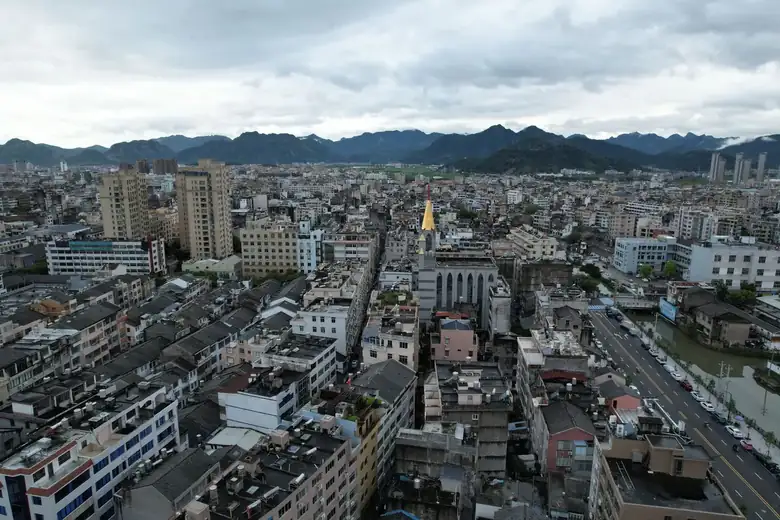
Hohhot City, abbreviated as "Hu City" and formerly known as "Guisui City," is the capital of the Inner Mongolia Autonomous Region and its political, economic, cultural, educational, and financial center. Located in central Inner Mongolia, south of the Daqing Mountains, it borders Ulanqab City to the east, Shanxi Province to the southeast, Ordos City to the south and southwest, and Baotou City to the west and northwest, covering a total area of 17,200 square kilometers. As of 2023, Hohhot administers 4 districts, 4 counties, and 1 banner. As of 2025, the resident population reached 3.661 million. The local dialect blends features of Shanxi and Shaanxi dialects. The terrain is predominantly mountainous and plains, with a mid-temperate continental monsoon climate — long, bitterly cold winters; short, hot summers; and dramatic spring and autumn transitions. Major rivers include the Yellow River and Dahei River. Hohhot has over 2,000 years of urban history. During the pre-Qin period, King Wuling of Zhao established Yunzhong Commandery here. In 1575, Altan Khan built the city of "Kuku Hoton," which the Ming court named "Guihua." During the Republic of China era, it was renamed Guisui City. In 1954, the name was officially restored to Hohhot. The city is designated by the State Council as an important central city in North China, a national historical and cultural city, a national comprehensive transportation hub, and a regional advanced manufacturing base. Its dairy industry cluster has been selected as a national advanced manufacturing cluster. In 2025, Hohhot's GDP reached 427.83 billion yuan (approximately $59.4 billion USD), growing 5.2% year-on-year.
Name and Etymology
"Hohhot" is a phonetic transliteration of the Mongolian word meaning "Blue City," symbolizing warmth, simplicity, and hope. The city was built in 1572 under the direction of Altan Khan, leader of the Tumet Mongol tribe, originally named "Kuku Hoton." The city walls were constructed with blue bricks, giving it a blue appearance from afar — "Kuku" means blue and "Hoton" means city in Mongolian. In 1575, the Ming Dynasty court bestowed the name "Guihua." During the Republic of China era, it was renamed Guisui. In 1954, the name was officially restored to Hohhot.
Historical Evolution
Pre-Qin Period
Archaeological discoveries at the Dayao Cultural Site on Hohhot's eastern outskirts date human activity back 700,000 years to the Paleolithic era. By the 4th to 3rd centuries BCE, tribes such as the Linhu and Loufan inhabited the area. During the late Warring States period, the Xiongnu expanded into the region. King Wuling of Zhao (325–298 BCE) reformed the military and established Yunzhong Commandery here. In 234 BCE, Qin general Li Xin captured the area, bringing it under Qin control.
Qin and Han to Northern and Southern Dynasties
After the Qin Dynasty unified China, it retained Yunzhong Commandery. The Han Dynasty continued this administrative structure. In 125 BCE, the Xiongnu launched raids into the region, and Han general Wei Qing led over 100,000 cavalry from Dingxiang Commandery against them. In 33 BCE, Wang Zhaojun was married to the Xiongnu chieftain Huhanye Chanyu — the famous "Zhaojun Beyond the Great Wall" event — bringing over 60 years of peace to the frontier.
During the Wei, Jin, and Northern and Southern Dynasties, the Xianbei Tuoba tribe established the Northern Wei regime. The Chile people were settled in the Yinshan area plains, giving the region its name "Chilechuan." Emperor Xiaowen of Northern Wei ordered the construction of irrigation systems in the region.
Sui and Tang to Song and Yuan
During the Sui Dynasty (585 CE), the area was reorganized as Fengzhou. Under the Tang Dynasty, the area was within the Turkic sphere of activity. Tang forces defeated the Turks at Baidao (modern Wugongba, north of Hohhot) during the Zhenguan era. In 707 CE, three "Surrender Acceptance Forts" were built south of the Yinshan Mountains as military garrisons.
In 947, the Liao Dynasty established the area as Fengzhou, an important military stronghold. The Jin Dynasty (1115) retained the name Fengzhou, which had approximately 22,000 households and 100,000 residents, making it a prosperous commercial center. Under the Yuan Dynasty (1279), Fengzhou remained stable and economically developed, serving as a key transportation hub connecting the Mongolian steppe with central China.
Ming and Qing Dynasties
The Ming Dynasty established military garrisons in the southern steppe region. In 1572, Altan Khan of the Tumet tribe settled in the Fengzhou area and unified the Mongolian and southern steppe regions, transforming the area into "Tumet Plains." In 1571, a peace agreement was reached between the Ming and Mongols. In 1581, Altan Khan and his wife San Niangzi formally built the city with blue brick walls, earning it the name "Blue City." The Ming court named it "Guihua." Local people called it "San Niangzi City" in her memory.
During the early Qing Dynasty, San Niangzi City was destroyed by fire. In 1694, an outer wall was added. A new garrison city called "Suiyuan Cheng" was built 2.5 km northeast of the old city, primarily for military barracks. By the late Qing, Guihua and Suiyuan were merged into "Guisui."
Republic of China Period
In 1912, the Beiyang government established the Republic of China, maintaining the Qing-era administrative system. In 1913, Suiyuan was established as a special administrative region, and Guihua and Suiyuan were merged into Guisui County. In 1929, Suiyuan became a province with Guisui as its capital.
During the Anti-Japanese War (1937), Guisui fell to Japanese forces, who established a puppet Mongolian government. The Chinese Communist Party led resistance forces in the Daqing Mountains. In 1945, after Japan's surrender, the city was restored as Guisui. On September 19, 1949, KMT general Dong Qiwu accepted the peaceful resolution, and the People's Liberation Army entered Guisui.
After the Founding of the People's Republic of China
After the PRC's founding, the Guisui Municipal Government was established. In February 1954, the Suiyuan provincial administration was dissolved and merged into the Inner Mongolia Autonomous Region. On April 25, 1954, the name "Guisui" — which carried ethnic discrimination and feudal connotations — was abolished, and the city was renamed Hohhot, becoming the capital of the Inner Mongolia Autonomous Region.
Administrative Divisions
As of 2023, Hohhot administers 4 districts (Huimin District, Yuquan District, Xincheng District, Saihan District), 4 counties (Tuoketuo County, Qingshuihe County, Wuchuan County, Helinge'er County), and 1 banner (Tumd Left Banner). The municipal government is located at No. 1 Xinhua East Street, Xincheng District.
Geography
Location
Hohhot is located in central Inner Mongolia, south of the Daqing Mountains, between longitudes 110°46′–112°10′E and latitudes 40°51′–41°8′N. It borders Ulanqab City to the east, Shanxi Province to the southeast, Ordos City to the south and southwest, and Baotou City to the west and northwest. The maximum east-west distance is 110 km, and the maximum north-south distance is 215 km, with a total area of 17,200 square kilometers.
Climate
Hohhot has a mid-temperate continental monsoon climate with four distinct seasons: long, bitterly cold winters; short, hot summers; and dramatic spring and autumn transitions. The average annual temperature ranges from 2°C in the northern Daqing Mountain area to 6.7°C in the south. January is the coldest month (average -12.7 to -16.1°C), and July is the warmest (average 17–22.9°C). Average annual precipitation ranges from 335.2 to 534.6 mm, decreasing from northeast to southwest. The frost-free period ranges from 75 days in northern mountains to 113–134 days in southern plains. Annual sunshine averages 1,600 hours.
Geology
Hohhot's geological structure is divided by the Daqing Mountain fault zone into northern and southern sections. The northern section is part of the Inner Mongolian Axis — one of China's oldest geological cores — composed of Archean and Proterozoic strata. The Daqing Mountain fault, formed during the Yanshan Movement and active during the Himalayan Movement, controls the north-up, south-down tectonic pattern. Major exposed strata include the Archean Jining Group, Wulashan Group, Proterozoic Erdaowa Group, and Jurassic Shiguai Group.
Topography
The terrain features higher elevations in the north and east, sloping gently from northeast to southwest. Two main landforms dominate: mountains (primarily the Daqing Mountains in the north) and plains (the Tumd Plains in the south and southwest). The highest point is Jinluandian Peak at 2,280 meters; the lowest is in Tuoketuo County's Zhongtan Township at 986 meters. The urban area averages 1,050 meters elevation. The Daqing Mountains, part of the Yinshan range, stretch approximately 118 km east-west with an average elevation of 1,500 meters. The Tumd Plains cover about 8,000 square kilometers at elevations of 990–1,200 meters.
Hydrology
The city's water systems consist of rivers, lakes, and groundwater. The Yellow River flows through Tuoketuo County with an average annual runoff of 33.65 billion cubic meters. The Dahei River, the Yellow River's main tributary in Hohhot, is 236.5 km long (106 km within Hohhot) with a basin area of 6,835 square kilometers. Hasuhai Lake, a remnant oxbow lake of the ancient Yellow River in the western Tumd Left Banner, covers 30 square kilometers with a storage capacity of 48 million cubic meters. The city has 38 reservoirs, including 9 medium-sized ones such as Halaqin Reservoir (total capacity 67.3 million cubic meters).
Soil
As of 2021, Hohhot has 11 major soil types and 33 subcategories. Meadow soil accounts for 34.44% of cultivated land, followed by chestnut soil and chestnut-brown soil.
Natural Disasters
Hohhot's main natural disasters include sandstorms, heavy rain, earthquakes, and mudslides. In the first seven months of 2020, various disasters affected 55,033 people, damaged 29,020.92 hectares of crops, and caused direct economic losses of 159.25 million yuan (approximately $22.1 million USD). Wind and hail disasters were the most damaging, affecting 33,102 people and causing 111.63 million yuan in losses.
Natural Resources
Water Resources
Hohhot is one of China's most water-scarce cities. As of 2022, total available water resources amounted to 1.257 billion cubic meters, with per capita water resources of only 378.1 cubic meters — less than one-fifth of the national average. Groundwater has an annual recharge of 987 million cubic meters.
Land Resources
As of 2022, Hohhot has 557,471 hectares of cultivated land, 398,572 hectares of forest land, 541,764 hectares of grassland, and 17,132 hectares of wetland.
Mineral Resources
Hohhot has discovered 50 types of minerals, with 23 listed on the Inner Mongolia mineral reserves table across 101 mineral sites (35 large or medium-sized). Key minerals include niobium-tantalum (rubidium), iron, marble for cement, limestone, kaolin, granite, garnet, and graphite. Geothermal energy and decorative granite are also notable resources.
Forest and Grassland Resources
As of 2022, Hohhot has 5.94 million mu (approximately 396,000 hectares) of forest area with a coverage rate of 23.01% and timber stock of 8.2 million cubic meters. Grassland covers 8.1938 million mu with a vegetation coverage of 49.74%.
Renewable Energy
Hohhot has abundant solar energy resources, ranking as a sub-high-value area in China. Total solar radiation during the growing season reaches 355.93 MJ/square meter.
Biodiversity
Hohhot has approximately 400 species of wildlife, including 29 mammal species, 138 bird species, 37 fish species, and 100 insect species. Nationally protected species include black stork and peregrine falcon (Class I), and argali, snow leopard, blue sheep, and whooper swan (Class II). The city has over 770 plant species across 89 families and 370 genera.
Two nature reserves exist: the Daqing Mountain National Nature Reserve — the largest forest ecosystem nature reserve in northern China at 388,900 hectares, home to 1,189 plant species and 62 nationally protected wildlife species — and the Hasuhai Provincial Nature Reserve (18,316 hectares), protecting 226 vascular plant species and 16 nationally protected bird species.
Population
Population Size
As of 2025, Hohhot's resident population was 3.661 million, an increase of 22,000 from the previous year. The urban population was 3.015 million and rural population 646,000, with an urbanization rate of 82.4%. Males numbered 1.859 million and females 1.802 million. The birth rate was 5.4 per mille, death rate 6.6 per mille, and natural growth rate -1.1 per mille.
Ethnic Composition
Hohhot is a multi-ethnic city with the Mongolian ethnic group as the titular nationality, Han as the majority, and 42 ethnic groups including Hui, Manchu, Daur, and Ewenki. As of 2021, Han Chinese accounted for 85.42% (2,943,814), Mongolians 11.57% (398,688), and other minorities 3.01% (103,598).
Language
The Hohhot dialect is based on Shanxi and Shaanxi Chinese dialects, incorporating elements of Mongolian, Manchu, and Hui languages. Tumd Left Banner shows pronounced Shanxi influence, while Tuoketuo County leans toward Shaanxi dialect patterns.
Religion
Seven religions are practiced in Hohhot: Tibetan Buddhism, Chinese Buddhism, Daoism, Islam, Catholicism, Protestantism, and Eastern Orthodoxy. The Hui primarily practice Islam; Mongolians predominantly practice Tibetan Buddhism, with Xilitu Zhao being a famous Tibetan Buddhist temple. Notable religious sites include Guanyin Temple, Taiqing Palace, the Great Mosque, Catholic churches, and Protestant churches.
Politics
Hohhot serves as the political center of the Inner Mongolia Autonomous Region, hosting the regional government, party committee, and people's congress.
Economy
Overview
Hohhot is an important node city on the Belt and Road Initiative and the China-Mongolia-Russia Economic Corridor, with a well-developed dairy industry chain. In 2025, the GDP reached 427.83 billion yuan (approximately $59.4 billion USD), growing 5.2% year-on-year. The primary, secondary, and tertiary sectors contributed 18.13 billion yuan (up 4.6%), 128.85 billion yuan (up 4.7%), and 280.85 billion yuan (up 5.4%) respectively, with a sectoral ratio of 4.2:30.1:65.6. Per capita GDP reached 117,212.9 yuan (approximately $16,280 USD), up 4.3%.
Fixed asset investment grew 2.9%, with private investment surging 19.2% (accounting for 42.0% of total investment). Manufacturing investment grew 17.0%, and high-tech services investment surged 56.9%. General public budget revenue reached 26.86 billion yuan (approximately $3.73 billion USD), up 5.3%.
Primary Industry
Known as "China's Dairy Capital," Hohhot is home to major dairy brands Yili and Mengniu, forming the city's most dynamic industrial chain. In 2005, it was officially named "China's Dairy Capital" by the China Dairy Industry Association.
In 2025, total crop sowing area reached 6.778 million mu, up 3.4%. Grain output totaled 1.94 million tons; oilseed output 72,000 tons (up 9.1%); vegetable and edible mushroom output 544,000 tons (up 10.8%); and fruit output 145,000 tons (up 19.2%). Total agricultural machinery power reached 3.452 million kilowatts, up 2.4%.
Secondary Industry
In 2025, industrial value-added grew 5.3%, with above-scale industrial value-added increasing 6.7%. Mining grew 57.3%, manufacturing 5.1%, and utilities 10.0%. Key growth sectors included coal mining (69.5%), pharmaceuticals (56.4%), and utilities (7.6%). Major industrial products included: electricity generation 73.57 billion kWh; kaolin 1.307 million tons (up 34.5%); dairy products 2.68 million tons (up 8.7%); and monocrystalline silicon 208,000 tons (down 22.8%).
Above-scale industrial enterprises achieved revenue of 397.28 billion yuan (approximately $55.2 billion USD), up 2.9%, with total profits of 25.79 billion yuan (approximately $3.58 billion USD). The construction industry had 210 qualified enterprises with a construction area of 6.429 million square meters.
Tertiary Industry
In 2025, the wholesale and retail sector generated 39.96 billion yuan in value-added (up 4.2%); transportation, warehousing, and postal services 27.91 billion yuan (up 5.4%); accommodation and catering 8.4 billion yuan (up 2.8%); and real estate 27.59 billion yuan (up 5.6%). Above-scale service enterprises earned 152.02 billion yuan in revenue (up 8.6%).
Total retail sales of consumer goods reached 123.23 billion yuan (approximately $17.1 billion USD), up 4.8%. Customs import-export totaled 26.43 billion yuan (approximately $3.67 billion USD), up 16.5%, with exports of 15.72 billion yuan (up 22.8%) and imports of 10.71 billion yuan (up 8.4%).
Financial institutions held RMB deposit balances of 997.91 billion yuan (approximately $138.6 billion USD), up 6.2%, and loan balances of 1.1944 trillion yuan (approximately $165.9 billion USD), up 2.4%. The insurance sector had 45 institutions with premium income of 18.08 billion yuan (approximately $2.51 billion USD), up 8.8%.
Social Affairs
Science and Technology
In 2025, fiscal science and technology expenditure reached 1.13 billion yuan (up 12.1%), with 6,287 patent grants (down 19.7%), accounting for 33.0% of the autonomous region's total. Research institutions include the Inner Mongolia Academy of Social Sciences and the Institute of Grassland Research under the Chinese Academy of Agricultural Sciences.
Education
As of 2025, Hohhot has 24 regular universities with 286,000 enrolled students, 124 secondary schools with 165,000 students, 184 primary schools with 206,000 students, and 430 kindergartens with 75,000 children.
Culture
The city has 10 performing arts troupes, 10 cultural centers, 10 public libraries, and 30 museums. It has 6 radio and television stations with broadcasting coverage of 99.8% and television coverage of 99.9%. The Inner Mongolia Museum, opened in 2007, is the region's largest comprehensive museum and its first national first-class museum, covering 64,000 square meters with 150,455 collection items spanning from the Paleolithic era to the Ming and Qing dynasties.
Healthcare
As of 2025, Hohhot has 3,458 health institutions including 123 hospitals with 23,100 beds, and 40,837 health professionals including 16,552 practicing physicians.
Sports
The city has 27 stadiums, 23 gymnasiums, and 72 indoor swimming pools.
Social Security
As of 2025, 1.357 million people participated in urban employee basic pension insurance, and 559,000 in urban-rural resident pension insurance. Medical insurance enrollment reached 2.482 million. The city provided subsistence allowances to 99,385 households (155,567 beneficiaries), distributing 848.6 million yuan (approximately $117.9 million USD) in assistance funds.
Transportation
Overview
Hohhot is a key node city connecting eastern and western China and an important gateway to Russia, Mongolia, and Eastern Europe. The transportation network comprises highways, railways, and aviation. The highway network density reaches 50.2 km per 100 square kilometers, ranking second in Inner Mongolia.
Highways
As of 2023, the total highway mileage reached 8,635 km, including 515 km of expressways, 379 km of first-class highways, and 975 km of second-class highways. Expressways and first/second-class highways account for 21.65% of the total. In 2025, highway freight volume reached 171.573 million tons (up 4.8%) and passenger volume 17.151 million trips.
Railways
Hohhot is the headquarters of China Railway Hohhot Group. The railway network is a major freight corridor connecting northwest and north China, as well as an international route to Mongolia and Russia. Total railway mileage reached 674 km as of 2020. Major stations include Hohhot Station (built 1921, renovated 2014 with a 5,510-square-meter waiting hall) and Hohhot East Station — the largest railway passenger station in Inner Mongolia, opened in December 2010 with a building area of nearly 100,000 square meters, 6 platforms, and capacity for 16,000 peak passengers.
Aviation
Hohhot Baita International Airport, located 14.3 km from the city center, is a regional hub airport with a 4E rating. It features a 3,600-meter runway, 64 aircraft stands, a 106,000-square-meter domestic terminal, and an 8,500-square-meter international terminal. In 2023, the airport operated 161 routes connecting 92 Chinese cities. Hohhot Shengle International Airport, a new 4F-level airport under construction with 3 terminals and 130 aircraft stands, is designed to handle 22 million passengers and 200,000 tons of cargo annually upon completion.
Public Transportation
As of 2019, Hohhot operated 227 bus routes (including 4 BRT lines) with a total route length of 3,624.43 km, serving 1.03 million daily passengers with a transit share rate of 37.38%. The Hohhot Metro system, with its first line opening on December 29, 2019, made Hohhot the 38th Chinese mainland city with rail transit. Line 2 opened in October 2020. The metro network totals 49.019 km with 43 stations.
Pilot Free Trade Zone
The State Council approved the China (Inner Mongolia) Pilot Free Trade Zone, expanding China's FTZ count to 23. The zone covers 119.74 square kilometers across three areas: Hohhot (76.28 square kilometers, including 0.88 square kilometers of the Hohhot Comprehensive Bonded Zone), Manzhouli (25.11 square kilometers), and Erenhot (18.35 square kilometers).
Functional Division
The Hohhot area focuses on strategic emerging industries including new energy, new materials, biomedicine, and next-generation information technology, along with green agricultural processing and the dairy industry. It aims to become a core hub for northward opening and an innovation cluster for high-quality industrial development. The Manzhouli area focuses on cross-border processing, tourism, finance, and port services. The Erenhot area develops international trade, logistics, cross-border tourism, and medical services as a key hub of the China-Mongolia-Russia Economic Corridor.
Culture and Humanities
Overview
Hohhot has over 2,000 years of history as a cradle of Chinese civilization. It is the birthplace of the "Hu dress and mounted archery" military reform, the destination of Wang Zhaojun's marriage beyond the Great Wall, the founding place of the Xianbei Tuoba tribe, and a frontier where nomadic and agrarian civilizations converged. The city hosts the 700,000-year-old Dayao Cultural Site, the 4th-century BCE Zhao Great Wall, Wang Zhaojun's Tomb, and the Xilitu Zhao Buddhist temple complex.
Cuisine
Hohhot's cuisine features wheat-based staples including steamed buns, noodles, and flatbreads. Oat-based foods include hand-rolled noodles and tube-shaped rolls. Traditional specialties include shaomai (steamed dumplings), lamb offal soup, Hohhot baked bread (beizi), yellow millet fried cakes, Tuoketuo stewed fish, Helinge'er stewed lamb, and quick-fried lamb with scallions. Beizi — a distinctive baked pastry with a crispy exterior and soft interior — comes in varieties including plain, salted, sweet, and bean paste. Quick-fried lamb with scallions is a traditional dish requiring precise heat control and fresh scallion whites.
Customs
Major festivals include the Inner Mongolia Grassland Tourism Festival (based on the traditional Naadam, combining trade, sports, and entertainment at the Hohhot Racing Ground); the Inner Mongolia Ulan Muqir Art Festival (biennial, celebrating ethnic performing arts); and the Zhaojun Cultural Festival (a comprehensive cultural, economic, and tourism event originating from the Zhaojun Temple Fair, held annually since 1999).
Arts
Errentai is a popular folk opera in central and western Inner Mongolia, northern Shanxi, and northern Shaanxi, blending local folk melodies with Mongolian and Hebei influences. Jinju (Shanxi Opera), introduced to Inner Mongolia in the late Qing Dynasty, incorporates local dialects and features passionate, vigorous vocal styles with a repertoire of over 200 traditional plays.
Historical Sites
Hohhot has 21 national-level protected cultural heritage sites, 59 autonomous region-level sites, and 77 municipal/county-level sites. Great Wall resources include 1,595 sites spanning 655.25 km, encompassing the Zhao, Qin-Han, Jin, and Ming Great Walls.
Intangible Cultural Heritage
As of May 2023, Hohhot has 1 UNESCO-listed item, 7 national-level, 74 autonomous region-level, and 205 municipal-level intangible cultural heritage items. The Mongolian Khoomei (throat singing) art — where a singer produces two vocal parts simultaneously — was inscribed on the UNESCO Representative List of the Intangible Cultural Heritage of Humanity in 2009.
City Symbols
The city flower is lilac and the city tree is Chinese pine, designated in 1986. The city emblem features a galloping horse.
Scenic Spots and Landmarks
Hohhot has 41 A-level tourist attractions, including 19 national AAAA-level attractions (such as Zhaojun Tomb, Shenquan Ecological Tourist Area, and Dazhao Historical and Cultural Tourism Area) and 17 national AAA-level attractions.
Wang Zhaojun Tomb (Qingzhong), located on the Tumd Plains south of Hohhot, is a 33-meter-high, 13,000-square-meter tomb complex and a witness to Han-Xiongnu friendship, listed as a national key cultural heritage site in 2006. The Dayao Site, a Paleolithic stone tool manufacturing site dating back 700,000 years, is the earliest Paleolithic remains found in Inner Mongolia. The Chilechuan Grassland Cultural Tourism Area covers 100 square kilometers in Tumd Left Banner, featuring Mongolian cultural experiences and the Hasuhai National Wetland Park. The Shenquan Ecological Tourist Area in Tuoketuo County spans both banks of the Yellow River, combining classical gardens, the Kubuqi Desert, and wetland tourism.
International Relations
Hohhot maintains sister city relationships and international cooperation through the Belt and Road Initiative and the China-Mongolia-Russia Economic Corridor, serving as a key bridgehead for northward opening.
Notable People
Hohhot has been home to numerous historical figures across its 2,000-year history, including Wang Zhaojun (Han Dynasty concubine who married into the Xiongnu), Altan Khan (Ming Dynasty Mongol leader), and San Niangzi (influential Mongol political figure), as well as modern cultural and political leaders.
Important Honors
Hohhot holds numerous national titles including National Historical and Cultural City, National Forest City, National Model City for Ethnic Unity and Progress, National Double Support Model City, China Excellent Tourist City, and National Comprehensive Transportation Hub City. Its dairy industry cluster is recognized as a national advanced manufacturing cluster.
Travel information can change. Check current opening hours, reservations and entry requirements before you travel.
Traveller discussion
Start the conversation with a helpful tip or a question.