
Hangzhou City
Hangzhou CityHangzhou, abbreviated as "Hang," is the capital city of Zhejiang Province, a sub-provincial city, megacity, and core city of the Hangzhou metropolitan area. Located in the northern part of Zhejiang Province, in the lower reache
Hangzhou City
Hangzhou, abbreviated as "Hang," is the capital city of Zhejiang Province, a sub-provincial city, megacity, and core city of the Hangzhou metropolitan area. Located in the northern part of Zhejiang Province, in the lower reaches of the Qiantang River and at the southern end of the Beijing-Hangzhou Grand Canal, the terrain gradually descends from west to east with a mix of hills, mountains, and plains. The climate is subtropical monsoon with four distinct seasons and abundant rainfall. Total area: 16,850 square kilometers. As of the end of 2024, Hangzhou administers 10 districts, 2 counties, and 1 county-level city. As of the end of 2025, the permanent resident population was 12,700,000. Hangzhou is one of the first National Famous Historical and Cultural Cities, a birthplace of Chinese civilization, known as the "Famous Prefecture of the Southeast." The Kuahuqiao Site reveals human habitation 8,000+ years ago, and the 5,000-year-old Liangzhu Culture is called the "Dawn of Chinese Civilization." In 589, the Sui Dynasty established "Hangzhou"—the first use of the name. The Wuyue Kingdom (Five Dynasties) and Southern Song Dynasty both established their capitals here. In 1927, the city of Hangzhou was formally established. Hangzhou is an important central city in eastern China, an international comprehensive transportation hub, at the southern wing of the Yangtze Delta and western end of Hangzhou Bay. It is the intersection point of the Silk Road Economic Belt and the 21st Century Maritime Silk Road. Known as "Paradise on Earth," it features West Lake (UNESCO World Heritage), the Grand Canal (world's longest artificial waterway), and the famous Qiantang River tidal bore. The five major industrial circles are smart IoT, biomedicine, high-end equipment, new materials, and green energy. In 2025, GDP was 2,301.1 billion yuan, up 5.2%.
History
Hangzhou is one of the seven ancient capitals of China. Human habitation dates back 50,000 years (Wuguidong Cave fossils), with the 8,000-year-old Kuahuqiao Site and the 5,000-year-old Liangzhu Culture ("Dawn of Civilization"). During the Xia-Shang-Zhou period, it belonged to Yangzhou. Legend says Yu the Great moored his boat here, naming it "Yuhang." During the Spring and Autumn period (770–476 BCE), it was contested by Wu and Yue. During the Warring States period (475–221 BCE), Chu conquered Yue. In 221 BCE, the Qin Dynasty established Qiantang County. In 326 CE, the Eastern Jin built Lingyin Temple (the oldest temple complex at West Lake). In 589, the Sui Dynasty established "Hangzhou"—the first appearance of the name. The Tang Dynasty (618–907) saw flourishing commerce with tax revenue of 500,000 strings of coins (~4% of national revenue). The Five Dynasties period saw the Wuyue Kingdom establish its capital here for 85 years, building palaces and 70-li outer walls. The Southern Song Dynasty (1127–1279) established its capital in 1138, renaming it Lin'an Prefecture, expanding the city to include inner and outer walls with 13 gates. The population reached 1.24 million (including counties). The Yuan Dynasty (1271–1368) made it the Jiang-Zhe provincial capital. The Ming (1368–1644) and Qing (1644–1912) dynasties maintained Hangzhou as Zhejiang's capital. In 1896, following the Treaty of Shimonoseki, Hangzhou was opened as a treaty port. In 1927, the city of Hangzhou was formally established. In 1994, it became a sub-provincial city. In 2023, Hangzhou successfully hosted the 19th Asian Games.
Administrative Divisions
Divisional History
Administrative boundaries evolved significantly after the 1950s. In 1996, Binjiang District was established. In 2001, Xiaoshan and Yuhang became districts. In 2014, Fuyang became a district. In 2017, Lin'an became a district. In 2021, major redistricting: merged Shangcheng and Jianggan into new Shangcheng; merged Xiacheng and Gongshu into new Gongshu; split Yuhang into new Yuhang and new Linping; established Qiantang District from parts of Jianggan and Xiaoshan.
Division Details
As of November 2022: 10 districts (Shangcheng, Gongshu, Xihu, Binjiang, Xiaoshan, Yuhang, Linping, Qiantang, Fuyang, Lin'an), 2 counties (Tonglu, Chun'an), 1 county-level city (Jiande). 191 towns/townships/sub-districts (23 townships, 75 towns, 93 sub-districts), 1,293 community committees, 1,913 village committees. Government: No. 18 Jiefang East Road, Shangcheng District.
Geographical Environment
Location and Boundaries
Southern wing of the Yangtze Delta, western end of Hangzhou Bay, lower Qiantang River, southern end of the Grand Canal. Between 29°11′–30°34′N and 118°20′–120°37′E. Center coordinates: 120°12′E, 30°16′N. Total area: 16,850 km². The city's zero-kilometer origin is at Ziwei Garden in Shangcheng District.
Landforms
Complex terrain: western hills (Tianmu Mountains), eastern plains (low-lying, dense waterways, "Jiangnan water town" characteristics). Hills and mountains: 65.6%; plains: 26.4%; rivers/lakes/reservoirs: 8.0%.
Climate
Subtropical monsoon climate. Four distinct seasons, abundant rainfall. Average annual temperature: 17.8°C. Average humidity: 70.3%. Annual precipitation: 1,454 mm. Annual sunshine: 1,765 hours. Summer is hot and humid (one of the "new four furnaces"); winter is cold and dry. Spring and autumn are pleasant—golden seasons for tourism.
Hydrology
The city has rivers, lakes, and mountains in harmony. The Grand Canal (world's longest artificial waterway) and the Qiantang River (famous for tidal bores) traverse the city. 8% of the total area is water.
Natural Resources
Water Resources
In 2020: total water resources: 21.889 billion m³ (21.669 billion surface + 3.875 billion groundwater - 3.655 billion overlap). 4 large and 14 medium reservoirs with 14.42 billion m³ year-end storage (14.27 billion in large, 1.534 billion in medium). Xin'an River Reservoir (Thousand Island Lake) is the largest reservoir in southern coastal China.
Biological Resources
Known as "Land of Fish and Rice," "Home of Silk," and "Paradise on Earth." 260+ varieties of crops, trees, tea, and flowers. City tree: camphor; city flower: osmanthus. Famous for Hangzhou silk and West Lake Longjing tea. Forest area: 16.3527 million mu; forest coverage: 64.77%. 10 national Class I terrestrial wildlife species, 64 Class II; 3 Class I protected plants, 18 Class II. Lin'an Changhua chicken-blood stone is a prized collectible. A 2021–2025 comprehensive wildlife survey found 696 terrestrial vertebrate species (33 orders, 141 families, 84% of Zhejiang's total), including a new mammal species (East Chinese hedgehog) and 215 new records.
Mineral Resources
66 solid mineral types discovered. Energy minerals scarce, metallic minerals limited, reserves declining. Bentonite and fluorite resources nearly exhausted. Limestone is abundant; calcite and stone materials have potential; building stone resources are rich but with extraction restrictions.
Population
As of end 2025: 12,700,000 (up 76,000). Urban: 10,839,000 (85.3%). Males: 6,588,000 (51.9%); females: 6,113,000 (48.1%); sex ratio: 107.8. Birth rate: 6.95‰; death rate: 5.49‰; natural growth rate: 1.46‰. Registered population: 8,859,000. The city has the Han majority with 26 minority groups, mainly She, Zhuang, Hui, and Manchu. In 2025, 314,000 new urban jobs were created.
Politics
Economy
Overview
Hangzhou is the economic center of the Yangtze Delta's southern wing, one of China's e-commerce pilot cities, and a national software industrial base. In 2025, GDP was 2,301.1 billion yuan (up 5.2%). Primary: 38.3 billion (up 3.8%); secondary: 563.1 billion (up 5.0%); tertiary: 1,699.7 billion (up 5.3%). Per capita: 190,879 yuan ($26,723). Digital economy core industry value added: 630.5 billion (28.8% of GDP, up 7.1%). Five major industrial circles (revenue 1,902.5 billion, up 2.6%): smart IoT, biomedicine, high-end equipment, new materials, green energy. Private economy: ~61.5% of GDP. 921,000 private enterprises (90.1% of total). Private enterprise exports: 75.2% of total.
Primary Industry
In 2025: agricultural output 56.9 billion yuan (up 3.9%). Grain output: 599,000 tonnes (up 3.9%). Vegetables: 3.86 million tonnes; fruit: 900,000 tonnes.
Secondary Industry
In 2025: industrial value added 462.4 billion (above-designated-size grew 6.0%). Computer/communications grew 13.4%, automobile manufacturing 36.7%. High-tech industry grew 7.5%, strategic emerging 10.0%, high-end equipment 9.5%. New energy vehicles up 383.0%, industrial robots up 38.6%, 3D printing equipment up 15.1%.
Tertiary Industry
In 2025: service industry 1,699.7 billion (up 5.3%, contributing 73.4% of GDP growth). IT/software services grew 7.0%, financial 6.4%, transport 6.6%. Above-designated-size service revenue (Jan-Nov): 2,116.8 billion (up 8.1%). Digital economy service revenue grew 13.2%, high-tech service 12.1%. Retail sales: 949.9 billion (up 3.8%). Home appliances up 42.8%, smartphones up 31.4%, sports goods up 45.3%. Import/export: 854.9 billion (up 6.4% in 2024), with exports 595 billion (up 11.5%). Belt and Road exports: 261.1 billion (up 13.0%). Actual foreign investment: 6.54 billion USD (2024). 138 Fortune Global 500 companies have invested in 240 projects. Financial deposits: 7,952.2 billion (up 2.5%); loans: 7,299.4 billion (up 6.3%). Insurance premiums: 14.18 billion (up 12.6% in 2024).
Social Undertakings
Education
Hangzhou has a rich educational heritage: Wansong Academy (founded 1498, Ming Dynasty) was a major scholarly gathering place. Qiushi Academy (founded 1897), predecessor of Zhejiang University, was one of China's earliest Western-style higher education institutions. As of end 2025: 40 higher education institutions (645,000 students, 136,000 graduate students, 74.75% gross enrollment rate), 113 general high schools (160,000 students), 39 vocational schools (74,000), 317 junior high (341,000), 534 primary schools (808,000), 943 kindergartens (330,000). Junior high to senior high rate: 99.87%.
Science and Technology
National informatization, e-commerce, e-government, and digital TV pilot city. National software industrial base and IC design base. In 2025: R&D expenditure ~4% of GDP. Science expenditure: 31.2 billion (up 16.3%). 43,100 new invention patents (up 14.6%), 218,500 valid (up 19.4%), 87,800 high-value (up 12.1%). 2,234 PCT international applications. Technology transactions: 159.9 billion yuan. 33 national key laboratories (including Westlake University). 495 technology incubators (7.1 million m²). Ranked 13th globally in WIPO's top 100 science and technology clusters, first time in global top 10 research cities. National innovative city: #4.
Sports
In 2023, successfully hosted the 19th Asian Games. In 2025: athletes won 89 international medals (47 gold, 19 silver) and 429 national medals (174 gold, 133 silver). Hosted 31 international events including World Cup Asian qualifiers. First "ZheBA" Hangzhou tournament attracted 170,000+ spectators. Sports lottery: 5.05 billion yuan (up 31.8%).
Culture
In 1929, the first West Lake Expo inaugurated China's modern exhibition era (resumed 2000). In 2006, the first World Leisure Expo was co-organized. In 2024: cultural industry value added 344.8 billion (up 6.5%). 16 cultural centers, 16 public libraries, 87 museums, 140 rural/community museums. 48 national key cultural heritage units. 5 UNESCO intangible cultural heritage items, 48 national items (#1 in Zhejiang). National Class I libraries include Zhejiang Library, Hangzhou Library, and 14 others.
Healthcare
As of end 2025: 7,592 medical institutions (440 hospitals), 174,000 health personnel (69,000 physicians, 77,000 nurses), 108,000 beds (101,000 in hospitals). Annual outpatient visits: 182.41 million.
Environmental Protection
Rural domestic sewage coverage: 92.68%, compliance rate: 93.21%. Ranked #1 in Zhejiang for rural sewage management for 7 consecutive years (5 times #1). The 5th World Congress of Biosphere Reserves will be held in Hangzhou in September 2025. In September 2025, Hangzhou released its "Most Beautiful Hangzhou" city civilization logo featuring osmanthus elements.
Social Security
As of end 2025: employee pension 9.11 million; employee medical 8.33 million; work injury 7.32 million; unemployment 5.84 million. Resident pension minimum: 390 yuan/month. Minimum living standard: 1,310 yuan/month. 85,000 minimum living allowance recipients (1.31 billion yuan distributed). 790 million yuan in maternity subsidies. 228 elderly care institutions, 2,760 community elderly care centers. 440,000 free flu vaccinations for elderly 60+.
Transportation
Highways
Railways
Waterways
Grand Canal cruise boats from Suzhou to Hangzhou (overnight). Hangzhou Water Bus: 4 lines connecting the Grand Canal, Xixi, and Qiantang River systems, supporting WeChat/Alipay/UnionPay/Tongyi card payment.
Aviation
Hangzhou Xiaoshan International Airport: 27 km east of city center, a major national trunk airport and international scheduled flight airport. Phase 1 opened December 28, 2000. Phase 3 partially opened September 22, 2022, becoming the second-largest aviation hub in East China (after Pudong). In 2023: 41.17 million passengers (record high).
Public Transit
In 1922, Hangzhou's first bus route (predecessor of Route 7) opened. As of end 2022: 1,175 bus routes, 10,217 vehicles. Hangzhou Metro: first line opened November 24, 2012 (4th city in East China, 1st in Zhejiang). As of January 2025: 12 operating lines (1-10, 16, 19), 262 stations (46 transfer stations), ~521 km. 2 connecting municipal lines (Shaoxing Line 1 and Hang-Hai intercity). 7 lines under construction. Public bicycles: 60 minutes free, city-wide shared system. West Lake electric carts: 3 tour options (30 yuan full loop, 10 yuan section, 10 yuan/30 min charter). Taxi fare: 13 yuan/3 km base, 2.5 yuan/km, with low-speed waiting, late-night, and Spring Festival surcharges.
Historical Culture
Name Origin
In 589 CE, the Sui Dynasty abolished Qiantang Commandery and established "Hangzhou"—the first use of the name.
City Symbols
City logo: seal-script "Hang" character incorporating boat, city wall, and garden elements. City song: "Paradise of Dreams" (designated August 31, 2024). City tree: camphor. City flower: osmanthus.
Cultural Heritage
Intangible Cultural Heritage
As of December 2022: 5 UNESCO items, 48 national, 184 provincial—all ranking #1 in Zhejiang.
Dialect
Hangzhou dialect (urban core) belongs to the Wu Chinese, Taihu group, Hangzhou sub-group. It is a "living fossil" of Hangzhou's history, reflecting the Northern Song migration (Kaifeng dialect) and Qing Dynasty Eight Banners garrison influence. It features standalone "er" suffixes (not retroflex), literary readings, and strong Shaoxing dialect influence. The dialect has full voiced consonants and 4 tones with clear/voiced opposition—typical Wu Chinese markers. Surrounding areas (Binjiang, Xiaoshan, Fuyang, Lin'an, Tonglu) speak the Linshao sub-group; Yuhang speaks the Tiaoxi sub-group; Chun'an and Jiande speak Hui Chinese.
Religion
5 religions: Buddhism (Lingyin Temple, Jingci Temple, Three Tianzhu Temples), Daoism (Baopu Daoist Temple), Islam (Phoenix Mosque), Catholicism (Immaculate Conception Cathedral), and Protestantism (Chongyi Church—the world's largest Chinese Protestant church).
Festivals
Scenic Spots
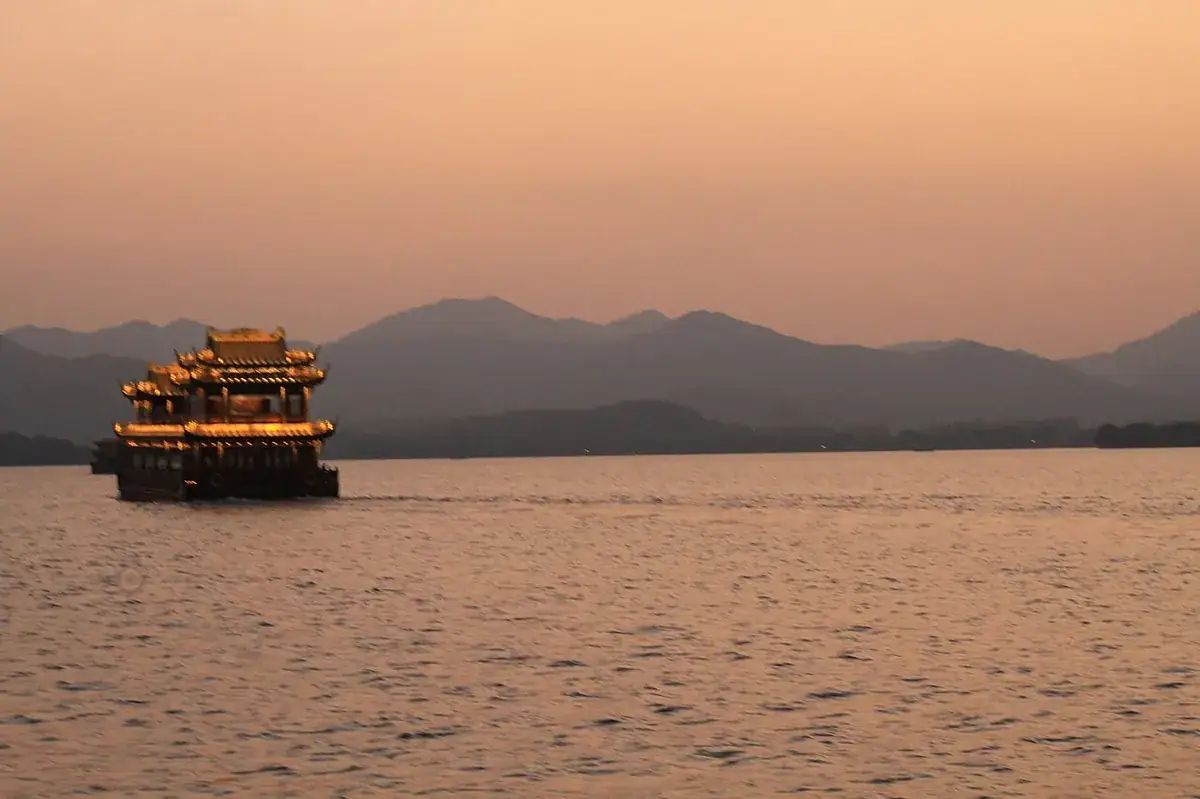
West Lake was inscribed as a UNESCO World Heritage Site on June 24, 2011. As of 2021: 111 A-level scenic areas (3 5A), 105 star-rated hotels (22 five-star), 959 travel agencies. In 2021: 89.518 million tourists, 152.42 billion yuan revenue, 182,000 overnight international visitors.
Local Specialties
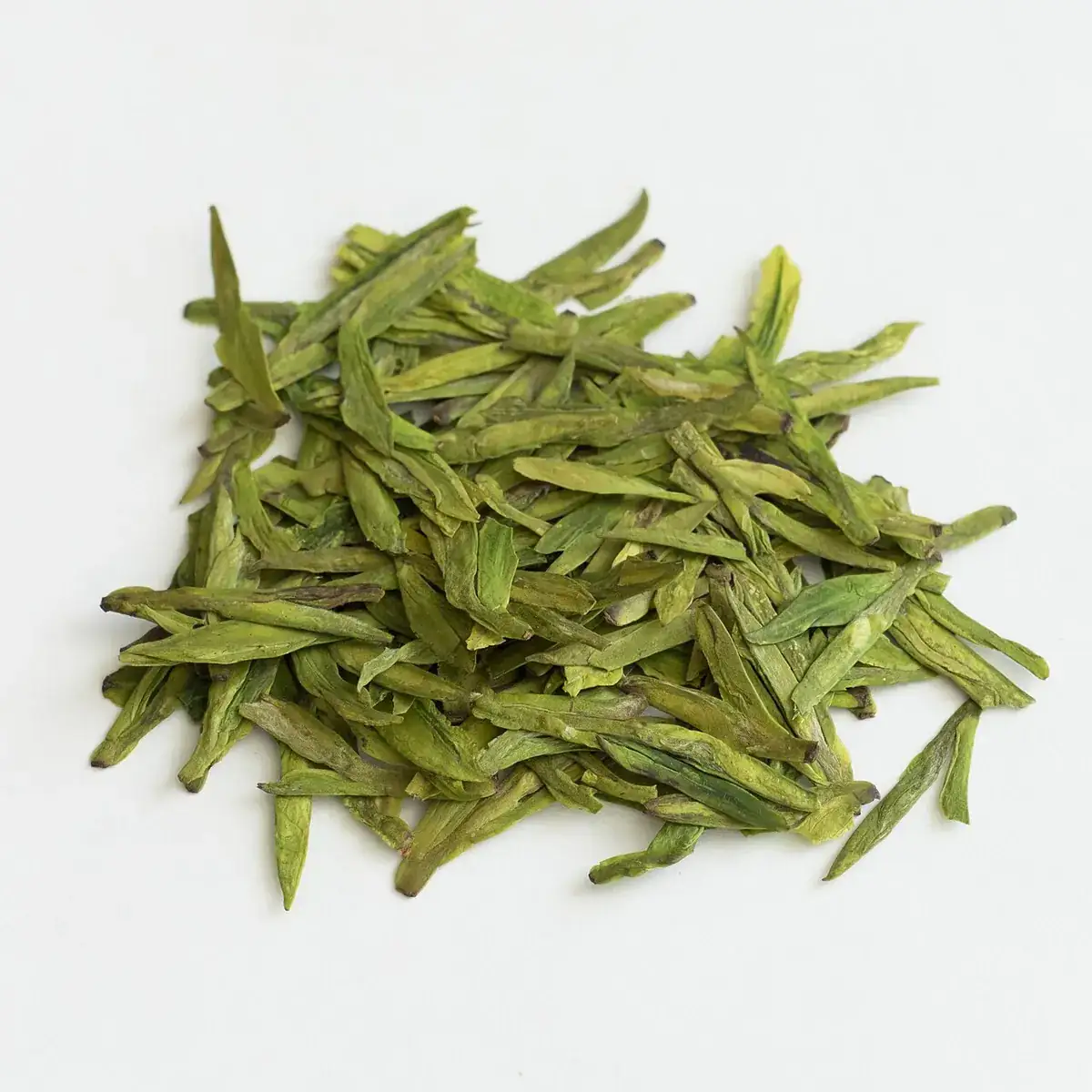
Hangzhou silk, West Lake Longjing tea, West Lake lotus root starch, Jingshan tea, West Lake silk umbrella, Xueshuiyun green tea, Xiaoshan dried radish, Lin'an pecans, Dingsheng cake, and Longjing shrimp.
Sister Cities
Famous Figures
Honorary Titles
Travel information can change. Check current opening hours, reservations and entry requirements before you travel.
Traveller discussion
Start the conversation with a helpful tip or a question.