
Zhejiang
ZhejiangCity OverviewZhejiang Province is located on China's southeastern coast, on the southern wing of the Yangtze River Delta. It borders the East China Sea to the east, Fujian to the south, Jiangxi and Anhui to the west, and Jiangsu and
Zhejiang
City Overview
Zhejiang Province is located on China's southeastern coast, on the southern wing of the Yangtze River Delta. It borders the East China Sea to the east, Fujian to the south, Jiangxi and Anhui to the west, and Jiangsu and Shanghai to the north. The province covers a land area of approximately 105,500 square kilometres, with a topography characterised by "70% mountains, 10% water, and 20% farmland." The southwestern part consists of mountains and hills, with ranges such as Tianmu, Xianxia, Kuocang, and Yandang extending across the region. The central part is an interlaced zone of the Jinqu Basin and eastern Zhejiang hills. The northeastern part comprises the Hangzhou‑Jiaxing‑Huzhou Plain and the Ningbo‑Shaoxing Plain, with a dense network of waterways—the Qiantang, Ou, Ling, and Yong rivers flowing through them. The Thousand‑Island Lake (Xin'anjiang Reservoir) lies like an emerald set among the mountains of western Zhejiang.
As of the end of 2024, Zhejiang had a permanent population of approximately 66.27 million, making it one of the most densely populated provinces in China. As a provincial‑level administrative region, Zhejiang is a "province," with 11 prefecture‑level cities under its jurisdiction and Hangzhou as its capital.
Zhejiang is also known as the "Zhe River" (Zhijiang), because the Qiantang River twists like the character "之" (zhi) in the Hangzhou area. It is also referred to as "Wu‑Yue," after the ancient states of Wu and Yue that once occupied this territory. Since ancient times, this land has been known as the "hometown of silk" and the "land of fish and rice." Since the 1980s, it has gained the reputation of a "province of markets," with the private economies of Wenzhou and Yiwu surging forward, shaping the most distinctive identity of contemporary Zhejiang.
In terms of provincial structure, Zhejiang presents an economic map of "one core, two wings, and multiple nodes." The provincial capital, Hangzhou, serves as the political, economic, cultural, and science‑education centre, leading the province in the digital economy, cultural creativity, and high‑end manufacturing. The sub‑provincial city of Ningbo boasts a world‑class deep‑water port and is Zhejiang's "eastern maritime gateway" and a major advanced manufacturing hub. Wenzhou is the birthplace of the private economy, renowned for its pioneering spirit and for producing merchants who operate across the globe. At the level of specialised cities, Yiwu has transformed from a small county in central Zhejiang into the world's capital of small commodities, serving as a departure point for China‑Europe freight trains. Shaoxing is an important advanced manufacturing base and historical‑cultural city in the Yangtze River Delta, with its three traditional and emerging pillars—yellow wine, textiles, and integrated circuits. Jiaxing, located between Shanghai and Hangzhou, has recently gained prominence through its red‑culture heritage on South Lake and its international science‑and‑technology innovation platforms. This group of cities, working in coordination, forms one of the most dynamic and balanced regional economies in China today.
Historical Context
The history of human activity in Zhejiang can be traced back to the Neolithic period, approximately 7,000 years ago. The Hemudu site, discovered in Yuyao in 1973, yielded large quantities of cultivated rice remains, stilt‑house structural components, and bone ploughs, proving that the Yangtze River basin was also an important cradle of Chinese civilisation. This discovery rewrote the traditional historiographical narrative centred on the Yellow River, bringing Zhejiang into the international spotlight as an ancient rice‑cultivating civilisation.
During the Spring and Autumn and Warring States periods (770–221 BCE), most of Zhejiang belonged to the Yue state. In 473 BCE, King Goujian of Yue, after enduring hardship and seeking revenge, finally destroyed the state of Wu and established his capital at Kuaiji (present‑day Shaoxing), giving Yue culture strong state support for the first time. The Qin and Han dynasties implemented the commandery‑county system; the Qin established Kuaiji and Zhang commanderies in Zhejiang, and during the reign of Emperor Wu of Han, Fujian was incorporated, initially establishing Zhejiang's position as a southeastern political pivot. During this period, Yue‑kiln celadon began to appear, foreshadowing the later Longquan celadon and the Southern Song official kilns.
From the Three Kingdoms to the Jin and Northern and Southern Dynasties (220–589 CE), northern wars prompted large‑scale southward migration of the Central Plains aristocracy, known as the "southward crossing of the scholars and officials." Zhejiang benefited comprehensively: irrigation techniques spread, farmland increased substantially, and literature and the arts flourished. The Eastern Jin calligrapher Wang Xizhi wrote the "Preface to the Orchid Pavilion Collection"—hailed as the "world's best running‑script calligraphy"—at the Orchid Pavilion in Shaoxing, an event that became an indelible landmark in Chinese cultural history.
The Sui, Tang, and Five Dynasties (581–960 CE) were a critical period when Zhejiang entered China's core economic zone. The Grand Canal, ordered by Emperor Yang of Sui, connected Yuhang (present‑day Hangzhou) closely with the northern political centres, enabling southern grain to flow northward. In the Tang dynasty, Mingzhou (Ningbo) became a major port for trade with Japan and Silla, and the southeastern starting point of the Maritime Silk Road began to take shape. During the Five Dynasties and Ten Kingdoms period (907–978 CE), the Wuyue Kingdom, founded by Qian Liu, established its capital at Hangzhou. The Qian family, for three generations, pursued a policy of "protecting the territory and pacifying the people," building seawalls along the Qiantang River and constructing water conservancy works, freeing the Hangzhou‑Jiaxing‑Huzhou Plain from tidal disasters. Hangzhou rose from a frontier military town to the leading city of the southeast.
The Southern Song dynasty (1127–1279 CE) was a high point in Zhejiang's history. In 1129, Emperor Gaozong established his capital at Lin'an (Hangzhou), making it the political, economic, and cultural centre of the country, with a population of over one million and unparalleled commercial prosperity. Southern Song official kilns, Longquan celadon, Huzhou bronze mirrors, and Wenzhou lacquerware were exported overseas. Marco Polo later marvelled at Hangzhou as "the finest and most splendid city in the world." The remaining Southern Song sites in Hangzhou—the Imperial Temple site, Deshou Palace, and Liubu Bridge—still speak of the prosperity of eight hundred years ago amid the concrete and steel.
From the Ming and Qing dynasties to the modern period (1368–1949), Zhejiang experienced the pain of transition and the change of opening up. The Ming dynasty imposed a maritime ban, sharply curtailing coastal trade, but smuggling and informal maritime commerce in southern Zhejiang never ceased. After the Treaty of Nanjing in 1842, Ningbo became one of the five treaty ports. Foreign consulates, churches, and trading firms poured into the north bank of the Yong River; the first wave of modern buildings appeared here as Western influences spread eastward. Meanwhile, Wenzhou and Hangzhou were opened as commercial ports in 1876 and 1896 respectively, and Zhejiang's foreign trade system began to take shape. This interplay of humiliation and opening laid hidden foundations for the rise of Zhejiang's private economy in the 20th century.
Cultural Heritage
Zhejiang dialects belong to the typical Wu language area, with enormous internal variation—so much so that there is a saying: "within ten li, the accent changes." The province is home to three main branches of Wu: the northern Taihu subgroup (centred on Hangzhou, Jiaxing, Huzhou, and Shaoxing), where Hangzhou dialect has some Mandarin characteristics due to the influence of northern immigrants when the Southern Song established its capital; the Yongjiang and Taizhou subgroups spoken in Ningbo, Zhoushan, and Taizhou; and the Dong'ou subgroup centred on Wenzhou, whose dialect is among the most complex in China, prompting the saying: "Fear not the heavens, fear not the earth, but fear the Wenzhou dialect." In addition, parts of Quzhou and Lishui in western Zhejiang use Hui dialects and Min‑language enclaves, forming a colourful linguistic map that reflects Zhejiang's deep historical legacy as a migration corridor.
In folk traditions, Zhejiang's festivals are rich in ritual and diversity. During the Spring Festival, Shaoxing village operas are performed on ancient stages in water towns, their resounding gongs and drums blending with the night and reflections in the rivers. At Qingming, families in northern Zhejiang make green dumplings (qingtuan) to offer to ancestors. During the Dragon Boat Festival, Hangzhou's Xixi Wetland hosts a centuries‑old dragon‑boat race, while in Ningbo, wormwood and calamus are hung over doorways, and in Wenzhou, the street‑blessing festival (Lan Jie Fu) is held to pray for safety. In popular belief, there is a strong cult of sea‑voyage protectors—temples dedicated to Mazu and Chen Shisi Niangniang are densely distributed along the coast, forming a maritime belief system of "deities and humans coexisting," together with the Guanyin Buddhist centre at Putuo Mountain. The Sacrificial Ceremony to the Yellow Emperor at Jinyun Xiandu in Lishui is a national‑level intangible heritage event, preserving the ancient southern tradition of worshipping the Yellow Emperor.
Zhejiang is a fertile ground for opera, the brightest gem being Yue Opera. Born in the countryside of Shengzhou, Yue Opera grew from the "Didi Troupe" to become the second largest opera genre in China. Classics such as The Butterfly Lovers, Dream of the Red Chamber, and The West Chamber have captured the tenderness and refinement of Jiangnan to the fullest. In addition, Wu Opera is popular in the Jinqu area, characterised by its combination of high‑tuned, Kun, and Luantan melodies, with a more robust performance style. Shaoxing Opera (Shaoxing Daban) is known for its sonorous, tragic "tune‑changing" style; the performance skills of the "Monkey King" actor Liu Xiao Ling Tong were infused with the essence of Shaoxing Opera. In painting and calligraphy, the legacy of the "Sage of Calligraphy" Wang Xizhi at the Orchid Pavilion has been passed down through generations in Shaoxing; China's highest calligraphy award, the "Lanting Award," is therefore based in Zhejiang. The founding of the China Academy of Art (formerly the National Art Academy) and the seal‑carving tradition of the Xiling Seal Society have made Hangzhou one of the centres of modern art education and international seal engraving exchange.
As of 2024, Zhejiang has 11 items on the UNESCO Representative List of the Intangible Cultural Heritage of Humanity, including traditional Chinese sericulture and silk‑weaving techniques (in the Hangzhou‑Jiaxing‑Huzhou area), traditional Longquan celadon firing techniques, traditional Chinese wooden arch‑bridge construction techniques (sister craft to the Taishun covered bridges), Chinese seal engraving (Xiling Seal Society), and Kunqu Opera (with the Zhejiang Kunqu Troupe as one of its main bases). Behind each heritage item lies the life wisdom of Zhejiang people in their long dialogue with nature—silkworm farmers maintain absolute cleanliness and silence during reeling, Longquan kiln masters judge kiln temperatures by the colour of the flames, and bridge craftsmen weave wooden components into arches without using a single nail or rivet. These skills have been passed down through generations of master‑apprentice relationships, surviving tenaciously in the interstices of industrial and digital civilisation, constituting Zhejiang's most silent yet proudest cultural foundation.
Architecture and Urban Landscape
Zhejiang's traditional architecture is deeply shaped by geography and climate, giving rise to the Jiangnan residential system characterised by white walls, black tiles, small bridges, and flowing water. Waterfront streets (water streets) and water pavilions coexist with the river networks—the former, common in Shaoxing and Huzhou, link commerce with river ports, forming units of "one river, one street" or "one river, two streets"; the latter are concentrated in the ancient villages of the Nanxi River basin, typified by Cangpo and Furong in Yongjia, with stone walls, timber frames, and cobbled paths. Houses and ancestral halls grow organically along the waterways, preserving many elements of the Song‑dynasty Yingzao Fashi and feng shui principles. Hui‑style architecture has a deep influence in western Zhejiang—Quzhou, Jinhua, and Jiande—where horse‑head gables, brick‑carved gate towers, and courtyard houses with inner patios engage in dialogue with local yellow‑mud dwellings, revealing a layered immigrant architectural culture. The stone houses of coastal fishermen present a different landscape: to withstand typhoons, the old fishermen of Wenling's Shitang built thick stone walls, stone windows, and stone roofs, with bay houses stacked one upon another, like a cluster of stubborn little fortresses when viewed from afar.
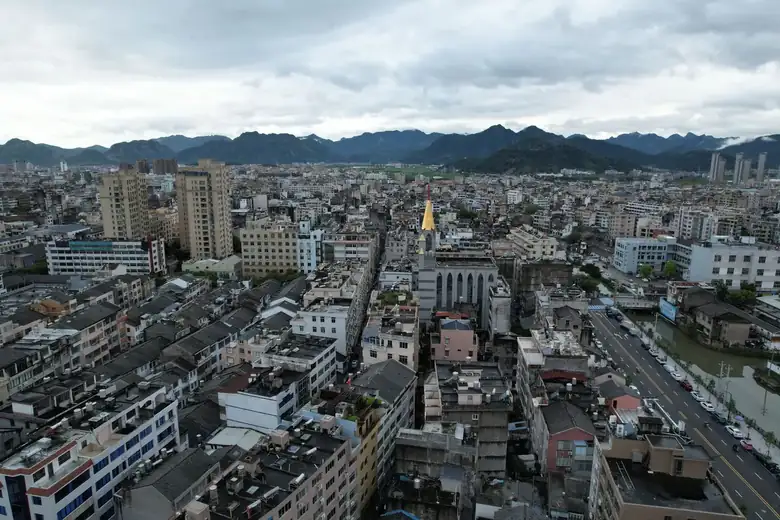
The evolution of modern architecture began with the late‑19th‑century "treaty‑port tide." On Ningbo's north bank, European‑style buildings remain—the Catholic Church (completed in 1872) , the former British Consulate, and the police station—forming a miniature "Bund." Along Hangzhou's Beishan Road, the Xinxin Hotel (1922) and Qiushui Villa are experiments in Republican‑era eclectic architecture, blending grey bricks with European colonnades and floor‑to‑ceiling windows, capturing the West Lake aesthetic of that period. In the 1930s, the Qiantang River Bridge, designed by architect Mao Yisheng, was the first road‑rail dual‑use bridge designed and built independently by China; its riveted steel structure still exudes the confidence of industrial civilisation.
Contemporary Zhejiang's urban fabric shows striking contrasts and regeneration. Hangzhou's Southern Song Imperial Street, renovated in 2009 by architect Wang Shu and others, juxtaposes new and old, with fair‑faced concrete and old timber coexisting, offering a "Hangzhou solution" for the modern regeneration of historic districts. Ningbo's Tianyi Square is a classic example of the transformation of an old city centre into a commercial hub; the outer wall of the Ningbo Museum (designed by Wang Shu) uses old bricks and tiles collected from urban renewal—the local eastern Zhejiang folk technique of "tile‑clad walls" has been translated into avant‑garde architectural language, drawing international attention to Zhejiang's old‑material recycling system.
In terms of distinctive neighbourhoods, Hangzhou's Hefang Street preserves traditional commercial spaces such as Hefang Street, Gaoyin Street, and Wushan Square; the Huqingyutang Traditional Chinese Medicine Museum, Jiangnan Copper House, and handmade pastry shops let you feel the pulse of life beneath the former imperial city wall. Shaoxing's Cangqiao Straight Street, with its tai gates, yellow‑wine shops, and black‑awned boat piers, is the most concentrated kilometre of the water‑city spirit. Overall, Zhejiang's urban landscape is not dominated by a single peak but is a collage of many historical layers—mountains, seas, rivers, cities, and people shaping one another, maintaining a delicate balance in dynamic evolution.
Culinary Culture
Zhejiang cuisine is one of China's eight great culinary traditions, comprising the flavours of Hangzhou, Ningbo, Shaoxing, and Wenzhou. Overall, it pursues "clear, fresh, crisp, and tender" qualities, emphasising the original taste of ingredients. Unlike the numbing‑spiciness of Sichuan cuisine or the richness of Shandong cuisine, Zhejiang cuisine, like Jiangnan's landscape and people, is mild and restrained, with exquisite preparation and meticulous knife skills.
Hangzhou cuisine is known for its refinement and elegance, with Dongpo pork being the most iconic. When the Northern Song literary giant Su Shi served in Hangzhou, he improved the folk method of braising pork, simmering it slowly with yellow wine, soy sauce, and rock sugar. The finished dish is a glossy amber colour, rich but not greasy. This story, together with the "Spring Dawn on Su Causeway," is etched into Hangzhou's urban memory. West Lake vinegar fish is made with grass carp, cooked and then topped with a sweet‑and‑sour sauce; the flesh is white and has a hint of crab flavour, demanding great skill in heat control and knife work. Sister Song's fish broth is said to have been created by a woman named Song Wusao (Sister Song) in the Southern Song, for northern refugees fleeing south; it is still slowly simmered with mandarin fish, ham, and mushroom shreds, carrying a comforting taste from eight centuries ago.
Ningbo cuisine (Yongbang cuisine) is known for its savoury freshness, closely linked to Ningbo's seafaring history. Salt-cured crab with red roe is the ultimate raw dish: swimming crabs are directly soaked in a high‑concentration brine, with the roe turning a deep red and the meat as sweet as jelly—it is the centrepiece of Ningbo's New Year's Eve feast. Yellow croaker with pickled cabbage is a Ningbo classic: local pickled mustard greens draw out the freshness of the East China Sea yellow croaker; the broth is clear yet rich, said to be so fresh it "makes your eyebrows fall off."
Shaoxing cuisine bears the strong mark of fermentation culture. Steamed pork with preserved mustard greens, fermented bean curd sheets, and fermented amaranth stalks—behind the "fermented" character is the folk wisdom of preserving food in Jiangnan's hot, humid climate. Together with Shaoxing yellow wine and stinky tofu, they form a unique flavour system of "stinky, fermented, and pickled." The smell is unfamiliar at first, but unforgettable once tasted. Wenzhou cuisine (Ou cuisine) highlights the original flavour of seafood with minimal processing. Fish ball soup is made from croaker flesh, scraped and beaten until gelatinous, then dropped into boiling water; the soup is clear, the fish balls white and bouncy, without any fishy taste—embodying the Wenzhou culinary philosophy that "when freshness reaches its peak, it is simple."
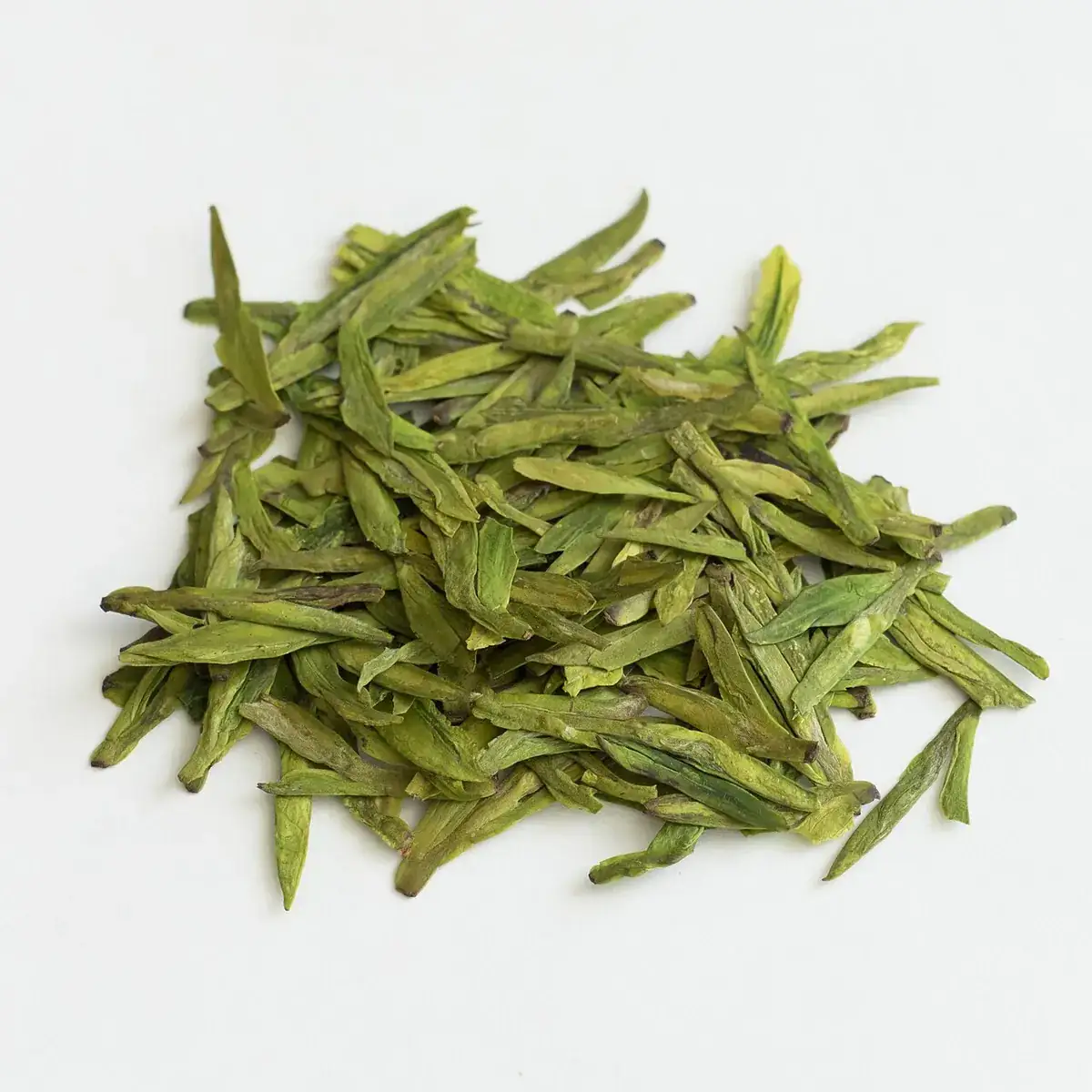
In Zhejiang's food customs, the awareness of solar terms and seasons is very strong: black rice is eaten at the Beginning of Summer, noodles at the Summer Solstice, crabs at Mid‑Autumn, and glutinous rice cakes at the Winter Solstice for ancestral offerings. Tea is the soul of Zhejiang cuisine. Hangzhou's West Lake Longjing tea is renowned for its "green colour, rich fragrance, sweet taste, and beautiful shape." When drinking green tea, it is customary not to add any accompaniments or sweets; Zhejiang people believe that would spoil the tea's own aroma. The food genes carry Zhejiang's regional character: the refinement of Hangzhou cuisine reflects the scholarly tradition of the capital; the boldness of Ningbo cuisine is the gastric expression of Ningbo people's seafaring spirit; Shaoxing's fermented world is the ultimate expression of the water‑town people's frugality and practicality; the freshness and chewiness of Wenzhou fish balls mirror the group's quick reactions in business. A single Zhejiang meal reveals the character of the whole province.
Modern and Contemporary Development
Zhejiang's modernisation process began with the opening of treaty ports in the mid‑19th century. After the Treaty of Nanjing in 1842, the north bank of the Yong River in Ningbo was designated as a foreign settlement. The British Consulate, Zhejiang Customs, Catholic churches, and foreign firms were established one after another, making Ningbo one of China's earliest modernisation windows, where modern postal services, steamship companies, and machine‑powered silk‑reeling emerged. In 1896, Hangzhou's Gongchen Bridge was opened as a treaty port, and the Japanese concession brought light industries such as cotton spinning and matches; Zhejiang's first generation of industrial workers was born here.
After the founding of the People's Republic of China in 1949, Zhejiang was long positioned on the state's planned‑economy map as a "frontline" rather than an "industrial stronghold," with limited heavy‑industry investment. Yet it was precisely under these conditions that Zhejiang's grass‑roots industries began to flow underground. After reform and opening up in 1978, Wenzhou was the first to unleash a wave of private enterprise—Liushi low‑voltage electrical appliances, Qiaotou buttons, Jinxiang badges, and other "front shop, back factory" family workshops mushroomed everywhere. Farmers turned into individual entrepreneurs, forcing institutional innovation with their bold actions even before the national policy framework was fully in place. In the 1980s, the Yiwu county government decisively opened a small‑commodity market, turning the "feathers for candy" peddlers into global buyers. In the 1990s, specialised markets bloomed across the province: Keqiao Textile City, Yongkang Hardware City, Haining Leather City—each radiating nationwide, forming a unique "block economy" model.
In the 21st century, Zhejiang's economic landscape underwent dramatic restructuring and upgrading. Hangzhou pivoted decisively towards the Internet and the digital economy after 2000; the rise of Alibaba turned this tourist city into a global centre for e‑commerce and mobile payments. The 2016 G20 Hangzhou Summit and the 2023 Asian Games in Hangzhou demonstrated the city's status as the "number‑one digital economy city." Ningbo, relying on the integration of Beilun Port and Zhoushan Port into Ningbo‑Zhoushan Port, has maintained the world's largest cargo throughput for ten consecutive years, becoming an international shipping and logistics hub. Ningbo's green petrochemicals and automobile manufacturing have also formed trillion‑yuan industrial clusters. Wenzhou underwent a difficult transformation after local financial turmoil in 2010, extending from traditional manufacturing into smart equipment and the life‑health sector.
Today, Zhejiang faces the national mission of being a "demonstration zone for common prosperity"—the urban-rural income ratio has been continuously narrowed to below 1.9:1, providing a national model for narrowing income, urban‑rural, and regional gaps. At the level of provincial industrial division, Hangzhou focuses on the digital economy, fintech, and smart IoT; Ningbo takes on new materials, new‑energy vehicles, and high‑end equipment; Shaoxing is deeply involved in integrated circuits and biomedicine; Jiaxing actively absorbs the spillover effects from Shanghai, developing science‑and‑technology innovation and airport‑related economies; the Jinyi Urban Cluster (Jinhua‑Yiwu) is driven by international trade, modern logistics, and advanced manufacturing; and Lishui and Quzhou in southern Zhejiang protect the ecological barrier, focusing on tourism, health, and green energy. This clearly divided, collaborative provincial economic ecosystem constitutes the core code for Zhejiang's transformation from a resource‑poor province to an economic powerhouse.
Transportation and Travel
Zhejiang's transport network is centred on Hangzhou, forming a multi‑level, three‑dimensional system covering the entire province, connecting the Yangtze River Delta, and radiating nationwide. In railways, the Shanghai‑Kunming high‑speed railway (Shanghai–Hangzhou–Nanchang–Changsha–Kunming) runs across the northern part of the province; the Hangzhou–Shenzhen railway (Hangzhou–Ningbo–Wenzhou–Fuzhou–Shenzhen) runs along the southeastern coast; and the Nanjing–Hangzhou, Hangzhou–Huangshan, and Shangqiu–Hefei–Hangzhou high‑speed railways have opened successively, making Hangzhou a railway hub on the southern wing of the Yangtze River Delta. The Hangzhou West Station, opened in 2022, with its "cloud city" design, connects to the Hefei–Hangzhou, Hangzhou–Wenzhou, and Hangzhou–Lin'an–Jixi high‑speed rail lines, further alleviating passenger flow and introducing the concept of "high‑speed rail express delivery" for the first time. As of 2024, all 11 prefecture‑level cities in Zhejiang are accessible by high‑speed train; the fastest travel time from Hangzhou to Shanghai is 45 minutes, to Ningbo 45 minutes, and to Wenzhou 1 hour 40 minutes. The province's "one‑hour transport circle" is essentially in place.
The expressway network is as dense as a spider's web. The G15 Shenyang–Haikou Expressway runs north‑south along the coast; the G60 Shanghai–Kunming Expressway connects Shanghai with central and western Zhejiang; the Hangzhou Bay Bridge (opened in 2008) shortened the drive from Ningbo to Shanghai from 4 hours to 2 hours; and the Zhoushan Cross‑Sea Bridge Complex ended the history of the Zhoushan archipelago not being connected to the mainland road network. Notably, the mountain expressways in southwestern Zhejiang, such as the Lishui–Longquan–Wenzhou Expressway and the Hangzhou–Xin'anjiang–Jingdezhen Expressway, wind through mountains with bridge‑tunnel ratios exceeding 80%; driving on them is itself a moving viewing platform through misty terraced fields.
In aviation, the province has three trunk‑line airports: Hangzhou Xiaoshan International Airport, Ningbo Lishe International Airport, and Wenzhou Longwan International Airport, along with regional airports such as Zhoushan Putuoshan, Quzhou, Taizhou Luqiao, and Yiwu airports. Hangzhou Xiaoshan is a gateway hub, operating more than 80 international and regional routes, with direct flights to multiple cities in Europe, North America, Southeast Asia, and Oceania. Ningbo and Wenzhou, as international cruise home ports, also have regular routes.
For unique travel experiences, a few routes are not to be missed. The Hangzhou–Huangshan high‑speed railway is known as the "most beautiful high‑speed rail line," passing through the Fuchun River, Qiandao Lake, and Huangshan; the window is a flowing landscape painting. The seaplane route from Zhoushan to Shanghai allows passengers to fly directly from the Shengsi Islands to Shanghai Pudong—a luxury option to avoid ferry seasickness and enjoy a low‑altitude bird's‑eye view of the fishing ports and islands. Shaoxing's water buses still retain an ancient charm: taking a black‑awned boat from Lu Xun's hometown pier through Xixiaolu (West Lane) to the Bazi Bridge is the slowest and most appropriate way to touch the texture of the ancient city. In summary, travelling in Zhejiang is a constant switching between modern speed and the slow life of the water towns—on the high‑speed train, you cannot help but refresh your business emails, while opening the wooden window of an old tai gate, time still lingers in the sound of oars.
Travel Tips
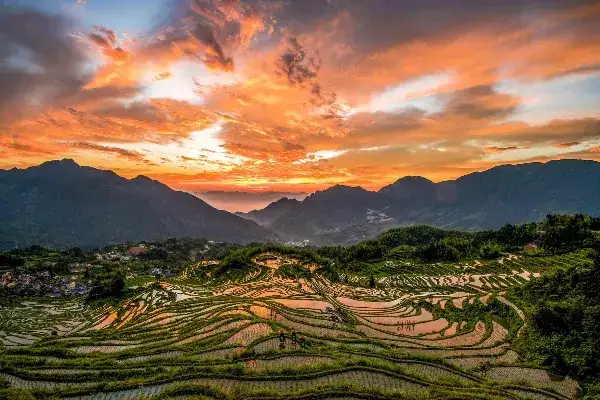
Best travel seasons: Zhejiang has four distinct seasons, with spring (March–May) and autumn (September–November) being the golden periods. From late March to mid‑April, the peach trees bloom and the willows turn green along Hangzhou's Su and Bai causeways are in bloom, and the Longjing tea gardens sprout new shoots; the entire Hangzhou‑Jiaxing‑Huzhou plain is bathed in the gentle spring breeze and rain. In May, the terraced fields in the southern Zhejiang mountains begin to be irrigated; the Yunhe rice terraces mirror the sky like a thousand layers of glass, offering a perfect photographic opportunity. In autumn, the rains recede and the skies are high; the red leaves around Qiandao Lake and Siming Lake enter their peak, and the Shaoxing yellow‑wine brewing ceremony takes place at the Beginning of Winter (early November), allowing visitors to witness the traditional opening of the brewing vats. Summer is hot and rainy, but the sea breezes of Putuo Mountain and the bamboo groves of Mogan Mountain are the ultimate summer escapes. Winter is damp and cold, but the snow‑covered West Lake and the New Year customs of Wuzhen offer a different flavour. Avoiding the peak crowds of the May Day and National Day holidays is the first rule of enjoying Zhejiang's beauty.
Must‑do experiences:
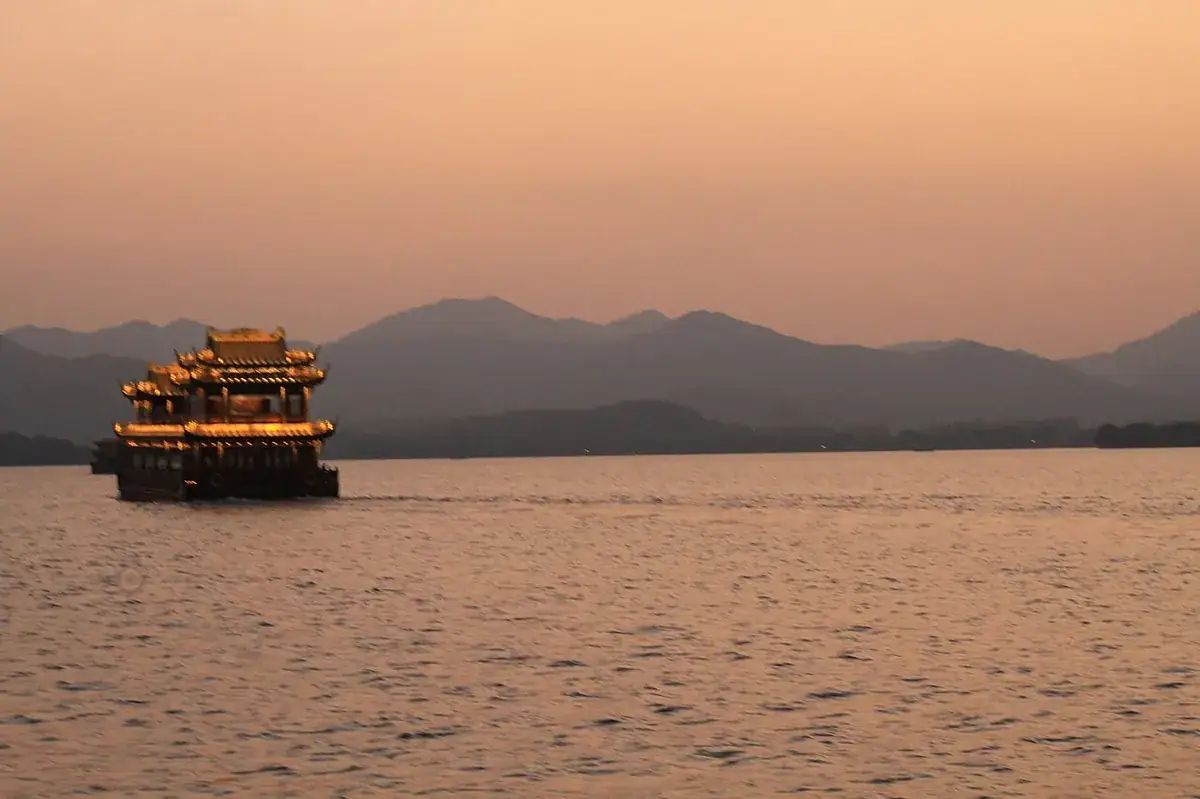
1. Cycling around West Lake—Start from Beishan Road in the early morning, cross the lake via Su Causeway, pass through Yanggongdi to Huagang Guanyu, and finally ascend Leifeng Pagoda for a panoramic view of the three islands in the lake. This is not a checklist of tourist spots but an urban ride through the cultural heritage of the Tang and Song dynasties—the willow waves of Bai Causeway, the seal‑carving traces at Xiling Bridge, and the morning bells of Jingci Temple form a rideable aesthetic history of West Lake.
2. Hiking in the bamboo forests of Anji or Mogan Mountain—Choose a wild bamboo‑forest ancient trail, walk from Naked Heart Valley to the Dawu Reservoir, and watch the bamboo tops surge like green waves. Return at dusk to a countryside guesthouse, try Anji free‑range chicken and bamboo‑tube rice, and experience the Zhejiang everyday philosophy of "living among bamboo, eating bamboo shoots."
3. Hands‑on experience at a Longquan celadon workshop—Drive to Shangyang Town in Longquan, Lishui, and visit a workshop still using dragon kilns. Under the guidance of an intangible‑heritage inheritor, throw and glaze your own cup, then send it into the kiln fire. This process, understanding the spirit of "the right season, the right earth, the beauty of materials, and the skill of craftsmanship," is more profound than buying any souvenir.
4. Night tour of Shaoxing ancient city plus yellow‑wine tasting—In the evening, from Lu Xun's hometown along Xianheng Hotel to Cangqiao Straight Street, order a pot of Diao Wang wine with fennel beans and steamed pork with preserved mustard greens, and listen to a Yue Opera excerpt in an old tai gate by the river. Half‑drunk, step onto the Bazi Bridge; the moonlit water town reveals its most unguarded tenderness.
5. "Cross‑border observation" at Yiwu International Trade City—Visit Zone 4 of the Yiwu market to see buyers of different skin colours rushing through the stalls with suitcases in tow of Christmas decorations and Muslim headscarves. Find an Arab or Turkish restaurant, read the Arabic and Spanish phonetic notes on the menu, and feel how this county town became the departure point of China‑Europe freight trains and a terminal of globalisation's capillaries.
Practical tips: For public transport, download the "Hangzhou Tong" or use Alipay to obtain an electronic bus card; mobile payment covers most cities' bus and metro systems. Zhejiang's bed‑and‑breakfasts (especially in Mogan, Anji, and Songyang) are mature and generally of high quality; during peak seasons, book at least two weeks in advance, or choose more cost‑effective county‑run guesthouses (often tucked away in old city lanes with distinctive charm). In terms of language, the younger generation generally speaks Mandarin, but in Shaoxing, Wenzhou, and Taizhou's rural areas or old shops, you may encounter a purely Wu dialect environment—a smile and gestures are more useful than translation apps.
Cautions: In the Zhoushan islands, summer typhoons may cause ferry suspensions; check local maritime weather warnings before travelling. During typhoon warnings, stranded tourists should follow the instructions of emergency management authorities and not enter the sea privately. In Zhejiang's mountainous areas (especially in Lishui and Wenzhou), some ancient trails have weak mobile signals; download offline maps and carry a power bank before hiking. When photographing fishing ports, temple rituals, or artisans, always ask for permission with a smile and avoid pointing the camera directly at people's faces. Tipping is not a custom in China; your sincere gratitude and appreciation for the work or craft are the best rewards.
Travel information can change. Check current opening hours, reservations and entry requirements before you travel.
Traveller discussion
Start the conversation with a helpful tip or a question.