
Wenzhou City
Wenzhou CityWenzhou is a prefecture-level city in Zhejiang Province, located in the southeastern part of the province, facing the East China Sea to the east, bordering Fujian's Ningde to the south, connecting Lishui to the west and northwes
Wenzhou City
Wenzhou is a prefecture-level city in Zhejiang Province, located in the southeastern part of the province, facing the East China Sea to the east, bordering Fujian's Ningde to the south, connecting Lishui to the west and northwest, and Taizhou to the north and northeast. The terrain slopes from southwest to northeast, dominated by mountains and hills with a rugged coastline and excellent harbors. The climate is central subtropical monsoon, humid and rainy. Land area: 12,102.65 km²; sea area: 8,649 km²; coastline: 514 km. As of the end of 2024, the city administers 4 districts, 5 counties, and 3 county-level cities. As of the end of 2025, the permanent resident population was 9,902,000. Historically known as Ou or Dong'ou, the city was established as Yongjia Commandery in 323 CE. Legend says a white deer carrying flowers circled the city during construction, hence the name "Deer City" (Lucheng). In 675, it was named Wenzhou—over 2,000 years of urban history. Wenzhou is a key regional center city on China's southeastern coast, a national private economy demonstration city, a national comprehensive transportation hub, and a National Famous Historical and Cultural City. Known for "the finest mountains and waters in the Southeast," it features Yandang Mountain, Jiangxin Island, Nanxi River, and Nanji Islands. In 2025, GDP exceeded 1 trillion yuan (102.139 billion), up 6.1%.
History
The area has 100+ Neolithic sites (~2500 BCE) yielding stone tools and pottery. During the Xia-Shang-Zhou period, it belonged to the Dong'ou branch of Baiyue. In 333 BCE, Chu conquered Yue, and some Yue people migrated to Dong'ou. In 192 BCE, the Western Han established the Donghai Kingdom (Dong'ou). In 138 BCE, the kingdom was abolished. In 138 CE, the Eastern Han established Yongning County—the beginning of Wenzhou's county-level administration. In 323, the Eastern Jin established Yongjia Commandery and built the city on the south bank of the Oujiang River. In 422, Xie Lingyun was exiled here and became the "father of landscape poetry." In 675, Wenzhou was formally established. The Song Dynasty designated it a military prefecture. The Yuan, Ming, and Qing dynasties maintained the Wenzhou Prefecture. In 1981, the prefecture and city merged into the current Wenzhou City.
Administrative Divisions
Divisional History
In 1981, Ouhai County was established. In 1984, Lucheng and Longwan districts were created. In 1987, Rui'an County became a city. In 1992, Ouhai became a district. In 1993, Yueqing became a city. In 2015, Dongtou County became a district. In 2019, Longgang Town became Longgang City (county-level, directly under Zhejiang, administered by Wenzhou).
Division Details
As of end 2024: 4 districts (Lucheng, Longwan, Ouhai, Dongtou), 5 counties (Yongjia, Pingyang, Cangnan, Wencheng, Taishun), 3 county-level cities (Rui'an, Yueqing, Longgang), 67 sub-districts, 92 towns, 26 townships, 2,951 villages, 716 communities. Government: No. 321 Xiushan Road, Lucheng District.
Geographical Environment
Location and Boundaries
Between 27°03′–28°36′N and 119°37′–121°18′E. Land area: 12,102.65 km²; sea area: 8,649 km²; continental shelf within 200m isobath: 66,700 km².
Landforms
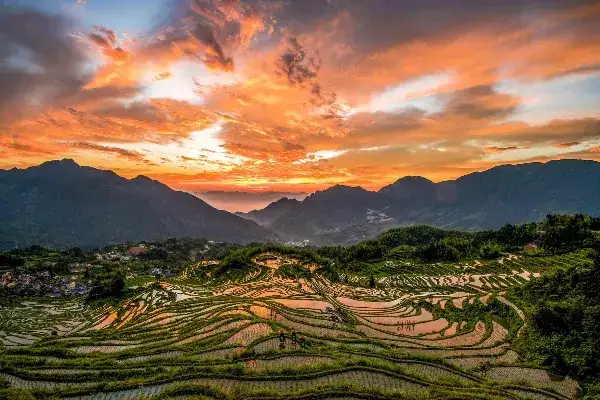
Terrain slopes west to east in steps. Western mid-mountains (Donggong and Kuocang ranges, mostly above 1,000m), central low hills (South and North Yandang ranges), and eastern alluvial/marine plains. Coastline has both bedrock and muddy shores. River mouths form drowned valleys. Islands are submerged mountain extensions (all continental islands).
Climate
Central subtropical monsoon climate. Average annual temperature: 17.3–19.4°C (January 4.9–9.9°C, July 26.7–29.6°C). No severe winter cold or summer heat. Annual precipitation: 1,113–2,494 mm. Meiyu in spring-summer transition, tropical cyclones July–September. Frost-free period: 241–326 days. Annual sunshine: 1,442–2,264 hours.
Hydrology
Rivers flow along structural fractures, generally west to east, forming feather-like tributary patterns. Main rivers: Oujiang, Feiyunjiang, and Aojiang. Mountain-stream rivers with strong tidal influence, steep gradients, V-shaped upper valleys, and drowned-valley mouths with heavy sediment. Flood season: June–September. Annual water temperature: ~19°C.
Natural Resources
Water Resources
150+ rivers. Total water resources: 14.113 billion m³ (111.85 billion surface + 2.928 billion groundwater). Per capita: ~2,240 m³. Distribution: mountains 75.04 billion (67%), plains 36.68 billion (32.8%), islands 0.2%.
Plant Resources
Original vegetation: typical broadleaf forest with Fagaceae (Castanopsis, beech), Moraceae (two ficus species), Lauraceae (camphor, pepper, Machilus), and Aquifoliaceae. Most original forest destroyed; secondary forests remain at Wuyanling, Tianguanshan, and other reserves.
Animal Resources
Mammals: wild boar, badger, porcupine, clouded leopard, leopard, tufted deer, serow, golden cat. Birds: sparrow, eagle, falcon, owl, magpie, thrush, swallow, goose, merganser, shrike. Rare species: Cabot's tragopan, silver pheasant. Marine fish: 424 species including hairtail, yellow croaker, and eel. Shellfish: 430+ species.
Mineral Resources
38 mineral types, 18 with reserves, 32 occurrences. 11 with basic reserves: molybdenum, lead, zinc, silver, pyrophyllite, alunite, illite, kaolinite, pyrite, quartz diorite, and potash feldspar. Non-metallic minerals dominate. Alunite (Cangnan Fanshan) and pyrophyllite (Taishun Shiyang) have massive reserves—"World Alunite Capital" and "World Pyrophyllite Capital." Yongjia molybdenum is notable among metallic minerals.
Population
As of end 2025: 9,902,000. As of end 2024: 9,852,000 (up 91,000). Birth rate: 5.6‰; death rate: 6.2‰; natural growth rate: -0.6‰. Urbanization rate: 76.0% (up 1.3 percentage points). 383,600 minority residents, with She being the largest group. 2 She towns, 5 She townships, 111 ethnic villages (provincial #2 in ethnic villages).
Ethnic Composition
Per 7th Census: 383,600 permanent minority residents. 2 She ethnic towns, 5 She townships, 111 ethnic villages (#2 in Zhejiang). Registered minorities mainly She.
Politics
Economy
Overview
In 2024, GDP was 971.88 billion yuan (up 6.3%), exceeding 1 trillion in 2025 (102.139 billion, up 6.1%). Primary: 19.47 billion (up 3.5%); secondary: 356.83 billion (up 7.5%); tertiary: 595.58 billion (up 5.6%). Structure: 2.0:36.7:61.3. Per capita: 99,106 yuan ($13,919). General public budget revenue: 63.26 billion (up 1.6%). Fixed asset investment down 0.8%, with industrial investment up 14.4%. In 2025, GDP exceeded 1 trillion yuan—Wenzhou became Zhejiang's 4th trillion-yuan city.
Primary Industry
In 2024: agricultural output 31.13 billion yuan (up 3.7%). Grain sown area: 1.714 million mu; grain output: 706,000 tonnes (up 1.0%). Aquatic products: 788,000 tonnes (up 3.9%). Pig slaughter: 1.032 million (up 4.8%). In 2025: agricultural output 31.96 billion (up 3.8%), grain 716,000 tonnes (up 1.4%), aquatic products 824,000 tonnes (up 4.6%).
Secondary Industry
In 2024: 9,291 above-designated-size enterprises, industrial value added 173.69 billion (up 10.2%). Heavy industry grew 12.1%, light industry 6.2%. Export delivery value: 105.91 billion (up 8.3%). Profits: 45.77 billion (up 12.3%). In 2025: above-designated-size industry grew 10.3% (leading Zhejiang). 28 of 33 industries grew (84.8% breadth). Auto parts grew 19.0%, electrical 13.6%, strategic emerging 14.4%, digital economy manufacturing 16.4%.
Tertiary Industry
In 2024: retail sales 493.89 billion yuan (up 4.9%). New energy vehicles up 29.6%, smartphones up 77.5%. Import/export: 293.66 billion (up 4.1%), with exports 251.98 billion (up 7.7%). Private enterprises: 94.6% of exports. Actual foreign investment: 414 million USD (55.5% in high-tech). In 2025: retail sales exceeded 500 billion (514.39 billion, up 4.2%). Import/export exceeded 300 billion (311.65 billion, up 6.1%). 237 trading partners. Private enterprise exports: 96.1% of total. Financial deposits: 2,271.9 billion (up 3.5%); loans: 2,254 billion (up 7.9%). 63 listed companies. Insurance premiums: 41.98 billion (up 7.3%).
Social Undertakings
Education
As of end 2024: 535 primary schools (639,400 students, 100% enrollment), 328 junior high schools (307,100 students), 40 secondary vocational schools (91,700 students), 106 general high schools (151,700 students), 11 higher education institutions (155,200 students), 1,110 kindergartens (226,200 children).
Science and Technology
As of end 2024: 1 national high-tech zone, 2 provincial, 6 under creation. 4 national incubators, 1 national university science park, 16 national maker spaces. 264 provincial enterprise research institutes (31 key), 558 provincial high-tech enterprise R&D centers. 4,779 high-tech enterprises, 16,198 provincial technology-based SMEs. 54,311 patents authorized (5,523 invention). 464 "Zhejiang Manufacturing" standards.
Culture
As of end 2024: 185 cultural stations, 13 cultural centers, 52 museums, 13 public libraries (18.1553 million books), 171 city study rooms, 75 community libraries, 298 cultural stations. Shuomen Ancient Port Site rated among national top 10 cultural heritage cases.
Healthcare
As of end 2024: 6,245 medical institutions (171 hospitals, 516 community centers, 2,096 village clinics, 2,829 clinics), 50,151 beds, 89,167 health technical personnel (38,691 physicians, 38,594 nurses). Annual visits: 107.537 million (up 3.3%).
Sports
In 2024: ~100 major events, 17 national-level+. Wenzhou athletes won 3 gold, 2 silver, 1 bronze at Paris Olympics. 1,634 mass sports events. New: 6 village fitness plazas, 28 football fields, 60 community gyms, 6,653 km of hiking trails, 2.136 million m² of new sports area. Sports lottery: 4.051 billion yuan (up 10.2%).
Social Security
As of end 2024: employee pension 4.231 million; resident pension 1.852 million; employee medical 2.802 million; resident medical 4.964 million; unemployment 1.737 million; work injury 2.791 million; maternity 2.198 million. 101,300 minimum living allowance recipients (8,800 urban, 92,500 rural), standard 1,145 yuan/month. 23,139 elderly care beds, 190 community centers, 2,567 village stations, 439 new elderly dining points.
Transportation
Highways
One of 45 national highway hub cities and 25 major port cities. Expressways: G15 Shenhai (Yongtaiwen), G1513 Jinliwen, S26 Zhuyong, S10 Wenzhou Ring. Ouhai Avenue is the main east-west urban expressway. In 2024: highway passengers 49.88 million (up 6.7%); freight 169.33 million tonnes (up 7.9%).
Railways
Jinwen Railway (China's first joint-venture railway, opened 1996, new line 2015). Wenfu and Yongtaiwen railways opened in 2009. Hang-Wen High-Speed Railway opened September 2024. Wenfu High-Speed Railway started September 2025. In 2024: railway passengers 27.916 million (up 10.1%); freight 6.084 million tonnes (down 12.6%).
Aviation
Wenzhou Longwan International Airport (national Class I open port, T2 terminal opened 2018). 184 cumulative connected cities (41 international). 104 operating cities, 166 routes, 43 airlines. In 2024: 12.533 million passengers (up 7.2%); 12,900 tonnes cargo (up 21.9%).
Waterways
Wenzhou Port is one of China's 25 major ports, with 350 km of coastline, serving as the central hub for southern Zhejiang coastal and ocean shipping. In 2024: 90.211 million tonnes throughput (up 2.4%); 1.454 million TEU (up 11.6%).
Public Transit
As of end 2024: 5,159 buses (270 million annual passengers), 6,426 taxis. Wenzhou Rail Transit: S1 Line (51.9 km, 15 stations, opened 2019), S2 Line (63 km, opened 2023), S3 Line (35.8 km, started 2023). Planned: M1 Line (57.3 km, 32 stations) and M2 Line (35.2 km, 24 stations).
Historical Culture
Local Language
Wenzhou dialect (Ou language) is the most important local dialect, belonging to the Oujiang sub-group of Wu Chinese, representing southern Wu Chinese. Other dialects include Min, Manhua, Manjiang, She, Jinxiang, Dajing, and Luoyang variants.
Intangible Cultural Heritage
As of March 2025: 4 items on the UNESCO Representative List (Yongjia Kunqu, Yueqing fine-line paper-cutting, Tai Gong Spring Sacrifice, and Taishun wooden arch bridge construction), 35 national, 159 provincial, 836 municipal items. 51 national, 230 provincial, 933 municipal inheritors. Project and inheritor counts rank among the top nationally.
Cultural Heritage
As of end 2024: 950 protected heritage units (33 national, 130 provincial, 795 county-level).
Name Origin
In 675, Wenzhou was named from "the land west of Wenqiao Ridge, where the people practice fire farming and winters remain warm" (from the Zhejiang Provincial Gazetteer). The area was called "Ou" since the Neolithic, when early Ou people made pottery (ou = pottery vessel).
## City Symbols
City tree: Banyan tree (Ficus microcarpa, designated 1985). City flower: Camellia (designated 1985)—Wenzhou is one of China's main camellia origins, with 200+ varieties. A 1,200-year-old golden-heart camellia grows at Daluo Mountain.
Scenic Spots
Overview
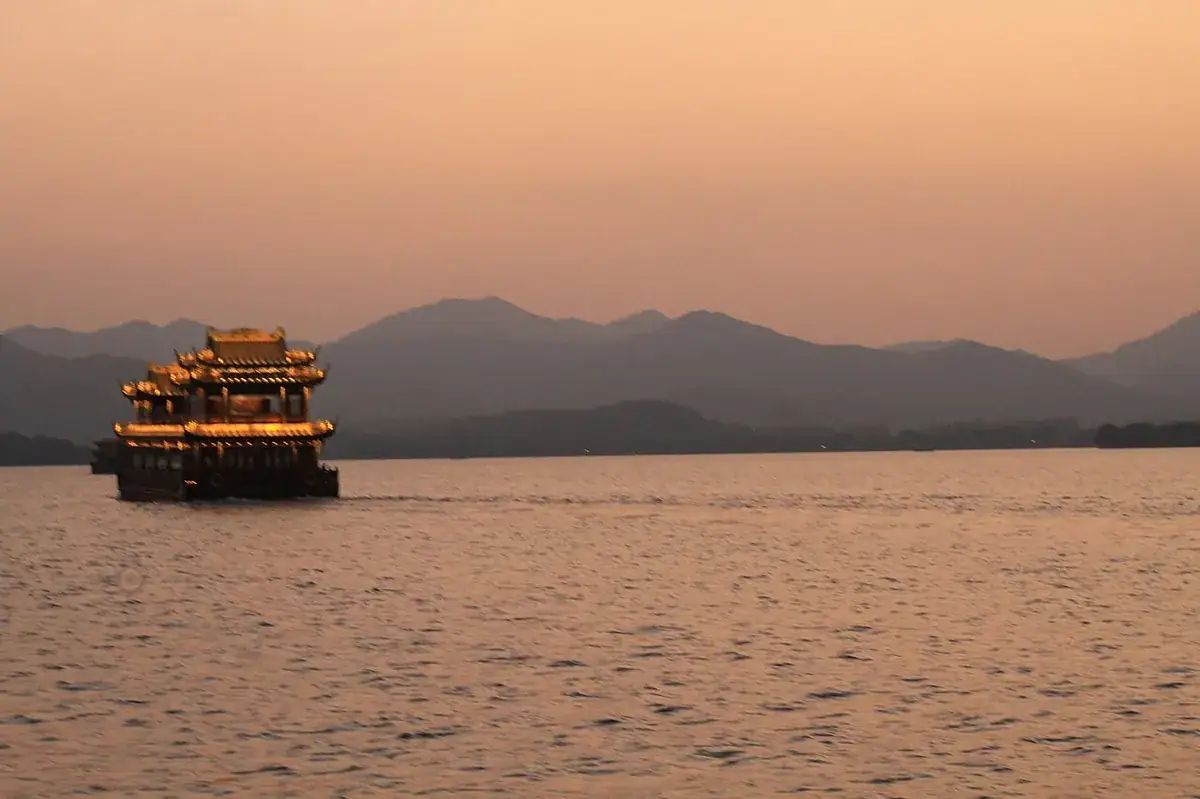
As of August 2022: 80 A-level scenic areas (2 5A, 21 4A), 6 provincial tourism demonstration counties, 4 national red tourism sites, 230 provincial 3A villages. Key attractions: Yandang Mountain (World Geopark), Jiangxin Island ("China's Poetry Island, World Ancient Navigation Beacon"), Nanxi River ("Eternal Landscape Poetry, Most Beautiful Peach Spring"), Tongling Mountain, Baizhangji Falls ("China's Tallest Waterfall"), Nanji Islands (shellfish-algae kingdom), and 100-island Dongtou.
Notable Attractions
Local Specialties
Overview
Wenzhou residents have enjoyed seafood since ancient times, with raw seafood being a distinctive dietary feature dating back 4,000–5,000 years. Raw river crab (live crab, chopped, dressed with sugar-vinegar-ginger-pepper) and raw oysters remain local specialties.
Main Products
Sister Cities
Domestic: Yingkou, Hefei, Liuzhou, Nanchong, Qitaihe, Xiamen, Zhengzhou, Suzhou. International: Turin (Italy), Dimona (Israel), Ishinomaki (Japan), Alicante (Spain), Union County (USA), Prato (Italy), Burnaby (Canada), Port-Gentil (Gabon), Ipswich (Australia), Gießen (Germany), Ipoh (Malaysia), Gisborne (New Zealand), Weiz (Austria), Lucknow (India), Ipswich (UK), Kumasi (Ghana), Gumi (South Korea), Slagelse (Denmark), Vienna District 9 (Austria), The Hague (Netherlands), Castellón (Spain), Ambato (Ecuador), Walvis Bay (Namibia), Kouvola (Finland), Vallensbæk (Denmark), Pittsburgh CA (USA), Levallois (France), Kure (Japan), Jung-gu Incheon (Korea), Gwangju (Korea), Barcelona (Spain), Borger TX (USA), St. Petersburg (Russia), Naples (Italy), São Paulo (Brazil).
Famous Figures
Ancient
Lin Jingxi, Gao Zecheng, Guo Mian, Zhou Qufei, Zhou Daguan, Xu Zhao, Xu Ji, Zhao Shixiu, Weng Juan, Xuanjue, Wang Shipeng, Ye Shi, Shangguan Ding, Wang Zhenpeng, Xie Tingxun, Ren Daosun, Zhao Shizhen, Liu Ji (Liu Bowen), Zhang Cong, Huang Gongwang, Chen Fuliang, Wang Zan.
Modern
Sun Yirang, Chen Qiu, Chen Fuchen, Song Shu, Xia Chengtao, Su Buqing, Yang Zhongdao, Xia Nai, Nan Huaijin, Zheng Zhenduo, Lin Jinlan, Ye Yonglie, Zeng Liangsong, Chen Guangzhen, Wang Jisi, Dai Jiaxiang, Jiang Lifu, Gu Chaohao, Ma Xingye, Tang Ti, Xie Xiexun, Qijun, Lin Haifan, Xia Xuanze, Zhu Qinan, Zhu Chen, Yang Huanming, etc. (extensive list of mathematicians, scientists, writers, artists, athletes, and political figures).
Honorary Titles
Wenzhou is China's birthplace of private economy, the "Cradle of Chinese Mathematicians," the "Hometown of Southern Opera," "China's Shoe Capital," a frontier of reform and opening up with the Wenzhou Financial Comprehensive Reform Pilot Zone, and one of the first 14 coastal open cities.
Travel information can change. Check current opening hours, reservations and entry requirements before you travel.
Traveller discussion
Start the conversation with a helpful tip or a question.