
[Yonghe Temple] Yonghe Temple Blessing Guide! Make your wishes come true!
In the heart of bustling Beijing, there lies a tranquil haven for peace and prayer—the Yonghe Temple. Strolling through it, the vermilion walls and bluestone paths blend harmoniously, while the upturned eaves and flying corners complement the blue sky and white clouds. Every brick, tile, blade of grass, and tree here tells a story of history. In m…
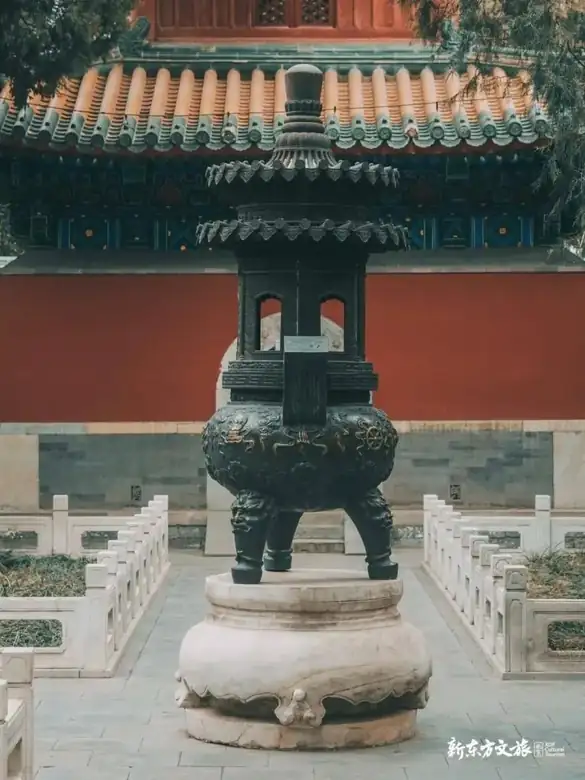
In the heart of bustling Beijing, there lies a tranquil place for peace and prayer—the Yonghe Temple. Strolling through it, the vermilion walls and bluestone paths blend harmoniously, while the upturned eaves and flying corners complement the blue sky and white clouds. Every brick, tile, blade of grass, and tree here tells a story of history. In my memory, burning incense and praying to Buddha seemed to be something only the older generation did, but now more and more young people are joining in. They come here with devout hearts to share their thoughts and seek their own optimal solutions.
Further Reading: [Beijing Self-Guided Tour] Beijing Travel Guide: Must-See Attractions, Accommodation, Food, and Transportation Costs
Yonghe Temple attractions
Yonghe Temple was the highest-ranking Buddhist temple in China during the mid-to-late Qing Dynasty, with a history of over 300 years. Its architectural complex went through three stages: initially serving as the residence of the Yongzheng and Qianlong emperors during their pre-Qin period, it was later upgraded to an imperial palace, and finally became a royal temple. The overall layout is complete, conforming to the standards of Buddhist temples and monasteries, showcasing imperial grandeur.
Yonghe Gate - May all your wishes come true
Originally the main gate of Prince Yong's Mansion, it was converted into a temple in the ninth year of the Qianlong Emperor's reign and became the Hall of Heavenly Kings, known as the "Yonghe Gate Hall". The center is dedicated to the Laughing Buddha, and the four Heavenly Kings are enshrined on both sides. Most people who come here pray for a smooth, happy and peaceful life.
Falun Hall - Activities
The roof of this hall features five skylights, each topped with a gilded finial, showcasing the unique architectural style of Tibetan Buddhist monasteries. The Dharma Wheel Hall is a place to pray for success in one's endeavors and to request blessings and protection.
Wanfu Pavilion - Peace and Good Fortune / Marriage and Offspring
In the early days of the temple's construction, the pavilion housed nearly 10,000 clay Buddha statues. Because the pronunciations of "Buddha" and "blessing" are similar, it was named "Wanfu Pavilion" (Pavilion of Ten Thousand Blessings). The main hall houses an 18-meter-tall Maitreya Bodhisattva statue, which is believed to protect peace and good fortune. The rear hall was originally the rear hall of the Guanyin Hall in the Yongqin Prince's Mansion, which was believed to protect marriage and offspring.
Recommended itinerary for visiting Yonghe Temple
Main Hall
Yonghe Gate Hall (for good fortune and happiness) — Yonghe Palace (for wealth) — Yongyou Hall (for exorcising evil and warding off disasters) — Falun Hall (for career success) — Wanfu Pavilion (main hall for peace and good fortune / rear hall for marriage and children) — Guanyin Cave (for marriage and children) — Suicheng Hall (for good fortune and happiness)
·Left Hall
Lecture Hall (Peace) — Kalachakra Hall (Good Fortune) — West Annex Hall (Studies)
·Right Hall
Esoteric Buddhist Hall (Peace) — Medicine Buddha Hall (Health) — East Annex Hall (Wealth)
Yonghe Temple Reservation Guide
Yonghe Temple Reservation Guide
Yonghe Temple sells tickets through a combination of on-site ticket windows and online sales.
Ticket price: Full price ticket 25 yuan (half price ticket 12 yuan)
✅️Ticket booking: Trip
Yonghe Temple Visiting Time
Summer and autumn (April 1 - October 31)
9:00~17:00 (Last entry at 16:30, park closes at 17:00)
Winter and Spring (November 1 - March 31)
9:00-16:30 (Last entry at 16:00, area cleared at 16:30)
Appointment Instructions
Free admission policy
① Children aged 6 and under (including 6 years old) or under 1.2 meters tall (including 1.2 meters) can visit for free with valid identification.
② People with disabilities can visit for free with a second-generation disability certificate issued by the Disabled Persons' Federation (disabled military personnel, disabled police officers, and disabled fire and rescue personnel can visit for free with their certificates).
③ Retired cadres can visit free of charge upon presentation of their retirement certificate.
④ Active duty military personnel, retired military personnel, and civilian personnel of the military may visit free of charge upon presentation of valid identification. The surviving family members of martyrs of the People's Republic of China, military personnel who died on duty, and military personnel who died of illness may visit free of charge upon presentation of their surviving family preferential treatment certificate.
⑤ On August 1st, Army Day, family members of active-duty military personnel can visit the museum free of charge upon presentation of valid proof.
⑥ Active and retired fire and rescue personnel, as well as students of fire and rescue colleges, can visit for free upon presentation of valid identification.
⑦ Holders of the "Civil Affairs Preferential Treatment Card" or "Civil Affairs Preferential Treatment Temporary Card" issued by the Beijing Municipal Civil Affairs Bureau are exempt from admission fees.
Half-price policy
①Full-time undergraduate and below students (excluding postgraduate students, adult education part-time university students, evening university students, correspondence university students, etc.) aged 6 (excluding 6 years old) to 18 (including 18 years old) can purchase tickets at half price with their student ID or other valid documents.
② Seniors aged 60 and above can purchase tickets at half price with their senior citizen card, ID card or other valid documents.
③ Individuals holding a social security benefit certificate issued by this city can purchase tickets at a 50% discount (present the original certificate at any ticket window for verification).
Yonghe Temple Transportation Information
📍Address: No. 28, Yonghegong Street, Dongcheng District
🚇Subway: Take Line 5 or Line 2 (Inner Loop) to Yonghegong Station, exit from Exit F (Southeast), and walk for about 5 minutes to reach the destination.
🚌Bus:
① Take bus route 13 or 84 to Guozijian Bus Station and walk for about 1 minute to reach the destination.
② Take bus routes 13, 84, 116, or 117 to Yonghegong Bus Station, and walk for about 5 minutes to reach the destination.
③ Take bus routes 18, 44 (inner loop), 44 (outer loop), 75, 142, or 200 (inner loop) to Yonghegong Bridge East Bus Station, and walk for about 9 minutes to reach the destination.
Recommended cultural and creative products from Yonghe Temple
Many people who visit the Yonghe Temple take home a few souvenirs or cultural items, both as a memento and as a token of their good wishes. These are some of the most popular items:
Incense Ash Glass Bracelet
This is the most popular cultural and creative product from Yonghe Temple, bar none. It's made by mixing the ash from burnt incense offerings with glass materials and then firing it. Different colors correspond to different blessings: white for academic success, green for career advancement, blue for health, and red for marriage. There's also a multi-treasure version featuring a family portrait. Prices start at 150 yuan, making it a must-buy souvenir for many tourists. Where to buy: Official Buddhist item sales outlets at Yonghe Temple. The shop west of Yongyou Hall, next to the consecration hall, has the most complete selection but the longest queue. Alternatively, you can choose the other two Buddhist item sales outlets outside the ticket gate (west side) and east of Zhaotai Gate, which are much less crowded.
Incense Ash Porcelain Bracelet
If you find glass bracelets too flashy, this incense ash porcelain bracelet is a great alternative. It also incorporates incense ash, and the porcelain beads are more elegant and refined. The simple design makes it suitable for everyday wear, and the price is similar to the glass bracelet. It also comes in different colors to correspond to different wishes. Purchase channels: Same as the incense ash glass bracelet, available at official French retailers.
Academic Symbol
This small triangular charm is a favorite among test-takers. Priced at 20 yuan each, it's inscribed with "Academic Progress." Many tourists preparing for exams, postgraduate entrance exams, or civil service exams specifically request one to bring good luck. Available at official magic item retailers.
Handwritten calligraphy refrigerator magnets
After visiting the Yonghe Temple, there's a small shop at No. 149 Yonghegong Street where you can get your own handwritten calligraphy refrigerator magnets. You can choose your own auspicious wishes, such as peace, good fortune, wealth, or joy, and the craftsman will write them on the wooden refrigerator magnet with a brush on the spot. He'll also stamp it. For just over ten yuan, you can get a personalized souvenir of good fortune, perfect for keeping for yourself or giving as a gift to a friend.
Food around Yonghe Temple
Lucky Bag Eating
📍Location: No. 29, Wudaoying Hutong, Dongcheng District
🏃Distance: Approximately 290 meters, about a 3-minute walk
💳Price: 99 yuan per person
🍜Recommended dishes: Almond tofu, Four Happiness Meatballs, Spicy Stir-fried Pork Neck Strips
Ba Ye Hot Pot (Guijie Street, Yonghegong Branch)
📍Location: No. 241-243, Dongnei Street, Dongcheng District
🏃Distance: Approximately 700 meters, about a 7-minute walk
💳Price: 119 yuan per person
🍜Recommended dishes: Hot pot lamb, eight-piece set meal, and Beijing-style braised tripe.
Suzuki Canteen (Beixinqiao Branch)
📍Location: No. 288-29, Dongnei Street, Dongcheng District
🏃Distance: Approximately 760 meters, about a 7-minute walk
💳Price: 95 yuan per person
🍜Recommended dishes: Japanese beef hot pot, Suzuki meat patties, Japanese fried chicken nuggets
Nearby attractions
Wudaoying Hutong
📍Location: West Gate of No. 67, Wudaoying Hutong, Andingmen, Dongcheng District
🏃Distance: Approximately 380 meters, about a 4-minute walk
🕰️Hours: Open all day
🎫Tickets: Free
Confucius Temple and Imperial College Museum
📍Location: No. 15, Guozijian Street, Dongcheng District
🏃Distance: Approximately 446 meters, about a 5-minute walk
🕰️Hours: 9:00~17:00 (last entry at 16:30) Closed on Mondays
🎫Tickets: Full price 30 RMB/person, half price 15 RMB/person
Ditan Park
📍Location: Ditan Park, Andingmenwai Street, Dongcheng District
🏃Distance: Approximately 760 meters, about a 7-minute walk
🕰️Hours: 6:00~21:30 (Last entry at 20:00) Closed on Mondays
🎫Tickets: Full price ¥2 per person, half price ¥1 per person
Further Reading: [Ditan Park] Beijing Ditan Park: An Ancient Altar, Understanding the Philosophy of Heaven and Earth
Kind tips
① There are three religious items distribution points at Yonghe Temple. One is located on the west side outside the ticket gate, and the other two are located on the left side of Zhaotai Gate and the right side of Daxiong Hall.
②The Yonghe Temple Visitor Service Center is located on the east side of the Yonghe Gate courtyard (behind the East Octagonal Stele Pavilion). It is equipped with facilities such as water dispensers, first aid kits, wheelchairs, stretchers, and umbrellas to provide relevant convenient services for tourists.
③As Yonghe Temple is a religious site, visitors should dress appropriately, simply, and wear hats when visiting, and avoid wearing overly revealing or brightly colored clothing.
④ Matters related to worshipping Buddha and visiting Yonghe Temple: When paying homage to Buddha, Dharma and Sangha, three sticks of incense are appropriate; please do not burn incense, take photos or videos inside the halls; stop burning incense when the wind is strong, please offer incense instead; please do not smoke in the courtyard; please protect the temple's cultural relics and maintain environmental hygiene.
Yonghe Temple TIPS
Why do the buildings and names resemble the Forbidden City?
A: Yonghe Temple was once a temporary palace for the Qing emperors. The halls were renovated with yellow tiles and red walls, and the scale was the same as that of the Forbidden City. In the ninth year of Qianlong's reign, the palace was converted into a temple, making it the highest-ranking Buddhist temple in China during the mid-to-late Qing Dynasty.
What prayers are most effective for blessings?
For career advancement: Yonghe Temple was the site of the birth of two emperors (Yongzheng and Qianlong), and is known as the "Dragon's Hidden Blessed Land," making it the best place to seek success in one's career.
Praying for academic success: Praying to Manjushri Bodhisattva for academic success is said to be very effective.
Praying for peace: It is said that praying for peace is very effective.
For seeking marriage: Yonghe Temple is more suitable for men to seek marriage, while women should go to Hongluo Temple.
What are the customs and traditions for praying for blessings?
Central Main Hall
Yonghe Gate Hall: May all your wishes come true
Yonghe Temple: Seeking Wealth
Yongyou Hall: Exorcising evil spirits and warding off disasters
Falun Hall: Career Fortune
Wanfu Pavilion: Bringing Good Fortune and Peace
Guanyin Cave: A place for marriage and childbirth
Suicheng Hall: Auspiciousness and good fortune
When paying homage to the Buddha, Dharma, and Sangha, three sticks of incense are appropriate.
Please refrain from burning incense, taking photos, or photography inside the hall.
Stop burning incense when the wind is strong; please offer incense only.
Notice:
The best time to pray for blessings is in the morning when the weather is sunny, as good weather and auspicious time ensure that the incense is offered with sincerity.
No need to request incense in advance; there is a complimentary incense station at the entrance where you can collect a bundle of incense.
Route (no backtracking): Ticket check at entrance — purchase at the religious goods distribution point — obtain incense at the incense distribution point — enter through Zhaotai Gate — Yonghe Gate Hall — Yonghe Palace — Yongyou Hall — consecration room (west side of Yongyou Hall) — Falun Hall — Wanfu Hall — Suicheng Hall — exit through the west gate.
Offerings: The masters will distribute them irregularly. Between 11 a.m. and 12 p.m., they may be given in any of the main halls. They may include wishes fulfilled (oranges), peace and joy (apples), and small surprises, depending on luck.
Must-read for academic success
After receiving incense (free of charge) at the Zhaotai Gate incense station, enter through the small door on the left side of the first main hall (Yonghe Gate Hall) and walk straight for 150 meters to the fourth main hall (West Annex Hall), where Manjushri Bodhisattva is enshrined.
Light three incense sticks, put your hands together in prayer, and silently recite "Namo Manjushri Bodhisattva" three times outside the west side hall to begin your prayer with a pure heart.
Place the incense in the incense burner and enter the hall empty-handed to pay homage to the Buddha. The second statue from the left in the hall is Manjushri Bodhisattva.
Prayer Template Reference: Disciple ***, now at a crucial time for exams, sincerely prays for: increased wisdom, a flow of inspiration, and smooth exam luck; peace of mind and body, composure during the exams, and exceptional performance; success in the exams, a bright future, and lasting blessings.
After praying for blessings, students are advised to visit the Imperial College/Confucius Temple near Yonghe Temple to absorb the cultural atmosphere.
Besides praying and worshipping Buddha, what else can we do?
You can obtain religious items at the religious item distribution center. These include bracelets, necklaces, and other items, such as the popular incense ash bracelet (you must go early every day to queue up; if you go in the afternoon, you won't be able to buy the "porcelain and glass series" at all).
Please request a bracelet and its consecration (see "Bracelet Request Guide" at the bottom).
Enjoy the beauty of the temple and the Yonghe Temple Museum (including permanent themed exhibition halls). The Yonghe Temple boasts a complete architectural layout, conforming to the standards of Buddhist temples. Must-see treasures include the "Three Wonders of Wood Carving": the Five Hundred Arhats Mountain, the Sandalwood Buddha, and the Nanmu Buddha Niche. The Five Hundred Arhats Mountain is located in the Falun Hall; the Sandalwood Buddha is the Maitreya Buddha in the Wanfu Pavilion; and the Nanmu Buddha Niche is behind the Shakyamuni Buddha statue in the Zhaofo Building.
Travel information can change. Check current opening hours, reservations and entry requirements before you travel.


Traveller discussion
Start the conversation with a helpful tip or a question.