
Tongliao City
Tongliao CityTongliao City, formerly known as Jirem League, is a prefecture-level city under the jurisdiction of Inner Mongolia Autonomous Region, located in eastern Inner Mongolia. It borders Siping (Jilin Province) to the east, Chifeng an
Tongliao City
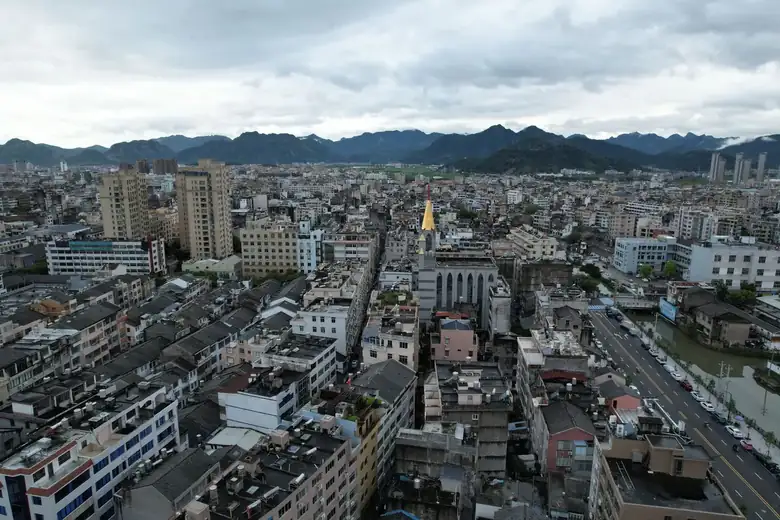
Tongliao City, formerly known as Jirem League, is a prefecture-level city under the jurisdiction of Inner Mongolia Autonomous Region, located in eastern Inner Mongolia. It borders Siping (Jilin Province) to the east, Chifeng and Xilingol League to the west, Shenyang, Fuxin, and Tieling (Liaoning Province) to the south, and Hinggan League as well as Baicheng and Songyuan (Jilin Province) to the north. Situated at mid-latitudes, it has a mid-temperate, arid and semi-arid continental monsoon climate, covering a total area of 59,535 square kilometers. As of October 2022, the city administers 1 district, 1 county, and 5 banners, and manages 1 county-level city. As of end of 2024, the permanent population was 2.7768 million. Tongliao is one of the birthplaces of the Mongolian nation. The Horqin Grassland gave rise to the famous Three Major Horqin Narrative Folk Songs (Han Xiuying, Dana Bala, and Gada Meilin) and over a thousand short-tune folk songs. Five railways—Jingtong, Tongrang, Dazheng, Tonghuo, and Jitong—converge within the city, and the Tong-Man-Europe international freight train service has been launched. It is a key strategic node for the Belt and Road Initiative and Inner Mongolia's northward opening, situated at the intersection of the Bohai Rim Economic Circle, Northeast Economic Zone, and Northeast Asia Economic Circle, serving as the meeting center of Northeast and North China. Tongliao Civil Airport can accommodate large and medium-sized aircraft such as Boeing 737s, and Tongliao Railway Station is one of the 36 major railway hub classification stations in China. In December 2018, it was designated as a second-batch China Characteristic Agricultural Product Advantage Zone. In October 2020, it was named a National Double Support Model City. Tongliao is one of the nation's important commodity grain bases. In 2025, Tongliao achieved over 2 million mu of "ton-grain fields" for the first time, increasing per-mu yield by over 400 jin compared to traditional management, with water-fertilizer utilization efficiency improving by 30%. In 2025, Tongliao's GDP reached 173.77 billion yuan (approximately $23.97 billion), a year-on-year increase of 4.9% at constant prices.
History
The predecessor of Tongliao City, Jirem League, was established in the early Qing Dynasty, with its territory spanning from the Tao'er River and Nenjiang River basins south of Sueyue'erji Mountain in the north to the East and West Liaohe River basins near Wuhana'de Mountain in the south, from Wuhana Mountain in the west to the Songhua River and Yidun River in the east.
During the Spring and Autumn and Warring States periods (c. 771–476 BCE), the area was inhabited by nomadic tribes such as the Donghu and Shiwei. The area south of the Yan Great Wall was under the Liaodong and Liaoxi commanderies of the Yan state. In the Qin Dynasty, the East and West Liaohe regions were under Liaodong and Liaoxi commanderies, while the Nenjiang basin remained pastureland for the Donghu people.
During the Western Han, the Xianbei and Wuhuan peoples—descendants of the Donghu—roamed the Nenjiang and Liaohe basins. From the Eastern Han through the Three Kingdoms, the Xianbei migrated inland in large numbers. From the Northern and Southern Dynasties through the Sui and Tang, the north was under the Khitan and the south under the Shiwei. The Tang Dynasty established the Raole and Songmo governorates in Khitan territory and the Shiwei governorate in Shiwei territory.
During the Liao, Jin, and Yuan dynasties, the Nenjiang and Liaohe basins were administered under various circuits and routes. In the Ming Dynasty, the area belonged to the Three Uriyangkhai Guards (Duoyan, Fuyu, and Taining), under the Daning Regional Military Commission. During Emperor Yongle's reign, descendants of Genghis Khan's brother Khabutu Khasar—led by Kuimengketasihala—nomadized in the Nenjiang basin, calling themselves the Nen Horqin, and quickly gained control of the Three Uriyangkhai Guards.
In 1626, Oba, a descendant of Kuimengketasihala, led the Horqin tribe to submit to the Later Jin. In 1636 (first year of Chongde), the Qing Dynasty established five Horqin banners and one Gorlos banner. By 1650, Jirem League comprised 10 banners, with the Horqin banners under the supervision of the Shenyang (Fengtian) military governor, and the Gorlos, Jalaid, and Durbert banners under the Jilin and Heilongjiang military governors. In the late Qing period, Mongolian lands were opened for cultivation and administered under separate jurisdictions, leading to the establishment of numerous counties including Changchun, Lishu, Changtu, Huaide, Nong'an, and others.
During the Republic of China era, Tongliao County was established in 1914 within the Horqin Left Wing Middle Banner. During the Japanese puppet state period (1932–1945), the Horqin banners were placed under the puppet Xing'an provincial administration. After World War II, Jirem League went through several administrative reorganizations. In 1949, Jirem League was placed under Inner Mongolia Autonomous Region. Tongliao City was formally established in 1951 as the seat of the league government. The league was dissolved and reconstituted several times; in 1969 it was transferred to Jilin Province, returning to Inner Mongolia in 1979. On January 13, 1999, the State Council approved the abolition of Jirem League and the establishment of prefecture-level Tongliao City, with the former county-level Tongliao City becoming Horqin District.
Administrative Divisions
As of October 2022, Tongliao City administers 1 district (Horqin District), 1 county (Kailu County), 5 banners (Horqin Left Wing Middle Banner, Horqin Left Wing Rear Banner, Naiman Banner, Hure Banner, and Jarud Banner), and manages 1 county-level city (Huolinguole City). It also has 1 economic and technological development zone—Tongliao Economic and Technological Development Zone. The municipal government is headquartered on Agula Street in Horqin District.
Geography
Location
Tongliao is located in eastern Inner Mongolia, at the western end of the Songliao Plain and in the heart of the Horqin Grassland, between 42°15′–45°59′N and 119°14′–123°43′E. It borders Jilin Province to the east, Liaoning Province to the south, Chifeng and Xilingol League to the west, and Hinggan League to the north. It extends approximately 418 km north-south and 370 km east-west, with a total area of 59,535 square kilometers.
Topography
Tongliao sits on the slope descending from the Mongolian Plateau to the Liaohe Plain. The overall terrain is high in the south and north, low and flat in the center. The northern area consists of rocky mountains and hills at the southern foot of the Greater Khingan Range, with elevations of 400–1,300 meters, accounting for 22.8% of the city's area. The highest peak is Hanshan Tuntur Peak at 1,444 meters. The southern area features loess hills and low mountains at 550–730 meters (7.0% of area). The central area is the West Liaohe alluvial plain at 120–320 meters, with semi-fixed sand dunes along its edges, accounting for 70.7% of the total area.
Climate
Tongliao has a mid-temperate, arid to semi-arid continental monsoon climate, characterized by dry and windy springs, hot summers with concentrated rainfall, cool and brief autumns, and long cold winters with little snow. Annual average temperatures range from 0–6°C in northern mountains to above 6°C in the south. Annual precipitation varies between 305–485 mm, with 70% concentrated from June to August. Annual sunshine hours total 2,868–3,111. Droughts, floods, and strong winds are the main natural disasters affecting agriculture and livestock production.
Hydrology
Tongliao's water system consists of the West Liaohe, Liuhe, Dalinghe, and Nenjiang river systems, plus the East Liaohe. The West Liaohe basin covers over 60% of the city's total area. There are 47 rivers with basin areas exceeding 100 square kilometers. The city also has 612 natural lakes with a total catchment area of 292.9 square kilometers and total water storage capacity of 353 million cubic meters.
Natural Resources
Water Resources
Tongliao's water resources are unevenly distributed, with higher precipitation in the northern and southern mountains than in the central plain. The city's multi-year average surface water resource is 685 million cubic meters, with groundwater at 3.683 billion cubic meters. After deducting overlap, the total average water resource is 4.264 billion cubic meters.
Plant Resources
Located in a transition zone between forest and grassland, Tongliao's original landscape was elm sparse-forest grassland, dominated by steppe vegetation. Natural flora includes 112 families, 446 genera, and 1,169 species, of which 578 have forage value. Key forage plants include Leymus chinensis, Stipa, and Cleistogenes. Wild medicinal plants such as ephedra, licorice, and sea buckthorn are of unique quality.
Animal Resources
Tongliao has over 1,300 species of wild flora and fauna. Terrestrial vertebrates and mammals comprise 14 orders, 25 families, and 33 species; wild birds include 17 orders, 40 families, and 152 species; fish include 5 orders, 11 families, and 38 species. The city has 5 national first-class protected species (red-crowned crane, white stork, bustard, sika deer, sable) and nearly 30 national second-class protected species including gray crane, demoiselle crane, mandarin duck, swan, lynx, red deer, and Mongolian gazelle.
Mineral Resources
Tongliao's northern mountains belong to the central-southern section of the Greater Khingan metallogenic belt, covering 19,349 square kilometers. The city has identified 63 types of minerals (including subtypes), with proven reserves for 38 types including coal, petroleum, and silica sand. There are 359 mining enterprises, with 150 currently in operation. Coal, petroleum, and natural quartz sand reserves are particularly abundant.
Politics
Economy
Overview
In 2025, Tongliao's GDP reached 173.77 billion yuan (approximately $23.97 billion), up 4.9% at constant prices. The primary industry added value was 45.33 billion yuan ($6.25 billion), up 5.1%; secondary industry 50.35 billion yuan ($6.94 billion), up 5.7%; tertiary industry 78.10 billion yuan ($10.77 billion), up 4.2%. The three-sector ratio was 26.1:29.0:44.9. Per capita GDP reached 62,847 yuan ($8,670), up 6.0%.
Primary Industry
In 2025, the gross output of agriculture, forestry, animal husbandry, and fishery grew by 5.2%. Total grain output reached 20.21 billion jin (approximately 10.1 million tons), up 4.1%. Vegetable and edible mushroom output was 1.036 million tons, up 8.3%.
Secondary Industry
In 2025, industrial value added above designated size grew by 6.5%. Manufacturing grew 11.3%, while mining declined 1.5%. Key growth sectors included non-ferrous metal smelting (+6.9%), power and heat production (+9.2%), and food manufacturing (+10.9%). From January to November 2025, above-designated-size industrial enterprises achieved revenue of 174.34 billion yuan ($24.05 billion), up 8.9%, with total profits of 18.70 billion yuan ($2.58 billion), up 35.0%.
Tertiary Industry
In 2025, the service sector's value added grew 4.2%, accounting for 44.9% of GDP and driving 2.0 percentage points of economic growth. Wholesale and retail grew 7.2%, accommodation and catering 2.9%, and transportation 6.4%. Total retail sales of consumer goods reached 37.59 billion yuan ($5.18 billion), up 3.1%. Foreign trade total was 5.05 billion yuan ($696 million), up 0.5%, with exports of 4.63 billion yuan ($638 million) and imports of 410 million yuan ($57 million, up 40.7%).
Social Affairs
Science and Technology
In 2025, 3 natural science foundation projects and 21 key R&D and achievement transformation projects were funded. Patent grants totaled 724, down 36.6%. Invention patents per 10,000 people reached 3.0, up 13.3%. A total of 112 technology contracts were registered with a transaction value of 300 million yuan ($41.4 million).
Education
Tongliao has 3 regular higher education institutions with 42,076 enrolled students (including 3,027 full-time graduate students) and 3,146 staff (2,145 full-time teachers). The city also has 958 schools (kindergartens, primary, secondary, vocational, and special education), with 364,087 students and 36,164 full-time teachers.
Culture
As of end of 2025, the city has 9 cultural centers, 9 public libraries, 11 museums, and 9 professional performing arts troupes that gave 1,128 performances with 718,000 attendees. There are 8 radio stations with 99.84% population coverage.
Healthcare
Tongliao has 4,534 medical and health institutions, including 91 hospitals and 4,415 primary care facilities. Total authorized beds number 19,417, with 35,717 health workers including 28,659 health technicians (12,154 licensed physicians and 11,577 registered nurses).
Sports
In 2025, Tongliao athletes won 11 gold, 10 silver, and 10 bronze medals in national competitions, and 84 gold, 119 silver, and 112 bronze medals at the autonomous region level. The city has 3,200 community fitness sites and 11,032 social sports instructors.
Social Security
In 2025, per capita disposable income was 34,119 yuan ($4,710), up 5.1%. Urban residents' per capita disposable income was 45,376 yuan ($6,259), while rural and pastoral residents' was 24,552 yuan ($3,387). Per capita consumption expenditure was 23,628 yuan ($3,259). Social insurance participation: 2.017 million for pension, 2.686 million for medical, 253,000 for unemployment, and 296,000 for work injury insurance. Urban minimum living allowance recipients numbered 27,000, and rural recipients 163,000.
Transportation
Overview
Five railways—Jingtong, Tongrang, Dazheng, Tonghuo, and Jitong—converge in Tongliao. The city has 3 expressways, 6 national highways, and 7 provincial highways. Within 800 km, there are 15 cities with populations over one million. The city is 400 km from the nearest seaport, Jinzhou Port, making it a key node for the Belt and Road Initiative and Inner Mongolia's northward opening.
Highways
Major expressways include the Shuangliao-Tongliao (93.6 km), Jinbaotun-Charisu (44.6 km), and Chifeng-Tongliao expressways. National highways 111, 303, and 304 traverse the city, forming a three-vertical, four-horizontal road network reaching Jilin to the north, Dandong to the east, Beijing to the south, and Xilingol to the west. As of end of 2023, total highway mileage was 23,258.6 km, including 647.3 km of expressway. In 2025, highway freight volume reached 109.96 million tons (+4.7%), and passenger volume was 37.26 million (+1,211.8%).
Railways
All county-level areas are connected by rail. Six railways (Pingqi, Jingtong, Tongrang, Dazheng, Tonghuo, Jitong) traverse the city. Tongliao Railway Station is a first-class station under the Shenyang Railway Bureau and one of the major railway hubs connecting Northeast and North China. In 2025, railway passenger departures totaled 6.06 million (+2.5%), and freight dispatch was 56.87 million tons (+32.3%).
Civil Aviation
Tongliao Airport has an 11,500-square-meter terminal and a 2,700-meter runway capable of handling Boeing 737 and similar aircraft. It operates 14 routes to 13 cities. In 2025, passenger volume was 1.52 million (-5.0%), and cargo volume was 1,954.6 tons (+8.8%).
Public Transit
Tongliao has 12 urban bus routes with over 180 bus stops, providing convenient intra-city transportation.
Population
According to the Seventh National Census (November 1, 2020), Tongliao's permanent population was 2,873,168, with a gender ratio of 50.44% male and 49.56% female. As of end of 2025, the permanent population was 2.752 million, a decrease of 24,800 from the previous year. The urbanization rate reached 53.72%. The birth rate was 4.00 per mille and the death rate was 10.13 per mille, yielding a natural growth rate of -6.13 per mille.
Scenic Spots
In 2025, Tongliao received 23.557 million domestic tourists, generating tourism revenue of 29.48 billion yuan ($4.07 billion). The city has 37 A-level scenic areas, including 10 4A-level and 12 3A-level sites.
Notable protected areas include 2 national-level nature reserves (Daqinggou and Hanshan), 4 autonomous region-level nature reserves, and 50 county-level nature reserves. The city also has 2 national desert parks (Naiman Baogutu and Hure Yinsha Bay), 7 forest parks (1 national, 6 regional), 4 wetland parks, and 1 regional geopark.
Local Specialties
Tongliao is largely a pastoral area with predominantly Mongolian and Han populations. Mongolian residents are known for their hearty hospitality, favoring generous bowls of wine and hand-grabbed meat during festivals. Due to its proximity to the three northeastern provinces, the local diet is similar to that of the Northeast region and local Han cuisine.
External Relations
Notable Figures
Honorary Titles
Travel information can change. Check current opening hours, reservations and entry requirements before you travel.
Traveller discussion
Start the conversation with a helpful tip or a question.