
Gansu
GansuAn Overview of the ProvinceGansu, a land threaded by the Yellow River, China’s mother river, is shaped like a jade ruyi (a ceremonial scepter symbolizing good fortune) inlaid in the country’s northwest. Its strategic geographical posit
Gansu
An Overview of the Province
Gansu, a land threaded by the Yellow River, China’s mother river, is shaped like a jade ruyi (a ceremonial scepter symbolizing good fortune) inlaid in the country’s northwest. Its strategic geographical position and extraordinary cultural richness are virtually unmatched across the entire Chinese landscape. Sitting deep in the interior, between 32°11′ and 42°57′ north latitude and 92°13′ and 108°46′ east longitude, Gansu touches Shaanxi to the east, borders Sichuan and Qinghai to the south, leans on Xinjiang to the west, and guards the gateways of Inner Mongolia and Ningxia to the north. It has long been the crucial key connecting the Central Plains with the Western Regions, and the northern steppe with the Tibetan Plateau. The province is long and narrow, its landforms astonishingly diverse — mountains, plateaus, plains, river valleys, deserts and the Gobi all weave through here. The most remarkable geographical unit is undoubtedly the Hexi Corridor, a strip of land over one thousand kilometers long that cuts diagonally through the northwest of the province. Pressed between the Qilian Mountains to the south and the Badain Jaran and Tengger deserts to the north, this narrow passage was not only the obligatory route of the ancient Silk Road, but also a vital ecological safety barrier for China’s interior. Snow-melt from the Qilian range, like mother’s milk, nourishes a string of oases inside the corridor and defines the intertwined character of agrarian and nomadic civilizations that has always colored Gansu. Beyond the Hexi Corridor, the central and eastern parts of the province belong to the western edge of the Loess Plateau, where a landscape of deep gullies and ravines carries the weighty foundations of the Zhou and Qin cultures. To the south, the Gannan and Longnan regions transition into the Tibetan Plateau and the Qinba Mountains — an elevated, abundantly watered world that unfurls a completely different panorama of Tibetan life.
As a provincial-level administrative region, Gansu covers roughly 425,800 square kilometers and is home to a multi-ethnic population of around 24.65 million (2023). Its administrative status is that of a province, and the capital is Lanzhou. Gansu is never a single-city story. It is a grand symphony performed by a cast of cities with utterly distinct personalities. On the provincial economic and cultural stage, Lanzhou, the capital, is indisputably the political, economic, cultural hub and transport nerve center. The Yellow River runs straight through the city, lending this heavy-industry powerhouse a unique, bold spirit. Tianshui, the province’s sub-core city, proudly carries the titles “Hometown of Emperor Fuxi” and “The Jiangnan of the Long region,” acting as a guardian of Chinese cultural roots and a center of light industry. Meanwhile, Jiuquan, on the Hexi Corridor, represents Gansu’s forward-looking scientific ambitions with its space launch center and new-energy industries. These three cities neatly outline the province’s clear trajectory from the depths of history to modern civilization.
Gansu has several nicknames, each loaded with a piece of its grand, sweeping past. The most familiar one is “Long.” This abbreviation comes from the fact that most of today’s Gansu once belonged to the historical Longxi Commandery, and Mount Long (today’s Liupan Mountains) was a strategic landmark deeply etched into Chinese memory. Some parts of the province, because they lie along the upper reaches of the Yellow River, are also historically associated with the name “Gan.” During the Tang Dynasty, the region was organized as Longyou Circuit, giving Gansu another old appellation: “Longyou.” These different names are like geological strata, layer upon layer, pressing down with the information of ages, waiting for us to discover.
A Journey Through History
The history of Gansu is a grand epic of multi-ethnic fusion and the exchange of civilizations between East and West. Its history of city-building and the dawn of civilization can be traced back to the very remote past. The Dadiwan Culture, dating back about 8,000 years, was excavated in Qin’an, Gansu. The sheer scale and richness of the site reveal the earliest settled agricultural society on the Loess Plateau. Among the discoveries are what may be some of China’s earliest writing symbols and a concrete-like floor, which astonished the world. This prehistoric chapter set the tone for Gansu as one of the cradles of Chinese civilization. Since then, the region has oscillated between being a frontier outpost and a forward post for operating in the Western Regions. Every time history’s spotlight turns here, it invariably revolves around the interplay of military power, trade, and faith.
Stage One: Cradle of the Zhou and Qin & the Establishment of Frontier Commanderies (Pre-Qin to Qin-Han Era)
The valleys of the Jing and Wei Rivers in eastern Gansu are where the Zhou people and the Qin people first rose to prominence. The Zhou ancestor Bu Ku led his tribe here and taught farming; the ancestors of the Qin were granted land on the “Western Frontier,” raising horses for the Zhou royal court in today’s Li County and Qingshui areas. From that base, during the Warring States period, they eventually set their sights eastward and went on to unify China. After the Qin Dynasty unified the six states, it tightened its grip on this region, setting up commanderies such as Longxi and Beidi. During the reign of Emperor Wu of the Han Dynasty, to eliminate the threat of the northern Xiongnu and open passage to the Western Regions, the general Huo Qubing led two expeditions deep into the steppe, heavily defeating the Xiongnu and incorporating the Hexi Corridor into the Han Empire. Following this, Emperor Wu established the “Four Hexi Commanderies” — Wuwei, Zhangye, Jiuquan, and Dunhuang. This was more than a military deployment; it was a far-sighted political strategy. Large numbers of settlers from the Central Plains migrated to the frontier, bringing advanced farming techniques and Confucian culture, setting the oases on a path of Sinicization. From then on, a land corridor connecting the Asian and European continents was officially opened, and the sound of camel bells and the bustle of merchants never ceased.
Stage Two: The Five Liang Kingdoms & Silk Road Flourishing (Wei, Jin, Southern and Northern Dynasties)
When the Han Empire collapsed and the Central Plains descended into chaos, the relatively stable Hexi Corridor entered a golden period of cultural flowering. During the Sixteen Kingdoms era, a succession of separatist regimes — the Former Liang, Later Liang, Southern Liang, and Northern Liang, collectively known as the “Five Liang” — emerged here. The rulers of these kingdoms mostly revered Confucianism, championed education, and in those turbulent times provided a rare safe haven for the scholar-official class fleeing the Central Plains. The historian Chen Yinke once remarked, “The culture of the Central Plains after the Wei and Jin was transferred and preserved in one corner of Liangzhou,” a comment that underscores its monumental contribution to Chinese cultural continuity. At the same time, Silk Road trade did not cease in the turmoil. Buddhism, in particular, flourished, as eminent monks like Kumārajīva came to Liangzhou via Kucha to translate scriptures and teach, making the region a northern center of Buddhist transmission. The carving of the Mogao Caves in Dunhuang began at this very time, in the second year of the Jianyuan era of the Former Qin Dynasty (366 AD). The sound of chisels would continue for a thousand years, carving the light of faith onto the cliff faces.
Stage Three: Tang Dynasty Grandeur & Frontier Lament (Sui-Tang Era)
The unification under the Sui and Tang brought unprecedented prosperity to Gansu. Emperor Yang of the Sui personally toured Hexi and held a grand “International Trade Fair” at Zhangye, receiving envoys from twenty-seven Western states — a moment that marked the apex of Silk Road exchange. During the Tang Dynasty, most of Gansu fell under the Longyou Circuit, serving as the empire’s most important horse-breeding base and strategic buffer. Liangzhou (today’s Wuwei) became an international metropolis, second only to Chang’an and Luoyang, teeming with foreign merchants and sumptuous music and dance. The “Liangzhou Melody” became an iconic theme of High Tang frontier poetry. Wang Wei’s immortal lines “Smoke rises straight over the vast desert; the setting sun rounds the long river” are still recited today. However, the eruption of the An Lushan Rebellion forced the Tang court to withdraw elite troops from Longyou to quell the revolt. The Tibetan Empire seized the opportunity to occupy vast swathes of the Hexi and Longyou territories, and the Silk Road was severed. In the centuries that followed, Gansu gradually transformed from the empire’s bustling vanguard into a frontier forever lit by beacon fires. This military melancholy and desolation deeply shaped later generations’ literary imagination of the northwest.
Stage Four: Rivalries and the Birth of a Province (Song, Yuan, Ming, Qing Dynasties)
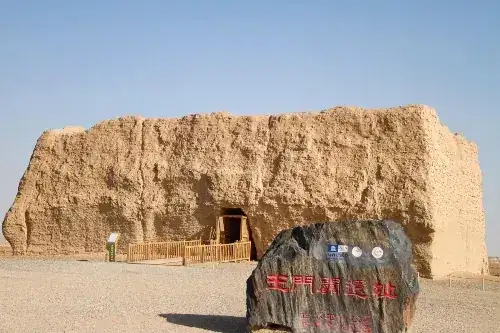
During the Northern Song Dynasty, much of Gansu was held by the Western Xia Empire, where the Tangut people farmed and developed their own culture while engaging in protracted triangular struggles with the Song, Liao, and Jin. In the Yuan Dynasty, the Mongol cavalry swept through and once again opened the passage across Eurasia. For the first time, Gansu was established as a province — the Gansu Branch Secretariat — marking its official birth as a unified administrative region. The name “Gansu” was derived from the first characters of its two key cities: Ganzhou (today’s Zhangye) and Suzhou (today’s Jiuquan). In the Ming Dynasty, to defend against the remnants of the Yuan, the court built extensive walls along the Hexi Corridor, erected the Jiayuguan Pass, and abandoned Dunhuang beyond the gates. Jiayuguan became the westernmost endpoint of the Ming Empire, the final gaze back toward the Central Plains. Under the Qing Dynasty, Emperor Kangxi pacified the Dzungar Khanate and brought the Western Regions back into the imperial fold. After Shaanxi and Gansu were separated into distinct provinces, the modern administrative shape of Gansu was confirmed. Throughout this period, Gansu’s role as the crucial communication hub linking the interior with Xinjiang and Tibet once again underscored its military and political significance.
Historical Relics and Testimonies
This long history has left a galaxy of relics: the vestiges of a prehistoric village at Dadiwan in Qin’an; the starting point of the Qin-era Great Wall in Lintao; the painted murals and sculptures of the Mogao Caves in Dunhuang; the coexistence of sand and spring at Mingsha Mountain and Crescent Moon Spring; the Bronze Galloping Horse (often called “Horse Stepping on a Swallow”) unearthed from the Leitai Han Tomb in Wuwei; the reclining Buddha in Zhangye’s Giant Buddha Temple and the echoes of the Western Xia’s state monastery; and the majestic Jiayuguan Fortress standing silently on the Gobi. Together, they form vivid and eternal witnesses to Gansu’s past.
Cultural Heritage
Much like its complex terrain, Gansu’s cultural heritage is remarkably diverse and transitional. It is neither a purely agrarian civilization of the loess, nor a wholly nomadic one of the grasslands, but a unique “cultural corridor” formed by the collision and fusion of multiple cultural plates. This deep accumulation spans language, customs, art, and belief systems, making it a living specimen for understanding the interactions between northwestern Chinese civilizations and even those of Central Asia as a whole.
In terms of dialect, the Chinese variants spoken in Gansu belong mainly to the Lan-Yin Mandarin and Zhongyuan Mandarin sub-groups of the broader northern dialect family. Lan-Yin Mandarin is prevalent along the Hexi Corridor and around Lanzhou, typically having only three or four tones. It is crisp and straightforward, carrying a frank, northwest-style directness. Zhongyuan Mandarin, spoken in the eastern and southern parts of the province, is closer to the Guanzhong dialect and represents the lingering echoes of the elegant Zhou-Qin language. Beyond Chinese, the region’s multi-ethnic fabric has preserved a wealth of minority languages, such as the Amdo Tibetan of Gannan, the Dongxiang language in Linxia, and the Yugur language — which preserves ancient Turkic and Mongolian elements — used in Sunan. This phenomenon of “one land, many tongues” is a true mirror of Gansu as an ethnic corridor.
Folk traditions are equally colorful, deeply reflecting the spiritual worlds of different peoples. Han Chinese festivals follow Central Plains rituals but are infused with a unique northwest character. During the Spring Festival, Shehuo (traditional festive performances) are especially vibrant in Lanzhou and the Longdong region. Performers in painted masks walk on stilts and run “land boats” in a boisterous, uninhibited display meant to ward off evil and invite blessings. Wedding and funeral customs in Gansu are elaborate and solemn, and many villages still preserve the ancient flavor of the complete “Six Rites.” On the level of belief, a more inclusive syncretism is evident. Among Han communities, worship of local deities is still widespread. A notable example is the worship of the “Eighteen Water Gods” in the Taomin area. Every year in the fifth lunar month, villagers carry palanquins of their patron dragon gods and converge on the regional center for a procession and competition — a sea of people and a huge frenzy. This is a remarkable remnant of Ming-dynasty military Nuo culture blended with folk rain-prayer rituals.
The arts represent the most dazzling gem in Gansu’s crown. When one speaks of the arts here, Dunhuang art is indisputably the first that comes to mind. The cave art represented by Mogao spans a thousand years, from the Sixteen Kingdoms period to the Yuan Dynasty, with exquisite murals and painted sculptures covering Buddhist sutra stories, Jataka tales, sutra illustration paintings, donor portraits, ceiling designs, and flying apsaras. It is a systematic history of Chinese art and medieval social customs. Dunhuang Studies, born from the Dunhuang manuscripts and the study of the caves, has become a distinguished international academic field. In local opera, Longju Opera is a genre unique to Gansu. It evolved from the “Longdong Daoqing” shadow puppetry popular in Qingyang and Pingliang, featuring melodious yet desolate tunes. Its representative work, Feng Luo Chi, is acclaimed nationwide. Additionally, Qinqiang Opera enjoys a massive grassroots following in Gansu. Its singing style here is even more sonorous and impassioned, known as the “Gan School of Qinqiang.”
In the realm of intangible cultural heritage, Gansu boasts a large number of national and provincial items. Besides the aforementioned Longju Opera and the “Eighteen Water Gods” festival, they include Linxia brick carving, Tianshui carved lacquerware, Qingyang sachet embroidery and paper-cutting, Gannan’s Tibetan medicine, and the “Hua’er” folk songs sung across the He Huang region. Hua’er, a kind of high, loud mountain song often sung impromptu outdoors by Han, Hui, Tibetan, and other ethnic groups together, uses metaphorical imagery to sing of love and life. It is a UNESCO Intangible Cultural Heritage item and perfectly embodies the multi-ethnic cultural fusion that characterizes Gansu, serving as a rough yet delicate emotional outlet for the people of this land.
Architecture and Cityscapes
Traveling through Gansu, from cave dwellings on the Loess Plateau to the Gobi oases of the Hexi Corridor and the Tibetan-style watchtowers of Gannan, the dramatic shifts in architectural form vividly narrate how different geographical units select and shape living spaces. The cityscapes and buildings here are a three-dimensional history book co-authored by raw earth, brick, timber, and faith.
The traditional architectural styles of Gansu are dictated primarily by harsh natural conditions and diverse cultural genes. In the loess highlands of Longdong and Longzhong, cave dwellings were the most common form of housing for millennia. People carved arched rooms into the deep loess cliffs, creating homes that are warm in winter and cool in summer. This gave rise to a unique underground settlement landscape where “trees are seen but not villages, and entering a village, you see no houses.” This earth architecture is extremely material-efficient and blends into the land — a crystallization of wisdom for sustainable co-existence with the environment. On the Hexi Corridor, traditional folk houses are typically courtyard compounds of adobe or brick-and-timber, with thick walls and small, narrow windows to resist sandstorms and bitter winters. Decoratively, they often feature both traditional Central Plains wood and brick carving, as well as complex geometric patterns influenced by Western Regions and Islamic art. A striking example is the brick carving on the mosques and folk houses of Linxia, with exquisite compositions and finely fitted bricks, demonstrating a fusion of Han and Hui craftsmanship.
In contrast to the humble dwellings, religious architecture forms the most magnificent chapter of Gansu’s buildings. Buddhist cave-temple complexes are undoubtedly the most brilliant part. From the Mogao Caves in Dunhuang to the Maiji Mountain Grottoes in Tianshui and the Bingling Temple in Yongjing, these are not isolated caves but grand ensembles combining wooden temple structures, cliff-side walkways, and rock faces. Towering giant cliff-carved Buddhas and cascading pavilions demonstrate an ultimate pursuit of faith in extreme environments. Tibetan Buddhism, meanwhile, has left a deep mark on the land of Gannan. The Tibetan monastic complex represented by Labrang Monastery in Xiahe rises tier upon tier along the mountainside. Vast white stone walls create a strong color contrast with the deep reddish-brown bianma parapet walls, while the resplendent, gilt-bronze, hip-and-gable roofed Grand Sutra Hall stands among them. The sheer grandeur often creates a profound spiritual shock for first-time visitors, as if they have arrived deep in the heart of the Tibetan Plateau.
In the modern era, the architecture and urban fabric of Gansu have undergone further reshaping. The capital Lanzhou is a classic valley-strung city, its urban growth stretching linearly along both banks of the Yellow River to form a narrow skeleton that extends dozens of kilometers. In the 1950s and 60s, along with large-scale industrial construction, Soviet-style factory buildings and accompanying residential quarters rose up. These massive, heavily structured buildings bear the distinct stamp of their era, representing the forceful injection of modern industrial civilization into this ancient land. Since the reform and opening-up, especially after entering the 21st century, city construction in places like Lanzhou has begun to blend modern styles with regional features. The riverside landscape belt along the Yellow River, for example, not only effectively manages the waterway but also incorporates local cultural elements like waterwheels and the “Yellow River Mother” sculpture, forming a flowing urban scenic line. Currently, clusters of skyscrapers are reshaping Lanzhou’s skyline. Meanwhile, historic cities like Tianshui and Wuwei are focusing more on finding micro-renewal possibilities within protected historic districts, striving for a balance between implanting modern functions and preserving the traditional fabric.
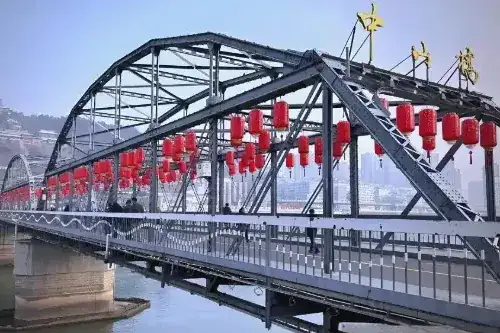
Characteristic neighborhoods and districts are windows into a city’s soul. In Lanzhou, to soak up the hustle and bustle, nothing beats the Zhenning Road Night Market and Zhangye Road pedestrian street, bustling with noise and the aromas of food day and night. For quiet nostalgia, climb White Pagoda Hill to overlook the iconic Yellow River Iron Bridge and the city panorama, feeling the weight of a century. In Tianshui, the pedestrian street in the Fuxi City area of Qinzhou tries its best to restore the old cityscape. With flagstone paths and antique-style buildings hosting antique shops and local eateries, it’s the best place to feel the pulse of the “Hometown of Fuxi.” In Xiahe, Gannan, the core of the entire Labrang town is formed by the kora (circumambulation) corridor and dense monks’ quarters around the monastery. Blond, blue-eyed backpackers brush shoulders with lamas in crimson robes, creating a surreal cultural experience that feels otherworldly. This is the most unique and spiritually rich segment of Gansu’s architectural and urban landscape.
Culinary Culture
Gansu’s cuisine, like all other cultural forms on this land, has developed a palate system heavy on wheat and lamb, with strong, savory, fragrant, sour, and spicy flavors that chase the essence of the ingredients themselves. It is a food culture forged by a harsh geography and a history of multi-ethnic coexistence. It brings together the fragrance of wheat from the Longyuan land (Gansu), the rich aroma of meat from highland pastures, and the scent of spices that drifted in along the Silk Road, creating the uniquely captivating flavor known as “Long Cuisine.”
If one dish must be named the face of Gansu, it is Lanzhou Beef Noodles. Hailed as “China’s No. 1 Noodle,” this dish has long transcended its geographic origin, but its soul remains forever in Lanzhou. An authentic bowl must satisfy the “Five Attributes”: One Clear (clear broth), Two White (white radish slices), Three Red (red chili oil), Four Green (green garlic sprout and coriander), and Five Yellow (yellowish, glossy noodles). The noodle master can pull the dough into over a dozen shapes according to the diner’s preference, from “cap-thin” to “leek-leaf” to “extra-wide.” The noodles are thrown into a rolling cauldron and cooked in seconds. They are then doused in a clear beef broth simmered for hours, covered with thin slices of beef and white radish, finished with a few spoonfuls of sizzling chili oil and a scattering of herbs. A bowl of this warm, comforting goodness is the essential key to starting a Lanzhou resident’s day with spirit.
The list of representative dishes and snacks goes far beyond this. First comes Hand-grabbed Lamb, a dish that best embodies the boldness of the vast northwest. Choice wether lamb from the Gannan grasslands or Linxia is boiled in plain water with a few simple spices like Sichuan pepper and ginger until tender. It is then chopped into chunks and served on a plate, to be eaten dipped in spiced salt or alongside a clove of raw garlic. The meat is incredibly tender, without the slightest gamey taste — a simply delicious dish that triumphs on the sheer freshness of its ingredients. Next is Liangpi (cold skin noodles), a summer snack popular across the province. A batter of flour is steamed in thin sheets in a metal tray, cut into long strips, and mixed with gluten pieces, cucumber shreds, and a sauce of sizzling chili oil, garlic paste, mustard, and vinegar. Bright red, sour, and spicy, it finds a delicate balance between chewy and soft. Also, there is Tianshui’s Guagua, a blocky snack made from buckwheat starch. It is crushed by hand, mixed with sesame paste, chili oil, and garlic, and boasts a soft, chewy texture — a breakfast staple for Tianshui locals. Then there is Zhangye’s Cuoyuzi, from the Hexi Corridor, a pasta where dough is rubbed into two-pointed curls shaped like tiny fish, then stir-fried with vegetables and shredded meat. It’s a classic home-style dish where the noodle and the meal are one.
Beneath the eating habits lies the deep regional character of Gansu. First, there is the heavy reliance on noodles within the overall meal structure, with dishes often playing a supporting role. This reflects the pragmatic agrarian demand for high-calorie carbohydrates. Second is the simple, direct approach to cooking. Whether it is large chunks of hand-grabbed lamb or noodles roughly slathered in chili, there is less of the refined elegance of southern cuisines and more of a raw, open-heartedness, as if facing the wind and frost head-on. Finally, the custom of sharing and communal eating — such as a group gathering around a large plate of lamb — encapsulates the tight-knit community bonds forged by a collectivist spirit in a harsh environment. This culinary generosity and sharing is a tradition of Silk Road hospitality that stretches back centuries and continues today at every dinner table. It is a key to interpreting the inner world of the people of Gansu.
Modern Transformation
Entering the modern era, Gansu has experienced a difficult journey: from an ancient inland province, to an industrial pillar of the People’s Republic, to its current quest for a green transition. Throughout this time, its strategic geographic value has been repeatedly redefined and its dominant industries have undergone numerous shifts, creating a development sample for an inland province with distinct Chinese characteristics.
Ancient Gansu flourished because of the Silk Road, but when maritime routes replaced the overland ones, and when the Qing Dynasty, as a unified empire, no longer needed to manage the Western Regions as a military buffer, the region slipped into the status of a remote frontier. During the Self-Strengthening Movement in the late Qing Dynasty, Zuo Zongtang, then Governor-General of Shaanxi and Gansu, established an arsenal and a woolen mill in Lanzhou, marking the difficult beginning of modern industry in Gansu and the starting point of modern industrialization in northwest China. Up until the Republic of China period, however, the economy of Gansu remained mired in a backward, semi-self-sufficient agricultural state, and its industrial base was extremely weak. The saying “the barren lands of central Gansu are the poorest under heaven” was widely quoted.
After the founding of the People’s Republic, Gansu met a turning point. During the First Five-Year Plan and the “Third Front” construction period, the strategic allocation of national resources profoundly reshaped Gansu’s economic landscape. Lanzhou was designated as one of the nation’s key industrial bases. The state laid out a large number of energy, raw material, and heavy industrial projects here, such as the Lanzhou Oil Refinery and the Lanzhou Chemical Industry Company. The construction of the Liujiaxia Hydropower Station on the upper Yellow River provided massive electrical support. These projects rapidly transformed Lanzhou into a modern heavy-industry city with sectors like petrochemicals, metallurgy, and machinery manufacturing. During this period, the discovery of iron ore at Jingtieshan in Jiuquan (the area was later established as Jiayuguan City) on the Hexi Corridor directly gave birth to another important steel city in Gansu — Jiayuguan. These cities were like lit industrial torches, briefly leading the region in both economic output and skilled workforce reserves. At the same time, however, the model of relying on single, massive state-owned enterprises directed by mandatory state plans also planted the heavy seeds for painful market transitions later.
Since the Reform and Opening-up, and especially into the 21st century, Gansu’s industrial landscape has experienced intense growing pains and profound adjustments. As the coastal economy took off, the old industrial bases were constrained by institutional systems, location, and resource depletion. A large number of state-owned enterprises faced bankruptcy and restructuring, and waves of layoffs once left “the eldest son of the republic” anxious and disoriented. Against this backdrop, transformation and diversified development became the main theme. First, there has been the rise of distinctive, high-quality agriculture. Leveraging unique conditions of sunlight and temperature differences, the yield and quality of Gansu’s potatoes, hybrid corn seeds, and Chinese medicinal herbs (like dang gui, dang shen, and huang qi) have jumped to the national forefront. Dingxi became known as “China’s Potato Capital” and Zhangye as a “National Hybrid Corn Seed Production Base.” Second, the cultural tourism sector has seen explosive growth. The influence of IPs like Dunhuang, Jiayuguan, Lanzhou Beef Noodles, and the hidden Gannan have been infinitely magnified by improved transport and word-of-mouth on the internet, turning tourism into a major engine for economic restructuring. Third, a new energy sector has risen remarkably. The Hexi Corridor is windy, sun-scorched, and vast. It has been planned by the state as a critical new energy base. Around Jiuquan and Guazhou, thousands of white wind turbines create a spectacular “white forest” on the Gobi, and gigantic arrays of photovoltaic panels stretch to the horizon. This has made Gansu one of China’s iconic zones for the country’s pledge to peak carbon emissions and achieve carbon neutrality.
Today, Gansu’s urban development has entered a new phase of clearer functional division. Lanzhou remains the core engine driving the province, striving to become a regional center in northwest China by developing modern service industries such as big data, logistics, and conventions. The Hexi Corridor urban cluster (Jiuquan, Jiayuguan, Zhangye, Jinchang, Wuwei) relies on its resource endowments, each forming a complementary industrial structure built on pillars like new energy and equipment manufacturing, metallurgy and new materials, modern agriculture, and cultural tourism. Tianshui, as part of the Guanzhong Plain urban cluster, focuses on equipment manufacturing, electrical appliances, and chip packaging and testing. Gannan and Linxia, meanwhile, strictly guard their ecological red lines, prioritizing specialty animal husbandry and ethnic cultural tourism. This former “passage” is striving hard to forge itself into a solid fulcrum for economic growth in northwestern China.
Transportation and Travel
For a province that stretches over a thousand kilometers from east to west, transportation is not just an economic lifeline; it is the physical thread that holds all its disparate parts together. Today, Gansu has initially built a three-dimensional transport system with Lanzhou as its hub, woven together by high-speed railways, expressways, and aviation networks, inscribing a new era of speed and connectivity on this vast land.
The external transport network of Gansu follows a core logic: it is laid out along the natural corridors formed by the ancient Silk Road and the Yellow River. The railway trunk lines are undoubtedly its arteries. The Longhai Line runs the full width of the province from east to west, connecting Xi’an and Urumqi and forming a crucial component of the Eurasian Land Bridge. Besides this, the Lanzhou-Xinjiang Railway, Baotou-Lanzhou Railway, Lanzhou-Qinghai Railway, and Lanzhou-Chongqing Railway extend outwards towards the northwest, northeast, and southwest respectively, turning Lanzhou into a veritable railway crossroads. Entering the high-speed rail era, the Lanzhou-Xinjiang High-Speed Railway has drastically shortened the temporal distance across the Hexi Corridor. The journey from Lanzhou to Jiayuguan has been slashed from nearly ten hours to just over four, making it possible for a traveler to “eat noodles in Lanzhou in the morning and see the fortress at Jiayuguan by dusk.” The successive openings of the Baoji-Lanzhou High-Speed Railway and Yinchuan-Lanzhou High-Speed Railway have integrated Gansu deeply into the national high-speed rail network, allowing direct travel eastward to megacities like Beijing, Shanghai, Guangzhou, and Shenzhen, and radiating westward into Xinjiang.
The province’s expressway network has similarly densified along the main corridors. The G30 Lianhuo Expressway, a national artery running east-west, enters from Shaanxi into Tianshui, passes through Lanzhou, and then runs west, stringing together all the major cities of the Hexi Corridor before reaching the Khorgos border port. Using the G30 as a horizontal axis, numerous north-south expressways like the G75 Lanhai Expressway and G6 Beijing-Tibet Expressway intersect in Lanzhou, forming a dense, radiating network. It is particularly worth noting that in the extremely difficult terrain of the Longnan mountains, the completion of highways like the Shitian and Chengwu Expressways has transformed what was once a sky-scraping barrier described as “harder than climbing to heaven” into a smooth route, greatly boosting the external connectivity of this underdeveloped region. These wide, straight expressways often cut through uninhabited Gobi or majestic loess highlands, and the shifting scenery outside the window is in itself a unique and remarkable travel experience.
In terms of aviation, Gansu has built a network of trunk and regional airports centered on Lanzhou Zhongchuan International Airport. As an important aviation hub in the northwest, Zhongchuan Airport operates flights to major and medium-sized cities across the country, as well as some international and regional routes. The expansion of its Terminal 3 will further boost its annual passenger throughput capacity. Moreover, in regions far from the core cities, a number of regional airports have been laid out, such as Dunhuang Mogao Airport, Jiayuguan Jiuquan Airport, Zhangye Ganzhou Airport, Jinchang Jinchuan Airport, and Longnan Chengxian Airport. These regional airports are like pearls dotted along the Silk Road, closely tied to the provincial capital by regional aviation, providing huge convenience for long-distance travelers to realize the dream of “travel fast, tour slow.”
Within the provincial transportation network, the hub status of Lanzhou, the capital, is self-evident. It is the convergence point for almost all external railways, expressways, and air routes, forming a strong, “single-center” radial pattern. For travelers, this creates a very clear travel logic: most people will use Lanzhou as their first stop for entering Gansu and starting a journey along the Silk Road. Here, they can rest, resupply, and then use it as a fulcrum to venture forth towards the historical relics of the Hexi Corridor, or head south to discover the hidden lands of Gannan. This transport structure itself, invisibly, charts the most classic and efficient travel route for every visitor, allowing their understanding of Gansu to unfold gradually along this well-established corridor.
Travel Tips
Writing travel tips for friends from afar is a bit like drawing a treasure map to an exotic land. Gansu’s charm lies precisely in its mix of grandeur, desolation, and splendor. But the harsh climate and the vast distances also require travelers to be well-prepared.
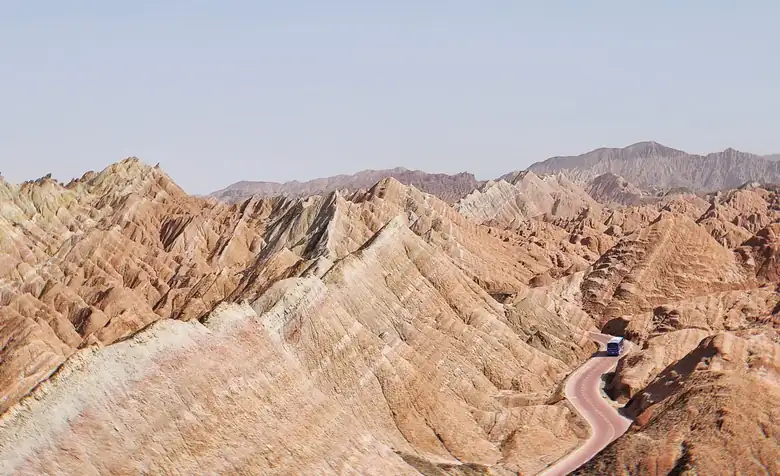
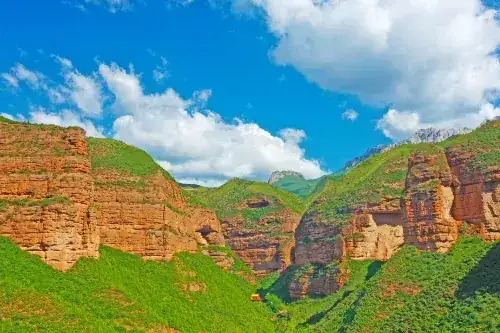
As for the best season to visit, Gansu’s territory is vast and the climate varies dramatically, but generally speaking, spring (April to May) and autumn (September to October) are the most comfortable times for province-wide travel. During these periods, the Hexi Corridor has less wind and sand, the temperatures are pleasant, and the rainbow-colored Danxia formations and ancient Great Wall are at their most magnificent under the blue sky. The hills and wilds of Longdong and Longnan are ablaze with autumn colors, intensely beautiful. Summer (June to August) is the most beautiful season on the Gannan grasslands, with lush grass and wildflowers everywhere; it’s also cool and pleasant, making it a perfect escape from the heat. However, at this same time, the Hexi Corridor and Lanzhou can be scorching and very dry. In winter (November to March), Gansu is generally freezing cold, with heavy snow in many areas that can disrupt transportation. But for photography enthusiasts and travelers who wish to experience a sense of ultimate desolation, the snow-covered Mogao Caves, Jiayuguan Pass, and the Loess Plateau possess a secluded, silent beauty that stands apart from the world.
For those visiting Gansu for the first time, the following three to five must-sees and experiences form the basic skeleton of your trip:
First, make your pilgrimage to Dunhuang. This is not just a devotional visit to the artistic caves of Mogao; you should also wait for a desert sunset at Mingsha Mountain and Crescent Moon Spring, experiencing the wonder of sand and spring coexisting to the sound of camel bells. Booking your Mogao Cave tickets a month in advance is crucial for the trip.
Second, delve deep into the Hexi Corridor. Rent a car or hire a driver for a stretch of the old National Highway 312. Witness the palette of the gods at Zhangye’s Colorful Danxia landform, and then travel west to finally stand upon the Jiayuguan Fortress rising from the gobi, touch the legendary “Fortress Brick” polished by 600 years of wind and sand, and feel the historic desolation of “West of Yang Pass, there will be no old friends.”
Third, spend an afternoon lounging by the Yellow River in Lanzhou. Walk from the south side of Zhongshan Bridge to White Pagoda Hill on the north bank for a panoramic view of the city. After that, find a deck chair by the river, order a cup of San Pao Tai (a tea with dried fruits, rock sugar, and goji berries), and watch the murky Yellow River flow east. In the evening, surrender to the bustling atmosphere of the Zhenning Road Night Market, indulging in sweet, milky egg lao zao and sizzling lamb skewers.
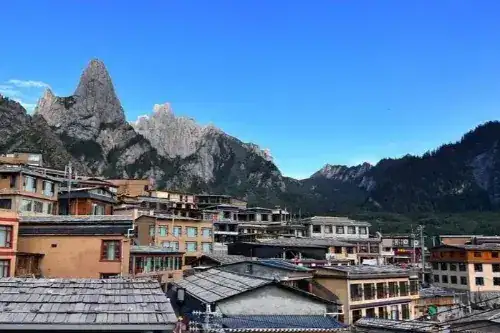
Fourth, experience Tibetan culture in Gannan. Head to Labrang Monastery in Xiahe. Follow the crimson-robed lamas and devout pilgrims as you turn the world’s longest kora (circumambulation corridor) and feel the power of faith. Then visit the nearby Sangke Grasslands and enjoy hand-grabbed lamb and yak butter tea in a herder’s tent.
A few practical tips will make your trip even smoother. Gansu’s climate is extremely dry, especially in the Hexi region. A portable humidifier, lip balm, high-SPF sunscreen, and sunglasses are daily essentials. Make sure to drink plenty of water. Altitudes vary greatly, from 1,500 meters in Lanzhou to plateaus over 3,000 meters in Gannan. Be aware of and take precautions against altitude sickness by moving slowly and avoiding strenuous activity. It is also crucial to respect local customs. In mosques, keep quiet and dress modestly. In Tibetan temples, remove your hat, never point your finger directly at a Buddha statue, and always walk and turn prayer wheels in a clockwise direction.
Finally, some crucial points of caution. Many of Gansu’s top sights, like Mogao and the Mati Temple Grottoes, are irreplaceable historical treasures. Photography and touching of the murals are strictly prohibited inside the caves. For the sake of history, and for our own sake, please strictly abide by these rules. In addition, keep the concept of time difference in mind. Although all of China uses Beijing time, in the Hexi Corridor in summer, the sun may not set until 8:30 pm or even 9:00 pm, making your days feel exceptionally long. It is important to pace your energy wisely. On this land inscribed with the imprints of interwoven civilizations, traveling with a humble and open heart is far more precious than any souvenir you could take away.
Travel information can change. Check current opening hours, reservations and entry requirements before you travel.
Traveller discussion
Start the conversation with a helpful tip or a question.