
Hulunbuir City
Hulunbuir CityHulunbuir City is a prefecture-level city under the jurisdiction of the Inner Mongolia Autonomous Region, China. Located in the northeastern part of the Inner Mongolia Autonomous Region, it is named after Hulun Lake and Beier
Hulunbuir City
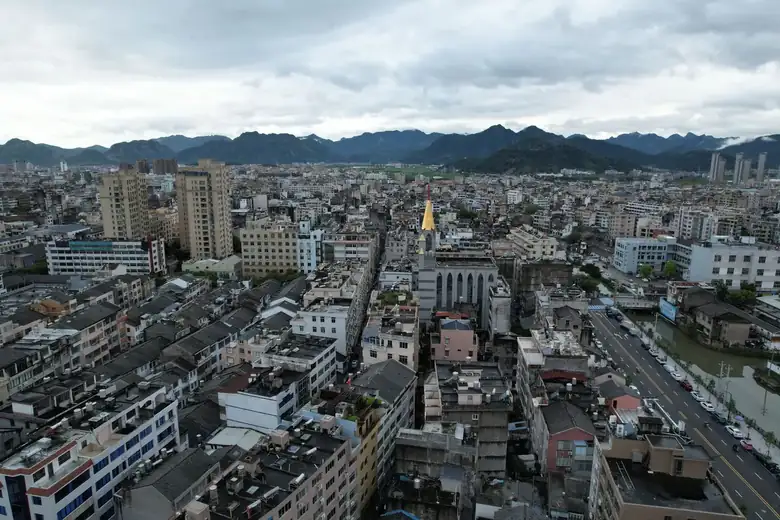
Hulunbuir City is a prefecture-level city under the jurisdiction of the Inner Mongolia Autonomous Region, China. Located in the northeastern part of the Inner Mongolia Autonomous Region, it is named after Hulun Lake and Beier Lake within its territory. It is connected to Hinggan League to the south, borders Heilongjiang Province to the east with the Nenjiang River as the boundary, borders Russia to the north and northwest with the Ergun River as the boundary, and borders Mongolia to the west and southwest. It is part of the Mongolian Plateau in central Asia. The climate distribution is characterized by the Greater Khingan Mountains as the dividing line, with a total area of approximately 253,000 square kilometers. As of January 2026, Hulunbuir City has jurisdiction over 2 municipal districts, 4 banners, 3 autonomous banners, and administers 5 county-level cities. As of the end of 2025, the permanent population of Hulunbuir City was 2.119 million. On April 30, 1954, the Eastern District Administrative Office was abolished, and the areas formerly under Hinggan League and Huna League were merged and renamed "Hulunbuir League." The Binzhou Railway and National Highway 301 run through the city, which has two international airports in Hailar and Manzhouli, with over 50 international and domestic routes connecting to Russia, Mongolia, and cities including Beijing, Hohhot, Harbin, Shanghai, and Guangzhou. Bordering both Russia and Mongolia, it is the only city in China at the intersection of three countries — China, Russia, and Mongolia — with 8 national-level ports including Manzhouli and Heishantou. It has a long cultural history and is an important birthplace of hunting and nomadic peoples in northern China. Hulunbuir City is an Outstanding Tourism City of China, the only key development area for grassland tourism in the country, a national pioneer zone for tourism reform and innovation, and home to the Hulunbuir Grassland, one of the world's four major grasslands and one of China's top 20 tourist attractions. It has been designated a National Forest City, selected as one of China's Top Ten Ice and Snow Tourism Cities, listed as a National Logistics Hub Carrier City, awarded the National Ecological Civilization Construction Demonstration Zone in 2025, and recognized as a National Double Support Model City (County). In 2025, Hulunbuir City achieved a regional GDP of 174.974 billion yuan (approximately US$24.1 billion), with a growth rate of 4.0%, and the three-industry structure ratio was 24.2:29.3:46.5.
Historical Evolution
In ancient times, early humans — the Zhalainuoer people — lived and thrived around the Hulun Lake area, creating the primitive culture of Hulunbuir.
In the first year of Emperor Qin Er Shi Huhai (209 BC), the Xiongnu conquered the Donghu tribe and unified the northern grasslands. The Hulunbuir region belonged to the territory of the Left Wise King's Court, one of the three tribal territories.
In the first century, the Tuoba Xianbei tribe, active in the Oroqen Banner area, "migrated south to the great lake" (i.e., Hulun Lake), replaced Xiongnu rule, and established the Xianbei tribal alliance. From there, they entered the Central Plains and established the Northern Wei Dynasty — the first ethnic minority regime in Chinese history.
While the remnants of the Xianbei people — the Shiwei tribe — and the Uyghurs, Turks, Kyrgyz, as well as the Khitans of the Liao Dynasty and the Jurchens of the Jin Dynasty successively fought over and ruled Hulunbuir, the various Mongol tribes quietly rose to prominence in the region.
In the eighth century, the Mengwu Shiwei tribe, ancestors of Genghis Khan living on the east bank of the Ergun River, migrated to the source area of the Onon River, Kherlen River, and Tula River in the Kent Mountains. In the twelfth century, when Genghis Khan rose to the political stage to unify the Mongolian grasslands, he returned to Hulunbuir, where he fought several major decisive battles, eliminated his political rivals, broke the long-standing balance of power among several major tribes, and finally unified the Mongolian Plateau. From then on, the Mongol ethnic group — with commonalities in language, territory, culture, and many shared characteristics in economic life — was formed on the northern grasslands. After the establishment of the Mongol Empire, the Household-Based Enfeoffment System was implemented.
In the ninth year of the Taizu era of the Mongol Empire (1214), Genghis Khan enfeoffed the greater part of the Hulunbuir Grassland to his eldest brother Jochi Khasar (the ancient city of Heishantou in Ergun City was his capital), and the remaining parts to his second brother Khachiun Elchi and the in-law De Sechen family. The eastern ridge area was granted to his youngest brother Temüge Otchigin. After the establishment of the Yuan Dynasty, the provincial system was created.
In the twenty-fifth year of the Zhiyuan era of the Yuan Dynasty (1288), the enfeoffed lands of the princes were incorporated into the provincial system. The western ridge area was placed under the jurisdiction of the Helin Circuit of the Lingbei Province, and the eastern ridge area was placed under the jurisdiction of the Taining Circuit of the Zhongshu Province and the Shanbei Liaodong Circuit of the Liaoyang Province. After the fall of the Yuan Dynasty, the descendants of Genghis Khan retreated to the Mongolian grasslands. The descendants of Emperor Shun of Yuan and the descendants of Genghis Khan's second brother Jochi Khasar successively nomadized on the Hulunbuir Grassland until they submitted to the Later Jin.
From the first year of the Yongle reign of Emperor Chengzu of Ming to the eighth year of the Xuande reign (1403–1433), the Ming Dynasty successively established the Jianhe Guard (present-day Ergun City and Genhe City), the Hailaer Thousand-Household Office (present-day Hailar District and Evenk Autonomous Banner), the Ouhan River Guard (present-day Woken River basin), the Halaha Office (present-day Halahe River area), the Zhierman Guard (Hailaer River basin), the Arun Guard (present-day Arun Banner area), the Ruanlihe Guard (present-day Zhalantun City area), and the Halahai Guard (present-day New Barag Left Banner area). The jurisdictions of these guards and offices covered most of present-day Hulunbuir, all subordinate to the Nurgan Regional Military Commission.
After the establishment of the Qing Dynasty, the region was placed under the command of the Heilongjiang Military Governor. The Butha Eight Banners, Solon Eight Banners, and Barga Eight Banners — composed of Evenk, Daur, Barga Mongol, and Oroqen people — were brave and skilled in battle, guarding the frontier and making contributions to defending against Russian invasions, ensuring the smooth operation of postal relay stations, and maintaining frontier peace.
From the first year of the Republic of China (1912) to the ninth year (1920), the western ridge area practiced local autonomy, separating from Heilongjiang Province. After 1920, it returned to the command of the Heilongjiang Military Governor, with the Deputy Commander's Office still maintained, while a Rehabilitation Commissioner and Negotiation Office was established, and the counties of Hulun, Lubin, Shiwei, and Qiqian were set up, forming a situation of coexistence and separate administration of banners and counties. The eastern ridge area also retained the West Butha Chief Office, while establishing Yalu County and Buxi County, directly under Heilongjiang Province.
During the occupation of Northeast China, the eastern ridge area became Hinggan Eastern Province, and the western ridge area became Hinggan Northern Province, both directly under Manchukuo.
In August 1945 (the thirty-fourth year of the Republic of China), Japan surrendered. In October, the Hulunbuir Autonomous Provincial Government was established in the western ridge area, and the Nawenmuren Province was established in the eastern ridge area. In June 1946, Nawenmuren Province was renamed Nawenmuren League, under the leadership of the Hinggan Provincial Government led by the Chinese Communist Party. In October, the Hulunbuir Autonomous Provincial Government was renamed the Hulunbuir Autonomous Government. In May 1947, Nawenmuren League was placed under the leadership of the Inner Mongolia Autonomous Government. On January 1, 1948, the Hulunbuir Autonomous Government was renamed Hulunbuir League, subordinate to the Inner Mongolia Autonomous Region Government.
In April 1949, Hulunbuir League and Nawenmuren League merged to form the Hulunbuir Nawenmuren League, abbreviated as Huna League. The territory of Huna League roughly coincided with that of Hulunbuir City established in 2001.
On April 1, 1953, the Eastern Administrative Office of the Inner Mongolia Autonomous Region was established, headquartered in Ulan Hot. Simultaneously, the original structures of Jirem, Hinggan, and Huna leagues were abolished. The cities of Hailar, Manzhouli, and Ulan Hot from the former Huna League became municipalities directly under the Inner Mongolia Autonomous Region, with their affairs entrusted to the Eastern Administrative Office.
On April 30, 1954, the Eastern District Administrative Office was abolished. The areas formerly under Hinggan League and Huna League were merged and renamed Hulunbuir League, and the Hulunbuir League People's Government was established as a first-level government, directly under the leadership of the Inner Mongolia Autonomous Region. The league government was seated in Hailar City.
On February 21, 1957, the Hulunbuir League People's Government was renamed the Hulunbuir League People's Committee. On June 1, 1958, the Hulunbuir League People's Committee was abolished and reorganized as a dispatched agency of the Inner Mongolia Autonomous Region, with the Administrative Office established in Hailar City, renamed the Hulunbuir League Administrative Office.
On August 20, 1958, the Inner Mongolia Party Committee approved the merger of Ulan Hot City into the Horqin Right Wing Front Banner of Hulunbuir League, while retaining the external name of Ulan Hot City. On July 20, 1964, it was changed to Ulan Hot (township level), subordinate to the Horqin Right Wing Front Banner of Hulunbuir League.
In August 1965, the Horqin Right Wing Middle Banner of Hulunbuir League was transferred to Jirem League (later reorganized as Tongliao City).
On December 20, 1967, the Hulunbuir League Revolutionary Committee was established as a temporary authority, exercising the powers of the former Hulunbuir League Administrative Office.
On July 5, 1969, the CPC Central Committee and the State Council decided to transfer Hulunbuir League of the Inner Mongolia Autonomous Region to Heilongjiang Province, while Tuquan County and the Horqin Right Wing Front Banner of Hulunbuir League were placed under the jurisdiction of Baicheng Prefecture in Jilin Province. Hulunbuir League under Heilongjiang Province had jurisdiction over 2 cities and 12 banners.
In April 1970, the Oroqen Autonomous Banner and the Morin Dawa Daur Autonomous Banner of Hulunbuir League in Heilongjiang Province were transferred to the Greater Khingan Prefecture.
On May 30, 1979, the CPC Central Committee and the State Council decided to restore the original administrative divisions of the Inner Mongolia Autonomous Region as of July 1969. Effective July 1, Hulunbuir League of Heilongjiang Province, the Oroqen Autonomous Banner and Morin Dawa Daur Autonomous Banner of the Greater Khingan Prefecture, and Tuquan County and the Horqin Right Wing Front Banner of Baicheng Prefecture in Jilin Province were formally transferred to Hulunbuir League of the Inner Mongolia Autonomous Region.
In July 1980, the Hinggan League structure was restored: Ulan Hot City was separated from the Horqin Right Wing Front Banner, and the Horqin Right Wing Front Banner, Jalaid Banner, Tuquan County, and Ulan Hot City of Hulunbuir League, along with the Horqin Right Wing Middle Banner of Jirem League, were transferred to Hinggan League. In the same year, the Hulunbuir League Revolutionary Committee was abolished and replaced by the Hulunbuir League Administrative Office, which operated until the league was abolished and the city was established in 2001.
On October 10, 2001, Hulunbuir League was abolished and the prefecture-level Hulunbuir City was established. The county-level Hailar City was abolished and Hailar District was established.
On March 6, 2013, the Manzhouli Zhalainuoer Mining Area was registered as Zhalainuoer District of Hulunbuir City, administered by Manzhouli City on behalf of the prefecture.
In March 2023, the Standing Committee of the 11th Party Congress of the Inner Mongolia Autonomous Region decided that Zhalainuoer District would be directly managed by Hulunbuir City.
Administrative Divisions
As of January 2026, Hulunbuir City has jurisdiction over 2 municipal districts, 4 banners, 3 autonomous banners, and administers 5 county-level cities: Hailar District, Zhalainuoer District, Manzhouli City, Zhalantun City, Yakeshi City, Genhe City, Ergun City, Arun Banner, New Barag Left Banner, New Barag Right Banner, Old Barag Banner, Morin Dawa Daur Autonomous Banner, Oroqen Autonomous Banner, and Evenk Autonomous Banner. There are a total of 36 sub-districts, 68 towns, 19 townships (including 13 ethnic townships), and 19 sumu (including 1 ethnic sumu). The Hulunbuir Municipal People's Government is seated at Youhao Sixth Street, Hailar District.
Geographical Environment
Location and Boundaries
Hulunbuir City is located in the northeastern part of the Inner Mongolia Autonomous Region, between 47°05'–53°20' N latitude and 115°13'–126°04' E longitude. It spans 630 kilometers from east to west and 700 kilometers from north to south, with a total area of 253,000 square kilometers, equivalent to the combined area of Shandong and Jiangsu provinces. The city borders Heilongjiang Province to the east, and borders Mongolia and Russia to the west and north. The border with Russia and Mongolia totals 1,733.32 kilometers, of which the China-Russia border is 1,051.08 kilometers and the China-Mongolia border is 682.24 kilometers.
Topography and Landforms
Hulunbuir City is part of the Mongolian Plateau in central Asia. The Greater Khingan Mountains run through the central part of Hulunbuir City in a northeast-southwest direction, forming three major topographic units and economic zones: the Greater Khingan mountain area, which serves as a forest region, with elevations of 700–1,700 meters; the area west of the mountains, which is the Hulunbuir Grassland, a grassland animal husbandry economic zone with elevations of 550–1,000 meters; the transitional zone between grassland and forest, mostly with chernozem soil, suitable for crop cultivation, forming a combined farming and herding economic belt; and the area east of the mountains, consisting of low hills and river valley plains, forming an agriculture-based economic zone with elevations of 200–500 meters.
Climate
The climate distribution of Hulunbuir City is characterized by the Greater Khingan Mountains as the dividing line. The climate types are divided as follows: the eastern ridge area is a monsoon climate zone, and the western ridge area is a continental climate zone. In terms of annual precipitation: the eastern ridge area has a semi-humid climate with annual precipitation of 500–800 millimeters; the western ridge area has a semi-arid climate with annual precipitation of 300–500 millimeters. The overall climate characteristics are: cold and dry winters, hot and rainy summers, with large annual and diurnal temperature differences.
Natural Resources
Water Resources
Of Hulunbuir City's total water resources of 31.619 billion cubic meters, surface water resources amount to 29.819 billion cubic meters, accounting for more than 1% of the national total and over 73% of the autonomous region's total. Groundwater resources total 1.8 billion cubic meters. The per-capita water resource ownership in the city exceeds 11,000 cubic meters, higher than the world average and nearly 5 times the national average.
Plant Resources
Hulunbuir City has abundant wild plant resources, with over 1,400 species of wild plants, of which more than 500 have economic value. These mainly include wild medicinal plants, wild economic plants, wild oil-bearing plants, wild fiber plants, wild starch plants, wild edible plants, and wild fruit plants.
Animal Resources
Hulunbuir City has a wide variety and large quantity of wildlife. According to incomplete statistics, the city's wildlife species account for 12.3% of China's total and over 70% of the autonomous region's total, ranking first. Among these animals, more than 30 species are Class I, II, and III nationally protected wildlife and autonomous region-protected wildlife, some of which are rare mammals and birds. The Cervidae (deer family) is the most famous. Of the city's 313 bird species, over 60 are nationally protected, including the Red-crowned Crane, Hooded Crane, Siberian Crane, Common Crane, Whooper Swan, and Tundra Swan.
On June 11, 2026, the Information Office of the Hulunbuir Municipal People's Government held a press conference on the terrestrial wildlife resource survey, releasing the preliminary results. This survey covered 14 banners, cities, and districts of Hulunbuir City and was the largest and most systematic terrestrial wildlife resource survey in the region's history. Through scientific monitoring and statistical analysis, the survey confirmed 457 species of terrestrial wildlife in Hulunbuir City, including 9 species of amphibians, 7 species of reptiles, 140 species of passerine birds, 209 species of non-passerine birds, 31 species of rodents, and 61 species of non-rodent mammals. This survey recorded four new species for the first time: the Harlequin Duck, White-crowned Penduline Tit, White-throated Bush Chat, and Steppe Wildcat.
Mineral Resources
Hulunbuir City is rich in mineral resources and is an important mineral resource city in the autonomous region. Energy minerals, primarily coal, petroleum, and natural gas, are abundant, making it an important national energy development base. Metallic minerals are mainly iron, copper, lead, zinc, molybdenum, and silver, with numerous large and medium-sized mineral deposits suitable for large-scale development and utilization. Non-metallic minerals are comprehensive in variety, widely distributed, and have great resource potential with obvious advantages. Among them, coal retained resource reserves amount to 125.964 billion tons, with prospective reserves exceeding 200 billion tons. In 2020, the city's raw coal output was 71.617 million tons. The proven retained resource reserves of precious metals and other metals are: gold 28.04 tons, silver 13,600 tons, copper 2.6808 million tons, lead 3.3419 million tons, zinc 5.6789 million tons, and iron ore 89.80 million tons.
Population
Population Size
According to the Seventh National Population Census, as of midnight on November 1, 2020, the permanent population of Hulunbuir City was 2,242,875.
As of the end of 2024, the permanent population of Hulunbuir City was 2.1391 million, a decrease of 27,200 from the end of the previous year. Of these, the urban population was 1.6426 million and the rural population was 496,500. The male population was 1.0802 million and the female population was 1.0589 million. There were 8,400 births during the year, with a birth rate of 3.9 per thousand; 23,100 deaths, with a mortality rate of 10.7 per thousand.
Ethnic Composition
Hulunbuir City is home to 48 ethnic groups, including Han, Mongol, Daur, Evenk, Oroqen, Hui, Manchu, Russian, Korean, Zhuang, Tibetan, Xibe, Miao, Tujia, Yi, Uyghur, Kyrgyz, Gaoshan, Buyi, She, Dai, Dong, Qiang, Li, Kazakh, Tu, Bai, Jingpo, Va, Naxi, Hezhen, Gin, Yao, Jino, Mulam, Dongxiang, Lisu, Salar, Sui, Hani, Monba, Achang, Maonan, Lahu, Nu, Yugur, Uzbek, and Bonan.
Politics
Economy
Overview
In 2024, Hulunbuir City's regional GDP was 173.067 billion yuan (approximately US$23.9 billion), a year-on-year increase of 3.5%. By industry, the primary industry value-added was 40.359 billion yuan (approximately US$5.6 billion), up 5.4%; the secondary industry value-added was 54.421 billion yuan (approximately US$7.5 billion), up 0.7%; and the tertiary industry value-added was 78.287 billion yuan (approximately US$10.8 billion), up 4.2%. The three-industry structure ratio was 23.3:31.4:45.2. The contribution rates of the primary, secondary, and tertiary industries to GDP growth were 36.0%, 5.3%, and 58.7%, respectively. The per-capita GDP for the year was 80,310 yuan (approximately US$11,100), up 4.7% year-on-year.
In 2024, Hulunbuir City's total social fixed asset investment was 38.710 billion yuan (approximately US$5.3 billion), up 8.0% year-on-year. Fixed asset investment (excluding rural households) was 37.961 billion yuan (approximately US$5.2 billion), up 10.0%. By economic type, state-controlled investment was 21.784 billion yuan (approximately US$3.0 billion), up 1.9%; private investment was 15.332 billion yuan (approximately US$2.1 billion), up 16.7%. By sector, manufacturing investment was 3.743 billion yuan (approximately US$516 million), down 24.9%; infrastructure investment was 14.685 billion yuan (approximately US$2.0 billion), up 0.8%; and real estate development investment was 5.014 billion yuan (approximately US$692 million), down 1.4%.
In 2024, Hulunbuir City's general public budget revenue was 11.881 billion yuan (approximately US$1.6 billion), up 7.4% year-on-year. Of this, tax revenue was 8.375 billion yuan (approximately US$1.2 billion), up 2.1%. General public budget expenditure was 62.248 billion yuan (approximately US$8.6 billion), up 8.0%. Various livelihood expenditures in social security, healthcare, and other fields totaled 45.765 billion yuan (approximately US$6.3 billion), up 9.9%, accounting for 73.5% of general public budget expenditure.
Primary Industry
In 2024, the sown area of grain crops in Hulunbuir City was 1.6423 million hectares, up 0.06% year-on-year. Total grain output was 6.7927 million tons, up 2.9%. Specifically, wheat output was 760,300 tons, down 5.3%; corn output was 3.6929 million tons, up 3.6%; soybean output was 1.8538 million tons, up 0.7%; and potato output (grain-equivalent) was 326,700 tons, up 34.7%. The average grain yield per mu was 275.75 kilograms, up 2.8%.
In 2024, the output of pork, beef, mutton, and poultry meat in Hulunbuir City was 263,000 tons, up 5.3% year-on-year. Specifically, pork output was 37,000 tons, up 4.4%; beef output was 116,000 tons, up 16.9%; mutton output was 102,000 tons, down 5.8%; and poultry meat output was 8,000 tons, up 13.6%. Poultry egg output was 26,000 tons, down 13.3%. Milk output was 717,300 tons, down 4.8%.
Secondary Industry
In 2024, the total industrial value-added of Hulunbuir City increased by 0.2% year-on-year, of which the value-added of industrial enterprises above designated size decreased by 0.9%. By economic type, state-controlled enterprise value-added decreased by 2.1%, joint-stock enterprises decreased by 1.1%, and foreign-invested and Hong Kong-Macau-Taiwan-invested enterprises increased by 5.0%. By sector, mining decreased by 4.0%, manufacturing increased by 8.8%, and electricity, heat, gas, and water production and supply increased by 1.5%. Among the above-scale industrial sectors, food manufacturing value-added increased by 24.9%, wood processing increased by 24.7%, non-metallic mineral products increased by 11.4%, agricultural and sideline food processing increased by 6.1%, electricity and heat production and supply increased by 1.9%, coal mining and washing decreased by 2.4%, chemical raw materials and chemical products manufacturing decreased by 5.8%, non-ferrous metal mining decreased by 9.4%, and alcoholic beverages manufacturing decreased by 14.0%. Above-scale industrial enterprises achieved operating revenue of 80.993 billion yuan (approximately US$11.2 billion), down 1.0% year-on-year; profit of 12.733 billion yuan (approximately US$1.8 billion), down 10.4%; operating revenue profit margin of 15.7%; cost per 100 yuan of revenue of 68.14 yuan, up 1.0%; asset-liability ratio of 61.4%, down 1.7 percentage points; and product sales rate of 98.9%, down 1.0 percentage points.
In 2024, the construction industry value-added of Hulunbuir City was 6.970 billion yuan (approximately US$961 million), up 3.1% year-on-year. The city had 85 qualified construction enterprises with output of 5.197 billion yuan (approximately US$717 million), up 5.2%. The building construction area of construction enterprises was 764,700 square meters, and the completed building area was 116,300 square meters.
Tertiary Industry
In 2024, the total retail sales of consumer goods in Hulunbuir City were 35.595 billion yuan (approximately US$4.9 billion), up 2.6% year-on-year. By location, urban retail sales were 31.874 billion yuan (approximately US$4.4 billion), up 2.5%; rural retail sales were 3.721 billion yuan (approximately US$513 million), up 3.7%. By consumption type, commodity retail sales were 28.975 billion yuan (approximately US$4.0 billion), up 1.8%; catering revenue was 6.620 billion yuan (approximately US$913 million), up 6.2%. Among retail sales of goods by above-designated-size units, grain, oil, and food category retail sales increased by 7.3%, beverages by 42.1%, tobacco and alcohol by 7.7%, Chinese and Western medicines decreased by 4.4%, petroleum and related products increased by 1.5%, and automobiles decreased by 6.2%.
As of the end of 2024, the balance of RMB deposits of financial institutions in Hulunbuir City was 278.348 billion yuan (approximately US$38.4 billion), up 8.6% year-on-year. Of this, household deposits were 219.264 billion yuan (approximately US$30.2 billion), up 9.5%; non-financial enterprise deposits were 22.204 billion yuan (approximately US$3.1 billion), up 8.4%; fiscal deposits were 4.002 billion yuan (approximately US$552 million), up 11.5%; and government and organizational deposits were 32.380 billion yuan (approximately US$4.5 billion), up 2.7%. The balance of RMB loans of financial institutions in the city was 139.658 billion yuan (approximately US$19.3 billion), up 0.9%. Of this, household loans were 53.470 billion yuan (approximately US$7.4 billion), up 15.4%; and non-financial enterprise and organizational loans were 86.188 billion yuan (approximately US$11.9 billion), down 6.4%.
In 2024, Hulunbuir City had 35 insurance financial institutions. The cumulative original insurance premium income for the year was 8.131 billion yuan (approximately US$1.1 billion), up 1.58% year-on-year; cumulative claim expenditures were 3.537 billion yuan (approximately US$488 million), up 12.85%. Specifically, property insurance premium income was 3.016 billion yuan (approximately US$416 million), up 1.89%, with claim expenditures of 2.070 billion yuan (approximately US$286 million), up 12.83%; personal insurance premium income was 5.115 billion yuan (approximately US$706 million), up 1.39%, with claim expenditures of 1.467 billion yuan (approximately US$202 million), up 12.87%. Agricultural insurance premium income was 1.395 billion yuan (approximately US$192 million).
Social Affairs
Science and Technology
In 2024, Hulunbuir City appraised 58 scientific and technological achievements. A total of 37 technology contracts were signed, with a contract transaction amount of 153 million yuan (approximately US$21 million), down 42.9% year-on-year.
Education
In 2024, Hulunbuir City had 4 regular institutions of higher education. The city admitted 10,753 regular undergraduate and junior college students, up 25.78% year-on-year. The number of regular undergraduate and junior college students in attendance was 29,179, up 1.51%. The number of adult undergraduate and junior college students in attendance was 2,301, up 31.1%. There were 24 regular senior high schools, admitting 11,089 students, down 4.68%; with 33,759 students in attendance, down 2.96%. There were 126 junior high schools, admitting 16,566 students, down 0.26%; with 52,245 students in attendance, down 0.14%. There were 121 primary schools, admitting 14,927 students, down 14.25%; with 98,883 students in attendance, down 1.95%.
Culture
In 2024, Hulunbuir City had 14 performing arts groups, 15 public libraries, 15 public art (cultural) centers, and 25 museums. The city had 1 municipal-level radio and television broadcasting institution and 14 banner/county-level integrated media centers. There were 96 FM television relay and transmission stations. The comprehensive coverage rate of radio was 99.74%, and the comprehensive coverage rate of television was 99.73%.
Healthcare
In 2024, Hulunbuir City had 1,896 health institutions, flat compared to the previous year. Medical and health institutions had 16,373 actual hospital beds, a decrease of 597.
Sports
In 2024, Hulunbuir City won 9 gold medals, 10 silver medals, and 11 bronze medals in national competitions; and won 88 gold medals, 101 silver medals, and 111 bronze medals in provincial-level competitions.
Social Security
In 2024, 942,600 people in Hulunbuir City participated in urban employee pension insurance, and 685,100 people participated in urban and rural resident pension insurance. A total of 2.0749 million people participated in basic medical insurance, 297,200 in unemployment insurance, 328,000 in work injury insurance, and 359,700 in maternity insurance.
Transportation
Overview
Hulunbuir City is a key node in the China-Mongolia-Russia Economic Corridor of the Belt and Road Initiative. It has built a "One Axis, Two Wings" comprehensive, multi-dimensional opening channel system, preliminarily achieving the extension of the aviation transport chain and a one-hour aviation circle. Railway dedicated lines for coal mines, power plants, large enterprises, and major industrial parks are being advanced in an orderly manner, urban and rural passenger transport routes are gradually being opened, and all administrative villages and gachas with conditions for passenger transport service have been connected. At the same time, with the "One Horizontal, Two Verticals, Five Rings" tourism route as the backbone, transportation construction is deeply integrated with tourism resource development, creating a comprehensive tourism road network covering grasslands, forests, wetlands, and folk villages.
In 2024, the railway and highway freight volume of Hulunbuir City was 205.2181 million tons, up 5.7% year-on-year. Of this, railway freight volume was 112.9471 million tons, up 4.8%; highway freight volume was 92.2710 million tons, up 6.9%. Civil aviation cargo and mail throughput was 29,200 tons, up 22.0%. Railway and highway freight turnover was 59.971 billion ton-kilometers. Of this, railway freight turnover was 43.192 billion ton-kilometers, up 1.4%; highway freight turnover was 16.779 billion ton-kilometers, up 7.0%. Railway and highway passenger volume was 7.4284 million, up 7.0% year-on-year. Of this, railway passenger volume was 4.6754 million, up 5.0%; highway passenger volume was 2.7530 million, up 10.6%. Civil aviation passenger throughput was 3.7974 million, up 9.0%. Railway and highway passenger turnover was 2.391 billion person-kilometers. Of this, railway passenger turnover was 2.063 billion person-kilometers, up 6.6%; highway passenger turnover was 328 million person-kilometers, down 4.7%.
Railways
The railway trunk lines within Hulunbuir City are distributed in a rectangular (closed-loop) pattern. There are 10 existing railways: the Binzhou Line (Harbin–Manzhouli), Yalin Line (Yakeshi–Mangui), Bolin Line (Boketu–Tarqi), Chaowu Line (Chaozhong–Moerdaoga), Yimin Line (Hailar East–Yimin), Yi'a Line (Yimin–Yi'ershi), Azha Line (Arun Banner–Zhalantun), Yijia Line (Yituli River–Jiagedaqi), Jiamo Line (Jiagedaqi–Mohe), and Qijia Line (Qiqihar–Jiagedaqi). A planned new high-speed railway trunk line is to be incorporated into the Suiman Corridor.
Highways
Hulunbuir has formed a road network with National Expressway G10 (Suiman Expressway) and G5511 (Ji'a Expressway), three national highways — National Highway 111 (Beijing to Jiagedaqi), National Highway 301 (Suifenhe to Manzhouli), and National Highway 332 — and five provincial highways as the main backbone: Provincial Highway 201 (Shiwei to Amugulang), Provincial Highway 202 (Hailar to Handagai), Provincial Highway 203 (Manzhouli to Ulan Hot), Provincial Highway 301 (Heihe to Heishantou), and Provincial Highway 302 (Nianzishan to Boketu), supplemented by county, township, border defense, and dedicated roads.
Aviation
As of January 2021, there are 11 civil airports within Hulunbuir City, including 4 civil transport airports: Hulunbuir Dongshan International Airport, Manzhouli Xijiao International Airport, Zhalantun Genghis Khan Airport, and Greater Khingan Oroqen Airport; and 7 civil general aviation airports: Genhe Aoluguya Airport, Hulunbuir Bayankuren General Airport, Morin Dawa Nierji General Airport, New Barag Right Banner Baogede Airport, Hulunbuir Xie'ertala Airport, Inner Mongolia Forestry General Hospital Heliport (Medical), and Arun Airport. Of the 11 airports, the Greater Khingan Oroqen Airport belongs to the Greater Khingan Prefecture of Heilongjiang Province, and the other 10 belong to Hulunbuir City.
Hulunbuir Dongshan International Airport is a major airport of the Inner Mongolia Autonomous Region, a national first-class 4D-level airport located in Hailar District. It is the central airport of Hulunbuir and is commonly referred to as "Hailar Dongshan (International) Airport" in airline systems. It has opened routes to Beijing, Hohhot, Zhalantun, Genhe, Baogede, Harbin, Shenyang, Nanjing, Hangzhou, Shenzhen, Guangzhou, Shijiazhuang, Tianjin, Shanghai, Dalian, Zhengzhou, Xiamen, Wuhan, Hong Kong, Taipei, Sanya (winter), Chita (Russia), Choibalsan (Mongolia), Ulaanbaatar (Mongolia), Seoul (South Korea), and Kumamoto (Japan), among others.
Manzhouli Xijiao International Airport has opened 26 routes, including 6 international routes. Compared to 2014, it added 3 domestic routes and 1 international route, with 4 newly connected cities.
Zhalantun Genghis Khan Airport is not an aviation port and only operates routes to cities in mainland China. Genhe Aoluguya Airport and Morin Dawa Nierji General Airport only operate routes within Hulunbuir City and intercity routes. New Barag Right Banner Baogede Airport has a long-term plan to open domestic routes, but as of 2018 it remained a commuter general aviation airport, only operating routes within Hulunbuir City.
History and Culture
Scenic Spots
Hulunbuir Grassland
The Hulunbuir Grassland is located in the western part of Hulunbuir City. The grasslands extending from west of the Greater Khingan Mountains to the border of Mongolia are all part of it, making it the largest grassland in China. At scenic areas such as Huhenuor and Bayanhushuo on the Hulunbuir Grassland, visitors can enjoy wrestling, archery, and other performances. In addition to the grasslands, attractions include the Ergun River and Hulun Lake. The Russian cultural atmosphere can also be experienced in Shiwei Town, Manzhouli, and other locations. In the evening, visitors can participate in distinctive grassland bonfire parties, with Mongolian music, songs, and dances.
World Anti-Fascist War Hailar Memorial Park
The World Anti-Fascist War Hailar Memorial Park is located at Beishan (North Mountain) in Hailar District, Hulunbuir City (at the former site of the Hailar Fortress of the Japanese Invading Army, 3 kilometers north of the Hailar urban area). It is a national 4A-level tourist attraction and a patriotic education base of Hulunbuir City. The memorial park covers a total area of 110 hectares and was built on the former site of the Hailar Fortress of the Japanese Invading Army. It is a military-themed red tourism attraction integrating patriotism, internationalism, and revolutionary heroism. The memorial park is divided into above-ground and underground sections. The above-ground section includes the Hailar Fortress Site Museum (with four exhibition halls and nine sections), a theme plaza, above-ground war relics, simulated war scenes, and visitor service facilities. The underground fortification ruins reproduce the Japanese headquarters, soldiers' dormitories, medical rooms, communication rooms, and other facilities.
Other Major Scenic Areas
Notable Figures
Honorary Titles
Travel information can change. Check current opening hours, reservations and entry requirements before you travel.
Traveller discussion
Start the conversation with a helpful tip or a question.