
Chifeng City
Chifeng CityChifeng City, abbreviated as "Chi" and formerly known as "Zhaowuda League," is a prefecture-level city and Type II large city under the Inner Mongolia Autonomous Region. Located in southeastern Inner Mongolia at the junction of
Chifeng City
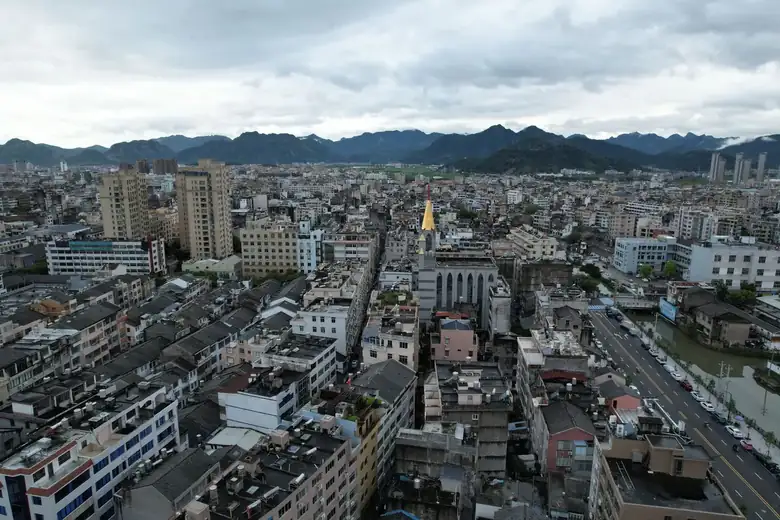
Chifeng City, abbreviated as "Chi" and formerly known as "Zhaowuda League," is a prefecture-level city and Type II large city under the Inner Mongolia Autonomous Region. Located in southeastern Inner Mongolia at the junction of Inner Mongolia, Hebei, and Liaoning, it borders Chaoyang to the southeast, Chengde to the southwest, Tongliao to the east, and Xilingol League to the northwest. The terrain features mountains on three sides, high in the west and low in the east, with numerous hills. The climate is temperate semi-arid continental monsoon, with distinct seasons, long cold winters, and short summers with concentrated rainfall. Total area: 90,021 square kilometers. As of May 2025, Chifeng administers 3 districts, 7 banners, and 2 counties. As of end-2025, the permanent population was 3.887 million. The name "Chifeng" means "Red Mountain," derived from the ochre-red peaks northeast of the city center, known as "Ulan Hada" in Mongolian. Chifeng is home to numerous national-level cultural heritage sites and is called the "Hometown of the Jade Dragon" after the discovery of the Hongshan Culture jade dragon. The region was the political, economic, and cultural center of the Liao Dynasty. Chifeng is the Inner Mongolian city closest to a seaport, an important node in the Capital Economic Circle and Bohai Rim Economic Circle, a national logistics hub city, and a key energy and strategic resource supply base. Known as "China's Hometown of Non-ferrous Metals," it holds titles including National Health City, National Garden City, and China Excellent Tourism City. In 2025, Chifeng's GDP reached 240.71 billion yuan (approximately $33.7 billion USD), growing 4.9% year-on-year.
Historical Evolution
Around 10,000 years ago, early inhabitants pioneered the Neolithic Revolution. The Xinglongwa Culture (8,000 years ago) left large-scale settlement ruins, called "China's First Village." The Zhaobaogou Culture (7,000 years ago) created a distinctive Neolithic culture. The Hongshan Culture (5,000-6,000 years ago) marked Chifeng as the birthplace of ancient Chinese civilization, exemplified by the large jade dragon excavated at Sanxingtala in Wengniute Banner—China's earliest dragon-shaped artifact, hailed as "The World's First Dragon." The Xiaoheyan Culture (4,500 years ago) saw the beginning of written records. The Lower Xiajiadian Culture (4,300 years ago) ushered in the Bronze Age with hundreds of fortresses.
During the late Shang to Warring States period, the Donghu peoples were active. The Yan state built the Northern Great Wall through southern Chifeng. Under the Qin through Tang dynasties, the area was administered through the Raole and Songmo military commissions. During the Liao Dynasty, Chifeng belonged to the Shangjing (Linhuang) and Zhongjing (Dading) prefectures—Shangjing being the Liao capital. Under the Jin Dynasty, it belonged to the Beijing Circuit. The Yuan Dynasty placed it under the Shangdu Circuit and Liaoyang regional secretariat circuits. The Ming Dynasty assigned it to the Daning and Nurgan regional military commissions. The Qing Dynasty placed most of Chifeng under the Zhaowuda League.
During the Republic of China era, the area belonged to Rehe Special Region (1914) and later Rehe Province (1928). In 1933, Japanese forces occupied the entire Rehe Province. After Japan's surrender in 1945, the area was administered under Rehe Province. In 1956, Rehe Province was dissolved and its territories merged into Zhaowuda League. In 1969, the league was transferred to Liaoning Province, then returned to Inner Mongolia in 1979. In October 1983, the State Council abolished the Zhaowuda League administrative office and established Chifeng City under the city-administering-county system.
Administrative Divisions
In 1993, the city's suburbs were renamed Songshan District. Township-level divisions were consolidated from 273 to 236 in 2001, further to 116 in 2006, and restored to 132 in 2012.
Administrative Details
As of May 2025, Chifeng administers 3 districts, 7 banners, and 2 counties: Hongshan District, Songshan District, Yuanbaoshan District, Aruhorqin Banner, Bairin Left Banner, Bairin Right Banner, Keshiketeng Banner, Wengniute Banner, Harqin Banner, Aohan Banner, Linxi County, and Ningcheng County. The municipal government is located at No. 1 Yulong Avenue, Songshan District.
Geography
Location and Area
Chifeng is located in eastern Inner Mongolia, at the western end of Northeast China, in the upper Xiliao River basin at the junction of the southwestern Greater Khingan Mountains and northern foothills of the Yan Mountains. Geographic coordinates: 41°17′10″N–45°24′15″N, 116°21′07″E–120°58′52″E, covering 90,021 square kilometers. It is approximately 400 km from Beijing and Shenyang, and less than 300 km from Jinzhou and Qinhuangdao.
Terrain
The terrain features mountains on three sides, with elevation decreasing west to east, divided into four zones: northern mountain-hill area, southern mountain-hill area, western high plateau, and eastern plain, with elevations of 300–2,000 meters. The lowest point (below 300 m) is at the confluence of the Xila Mulun and Laoha rivers. The highest peak, Daguangdingzi Mountain (2,067 m), sits at the junction of Keshiketeng Banner, Songshan District, and Hebei's Weichang County. The land is characterized as "seven parts mountain, one part water, two parts farmland."
Climate
Chifeng has a temperate semi-arid continental monsoon climate. Annual average temperature ranges from 0–7°C, and annual precipitation averages 381 mm, decreasing from southwest to northeast. Annual sunshine hours range from 2,800–3,100. Winters are long and cold; summers are short with concentrated rainfall.
Hydrology
Chifeng has four river basins: Xiliao River, inland, Daling River, and Luan River. There are 333 rivers with catchment areas over 50 square kilometers, forming eight water systems. The city has 128 lakes, with Dali Nor Lake being the largest—a semi-saline soda lake. The largest reservoir, Hongshan Reservoir, has a capacity of 2.56 billion cubic meters. Eleven rivers flow through the central urban area, totaling 37.5 km.
Natural Resources
Water Resources
Chifeng sits at the headwaters of the Xiliao River basin. Total water resources amount to 3.898 billion cubic meters, with per capita availability of 851 cubic meters—only 40% of the national average and well below the international warning line of 1,700 cubic meters, making it a typical water-scarce region.
Land Resources
The city's total soil area is 133.06 million mu (approximately 8.87 million hectares), classified into 17 types and 142 subgroups. As of end-2024, Chifeng has 28 nature reserves at various levels covering 1.106 million hectares, including 8 national-level reserves (670,000 hectares), 9 autonomous region-level (252,000 hectares), 3 municipal (41,000 hectares), and 8 county-level (143,000 hectares).
Flora
Chifeng's transitional location between North China, Northeast China, and Mongolian floristic zones creates diverse vegetation types including forests, shrub-grasslands, meadow grasslands, dry grasslands, marshes, and sand vegetation. The city has 1,863 wild plant species, of which 586 have medicinal value and 739 have forage value.
Fauna
A total of 497 vertebrate species have been identified, including 37 fish, 5 amphibian, 15 reptile, 63 mammal, and 377 bird species. Seventy-two species are under national key protection, including 11 Class I and 54 Class II protected bird species. The wetlands along the Laoha and Xila Mulun rivers, Hongshan Reservoir, and Dali Nor serve as important migration corridors for cranes, bustards, and swans. During migration season, over 70,000 whooper swans rest at Dali Nor alone.
Mineral Resources
Chifeng straddles two major metallogenic belts—the Greater Khingan and the northern margin of the North China Platform—making it an important precious and non-ferrous metals base. In 2010, it was named "China's Hometown of Non-ferrous Metals," the only prefecture-level city to receive this honor. The estimated potential value of mineral resources exceeds 5 trillion yuan (approximately $700 billion USD). Eighty-three mineral types and over 1,600 mineral occurrences have been discovered. Key reserves include: gold 271.3 tons, silver 34,000 tons, copper 870,000 tons, lead 5.528 million tons, zinc 9.074 million tons, tungsten 149,000 tons, tin 845,000 tons, molybdenum 415,000 tons, iron 590 million tons, and coal 3 billion tons. Balin Stone has become one of China's four national stones.
Population
As of end-2025, the permanent population was 3.887 million, including 2.2365 million urban and 1.6505 million rural residents, with an urbanization rate of 57.54% (up 0.87 percentage points). There were 1.9671 million males and 1.9199 million females. Annual births totaled 16,900 (birth rate 4.32 per mille); deaths totaled 34,900 (death rate 8.93 per mille).
Politics
Chifeng City operates under the standard prefecture-level city governance structure of the People's Republic of China, with the municipal People's Congress, People's Government, and Chinese People's Political Consultative Conference.
Economy
Overview
In 2025, Chifeng's GDP reached 240.71 billion yuan (approximately $33.7 billion USD), up 4.9% year-on-year. The primary, secondary, and tertiary sectors contributed 50.78 billion yuan, 61.27 billion yuan, and 128.66 billion yuan respectively, with a three-sector ratio of 21.1:25.5:53.4. Per capita GDP reached 61,562 yuan (approximately $8,620 USD), up 6.0%.
Fixed asset investment grew 7.0%, with primary industry investment up 15.5%, secondary up 16.5%, and tertiary down 6.9%. High-tech industry investment surged 30.9%. General public budget revenue was 12.63 billion yuan (approximately $1.77 billion USD), down 6.7%. General public budget expenditure was 68.73 billion yuan (approximately $9.6 billion USD), down 0.1%.
Urban residents' per capita disposable income was 45,325 yuan (approximately $6,345 USD), up 4.5%. Rural and pastoral residents' per capita disposable income was 20,232 yuan (approximately $2,830 USD), up 6.0%. Total retail sales of consumer goods reached 66.84 billion yuan (approximately $9.36 billion USD), up 4.7%.
Primary Industry
Total agricultural, forestry, animal husbandry, and fishery output value reached 84.39 billion yuan (approximately $11.8 billion USD), up 5.3%. Grain output reached 7.046 million tons, up 3.6%, achieving a 13th consecutive bumper harvest. Vegetable and edible mushroom output was 4.002 million tons (up 10.6%). Combined pork, beef, mutton, and poultry meat production totaled 682,000 tons (up 5.7%). Year-end livestock included 2.413 million pigs (up 10.1%), 1.801 million cattle (up 8.8%), and 9.501 million sheep (down 3.5%).
Secondary Industry
Chifeng has developed an industrial system featuring energy, metallurgy, food, pharmaceuticals, textiles, building materials, chemicals, and machinery. The Chifeng High-tech Industrial Development Zone has formed 8 industrial clusters and 13 industry chains. Industrial value-added grew 9.1% in 2025, with above-scale industrial value-added up 11.1%. By sector: mining down 1.0%, manufacturing up 16.7%, and utilities up 6.1%. Key industries: energy +6.2%, metallurgy +15.1%, food +5.7%, chemicals +21.4%. Raw coal output was 18.713 million tons; electricity generation was 41.83 billion kWh. Above-scale industrial enterprises achieved revenue of 232.97 billion yuan (approximately $32.6 billion USD), up 11.8%, with profits of 7.19 billion yuan, up 45.1%. Construction industry value-added declined 1.6%, with 246 qualified construction enterprises and building area of 7.78 million square meters.
Tertiary Industry
Chifeng's outward-oriented economy has developed significantly, with three national-level and two autonomous region-level foreign trade export bases. The Chifeng Bonded Logistics Center (Type B) began operations, and the State Council approved the China (Chifeng) Cross-border E-commerce Comprehensive Pilot Zone. The "Chifeng" China-Europe freight train launched in April 2022 and has run 39 trips with 4,050 standard containers and total import-export value of 607 million yuan. A Central Asia freight train (Chifeng–Tashkent) launched in December 2023. In April 2024, a new rail-sea intermodal channel from Chifeng International Land Port to Tianjin Port opened.
In 2025, wholesale and retail trade value-added was 23.7 billion yuan (up 5.5%); transportation and postal services 16.65 billion yuan (up 4.5%); accommodation and catering 4.39 billion yuan (up 3.9%); finance 10.12 billion yuan (up 1.0%); real estate 11.29 billion yuan (up 4.5%). Postal delivery volume reached 151.85 million items (up 18.3%). Mobile phone subscribers reached 5.889 million. Total retail sales of consumer goods reached 66.84 billion yuan (approximately $9.36 billion USD), up 4.7%. Foreign trade import-export totaled 34.15 billion yuan (approximately $4.78 billion USD), up 10.9%, with exports of 7.51 billion yuan (up 45.4%) and imports of 26.64 billion yuan (up 4.0%).
Bank deposits reached 446.01 billion yuan (approximately $62.4 billion USD), up 10.8%, with household deposits at 367.5 billion yuan. Loans reached 334.98 billion yuan, up 5.8%. Insurance premium income was 12.32 billion yuan, up 7.9%. Tourism welcomed 31.951 million visitors (up 17.6%), with tourism revenue of 37.86 billion yuan (approximately $5.3 billion USD), up 16.1%.
Social Affairs
Science and Technology
In 2025, 247 scientific and technological achievements were registered (up 53). Technology contract transactions totaled 720 million yuan, including 560 million yuan in technology trade. Enterprises contributed 60.84% of registered achievements, with applied technology projects accounting for 83.73%.
Education
As of end-2025, Chifeng had 30 secondary vocational schools (32,000 students), 47 regular high schools (82,100 students), 109 junior high schools (127,300 students), and 362 primary schools (251,500 students). Junior high enrollment rate was 99.61%, and primary school enrollment rate was 98.54%.
Culture
The city had 10 performing arts troupes, 14 public libraries, 194 cultural stations, and 22 museums. Radio coverage reached 99.52% and TV coverage 99.54%.
Healthcare
As of end-2024, Chifeng had 4,477 medical institutions, including 119 hospitals (35 public, 84 private), 133 community health centers, and 238 township health centers. Total health personnel numbered 46,740, including 17,435 practicing physicians and 15,995 registered nurses. In 2025, the National Regional Medical Center (Capital Medical University Xuanwu Hospital Inner Mongolia Branch) began operation, and 6 hospitals were upgraded to Grade 3A.
Sports
The Chifeng Sports Center, built in 2010, includes a 32,000-seat stadium and 7,000-seat gymnasium. Chifeng hosted the 13th Inner Mongolia Games (2014), snow events of the 15th Inner Mongolia Games (2023), and the snowboard parallel giant slalom of China's 14th National Winter Games (2024). In 2024, Chifeng-native boxer Yang Liu won a silver medal in women's 66 kg boxing at the Paris Olympics—the city's first Olympic medal. The 2024–2025 Snowboard Parallel Giant Slalom World Cup was held at Meilin Valley.
Infrastructure
Chifeng's urban digital management system covers 60 square kilometers of the central city with 2,008 grid units. All banners and districts have waste treatment facilities with 100% harmless treatment rates. In 2025, 1.475 million mu (approximately 98,300 hectares) of high-standard farmland was newly built or upgraded, and 6.89 million mu (approximately 459,000 hectares) of desertified land was treated—a record high. The city invested 3.07 billion yuan in poverty alleviation and rural development projects.
Social Security
In 2025, 19,700 new urban jobs were created, and 7,600 unemployed workers were reemployed. The city had 101 elderly care institutions with 13,877 beds. Participants in urban employee pension insurance reached 1.20 million (up 1.6%), and in urban-rural resident pension insurance 1.764 million (down 1.1%). Basic medical insurance covered 3.829 million people (down 0.6%). Minimum living allowances supported 18,000 urban residents and 328,000 rural residents, with the rural monthly per capita subsidy at 591 yuan.
Transportation
Overview
Chifeng is a key node on the "Belt and Road" eastern route, approximately 390 km from Beijing, 500 km from Shenyang, and 250 km from Jinzhou port. It has been designated a national logistics hub city, a Beijing-Tianjin-Hebei industrial transfer demonstration zone, and a functional modern circulation strategic pivot city. In 2025, highway freight volume reached 250 million tons (up 4.7%), and civil aviation passenger throughput was 1.90 million (down 7.3%).
Highways
As of end-2024, total highway mileage reached 30,400 km, including 1,006 km of expressways, with a highway density of 33.86 km per 100 square kilometers. The city was among the first two leagues in Inner Mongolia to build a ring-road expressway (55.66 km, opened 2011). In June 2024, the Jingpeng–Wulanbudong expressway (G1611) opened, connecting three major grassland tourism areas and forming a tourism loop linking Beijing, Chengde, Chifeng, Xilinhot, and Zhangjiakou. The Wubai line in Wengniute Banner was rated the nation's top "Ten Most Beautiful Rural Roads."
Railways
Chifeng has two main passenger stations: Chifeng Station and Chifeng South Station. As of end-2022, the city had 7 operating railways totaling 1,286 km (1,185 km conventional, 101 km high-speed), with 2 additional railways under construction. Chifeng Station, opened in June 2020 with the Kachi High-speed Railway, has a building area of 32,000 square meters with 5 platforms and 11 tracks. As of November 2024, the two stations handled 8,040 trains, 3.7 million passengers, and 3.976 million tons of freight.
Aviation
Chifeng Yulong Airport, a 4C-level dual-use regional airport about 15 km from downtown, has a T2 terminal of 31,534.89 square meters with 9 boarding bridges. In 2024, it handled 2.0495 million passengers (up 6.5%, ranked 77th nationally) and 1,855.8 tons of cargo (ranked 100th). It operates 29 routes with 15 airlines connecting 30 cities including Shanghai, Shenzhen, and Guangzhou.
Public Transportation
Chifeng Public Transport operates 620 buses across 47 routes totaling 843.6 km, carrying approximately 100 million passengers annually. The basic fare is 1 yuan per ride (cash), with discounted card options. Payment methods include transit cards, Alipay, WeChat, and UnionPay. Chifeng Bus Station operates intercity routes to over 20 cities including Beijing, Shenyang, Tianjin, and Harbin. The city has invested 577 million yuan in public transport infrastructure, with 23 terminal stations, 96 charging piles, and 1,232 bus shelters.
History and Culture
Historical Sites
Chifeng has 50 national-level cultural heritage protection units and 8 cultures named after local sites, including the Xinglongwa, Zhaobaogou, Hongshan, and Xiajiadian cultures, with 7,340 ancient cultural sites discovered. The Xinglongwa site is called "China's First Village," the Hongshan jade dragon "China's First Dragon," and the Erdaojingzi site "Grassland's First City." The Liao Upper Capital and Liao Middle Capital ruins are located in Bairin Left Banner and Ningcheng County respectively. The Karqin Prince's Mansion is the largest surviving Qing Dynasty Mongolian prince's residence. The Hongshan Culture and Liao Culture sites are on China's World Cultural Heritage tentative list. The Liao Upper Capital site was named Inner Mongolia's first national archaeological site park.
Language
The local dialect belongs to the Chaofeng subgroup of Beijing Mandarin, a transitional dialect between Northeastern and Beijing Mandarin. It was formed through centuries of interaction among Shanxi, Hebei, Shandong, Henan, Beijing, and Northeastern dialects with the earlier "Chifeng dialect," producing a variant relatively close to standard Mandarin.
Intangible Cultural Heritage
The city has 610 intangible cultural heritage representative projects at all levels, with 592 inheritors across 12 banner-county-district areas. This includes 6 national-level projects with 4 inheritors, 75 autonomous region-level projects with 88 inheritors, and 195 municipal-level projects with 258 inheritors.
Ethnic Customs
Since the founding of the People's Republic, traditional Mongolian customs have adapted to new social conditions. The Mongolian people are known for their hospitality and sincerity. Traditional ceremonies such as the "Obo worship" festival have transformed into "Nadam Fair" celebrations featuring archery, wrestling, and horse racing on the grasslands.
Scenic Spots
Chifeng has over 90 developed tourist attractions, including 59 rated A-level or above: 1 5A site (Keshiketeng Stone Array), 10 4A sites (including Dali Nor Lake, Karqin Prince's Mansion, Yulong Sand Lake, Daoxu Valley, Meilin Valley, Aohan Hot Spring City, Zhaomiao Temple, Chifeng Museum, Zimeng Lake, and the Saihanwula Nature and Liao Culture Tourism Resort), 17 3A sites, and 29 2A sites. The city also has 6 national forest parks, 8 national nature reserves, 8 national water scenic areas, 3 geothermal hot springs, and 4 world-class cultural tourism brands.
Specialty Foods
Notable local specialties include Chifeng Duicha (a traditional pastry sandwich), Guo Bao Rou (crispy sweet-and-sour pork), and Balin Stone products.
Famous People
Chifeng has produced notable athletes including Yang Liu, who won a silver medal in women's boxing at the 2024 Paris Olympics—the city's first Olympic medalist.
Sister Cities
Chifeng maintains sister-city relationships with domestic and international cities as part of its open development strategy.
Honorary Titles
Chifeng holds numerous honorary titles including National Health City, National Garden City, China Excellent Tourism City, National Model City for Double Support (military-civilian unity), and National Demonstration City for Ethnic Unity and Progress.
Travel information can change. Check current opening hours, reservations and entry requirements before you travel.
Traveller discussion
Start the conversation with a helpful tip or a question.