
Wuhai City
乌海市
Origin of the name: It's not Mongolian, but a shortened Chinese name. Wuhai is composed of three districts: Wuda, Haibowan, and Hainan. The name is formed by abbreviating the first characters of each district. Because Wuhai is rich in coal, it is also known as the "Sea of Black Gold." Basic introduction: Wuhai City, Inner Mongolia Autonomous Reg…
Origin of place name:
It's not Mongolian, but a shortened Chinese name. Wuhai is composed of three districts: Wuda, Haibowan, and Hainan. The name is formed by taking the first characters of each district. Because Wuhai is rich in coal, it is also known as the "Sea of Black Gold."
Basic introduction:
Wuhai City, Inner Mongolia Autonomous Region
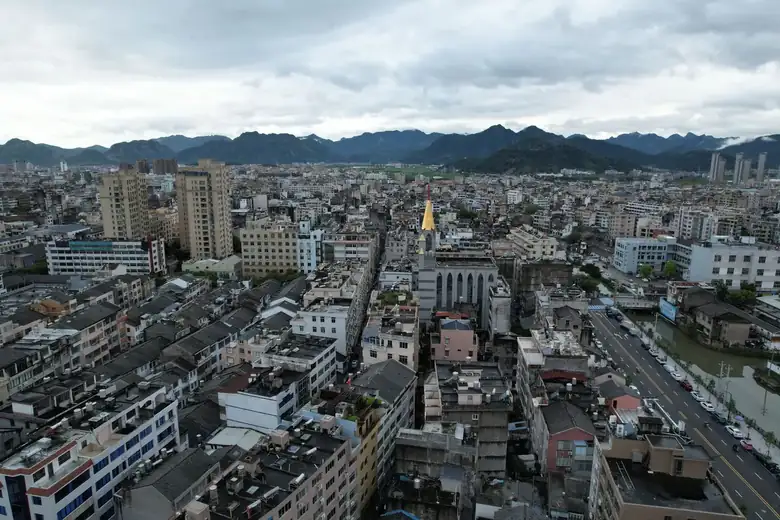
Wuhai City, located on the upper reaches of the Yellow River, was established in 1976 through the merger of Wuda City (formerly part of Bayannur League) and Haibowan City (formerly part of Ih Ju League). It became the third prefecture-level city in Inner Mongolia Autonomous Region. Situated in southwestern Inner Mongolia, between 106.36° and 107.05° east longitude and 39.15° and 39.52° north latitude, it stretches approximately 80 kilometers from north to south and 30 kilometers from east to west. It borders the Ordos Plateau to the east, the Alashan Grassland to the west, the Ningxia Plain to the south, and the Hetao Irrigation District to the north. It covers an area of 1,754 square kilometers and has a population of 480,000, comprising 26 ethnic groups including Han, Hui, Mongolian, and Manchu. The city administers three districts: Haibowan, Wuda, and Hainan. Haibowan District is the seat of the Wuhai Municipal Government.
Wuhai City is a newly emerging resource-based industrial city. In 1958, with the opening of the Baotou-Lanzhou Railway, large-scale development of its coal resources began. After becoming a city in 1976, and especially after reforms...
View detailed information about Wuhai City >>
Honors Ranking:
In August 2026, it was designated as one of the second batch of pilot cities for innovation and upgrading of the national retail industry.
In January 2026, it ranked 258th in the overall ranking of overseas online influence of Chinese mainland cities in 2025.
In May 2025, the 2025 China City Charm Ranking was released, and Wuhai City ranked 303rd (a fifth-tier city).
In May 2025, the list of the top 100 cities with the greatest talent attraction in 2024 was released, with Wuhai City ranking 87th.
In April 2025, it was named a national model city (county) for supporting the military and giving preferential treatment to families of servicemen.
In February 2025, the 2024 China Urban Social Development, Population Development and Social Potential Top 100 List was released, with Wuhai City ranking 65th.
In February 2025, the 2024 China Urban Social Development Comprehensive Ranking Top 100 list was released, with Wuhai City ranking 68th.
In September 2024, the first batch of pilot areas for the full-area promotion of the "15-minute convenient living circle in the city" was announced, and Wuhai City was on the list.
In May 2024, the 2024 China City Commercial Attractiveness Ranking was released, with Wuhai City ranking 274th.
View more honors and rankings of Wuhai City >>
Historical background:
In the second year of the Yuanshuo era of the Han Dynasty (127 BC), Emperor Wu of Han defeated the Loufan King and Baiyang King of the Xiongnu and recovered the Henan region (the territory south of the Wujia River in present-day Bayannur League and the Ordos Plateau). He changed the original Jiuyuan Commandery to Wuyuan Commandery and added Shuofang Commandery, with its capital in Sanfeng County (Taoshengjing, also known as Mamitukumiao Ancient City, in Hatengtaohai Sumu, Dengkou County, Bayannur League).
Shuofang Commandery consisted of 10 counties, with Woye County established in what is now the Haibowan area.
In the third year of the Yuanshou era (120 BC), the county seat of Woye was built (now the ancient city of Beixindi in Haibowan District).
In the second year of the Yuanshou era of the Han Dynasty (121 BC), after the Southern Xiongnu Hunye King submitted to the Han Dynasty, the Wuda region became the northern border of Wuwei Commandery.
Eastern Han Dynasty
View detailed historical evolution of Wuhai City >>
Travel information can change. Check current opening hours, reservations and entry requirements before you travel.
Traveller discussion
Start the conversation with a helpful tip or a question.