
Macau
MacauCity OverviewMacau, officially known as the Macao Special Administrative Region of the People’s Republic of China, is located on the southeastern coast of China, on the western bank of the Pearl River Estuary. It lies between 113°32′ a
Macau
City Overview
Macau, officially known as the Macao Special Administrative Region of the People’s Republic of China, is located on the southeastern coast of China, on the western bank of the Pearl River Estuary. It lies between 113°32′ and 113°36′ east longitude and 22°06′ and 22°13′ north latitude. Across Lingdingyang Bay to the east lies Hong Kong, while to the west it borders Wanzai Town of Zhuhai City, Guangdong Province, separated only by a narrow stretch of water. The South China Sea lies to the south, and the northern boundary at the Border Gate connects Macau with Gongbei, Zhuhai. This strategic location has made Macau an important node in the Pearl River Delta and, since ancient times, a gateway for exchanges between China and the Western world.
Macau consists of the Macau Peninsula and the two outlying islands of Taipa and Coloane. The three areas are closely connected by three major sea-crossing bridges—the Governador Nobre de Carvalho Bridge, Friendship Bridge, and Sai Van Bridge—along with an integrated road network. The terrain is mainly hilly, with higher elevations in the south and lower areas in the north. The highest point is Coloane’s Alto de Coloane (Coloane Hill), with an elevation of approximately 170.6 meters. Coastal areas feature mudflats and mangrove ecosystems, while the Inner Harbour has relatively shallow waters. Through numerous land reclamation projects throughout history, approximately two-thirds of Macau’s current land area was created through reclamation.
According to data from the Statistics and Census Service of the Macao SAR Government, as of 2024, Macau covers an area of approximately 33.3 square kilometers and has a population of around 687,000. Its population density exceeds 20,000 people per square kilometer, making it one of the most densely populated regions in the world. The Han Chinese constitute the overwhelming majority of the population, while Portuguese descendants and Macanese people form unique ethnic minority communities. The official languages are Chinese and Portuguese, while Cantonese is the most commonly spoken language in daily life.
In terms of administrative status, Macau became the Macao Special Administrative Region of the People’s Republic of China on December 20, 1999. Under the principle of “One Country, Two Systems,” it enjoys a high degree of autonomy and the policy of “Macao people governing Macao,” while maintaining its existing capitalist system and way of life for 50 years unchanged. This constitutional arrangement allows Macau to preserve its Chinese cultural foundation and traditional social fabric while continuing its unique historical legacy of more than four centuries of cultural exchange between China and the West.
Macau has many alternative names, among which “Haojing” (濠镜, “Mirror-like Harbour”) or “Jinghai” (镜海, “Mirror Sea”) are among the earliest names. They originated from the calm waters at the southern tip of the peninsula, which resembled a mirror, as well as the area’s abundance of oysters. The name “Haojiang” (濠江, “Hao River”) also developed from this origin. “Macao” itself is derived from the Portuguese pronunciation of “Mazu Pavilion,” referring to the A-Ma Temple that Portuguese sailors encountered when they first arrived at the peninsula. Local residents also affectionately call the city “Aomen Street” (澳门街), reflecting its compact urban scale and strong sense of neighborhood community. Another widely known nickname is “Monte Carlo of the Orient” or “Las Vegas of the East,” referring to Macau’s unique position as a global gambling center in Asia. However, these titles alone cannot fully capture the city’s profound cultural heritage and diverse urban character.
---
Historical Timeline
The history of Macau can be traced back to the Neolithic Age. Archaeological discoveries confirm that human settlements existed along this coastal region approximately 5,000 years ago. After Qin Shi Huang unified China, Macau was officially incorporated into Chinese territory and became part of Panyu County under Nanhai Commandery. During the Song and Yuan dynasties, fishermen and farmers had already settled in the Macau area, and early villages such as Wangxia and Haojing gradually emerged. However, Macau truly entered world history during the Age of Exploration.
Portuguese Settlement Period (1553–1849)
In 1553 (the 32nd year of the Jiajing reign of the Ming Dynasty), Portuguese traders claimed that their ships had been damaged by storms and requested temporary permission to stay in Haojing to dry water-damaged goods. They were granted permission to temporarily reside on the Macau Peninsula. Afterwards, the Portuguese gradually established a permanent presence by paying land rent, eventually forming a semi-autonomous community.
In 1557, Portugal officially established a foothold in Macau, which subsequently became an important maritime trading hub between East and West. It served as a key link along the route connecting Lisbon–Goa–Malacca–Macau–Nagasaki.
Major events during this period included the establishment of the Catholic Diocese of Macau in 1576, the founding of St. Paul’s College in 1594—the first Western-style university in the Far East—and the defeat of the Dutch attack on Macau in 1622.
Macau gradually developed into a unique city with a dual governance structure: Portuguese residents managed local affairs through municipal councils, while the Ming and Qing governments maintained sovereignty over the territory. Historic landmarks such as the Ruins of St. Paul’s (the surviving façade of the former Church of St. Paul’s College), A-Ma Temple, and Na Tcha Temple are architectural remnants from this era.
Colonial Expansion Period (1849–1887)
After the Opium War, Portugal took advantage of the weakened Qing government and changed its policies toward Macau. In 1849, Governor João Maria Ferreira do Amaral forcibly abolished land rent payments, expelled Qing officials stationed in Macau, and expanded Portuguese control over the entire Macau Peninsula.
Portugal subsequently occupied Taipa in 1851 and Coloane in 1864. This period marked Macau’s transformation from a “leased settlement” into a territory under Portuguese colonial rule. Existing landmarks such as Avenida de Ferreira do Amaral and the Maritime and Customs Building (originally the Moorish Barracks) still bear spatial traces of this period of colonial expansion.
Middle and Late Portuguese Administration (1887–1974)
In 1887, the Sino-Portuguese Treaty of Amity and Commerce was signed, granting Portugal the right to “perpetually occupy and govern Macau.” However, the treaty did not formally define the boundaries of Macau, leaving territorial issues unresolved.
During the first half of the 20th century, Macau’s neutral status during wartime made it a refuge for surrounding populations, causing a rapid increase in population. From the 1950s to the 1960s, the Portuguese administration began promoting early urban development and social welfare systems. However, Chinese and Portuguese communities remained largely separated in terms of residence, education, and social rights for an extended period.
Transition and Return to China (1974–1999)
Following Portugal’s Carnation Revolution in 1974, the new Portuguese government announced the abandonment of colonialism. In 1976, the Organic Statute of Macau was enacted, recognizing Macau as a “Chinese territory under Portuguese administration.”
After China and Portugal established diplomatic relations in 1979, the two countries began discussions regarding Macau’s future. On April 13, 1987, China and Portugal signed the Joint Declaration on the Question of Macau, officially confirming that Macau would return to China on December 20, 1999.
During the transition period, Macau underwent three major transformations: localization of civil servants, localization of the legal system, and the official recognition of Chinese as an official language.
Special Administrative Region Period (1999–Present)
On December 20, 1999, the Macao Special Administrative Region was officially established. After the handover, Macau retained the legal operation of the gambling industry under the Basic Law. The opening of gaming concessions in 2002 stimulated rapid economic growth, making Macau the city with the highest gambling revenue in the world.
At the same time, in 2005, the “Historic Centre of Macao” was inscribed on the UNESCO World Heritage List, providing new global recognition of Macau’s cultural identity.
Today, Macau is undergoing a strategic transformation from a “gambling city” into a “world center for tourism and leisure.”
Cultural Heritage
The most distinctive feature of Macau’s culture is its deeply integrated character of “a harmonious fusion of Chinese and Western traditions.” This fusion is not merely a simple combination or coexistence of different elements, but rather the result of more than four centuries of gradual accumulation and mutual influence in daily life, beliefs, arts, and festivals.
The linguistic landscape represents the most direct expression of Macau’s multicultural identity. Cantonese is the mother tongue and common everyday language of Macau’s Chinese community. It belongs to the Guangzhou dialect branch of Cantonese and preserves many phonetic characteristics and vocabulary from Middle Chinese. Portuguese, although an official language, is mainly used by the Macanese community and residents from Portuguese-speaking countries.
Macanese Portuguese (Patuá), also known as “Macau Creole,” is a creole language based on old Portuguese, incorporating large numbers of elements from Malay, Cantonese, Japanese, and Indian languages. It was once classified by UNESCO as a “critically endangered language.” Today, it mainly survives as a cultural memory carrier through theatrical performances, such as Patuá-language plays presented during the annual Macao Arts Festival.
Macau’s folk traditions display a rare pattern of “multiple deities coexisting together.” Traditional Chinese beliefs mainly center around Mazu, Guanyin, and local earth deities. The Feast of Mazu (held on the 23rd day of the third month in the lunar calendar) is one of Macau’s largest traditional festivals. A-Ma Temple remains filled with incense as local fishing communities continue their devotion to the goddess who protects sailors and fishermen.
At the same time, Catholic traditions have deeply penetrated the city’s cultural fabric. The Procession of Our Lady of Fátima (held every May 13) is one of the most solemn religious events organized by the Catholic Diocese of Macau. Believers depart from St. Dominic’s Church, escorting the statue of Our Lady of Fátima all the way to the Chapel of Our Lady of the Snows on Penha Hill, reciting prayers along the route in a solemn and moving ceremony.
Even more uniquely, some temples in Macau simultaneously enshrine Buddhist, Taoist, and folk deities. It is not unusual for worshippers to attend Mass and then burn incense to Mazu afterward. This fascinating “overlapping of faiths” represents the inclusiveness and practicality at the heart of Macau’s culture.
In terms of festivals, traditional Chinese celebrations such as Lunar New Year, Mid-Autumn Festival, and Dragon Boat Festival coexist naturally alongside Western and Portuguese-style celebrations including Easter, Christmas, and the Lusofonia Festival. Wedding customs also demonstrate cultural integration, as Macanese weddings often combine traditional Chinese marriage rituals with Catholic church ceremonies.
In the field of performing arts, Cantonese opera, a shared intangible cultural heritage of Guangdong, Hong Kong, and Macau, enjoys a deep audience base in Macau. Organizations such as the Macau Cantonese Opera Association have long been dedicated to preserving and promoting the art form, while the Cinema Alegria (Yongle Theatre) continues to host regular Cantonese opera performances.
Particularly noteworthy is “Macanese Patuá Theatre,” a comedic theatrical tradition created and performed by the Macanese community in the Patuá language. Through humorous dialogue and satire, these performances comment on current affairs and social issues while preserving the cultural identity of the Macanese people. In 2021, this unique theatrical tradition was included in China’s national intangible cultural heritage list.
Macau currently possesses numerous intangible cultural heritage items. National-level intangible cultural heritage projects include Cantonese opera, Macanese Patuá Theatre, Macau deity statue carving, Macau herbal tea preparation techniques, and the Feast of the Drunken Dragon.
Macau deity statue carving inherits traditional Lingnan woodcarving techniques and is renowned for exquisite craftsmanship and elaborate gilded decoration. The statues produced are exported to many parts of Southeast Asia. The Feast of the Drunken Dragon is a traditional festival organized by the Macau Fishmongers’ Association. Held annually on the eighth day of the fourth month of the lunar calendar, participants perform street processions carrying wooden dragon heads and tails while walking in a deliberately “drunken” style. Combining ritual worship, disease prevention, and community bonding, it is one of Macau’s most representative examples of fishing-port cultural heritage.
---
Architecture and Urban Landscape
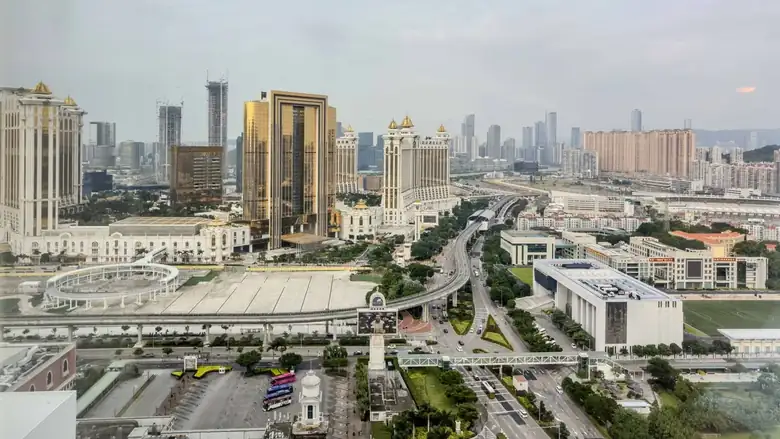
Macau may be one of the most architecturally diverse yet harmonious cities in East Asia. On a territory of less than 40 square kilometers, Lingnan-style residences, Southern European Baroque churches, Neoclassical government buildings, modern skyscrapers, and Southeast Asian-style arcades coexist, creating a tangible architectural history of the city.
Traditional Chinese architecture in Macau preserves typical characteristics of Lingnan architecture, including grey brick walls, tiled roofs, swallowtail-style gable walls, wooden beam structures, and intricately carved windows.
A-Ma Temple is the oldest surviving Chinese architectural complex in Macau. Built along the hillside, it consists of multiple structures including the Main Hall, Hongren Hall, and Guanyin Pavilion. Numerous cliff inscriptions can be found within the temple grounds, with some dating back to the Ming Dynasty.
Lin Fung Temple and Kun Iam Temple (also known as Pou Chai Temple) are considered three of Macau’s major ancient temples, together with A-Ma Temple. Kun Iam Temple features a traditional three-courtyard layout, and the intertwined trees and stone tables in its rear garden silently bear witness to the signing of the Treaty of Wangxia between China and the United States in 1844.
The Mandarin’s House and Lou Kau Mansion are excellent examples of the combination of Lingnan residential architecture and Western decorative elements. The Mandarin’s House adopts a multi-courtyard design while incorporating Western patterns into details such as window frames and floor tiles, representing a typical example of Western influence entering traditional Chinese residential architecture in Macau.
The Western-style architecture introduced by the Portuguese after their arrival forms the most recognizable part of Macau’s urban landscape.
The Ruins of St. Paul’s, Macau’s most iconic symbol, are actually the surviving façade of the Church of Mater Dei, part of St. Paul’s College, completed in 1637. The Baroque-style stone façade skillfully integrates Chinese elements such as Chinese characters, chrysanthemums, and Eastern lions alongside traditional Western religious imagery. It represents one of the greatest achievements of cross-cultural artistic exchange more than four centuries ago.
The public architectural complex radiating from Senado Square includes the Leal Senado Building (formerly the Municipal Council Building, in Neoclassical style), the Holy House of Mercy Building (Neoclassical), the General Post Office (Eclectic style), and St. Dominic’s Church (Baroque style), forming the core of Macau’s Southern European-style public spaces.
The area around Largo de Santo Agostinho gathers several historic buildings, including St. Joseph’s Seminary and Church (Baroque style), Dom Pedro V Theatre (Neoclassical style and the first Western-style theater in China), and St. Augustine’s Church. This area is often referred to as “a miniature Europe in Macau.”
Macanese residential architecture is a unique housing style found only in Macau. It is represented by the five mint-green Portuguese-style houses of the Taipa Houses Museum. Built in 1921, these residences follow the style of Portuguese countryside villas, featuring spacious verandas and shutters. They respond to Macau’s subtropical climate while preserving Portuguese residential aesthetics.
The interior decoration combines Chinese and Western influences, with Buddhist shrines and Christian statues existing in the same spaces, reflecting the cultural duality of the Macanese community.
Macau’s urban fabric presents two completely different spatial patterns.
The old districts of the Macau Peninsula feature narrow, winding streets that follow the natural terrain, preserving the irregular organic layout characteristic of medieval Portuguese cities. In contrast, the newly reclaimed areas and Cotai district adopt modern grid-based urban planning, with broad and orderly streets.
This transformation in spatial organization almost perfectly reflects Macau’s historical process of land reclamation and urban expansion.
Taipa Island still retains parts of its traditional fishing village character. The small-scale streets around Taipa Old Town, Iec Long Firecracker Factory, and Rua do Cunha stand in dramatic contrast with the enormous casino resorts along the Cotai Strip.
This coexistence of two completely different urban scales—a “dualistic” urban landscape—is now extremely rare among contemporary world cities.
Food Culture
Macau is recognized by UNESCO as a “Creative City of Gastronomy.” This title represents far more than the food itself; it reflects the city’s over four centuries of cross-cultural dialogue in the culinary field. Macau cuisine can generally be divided into three major systems: Cantonese cuisine, Portuguese cuisine, and Macanese cuisine. These three traditions have never existed in isolation, but have undergone centuries of interaction, adaptation, and localization.
Cantonese cuisine forms the foundation of Macau’s everyday diet. Rooted in the culinary traditions of Shunde and Zhongshan, it emphasizes fresh ingredients, precise cooking techniques, and light yet refined flavors. However, due to centuries of contact with Portuguese ingredients and seasonings, Macau’s Cantonese cuisine has developed subtle local variations. For example, the use of Portuguese sausages, olive oil, and bay leaves to enhance traditional Cantonese soups represents a quiet form of cultural borrowing within Macau’s kitchens.
Portuguese cuisine in Macau appears in two distinct forms. The first is authentic Portuguese cuisine served in high-end Portuguese restaurants, which remains close to the flavors and standards of contemporary Lisbon and Porto. The second is locally transformed “Macau Portuguese cuisine,” which is saltier, richer, and better adapted to the local preference for rice as a staple food. Some dishes have no direct equivalent in modern Portugal.
African Chicken is the best example of this localization process. Originally introduced by Portuguese people from southern Africa, the dish was transformed by Macau chefs who incorporated coconut milk, peanut sauce, chili peppers, and various Southeast Asian spices. It eventually became a signature dish belonging entirely to Macau and remains unknown in Portugal itself.
Macanese cuisine is a culinary tradition unique to Macau. It is defined as the long-term fusion of Portuguese maritime food traditions with ingredients, spices, and cooking techniques from across Asia. In many ways, it is an edible archive of global history.
This cuisine makes extensive use of coconut milk, turmeric, bay leaves, shrimp paste, salted cod (bacalhau), and olive oil. Its ingredients and flavor logic combine culinary influences from Portugal, Goa in India, Malacca, Timor, and China’s Lingnan region.
Representative dishes include:
- Portuguese Chicken — chicken cooked with turmeric and coconut milk, mild rather than spicy, usually served with rice.
- Minchi — minced beef or pork served with fried potatoes and a fried egg; one of the most beloved comfort foods among Macanese families.
- Tacho — a large mixed stew containing various meats, sausages, and vegetables. It is related to the Portuguese dish Cozido but incorporates Cantonese preserved meats such as cured duck and Yunnan ham.
- Bacalhau Fritters — deep-fried balls made from a mixture of salted cod and mashed potatoes.
Behind these dishes lies the creative practice of women in mixed-cultural families. Facing family members with different culinary backgrounds, they often could not simply follow a single traditional recipe. Instead, they created new flavors that everyone could recognize as “the right taste.”
Macau’s snack culture is equally diverse. Portuguese egg tarts are among the city’s most internationally famous food symbols. The most renowned examples come from Lord Stow’s Bakery in Coloane and Margaret’s Café e Nata on the Macau Peninsula. Their pastry combines characteristics of both puff pastry and layered pastry, while the caramelized custard filling has a slightly bitter roasted aroma, making it very different from Cantonese-style egg tarts.
The pork chop bun represents Macau’s grassroots food culture. A freshly fried or grilled bone-in pork chop is placed inside a crispy yet soft Portuguese-style bread roll. Simple and straightforward, it delivers a deeply satisfying flavor. Tai Lei Loi Kei is the most iconic traditional shop associated with this dish.
Other important elements of Macau’s street food memory include crab congee, beef offal, almond cookies, and peanut candy.
The dietary traditions of Macau reveal the personality of the city itself: practical, inclusive, curious about outside influences, and willing to adapt rather than insist on absolute authenticity. In Macau, food is never merely a biological necessity. It is a cultural network connecting oceans and continents, with every bite silently telling stories of encounters, collisions, and rebirth.
---
Modern Development
The modern development of Macau represents a unique transformation from a marginal fishing village into a regional international city and eventually into the world’s leading gambling center. This entire process has been intertwined with the turbulence of modern Chinese history, the fate of the Portuguese colonial empire, and the forces of globalization.
After the Opium War, the rise of Hong Kong caused Macau to lose much of its position as an international trading hub. However, this also pushed Macau to seek new economic opportunities in areas such as Chinese labor trade, smuggling, and gambling.
In 1847, the Portuguese administration in Macau legalized gambling, marking the beginning of the industry’s central role in the city’s economic development. From the late nineteenth century to the early twentieth century, Macau’s economic structure remained relatively narrow, relying mainly on gambling, opium processing and trade, and traditional fishing. Urban infrastructure was underdeveloped, and living standards remained generally low.
During the Second Sino-Japanese War and the Chinese Civil War, Macau’s neutral status under Portuguese administration made it a refuge for refugees from surrounding conflict zones. The population expanded rapidly in a short period, bringing capital, labor, and cultural vitality to the city.
Beginning in the 1960s, the Portuguese administration introduced limited municipal development and social welfare reforms. However, Macau’s economic growth remained far behind Hong Kong. Manufacturing industries, particularly textiles, toys, and wigs, experienced rapid growth in the 1970s due to European and American textile quota policies. These industries absorbed large numbers of workers and became one of Macau’s most important pillar industries at the time.
In 1974, the Governador Nobre de Carvalho Bridge opened, connecting the Macau Peninsula and Taipa Island and ending the era when transportation between the peninsula and islands depended entirely on ferries.
China’s reform and opening-up policy brought profound changes to Macau. After 1978, a large portion of Macau’s manufacturing sector relocated northward to the Pearl River Delta, forcing the city to restructure its economy. At the same time, large numbers of mainland Chinese migrants entered Macau, reshaping the city’s demographic structure and labor market.
From the 1980s to the 1990s, Macau experienced fluctuations in the real estate market, modernization of its financial system, and large-scale legal and administrative reforms in preparation for the handover, including the localization of civil servants.
In 1995, Macau International Airport began operations, ending the city’s long history without an airport and opening a new channel for international connectivity.
After the handover in 1999, Macau entered a new economic era. In 2001, the Legislative Assembly passed the “Gaming Industry Regulatory Framework,” and in 2002 gambling concessions were officially opened. This ended the forty-year monopoly of the Stanley Ho family and allowed international gaming companies such as Sands, Wynn, and Melco to enter the Macau market.
Large amounts of investment flowed into the city, and the reclaimed Cotai area rapidly developed into the world’s most concentrated casino resort district. In 2006, Macau surpassed the Las Vegas Strip in total gaming revenue and became the world’s highest-grossing gambling destination.
The gaming industry stimulated rapid growth in construction, real estate, hotels, and retail. Macau’s GDP per capita once ranked first in Asia and among the highest in the world.
However, the vulnerability of excessive dependence on a single industry gradually became apparent. Since 2014, factors including mainland China’s anti-corruption campaign, capital controls, and slower economic growth caused Macau’s gaming revenue to undergo a significant adjustment.
The Macao SAR government subsequently promoted a strategy of “moderate economic diversification,” encouraging the city to transform from a “gaming center” into a “world tourism and leisure center.” Efforts have focused on developing exhibitions and conventions, cultural and creative industries, traditional Chinese medicine, and financial services.
In 2019, the Outline Development Plan for the Guangdong-Hong Kong-Macao Greater Bay Area positioned Macau as 'one center, one platform, one base,' namely:
- a world tourism and leisure center;
- a platform for commercial cooperation between China and Portuguese-speaking countries;
- a base for cultural exchange where Chinese culture serves as the mainstream while diverse cultures coexist.
In 2021, the Overall Plan for the Construction of the Guangdong-Macao In-Depth Cooperation Zone in Hengqin was introduced, providing Macau with a new development space on Hengqin Island’s 106-square-kilometer territory.
This small but resilient economy is now navigating the complex changes of global politics and economics, seeking a sustainable development path that does not rely excessively on the gambling industry.
Transportation and Travel
With its limited land area and high population density, Macau’s transportation system must handle large volumes of people and vehicles within a very restricted space. Its cross-border transportation network also reflects the unique arrangements for movement of people under the framework of “One Country, Two Systems.”
The Macau Peninsula and Zhuhai’s Gongbei area are connected through the Border Gate (Portas do Cerco), Macau’s busiest land checkpoint. Daily passenger flows have repeatedly exceeded 400,000 people, making it one of the busiest border crossings in the world.
The border facilities connect with Zhuhai’s urban rail stations and the Guangzhou–Zhuhai intercity railway network, allowing Macau to indirectly connect with China’s national high-speed railway system through convenient border transfers.
Two other land checkpoints—the Qingmao Port (opened in 2021, adopting a “joint inspection and one-stop clearance” model with extremely high efficiency) and the Cross-Border Industrial Zone Checkpoint—help relieve passenger and cargo pressure.
On Taipa Island, the Lotus Port connects with Hengqin Port and serves as a major gateway to the Guangdong-Macao In-Depth Cooperation Zone in Hengqin.
The Hong Kong-Zhuhai-Macao Bridge is the most remarkable cross-border infrastructure project connected with Macau. The bridge has a total length of approximately 55 kilometers, began construction in 2009, and officially opened in October 2018. Consisting of bridges, artificial islands, and an undersea tunnel, it connects Hong Kong, Zhuhai, and Macau.
From Macau’s artificial island checkpoint, travelers can take the shuttle bus, commonly known as the “Golden Bus,” across the bridge to the Hong Kong Port. The journey takes approximately 40 minutes, creating a direct land connection across the Pearl River Estuary and completely changing the previous situation in which travel between Macau and Hong Kong depended mainly on ferries.
The Hong Kong-Macau Ferry Terminal and Taipa Ferry Terminal continue to operate cross-border ferry services to Hong Kong’s Sheung Wan, Tsim Sha Tsui in Kowloon, Shenzhen, and Zhuhai. TurboJET and Cotai Water Jet are the main operators, with journeys taking approximately one hour.
Macau International Airport is located on Taipa Island and operates flights to major mainland Chinese cities as well as destinations in Southeast Asia and Northeast Asia. It mainly serves short- and medium-distance routes using narrow-body aircraft.
Within Macau, the Peninsula and Taipa Island are connected by three sea-crossing bridges and the underwater tunnel of the University of Macau. Taipa and Coloane are connected through the Cotai Connection Road.
Public buses are the most commonly used form of transportation for residents. Operated by Transmac and TCM, the bus network covers the entire city. The standard fare is MOP 6 within Macau Peninsula and MOP 6 or MOP 8 for inter-island routes. Bus announcements are available in four languages: Cantonese, Mandarin, Portuguese, and English.
The Macau Light Rapid Transit (LRT) is the city’s first rail transit system. The Taipa Line opened in 2019, connecting major locations including Ocean, Macau International Airport, Taipa Ferry Terminal, and Cotai East. It operates with driverless trains and mainly serves tourists and residents of the islands.
The Barra Station opened in 2023, extending the LRT network to the Macau Peninsula for the first time. The Seac Pai Van Line and Hengqin Extension Line are currently under development.
Macau also offers unique transportation experiences, including walking through the old districts and exploring historic neighborhoods by traditional pedicab.
Due to the narrow and winding streets of the Historic Centre of Macau, walking remains the best way to experience the city in depth. Starting from Senado Square, travelers can walk along Rua de São Paulo, Travessa da Paixão, Rua de Santo António, and continue toward the Camoes Garden, passing through four centuries of urban history.
The free casino shuttle buses, once a popular “free transportation system” for visitors, have seen their routes reduced as government policies have tightened. They now mainly serve hotel guests and are far less influential than before.
In Taipa Old Town, cycling around the Taipa waterfront and Coloane Village offers a slower-paced travel experience. Coloane, in particular, preserves one of the few remaining fishing village landscapes and traditional community atmospheres in Macau.
---
Travel Recommendations
Best Time to Visit
Macau has a subtropical monsoon climate, with hot and humid summers and mild, dry winters. The best travel season is from October to December.
During this period, the weather is clear and comfortable, with abundant sunshine and average daily temperatures ranging from 18°C to 25°C, making it the most pleasant time to explore Macau’s urban landscapes.
In December, major squares and hotels decorate their spaces for Christmas and the anniversary of the establishment of the Macao Special Administrative Region (December 20). Senado Square becomes especially beautiful with dazzling lights and a strong festive atmosphere.
Spring (March to May) is also suitable for travel, although humidity and fog gradually increase after April.
Summer (June to September) is hot and rainy, and typhoons may affect travel plans. However, hotel prices are generally lower during this period.
During the Lunar New Year holiday (usually between late January and mid-February), Macau presents a lively festive atmosphere with flower parades, fireworks displays. However, crowds become extremely large and hotel prices often rise significantly.
---
Must-Visit Attractions and Experiences
1. Historic Centre of Macau (UNESCO World Heritage Site)
Starting from A-Ma Temple, this walking route passes through the Maritime Administration Building, Lilau Square, Mandarin’s House, St. Lawrence’s Church, St. Joseph’s Seminary and Church, Dom Pedro V Theatre, Sir Robert Ho Tung Library, the Leal Senado Building, Senado Square, the Holy House of Mercy, St. Dominic’s Church, and finally the Ruins of St. Paul’s, Na Tcha Temple, and Mount Fortress.
This route covers Macau’s most important historic buildings and public spaces. The entire walk takes roughly half a day, and visitors are advised to divide it into morning and afternoon sections with breaks for local snacks.
Below the Ruins of St. Paul’s are the Museum of Sacred Art and the underground crypt, where visitors can view seventeenth-century missionary remains and religious artifacts.
---
2. Taipa Old Town and Taipa Houses Museum
Taste crab congee and serradura pudding on Rua do Cunha, experience the peaceful atmosphere in front of Our Lady of Carmel Church, then walk to the Taipa Houses Museum to admire five mint-green Portuguese-style residences surrounded by wetland scenery.
From the museum area, visitors can clearly see the contrast between the luxurious skyline of the Cotai Strip and the delicate pastel-colored historic houses in front of them.
Sitting quietly in this area and slowing down is one of the best ways to understand Macau’s “collision between old and new.”
---
3. Coloane Village
For those imagining Macau as an authentic fishing village, Coloane Village is one of the last remaining places where that atmosphere survives.
Eduardo Marques Square, St. Francis Xavier’s Chapel, Coloane Pier, and Lord Stow’s original egg tart shop form the heart of this seaside village landscape.
Standing by the pier, feeling the sea breeze, watching elderly fishermen and traditional seafood drying areas, visitors may momentarily feel that the identity of Macau as a global gambling metropolis is far away.
---
4. Macau Tower
Standing 338 meters tall, Macau Tower features a 360-degree observation deck and revolving restaurant, offering panoramic views of the Macau Peninsula, Taipa, and Zhuhai’s Hengqin Island.
On clear days, visitors can even see Hong Kong’s Lantau Island in the distance.
The tower also offers the world’s highest commercial bungee jump, with a leap from 233 meters above ground. It has become a destination for extreme sports enthusiasts worldwide.
---
5. Macau Grand Prix Museum
The Macau Grand Prix, established in 1954, is one of the oldest continuously held street racing events in the world.
The Guia Circuit is famous for its difficulty and danger. The Grand Prix Museum displays historic racing cars, interactive multimedia exhibits, and a Hall of Fame, making it a pilgrimage site for motorsport fans.
---
Practical Tips
- Macau’s official currency is the Macanese Pataca (MOP), but Hong Kong dollars are accepted at most places and are commonly treated at a 1:1 exchange rate. Change is usually returned in MOP. Renminbi is accepted in some locations but often at less favorable exchange rates. Carrying MOP or Hong Kong dollars is recommended.
- Macau buses accept the Macau Pass stored-value card. Cash payments in MOP, Hong Kong dollar coins, and Renminbi coins are also accepted at a 1:1 value, but drivers do not provide change. The LRT accepts Macau Pass and ticket purchases from vending machines.
- Many casinos provide free cloakroom and luggage storage services, which can be useful for travelers exploring the city while exploring the city.
- To reach Coloane, travelers need to take a bus from Taipa. The journey takes approximately 20–30 minutes, and visitors should reserve at least half a day for the area.
---
Important Notes
- Smoking is completely prohibited in indoor public places in Macau, including casinos, shopping malls, buses, and the LRT. Violators may receive a fine of MOP 1,500.
- Visitors must be at least 21 years old to enter casinos. Photography and mobile phone calls are strictly prohibited inside casino areas, and visitors should follow all regulations.
- Macau uses a 220-volt electrical system. Power outlets are British-style three-pin flat plugs, so travelers should bring an appropriate adapter.
- Streets in the historic districts are narrow, and some sidewalks use Portuguese-style cobblestone paving, which can become slippery after rain. Comfortable shoes with good grip are recommended.
- Macau’s tourism capacity reaches its limits during major holidays. Travelers are advised to avoid mainland China’s “Golden Week” holidays and the Lunar New Year period whenever possible, allowing for a more comfortable and authentic experience away from overwhelming crowds.
Travel information can change. Check current opening hours, reservations and entry requirements before you travel.
Traveller discussion
Start the conversation with a helpful tip or a question.