
Lhasa
拉萨市
Origin of the place name: In Tibetan, "La" means "god" or "Buddha," and "Sa" means "land." Lhasa thus means "land of Buddha." Legend has it that during the reign of Songtsen Gampo of the Tubo Kingdom, the Jokhang Temple was built. It is said that goats (pronounced "Re" in Tibetan) carried soil (pronounced "Sa") to fill a lake for the foundation, h…
Origin of place name:
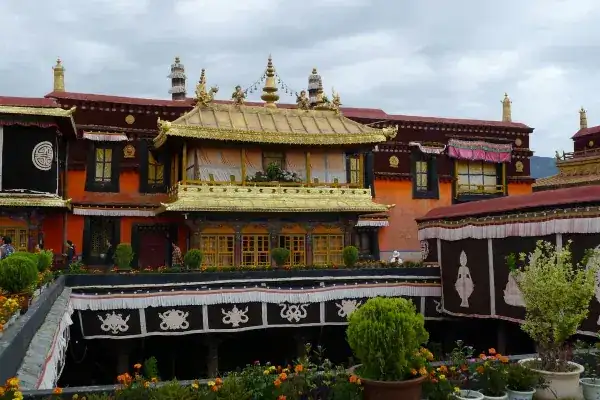
In Tibetan, "Lha" means "god" or "Buddha," and "Sa" means "land." Therefore, Lhasa means "land of Buddha." Legend has it that during the reign of Songtsen Gampo of the Tubo Kingdom, the Jokhang Temple was built. It is said that goats (pronounced "Re" in Tibetan) carried soil (pronounced "Sa") to fill a lake for the foundation, hence the name "Resa." "Lhasa" and "Lhasa" are phonetic variations of "Resa." Later, the temple housed a golden statue of Shakyamuni Buddha brought by Princess Wencheng, and Buddhist activities flourished. The name was later changed to Lhasa.
Basic introduction:
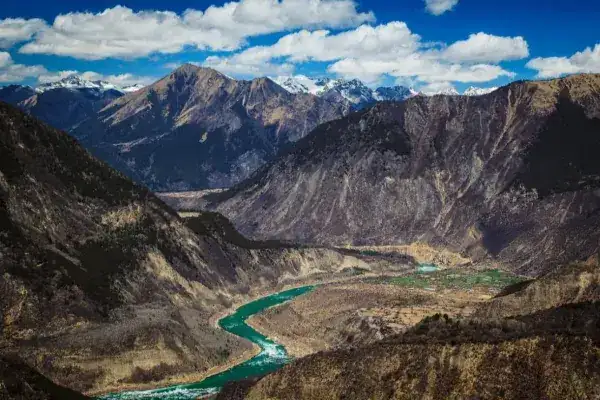
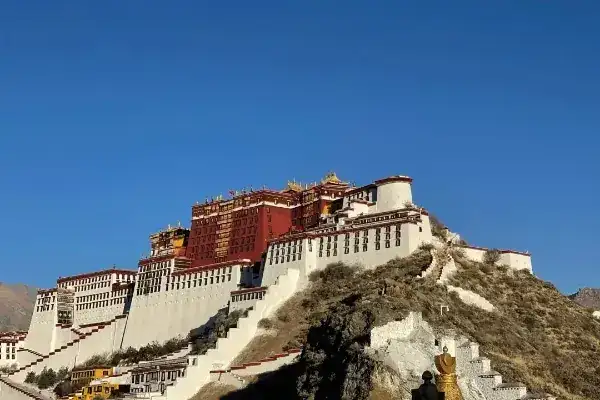
Lhasa, meaning "holy land" in Tibetan, is the capital city of the Tibet Autonomous Region. It is the political, economic, cultural, and scientific center of Tibet, and a sacred site of Tibetan Buddhism. Located in the slightly southeastern part of central Tibet, on the north bank of the Lhasa River, a tributary of the Yarlung Tsangpo River, the terrain slopes generally from east to west, with an average altitude of 3,650 meters. It is an ancient city with a history of 1,300 years. Lhasa is a renowned historical and cultural city, a vital city for stability in Tibet, a pristine city on the Tibetan Plateau, and a new city of reform and opening up. It is also a National Historical and Cultural City, a National Civilized City, a National Garden City, a National Model City for Supporting the Army and Giving Preferential Treatment to Families of Servicemen and Veterans, a National Model City for Environmental Protection, a National Sanitary City, and a National Excellent Tourism City. Historically known as "Lhasa," Lhasa is a famous historical and cultural city in my country. As early as the 7th century AD, after Songtsen Gampo unified Tibet by annexing neighboring tribes, he moved the capital from Yarlung to Lhasa, establishing the Tubo Dynasty, which became the religious, political, economic, and cultural center of Tibet at that time.
View detailed information about Lhasa >>
Honors Ranking:
In July 2026, it was designated as a tourism hub city in the "15th Five-Year Plan for Building a Tourism Power".
In January 2026, it ranked 14th in the overall ranking of overseas online influence of Chinese mainland cities in 2025.
In May 2025, it was selected as one of the pilot cities for new forms, models and scenarios of consumption nationwide.
In November 2025, it ranked 26th on the 2025 list of Chinese cities with international influence.
In July 2024, it was certified as an international wetland city in the third batch.
In May 2025, it was designated as one of the first batch of pilot cities for innovation and upgrading of the national retail industry.
In May 2025, the 2025 China City Charm Ranking was released, with Lhasa ranking 206th (a fourth-tier city).
In May 2025, the list of the top 100 cities with the greatest talent attraction in 2024 was released, with Lhasa ranking 70th.
In April 2025, it was named a national model city (county) for supporting the military and giving preferential treatment to families of servicemen.
View more Lhasa city honors and related rankings >>
Historical background:
Historically, Lhasa has been translated as Rasa, Luosuo, Luoxie, Lhasa, Chasa, Lasa, etc.
In the seventh year of the Zhenguan era of the Tang Dynasty (633), Songtsen Gampo of the Yarlung tribe established the Tubo Dynasty in Lhasa.
Before becoming the capital, Lhasa was a swampy wasteland. After it became the capital, palaces and fortresses were built, waterways were repaired, and temples were constructed, laying the foundation for the city of Lhasa.
The Jokhang Temple was built during this period, and the story of goats carrying soil to fill the lake is a legend from the construction process.
In Tibetan, sheep are called "Ra" and earth is called "Sa". Since the Jokhang Temple is the oldest building, people use "Rasa" as the name of the city centered around the Jokhang Temple.
Chinese historical records generally translate "惹萨" as "罗娑".
+View detailed historical evolution of Lhasa >>
Travel information can change. Check current opening hours, reservations and entry requirements before you travel.
Traveller discussion
Start the conversation with a helpful tip or a question.