
Hohhot
呼和浩特市
Origin of the name: In Mongolian, it means "blue city." "Hohhot" means blue, and "city" or "walled city" means city. It is named after the Daqingshan Mountain, which lies to the north of its central urban area. Other attractions include the Chulechuan National Grassland Nature Park, Zhaojun Museum, Mengniu Industrial Tourism Area, Laoniuwan Yellow…
Origin of place name:
The name means "Blue City" in Mongolian. "Hohhot" means blue, and "Khoto" means city or walled city. It is named after the Daqingshan Mountain, which lies to the north of its central urban area.
Basic introduction:
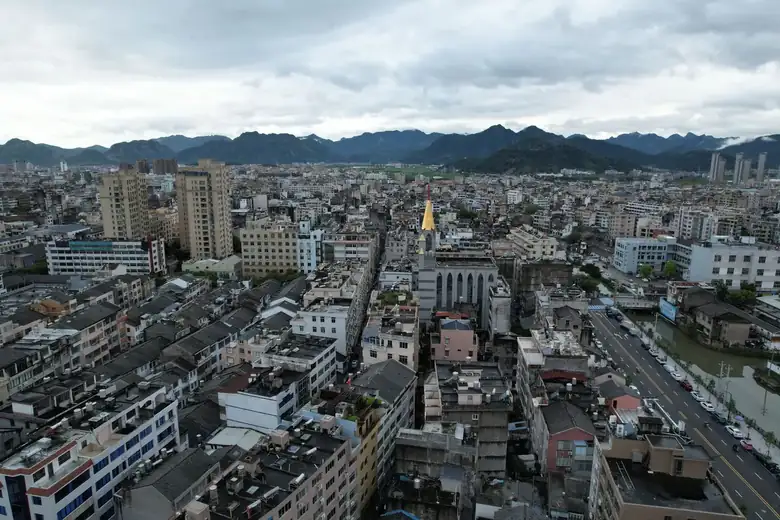
Hohhot, meaning "Blue City" in Mongolian, is also known as "Qingcheng" (Green City). Located in central Inner Mongolia, it sits on the Tumochuan Plain. With over 400 years of history, it boasts a rich cultural heritage. It is the capital of Inner Mongolia Autonomous Region and its political, economic, scientific, educational, and cultural center.
In the mountainous area northeast of Hohhot, there is the "Dayao Culture" site, dating back to the Paleolithic Age, between 400,000 and 700,000 years ago. In 1572 (the sixth year of the Longqing reign of the Ming Dynasty), Altan Khan built a city here. After its completion, the Ming court named it "Guihua City." In the 1630s, the Qing Dynasty built a city 5 kilometers northeast of Guihua City for the Manchu Eight Banners army, naming it "Suiyuan City." At that time, people called "Suiyuan City" the new city and "Guihua City" the old city. During the Republic of China period, the old and new cities of Hohhot were merged and renamed "Guihua" and then "Houhe City." After the victory of the Anti-Japanese War...
View detailed information about Hohhot >>
Honors Ranking:
In August 2026, it was designated as one of the second batch of pilot cities for innovation and upgrading of the national retail industry.
In July 2026, it was designated as a tourism hub city in the "15th Five-Year Plan for Building a Tourism Power".
In March 2026, it ranked 47th among China's top 100 cities.
In January 2026, it ranked 57th in the overall ranking of overseas online communication influence of Chinese mainland cities in 2025.
In May 2025, it was selected as one of the pilot cities for new forms, models and scenarios of consumption nationwide.
In November 2025, it ranked 33rd on the 2025 China Cities International Influence Ranking.
In September 2025, it ranked 69th among the top 100 smart cities in China (SMILE Index).
In September 2025, it ranked 39th on the list of the top 100 cities in the digital economy in 2025.
In May 2025, the 2025 China City Charm Ranking was released, with Hohhot ranking 67th (a third-tier city).
View more honors and rankings of Hohhot City >>
Historical background:
Archaeological discoveries from the pre-Qin period have revealed the Dayao Culture site, dating back 700,000 years, in the eastern suburbs of Hohhot. This site proves that humans lived and thrived in the Hohhot area as early as the Paleolithic Age.
[34] In the 4th to 3rd centuries BC, tribes such as the Linhu and Loufan emerged in the region.
During the late Warring States period, the Xiongnu people rapidly expanded, entered the Ordos Plateau, and subjugated tribes such as the Linhu and Loufan.
From the first to the twenty-eighth year of King Wuling of Zhao (325 to 298 BC), King Wuling of Zhao reformed the military system, expanded the territory to the north, and established Yunzhong Commandery in the region (the plain area south of Daqingshan Mountain in Tuoketuo County).
King Zheng of Qin, 10
View detailed historical evolution of Hohhot City >>
Travel information can change. Check current opening hours, reservations and entry requirements before you travel.
Traveller discussion
Start the conversation with a helpful tip or a question.