
Hong Kong
Hong KongCity OverviewHong Kong, officially the Hong Kong Special Administrative Region (HKSAR) of the People's Republic of China, is located on the southern coast of China, on the eastern side of the Pearl River Estuary. It borders Shenzhe
Hong Kong
City Overview
Hong Kong, officially the Hong Kong Special Administrative Region (HKSAR) of the People's Republic of China, is located on the southern coast of China, on the eastern side of the Pearl River Estuary. It borders Shenzhen in Guangdong Province to the north, faces the South China Sea to the south, lies across the sea from Macau to the west, and adjoins Mirs Bay to the east. Situated between 22°08′–22°35′ N and 113°49′–114°31′ E, Hong Kong occupies a strategic position where East Asia's continental landmass meets the Pacific Ocean, serving as a natural gateway between mainland China, Southeast Asia, and the wider world.
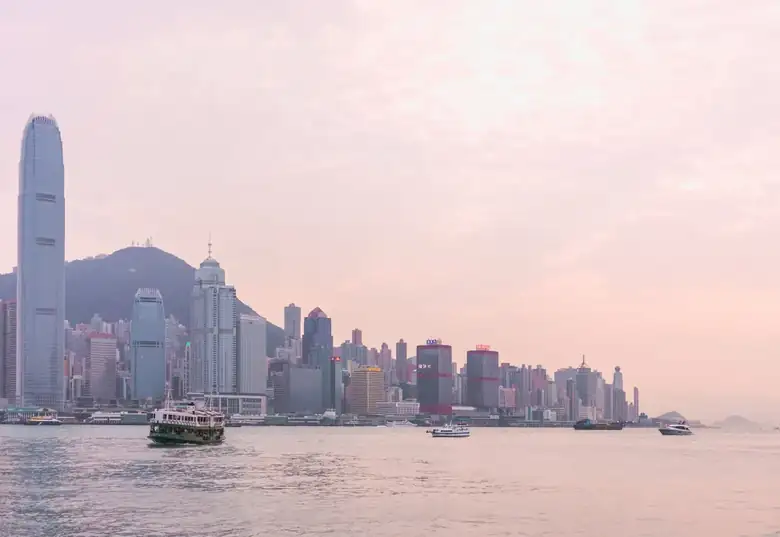
The territory consists of Hong Kong Island, the Kowloon Peninsula, the New Territories, and 263 outlying islands, with a total land area of approximately 1,114 square kilometers (as of 2025, including reclaimed land). Mountains and hills dominate the landscape, while flat land is relatively scarce. The highest point is Tai Mo Shan in the New Territories, rising 957 meters above sea level. On Hong Kong Island, Victoria Peak (Mount Austin), although only 552 meters high, is the city's most iconic vantage point, offering panoramic views of Victoria Harbour and the world-famous skyline. Hong Kong has no major rivers; instead, numerous short streams such as the Shing Mun River and Lam Tsuen River flow through the territory. Freshwater supplies rely heavily on reservoirs and imported water from the Dongjiang (East River) in Guangdong Province. At the heart of the city lies Victoria Harbour, one of the world's three finest natural deep-water harbors. Stretching roughly 12 kilometers from east to west and between 1.2 and 9.6 kilometers wide, it has long served as the lifeline of Hong Kong's urban and economic development.
By the end of 2024, Hong Kong's population stood at approximately 7.53 million, making it one of the most densely populated places on Earth, with an average population density exceeding 6,700 people per square kilometer. Population density is particularly high on Hong Kong Island and in Kowloon. About 92% of residents are ethnic Chinese, while sizable communities from the Philippines, Indonesia, India, Nepal, the United Kingdom, and many other countries contribute to the city's multicultural character. Administratively, Hong Kong is directly under the Central People's Government and operates under the constitutional principle of "One Country, Two Systems" and "Hong Kong people administering Hong Kong." It enjoys a high degree of autonomy while maintaining its capitalist system and way of life, with an independent judiciary, a separate customs territory, and its own currency—the Hong Kong Dollar (HKD).
Hong Kong is known by many celebrated nicknames. "Pearl of the Orient" reflects its dazzling skyline and vibrant metropolitan image. "Fragrant Harbour"—the literal meaning of "Hong Kong"—is traditionally associated either with a stream known for its fragrant water or with the historical trade of aromatic agarwood (Aquilaria sinensis). It is also widely recognized as "Shopping Paradise" and "Food Paradise," thanks to its status as a free port and its remarkable diversity of international cuisine. The English name Hong Kong is derived from the Cantonese pronunciation of 香港, meaning "Fragrant Harbour." Together, these names capture the city's unique identity as an international metropolis where East and West converge amid mountains and sea.
Historical Development
Human settlement in the Hong Kong region dates back approximately 6,000 years to the Neolithic Age. Excavations at the Sham Wan archaeological site on Lamma Island have uncovered painted pottery and stone tools, providing evidence of early human activity. After the Qin Dynasty unified Lingnan in the third century BCE, Hong Kong became part of Panyu County, remaining within the administrative framework of successive Chinese dynasties for centuries. During the Tang and Song dynasties, military garrisons and maritime trade were already recorded around Tuen Mun and Fat Tong Mun, while historic sites such as Tsing Shan Monastery trace their origins to the Song period. From the Ming Dynasty through the early Qing Dynasty, Hong Kong served as an important transshipment point for agarwood (Aquilaria sinensis), from which the name "Hong Kong" is widely believed to have originated. Following the lifting of coastal evacuation restrictions during the reign of the Kangxi Emperor, Hakka settlers, Tanka fishing communities, and other groups gradually established communities centered on agriculture, fishing, salt production, and pearl harvesting.
Phase One: British Occupation and Early Colonial Development (1841–1898)
In January 1841, British forces landed at Possession Point on Hong Kong Island. Following the First Opium War, the Qing government ceded Hong Kong Island to Britain under the Treaty of Nanking (1842). After the Second Opium War, the Convention of Peking (1860) transferred the portion of the Kowloon Peninsula south of Boundary Street to British control. In 1898, the Convention for the Extension of Hong Kong Territory leased the New Territories and 235 surrounding islands to Britain for 99 years, expiring on 30 June 1997. Together, these three treaties established the territorial boundaries of colonial Hong Kong.
During its early colonial years, the government capitalized on the advantages of Victoria Harbour to develop entrepôt trade. Extensive land reclamation projects and road construction transformed Central on Hong Kong Island into the colony's administrative and commercial heart. The colonial government was formally established in 1843, adopting a free-port policy that attracted merchants from around the world. At the same time, Chinese communities flourished in areas such as Temple Street and Hollywood Road, creating a distinctive urban landscape where Chinese and Western cultures coexisted.
Phase Two: The Golden Age of Entrepôt Trade and the Japanese Occupation (1898–1945)
During the first half of the twentieth century, Hong Kong emerged as one of the Far East's most important trading ports, thanks to its deep-water harbor and free-trade policy. The opening of the Kowloon–Canton Railway in 1910 further strengthened connections with mainland China. The founding of The University of Hong Kong in 1911 marked the beginning of modern higher education in the territory.
In December 1941, Japanese forces invaded Hong Kong. After 18 days of fierce fighting, the colony fell under Japanese occupation, ushering in the traumatic period known locally as the "Three Years and Eight Months." During the occupation, the population plummeted from approximately 1.6 million to 600,000, while the economy collapsed and civilians endured severe hardship, famine, and repression. The experience profoundly shaped the collective memory and identity of later generations.
Phase Three: Industrial Takeoff and Economic Transformation (1945–1980s)
After the Second World War, Hong Kong's population rebounded rapidly as large numbers of migrants from mainland China brought capital, skills, and labor. The territory gradually transformed from an entrepôt into an export-oriented manufacturing economy. Although the Korean War and the embargo on trade with China initially disrupted commerce, they also accelerated the growth of textile, garment, plastics, electronics, and other manufacturing industries.
Throughout the 1960s and 1970s, Hong Kong experienced extraordinary economic expansion and became one of the "Four Asian Tigers," alongside South Korea, Taiwan, and Singapore. Public housing programs, free compulsory education, the establishment of the Independent Commission Against Corruption (ICAC) in 1974, and the construction of the Mass Transit Railway (MTR) fundamentally transformed the city's infrastructure and quality of life. Towering skyscrapers reshaped districts such as Central, Wan Chai, and Tsim Sha Tsui, while the enduring "Lion Rock Spirit" came to symbolize Hong Kong's resilience, determination, and entrepreneurial drive.
Phase Four: The Transition to Chinese Sovereignty and an International Metropolis (1980s–1997)
In 1984, China and the United Kingdom signed the Sino-British Joint Declaration, confirming that China would resume the exercise of sovereignty over Hong Kong on 1 July 1997 under the principle of "One Country, Two Systems" and "Hong Kong people administering Hong Kong." During the transition period, Hong Kong continued shifting toward a service-based economy, with finance, real estate, tourism, trade, and logistics becoming its economic pillars.
Many residents emigrated overseas during these years, while China's Reform and Opening-up policies fostered the "front shop, back factory" production model across the Pearl River Delta. Hong Kong increasingly served as the gateway for foreign investment into mainland China. The promulgation of the Basic Law in 1990 established the constitutional framework for the future Hong Kong Special Administrative Region.
Phase Five: The Hong Kong Special Administrative Region Era (1997–Present)
On 1 July 1997, Hong Kong officially returned to China and became the first Special Administrative Region operating under the "One Country, Two Systems" framework. Since then, the city has weathered numerous challenges—including the Asian Financial Crisis, the SARS epidemic, the Global Financial Crisis, periods of social unrest, and the COVID-19 pandemic—while maintaining its position as one of the world's leading international centers for finance, trade, and shipping.
Major cross-boundary infrastructure projects, including the Hong Kong–Zhuhai–Macau Bridge (opened in 2018) and the Hong Kong section of the Guangzhou–Shenzhen–Hong Kong Express Rail Link (also opened in 2018), have significantly strengthened regional connectivity. Within the framework of the Guangdong–Hong Kong–Macao Greater Bay Area, Hong Kong is positioned as one of the region's core engines of development. Today, the city is actively promoting innovation and technology, reinforcing its role as the world's leading offshore Renminbi business hub, and exploring new directions for its future under the enduring principle of "One Country, Two Systems" and "Hong Kong people administering Hong Kong."
Hong Kong's historical landmarks vividly illustrate its layered past. The former Supreme Court Building beneath Government Hill (now the Court of Final Appeal), Pottinger Street in Central, 1881 Heritage—the restored former Marine Police Headquarters—the site of the once-notorious Kowloon Walled City (now Kowloon Walled City Park), and numerous historic walled villages in the New Territories, including Kat Hing Wai and Tsang Tai Uk, all offer invaluable insights into the city's complex historical evolution.
Cultural Heritage
Hong Kong's cultural identity is deeply rooted in Lingnan (Cantonese) culture. During more than a century and a half of British administration, however, it evolved through extensive interaction with Western civilization while also absorbing influences from Southeast Asia and South Asia. The result is a distinctive "Hong Kong culture" renowned for its openness, pragmatism, and adaptability—qualities that are reflected across every aspect of society.
Languages and Dialects
Cantonese is the de facto native language and primary spoken language of Hong Kong. According to official statistics, approximately 88.9% of residents aged five and above use Cantonese as their usual language. Hong Kong Cantonese preserves many features of Classical Chinese pronunciation and vocabulary, including everyday expressions such as sik faan (to eat a meal) and haang lou (to walk). At the same time, historical ties with Britain have introduced a vast number of English loanwords into daily speech, including baa si (bus), si do (store), tip si (tips), and bo (ball), creating a uniquely hybrid vocabulary.
Traditional dialects such as Weitou and Hakka continue to survive in a small number of indigenous villages in the New Territories. Since Hong Kong's return to China in 1997, Mandarin (Putonghua) has become increasingly widespread, while English remains extensively used in government, business, law, and international communication. Together, they form Hong Kong's official language policy of "biliteracy and trilingualism"—written Chinese and English, with spoken Cantonese, Putonghua, and English.
Traditional Customs and Festivals
Hong Kong celebrates a rich calendar of traditional festivals. Alongside nationwide observances such as the Chinese New Year, Qingming Festival, Dragon Boat Festival, Mid-Autumn Festival, and Double Ninth Festival, it also preserves numerous customs unique to Lingnan culture.
The Cheung Chau Bun Festival, held annually from the fifth to the ninth day of the fourth lunar month, is recognized as a National Intangible Cultural Heritage. Originally a Taoist ritual intended to drive away disease and evil spirits, it is famous today for its spectacular Piu Sik (Floating Colors) Parade, the thrilling Bun Scrambling Competition, and three days of vegetarian observance.
Another iconic tradition is the Tai Hang Fire Dragon Dance, performed over three consecutive nights during the Mid-Autumn Festival. Dating back to the late nineteenth century, the ritual was originally intended to ward off plague and misfortune. The enormous dragon, constructed from hemp rope, pearl grass, and thousands of burning incense sticks, winds through the streets in a breathtaking display of light and movement.
The Tin Hau Festival is among the most important religious celebrations for Hong Kong's coastal communities. With more than 70 Tin Hau Temples across the territory, grand processions take place annually on the twenty-third day of the third lunar month in locations such as Yau Ma Tei, Sai Kung, and Stanley.
Other important traditional celebrations include the Yu Lan Ghost Festival, Che Kung Festival, and Tam Kung Festival, all of which reinforce local community identity and religious traditions.
Traditional Chinese wedding customs also remain vibrant. Ceremonies such as Guo Da Li (the formal exchange of betrothal gifts) and Shang Tou (the hair-combing ritual before marriage) continue to be observed, particularly in indigenous villages of the New Territories. Meanwhile, most modern weddings combine Western and Chinese traditions, with white wedding gowns followed by the traditional Chinese tea ceremony.
Religious life reflects a harmonious blend of Confucianism, Buddhism, and Taoism, alongside ancestral worship and traditional folk beliefs. Popular temples such as Wong Tai Sin Temple, Man Mo Temple, and Che Kung Temple attract worshippers throughout the year, while deities including Guan Yu, Hung Shing, Pak Tai, and the Earth God (Tudi Gong) each enjoy devoted followings.
Performing Arts and Creative Traditions
Cantonese Opera is Hong Kong's most iconic performing art and was inscribed on the UNESCO Representative List of the Intangible Cultural Heritage of Humanity in 2009. While preserving its traditional vocal techniques, stylized choreography, and martial performances, Hong Kong's Cantonese Opera incorporated elements of cinema and Western music during the mid-twentieth century. Classic works by playwright Tong Tik-sang, including The Purple Hairpin and The Reincarnation of Princess Cheung Ping (The Princess Changping), continue to be widely performed today. The Yau Ma Tei Theatre and the adjacent Red Brick Building now serve as major centers for Cantonese Opera.
Hong Kong cinema has likewise left an indelible mark on both Chinese-language and global filmmaking. Genres such as martial arts films, kung fu movies, crime thrillers, and mo lei tau (nonsensical comedy) have influenced generations of filmmakers worldwide, establishing a cinematic style distinguished by its energetic pacing, inventive storytelling, and unique visual language.
In the visual arts, the Lingnan School of Painting flourished in Hong Kong through second-generation masters such as Chiu Chao-an and Yeung Sin-sum, blending traditional Chinese painting with Japanese and Western artistic techniques. In recent decades, contemporary ink painting and installation art—often inspired by themes surrounding Hong Kong's changing identity—have found important exhibition spaces at institutions such as M+ in the West Kowloon Cultural District.
Traditional craftsmanship also remains an important part of the city's cultural heritage. Crafts such as birdcage making, traditional flower-board construction, cheongsam tailoring, and Cantonese Opera costume and headdress making are all included in Hong Kong's official intangible cultural heritage inventory.
Intangible Cultural Heritage
Beyond Cantonese Opera, Hong Kong's First Inventory of Intangible Cultural Heritage includes 480 heritage items, covering oral traditions, performing arts, social customs, festivals, rituals, and traditional craftsmanship.
Among these, ten representative items have been officially recognized as part of the Representative List of the Intangible Cultural Heritage of Hong Kong, including Nanyin narrative singing, spring and autumn ancestral ceremonies, Quanzhen Taoist rituals, the craft of Hong Kong-style milk tea making, and traditional bamboo scaffolding and paper craft (Jat Zak).
These living traditions continue to thrive in everyday life. Whether it is a bowl of traditional Twenty-Four Herbs Herbal Tea served in a neighborhood herbal shop or a cup of silky Hong Kong-style milk tea enjoyed in a classic cha chaan teng, they are more than ordinary refreshments—they are enduring expressions of the city's collective memory and cultural identity.
Architecture and Urban Landscape
Hong Kong's architecture is a three-dimensional history book. Traditional Lingnan residences, colonial eclecticism, modernist skyscrapers, ultra-high-density housing, and world-class infrastructure coexist within one of the world's most limited land areas, creating an urban landscape distinguished by extraordinary density and striking verticality.
Traditional Architecture
In the New Territories and the outlying islands, traditional Hakka and Punti walled villages, such as Kat Hing Wai and Tsang Tai Uk, remain remarkably well preserved. Constructed with grey brick walls, granite foundations, and carefully organized ancestral halls, these settlements were surrounded by defensive walls, watchtowers, and moats to protect residents from external threats.
The strong tradition of clan culture continues through ancestral halls built by the five major indigenous clans of the New Territories—Tang, Man, Liu, Hau, and Pang. Their elaborate roof decorations, ceramic sculptures, plaster reliefs, and murals celebrate stories of loyalty, filial piety, and virtue.
Many Qing Dynasty temples, including the Hung Shing Temple in Ap Lei Chau and Man Mo Temple in Sheung Wan, exemplify classic Lingnan architectural design. Featuring two- or three-courtyard layouts, richly decorated roof ridges, and open courtyards that admit natural light, they showcase the elegance and practicality of southern Chinese temple architecture.
Another distinctive architectural form is the Tong Lau, the mixed-use tenement buildings that dominated Hong Kong from the late nineteenth century through the 1960s. Typically four to six stories high, Tong Laus combined shops on the ground floor with residences above. Their long, narrow arcades—derived from Cantonese and southern European architectural traditions—provided pedestrians with shelter from both sun and rain. Buildings such as the Blue House and Lui Seng Chun are among the finest surviving examples, many of which have been successfully revitalized for modern use.
Modern and Contemporary Architecture
Following the establishment of British colonial rule in 1842, European classical architecture rapidly reshaped Central. Landmark buildings include the Legislative Council Building (formerly the Supreme Court, completed in 1912), a masterpiece of Neoclassical architecture distinguished by its Greek columns and prominent dome, as well as the Court of Final Appeal (formerly the French Mission Building), which reflects elegant Edwardian architectural influences.
The former Marine Police Headquarters, now restored as 1881 Heritage, demonstrates the influence of the Indo-Saracenic style, with its red-brick walls, arcaded verandas, and timber shutters adapted to Hong Kong's subtropical climate.
After the Second World War, Hong Kong embraced modernism. Jardine House, completed in 1973, became Asia's tallest building and is instantly recognizable for its circular windows and concrete structural design. Bank of China Tower, designed by I. M. Pei and completed in 1990, symbolizes growth and resilience through its ascending triangular framework inspired by bamboo stalks. The HSBC Main Building, designed by Norman Foster and completed in 1985, pioneered high-tech architecture with its exposed suspended structural system and elevated ground floor that remains open as a public space.
Other engineering landmarks include Hong Kong International Airport (opened in 1998), the Tsing Ma Bridge, and the Hong Kong Convention and Exhibition Centre (New Wing), all of which have become defining symbols of the city's modern identity.
Urban Fabric
Hong Kong's urban fabric is characterized by the coexistence of narrow streets, towering buildings, and multi-level pedestrian connectivity. The limited flat land along the northern shore of Hong Kong Island and the southern coast of Kowloon has been developed with exceptional intensity, producing the world-famous skyline stretching from Central through Admiralty, Wan Chai, and Tsim Sha Tsui.
Movement throughout the city takes place on multiple levels. Streets, elevated footbridges, underground passages, and the Central–Mid-Levels Escalator—the world's longest outdoor covered escalator system at approximately 800 meters—form an integrated pedestrian network used by tens of thousands of commuters every day.
Housing is equally distinctive. Large-scale public housing estates and Home Ownership Scheme developments accommodate a significant proportion of Hong Kong's population. Estates such as Choi Hung Estate, Lai Tak Tsuen, and Ping Shek Estate have become visual icons thanks to their bold colors and distinctive architectural forms. At the same time, ultra-slender private residential towers—popularly nicknamed "pencil towers"—maximize every available plot of land.
Traditional street markets, open-air food stalls, and modern shopping malls coexist throughout the city. Goldfish Market in Mong Kok, the Yau Ma Tei Fruit Market, and Apliu Street in Sham Shui Po each possess their own unique atmosphere and contribute to the city's vibrant street life.
Distinctive Districts
Central is Hong Kong's financial heart, home to international banking headquarters and luxury boutiques, while historic streets such as Pottinger Street, Lan Kwai Fong, and Hollywood Road preserve the district's cultural diversity.
Sheung Wan combines traditional dried seafood shops with independent cafés and creative spaces. Attractions such as Man Mo Temple, Cat Street Market, and PMQ—the revitalized former Police Married Quarters—have made it one of the city's most dynamic cultural neighborhoods.
Tsim Sha Tsui serves as Hong Kong's premier waterfront destination. The Tsim Sha Tsui Promenade, Hong Kong Cultural Centre, and the Avenue of Stars define the harborfront, while the West Kowloon Cultural District, home to M+ Museum and the Hong Kong Palace Museum, has emerged as the city's newest cultural landmark.
Yau Ma Tei offers a glimpse into everyday Hong Kong life through Temple Street Night Market, the Jade Market, and the historic Red Brick Building.
Sham Shui Po, often described as "Hong Kong's workshop," is renowned for its fabric wholesalers, electronics markets, affordable street food, and vibrant hawker culture.
Though these neighborhoods blend seamlessly into one another, each contributes a distinctive chapter to Hong Kong's richly layered urban story.
Culinary Culture
Hong Kong's culinary culture is rooted in Cantonese cuisine while embracing influences from Western, Southeast Asian, and various regional Chinese traditions. Drawing on the strengths of diverse food cultures, it has developed into a distinctive culinary identity of its own. UNESCO has recognized Hong Kong as a "City of Gastronomy." Here, diners can enjoy everything from humble street stalls to Michelin-starred restaurants, with options to suit every budget and taste.
Representative Cuisine and Characteristics
The foundation of Hong Kong cuisine is Cantonese (Guangfu) cuisine, which emphasizes the freshness of ingredients, the elusive wok hei (the "breath of the wok"), and the natural flavors of food. Common cooking methods include steaming, stir-frying, slow simmering, braising, and poaching.
At the same time, Western cuisine underwent early localization during the colonial era, giving rise to the distinctive style known as soy sauce Western cuisine. Popular examples include Swiss chicken wings and baked pork chop rice, with Hong Kong-style cafés (cha chaan teng) serving as the best representation of this culinary fusion.
Meanwhile, Chaozhou, Hakka, Beijing, Sichuan, Shanghai, Japanese, and Southeast Asian cuisines have all taken root in Hong Kong, highlighting the city's cosmopolitan character. Upscale Cantonese restaurants specialize in elaborate dishes prepared with premium ingredients such as dried abalone, shark fin, and fish maw, while affordable everyday meals—including dai pai dong-style rice plates, cart noodles, and two-dish rice—serve the daily needs of ordinary residents. Together, they reflect Hong Kong's remarkable diversity across different consumer segments.
Signature Dishes and Snacks
1. Dim Sum and Yum Cha
Shrimp dumplings (har gow), pork dumplings (siu mai), barbecued pork buns (char siu bao), rice noodle rolls (cheung fun), and braised chicken feet are classic dim sum served in bamboo steamers. Paired with Pu-erh tea or jasmine tea, they form the centerpiece of family gatherings and business socializing.
Although traditional trolley service and stamp cards have gradually given way to order sheets, the culture of yum cha remains as vibrant as ever. On weekend mornings, teahouses buzz with conversation, and round banquet tables continue to play an important role in Hong Kong's social life.
2. Hong Kong-style Barbecue (Siu Mei)
Roast goose, barbecued pork (char siu), crispy roast pork, and soy sauce chicken are the cornerstones of Hong Kong's famous roasted meats.
Renowned establishments such as Yung Kee and Kam's Roast Goose attract visitors from around the world, while neighborhood barbecue shops can be equally satisfying. Roast goose is prized for its crispy skin and tender meat, traditionally served with plum sauce. Char siu features caramelized edges coated in honey glaze, giving it an irresistible appearance.
Barbecue rice dishes—especially the popular "char siu and soy chicken combo rice"—remain one of Hong Kong's favorite fast meals.
3. Hong Kong Milk Tea and Silk Stocking Milk Tea
Hong Kong milk tea is brewed from a carefully blended mixture of tea leaves and repeatedly filtered through a long cloth bag resembling a silk stocking, producing a rich, robust, and full-bodied tea. Evaporated milk is then added generously to create the signature beverage known as silk stocking milk tea.
As the iconic drink of the cha chaan teng, it is often enjoyed alongside freshly baked egg tarts—available with either buttery shortcrust or flaky puff pastry—or a pineapple bun with butter, a warm sweet bun filled with a thick slice of chilled butter. Together they form the classic afternoon tea tradition affectionately known as "3:30 Tea."
4. Wonton Noodles and Cart Noodles
Wonton noodles are a classic Cantonese specialty, featuring delicate shrimp wontons served over springy bamboo-pressed egg noodles in a clear yet intensely flavorful broth.
Cart noodles, by contrast, embody Hong Kong's street-food culture. Diners customize their own bowls by choosing noodles, soup bases, and toppings such as fish balls, pork skin, daikon radish, and braised beef brisket. Once associated with working-class ingenuity, cart noodles have evolved into one of the city's iconic comfort foods.
5. Typhoon Shelter Crab
Originating from the floating fishing communities of the Causeway Bay Typhoon Shelter, this famous seafood dish stir-fries fresh crab with generous amounts of garlic, fermented black beans, and chili peppers over high heat. Intensely aromatic and infused with exceptional wok hei, it remains the signature dish of Typhoon Shelter cuisine and can now be enjoyed at seafood destinations such as Lei Yue Mun and Lau Fau Shan, as well as specialty restaurants throughout the city.
Dining Customs
Hong Kong people traditionally begin meals with soup, and slow-cooked Cantonese herbal soups remain a symbol of family warmth and care.
Serving chopsticks are widely used during shared meals, reflecting a strong awareness of hygiene. Another enduring tradition is the "3:30 afternoon tea," originally introduced during the British colonial era as a workers' break and still commonly observed in offices and construction sites today.
Dining habits also reflect the city's fast-paced lifestyle. Morning tea can be finished in just ten minutes, while food delivery apps and local shorthand expressions—such as fei sa jau nai ("no sugar, no milk")—have become part of everyday life.
Sharing tables with strangers, known as dap toi, is perfectly normal in cha chaan teng and traditional restaurants. Although strangers may sit face-to-face, everyone respects each other's privacy while enjoying a quick meal.
The Character Reflected in Hong Kong Cuisine
Hong Kong cuisine embodies the philosophy of being fast, appealing, and authentic—food is served quickly, presented attractively, and tastes exactly as it should. This reflects the city's culture of efficiency, practicality, and results-oriented thinking.
At the same time, countless subtle innovations—from French toast sweetened with condensed milk instead of syrup to lo ding (instant noodles tossed with luncheon meat)—demonstrate Hong Kong's remarkable adaptability and creativity. These culinary inventions exemplify how this immigrant city continually absorbs outside influences while transforming them into something uniquely its own.
---
Modern Development
Hong Kong's modern development is the story of a small fishing village that rose to become one of the world's leading international metropolises through favorable geography, historical opportunities, and the determination of its people. Its transformation has been closely intertwined with China's national fortunes and the changing global order.
The Opening of the Port and the Foundation of an Entrepôt (1841–1940s)
On January 26, 1841, British forces landed at Possession Point on Hong Kong Island (near today's Possession Street in Sheung Wan) and soon declared Hong Kong a free port exempt from customs duties.
This policy attracted British opium merchants, Parsee traders, Jewish merchants, and Chinese businessmen formerly associated with Guangzhou's Thirteen Factories. Major trading houses such as Jardine, Matheson & Co. and Dent & Co. quickly established their headquarters in Hong Kong.
Land reclamation projects began as early as the 1840s, meaning that today's Des Voeux Road Central and Connaught Road were once part of the original coastline. In 1865, The Hongkong and Shanghai Banking Corporation (HSBC) was founded and gradually became the city's dominant financial institution.
By the early twentieth century, Hong Kong had become the most important entrepôt in the Far East, handling the overwhelming majority of South China's international trade.
Post-war Industrialization and the Economic Miracle (1950s–1970s)
Following the founding of the People's Republic of China and the trade embargo imposed during the Korean War, Hong Kong was compelled to shift toward export-oriented manufacturing.
Textile entrepreneurs from Shanghai and Ningbo relocated south with capital, technology, and machinery, establishing factories in Tsuen Wan, Kwun Tong, and San Po Kong. By the 1960s, Hong Kong had become one of the world's leading exporters of textiles, garments, plastic flowers, toys, and wigs, making the label "Made in Hong Kong" internationally renowned.
During the 1970s, a young and flexible workforce, combined with strong overseas demand, drove annual economic growth to over 9 percent. At the same time, the colonial government launched large-scale public housing programs, built reservoirs, and established the Independent Commission Against Corruption (ICAC), allowing social stability and economic prosperity to reinforce one another.
The Cross-Harbour Tunnel opened in 1972, followed by the first section of the Mass Transit Railway (MTR) in 1979, significantly expanding the city's urban framework.
The Rise of a Service Economy and International Financial Centre (1980–1997)
During the 1980s, much of Hong Kong's manufacturing industry relocated to the Pearl River Delta, creating the well-known "front shop, back factory" model. Production moved to cities such as Guangzhou, Shenzhen, and Dongguan, while Hong Kong specialized in design, marketing, finance, and logistics.
The local economy rapidly transitioned toward services, with finance, real estate, trade, and professional services becoming its four major pillars.
In 1986, Hong Kong's four stock exchanges merged to form the Stock Exchange of Hong Kong, which gradually developed into one of the Asia-Pacific region's leading fundraising platforms. In 1993, Tsingtao Brewery became the first mainland Chinese H-share company listed in Hong Kong, opening an important financing channel for mainland enterprises.
During the same period, construction began on the new Hong Kong International Airport and its associated infrastructure under the Airport Core Programme, one of the world's largest infrastructure projects at the time.
By the eve of the 1997 handover, Hong Kong's GDP per capita had surpassed that of many Western economies, and the city was widely regarded as one of the world's leading examples of a free-market economy.
Transformation and Connectivity After the Handover (1997–Present)
On July 1, 1997, Hong Kong returned to China under the principle of "One Country, Two Systems" and "Hong Kong people administering Hong Kong."
The city subsequently faced a series of major challenges, including the Asian Financial Crisis (1998), the collapse of the property bubble, and the SARS epidemic (2003), all of which temporarily weakened the economy.
Recovery followed through initiatives such as the Closer Economic Partnership Arrangement (CEPA) between Mainland China and Hong Kong, the Individual Visit Scheme, and the internationalization of the Renminbi.
In 2009, Hong Kong became the world's largest market for initial public offerings (IPOs) by funds raised, a position it has reclaimed multiple times since. The launch of the Shanghai–Hong Kong Stock Connect in 2014 and the Shenzhen–Hong Kong Stock Connect in 2016 further strengthened integration between Hong Kong and mainland China's capital markets.
More recently, the Guangdong–Hong Kong–Macao Greater Bay Area initiative has positioned Hong Kong as an international innovation and technology hub. Development of the Hong Kong–Shenzhen Innovation and Technology Park in the Lok Ma Chau Loop is one of its flagship projects.
Today, Hong Kong continues to serve as one of the world's freest economies, the largest offshore Renminbi business centre, and a leading Asia-Pacific hub for asset management and international legal dispute resolution. As the city moves forward, it continues to balance its traditional strengths in finance with its growing ambitions in innovation and technology.
Transportation and Getting Around
Hong Kong's transportation system is renowned for its efficiency, density, and seamless integration of multiple transport modes. It serves as the lifeblood of this vertical city while also functioning as a unique gateway connecting Mainland China with the rest of the world through its distinctive cross-boundary transport network.
External Transportation
Cross-boundary transportation is one of Hong Kong's defining roles as a Special Administrative Region.
By land, Hong Kong is connected to Mainland China through six major border crossings: Shenzhen Bay, Lok Ma Chau (Huanggang), Futian, Lo Wu, Man Kam To, and Sha Tau Kok, as well as the Hong Kong Port of the Hong Kong–Zhuhai–Macao Bridge, which links Hong Kong with Zhuhai and Macao.
Stretching 55 kilometers, the Hong Kong–Zhuhai–Macao Bridge is the world's longest sea-crossing bridge. Since opening in 2018, it has reduced the road journey between Hong Kong and Zhuhai from more than three hours to approximately 40 minutes.
By rail, the Hong Kong section of the Guangzhou–Shenzhen–Hong Kong Express Rail Link commenced operation in September 2018. West Kowloon Station adopts the "co-location" immigration arrangement, allowing passengers to complete both Hong Kong and Mainland Chinese immigration procedures within the station. Shenzhen Futian can be reached in as little as 14 minutes, while Guangzhou South is approximately 46 minutes away, providing direct access to China's nationwide high-speed rail network.
By air, Hong Kong International Airport (Chek Lap Kok Airport) has consistently ranked among the world's busiest cargo airports. It serves approximately 220 destinations worldwide, while the Airport Express carries passengers between Central and the airport in just 24 minutes.
For travel to Macao and coastal cities in Guangdong Province, high-speed ferries operate from the Hong Kong–Macau Ferry Terminal and China Ferry Terminal, with journeys typically taking around one hour. A unique cross-boundary helicopter service also offers rapid connections to Macao and Shenzhen.
Urban Transportation
Hong Kong's public transportation system carries more than 12 million passenger trips every day, with rail transit serving as its backbone.
The Mass Transit Railway (MTR) consists of ten urban railway lines together with an extensive Light Rail network, covering Hong Kong Island, Kowloon, the New Territories, and Lantau Island. With an on-time rate exceeding 99.9%, it is widely regarded as one of the world's busiest and most profitable metro systems.
The city's franchised bus operators—including Kowloon Motor Bus (KMB), Citybus, and New Lantao Bus—operate more than 700 routes. Their iconic double-decker buses navigate both congested urban streets and winding mountain roads, offering passengers an excellent vantage point from which to experience the city's unique urban landscape.
Public light buses come in two varieties: green minibuses, which operate on fixed routes and schedules, and red minibuses, which enjoy greater operational flexibility. The latter can often be hailed along the roadside and play an important role in neighborhoods such as Sham Shui Po, Mong Kok, and Causeway Bay. A familiar sound aboard these minibuses is passengers calling out in Cantonese, "Driver, getting off ahead!"
Ferries remain indispensable for the Outlying Islands. Since 1888, the Star Ferry has connected Central and Wan Chai on Hong Kong Island with Tsim Sha Tsui in Kowloon. Although the crossing takes only a few minutes, it has been recognized as one of the "50 Places of a Lifetime" and remains one of the most affordable ways to admire Victoria Harbour.
The Peak Tram, also operating since 1888, is Asia's first funicular railway. It climbs to Victoria Peak in approximately six minutes.
Hong Kong's taxis are divided into three color-coded services: red for the urban area, green for the New Territories, and blue for Lantau Island. They are known for relatively affordable fares, 24-hour availability, and exceptional efficiency.
A Distinctive Travel Experience
Getting around Hong Kong is far more than simply traveling from one place to another—it is an immersive way of experiencing the city's unique urban fabric.
Riding the Central–Mid-Levels Escalator feels like moving through different eras and social layers of Hong Kong. Crossing Victoria Harbour aboard the Star Ferry from Tsim Sha Tsui allows visitors to admire the harmonious blend of mountains, sea, and skyscrapers. Taking the Light Rail in Tuen Mun or Yuen Long reveals the fascinating transition between urban and rural landscapes in the New Territories. Even riding a late-night bus back from the city center to the new towns offers another perspective, as the brilliant city lights gradually fade into quieter suburban neighborhoods.
The Octopus Card and mobile payment systems are accepted across virtually all forms of public transportation, enabling this highly complex network to operate with remarkable precision.
---
Travel Tips
Best Time to Visit
Hong Kong has a subtropical monsoon climate, with spring and autumn generally considered the most pleasant seasons for travel.
From October through mid-December, the weather is typically sunny, dry, and comfortably cool, making it the ideal season for outdoor activities and hiking.
Spring (March to April) often brings mist and light drizzle, but blooming flowers make it an excellent time for leisurely urban exploration.
Summer (May to September) is hot and humid, with temperatures frequently exceeding 32°C (90°F). It is also typhoon season, when heavy rainstorms are common, so visitors should carry rain gear and closely monitor weather warnings.
Winter (late December to February) is cool and dry, with temperatures occasionally dropping to around 10°C (50°F). Christmas and Lunar New Year create a festive atmosphere throughout the city, although accommodation prices are generally higher during these peak travel periods.
Must-Visit Attractions and Experiences
1. Victoria Peak and the Hong Kong Skyline
Ride the Peak Tram to Victoria Peak and enjoy breathtaking panoramic views of Victoria Harbour and Hong Kong's iconic skyline from Sky Terrace 428 or the nearby Lugard Road Lookout. After dark, the city's glittering skyline becomes even more spectacular, while the nightly A Symphony of Lights multimedia show at 8:00 p.m. offers a free and unforgettable visual experience.
2. Star Ferry and the Tsim Sha Tsui Waterfront
Take the Star Ferry across Victoria Harbour before strolling along the Avenue of Stars, where handprints of Hong Kong film legends and the bronze statue of Bruce Lee stand against the harbor backdrop.
Nearby are the Hong Kong Museum of Art, the Hong Kong Space Museum, and the Hong Kong Cultural Centre. The West Kowloon Cultural District is also home to M+, Asia's leading museum of visual culture, and the Hong Kong Palace Museum, making the area a paradise for both contemporary and traditional art enthusiasts.
3. Temple Street Night Market and the Everyday Life of Yau Ma Tei
After sunset, Temple Street Night Market becomes one of the best places to experience Hong Kong's grassroots culture.
Fortune tellers, Cantonese opera performances, open-air food stalls, clay pot rice, and countless souvenir vendors combine to create a vivid portrait of local street life. Nearby, the Yau Ma Tei Wholesale Fruit Market is particularly lively before dawn, offering visitors another fascinating glimpse into the city's rhythm.
4. Island Hiking on Lamma Island or Lantau Island
Ferries departing from Central reach Lamma Island in about 30 minutes. The scenic walk from Yung Shue Wan to Sok Kwu Wan passes fishing villages, beaches, and seafood restaurants, providing a relaxing escape between mountains and the sea.
Alternatively, visit Lantau Island by taking the Ngong Ping 360 Crystal Cabin cable car to the Tian Tan Buddha and Po Lin Monastery, where visitors can experience Hong Kong's tranquil Buddhist heritage.
5. Experience Hong Kong's Cha Chaan Teng Culture
Begin the day with traditional Cantonese morning tea at a classic teahouse, or squeeze into a neighborhood cha chaan teng and order a typical breakfast set featuring buttered toast, two fried eggs, satay beef instant noodles, and a cup of silk stocking milk tea.
Listening to waiters effortlessly use local shorthand expressions—such as cha jau (milk tea made with condensed milk instead of evaporated milk), fei sa jau nai ("no sugar, no milk"), or kau dai ("less rice")—offers one of the most authentic ways to appreciate Hong Kong's unique blend of efficiency and inclusiveness.
Practical Tips
Language
Mandarin is widely understood at major tourist attractions and shopping malls, while learning a few simple Cantonese phrases—such as nei hou ("hello"), m goi ("thank you" or "excuse me"), and do ze ("thank you")—is often appreciated by locals. English is commonly spoken in hotels, financial districts, and international establishments.
Currency and Payment
The Hong Kong dollar (HKD) is the official currency. Most shops accept credit cards and mobile payment platforms such as Alipay, WeChat Pay, and Octopus. However, traditional wet markets, street food stalls, and taxis often still prefer cash or Octopus payments. Purchasing an Octopus Card is highly recommended, as it can be used on nearly all forms of public transportation as well as in convenience stores.
Connectivity
Local prepaid SIM cards with data plans are available at the airport and major border checkpoints. Free public Wi-Fi through the GovWiFi network is widely available in public libraries, selected parks, and government facilities.
Getting Around
Whenever possible, avoid riding the MTR during peak commuting hours (8:00–9:30 a.m. and 5:30–7:00 p.m.), when trains can become extremely crowded. Hong Kong's hilly terrain also makes a comfortable pair of walking shoes essential.
Things to Keep in Mind
1. Hong Kong strictly enforces its laws. Eating or drinking is prohibited on most forms of public transportation (with limited exceptions for certain long-distance trains), while littering and spitting in public carry substantial fixed penalties. Smoking is prohibited in virtually all indoor public places.
2. Electricity is supplied at 220V using British-style Type G three-pin plugs. Visitors should bring a suitable travel adapter.
3. When shopping, remember that one catty in Hong Kong equals 16 taels, or approximately 604 grams, which differs from the mainland Chinese jin. Most retailers display fixed prices, and major chain stores and shopping malls generally provide reliable after-sales service.
4. Respect Hong Kong's strong culture of queuing. When using escalators, stand on the right and leave the left side clear for those in a hurry. Although hiking trails and country parks are generally well maintained, visitors should check route difficulty, carry sufficient drinking water, and avoid coastal areas or mountain streams immediately after typhoons or heavy rainfall.
---
Hong Kong is a remarkably compact city whose greatest charm lies in its harmonious contradictions. It is a place where East meets West, mountains meet the sea, extraordinary density coexists with remarkable efficiency, and commercial dynamism is balanced by genuine warmth and humanity.
The best way to discover Hong Kong is to slow down. Wander through its streets with curiosity, moving between soaring skyscrapers and the aroma of a steaming bowl of wonton noodles, and gradually piece together your own unique impression of this extraordinary city.
Travel information can change. Check current opening hours, reservations and entry requirements before you travel.
Traveller discussion
Start the conversation with a helpful tip or a question.