
Baotou City
包头市
Origin of the name: Baotou City is located at the southern end of the Inner Mongolian Plateau. Its name originates from the Mongolian word "Boktu," meaning "place with deer," hence it is also called Deer City. Baotou Museum, Miaofa Temple, Meidaizhao, Northern Weapon City. Basic introduction: Baotou is a transliteration of the Mongolian word "Bokt…
Origin of place name:
Baotou City is located at the southern end of the Inner Mongolia Plateau. Its name originates from the Mongolian word "Boktu," which means "a place with deer." Therefore, it is also known as Deer City.
Basic introduction:
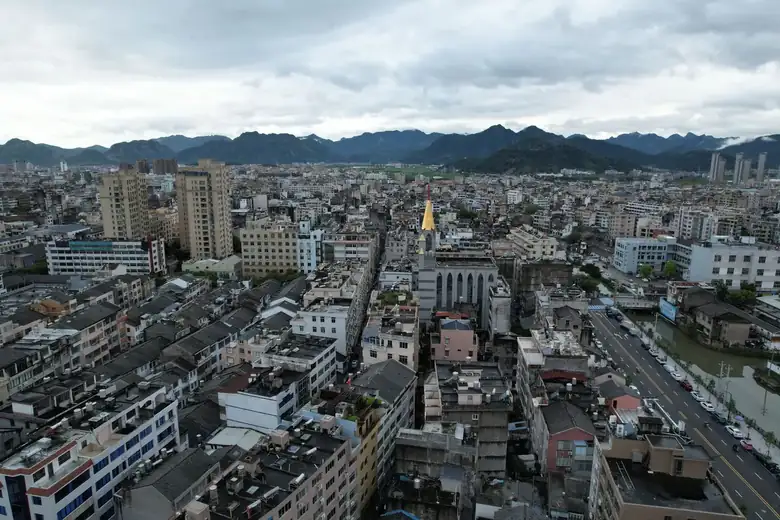
Baotou is a transliteration of the Mongolian word "Boktu," meaning "a place with deer," and is also known as "Deer City." Located in western Inner Mongolia Autonomous Region, it borders Mongolia to the north, the Yellow River to the south, and the Tumochuan Plain and Hetao Plain to the east and west. Baotou is a crucial hub connecting North and Northwest China, and a key development area for national and Inner Mongolian opening-up. Together with Hohhot and Ordos, it forms one of Inner Mongolia's most dynamic and advantageous development regions.
A civilized and harmonious city. In 307 BC, King Wuling of Zhao established Jiuyuan County in Baotou. The Qin Dynasty later established Jiuyuan Prefecture, which was renamed Wuyuan Prefecture during the Western Han Dynasty. Baotou is a crucial transportation hub connecting the nomadic culture of the northern grasslands with the agricultural culture of the Central Plains, thus accumulating a rich grassland civilization. With urban development, grassland charm and industrial civilization complement each other, showcasing the unique style of a grassland steel city and a leisure capital. In 2005, it was among the first batch of cities to be named a National Civilized City.
A modern industrial city. Developing gradually alongside key national projects.
View detailed information about Baotou City >>
Honors Ranking:
In January 2026, it ranked 44th in the overall ranking of overseas online influence of Chinese mainland cities in 2025.
In November 2025, it was selected as a pilot city for the integrated development of human resources service industry and manufacturing industry.
In September 2025, it ranked 91st on the list of the top 100 cities in the digital economy in 2025.
In May 2025, it was designated as one of the first batch of pilot cities for innovation and upgrading of the national retail industry.
In May 2025, the 2025 China City Charm Ranking was released, with Baotou City ranking 130th (a fourth-tier city).
In May 2025, the list of the top 100 cities with the greatest talent attraction in 2024 was released, with Baotou ranking 56th.
In April 2025, it was named a national model city (county) for supporting the military and giving preferential treatment to families of servicemen.
In February 2025, the list of the top 100 Chinese cities in terms of social development, economic development and people's livelihood in 2024 was released, with Baotou City ranking 27th.
In February 2025, the 2024 China Urban Social Development Comprehensive Ranking Top 100 list was released, with Baotou City ranking 42nd.
View more honors and rankings of Baotou City >>
Historical background:
The section of the Yellow River that flows through Baotou during the pre-Qin period was one of the earliest places where primitive humans were active.[29] 6,000 years ago, during the Neolithic Age, on the Yinshan Plateau, the ancestors represented by the Ashan culture made a living by hoeing, raising livestock, fishing, hunting, and gathering.
[22] During the Xia, Shang and Zhou dynasties, the tribes and clans active in the area of present-day Baotou were very complex.
The area has seen the emergence of tribes and clans such as the Guifang, Loufan, and Linhu.
[30] During the Warring States period, the administrative structure of Baotou area was established. [22] In the middle and late Warring States period, the nomadic Xiongnu people entered the Baotou area.
[30] In the 26th year of King Wuling of Zhao (300 BC), King Wuling of Zhao expanded westward.
View detailed historical evolution of Baotou City >>
Travel information can change. Check current opening hours, reservations and entry requirements before you travel.
Traveller discussion
Start the conversation with a helpful tip or a question.