
Ulanqab
UlanqabUlanqab is a prefecture-level city in the Inner Mongolia Autonomous Region of China, located in the central part of Inner Mongolia, directly north of China's heartland. It is the closest Inner Mongolian prefecture-level city to Beiji
Ulanqab
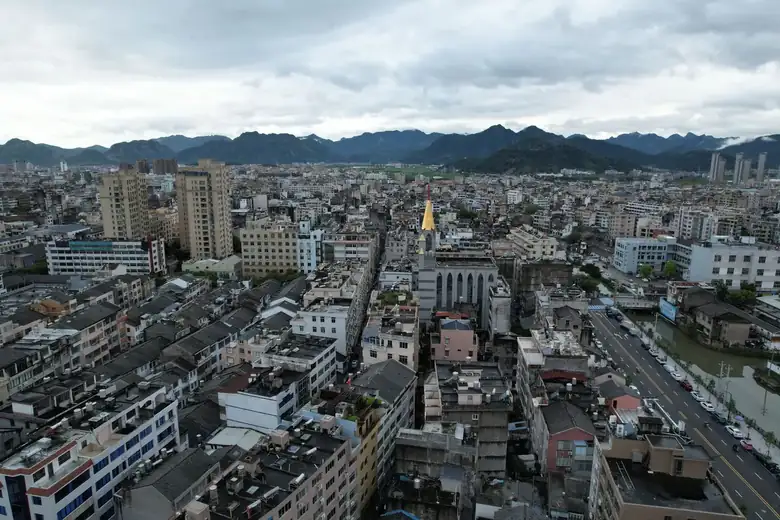
Ulanqab is a prefecture-level city in the Inner Mongolia Autonomous Region of China, located in the central part of Inner Mongolia, directly north of China's heartland. It is the closest Inner Mongolian prefecture-level city to Beijing. It borders Hebei Province to the east, Xilingol League to the northeast, Shanxi Province to the south, Hohhot to the southwest, Baotou to the northwest, and Mongolia to the north, with a border of over 100 km. The terrain is diverse, comprising four main zones from north to south, with a typical mid-temperate semi-arid continental monsoon climate. The total area is 54,500 square kilometers. As of the end of 2025, Ulanqab administers 1 district, 4 banners, 5 counties, and 1 county-level city, with a resident population of 1,557,000. The name "Ulanqab" means "red mountain pass" in Mongolian. The city has over 6,000 years of civilization history and is an important birthplace of northern Chinese civilization, as well as a key node on the Grassland Silk Road and the Ten-Thousand-Mile Tea Route. It is the only non-provincial-capital hub node city on the "Belt and Road" and China-Europe freight train routes, and one of 23 national logistics hub cities. The city has 5 expressways, 6 railways, and 1 airport, serving as a critical transportation hub connecting northern, northeastern, and northwestern China and a gateway to Mongolia, Russia, and Europe. In 2025, GDP reached 126.03 billion yuan (approximately US$17.7 billion), up 4.8%.
Historical Evolution
Ulanqab is located on the transitional zone between agriculture and pastoralism north of the Great Wall, historically a meeting point of central Chinese dynasties and northern nomadic peoples. During the Warring States period, the area was shared by the State of Zhao and the Xiongnu. After Qin's unification, Yunzhong, Dai, and Yanmen commanderies were established. During the Northern Wei, the area was held by the Tuoba Xianbei. Through the Song, Yuan, Ming, and Qing dynasties, Khitan, Jurchen, and Mongol peoples inhabited the area. The Ulanqab League was formed during the Kangxi reign of the Qing dynasty (1662–1722), when four Mongol tribes and six banners first assembled. In December 2003, the State Council approved the conversion from league to prefecture-level city.
Administrative Divisions
As of October 2022, Ulanqab administers 1 district (Jining), 4 banners (Siziwang, Chahar Right Wing Front, Chahar Right Wing Middle, Chahar Right Wing Rear), 5 counties (Liangcheng, Zhuozi, Xinghe, Shangdu, Huade), and 1 county-level city (Fengzhen). The municipal government is at No. 18 Chahar West Street, Jining District.
Physical Geography
Location and Boundaries
Ulanqab is in central Inner Mongolia, between 40°10′–43°28′N and 110°26′–114°49′E. It borders Mongolia to the north (110 km border), Xilingol League to the northeast, Hebei Province to the east, Shanxi Province to the south, and Hohhot and Baotou to the west. The city spans 458 km east-west and 442 km north-south, covering 54,500 square kilometers.
Topography and Landforms
The terrain consists of four zones from north to south: the Inner Mongolia Plateau, Ulanqab hills, Yinshan mountains, and hill terraces. The Huitengliang ridge of the Daqing Mountains crosses the central area at 1,595–2,150 m elevation. The highest point is the main peak of Sumu Mountain (2,349 m).
Climate
Ulanqab has a typical mid-temperate semi-arid continental monsoon climate. The average annual temperature is 0–6°C, with winters averaging below −15°C and 47–75 days of severe cold (below −20°C). Spring is dry and windy with up to 60 days of strong winds. Summer is brief and warm (17–22°C). Annual precipitation is 150–450 mm. Annual sunshine is 2,775–3,080 hours.
Hydrology
Ulanqab's water systems are divided into outflow areas (Yellow River and Yongding River systems, covering 32.7% of the total area) and inland river systems (covering 44,000 km²). The city has 110 perennial lakes with a total water surface area of over 70,000 mu. The largest freshwater lake is Daihai (160 km², 1.3 billion m³), followed by Huangqihai (130 km², 400 million m³). There are 44 small and medium reservoirs with total capacity of 251.73 million cubic meters.
Natural Resources
Water Resources
Ulanqab's average annual total water volume is 2.101 billion cubic meters, including 854 million cubic meters of surface water and 1.247 billion cubic meters of groundwater.
Plant Resources
The city has 702 species of wild plants across 107 families and 358 genera, including 487 species of wild medicinal herbs such as bupleurum, gentiana, astragalus, saposhnikovia, licorice, ephedra, and cistanche. Wild trees include 119 species of native trees (32 arboreal and 87 shrub species), including spruce, Chinese pine, arborvitae, poplar, birch, and elm. Wild forage grasses total 389 species, and wild flowers 87 species.
Animal Resources
Wild vertebrates include 36 fish species, 18 amphibian and reptile species, 125 bird species, and 42 mammal species. Over 30 species of precious wildlife have been identified, along with 20 fur-bearing animal species.
Mineral Resources
Ulanqab has 80+ discovered mineral varieties, with 49 having proven reserves and an estimated potential economic value of 450 billion yuan. Major resources include copper, fluorite, graphite, bentonite, diatomite, limestone, and coal. Siziwang Banner has a large oil field with reserves of 100 million tons, and the city has coal reserves of 40 billion tons, iron ore of 5+ billion tons, molybdenum of 2.6 million tons (the world's largest molybdenum deposit), fluorite of 30+ million tons, graphite of 30+ million tons, and silica of 1.3 billion tons.
Population
Population Size
At the end of 2025, the resident population was 1,557,000, a decrease of 23,700 (1.50%). The urban population was 997,500 (urbanization rate 64.07%). The age structure was: 0–14 years 8.70%, 15–64 years 64.50%, 60+ years 37.21%, and 65+ years 26.81%. The birth rate was 2.74‰, death rate 12.11‰, and natural growth rate −9.37‰.
Ethnic Composition
Ulanqab has 35 ethnic groups including Han, Mongolian, Hui, Manchu, Daur, Evenki, and Korean. The Han Chinese are the majority.
Politics
Economy
Overview
In 2025, GDP was 126.03 billion yuan (approximately US$17.7 billion), up 4.8%. The primary industry added value was 20.43 billion yuan (up 5.3%), secondary industry 41.14 billion yuan (up 6.2%), and tertiary industry 64.46 billion yuan (up 3.9%). The industrial structure was 16.2:32.6:51.2. In 2024, per capita disposable income was 30,039 yuan (approximately US$4,220), with urban residents at 42,048 yuan (approximately US$5,910) and rural residents at 18,206 yuan (approximately US$2,560). General public budget revenue was 7.02 billion yuan. Fixed asset investment above 5 million yuan grew 4.4%, with big data project investment growing 30.4%.
Primary Industry
In 2024, total agricultural, forestry, animal husbandry, and fishery output was 33.35 billion yuan (up 5.1%). Grain output was 2.89 billion jin (1.445 million tons, up 10.3%), with sown area of 7.126 million mu. Meat production was 160,000 tons (up 3.5%).
Secondary Industry
In 2024, 352 above-scale industrial enterprises saw added value grow 10.8%, with manufacturing up 13.7% and equipment manufacturing up 53.8%. Key products: power generation up 14.5%, ferroalloy up 18.8%, and dairy products up 27.9%.
Tertiary Industry
In 2024, service sector added value grew 5.7%, with wholesale and retail up 10.1% and IT services up 52.9%. Total retail sales of consumer goods reached 25.86 billion yuan (up 3.3%), with new energy vehicle sales up 89.1%. Above-scale service enterprises achieved revenue of 12.62 billion yuan (up 28.1%).
Social Affairs
Science and Technology
In 2023, 66 national and regional-level technology projects were arranged with funding of 55.21 million yuan. Technology contract transactions totaled 168.73 million yuan. Patent grants reached 1,028, including 83 invention patents.
Education
Ulanqab has 3 regular higher education institutions, 14 secondary vocational schools, 27 high schools, 51 junior high schools, and 100 primary schools. High school gross enrollment rate reached 105.2%.
Culture
The city has 14 performing arts troupes (including 11 Ulan Muqir troupes), 12 cultural centers, 12 public libraries, 9 museums, and 13 comprehensive archives. Radio and TV coverage both reached 99.5%.
Healthcare
Ulanqab has 2,136 health institutions including 67 hospitals, with 11,290 beds and 15,526 health personnel.
Sports
In 2022, Ulanqab athletes won 1 gold medal at national-level competitions and 19 gold medals at autonomous region competitions.
Social Security
At the end of 2023, basic pension insurance covered 628,700 urban workers and 1,049,200 rural residents. Basic medical insurance covered 2.054 million people. Urban low-income assistance covered 47,000 people, and rural assistance 378,800 people. The city operates 41 elderly care institutions with 5,147 beds and 359 "Happiness Courtyards" housing 23,600 households.
Transportation
Overview
Ulanqab is at the junction of Inner Mongolia, Shanxi, and Hebei, 300 km from Beijing. It has 5 expressways, 6 railways, and 1 airport. The Beijing-Hohhot High-Speed Railway opened in 2019, and the Jining-Datong-Taiyuan HSR opened in 2024. It is a critical hub connecting northern, northeastern, and northwestern China and a gateway to Mongolia, Russia, and Europe.
In 2023, highway passenger volume was 409,000 trips (up 30.3%), and freight volume was 123.878 million tons (up 15.5%).
Railways
Six railways pass through Ulanqab: Beijing-Baotou, Jining-Erenhot, Zhangjiakou-Jining, Jining-Tongliao, Datong-Zhunge'er, and the Beijing-Hohhot HSR. The coverage rate reaches 73% of the city's counties. The international freight train "Ruyi" to Frankfurt originates from Ulanqab, and the China-Europe freight train X9053 (Ulanqab-Almaty) makes Ulanqab a key Belt and Road railway hub.
Highways
Major expressways include the Dandong-Lhasa and Erenhot-Guangzhou expressways, with national highways G110 and G208 and the Hohhot-Manzhouli inter-provincial corridor. An eastern bypass expressway will form a ring road around the city.
Aviation
Ulanqab Airport is a Grade 4E airport with a 3,200 m × 45 m runway, opened on April 25, 2016. It handles Airbus A320 and Boeing 737 series aircraft. As of July 2025, it operates routes to Tianjin, Hangzhou, Shijiazhuang, Chongqing, Bayannur, Zhengzhou, and Guangzhou.
History and Culture
Ulanqab rock art, distributed across the grasslands from Siziwang Banner to Urad Middle Banner, is an important component of northern Chinese grassland rock art, representing the cultural heritage of ancient northern nomadic peoples.
Neolithic cultural sites in Ulanqab include the Shihushan Hougang Phase I culture, Yangshao Wangmieshan type, Yuanzigou culture, and Laohushan culture. The Huan Daihai site cluster and the Miaozigou culture site were designated as national key cultural relic protection units in 2001.
Chahar culture, characterized by Northern Yuan court traditions, embodies the heroic spirit of the Mongolian people with qualities of inclusiveness and harmony, representing a composite of grassland and farming cultures.
Scenic Spots
Local Specialties
Notable Figures
Honorary Titles
Travel information can change. Check current opening hours, reservations and entry requirements before you travel.
Traveller discussion
Start the conversation with a helpful tip or a question.