
Qinhuangdao City
Qinhuangdao CityQinhuangdao, abbreviated as "Qin" and also known as Gangcheng (Port City), is a prefecture-level city under Hebei Province, classified as a Type II large city. Located in the North China region, in the northeastern part of H
Qinhuangdao City
Qinhuangdao, abbreviated as "Qin" and also known as Gangcheng (Port City), is a prefecture-level city under Hebei Province, classified as a Type II large city. Located in the North China region, in the northeastern part of Hebei Province, it faces the Bohai Sea to the south, leans against the Yan Mountains to the north, borders Liaoning to the east, and is close to Beijing and Tianjin to the west. Situated at the junction of the two major economic zones of North China and Northeast China, it occupies a central position in the Circum-Bohai Sea Economic Rim, serving as an important functional area of the Capital Economic Circle and one of the first batch of coastal open cities. Qinhuangdao is designated by the State Council as an important node city of the Beijing-Tianjin-Hebei region, a modern maritime city, and a national comprehensive transportation hub city, as well as a national coastal tourism destination. As of 2025, Qinhuangdao administers 4 districts and 3 counties, with a land area of 7,802 square kilometers, a sea area of 1,805 square kilometers, and a permanent resident population of 3,100,700. The city was named after Qin Shi Huang, the First Emperor of the Qin Dynasty (221–206 BCE), who passed through here on his eastern inspection tour and dispatched men to search for immortals at sea. It is the only city in China named after an emperor's title. It is 280 kilometers from Beijing, 240 kilometers from Tianjin, and 380 kilometers from Shenyang. Five national railway trunk lines converge here: the Jingshan, Jingqin, Daqin, Qinshen, and Shenshan railways. The Jinqin High-Speed Railway, Jing-Shen Expressway, Qinbin Expressway, Chengqin Expressway, Qinhuangdao-Shenyang Expressway, Jingqin Expressway, and Qintang Expressway traverse the entire territory. The Shanhaiguan District is a National Famous Historical and Cultural City. The Port of Qinhuangdao is China's main hub port for transporting coal from north to south, with maritime operations covering more than 130 countries and regions. In October 2025, it was awarded the title of National Demonstration City for Rule of Law Government. In 2025, the city's GDP was 220.04 billion yuan, an increase of 5.9% over the previous year.
History
Artifacts unearthed from the karst cave at the Wushan Ape Man site in Lulong County prove that humans inhabited the Qinhuangdao area as early as 500,000 to 600,000 years ago. The Xiaomaoshan Neolithic site in Mengjiang Town, Shanhaiguan District, and the Jiangjuntai Neolithic site in Gaojianzhuang, Shanhaiguan District, further demonstrate that during the Neolithic period, the ancestors of Qinhuangdao had already mastered relatively advanced production tools and created a fairly high level of culture.
According to written records, the earliest place name to appear in the Qinhuangdao area is Jieshi, recorded in the "Yu Gong" (Tribute of Yu), which belonged to Jizhou. The Qinhuangdao area, situated in the ancient Jieshi region, during the Shang Dynasty (c. 1600–1046 BCE), was part of the prosperous Guzhu State, whose capital was located near present-day Lulong city. After the fall of the Shang, Guzhu came under the Zhou Dynasty (1046–256 BCE). In 664 BCE, the State of Qi conquered Guzhu, ending the ancient state's existence of over 1,100 years. Guzhu was a northeastern ancient state.
From the Hongshan Culture and the Shang clan 6,000 years ago to the Ming Dynasty (1368–1644) in 1381, a span of more than 4,000 years, the Qinhuangdao area consistently belonged to Liaoxi. The construction of Shanhaiguan Pass during the Ming Dynasty separated Qinhuangdao from the Northeast, but culturally it remained part of the Northeast Liaoxi cultural sphere.
During the Shang and Zhou periods, the area was the central region of the Guzhu State. During the Spring and Autumn period (770–476 BCE), the State of Jin conquered the Fei tribe, and the Fei people fled to the Yan State, where they were allowed to establish the Feizi State. During the Warring States period (475–221 BCE), this area belonged to the Liaoxi Commandery of the Yan State. During the Qin and Han periods, Qinhuangdao was a key passage for imperial eastern tours and a strategically contested military location. Qin Shi Huang's fourth eastern inspection tour brought him to Jieshi, where he inscribed the Jieshi Gate. He dispatched the Yan alchemists Lu Sheng, Han Zhong, Hou Gong, and Shi Sheng to search for immortals and the elixir of immortality at sea, which is how Qinhuangdao got its name.
During the Spring and Autumn and Warring States periods, the area belonged to the Yan territory. The Fei people fled to Yan and were enfeoffed in the northwest of present-day Lulong city, establishing a marquisate that became the wealthiest land in the Yan State.
After Qin Shi Huang unified China and divided the realm into thirty-six commanderies, this area belonged to Liaoxi Commandery.
During the Western Han Dynasty (206 BCE–9 CE), the area belonged to Youzhou. The northern part of Funing and Qinglong belonged to Beiping Commandery. A Licheng County seat was established west of Funing city; Lulong, Changli, and the Qinhuangdao urban area belonged to Liaoxi Commandery; a Feiru County seat was established north of Lulong city, and a Lei County seat was established near Changli city.
From the Eastern Han Dynasty (25–220 CE) through the Three Kingdoms Wei (220–265) and the Western Jin Dynasty (265–316), Qinhuangdao belonged to Liaoxi Commandery of Youzhou. During the Eastern Han, a Feiru County seat was established north of Lulong city, and a Linyu County seat was established at Yuguai in Funing. The western part belonged to Feiru County and the eastern part to Linyu County. During the Three Kingdoms Wei period, a Feiru County seat was established north of Lulong city, and the Liaoxi Commandery and Yangle County seats were established east of the city. During the Western Jin, the commandery seat and Yangle County seat were east of the city, a Feiru County seat was north of Lulong city, a Linyu Garrison was at Yuguai, and the northern part of Lulong and most of Qinglong were Feiru County territory, while western Changli was Haiyang territory and the remainder was Yangle County territory.
During the Eastern Jin and Sixteen Kingdoms period (317–439), the area was successively part of the Former Yan, Former Qin, Later Yan, and Northern Yan, all under Liaoxi Commandery, with the commandery seat west of Funing city. During the Southern and Northern Dynasties (420–589), the area belonged to Pingzhou. During the Northern Wei Dynasty (386–534), the Pingzhou, Liaoxi Commandery, and Feiru County seats were established north of Lulong city, while the Beiping Commandery and Xinchang County seats were at Lulong city; the Yangle County seat was west of Funing city. During the Eastern Wei (534–550), the Pingzhou and Liaoxi Commandery seats remained north of Lulong city, the provincial and commandery seats were combined in one city, and the Beiping Commandery seat was at Lulong city. During the Northern Qi (550–577), the provincial seat was north of Lulong city, the commandery seat was at Lulong city, with Feiru County and Xinchang County under its jurisdiction.
The Sui Dynasty (581–618) unified the Southern and Northern Dynasties, dividing the realm into fifty-seven commanderies. The Qinhuangdao area was split into eastern and western parts by the present-day Dai River and Yuguai: the eastern half and Qinglong belonged to Liucheng County of Liaoxi Commandery, with the commandery and county seat near present-day Chaoyang City, Liaoning Province; the western half initially belonged to Pingzhou, administering Xinchang and Feiru counties. In the sixth year of the Kaihuang reign (586), Feiru was merged into Xinchang, and by the eighteenth year of Kaihuang (598), it was renamed Lulong, with the commandery and county seat at present-day Lulong city.
During the Tang Dynasty (618–907), the area was divided between two prefectures. West of Yuguai was Pingzhou of Hebei Circuit; in the early Tang, it was Beiping Commandery, changed to Pingzhou in the second year of the Wude reign (619), with the seat at present-day Lulong city, administering Feiru County (seat at Lulong city) and Linyu County (seat at Yuguai in Funing). That same year, Feiru was renamed Lulong, and Funing County was established (seat at Funing city). In the seventh year of Wude, Linyu and Funing counties were abolished and merged into Lulong County. In the fifteenth year of the Zhenguan reign (641), Linyu County was re-established, renamed Shicheng County in the second year of Wanshuitongtian (697). In the second year of the Tianbao reign (742), Pingzhou was renamed Beiping Commandery, and in the first year of Qianyuan (758), it reverted to Pingzhou. From the second year of Kaiyuan (714) to the second year of Tianbao (743), the Andong Protectorate was established in Lulong city, replaced by the Lulong Army in the second year of Tianbao (743). East of Yuguai and north of the Great Wall belonged to Liucheng County of Yingzhou, Hebei Circuit, with the prefecture and county seat near present-day Chaoyang City, Liaoning Province. Present-day Yuguai was the Yuguai Garrison City.
During the Five Dynasties and Ten Kingdoms period (907–960), this was the territory of Yingzhou and Pingzhou. During the Liang and Tang, Pingzhou and Lulong County seats were established at Lulong city. In the third year of the Tongguang reign (925), the Khitan occupied Yingzhou, Pingzhou, and other prefectures. During the Later Jin, Later Han, and Later Zhou, the area was held by the Khitan, who later renamed their dynasty Liao.
During the Liao Dynasty (907–1125), the area west of Yuguai and the Dai River belonged to the Nanjing Circuit, with Pingzhou and Lulong County seats at Lulong city and the Liaoxing Army stationed there; Yingzhou and Guangning County seats were at Changli city with the Linhai Army; the Wangdu County seat was south of Lulong city; Funing city was then Xin'an Town. Yingzhou and all counties were under Pingzhou. The area east of Yuguai and the Dai River and north of the Great Wall belonged to the Zhongjing Circuit, with Qianzhou and Qianmin County seats at Shanhaiguan and the Xingshan Army; Runzhou and Haiyang County seats at Haiyang Town in Funing with the Haiyang Army.
After the Jin Dynasty (1115–1234) conquered the Liao, the present-day Qinhuangdao area became Jin territory. The area west of Yuguai and the Dai River belonged to Pingzhou of the Zhongdu Circuit. Pingzhou and Lulong County seats were at Lulong city, with the Xingping Army garrisoned there. In the early Jin, Changli city remained the Guangning County seat; in the twenty-ninth year of the Dading reign (1189), it was renamed Changli County. That same year, Xin'an Town was elevated to Funing County (seat at present-day Funing city). The Liao-era Wangdu County was retained, and in the seventh year of the Dading reign (1167), it was renamed Haishan County. The area east of Yuguai and the Dai River and north of the Great Wall belonged to Ruizhou of the Beijing Circuit, with the Haiyang County seat at Haiyang Town in Funing and Shanhaiguan as Qianmin Town.
During the Yuan Dynasty (1271–1368), the area west of Yuguai and the Dai River belonged to Pingzhou of the Zhongshu Province. In the tenth year of the Yuantaizu reign (1215), the Pingzhou Xingping Army was reorganized as Xingping Prefecture. In the first year of the Zhongtong reign (1260), Xingping Prefecture was elevated to Pingluan Circuit. In the fourth year of the Dade reign (1300), due to frequent flooding in the area, Pingluan Circuit was renamed Yongping Circuit, with the circuit seat and Lulong County seat at present-day Lulong city. In the second year of the Zhiyuan reign (1265), Funing (seat at present-day Funing city) and Haishan (former Haishan County seat) were merged into Changli County (seat at present-day Changli city). A year later, Changli County was abolished and Funing County and Haishan County were re-established. In the fourth year of Zhiyuan (1267), Funing and Haishan were again merged into Changli County. In the seventh year of Zhiyuan (1270), Funing County was re-established, and Changli and Haishan were merged into Funing. In the twelfth year of Zhiyuan, Changli County was again re-established. The area east of Yuguai and the Dai River and north of the Great Wall belonged to Daning Circuit of the Liaoyang Province, with the southern part administered by the Ruizhou Chief Military Commission and a Daning Haiyang Garrison established at Haiyang Town; the northern part belonged to Lushan County.
In the early Ming Dynasty (1368–1644), the area was Yongping Circuit, subordinate to Shandong Province. In the second year of the Hongwu reign (1369), it was renamed Pingluan Circuit and transferred to Beiping Province. In the fourth year of Hongwu (1371), it was renamed Yongping Prefecture and the prefectural seat was established. In the nineteenth year of the Yongle reign (1421), it was placed directly under the imperial capital. The prefecture administered Lulong County, Changli County, and Funing County within the present-day Qinhuangdao area, with all county seats at their present county towns. At that time, Funing County's jurisdiction extended eastward beyond Shanhaiguan and northward to include the southern part of Qinglong County. In the fourth year of Hongwu, Yongping Guard was established south of the prefectural seat, and Shanhai Guard was established at Shanhaiguan. In the first year of Yongle (1403), Funing Guard was established north of Funing city, and the Dongs Left Guard was established northeast of the prefectural seat, later merging into the newly established Lulong Guard south of the prefectural seat, which in turn merged into Yongping Guard. In the third year of the Longqing reign (1569), the Yanheying Route, Taitouying Route, Shimenhai Route, and Shanhaiguan Route were added, all subordinate to the Jizhou Commander-in-Chief, with each route garrisoned by regional commanders.
During the Qing Dynasty (1644–1912), Qinhuangdao belonged to Yongping Prefecture of the Tongyong Circuit, Zhili Province, with the prefectural seat at Lulong city, administering Lulong County, Changli County, and Funing County, all with county seats at their present towns. In the second year of the Qianlong reign (1737), Linyu County was established at Shanhaiguan, and the land east of the Shen River in Funing was transferred to Linyu County. The eastern part of present-day Qinglong Manchu Autonomous County belonged to Linyu County, the central part to Funing County, and the western part to Qian'an County. In the early Qing, a Shanhaiguan Vice Commander-in-Chief was stationed at Shanhaiguan, continuing until the end of the dynasty. The Shanhai Guard and Funing Guard were also retained. In the first year of the Shunzhi reign (1644), a Shanhaiguan Garrison Commander-in-Chief was appointed, and the Taitouying Associate Garrison was stationed at Shanhaiguan Route, Shimenhai Route, and Yanheying Route, each with regional commanders. In the sixth year of Shunzhi (1649), the Shanhaiguan Commander-in-Chief was replaced by a vice commander; the Shanying Battalion mobile force was replaced by the Shanying Associate Vice Commander; the Yiyuankou vice commander was replaced by a lieutenant; the Taitouying vice commander was replaced by a captain, later changed to drill officer; the Shanhaiguan Route and Shimenhai Route regional commanders were replaced by captains; the Huangtuling regional commander was replaced by a drill officer; and the Yanheying Route regional commander was replaced by a garrison major. In the seventh year of Shunzhi (1650), Funing Guard was merged into Shanhai Guard, and in the second year of Qianlong, Shanhai Guard was abolished. In the ninth year of Shunzhi (1652), the Shanhaiguan vice commander was consolidated under the Shanying Associate Command, and in the thirteenth year of Shunzhi, a Puheying captain was appointed. In the twenty-third year of the Daoguang reign (1843), the Shanhaiguan Route captain was changed to a mobile force officer, and in the twenty-eighth year of Daoguang (1848), he was relocated to Yongping Prefecture. In the twenty-fourth year of the Guangxu reign (1898), Mining Minister Zhang Yi petitioned the throne to open Qinhuangdao as a commercial port, and coal transport wharves were gradually constructed, from which point Qinhuangdao's economy developed rapidly.
After the founding of the Republic of China, Lulong County was abolished, while Yongping Prefecture, Changli County, Funing County, and Linyu County were retained, all under Zhili Province. In the third year of the Republic (1914), Lulong County was restored, Yongping Prefecture was abolished, and Lulong County, Changli County, Funing County, and Linyu County were placed under the Jinhai Circuit of Zhili Province, with all county seats at their present towns and jurisdictions the same as in the Qing Dynasty. In the seventeenth year of the Republic (1928), the Jinhai Circuit was abolished, Zhili Province was renamed Hebei Province, and the four counties came under the direct jurisdiction of Hebei Province. The following year, a Dushan Administrative Bureau was established at Shuangshanzi Town in Qinglong to prepare for the establishment of Qinglong County. In the twenty-second year of the Republic (1933), Qinglong County was formally established at Dazhangzi Town (present-day Qinglong Town), with the vast majority of the territory north of the Great Wall from Qian'an County and the counties of Funing and Linyu transferred to Qinglong County, under Rehe Province. That same year, after the signing of the Tanggu Agreement, the area became a so-called "demilitarized zone."
In the twenty-fourth year of the Republic (1935), the puppet "East Hebei Anti-Communist Autonomous Government" was established at Tongxian, and Lulong, Changli, Funing, and Linyu counties were placed under its jurisdiction, with puppet county governments established one after another. From the thirty-first year of the Republic (1942) until liberation, a dual regime was established in the area. The Chinese Communist Party led the people in establishing the Ji-Re-Liao Anti-Japanese Base Area, continuously developing its strength, striking at the enemy, conducting a national revolutionary war, threatening the Jingfeng Railway line to the Northeast, and serving as a base for advancing into the Northeast. In the thirty-first year of the Republic (1942), the Qing-Fun-Lin-Sui-Ling Joint County Office and the Qian-Lu-Fun-Chang Joint County Office were established as anti-Japanese democratic regimes. In 1943, these two joint county offices were reorganized into the Qing-Ling-Sui Joint County, the Lin-Fun-Chang Joint County, the Qian-Lu-Fun-Chang Joint County, and the Chang-Le Joint County. The following year, the Fun-Chang Joint County Southern Office was established. In April of the same year, the Qian-Lu-Fun-Chang Joint County was reorganized into the Lu-Fun-Chang Joint County, with Qian'an County separated. By year's end, it was reorganized into the Lu-Fun-Chang-Qing Joint County. In September of the thirty-fourth year of the Republic (1945), after the victory of the War of Resistance Against Japan, the joint counties were abolished and the original county system was restored. The Qinglong County Party Committee and government were established at Qinglong Town; the Funing County Party Committee and government at Shenhe; the Linyu County Party Committee and government at Shanhaiguan, later relocated to Haiyang Town in Funing; the Changli County Party Committee and government at Huangdaozhuang in Changli; and the Lulong County Party Committee and government at Lulong city, later moved out of the county town. In November of the thirty-fourth year of the Republic (1945), Nationalist forces invaded the liberated areas, and puppet county governments were successively established at Shanhaiguan for Linyu County, at Funing city for Funing County, at Changli city for Changli County, and at Lulong city for Lulong County. Except for Qinglong, which belonged to Rehe Province, all other counties were under the jurisdiction of Hebei Province.
On November 27, 1948, Qinhuangdao was liberated. That month, Qinyu City was established at Qinhuangdao, administering the Shanhaiguan Office, First District (present-day Haigang District south of the railway), Second District, Third District (present-day Haigang District north of the railway, east and west sections), Hai Bin District, and Shangzhuangtuo District. In March 1949, the higher authority decided to convert Shanhaiguan into a city and place it under Liaoxi Province; at the same time, Qinyu City was renamed Qinhuangdao City, a province-administered city of Hebei Province.
In April 1984, Qinhuangdao was designated by the State Council as one of the 14 coastal cities in China to be further opened up.
In 1990, the Qinhuangdao Maritime Sports Ground served as an outdoor venue for the Beijing Asian Games, hosting sailing competitions.
In 2008, Qinhuangdao successfully hosted Olympic events as a co-host city of the 2008 Beijing Olympics.
Administrative Divisions
Divisional History
In November 1948, Qinyu City (including Qinhuangdao, Shanhaiguan, and Beidaihe) and Changli City (seat of the Tangshan Special District) were established. Linyu County was established at Haiyang Town in Funing, Funing County at Funing city, and Lulong County at Lulong city, all under the Tangshan Special District of Hebei Province.
In March 1949, Shanhaiguan was transferred to Liaoxi Province and established as Shanhaiguan City; Qinyu City was renamed Qinhuangdao City, a province-administered city of Hebei Province. In June, Changli City was abolished and merged into Changli County. In July, Qingping County was transferred to Qinglong County, subordinate to Rehe Province.
In November 1952, Shanhaiguan City was abolished and incorporated into Qinhuangdao City.
In July 1954, Linyu County was abolished and incorporated into Funing County.
In January 1956, the Rehe Province establishment was abolished, and Qinglong County was placed under the Chengde Special District of Hebei Province.
In April 1958, Qinhuangdao City was changed from province-administered to the Tangshan Special District. In November of the same year, Funing County was merged into Qinhuangdao City, and the area west of the Yang River in Funing County and Lulong County were merged into Changli County. That same year, the Tangshan Special District office was relocated from Changli city to Tangshan city.
In May 1961, the original establishments of Qinhuangdao City, Funing County, Changli County, and Lulong County were restored, all under the Tangshan Special District of Hebei Province.
In 1963, five districts were carved out of Qinglong County to establish Kuancheng County, while Qinglong County remained under the Chengde Special District.
On May 15, 1983, the Tangshan Prefecture was abolished, implementing a city-administering-county system. Funing County, Changli County, Lulong County, and Qinglong County were placed under the jurisdiction of Qinhuangdao City.
In May 1987, with State Council approval, Qinglong Manchu Autonomous County was formally established.
In July 2015, with State Council approval, Funing District was established in Qinhuangdao City. Shimenhai Town, Zhucao Camp Town, and Du Town were transferred to Haigang District, and Niutouai Town was transferred to Beidaihe District.
In September 2016, with State Council approval, the Beidaihe Life and Health Industry Innovation Demonstration Zone was established, the first national-level life and health industry innovation demonstration zone in China.
Division Overview
As of 2022, Qinhuangdao City administers 4 municipal districts (Haigang District, Shanhaiguan District, Beidaihe District, and Funing District), 2 counties (Changli County and Lulong County), and 1 autonomous county (Qinglong Manchu Autonomous County). Qinhuangdao has the national-level Qinhuangdao Economic and Technological Development Zone, the national-level Qinhuangdao Comprehensive Bonded Zone, and the Beidaihe New Area, a vice-departmental-level new district. The Qinhuangdao Municipal People's Government is located at No. 1 Cuichao Street, Haigang District.
Geographical Environment
Location and Boundaries
Qinhuangdao City is located in the northeastern part of Hebei Province, facing the Bohai Sea to the south, leaning against the Yan Mountains to the north, bordering Liaoning to the east, and close to Beijing and Tianjin to the west. It is situated at the junction of the two major economic zones of North China and Northeast China, in the central area of the Circum-Bohai Sea Economic Rim, between 39°24′–40°37′N latitude and 118°33′–119°51′E longitude. To the northeast, it borders Suizhong County and Jianchang County of Huludao City, Liaoning Province, and Lingyuan City of Chaoyang City. To the northwest, it borders Kuancheng Manchu Autonomous County of Chengde City, Hebei Province. To the west, it borders the four counties and cities of Luanzhou, Qian'an, Qianxi, and Luannan of Tangshan City. To the south, it faces the Bohai Sea. It is 280 kilometers from Beijing, 240 kilometers from Tianjin, 380 kilometers from Shenyang, and 101 nautical miles from Dalian. The land area is 7,802 square kilometers, and the sea area is 1,805 square kilometers.
Topography and Landforms
Qinhuangdao City is located in the hilly terrain at the eastern end of the Yan Mountains and the piedmont plain zone, with the terrain descending from north to south, forming a transition from northern mountainous areas to low hilly areas, intermontane basin areas, alluvial plain areas, and coastal plain areas. The northern mountainous area is located within Qinglong Manchu Autonomous County, with peaks exceeding 1,000 meters in elevation including Mount Du and Mount Zu. The tectonic unit of Qinhuangdao belongs to the Sino-Korean Paraplatform, the Yanshan Fold Belt, and part of the North China Fault Depression. Bounded by the Qinglong-Luanxian major fault, the western part belongs to the eastern section of the Malanyu composite anticline, including the Zunhua dome fold bundle and the Jixian concave fold bundle; the eastern part belongs to the Shanhaiguan platform uplift, bounded by the Gu'an-Changli major fault; the southern part belongs to the Nanbao section of the Huanghua platform depression. The stratigraphic exposures within the city are fairly complete, with all formations from the Archean to the Cenozoic exposed, except for the absence of the Upper Ordovician, Lower Carboniferous, and Middle and Lower Triassic series.
Climate
Qinhuangdao has a warm temperate semi-humid continental monsoon climate. Due to the significant influence of the ocean, spring is dry with little rain, summer is warm without extreme heat, autumn is cool with many sunny days, and winter is long without severe cold. The city's average annual temperature is 11.1°C, with an average maximum of 24.8°C and a minimum of -8.9°C. The average annual precipitation is 602.3 millimeters, and the average annual relative humidity is 61%. Annual sunshine hours range from 2,500 to 3,000, and the average annual wind speed is 1.1–2.6 meters per second.
Natural Resources
Water Resources
The river systems within Qinhuangdao belong to the Luan River system and the various river systems of the eastern Hebei coast. The city has 50 rivers with drainage areas exceeding 50 square kilometers, of which 23 larger rivers have drainage areas exceeding 100 square kilometers. The Luan River flows through Lulong County and along the western and southern borders of Changli County, entering the Bohai Sea at Douwangbu in Laoting County, Tangshan, and Liutaizhuang in Changli County, Qinhuangdao. Its length within the city is 64.3 kilometers, with a drainage area of 3,934.9 square kilometers. The Qinglong River, a tributary of the Luan River, has a length of 265 kilometers within the city and a drainage area of 6,267 square kilometers.
Biological Resources
The vegetation of Qinhuangdao belongs to the warm temperate coniferous and broadleaf mixed forest type, consisting of both natural and cultivated vegetation. The vegetation structure is complex and diverse, with 159 families, 552 genera, and 1,424 species of higher plants currently found in the city.
The fauna of the Qinhuangdao area belongs to the temperate forest-steppe farmland animal group. The entire area is in the transition zone between Northeast Asia and East Asia, with relatively rich animal resources, especially as an important stopover for migratory birds. Mammals: 6 orders, 11 families, and over 60 species, including medium-sized mammals such as the leopard cat, hog badger, and pig badger; small mammals include the Northeast hedgehog, Siberian weasel, striped hamster, and Chinese striped hamster. The leopard cat is a Class II protected terrestrial wildlife species at the national level. Birds: 503 wild bird species have been recorded in the city (with over 420 species observable annually), belonging to 20 orders and 56 families. Thirty-one species are listed under national Class I protection, including the Baer's pochard, Pallas's fish eagle, white-tailed eagle, Steller's sea eagle, greater spotted eagle, imperial eagle, cinereous vulture, greater spotted eagle, golden eagle, saker falcon, great bustard, Dalmatian pelican, great white pelican, Siberian crane, white-naped crane, red-crowned crane, hooded crane, spoon-billed sandpiper, Nordmann's greenshank, Saunders's gull, relic gull, painted stork, black stork, Oriental white stork, glossy ibis, black-faced spoonbill, Chinese egret, Pallas's bunting, yellow-breasted bunting, Chinese crested tern, and scaly-sided merganser. Ninety-one species are listed under national Class II protection. The total number of bird species in the city accounts for 34% of the 1,491 species nationwide. Reptiles: 2 orders, 5 families, and over 10 species, mainly including geckos, grass lizards, racerunners, and rat snakes. Amphibians: 7 species, with the toad and black-spotted frog being the most numerous. Fish: 17 families and 44 species, with inland freshwater fish dominated by crucian carp, ayu, mullet, common carp, Abbottina, and stone moroko.
Qinhuangdao has a total of 138 families and 1,323 species of plants, with over 1,000 species having resource significance. They are classified into 12 categories by economic use. According to the 2022 national forest, grassland, and wetland survey data, the city's total forestry land area is 279,900 hectares, accounting for 35.88% of the city's total land area. Based on the average growth rate, Qinhuangdao's forest area in 2022 reached 284,000 hectares, with a forest coverage rate of 36.4% and a forest stock volume of 4,770,000 cubic meters. The city has seven state-owned forest farms: Dushan, Zushan, Shanhaiguan, Haibin, Bohai, Pingshizhuang, and Tuanlin. In 2023, the total managed area of state-owned forest farms was 27,930.25 hectares, including 21,510.65 hectares of forest area. In 2023, the city's seedling cultivation area was 1,287 hectares, with main seedling varieties including poplar, chestnut, Chinese pine, Chinese scholar tree, black pine, spruce, plane tree, smoke tree, ash, maple, Sichuan pepper, golden-leaf elm, boxelder, silk tree, sun plum, purple-leaf plum, flowering almond, Chinese honeylocust, ginkgo, walnut, cherry, grape, elm, willow, torch tree, and crape myrtle.
Timber species: over 40 varieties, mainly used for construction, furniture, and tools. Main types include Chinese pine, North China larch, Chinese arborvitae, poplar, willow, oak, birch, mountain poplar, elm, maple, linden, black locust, and hornbeam. Fruit tree species: over 300 cultivated and wild varieties, with main cultivated varieties including apple, pear, peach, grape, chestnut, walnut, and jujube, and main wild varieties including hazel, mountain apricot, kiwi, and wild jujube. Notable high-quality varieties include Qinglong Longfu apple, Lulong Shimen walnut, Funing Funing apple, Changli Jieshi grape, Shanhaiguan Tiangong cherry, and Qinglong chestnut. Ecological forest species: including shelterbelts, special-purpose forests, and soil-and-water conservation forests, mainly poplar, willow, black locust, Liaodong oak, Chinese elm, sea buckthorn, pea shrub, lespedeza, spirea, mountain rose, mountain apricot, and cherry. Pasture species: over 500 varieties, with grasses and legumes being the most common, followed by composites, roses, mints, and mustards. Fiber plants: over 140 varieties. Brewing plants: over 90 varieties. Oil plants: over 100 varieties. Aromatic plants: over 90 varieties. Tannin plants: over 80 varieties. Ornamental plants: nearly 100 varieties. Medicinal plants: over 1,000 varieties. Vitamin plants: sea buckthorn, rose, kiwi, wild jujube, and date plum. Nectar source plants: black locust, vitex, wild jujube, small-leaf linden, lespedeza, elsholtzia, and mountain rose. Edible plants and fungi: bracken fern, lily, wood ear, mushroom, daylily, and flower buds.
The marine waters of Qinhuangdao have a total of 481 marine species. Among them, 133 species of phytoplankton have dominant species including delicate root algae, S-celled root algae, noctiluca, and ribbed skeleton algae; 101 species of zooplankton with dominant species including abdominal needle copepod, Pacific spindle copepod, two-haired spindle copepod, and small copepod; 235 species of benthic animals with dominant species including Qingdao amphioxus, Martin's polychaete, Japanese isopod, and fine-haired crab; and 12 species of nekton with dominant species including spotted gizzard shad, anchovy, small yellow croaker, and small ribbonfish.
Mineral Resources
Qinhuangdao has discovered 56 types of mineral resources, including 3 ferrous metals, 7 non-ferrous metals, 8 precious and rare metals, 2 rare earth minerals, 1 radioactive mineral, 5 fuel minerals, 4 chemical raw material non-metallic minerals, 4 metallurgical auxiliary raw material non-metallic minerals, 20 building material and other non-metallic minerals, and 2 liquid minerals. There are 548 mineral occurrences of various types. Of the 56 mineral types, 22 are listed on the reserves table, with 58 occurrences, including 7 large deposits, 11 medium deposits, and 40 small deposits. Sedimentary non-metallic minerals such as coal, limestone, and refractory clay are mainly concentrated in the Liujiang Basin; metal minerals such as gold, iron, copper, lead, and zinc are widely distributed in the northern mountainous areas; and construction sand, groundwater, geothermal energy, and mineral water resources are mostly found in the southern plain area, naturally forming three mineral resource zones.
Population
As of the end of 2024, the permanent resident population of Qinhuangdao was 3,111,400, an increase of 4,000 from the end of the previous year. Of these, the urban permanent resident population was 2,078,100, an increase of 13,900. The urbanization rate of the permanent resident population was 66.79%, an increase of 0.36 percentage points from the end of the previous year.
As of the end of 2023, the permanent resident population of Qinhuangdao was 3,107,400, an increase of 9,300 from the end of the previous year. Of these, the urban permanent resident population was 2,064,100, an increase of 35,800. The urbanization rate of the permanent resident population was 66.43%, an increase of 0.96 percentage points from the end of the previous year.
Qinhuangdao has 42 ethnic groups, including the Han, Manchu, Hui, Korean, Mongolian, and Zhuang. The minority populations are mainly concentrated in Qinglong Manchu Autonomous County, and Xi'nan Village in Funing District is a Korean ethnic enclave in Hebei Province.
Politics
Economy
Overview
In 2024, Qinhuangdao's GDP was 212.86 billion yuan, an increase of 5.5% over the previous year at constant prices. By industry, the primary industry's value added was 26.48 billion yuan, up 3.9%; the secondary industry's value added was 66.60 billion yuan, up 6.7%; and the tertiary industry's value added was 119.78 billion yuan, up 5.1%. The primary industry accounted for 12.4% of GDP, the secondary industry 31.3%, and the tertiary industry 56.3%. The city's per capita GDP was 68,456 yuan, up 5.2%. Total labor productivity was 150,759 yuan per person, up 5.1%. The private economy's value added for the year was 140.09 billion yuan, up 5.2%, accounting for 65.8% of the city's GDP.
In 2024, Qinhuangdao's general public budget revenue was 17.417 billion yuan, up 0.9%. Tax revenue was 8.957 billion yuan, up 0.1%. General public budget expenditure was 37.182 billion yuan, down 1.7%.
In 2024, fixed asset investment (excluding rural households) increased by 8.9%. Construction project investment grew by 14.7%, while real estate development investment declined by 2.1%. By industry, primary industry investment grew by 93.7%; secondary industry investment grew by 16.2%, with industrial investment up 16.0% and industrial technology renovation investment up 7.1%; and tertiary industry investment grew by 1.7%. Infrastructure investment grew by 36.3%; private investment grew by 8.2%, accounting for 63.9% of fixed asset investment (excluding rural households). Total housing construction area was 14,711,300 square meters, housing completion area was 1,037,800 square meters, and commercial housing sales area was 1,000,100 square meters.
In 2024, the urban consumer price index declined by 0.1% from the previous year. By category, food, tobacco, and alcohol prices fell 1.8%; clothing prices rose 0.6%; housing prices were flat; daily goods and services prices rose 0.1%; transportation and communication prices fell 0.5%; education, culture, and entertainment prices rose 2.1%; healthcare prices rose 0.7%; and other goods and services prices rose 4.8%.
In 2024, high-tech industry value added accounted for 45.2% of the value added of industrial enterprises above designated size, up 9.1 percentage points. High-tech industry investment grew by 77.3%, with high-tech manufacturing and high-tech services investment growing by 77.0% and 79.0% respectively. The industrial structure continued to optimize, with the ratio of the three industries adjusted from 12.5:31.5:56.0 the previous year to 12.4:31.3:56.3.
In 2024, per capita disposable income of residents was 36,290 yuan, up 5.4%. By residence, urban residents' per capita disposable income was 48,700 yuan, up 4.7%; rural residents' per capita disposable income was 21,513 yuan, up 6.7%. The urban-rural income ratio was 2.26, narrowing by 0.05. Per capita living consumption expenditure was 25,248 yuan, up 4.1%. The Engel coefficient was 27.9%, down 4.2 percentage points.
Primary Industry
In 2024, the grain sown area was 130,160 hectares, an increase of 500 hectares or 0.4%. Grain yield per mu was 400.75 kg, up 0.1%. Total grain output was 782,500 tonnes, up 0.5%. Oil crop sown area was 23,985 hectares, up 1.7%, with total output of 96,800 tonnes, up 2.8%. Vegetable sown area was 38,512 hectares, up 2.7%, with output of 2,699,200 tonnes, up 5.2%. Garden fruit output was 835,200 tonnes, up 5.3%. Edible nut output was 95,400 tonnes, up 10.1%. Livestock: pig inventory was 1,009,800 head, down 0.6%; pig slaughter was 2,058,300 head, down 6.1%. Cattle inventory was 167,900 head, up 3.7%; slaughter was 141,300 head, up 0.3%. Sheep inventory was 905,700 head, down 0.2%; slaughter was 2,189,900 head, down 3.7%. Poultry inventory was 16,694,800, up 6.1%; slaughter was 51,471,300, up 2.6%. Total meat output was 294,700 tonnes, down 1.7%; egg output was 86,300 tonnes, up 4.6%; milk output was 78,200 tonnes, down 2.3%. Total aquatic product output was 363,700 tonnes, up 6.6%.
Secondary Industry
In 2024, total industrial value added was 58.969 billion yuan, up 8.3%. Value added of industrial enterprises above designated size grew by 9.1%. By ownership, state-controlled enterprise value added grew 9.7%; joint-stock enterprises grew 9.4%; and foreign, Hong Kong, Macao, and Taiwan-invested enterprises grew 8.0%. By sector, mining value added declined 15.9%; manufacturing grew 10.3%; and electricity, heat, gas, and water production and supply grew 2.6%. Equipment manufacturing value added grew 10.1%, with railway, ship, aerospace, and other transportation equipment manufacturing up 26.0%; computer, communications, and other electronic equipment manufacturing up 48.6%; automobile manufacturing up 7.4%; food processing up 4.4%; ferrous metal smelting and rolling up 9.4%; and pharmaceutical manufacturing up 9.9%.
In 2024, among major industrial products, refined edible vegetable oil grew 29.4%; wheat flour grew 32.2%; fresh and chilled meat grew 4.4%; alcoholic beverages declined 7.5%; chemical raw material pharmaceuticals grew 13.3%; flat glass grew 71.2%; glass fiber cloth grew 15.7%; iron ore raw ore grew 2.4%; steel products grew 15.6%; crude steel declined 4.0%; steel structures declined 15.5%; cement declined 5.3%; and machine-made paper and paperboard declined 2.6. Industrial enterprises above designated size realized total profits of 13.739 billion yuan, up 27.1%.
In 2024, construction industry value added was 9.768 billion yuan, up 2.0%. There were 240 construction enterprises with general contracting or professional contracting qualifications, achieving total output value of 23.471 billion yuan, up 0.3%, and total profits of 651 million yuan, up 16.5%. Housing construction area was 9,215,900 square meters, down 12.6%; housing completion area was 3,136,000 square meters, up 39.4%.
Tertiary Industry
In 2024, the wholesale and retail industry value added was 15.465 billion yuan, up 5.1%; transportation, warehousing, and postal services 22.467 billion yuan, up 3.2%; accommodation and catering 3.338 billion yuan, up 3.3%; financial industry 11.912 billion yuan, up 6.5%; real estate 12.520 billion yuan, up 4.7%; scientific research and technical services 4.187 billion yuan, up 9.9%; and information transmission, software, and information technology services 4.244 billion yuan, up 10.1%.
In 2024, total retail sales of consumer goods were 71.101 billion yuan, up 6.6%. Urban retail sales were 56.002 billion yuan, up 7.2%; rural retail sales were 15.100 billion yuan, up 4.4%. Retail sales of enterprises (units) above designated size were 19.329 billion yuan, up 12.3%.
In 2024, total import and export value was 41.470 billion yuan, down 2.1%. Total exports were 27.770 billion yuan, up 2.9%; total imports were 13.700 billion yuan, down 10.9%. Actual foreign investment utilized was 60.03 million USD, up 32.2%.
As of the end of 2024, the balance of domestic and foreign currency deposits in financial institutions was 604.564 billion yuan, up 11.0%. The balance of domestic and foreign currency loans was 357.477 billion yuan, up 7.7%. There were 46 insurance companies with premium income of 10.661 billion yuan, up 12.1%.
In 2024, postal business revenue was 1.398 billion yuan, up 7.3%; express delivery revenue was 1.087 billion yuan, up 15.9%. Telecom business revenue was 2.703 billion yuan, up 0.3%. Fixed telephone subscribers numbered 301,400; mobile phone subscribers numbered 4,302,100, including 2,723,700 5G subscribers. Mobile phone penetration was 138.3 per 100 persons. Internet broadband access subscribers numbered 1,631,100. 5G base stations numbered 6,177, up 68.0%.
Transportation
As of the end of 2024, the total highway mileage of Qinhuangdao was 8,995 kilometers, all classified highways, including 383 kilometers of expressways. Eight expressways pass through the city, with 16 service areas. Highway freight volume was 72,909,900 tonnes, up 1.7%; highway passenger volume was 5,739,600, up 23.7%. Port cargo throughput was 187 million tonnes, down 1.2%; container throughput was 539,300 TEU, down 1.1%. The airport served 13 domestic cities with civil aviation passenger volume of 354,100, up 55.0%. There were 1,316 public buses in operation, with total annual passenger volume of 52,718,100. There were 4,397 cruising taxis. Civilian automobile ownership was 974,700, including 890,500 private automobiles; new energy vehicle ownership was 46,800, up 84.1%.
The total highway mileage reached 8,995 kilometers, with a road network density of 115.3 kilometers per 100 square kilometers. There are 7 expressways totaling 383 kilometers, 31 standard trunk highways totaling 1,035 kilometers, and 7,493 kilometers of rural roads, with 3,273 bridges. The city has achieved expressway access for every county, highway access for every village, and Class II or above highway connections between cities and counties.
Qinhuangdao's railways are jointly managed by the Beijing Railway Bureau, Taiyuan Railway Bureau, and Shenyang Railway Bureau. Five trunk railway lines pass through the city: the Qinshen Passenger Dedicated Line, Jingha Railway, Jinshan Railway, Daqin Railway, and Jinqin Passenger Dedicated Line. Railway stations include Qinhuangdao Station, Beidaihe Station, Shanhaiguan Station, Changli Station, Lulong Station, and Funing Station.
Qinhuangdao Beidaihe Airport is located south of Shaijiatuo Village, Longjiadian Town, Changli County, Hebei Province, 47 kilometers from downtown Qinhuangdao and 34 kilometers from Beidaihe District. It is rated as a 4C-level airport, covering an area of 2,194.73 mu, with a terminal building of 10,600 square meters, a 2,600-meter-long and 60-meter-wide runway, capable of handling large and medium-sized aircraft. The annual capacity is 500,000 passenger trips, 1,200 tonnes of cargo and mail, and 5,781 aircraft movements.
Social Undertakings
Education
As of 2024, Qinhuangdao has 550 kindergartens with 55,800 children enrolled. There are 393 primary schools with 186,300 students; 152 general secondary schools with 159,000 students, and a gross enrollment rate of 95.3% for senior secondary education; 39 secondary vocational schools with 36,800 students and 3,279 full-time teachers; and 12 higher education institutions enrolling 49,400 students with 159,100 total enrollment, including 15,400 graduate students and 6,583 full-time teachers.
Culture and Sports
As of the end of 2024, Qinhuangdao has 16 museums, 8 public libraries, 9 mass art centers and cultural centers, 101 cultural stations, and 30 upgraded village and community cultural squares. There are 46 performing arts groups and 1,045,200 cable television subscribers. The comprehensive population coverage rate for broadcasting is 99.5% and for television is 99.6%.
National Class I Libraries: Qinhuangdao Library and Lulong County Library.
National Class II Libraries: Haigang District Library, Shanhaiguan District Library, Beidaihe District Library, Funing District Library, Qinglong Manchu Autonomous County Library, and Changli County Library.
As of the end of 2024, Qinhuangdao has 12,160 sports venues covering 11,340,000 square meters. The sports system organized 28 sports meets with 33,410 participating athletes. Athletes won 97 gold, 108 silver, and 92 bronze medals in provincial-level and above competitions. There are 4 youth amateur sports schools with 4,053 trainees.
Science and Technology
In 2024, Qinhuangdao organized 339 science and technology plan projects, of which 97 received 36.95 million yuan in provincial funding. Technology contracts signed numbered 2,251, with a transaction value of 13.926 billion yuan. 29 new national high-tech enterprises were added, bringing the total to 450. The number of national technology-based small and medium enterprises reached 935. 36 new municipal and above technology innovation centers (key laboratories) were built. By year's end, there were 3 provincial industrial technology research institutes, 384 municipal and above technology innovation centers, 8 technology business incubators (5 national-level, 3 provincial-level), 1 national university science park, and 20 maker spaces (3 national-level, 8 provincial-level). The number of valid invention patents was 8,059, up 13.0%.
Healthcare
As of the end of 2024, Qinhuangdao has 3,946 medical and health institutions (including village clinics), including 92 hospitals, 75 township health centers, 165 community health service centers (stations), and 8 maternal and child health centers. The total number of beds in medical institutions was 23,117, down 3.1%. Health technical personnel numbered 29,269, up 5.3%, including 12,644 practicing (assistant) physicians, up 7.2%, and 13,147 registered nurses, up 3.5%.
Class III Grade A hospitals: Qinhuangdao First Hospital, Qinhuangdao Maternal and Child Health Hospital, Qinhuangdao Traditional Chinese Medicine Hospital, Qinhuangdao Second Hospital, and Ministry of Emergency Management Beidaihe Rehabilitation Hospital.
Social Security
As of the end of 2024, the number of participants in urban and rural resident basic pension insurance was 1,215,900, a decrease of 15,300; the number of participants in urban employee basic pension insurance was 1,125,900, an increase of 31,700. The number of participants in urban and rural resident basic medical insurance was 1,942,900, a decrease of 58,100; the number of participants in urban employee basic medical insurance was 916,700, a decrease of 4,800. Unemployment insurance participants numbered 477,800, up 6,000; work injury insurance participants numbered 624,900, up 4,800; and maternity insurance participants numbered 676,000, down 5,000.
The city has 67 residential civil affairs service institutions, including 61 elderly care institutions, providing 10,625 beds (10,266 in elderly care institutions). There are 1,542 non-residential civil affairs service institutions and facilities, including 1,541 community elderly care service institutions and facilities. 200 new affordable rental housing units were added during the year.
As of the end of 2024, new urban employment was 49,000, down 8,500. Reemployment of urban unemployed persons was 20,500, down 12,800. Employment of persons with difficulty was 12,500, up 1,600. The registered urban unemployed at year's end was 10,400, down 2,800. The minimum wage standard for urban districts was 2,200 yuan per month, unchanged; for counties, 2,000 yuan per month, unchanged.
Historical Culture
Regional Culture
Qinhuangdao is a cultural city that combines the charm of an ancient capital with modern vitality, designated as one of the first national demonstration zones for the public cultural service system. Its mountain and sea culture, Great Wall culture, tourism culture, and folk culture are distinctive, with diverse Chinese and Western cultural elements converging, and cultural landmarks found throughout the city.
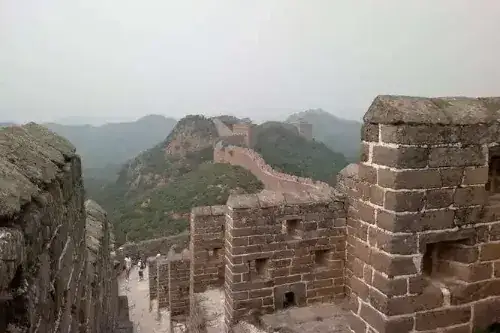
Qinhuangdao has been hailed as the "Hometown of Great Wall Culture," "Hometown of Guzhu Culture," "Hometown of Wind and Percussion Music," and "Hometown of Folk Poetry." Folk culture such as Changli ground yangge (folk dance) and Funing drum and wind music continue to be showcased internationally, highlighting the region's cultural heritage. Qinhuangdao annually hosts the Sea-Gazing Blessing Festival, Chinese Love Festival, and Marine Culture Festival. Large-scale live-action productions such as "Bright Moon Over the Sea," "Yu Yan Qin Huang," and "Song of Guzhu" each have their distinctive style. Cultural exchange activities with Russia, South Korea, and other countries are increasingly active.
Name Origin
The origin of the name Qinhuangdao refers to Dongshan (East Hill) in present-day Haigang District, a residual hill composed of weathered granite, about 20 meters in elevation and less than 1 square kilometer in area. Dongshan, now connected to the mainland, was a genuine island just over 200 years ago. It was only in the late 19th century, with the construction of the port, that the island became connected to land and part of the mainland.
Qinhuangdao is an ancient city with a long history. According to legend, it was named after Qin Shi Huang passed through here on his eastern inspection tour. In 215 BCE, Qin Shi Huang toured the east to "Jieshi," inscribed the "Jieshi Gate Inscription," and dispatched the Yan alchemist Lu Sheng to search for immortals at sea. He camped here, hence the name Qinhuangdao ("Isle of the Qin Emperor").
The name Qinhuangdao first appeared in the poem "Qinhuangdao" by Yang Ju in the fifth year of the Tianshun reign of Emperor Yingzong of the Ming Dynasty (1461), which contains the lines: "Ancient halls afar merge with clouds ethereal, ruined terraces overlook flowing waters murmuring."
In the fourteenth year of the Hongzhi reign of the Ming Dynasty (1501), the "Yongping Prefecture Gazetteer" contains a description of Qinhuangdao: "Qinhuangdao is seventy li east of Funing County, with a mountain in the sea. Tradition has it that Qin Shi Huang sought immortals and camped here." During the Wanli reign, Jiang Yikuai provided a more detailed account in "Chang'an Ke Hua" (Traveler's Tales from the Capital): "Six li south of the pass (Shanhaiguan) there is a lone mountain, standing independently on the sea, surrounded by water on all sides, popularly called Qinhuangdao... It is said that when the First Emperor came to this mountain and saw brambles, he was startled and said: 'This is the switch my teacher used when teaching me to read.' He dismounted and bowed, and the brambles all drooped toward the ground as if in submission, and remain so to this day. On the stone there are the hoof prints of the First Emperor, hence it is called Qinhuang Mountain." Subsequently, local gazetteers and literati poems frequently mentioned it. By the Qing Dynasty, there was also the name Qinwangdao ("Isle of the Prince of Qin"). The name Qinwangdao first appeared in the eighth year of the Kangxi reign in the "Funing County Gazetteer," which states: "Qinwangdao, mistakenly called Qinhuangdao, is seventy li east of the county, surrounded by water on all sides with only the island in the center. Emperor Taizong of Tang camped here during his campaign against Goguryeo, and the brambles on the island grew prostrate. It is said that the Prince of Qin bowed, and they drooped." The name Qinwangdao is associated with the legend of Li Shimin passing through here during his return from the campaign against Goguryeo. From then until the Republic of China era, local gazetteers and literati poems used both Qinhuangdao and Qinwangdao.
Scenic Spots
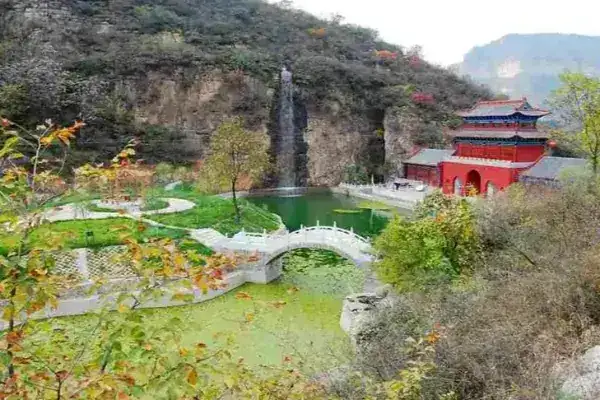
As of 2022, Qinhuangdao has 32 A-level tourist attractions, including 1 national 5A-level scenic area, 17 national 4A-level scenic areas, 8 national 3A-level scenic areas, and 6 national 2A-level scenic areas. In 2024, the city received 89,457,200 domestic tourist visits, up 11.5%.
Local Specialties
"Shimen walnuts" are large, thin-shelled, and delicious, with a cultivation history of nearly 1,000 years in Lulong. By the late Ming and early Qing dynasties, "Shimen walnuts" had already become a renowned local specialty, earning the reputation of "Shimen walnuts, a treasure of the world." In December 2009, "Shimen walnuts" passed the National Quality Inspection Bureau's geographical indication product protection review.
The unique latitude of 39°N and climatic advantages have made Changli County in Qinhuangdao, Hebei Province, a nationally renowned high-quality grape production area. In 1983, the first bottle of dry red wine in China was produced here. Changli wine has an elegant and pure aroma with a fine and rounded taste. Changli holds titles including "Hometown of Chinese Dry Red Wine," "Hometown of Chinese Wine Grapes," and "City of Chinese Dry Red Wine." In 2019, the China Alcoholic Drinks Association officially granted the Changli Jieshi Mountain producing area the title of "China Wine Micro-Region."
Famous Figures
Sister Cities
As of 2022, Qinhuangdao has established economic and trade relations with more than 170 countries and regions, with over 20 Fortune Global 500 companies and well-known multinational corporations investing in the city. It has formed friendly exchange and cooperation relationships with over 20 cities in countries including the United States, Italy, Japan, South Korea, and South Africa.
Honorary Titles
Qinhuangdao has successively received honorary titles including China's Most Beautiful Coastal City, National Top Ten Ecological Civilization Cities, Most Livable City in Northern China, China's Best Leisure City, China's Most Caring City, China's Happiest City, National Civilized City, and National Forest City.
Travel information can change. Check current opening hours, reservations and entry requirements before you travel.

Traveller discussion
Start the conversation with a helpful tip or a question.