Without the Xi'an Metropolitan Area, Li Zhiyu, deputy general manager of Shaanxi Hydrogen Energy Technology Co., Ltd., would not have conceived the idea of "R&D in Xi'an and production in Binzhou".
"I'm going to the Binzhou factory this afternoon to check on the operation of the new production line." On December 12, Li Zhiyu was busy coordinating business. This year, the company, which started with a university research project, has successfully established a complete "R&D-office-production" chain.
"Without the cross-regional resource complementarity and policy support of the metropolitan area, how could we have achieved such smooth progress?" Li Zhiyu's remark testifies to the achievements of the coordinated development of the Xi'an metropolitan area.
In February 2022, the National Development and Reform Commission officially approved the "Xi'an Metropolitan Area Development Plan". As the fifth national-level metropolitan area in my country and the only one in Northwest China, it covers four cities and one district, with an area of approximately 20,600 square kilometers.
Along the way, this "circle" has shown great potential.
—A one-hour commuting infrastructure network has been initially established, and the spatial development pattern of "one core, two axes, and multiple clusters" of the Xi'an metropolitan area is gradually being built.
—Deepen the joint development of the industrial chains in Xi'an-Xianyang, Xi'an-Weinan, and Xi'an-Tongchuan, and initially establish a collaborative innovation network that links the entire region and radiates throughout the province, promoting the deep integration of scientific and technological innovation and industrial innovation.
— Establish 25 medical specialty alliances to serve the entire province and surrounding provinces, effectively enhancing the specialty medical service capabilities of the surrounding areas.
...
Today, the Xi'an metropolitan area has a resident population of 18.75 million and an economic output exceeding 1.67 trillion yuan. A metropolitan area characterized by interconnectedness, shared development, and mutual benefit is becoming increasingly clear across Shaanxi province.
Towards New Energy —
Breaking down barriers, industrial collaboration "joins forces".
From university laboratories to technology companies, Li Zhiyu has witnessed every step of the company's "breaking out of its circle" growth.
"In the early days of the company, the biggest problem was finding a place to work. Soon, Qin Chuangyuan helped us coordinate an office area and testing center in the Fengdong Science and Technology Innovation Smart Industrial Park," said Li Zhiyu.
With the research and development issues resolved, the question of "where to manufacture" became an unavoidable hurdle.
As a new chemical project with pilot-scale testing capabilities, it was difficult to find a suitable site in traditional industrial parks. Therefore, Qin Chuangyuan, in conjunction with relevant departments in Xianyang, found a location for the company based on Binzhou's exclusive industrial support policies, comprehensive supporting facilities, and convenient location.
"Now, at our production base in Binzhou, core products for hydrogen fuel cell stacks are rolling off the production line in a steady stream, and we are increasingly confident in our market expansion," said Li Zhiyu.
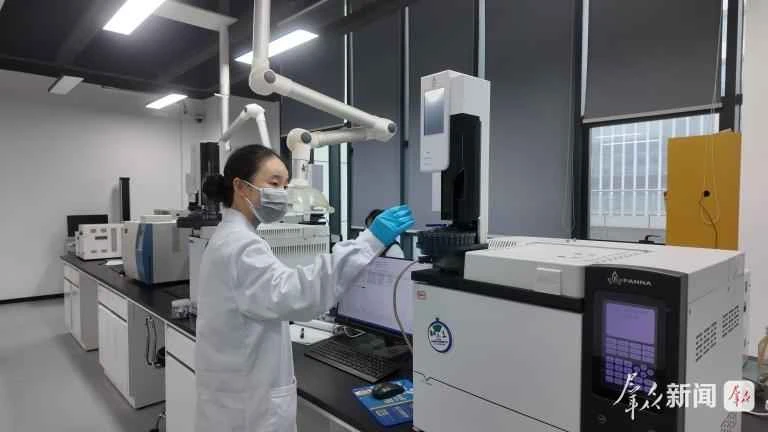
Experimental Center of Shaanxi Hydrogen Energy Technology Co., Ltd.
Such "cross-city collaboration" is very common within the "circle," providing a vivid illustration of the free flow of innovative elements and the coordinated development of industries.
On December 11, technicians were debugging the testing equipment at the Qinchuangyuan Tongchuan Enclave Incubator.
Tongchuan Zhiguang Optoelectronic Technology Co., Ltd., founded by a research team from Xi'an University of Posts and Telecommunications, was the first company to move into the incubator. Leveraging a "co-location" model of "R&D in Xi'an, production in Tongchuan," the company achieved a technological breakthrough in just five months. "This year, our annual output value has reached 10 million yuan," said Liang Lei, the company's head.
Across the land of Shaanxi, a wave of technological innovation is surging everywhere.
In 2023, Xi'an was approved to build a comprehensive science center and a science and technology innovation center, injecting strong momentum into the high-quality development of the metropolitan area. Seizing this opportunity, Xi'an has coordinated regional science and technology innovation resources, promoted breakthroughs in key core technologies, the transformation of scientific and technological innovation achievements, and the construction of key industrial chains, transforming science and technology innovation, a "key variable," into the "largest increment" for high-quality development.
With leading enterprises driving development and clusters gaining momentum, leading companies such as LONGi Green Energy and BYD continue to extend their industrial chains. More than 10,000 scientific and technological achievements have moved from the Qinchuang Original Innovation-Driven Platform to the production line. More than 20 future industry innovation clusters, such as photonics and hydrogen energy, are rapidly emerging. Under the development pattern of "one chessboard" coordinated advancement, a magnificent picture of deep integration of scientific and technological innovation and industrial innovation in the Xi'an Metropolitan Area is gradually unfolding.
Since the beginning of the 14th Five-Year Plan, Xi'an's total R&D investment has continued to climb, reaching a cumulative total of 71.749 billion yuan, an increase of 41.8% compared with the end of the 13th Five-Year Plan; the total number of high-tech enterprises has exceeded 12,000, and the number of companies listed on the Science and Technology Innovation Board ranks eighth in the country.
From a millennium-old cultural heritage to a hotbed of innovation, innovation-driven development has become the core engine and top priority for the high-quality development of this ancient capital, leading the Xi'an metropolitan area to stride forward on the road of coordinated development.
Weaving a net inward—
Connecting arteries accelerates and upgrades urban living.
How much can a highway change a person's life?
Not long ago, the results of the franchise bidding for the "Xi'an City Ring Road Lintong via Gaoling to Airport Section" entered the public announcement stage, marking the official start of the countdown to the commencement of construction for this northern section of the "Xi'an Fourth Ring Road," which has captured the hearts of the people.
"The total investment of the projects announced this time is 15.361 billion yuan, which exceeds the initial investment scale of Xi'an's 'Sixth Ring Road'," Tong Zhao, deputy director of the Tongma Management Office of Shaanxi Transportation Holding Group, told reporters.
The warmth of improved transportation benefits comes not only from new projects poised to launch, but also from the immediate effectiveness of roads already in operation.
On December 29, the first phase of Xi'an Metro Line 15 officially opened for initial operation, further expanding the metropolitan area's rail transit network and making cross-district commutes more time-saving and citizen travel more convenient. Prior to this, on December 10, a reporter drove along the Majing Expressway; the road was flat and wide, and signs for Fucha Town and Lehua City were clearly visible, with the lively atmosphere of villages and towns along the route immediately apparent.
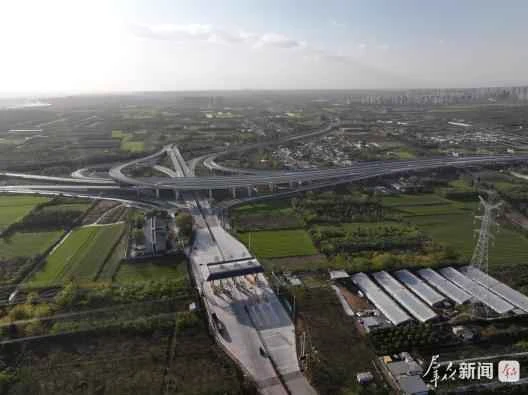
Majing Expressway.
This expressway officially opened to traffic at the end of 2024, completely changing the travel experience of residents in the surrounding area. "It used to take 40 minutes to commute from Jinghe New City to Xi'an, but now it only takes 25 minutes!" said Liu Gang, a resident of Xixian New Area, with deep feeling. Tong Zhao added, "The Majing Expressway connects the airport expressway and the Baomao Expressway, making the Xi'an metropolitan area's transportation network more compact and smooth, and injecting strong momentum into the integrated development of Xi'an and Xianyang."
The channels are becoming more open to businesses.
"This expressway connects cultural and tourism hubs and urban clusters such as Fucha Town and Lehua City, not only ending the history of some surrounding counties not having expressway access, but also revitalizing the economy along the route," Tong Zhao further said.
In recent years, the Xi'an Metropolitan Area has focused on the "6 axes, 7 corridors, and 8 channels" national comprehensive three-dimensional transportation network as its main framework, continuously expanding and densifying the three-dimensional transportation network.
The railway trunk line has made a strong breakthrough, with the Xi'an-Yan'an high-speed railway officially opening for operation, integrating Yan'an into Xi'an's "one-hour economic circle," and the high-speed rail network is taking shape at an accelerated pace. Since the beginning of the 14th Five-Year Plan, the China-Europe Railway Express (Xi'an) has operated more than 24,000 trains, transporting more than 23 million tons of goods, with many core indicators continuing to lead the country.
With the expansion of its rail transit network, the third phase of Xi'an's rail transit project was successfully completed, bringing the total operational mileage of the Xi'an Metro network to 422 kilometers. Throughout the year, the network's total passenger volume and passenger flow intensity remained among the highest in the country, making cross-city travel a daily occurrence for residents.
With extensive air routes, as of the end of November, Xi'an Xianyang International Airport had opened or resumed 60 international passenger routes, connecting 52 major cities in 25 countries and 34 destinations in 19 countries along the Belt and Road Initiative; it had also opened 33 all-cargo routes, connecting 42 major cities in 25 countries and 28 destinations in 16 countries along the Belt and Road Initiative.
A comprehensive, three-dimensional transportation network that "connects the world and radiates across the country" is gradually turning the "one-hour commute circle" from a vision into reality.
Expanding outwards—
Decentralized services bring warmth and well-being to people's lives.
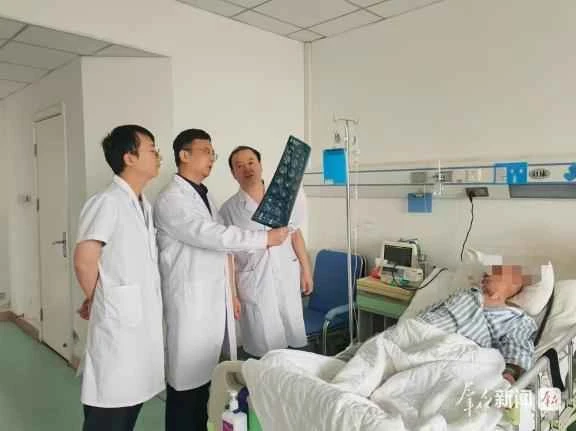
Mu Qiang, a doctor at Xi'an Chest Hospital, treats a patient at Hancheng People's Hospital (file photo).
"Dr. Mu, my father's COPD is much better. Thank you so much." On December 10, in the consultation room of Hancheng People's Hospital, Ms. Wang, a patient's family member, held the hand of Dr. Mu Qiang from Xi'an Chest Hospital and thanked him repeatedly.
Against the backdrop of the construction of the Xi'an Metropolitan Area, Xi'an City is breaking down regional barriers to promote the construction of medical consortia, enabling high-quality medical services to transcend geographical distances and reach ordinary streets and alleys in surrounding cities.
Mu Qiang is a doctor who travels between Xi'an and Weinan as part of a medical consortium collaboration.
Every week, he would arrive in Hancheng to see patients without fail, a practice he has maintained for over two years. His WeChat Moments are filled with stories of successful treatments and touching tales of compassion between doctors and patients.
"In the winter of 2024, Mr. Zhang was bedridden due to severe COPD, and his family was extremely worried." Mu Qiang recalled that after receiving the referral information through the medical consortium's remote consultation platform, he rushed to Hancheng immediately.
A personalized treatment plan was developed, with regular weekly check-ups and medication adjustments... Two months later, Grandpa Zhang was able to get out of bed and walk again. "Now he can not only take walks by himself, but also help with farm work. Every time we video chat, he mentions that he wants to treat me to apples from his hometown," Mu Qiang said with a smile.
This warmth continues to spread within the "circle".
In recent years, Shaanxi Province has vigorously promoted medical reform, forming a medical consortium framework characterized by urban medical groups, county-level medical consortia, specialty alliances, and "satellite hospitals."
"Now, not only people within the province are benefiting, but people from cities in other provinces such as Qingyang and Sanmenxia are also coming to seek medical treatment through the medical consortium," said a relevant official from the Xi'an Municipal Health Commission. The official added that Xi'an has established 25 specialist alliances, and its superior resources in orthopedics, pediatrics, and ophthalmology not only cover the Xi'an metropolitan area but also radiate throughout the province and even to neighboring provinces such as Gansu, Henan, and Shanxi.
Beyond healthcare, the "circle of unity" for shared well-being is growing ever larger.
Urban employee pension insurance has achieved unified provincial management, and a cross-regional work injury cooperation mechanism has been established; the Qin Chuangyuan Talent Market's "Xi'an-Xianyang Integration" job fair provides over 28,000 job opportunities annually; joint prevention and control of the ecological environment continues to deepen, working together to protect blue skies and white clouds...
Standing at a new starting point, the Xi'an Metropolitan Area is taking transportation as the link, industry as the core, and people's livelihood as the foundation, deeply cultivating collaborative innovation, solving development problems, and writing a new chapter of high-quality development in serving the "Belt and Road" initiative and contributing to the development of western China.
(Reporters Chen Yan and Hao Ying from the Mass News)
![[New Ideas Lead a New Journey] Traditional Industries Rejuvenate Through "New" Development](/upload/20260112/32ee0d644b4a23.webp)

