CCTV News (News Broadcast): General Secretary Xi Jinping pointed out: "Traditional manufacturing is an important part of the real economy. We must grasp market demand, strengthen technological innovation, and revitalize traditional industries."
At the start of the year, a wave of innovation and hard work swept across China. By breaking through barriers with innovation and laying a solid foundation with hard work, traditional industries are revitalizing their endogenous driving force and taking solid steps toward high-quality economic development through high-end, intelligent, green, and integrated transformation.
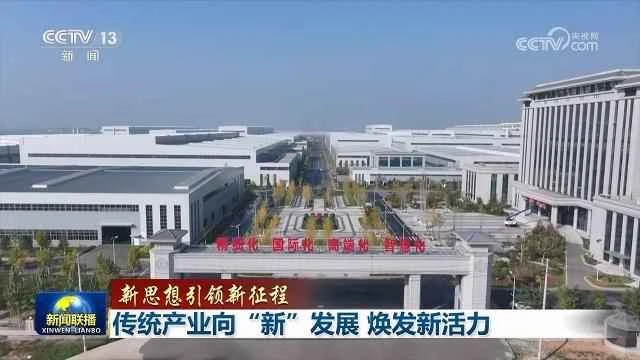
At the start of the new year, vitality is surging! The integration of artificial intelligence and traditional industries has been accelerated. At this company in Shanxi, dozens of "AI engineers" have been active on various fronts these past few days: the new technology for mining electric shovels with millisecond-level response is being debugged and will soon be deployed to various mining areas; the core wheel axles produced based on cutting-edge technologies such as big data quality prediction have successfully supported high-speed trains in setting new records.
Traditional industries form the foundation for new productive forces. General Secretary Xi Jinping has consistently placed the transformation and upgrading of traditional industries at the forefront of high-quality development. From steel workshops to bearing factories, from technological research laboratories to the front lines of industrial parks, the General Secretary has continuously pointed the way for the development of traditional industries during his inspection tours across the country. He emphasized that "traditional manufacturing is the foundation of a modern industrial system; we must accelerate digital transformation, promote advanced and applicable technologies, and strive to improve its high-end, intelligent, and green levels." He further stated that "developing new productive forces does not mean neglecting or abandoning traditional industries," and that "the transformation and upgrading of traditional industries can also develop new productive forces."
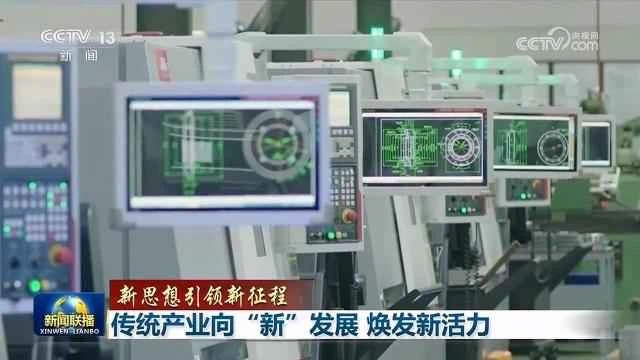
A strong industry leads to a strong economy. During the 14th Five-Year Plan period, my country's traditional industries will undergo comprehensive transformation and upgrading.
Significant progress has been made in the high-end development of traditional industries. In 2024, the added value of my country's high-tech manufacturing industry and equipment manufacturing industry above designated size increased by 42% and 37.1% respectively compared with 2020, with an average annual growth rate of 9.2% and 8.2%. Eighteen traditional manufacturing enterprises were selected into the world's top 500 brands, and domestic brands and trendsetting brands are rapidly emerging.
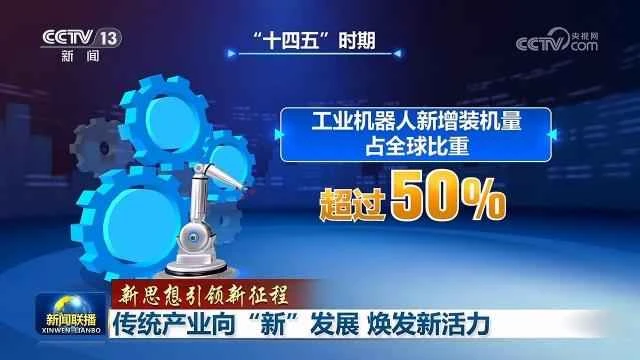
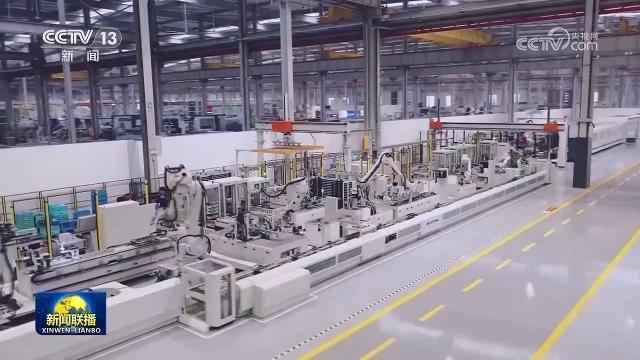
The intelligent transformation of traditional industries has been deeply implemented. During the 14th Five-Year Plan period, 46 cities carried out pilot projects for new technology transformation, and a total of more than 230 excellent smart factories and 1,260 5G factories were built. The newly installed capacity of industrial robots accounted for more than 50% of the global total, and a number of old factories were transformed into "smart factories".
The greening level of traditional industries has been significantly improved. During the 14th Five-Year Plan period, the overall comprehensive energy consumption per unit of product in key industries such as steel and cement has reached the world's advanced level, and the annual output of green electrolytic aluminum has exceeded 10 million tons, making industrial development more sustainable.
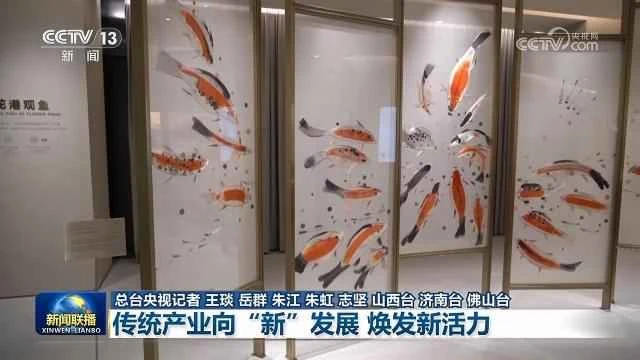
The integration and development of traditional industries is deepening, and new business formats and models are emerging rapidly. In Foshan, Guangdong, furniture companies are using large-scale industrial models to build a full-chain intelligent system, significantly improving order response speed and giving rise to new services such as "smart home scene packages." In Hangzhou, Zhejiang, established companies are launching online QR code-based "listen to embroidery stories" and "watch intangible cultural heritage production" demonstrations, integrating millennia-old textile techniques into cultural tourism scenarios and driving a 30% increase in product sales. The deep integration of the digital economy and traditional industries, along with cross-sector collaboration between manufacturing and service industries, is continuously injecting new vitality into traditional industries.
The 15th Five-Year Plan clearly proposed optimizing and upgrading traditional industries and promoting the quality improvement and upgrading of key industries. Recently, the state has issued a series of policies, from announcing implementation plans for stabilizing growth in key industries such as non-ferrous metals, steel, machinery, and light industry, to launching the "challenge-based" initiative with "artificial intelligence + manufacturing" as its core, to accelerating the construction of high-standard digital parks, and launching actions to integrate key industrial chains such as steel, chemicals, and power with the industrial internet. These interconnected measures are helping traditional industries accelerate the transformation of old and new growth drivers. These revitalized traditional industries are laying a solid foundation for the high-quality development of China's economy.


