
Xinjiang: The Civilisational Crossroads of the Eurasian Heartland
Xinjiang: The Civilisational Crossroads of the Eurasian HeartlandProvincial OverviewViewed from an altitude of ten thousand metres over the Eurasian continent, the eye is captured by a vast land where ochre yellow and snow white interweave.
Xinjiang: The Civilisational Crossroads of the Eurasian Heartland
Provincial Overview
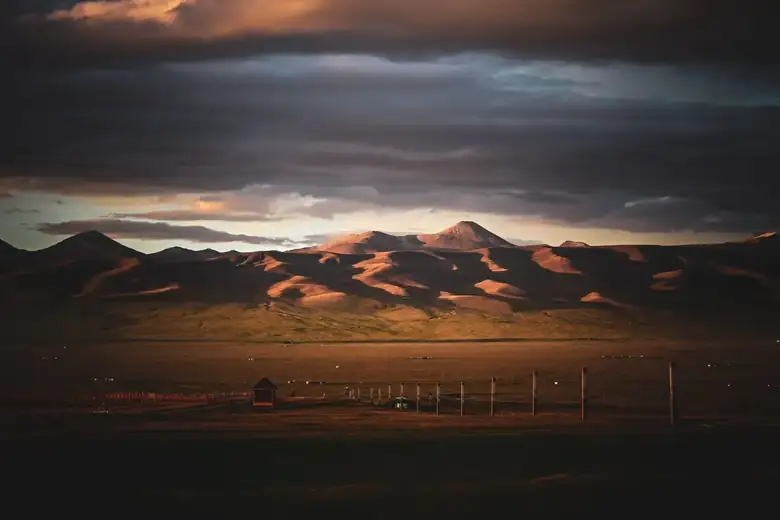
Viewed from an altitude of ten thousand metres over the Eurasian continent, the eye is captured by a vast land where ochre yellow and snow white interweave. This is Xinjiang—China's largest provincial‑level administrative region, occupying one‑sixth of the nation's territory. Deep in the heart of the Eurasian continent, far from the oceans, it has never been far from the spotlight of history. Three great mountain ranges—the Altai, the Tianshan, and the Kunlun—run across it from north to south, flanking the Junggar and Tarim basins, creating the classic "three mountains with two basins" topographical skeleton. The Tianshan Mountains run like a backbone through the middle, naturally dividing Xinjiang into the temperate grasslands of northern Xinjiang and the vast oases of southern Xinjiang. The Bogda and Tomur peaks are capped with snow year‑round, and their glacial meltwaters nourish scattered corridors of life.
This land covers approximately 1.66 million square kilometres—an area equivalent to France, Germany, and the Netherlands combined. As of 2023, its permanent population is about 25.98 million, comprising 47 ethnic groups including Han, Uyghur, Kazakh, Hui, Kirgiz, and Mongol—a microcosm of China's unity in diversity. Administratively, Xinjiang is one of China's five ethnic autonomous regions, officially the Xinjiang Uyghur Autonomous Region, with its capital at Ürümqi. This system embodies the constitutional principle of ethnic regional autonomy; the cultural traditions, languages, scripts, and religious beliefs of ethnic minorities, including the Uyghur people, are protected by law, and they enjoy full participation in local governance.
Xinjiang has many nicknames, each reflecting its unique historical and geographical significance. The most famous is "Xiyu" (the Western Regions), a geographical concept in use since the Han dynasty, originally referring to the vast area west of the Yumen and Yangguan passes, implying a relationship with Central Plains civilisation that was both distinct and intimately connected. The Qianlong Emperor of the Qing dynasty gave the name "Xinjiang" meaning "old territory newly returned," ending the separatist rule of the Dzungar Khanate and bringing this "old Han‑Tang land" back under effective central rule. In addition, because it produces abundant grapes, Hami melons, and other sweet fruits, Xinjiang is known as the "Land of Fruits and Melons"; because of the Uyghur Muqam art and the tradition of song and dance among all ethnic groups, it is also called the "Land of Song and Dance." And the scientific determination of the "geographical centre of the Eurasian continent"—located at Baojiao Caozi Village in the southwestern suburbs of Ürümqi—places Xinjiang at the world hub of the land‑power era with remarkable precision. Ürümqi, in Mongolian, means "beautiful pasture," a fitting summary of this famous Silk Road city's oasis endowment and nomadic heritage.
Historical Context
The history of Xinjiang is a grand narrative of the collision and integration of diverse civilisations. Its urban history can be traced back to Bronze‑Age settlements, but its emergence as a clear administrative region is deeply imprinted on the great designs of the Han and Tang dynasties in managing the Western Regions. In 138 BCE, Zhang Qian's mission to the Western Regions opened the Han court's eyes to the vastness of the "north‑western states." In 60 BCE, the Western Han established the Protectorate of the Western Regions at Wulei City in Luntai, with Zheng Ji as the first Protector General, marking the formal incorporation of Xinjiang into Chinese territory. Over the following two millennia, despite periods of division and obstruction, the central dynasties' sovereignty or suzerainty over the Western Regions remained the mainstream.
In 640 CE, Emperor Taizong of Tang sent an expedition to the west on the pretext that the Gaochang Kingdom was blocking the Silk Road, successively establishing the Anxi Protectorate and the Beiting Protectorate. The former was initially based in Xizhou (present‑day Jiaohe, Turpan) and later moved to Kucha (present‑day Kuqa), governing the area south of the Tianshan as far as Suyab; the latter was based in Tingzhou (present‑day Jimsar), governing the area north of the Tianshan. The beacon‑tower system of the "Four Garrisons of Anxi" (Kucha, Kashgar, Khotan, and Karashahr) projected Tang power as far as the Pamir Plateau. The poet Cen Shen's famous lines—"As if a spring breeze had come overnight, and thousands of pear trees burst into bloom"—were written during his tenure as an assistant administrative officer at the Beiting Circuit. The ruins of Jiaohe, Gaochang, and the murals of the Kizil Thousand Buddha Caves still freeze in time the Buddhist chants and camel caravans of that era.
The Qing dynasty was the foundational period for the establishment of Xinjiang as a province. From 1755 to 1759, the Qianlong Emperor successively pacified the Dzungar leader Dawaqi and the rebellions of the Khoja brothers, unifying the area north and south of the Tianshan and establishing the Ili General to oversee all military and administrative affairs. In 1884, at the urging of Zuo Zongtang, the Qing government formally approved the establishment of Xinjiang as a province, with Liu Jintang as its first governor, and the capital initially set in Dihua (present‑day Ürümqi). From then on, "Xinjiang" became fixed as the provincial name, and the scale of mainland immigration and military reclamation was unprecedented. The ancient city of Huiyuan in Ili, the Id Kah Mosque in Kashgar, and the Red Mountain Pagoda in Ürümqi all bear the memory of the consolidation of this unified multi‑ethnic state.
In the mid‑20th century, within the framework of the system of ethnic regional autonomy, on 1 October 1955, the Xinjiang Uyghur Autonomous Region was proclaimed, with Saifuddin Azizi as its first chairman. This historical event was not only a change in local administrative structure but also a landmark practice in China's institutional design for addressing ethnic issues. The establishment of the autonomous region guaranteed equal rights for all ethnic groups and promoted economic and cultural development. Today, the reclamation cities of Shihezi and Aral, built by the Xinjiang Production and Construction Corps, continue to write new chapters in reclamation and border defence, while the beacons, ancient cities, caves, and forts scattered throughout the region serve as immovable historical witnesses to the fateful bond between this land and the motherland.
Cultural Heritage
Xinjiang's cultural heritage is like an oasis nourished by the snowmelt of the Tianshan—multiple streams flowing together and thriving. There is no single "dialect" here; Chinese speakers mostly use a variety of the Lanyin Mandarin spoken in northern Xinjiang, with a rising intonation and a hint of boldness. But more distinctive is the symphony of native languages—Uyghur, Kazakh, Kirgiz, and Mongolian are all legally recognised common languages, widely used in daily life, education, and broadcasting, film and television. Uyghur belongs to the Turkic branch of the Altaic language family; its Kashgar and Ili dialects convey the nuanced emotions of oasis life through the long chanting of dastan (narrative poems).
Folk traditions are deeply rooted in religious beliefs and agro‑pastoral livelihoods. For the Uyghur, Kazakh, Hui, and other Muslim ethnic groups, the grandest festivals are Eid al‑Adha (Qurban) and Eid al‑Fitr (Rozah). On the morning of Eid al‑Adha, men go to the mosque for congregational prayers, slaughter livestock, visit relatives and friends, and share hand‑grabbed mutton and fried dough twists. Meshrep is the most representative form of folk entertainment among the Uyghur, combining song, dance, storytelling, and games. To the sound of the dombra and hand drums, people dance spontaneously and joyfully until dawn. The akyn song‑reciting gatherings of the Kazakh and the Manas epic recitations of the Kirgiz embody the hero worship and philosophical reflection of steppe peoples. In marriage and funeral rites, the Uyghur wedding centres on the nika (marriage contract) ceremony, with singing and feasting that can last several days; funerals follow the Islamic principles of prompt burial, simple burial, and burial in the earth.
In the arts, Xinjiang is truly a "Land of Song and Dance." The brightest jewel is the Uyghur Muqam Art, especially the Twelve Muqam, which integrates music, literature, dance, and drama, and is hailed as the "Pearl of Eastern Music." This vast suite consists of three parts—Chong Neghme (large pieces), Dastan (narrative poems), and Meshrep (song and dance)—and takes more than twenty‑four hours to perform in full. In 2005, it was inscribed on the UNESCO Representative List of the Intangible Cultural Heritage of Humanity. In addition, the Tajik eagle dance, the Mongol Shavurden dance, and the Xibe Beren dance each have their own charm. In arts and crafts, Hotan carpets are world‑famous as "Oriental carpets"; Kashgar earthenware and Yengisar knife‑forging have been practised for a millennium; Uyghur block‑printed calico and Atlas silk bring the brilliance of desert poplars and oasis rainbows into clothing.
On the intangible cultural heritage list, Xinjiang boasts three great epics: Manas (Kirgiz), Jangar (Mongol), and Gesar (Mongol, integrated across provincial boundaries)—all pinnacles of world oral literature. Together, they form a magnificent picture of Xinjiang's cultural diversity within unity, and, under the protection of the ethnic regional autonomy system, they continue to be transmitted as living traditions.
Architecture and Urban Landscape
Walking through Xinjiang, architecture is a frozen time diary. The wisdom of traditional architecture is deeply embedded in climate and livelihood: the aywan‑style Uyghur dwellings of the southern oases centre on an inner courtyard, with high side windows admitting light and thick adobe walls shielding the heat; veranda pillars are often adorned with exquisite wood carvings and plaster ornament. The Kazakh felt yurts are like white mushrooms scattered on the grasslands, their wooden lattice frames supporting a felt dome, easily dismantled and moved with the nomadic rhythm. The Kirgiz build stone‑built flat‑roofed houses known as tashm on the Pamir Plateau. Religious architecture, represented by the Id Kah Mosque in Kashgar, displays the restrained solemnity of Islamic architecture through its yellow brick walls, green glazed tiles, and staggered minarets. The Emin Minaret (Sugongta) in Turpan, in earthy tones, is covered with more than a dozen geometric brick patterns and is the tallest ancient minaret in Xinjiang.
Modern architecture bears witness to Xinjiang's integration into modern China. The Red Mountain Pagoda in Ürümqi, built in the Qianlong reign of the Qing, is an octagonal red‑rock structure overlooking the city and has become the city's totem. Around the "Great Cross," the Soviet‑style buildings of the 1950s—such as the People's Theatre and the Museum—contrast with the modern high‑rises that have since risen. But the most representative of the contemporary urban fabric is the Erdaoqiao area. Centred on the Xinjiang International Grand Bazaar, covering 40,000 square metres, it recreates the spatial essence of the traditional Islamic market—an 80‑metre observation tower, dense arcades, and domed shops, all in earthy tones with intricate brick carvings, creating an exotic commercial labyrinth. Nearby, the minaret of the Hantengri Mosque at the South Gate looks across the street at modern glass‑curtain‑wall office buildings—a classic scene of Ürümqi's multicultural coexistence.
Xinjiang's urban fabric is highly distinctive: oasis cities such as Kashgar and Hotan feature dense, labyrinthine lanes (the Kashgar high‑platform residences are typical) winding along the contours, with earthen houses layered one upon another; neighbourhood water ponds, mosques, and artisan workshops form independent micro‑communities. Corps new towns such as Shihezi and Wujiaqu display a standard grid layout—straight, horizontal, and vertical streets—with the Military Reclamation Museum and squares telling the story of those pioneering years. Among distinctive neighbourhoods, the Koziqiyabexi Lane (Pottery Street) and the craftsmen's bazaar in Kashgar's old city still preserve a centuries‑old artisanal atmosphere; the Kazanqi Folk Tourism Area in Yining, with its blue Uyghur courtyards, has been called "Xinjiang's Morocco"; and Kuqa (ancient Kucha)'s Restan Old Street, with its colourful doors, hides the stories of old families behind them. Together, these buildings and neighbourhoods write a layered history of civilisation, from nomadic tents and oasis settlements to modern cities.
Culinary Culture
Xinjiang cuisine is the finest compromise between oasis agriculture and nomadic traditions, achieved in the kitchen. Rooted in halal dietary laws, its three pillars are mutton, wheat, and fruit. The cooking methods are bold with a touch of refinement, and the flavours are robust with a deep devotion to cumin. Broadly, the cuisine belongs to the northwestern style, but it forms its own school, absorbing influences from Central Asia, the Central Plains, and even the Hui of Shaanxi and Gansu. The birth of Xinjiang's dapanji (big‑plate chicken) in the Ürümqi‑Changji area is a case in point: it originated from the collision of Sichuan spicy chicken and northwestern belt noodles; after being tested by the palates of long‑haul truck drivers, it was finally fixed as a hearty dish in which chicken, potatoes, and chillies meld exuberantly in a rich sauce.
Specific dishes not to be missed: Whole Roast Lamb, using a castrated lamb or a lamb within its first year, is coated with a paste of egg yolk, salted water, turmeric, and cumin powder, then roasted in a tandir (pit oven). The skin is golden and crisp, the meat tender and juicy—the highest form of hospitality. Lamb skewers are already famous worldwide; large chunks of leg meat on red willow skewers, sprinkled with chilli powder and cumin seeds over charcoal, with alternating layers of fat and lean, the smoke carries the unique fragrance of the Gobi. Pilaf (polo) is the art of slowly simmering rice with carrots, mutton, and onion in oil; the rice is glossy and translucent, the lamb shanks meltingly tender, often served with a side of sour‑spicy shredded cabbage to cut the richness. Naan, the ultimate transformation of flour, most commonly with sesame or onion, is pressed onto the interior walls of the tandir; the high heat instantly seals in the wheat aroma, and once dried, it can be stored for over a month—the soul of travellers' rations. Among snacks, baked buns (samsa) are filled with chopped leg of lamb, cumin, and black pepper, baked on the tandir walls until the bottom is crisp and the top golden; pulled noodles (laghman) are served with a savoury sauce, chewy and smooth; big‑plate chicken with its hand‑pulled belt noodles, soaked in the juices, is the ultimate comfort food. For beverages, Xinjiang milk tea is made by boiling brick tea with salt and fresh milk; herders drink it to aid digestion and ward off cold. Hand‑made yoghurt is thick as custard, sprinkled with sugar or dried fruit, the ultimate summer refreshment.
Dining customs bear the deep imprint of Islam: pork, dead meat, and blood are forbidden; at banquets, the younger generation may not eat before the elders start eating. Before meals, there is the custom of reciting the basmala ("In the name of Allah"). Naan is sacred in Xinjiang culture; it should not be discarded or trampled. Behind the food lies the regional character—honest, hospitable, and inclusive. The host will offer the choicest head meat to honoured guests; the generous portions reflect the generosity of the grasslands; and the free combination of elements from different ethnic cuisines on the urban table is a contemporary projection of the thousand‑year‑old Silk Road culinary fusion.
Modern and Contemporary Development
Xinjiang's modern history began with a stumble in the late 19th century, amidst frontier crises and foreign powers' encircling ambitions. The 1851 Sino‑Russian Treaty on Trade in Ili and Tarbagatai opened Ili and Tacheng, and in the southwest, Kashgar gradually became a dumping ground for British and Russian goods. However, it was the large‑scale construction after the founding of the People's Republic that truly set the tone for modern development. In 1954, the Xinjiang Production and Construction Corps was established to reclaim wasteland and guard the border, cultivating nearly ten million mu of farmland and building basic industries such as steel, textiles, and machinery. In 1958, the Karamay oilfield was discovered—the first major oilfield of New China, spurting out crude; Vice‑Chairman Zhu De personally inscribed "Leap Forward Gate," and this Gobi oil city became a major energy hub in the northwest, producing one‑quarter of the national crude oil output by 1960. In 1962, the Lanzhou‑Xinjiang Railway was laid to Ürümqi, ending Xinjiang's history of being without a railway; its whistle awakened the modern spirit of the Silk Road.
Since reform and opening up, Xinjiang has turned from a closed inland hinterland into a bridgehead for opening to the west. In 1981, the ports of Horgos and Torugart were reopened; in 1990, the second Eurasian Land Bridge was fully opened, making Alataw Pass a rail hub connecting Kazakhstan, with annual freight exceeding tens of millions of tonnes. In the 21st century, the Western Development Strategy and the Belt and Road Initiative were successively implemented, unlocking Xinjiang's locational advantages. In 2011, construction began on the Lanzhou‑Xinjiang High‑Speed Railway—Xinjiang's first high‑speed line; the Ürümqi‑Hami section opened in 2014, with bullet trains speeding along the ancient Silk Road. In the same year, the Kashgar Economic Development Zone and the Horgos Economic Development Zone were approved, with special policies attracting industry. China‑Europe freight trains depart from the Ürümqi marshalling centre, reaching more than twenty countries in Central Asia and Europe; in 2023, China‑Europe freight trains passing through Xinjiang ports exceeded 10,000, redrawing the supply chain across the Eurasian continent.
Today, Xinjiang's urban development positioning is clear and ambitious: as the core area of the Silk Road Economic Belt, Ürümqi is being built into a regional international trade centre, transport hub, and financial centre. Its built‑up area has expanded from over twenty square kilometres to more than five hundred square kilometres; the high‑speed railway and convention‑exhibition districts are now lined with skyscrapers. The four southern prefectures (Kashgar, Hotan, Aksu, and Kizilsu) are focused on poverty alleviation and rural revitalisation, with the help of counterpart support to upgrade specialty fruit and textile industries. In the energy sector, the oil and gas discoveries in the Tarim and Junggar basins, along with the West‑East Gas Pipeline project, have made Xinjiang an important strategic energy succession area and a national energy corridor. In 2023, the region's GDP exceeded 1.7 trillion yuan, with growth rates among the highest in the country. An open frontier facing Central Asia, South Asia, and West Asia, and linking with the China‑Pakistan Economic Corridor, is beginning to take shape. Under the system of ethnic regional autonomy, the historical process of all ethnic groups working together, struggling together, and developing together is steadily advancing.
Transportation and Travel
As China's largest provincial‑level administrative region, Xinjiang's transport network not only affects the daily lives of its people but also carries the strategic mission of the nation's opening to the west. After decades of construction, a three‑dimensional transport system with Ürümqi as its core, connecting the region internally and externally and radiating to neighbouring countries, has largely taken shape. Its strategic transport status is particularly prominent under the Belt and Road framework.
External transport is a major feature of Xinjiang's network. In aviation, Ürümqi Diwopu International Airport is a national gateway hub, with direct flights to Central Asia, West Asia, Europe, and major domestic cities—the most convenient gateway into Xinjiang. Annual passenger throughput has exceeded 20 million. Railways form a "one main line, two wing lines" corridor out of the region: the Lanzhou‑Xinjiang High‑Speed Railway (fully opened in 2014) connects Ürümqi with Lanzhou, Xi'an, and Beijing, with bullet trains departing in the morning and arriving by evening; the Lanzhou‑Xinjiang conventional line, together with the Linhe‑Hami and Golmud‑Korla railways, forms an east‑west artery through which goods flow day and night to north and east China. Internationally, the Alataw Pass and Horgos rail ports are respectively one of the world's largest railway transhipment stations and a port with dual China‑Kazakhstan codes; China‑Europe freight trains leaving via these ports can reach European hubs such as Malaszewicze in Poland and Duisburg in Germany. In road transport, the G30 Lianyungang‑Khorgas expressway runs east‑west; the Horgos port is the busiest land port between China and Kazakhstan, with vehicles passing through year‑round; with a passport or border pass, you can conveniently experience "one step across two countries." In addition, the aviation and road corridors from Kashgar to Islamabad and from Ürümqi to Bishkek are weaving a closer network with Central and South Asia.
Intra‑regional transport has its own distinctive features. The development of the "regional airport cluster" is remarkable: Xinjiang now operates 25 civil airports, including Kashgar, Hotan, Yining, Korla, Altay, and Fuyun—the most airports of any provincial‑level region in China. Regional flights greatly compress the vast distances; flying from Ürümqi to Kashgar takes only 1 hour 40 minutes, whereas driving takes 20 hours. In road transport, the main north‑south corridor is formed by the G30 Lianyungang‑Khorgas expressway and the Turpan‑Hotan expressway, connecting the oasis towns. The most legendary is the "most beautiful road in China"—the Duku Highway (G217, Dushanzi to Kuqa), 561 kilometres long, crossing the Tianshan and passing through four seasons in a single day, with snow mountains, canyons, and grasslands unfolding in succession. It is open from early June to early October and is a pilgrimage route for driving enthusiasts.
Unique travel experiences lie in the scenery itself becoming the journey. Crossing the Gobi by overnight sleeper train, watching the cold moon chase the sand outside the window; flying from Yining to Ürümqi in the early morning, watching the golden peak of Bogda pierce the sea of clouds outside the porthole—these are unforgettable moments. Within Ürümqi, the BRT and Metro Line 1 (opened in 2018) ease urban commuting, and the night buses from Erdaoqiao to Nanhu Square offer a glimpse of the real, everyday life of this multi‑ethnic city.
Travel Tips
Xinjiang's beauty is so vast it leaves you speechless. Planning a trip across such a huge land requires some local insights.
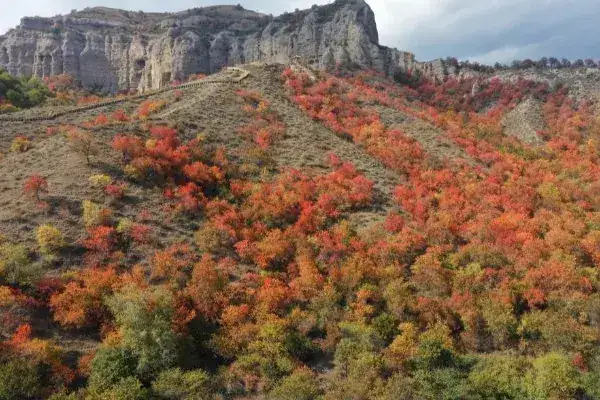
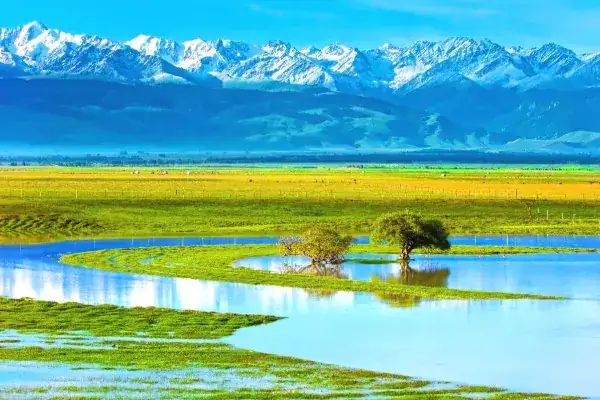
Best travel seasons: spring and autumn are the best, summer is second best, and winter offers its own unique pleasures. From mid‑April to May, the pink apricot blossom valley in the Ili River valley is dreamlike, and Lake Sayram is just beginning to thaw; June to August is the golden season for grasslands—Nalati and Bayanbulak are covered with green carpets and wildflowers—but also the peak season with many tourists; late September to mid‑October is Xinjiang's visual peak—the birch forests of Kanas and Hemu turn golden, and the poplar forests along the Tarim River blaze with golden fire. The weather is cool, and photographers gather. Winter (December to February) in Altay is the birthplace of human skiing, with excellent powder snow and temperatures that can drop to minus 20–30°C, but that is also how you experience the purest ice‑and‑snow fairy tale. If time is limited, priority should be given to spring or autumn.
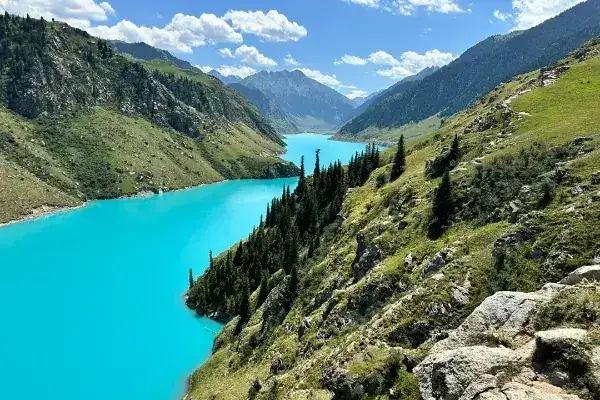
Must‑visit attractions and experiences: first, the Ürümqi International Grand Bazaar, which is both an architectural landmark and a living marketplace—you can buy authentic souvenirs such as Yengisar knives and Atlas silk, and watch the dawaz (high‑wire) performance at night. Heavenly Lake of the Tianshan is only 110 kilometres from Ürümqi; the peak of Bogda is reflected in this high‑altitude barrier lake, and the legend of the Queen Mother of the West lends it a mythological aura; you can walk the forest boardwalks or take a boat trip. Kanas Lake and Hemu Village, in the Altai Mountains of northern Xinjiang, are famous for the "lake monster" legend and the lake's colour‑changing waters; a hike along the three bays (Immortal Bay, Moon Bay, and Crouching Dragon Bay) is essential; Hemu Village, with its wooden cabins shrouded in morning mist and chimney smoke, looks like an oil painting in autumn. Kuqa Gorge and the Kizil Thousand Buddha Caves, stunning sites on the southern Silk Road: the red cliffs of Kuqa Grand Canyon are like fire; the Kizil Thousand Buddha Caves are the hometown of Kumarajiva, and their murals predate those of Dunhuang, with lapis lazuli blues and Kucha music and dance motifs visible in the open caves. With more time, you should not miss a self‑drive along the Duku Highway crossing the Tianshan, a wander through the old city of Kashgar and a sit in its century‑old teahouses, and the wild grandeur of the Pamir Plateau—Baisha Lake (White Sand Lake) and Muztagh Ata.
Practical tips: Xinjiang has a roughly two‑hour geographic time difference from Beijing, but China Standard Time is used throughout; sunset is around 10 pm in summer, so you can plan your day accordingly. There are many security checks within the region; always carry your ID. The climate is dry; sunscreen and moisturisers are essential; the diurnal temperature range is large—"wear a fur coat in the morning and gauze at noon" is no exaggeration. The cuisine is predominantly halal; when visiting a mosque, remove your shoes and women should cover their hair; do not photograph local people without permission. In major cities, Mandarin is widely spoken; in southern Xinjiang villages, some elderly people may only speak their native language, so a smile and gestures are your universal pass.
Special considerations: Tourism facilities in Xinjiang are already very well developed, but be aware that signal strength may be weak in grasslands, canyons, and other areas; in border regions such as Baihaba and Taxkorgan, you need a border permit, which can be obtained in your place of residence or in Xinjiang. Respect the customs of ethnic minorities; especially during Ramadan, do not eat or drink in public in front of Muslims. If you bring a drone, follow the regulations; some scenic areas prohibit flights. Finally, come with an open and understanding heart to feel the depth and warmth of this "Land of Song, Dance, Fruits, and Melons." Xinjiang is not a distant foreign land—it is an inseparable part of China's splendid frontier, waiting for every traveller to read its vastness with their footsteps and to touch its warmth with sincerity.
Travel information can change. Check current opening hours, reservations and entry requirements before you travel.
Traveller discussion
Start the conversation with a helpful tip or a question.