
Shanxi
ShanxiProvincial OverviewShanxi, abbreviated as “Jin,” is located in the western part of North China, on the eastern bank of the middle reaches of the Yellow River and to the west of the Taihang Mountains—hence its name, which means “west o
Shanxi
Provincial Overview
Shanxi, abbreviated as “Jin,” is located in the western part of North China, on the eastern bank of the middle reaches of the Yellow River and to the west of the Taihang Mountains—hence its name, which means “west of the mountains.” The geography of this land is like a natural giant fortress: the Taihang Mountains form a screen to the east, separating it from Hebei; to the west, the Lüliang Mountains separate it from Shaanxi; the Yellow River borders Henan to the south; and the Great Wall meets Inner Mongolia to the north. The provincial outline is a northeast–southwest parallelogram, about 680 kilometres long from north to south and 380 kilometres wide from east to west, covering an area of 156,700 square kilometres, with a permanent population of approximately 34.8 million (2023 data).
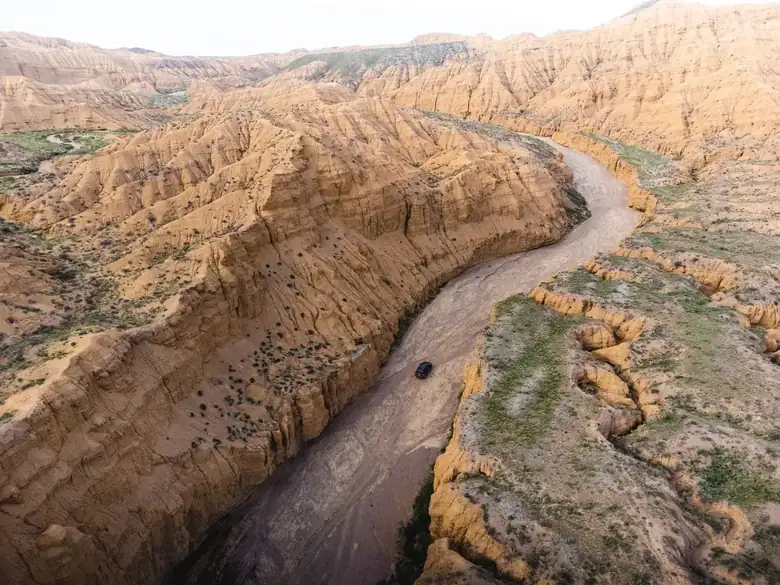
Shanxi is a classic “two mountains enclosing a river valley” landscape. The eastern Taihang Mountains stretch like a spine, with the North Peak of Mount Wutai (Yedou Peak) rising to 3,061 metres, known as the “roof of North China.” The western Lüliang Mountains run north–south, with thick loess and criss‑crossing ravines. Between these two mountain ranges, a series of fault‑basin valleys run from north to south—the Datong Basin, Xin‑Ding Basin, Taiyuan Basin, Linfen Basin, and Yuncheng Basin—which form the “river valleys” of Shanxi. The Fen River winds through them, nourishing more than 80% of the province’s population and economic activity. This belt of rift basins is the lifeblood of Shanxi and one of the most important geographical corridors in northern China.
The provincial economy unfolds along this basin belt, forming a distinct “one core, multiple poles” pattern. The capital, Taiyuan, lies at the geographic centre of the province and serves as the political, economic, cultural, and transport hub. Its pillar industries are equipment manufacturing, new materials, and information technology, with a 2023 GDP exceeding 550 billion yuan—more than a quarter of the provincial total. Datong in northern Shanxi is a sub‑central city; historically a crossroads of nomadic and agrarian civilisations, it is now transitioning towards an energy base and a cultural‑tourism city, with the Yungang Grottoes as its most brilliant cultural calling card. Changzhi in southeastern Shanxi excels in equipment manufacturing and modern coal chemicals; Yuncheng in the south is famous for agriculture (especially apple production) and the culture of Guan Yu, and serves as the province’s frontier for linking with the Central Plains economic zone. Also worth mentioning is Pingyao in central Shanxi—this county‑level city, with its intact Ming‑Qing ancient city and the remains of Shanxi merchant banks, is a World Heritage site and condenses the glorious memory of Shanxi’s commercial civilisation.
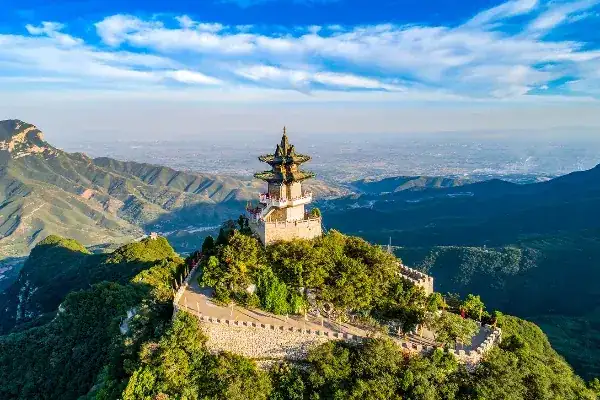
Shanxi’s provincial nickname, “San Jin” (Three Jin), derives from the story of the division of Jin into the three states of Zhao, Wei, and Han at the end of the Spring and Autumn period, and remains a cultural label for the region today. Another name, “Biaoli Shanhe” (literally “mountains and rivers within and without”), comes from the Zuo Zhuan and precisely describes its enclosed geography: the Yellow River outside and the Taihang Mountains inside. This insularity has profoundly shaped Shanxi’s historical destiny: a natural sanctuary in times of war, and a somewhat conservative place in peacetime. For that reason, Shanxi has been able to preserve more than 70% of China’s pre‑Yuan wooden architectural structures, making it the ultimate treasury of ancient Chinese architecture.
Historical Context
The history of Shanxi is an epic of repeated interaction and fusion between the Central Plains civilisation and the northern steppe peoples. Its depth of civilisation and thickness of historical accumulation are unmatched among China’s provincial‑level administrative regions.
Prehistory to the Pre‑Qin Period: Cradle of Civilisation (before 2000 BCE)
Southern Shanxi is one of the core birthplaces of Chinese civilisation. The Taosi site in Xiangfen (c. 2300–1900 BCE) is regarded by many archaeologists as the capital of the legendary Emperor Yao, “Pingyang.” The excavated pottery with cinnabar inscriptions, the observatory platform, and bronze artefacts form a chain of physical evidence for the “earliest China.” During the Xia and Shang dynasties, southern Shanxi was directly controlled by the royal domain. In the early Western Zhou, King Cheng of Zhou gave his younger brother Shu Yu the fief of Tang (later renamed Jin), with its capital in the area of Yicheng and Quwo—this was the historical starting point of “Jin.” The state of Jin dominated Central China for over 150 years during the Spring and Autumn period, and Duke Wen of Jin (Chong’er) was one of the “Five Hegemons of the Spring and Autumn.” The ruins of the Jin capital at Jiang County and the thousands of jade and stone covenant documents unearthed at Houma are powerful testimony to this era of hegemony.
Qin‑Han to the Northern Dynasties: Frontier Defence and Ethnic Melting Pot (221 BCE – 581 CE)
After the First Emperor of Qin unified China, he established commanderies such as Taiyuan, Shangdang, and Hedong, formally bringing Shanxi into the prefectural‑county system and making it the northern frontier against the Xiongnu. During the Han dynasty, the Bingzhou Inspectorate was established here; the Datong‑Shuozhou area was the main battlefield of the Han‑Xiongnu struggle, and the northern expeditions of Wei Qing and Huo Qubing mostly departed from here. The Yongjia Rebellion at the end of the Western Jin triggered nearly three hundred years of division and upheaval, pushing Shanxi to the forefront of ethnic integration. In 398 CE, the Tuoba Xianbei established the Northern Wei dynasty with its capital at Pingcheng (present‑day Datong). The Northern Wei operated from Pingcheng for nearly a century (398–494), during which they carved the world‑famous Yungang Grottoes, implemented the equal‑field system, and carried out sinicisation reforms. Shanxi thus became a hub connecting steppe civilisation with the Central Plains. During this period, Buddhism flourished in Shanxi as never before, and Mount Wutai began to emerge as a Buddhist sacred site.
Sui‑Tang to Song‑Yuan: Birthplace of Emperors and Buddhist Realm (581–1368)
Li Yuan and his sons launched their uprising from Taiyuan, founding the Tang dynasty. Shanxi was therefore regarded as the “birthplace of the dynasty,” and Taiyuan was designated the “Northern Capital,” ranking alongside Chang’an and Luoyang as one of the “Three Capitals.” Buddhism on Mount Wutai reached its peak in the Tang; the Eastern Hall of Foguang Temple (857 CE) remains the largest and highest‑ranked surviving wooden Tang structure in China. During the Five Dynasties and Ten Kingdoms period, Shi Jingtang ceded the Sixteen Prefectures of Yanyun, placing northern Shanxi under Khitan control and making Datong the Western Capital of the Liao. In the Liao‑Jin period, huge monasteries such as Huayan Temple and Shanhua Temple rose in Datong, and the Yingxian Wooden Pagoda (1056), at 67.31 metres tall, has stood for nearly a millennium as the world’s tallest and oldest wooden pagoda. The Dacheng Hall of the Pingyao Confucius Temple, built in 1139 (the second year of Tianjuan of the Jin), and the subsequent layout of Pingyao Old Town laid the foundation for today’s World Heritage site.
Ming‑Qing: The Shanxi Merchant Empire (1368–1912)
In the Ming dynasty, major frontier garrisons such as Datong and Taiyuan were established to defend against Mongol forces that had retreated to the northern deserts. The unique geographical position gave rise to the “salt‑ticket” system: Shanxi merchants supplied grain to the frontier garrisons in exchange for salt‑trading licences, accumulating their initial capital. In the Qing dynasty, the Shanxi merchants reached their peak, with business networks extending across China and into Mongolia and Russia, and their exchange banks dominated Chinese finance. The Rishengchang Exchange Bank in Pingyao (founded in 1823) has been called “the country grandfather of Chinese banking,” with branches as far as Japan and Korea. The grand courtyards of the Shanxi merchants—the Qiao, Wang, Cao, and Chang family mansions—converted wealth into splendid architectural complexes that remain living fossils of the merchants’ aesthetic and family ethics. During this period, Shanxi, though inland, was a hidden financial centre and commercial empire.
The Republic of China to the Present: Predicament and Transformation (1912– )
With the rise of railways and sea transport, Shanxi’s status as a land transport hub declined sharply. In the Republic era, Yan Xishan governed Shanxi for a long period, implementing a policy of “protecting the territory and pacifying the people” and building a relatively independent industrial system (represented by the Taiyuan Arsenal). During the War of Resistance, Shanxi was the seat of the Eighth Route Army headquarters and a main battlefield behind enemy lines; the Pingxingguan Victory (1937) and the Hundred Regiments Offensive (1940) both took place here. After the founding of the People’s Republic, Shanxi, with its abundant coal resources, was positioned as a national energy and heavy‑chemical base, fuelling the country’s industrialisation but at a heavy ecological cost and with the penalty of a monocultural economic structure. Since reform and opening up, and especially since the 21st century, Shanxi has experienced the painful throes of a resource‑based economic transition; the ups and downs of the coal economy have profoundly affected the province’s fortunes. In recent years, under the positioning of “vanguard of the energy revolution” and “national comprehensive reform pilot zone for resource‑based economic transformation,” Shanxi is struggling to shift from a “coal‑only” structure to one supported by diverse industries.
Cultural Heritage
The cultural foundation of Shanxi is the thick, multi‑layered sediment left by the continuous collision between agrarian civilisation and steppe culture. It is neither as delicate as the Jiangnan region nor as easy‑going as Sichuan, but rather a plain, ancient, and resilient inland character.
Dialects: The “Living Fossil” Value of Shanxi Dialects
Shanxi dialects belong to the Jin linguistic group, the only non‑Mandarin major dialect area in northern China. Their most distinctive feature is the preservation of the entering tone (ending with a glottal stop [ʔ], short in duration), which has disappeared from most northern dialects. Linguists note that the phonological pattern of Jin dialects is close to the Qieyun system of the Tang dynasty, making them a living fossil of Chinese phonetic history. Within the province, dialects vary markedly; they can be broadly divided into the Bingzhou group (centred on Taiyuan), Lüliang group, Shangdang group (Changzhi‑Jincheng), Wutai group, and Yunzhong group, among which mutual intelligibility is limited. For example, “yesterday” is yetian in Taiyuan dialect and yer’ge in Datong dialect. This diversity is directly related to the closed ravine terrain—literally, “across a ravine, speech changes.”
Folk Traditions: Ancient Customs Preserved
- Seasonal Festivals: Shanxi’s New Year customs are considered the most complete sample of traditional Han Chinese New Year culture in China. The “fire tower” (wanghuo) custom in northern Shanxi involves stacking large coal lumps into a pagoda and lighting them on New Year’s Eve, with flames leaping to drive away evil and bring blessings. In central Shanxi, “Shehuo” festivals feature back‑pole performances, elevated pavilions, boat dances, and Yangge dances that continue through the first lunar month. The Cold Food Festival’s fire‑prohibition custom has been preserved for over two thousand years in the Mianshan area of Jiexiu, where the legend of Jie Zitui has become embedded in the regional cultural DNA.
- Belief Spaces: Shanxi is a land of extraordinarily rich folk beliefs—Guan Yu worship (Jiezhou in Yuncheng is Guan’s hometown), Houtu worship (the Houtu Temple in Wanrong is the origin of imperial Houtu sacrifices), Eastern Peak worship, and water‑god worship coexist. Temple stages in villages still burn incense, and faith and daily life are intimately interwoven.
- Marriage and Funeral Rites: Shanxi wedding and funeral customs preserve many remnants of Zhou ritual, with emphasis on the “three letters and six rites,” thick burials, and prolonged mourning. In southern Shanxi, ancient rituals such as “pointing the spirit tablet” and “calling back the soul” are still performed; funeral music uses suona bands with loud, mournful tones.
Artistic Traditions and Intangible Heritage
In local opera, the Four Great Bangzi are the most famous. Among them, Jin Opera (Zhonglu Bangzi) is the provincial representative, with a singing style that is both soaring and exquisite; representative plays include Beating the Golden Branch and Calculating the Grain. Pu Opera (Puzhou Bangzi) is the source of the four bangzi, with a more ancient singing style and stunning acrobatic techniques such as “wing feather work” and “plume work.” Shangdang Bangzi and Northern Road Bangzi have their own regional distributions. There are also smaller genres such as Northern Shanxi Daoqing, Errentai, shadow puppetry, and puppetry. In folk crafts, Pingyao’s polished lacquerware is famous for its mirror‑like gloss achieved by hand‑polishing with lacquer applied by palm; Jiangzhou’s Chengni inkstones are as renowned as Duan and She inkstones. Shanxi dough sculpture (flowered buns) is a comprehensive art combining sculpture, painting, and noodle‑making skills—the date‑mountain buns for Spring Festival, cold‑swallow buns for Qingming, and happy buns for weddings are all rich in symbolism and have been inscribed as national‑level intangible heritage.
National‑level Intangible Cultural Heritage: As of 2024, Shanxi has 182 representative national‑level intangible cultural heritage items (including extensions), including Jin Opera, Puzhou Bangzi, Northern Road Bangzi, Shangdang Bangzi, Yangge opera (Shuozhou Yangge, Fanshi Yangge, etc.), Daoqing opera, drum arts (majestic drums, Taiyuan drums), paper‑cutting (Guangling paper‑cut, Zhongyang paper‑cut), flowered buns (Wenxi flowered buns), Pingyao polished lacquerware techniques, Chengni inkstone‑making, Xinghuacun Fenjiu liquor‑making, and aged vinegar‑making.
Architecture and Urban Landscape
When it comes to Shanxi’s architecture, one must first understand this: this province is the ultimate sanctuary of ancient Chinese wooden structures. According to the third national cultural heritage census, Shanxi has 53,875 registered immovable cultural relics, of which 28,027 are ancient buildings—accounting for more than one‑tenth of the national total. All four surviving Tang‑dynasty wooden buildings in China are located within Shanxi. This astonishing survival rate is the result of a dry climate, a relatively enclosed geography, and a history that has seen relatively little total destruction from war.
Traditional Architecture: A Living Volume of Chinese Architectural History
From the Tang to the Qing dynasties, Shanxi preserves a nearly complete architectural lineage. The main hall of Nanchan Temple (782 CE) and the East Hall of Foguang Temple (857 CE), with their large bracket sets, deep overhanging eaves, simple pedestals, and archaic painted sculptures, embody the majestic spirit of Tang architecture. The Wanfo Hall of Zhenguo Temple in Pingyao (963 CE) bridges Tang and Song. Liao‑Jin architecture reached its peak in Datong, with the Great Hero Hall of Huayan Temple, the Sutra Repository Hall, and the Great Hero Hall of Shanhua Temple all renowned for their monumental scale; the Yingxian Wooden Pagoda is a technological miracle of wooden construction. The Yuan‑dynasty Yongle Temple is famous for its large‑scale, exquisite murals, and its Gate of the Ultimate Beginning (Wuji Gate) is a typical example of Yuan official architecture. Ming‑Qing architectural remains are too numerous to count, represented by Jinci Temple (a temple complex dedicated to Shu Yu, the founding ancestor of the Jin state, and his mother Yijiang, with layers of architecture from Song, Jin, Ming, and Qing), as well as numerous Shanxi merchant courtyards, Guandi temples, and Confucius temples.
A core characteristic of Shanxi’s ancient buildings is the trinity of architecture, sculpture, and mural painting. The painted sculptures and murals in many ancient temples are art treasures of their time. Tang sculptures at Foguang and Nanchan, Liao sculptures at Huayan Temple in Datong, Song sculptures in the Holy Mother Hall of Jinci (the maidens are praised as one of the “three wonders of Jinci”), Yuan murals at Yongle Temple in Ruicheng (the Chaoyuan Tu is a masterpiece of world painting history), and Ming hanging sculptures at Shuanglin Temple in Pingyao (more than 2,000 statues filling the halls)—all are national treasures.
Urban Fabric: Two Typical Patterns, Pingyao and Taiyuan
Looking at the provincial level, Shanxi’s urban fabric can be roughly divided into two types. One is represented by the intact ancient city of Pingyao—a turtle‑shaped city plan, four main streets, eight minor streets, and seventy‑two winding alleys, with the market tower in the centre, the courtyard pattern of shops in front and houses behind, and a complete city wall and moat system. It is a perfect specimen of a Han Chinese city from the Ming‑Qing period. The other type is typified by Taiyuan—the traditional city site has been largely transformed by modernisation, but the street names (Liuxiang, Kaihuasi Street, Zhonglou Street) and a few remaining historical districts still reflect the ancient framework. Taiyuan itself is an ancient city whose site has not shifted for 2,500 years; although the Yingze Gate and Chengen Gate of the Song‑dynasty city no longer exist, the naming of Yingze Avenue bears the traces of this historical layering.
Modern and Contemporary Architecture: Shanxi University Hall and Industrial Heritage
In modern architecture, the old site of Shanxi University Hall (1902, a Sino‑Western hybrid building) was one of the first three national university halls in modern China. The Governor’s Mansion from the Republic period and the Zhengtai Hotel from Yan Xishan’s era bear witness to the political and economic patterns of that time. In recent years, in some resource‑based cities such as Datong’s Jinhua Gong Mine, the concept of “industrial heritage” has emerged—abandoned mines are being transformed into mine parks, recording Shanxi’s industrial memory as an energy base.
Notable Cultural Landscape Clusters
Within the province, several important cultural landscape clusters deserve mention: the temple complex on Mount Wutai (the sanctuary of ancient Chinese architecture, represented by Foguang and Nanchan temples), the ancient buildings and grottoes of Datong (the Yungang Grottoes, Huayan Temple, and Shanhua Temple), the cluster of Shanxi merchant courtyards in central Shanxi (a heritage belt of Ming‑Qing dwellings spanning Qi County, Taigu, and Pingyao), and the ancestral cultural remains in southern Shanxi (Hongdong Big Locust Tree, Guandi Temple, Yao Temple, etc.).
Culinary Culture
The essence of Shanxi’s cuisine, in brief, is: noodles reign supreme, sour and aromatic are the soul, and ruggedness conceals refinement. This is the survival wisdom and taste aesthetics forged over millennia by the working people on the dry, vegetable‑scarce Loess Plateau, using limited local produce.
The Noodle Universe: The Homeland of Chinese Noodles
Shanxi people’s understanding of noodles has long surpassed the narrow definition of “strips of dough.” Wheat, naked oats, buckwheat, sorghum, bean flour, corn flour—all kinds of grains are transformed into nearly a thousand variations through dozens of techniques: rolling, shaving, poking, smoothing, rubbing, twisting, pulling, pressing, pinching, and dropping. Knife‑shaved noodles are the ambassador of Shanxi noodles. One hand holds the dough, the other wields a curved blade; the shaved pieces are thicker in the middle and thinner at the edges, with distinct ridges, shaped like willow leaves—“one piece falls into the pot, one piece floats in the air.” They are smooth outside and chewy inside, soft but not sticky. Scissor‑cut noodles are cut with scissors, tapering to points like fish. Tijian (tijian noodles (hand-picked noodles)) use a dilute dough, poked from the edge of a plate into the pot with a chopstick, forming a shuttle shape with pointed ends. Mingedou (rubbed pellets) are pressed through a grating to produce inch‑long pieces resembling tadpoles. Cat’s ears are small dough pieces pressed with the thumb into a curled shape resembling cat ears. There are also hand‑pulled noodles, pinched slices, pressed noodles, dipped chips, and steamed oatmeal rolls. The noodle varieties of one Shanxi province exceed the sum of all European noodles. Behind the noodles is a complete system of toppings (sauces) and side dishes: tomato‑egg sauce, stir‑fried pork sauce, fried sauce, vinegar dressing, pickled cabbage sauce, and others, each with its own following.
Classic Flavours: Vinegar and Mutton in Concert
- Shanxi Aged Vinegar: One of China’s four great vinegars, made from sorghum through the five processes of “steaming, fermentation, smoking, leaching, and ageing,” with a special ageing process of “summer sunning and winter ice‑skimming” that concentrates the mellow sourness. A Shanxi table without vinegar is considered tasteless—this is no exaggeration, as the per capita vinegar consumption in Shanxi ranks first in the country. Vinegar is not just a condiment; it also gives rise to classic dishes such as vinegar stir‑fried cabbage, sweet‑and‑sour meatballs, and Guoyou Rou (sliced pork in vinegar sauce). Guoyou Rou is the signature dish of Shanxi cuisine—pork loin slices are oil‑passed, then stir‑fried with wood ear and bamboo shoots, finished with a vinegar sauce; the dish is golden, savoury with a hint of sourness, and embodies the essence of Jin cuisine.
- Datong Mutton Offal: The heart, liver, lungs, intestines, and blood of sheep are chopped and stewed with potato vermicelli and chilli oil, producing a thick, rich soup—a hardcore breakfast for winter warmth in northern Shanxi.
- Pingyao Beef: Cooked without any spices, only slow‑braised in an aged broth, the finished beef is reddish‑brown, dry and firm, with clear grain when sliced—a main cold dish at central Shanxi banquets.
- Tounao (Brain): A unique medicinal breakfast in Taiyuan, made from mutton, yam, lotus root, and yellow rice wine into a paste, served with pickled leeks and steamed dumplings. It is said to have been created by Fu Shan for his mother’s health over 300 years ago. A bowl of tounao warms the body from the core—a solemn ritual for Taiyuan people on winter mornings.
Dining Customs and Regional Character
Shanxi people traditionally eat “with side dishes, not stir‑fried dishes.” In the past, vegetables were scarce; a plate of pickles, a spoon of vinegar, and a bowl of noodles were a farmer’s main meal. At banquets, steaming, stewing, and simmering dominate, with heavy oil and colour, and a savoury‑sour flavour. The diet hides the group character of Jin people—frugal yet pragmatic, rugged yet persistent. On the barren Loess Plateau, they have developed infinite flavours from the simplest ingredients, relying on a near‑obsessive patience and creativity. The handcraft skills in noodle‑making and the pursuit of beauty in dough sculpture further reflect the Jin people’s stubborn defence of life’s dignity in the face of material scarcity.
Modern and Contemporary Development
Shanxi’s modern development trajectory has been almost entirely centred on coal. Its rise and fall have been tied to this resource, making it the most typical example of a resource‑based province in China.
Late Qing to the Republic: The Decline of Shanxi Merchants and Early Industrialisation
At the end of the 19th century, with Russian influence penetrating Mongolia, the independence of Outer Mongolia, and the opening of the Chinese Eastern Railway, the Shanxi merchants’ trade network with Mongolia and Russia suffered a fatal blow. At the same time, the Qing government’s banking reforms and the rise of modern banks rapidly dismantled the exchange‑bank industry. The Shanxi merchant empire essentially collapsed in the early Republic, and the enormous wealth that flowed back was converted into land and grand courtyards rather than modern industrial capital. During Yan Xishan’s governance (1911–1949), he promoted the “Six Policies and Three Affairs” (water conservancy, sericulture, tree‑planting, opium prohibition, haircutting, and anti‑footbinding), established the Northwest Industrial Corporation, and developed arms, steel, coal, and machinery industries, making Shanxi one of the few provinces with a relatively complete independent industrial system in the Republic; the Taiyuan Arsenal was among the largest in the country. The completion of the Zheng‑Tai Railway (1907) and the Tong‑Pu Railway (1937) formed the early railway skeleton of Shanxi and laid the groundwork for future coal transport.
Post‑1949 to Reform and Opening Up: National Energy Base
In the 1950s, Shanxi was positioned as a “national heavy‑industrial base.” More than ten of the 156 key Soviet‑assisted projects were located in Shanxi, including the Taiyuan Heavy Machinery Plant, Taiyuan Chemical Plant, and Datong Locomotive Works, forming a cluster of machinery, chemicals, and military industries centred on Taiyuan. In the late 1970s, the state made the strategic decision to “build Shanxi into a national coal energy base as quickly as possible,” and Shanxi entered the “coal era” in full. Under the planned system and the policy of “rapid exploitation of coal resources,” state‑owned, local, and township mines all advanced together; raw coal output surged from about 100 million tonnes in 1978 to a peak of 960 million tonnes in 2013, accounting for one‑quarter of national production and three‑quarters of inter‑provincial coal transfers. Shanxi’s coal lit up half of China, but at a heavy cost: over 3,000 square kilometres of mining‑induced subsidence, worsening soil erosion, and and the province once became a severe environmental pollution area.
Transformation Pain Since Reform and Opening Up
From the 1990s to the early 21st century, the coal market experienced several booms and busts. The “golden decade” of 2002–2012 saw soaring coal prices creating a class of “coal bosses,” but also further entrenched the “coal‑only” structure. After 2013, coal prices collapsed, and Shanxi’s GDP growth rate once ranked last in the country, plunging the province into deep recession. This crisis forced Shanxi to begin a difficult transformation: in 2010, the state approved the “Shanxi National Comprehensive Reform Pilot Zone for Resource‑Based Economic Transformation”; in 2019, the central government designated Shanxi to carry out a “comprehensive energy‑reform pilot.” In recent years, Shanxi has, on the one hand, promoted “reduction, optimisation, and greening” of the coal industry (cutting excess capacity, optimising structure, and developing green practices), advancing intelligent mining and coal‑bed methane development; on the other hand, it is vigorously cultivating non‑coal industries, including high‑end equipment manufacturing, new materials, semiconductors, big data, and cultural tourism. Taiyuan’s “China Valley of Nanotechnology,” Datong’s general aviation industrial park, and Changzhi’s LED industrial cluster represent the direction of transformation efforts. In 2023, the added value of Shanxi’s strategic emerging industries grew by 10.9%, and although the total volume cannot yet replace the dominance of coal, coking, metallurgy, and electricity, the trend of transformation is already visible.
Current Provincial Industrial Division
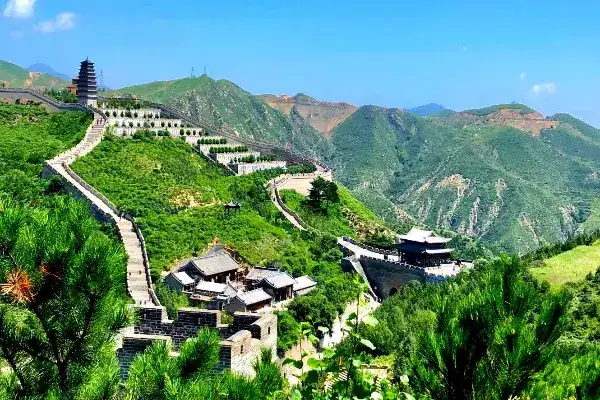
At the provincial level, Taiyuan, as the capital, primarily carries the functions of a science and innovation centre, modern services, and advanced manufacturing. Datong, with its location and cultural‑tourism resources, is transitioning to new energy, big data, and cultural tourism. Changzhi and Jincheng, relying on the southeastern urban cluster, develop equipment manufacturing and modern coal chemicals. Lüliang remains dominated by coal and coking, but is advancing its liquor industry cluster (Fenjiu production area). Yuncheng focuses on agricultural modernisation and linking with the Central Plains economic zone. Shanxi is currently making a major push in cultural tourism; the “Yellow River, Great Wall, Taihang” three‑tourism‑plate strategy attempts to convert cultural‑relic resources into a new economic engine. From “coal substitution” to “green substitution,” this transformation path is still long and arduous, but the direction is irreversible.
Transportation and Travel
Shanxi’s transport pattern is deeply constrained by its geography: long north–south, narrow east–west, with two mountain ranges enclosing a series of basins. This determines that the province’s transport flows are mainly north–south, with east–west as branches. As of 2024, the province has formed a three‑dimensional transport system centred on Taiyuan, comprising a high‑speed rail network, an expressway network, and a group of airports.
Railways: Shanxi Corridors in the High‑Speed Era
The backbone of Shanxi’s railways is the Datong–Xi’an High‑Speed Railway, now fully operational at a design speed of 250 km/h. It runs from Datong through Taiyuan, Linfen, and Yuncheng into Shaanxi, linking the province’s basin cities—it is called the “spine of Shanxi’s economic corridor.” From Taiyuan, Datong is about 1.5 hours away, and Yuncheng about 2 hours, fundamentally changing the perception of travel time within the province. The east‑west trunk line, the Taiyuan–Shijiazhuang Passenger Railway, connects to the national high‑speed network via the east, putting Taiyuan within 2.5 hours of Beijing and about 3.5 hours of Xi’an. The Taiyuan–Zhengzhou High‑Speed Railway (opened in 2020) strengthens the southern corridor, reducing Taiyuan–Zhengzhou travel to about 2 hours. In conventional rail, the Tong‑Pu Railway (Datong–Puzhou, north‑south), the Shi‑Tai Railway (Shijiazhuang–Taiyuan, the main artery for coal transport), the Tai‑Jiao Railway, and the Hou‑Yue Railway still carry enormous coal and freight volumes.
Expressways: A Vast Network of Coal‑Haul Routes
The Shanxi expressway network follows a “three verticals, twelve horizontals, twelve rings” pattern, with total mileage exceeding 6,000 kilometres, ranking among the highest in the country in density. The G5 Beijing–Kunming expressway runs through central Shanxi, and the G55 Erenhot–Guangzhou expressway cuts from northern to southeastern Shanxi, serving as the main north–south road arteries. The east–west Qingdao–Yinchuan (G20) and Cangzhou–Yulin expressways carry most of the road‑based coal traffic out of the province. Note that the proportion of heavy freight trucks on these expressways is extremely high, especially on the coal‑producing routes of northern and central Shanxi, where long convoys of coal trucks flow continuously; drivers should pay extra attention to safety.
Aviation: One Main Hub and Three Auxiliary Airports
Taiyuan Wusu International Airport is the provincial gateway, operating over 130 domestic and international routes with annual passenger throughput exceeding 14 million. Three regional airports are located at Datong Yungang, Changzhi Wangcun, and Yuncheng Zhangxiao; smaller airports such as Linfen Yaodu and Xinzhou Wutaishan complete the coverage, basically achieving “one‑hour air access from the capital to the whole province.” International routes are mainly to East and Southeast Asia, with recent efforts to open European routes in line with Belt and Road needs.
Unique Travel Experiences
Travel itself in Shanxi offers distinctive landscape and historical experiences. Driving through the Xin‑Ding Basin or the Jinzhong Basin, with distant mountains on both sides and villages, ancient pagodas, and temples scattered across the Fen River plain, is like reading a moving geographical reader. The Tai‑Jiu expressway crossing the Taihang Mountains, with bridges and tunnels alternating and steep gorges, gives a direct sense of the “mountains and rivers within and without” geographical barrier. Riding the Datong–Xi’an high‑speed railway from north to south, the view outside changes from the vastness of the Loess Plateau to the verdant southern plains, with noticeable shifts in climate and vegetation. As for driving along the Yellow River road in the Shanxi‑Shaanxi canyon section, one side is the rugged, deeply incised Loess Plateau, the other the turbid rushing Yellow River—an ultimate expression of North China’s geographical landscape. Note that mountain expressways and national/provincial highways are affected by spring thaw, summer floods, autumn fog, and winter black ice; road conditions vary seasonally, so always check real‑time road conditions before departure.
Travel Tips
Shanxi is a museum open to the depths of time, but for first‑time overseas visitors, it is also a thick land that requires patient decoding. The following practical tips aim to help you enter this land of “mountains and rivers within and without” more deeply.
Best Travel Seasons
Shanxi has four distinct seasons. Spring and autumn (late April to mid‑May, and September to October) are the golden windows for travel. Temperatures are moderate (15–25°C), the skies are clear, and they are ideal for wandering among ancient buildings. Autumn is especially recommended: the poplar trees in northern Shanxi turn golden, the red dates in central Shanxi are heavy on the branches, and the crisp, clear weather makes for excellent photography and hiking. Winter (November to February) is cold and dry; northern Shanxi can drop below −20°C, but with few tourists, you can quietly appreciate the solemn beauty of snow‑covered temples, and the Shehuo (traditional festive folk performances) around the Spring Festival are rich in folk experience. Summer (June–August) is rainy but cooler than much of North China; Mount Wutai is an excellent summer retreat (average temperature around 10°C on the summit). Avoid travelling during 1–3 May (Labour Day) and 1–7 October (National Day), when major attractions are overcrowded and the experience is poor.
Must‑Do Experiences (Provincial Level)
The following are the provincial‑level must‑do experiences that represent the cultural image of the entire province:
1. Pilgrimage to Ancient Architecture: No other province condenses such a complete history of Chinese architecture. The East Hall of Foguang Temple (Tang) and the main hall of Nanchan Temple (Tang) on Mount Wutai are essential pilgrimage sites; the Yingxian Wooden Pagoda represents the peak of Liao‑dynasty timber technology; the Ming‑dynasty painted sculptures at Pingyao’s Shuanglin Temple, the Song‑dynasty Holy Mother Hall at Jinci, and the “Flying Bridge over the Fish Pond” are irreplaceable historical sites. It is recommended to read relevant chapters of Liang Sicheng’s A History of Chinese Architecture before you go; visiting with that knowledge will deepen the experience.
2. Shanxi Merchant Cultural Tour: Pingyao Ancient City is the core heritage of the Shanxi merchants. The former site of Rishengchang Exchange Bank is the key to understanding the Shanxi merchant financial empire; the city wall, Confucius Temple, and county yamen form a complete Ming‑Qing urban specimen. Outside the city, Zhenguo Temple (Five Dynasties) and Shuanglin Temple (Ming‑dynasty painted sculptures) are also part of the World Heritage site. In addition, the Qiao Family Courtyard in Qi County (famous for its exquisite architectural layout) and the Wang Family Courtyard in Lingshi (noted for its grand scale, called the “folk Forbidden City”) are representative works of the Shanxi merchant courtyard culture; from the architectural details, one can glimpse the merchants’ life world and family ethics.
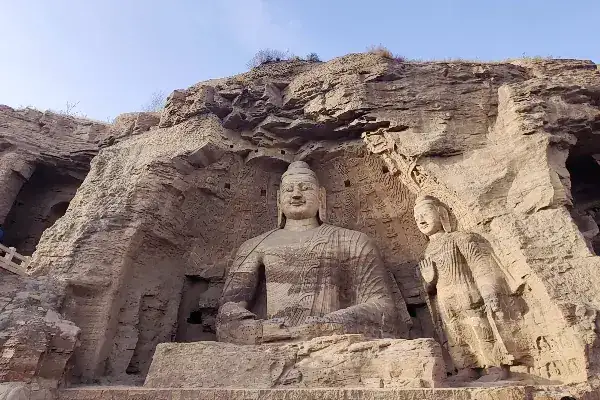
3. Grotto Art Journey: The Yungang Grottoes in Datong (Northern Wei imperial grottoes, 5th century) are one of the world’s three great grottoes. The “Five Caves of Tanyao” are awe‑inspiring, while the later niches display the refined, slender style of the sinicised Northern Wei. It is strongly recommended to spend at least half a day to appreciate them fully. Watch documentaries such as A Thousand Years in One Grotto – Yungang as preparation.
4. Yellow River and Loess Plateau Landscape: On the Shanxi‑Shaanxi canyon section (the Shanxi side of Hukou Waterfall is recommended), you can confront the primal power of the surging Yellow River; the water volume is greatest in April–May and September–October, when the waterfall roars like thunder—the most awe‑inspiring natural landscape in Shanxi. The magnificent loess‑gully scenery at Laoniuwan (where the Yellow River and the Great Wall meet) is also well worth a hike.
5. In‑Depth Noodle and Vinegar Experience: Taiyuan’s Shanxi Noodle Museum and time‑honoured noodle restaurants (such as Qingheyuan, Renyili, and Taiyuan Noodle House) are places to systematically experience noodle culture. Plan a meal to try knife‑shaved noodles, cat’s ears, tijian noodles (hand-picked noodles), and steamed oat rolls. Visit an old vinegar workshop (such as Yiyuanqing or Shangshuijing) to observe the vinegar‑making process and taste aged vinegar—a unique taste journey.
Practical Tips and Precautions
- Transport Connections: Scenic spots in Shanxi are scattered; public transport between counties is limited. It is advisable to use Taiyuan, Datong, or Pingyao as bases and combine high‑speed rail/buses with local chartered cars. Self‑driving is the most flexible and efficient way, but be cautious on mountain roads.
- Ticket Booking: Core attractions such as Yungang Grottoes, Pingyao Ancient City, and Mount Wutai all require real‑name reservation. During summer and Golden Week, tickets sell out quickly; book online 1–3 days in advance.
- Dress Code: There are many temples in Shanxi, some still used for religious services. Do not enter halls in shorts, sleeveless tops, or slippers. Wear comfortable, non‑slip shoes—ancient temple stone steps and flagstones are numerous and slippery in the rain.
- Dietary Adaptation: Shanxi cuisine is salty, sour, and oily, which may be challenging for overseas visitors with lighter palates. Start with milder dishes such as Guoyou Rou and Pingyao beef; ask for less oil in noodles. Do not drink tap water; bring a thermos for boiled water. Note: due to harder water quality, first‑time visitors may experience mild stomach discomfort—this is normal and usually adjusts within a day.
- Language: Mandarin is generally understood in cities such as Taiyuan and Datong. In remote villages or when speaking with elderly people, dialect may be a barrier; mobile translation apps have limited dialect recognition, so for key communications, ask a younger local for help.
- Air Quality and Health: Air quality in Shanxi has improved significantly in recent years, but heavy pollution may still occur during winter heating seasons. For those with respiratory sensitivity, it is advisable to bring masks and basic medication when travelling in autumn and winter.
Shanxi is not about immediate visual impact; it requires you to bring time and knowledge preparation to truly engage with it. Those silent wooden structures, peeling murals, aged vinegar aromas, and cave dwellings in the ravines are keys to ancient China. We look forward to you stepping into this land of mountains and rivers and touching the depths of China’s time with your own hands.
Travel information can change. Check current opening hours, reservations and entry requirements before you travel.

Traveller discussion
Start the conversation with a helpful tip or a question.