
How to enter Nanputuo Temple? A brand new guide to Nanputuo Temple!
With its reflection of the blue sky in the water, and lotus leaves nestled against the mountains facing the sea, Nanputuo Temple is a Buddhist temple with a history of over a thousand years. It was first built at the end of the Tang Dynasty and was originally named Sizhou Temple. During the Zhiping era of the Northern Song Dynasty, the monk Wen Cu…
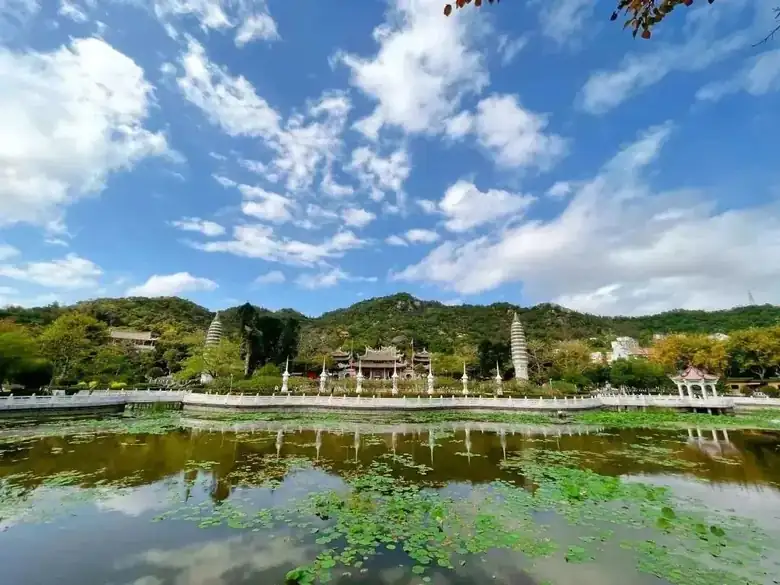
Blue sky reflected in water, lotus leaves in green.
Nestled against the mountains and facing the sea, it is a place of tranquil charm.
Introduction to Nanputuo Temple
Nanputuo Temple is a Buddhist temple with a history of over a thousand years. It was first built at the end of the Tang Dynasty and was then called Sizhou Temple. During the Zhiping era of the Northern Song Dynasty, the monk Wencui rebuilt the temple and named it Wujinyan. During the Zhiyuan era of the Yuan Dynasty, the temple was destroyed. During the Hongwu era of the Ming Dynasty, the monk Jueguang rebuilt the temple and named it Puzhao Temple. At the end of the Ming Dynasty and the beginning of the Qing Dynasty, the temple was again destroyed in the chaos of war.
In 1683, after Shi Lang, the Marquis of Jinghai, recovered Taiwan, he stationed his troops in Xiamen and rebuilt the temple on the original site of Puzhao Temple. He also added the Dabei Pavilion to enshrine Guanyin Bodhisattva. Thus, this temple became another Guanyin Bodhisattva temple similar to the one on Mount Putuo in Zhejiang Province, and because it was located south of Mount Putuo, it was named "Nanputuo Temple" (South Putuo Temple). By the early years of the Republic of China, Nanputuo Temple had become a very popular Buddhist temple in southern Fujian.
In 1937, with the outbreak of the Anti-Japanese War, Nanputuo Temple was bombed by Japanese aircraft, and the monks living there fled to the interior or abroad. In 1958, Buddhist temples in Xiamen were merged, and the monks from various temples gathered at Nanputuo Temple. In 1966, the temple's facilities were severely damaged, and the monks dispersed. In 1980, after the implementation of religious policies, Nanputuo Temple flourished again.
Nanputuo Temple historically belongs to the Heyun branch of the Linji school of Chan Buddhism. The Heyun branch is a sub-branch of the Linji school, founded by Zen Master Genxin Xingmi of Nanshan Temple in Zhangzhou. The Heyun branch has deep roots in the Minnan region, with temples in Xiamen, Zhangzhou, Quanzhou, and other places tracing their origins back to Nanshan Temple in Zhangzhou. Historically, the Linji school of Chan Buddhism also had a profound influence on surrounding countries.
Nanputuo Temple, a popular tourist attraction in Xiamen, boasts beautiful scenery at every turn, making it a place you'll want to return to again and again. But have you truly explored Nanputuo thoroughly? Here's the latest Nanputuo travel guide for 2026!
Further Reading: [Xiamen Tourism] Xiamen Independent Travel Guide: Attractions, Transportation, Accommodation, and Food
How do I enter Nanputuo Temple?
Precautions:Currently, overseas tourists, including those from Hong Kong, Macau, and Taiwan, need to use WeChat to search for "Nanputuo Temple Reservation Service Platform"You can make a reservation through the mini-program. We recommend that overseas travelers register a WeChat account. If you are unable to make a reservation through WeChat, you can make a reservation on-site!"
Admission: Free
✅️Guided tour + commentary booking: Trip
Nanputuo Temple official website: https://www.nanputuo.com/
Nanputuo Temple Guide Map
Nanputuo Itinerary
Lotus Pond and Release Pond
Upon entering the scenic area, the first thing you'll see is the Bodhi tree. Rows of Bodhi trees with swaying branches and leaves are neatly arranged on both sides of the road. A gentle breeze blows and the leaves rustle softly, as if waving to visitors and welcoming them to Nanputuo Temple.
Near the Bodhi tree is a pond full of lotus flowers, with lotus leaves floating on the surface and fish swimming in the shallows. There are exquisitely designed pavilions and walkways on the pond. If you were to wear a gorgeous dress and stroll through it, every snapshot would be beautiful.
When the lotus pond arrives in the height of summer, it is filled with blooming flowers and fragrant blossoms, inspiring one to compose a poem: "Picking lotus in the southern pond in autumn, the lotus flowers are taller than a person's head, bending down to play with the lotus seeds, the lotus seeds are as green as water." Next to the lotus pond is a release pond, where small turtles and goldfish swim freely, enjoying the blessings of the gods and Buddhas.
Between the two ponds stand seven pagodas, each composed of a Buddha statue including Shakyamuni Buddha and Kassapa Buddha. Their Southeast Asian-style architecture is particularly eye-catching. In addition, two 11-story pagodas stand on either side, complementing the lotus ponds and creating a scene as beautiful as a painting.
When visitors arrive at the release pond, they can feed the fish and enjoy the fountain. The beautiful water sparkles and glistens in the sunlight, dazzling and breathtaking. There are also many adorable pigeons by the pond; they are not afraid of strangers at all. If you offer them food, they will come to your hand or shoulder and interact with you!
Worship at the Hall of Heavenly Kings
Located at the foot of Wulao Peak, Nanputuo Temple boasts several magnificent halls, among which the Hall of Heavenly Kings is the most breathtaking. Green glazed tiles, gray-white brick walls, and colorful painted reliefs are cleverly combined to create a serene yet solemn atmosphere in the Hall of Heavenly Kings.
The Hall of Heavenly Kings enshrines Maitreya Buddha, depicted with a smiling face and a large belly, known as the "Welcoming Monk." It is said that Maitreya Bodhisattva attained Buddhahood under the Dragon Flower Tree in Hualin Garden after 5.67 billion years of practice, and is also known as the "Bodhisattva Who Will Become a Buddha in His Next Life." The Laughing Buddha, a compassionate monk from the late Tang Dynasty, dedicated his life to spreading Buddhism. People should learn from his attitude of letting go and living freely and unrestrainedly.
On either side of the Hall of Heavenly Kings stand the Four Heavenly Kings, guardian deities of Buddhism. They hold four sacred implements symbolizing "favorable weather and abundant harvests," and their lifelong duty is to ensure a world of peace and prosperity. Upon arriving at the Hall of Heavenly Kings, visitors can collect a free stick of incense from a small wooden hut.
Then, take the incense to the hand-washing pool, scoop up a spoonful of running water with a wooden ladle, hold the ladle with your left hand to pour the water and wash your right hand, then switch hands and wash your left hand again. Next, go to the side to light incense, and after lighting the incense, go to the Hall of Heavenly Kings to worship sincerely.
You don't need to go inside the temple to worship; you can just stay outside! Remember, sincerity is key. It's said that prayers for marriage and career success are very effective here, so you can give it a try.
Guanyin Bodhisattva in the Great Compassion Hall
Walking up the steps next to the Hall of Heavenly Kings, you will arrive at the Hall of Great Compassion, which was built by Shi Lang in the early Qing Dynasty. The Hall of Great Compassion has an exquisite and unique design and is magnificent. It is said that no iron nails were used in its construction; it was built entirely of wood.
Since ancient times, the Great Compassion Hall has been a place of great religious activity. In 1928, a fire broke out due to carelessness in burning incense. The current Great Compassion Hall was rebuilt in 1930 with funds raised by Master Taixu. The original Great Compassion Hall was completely destroyed by fire. The current Great Compassion Hall was originally built of wood, but it was later replaced with a cement structure due to severe termite infestation.
The Compassion Hall enshrines the Thousand-Hand Guanyin. Twenty-six steps lead up to the hall, where golden sunlight bathes the building, giving it a captivating glow, as if shrouded in a sacred veil, making it both holy and beautiful. Ascending the steps, one can devoutly worship Guanyin Bodhisattva, wishing to receive her blessings.
Dharma Propagation Department + Monk's Pagoda + Buddhist Holy Site
Behind the Great Compassion Hall is a building called the Dharma Propagation Department. The bluestone slabs in front of the courtyard bear the marks of time, as if conveying the history of Nanputuo Temple. Generation after generation of young monks have propagated Buddhism here, helping others and themselves, and have gone through countless years.
This is an important institution that integrates "education, practice, and propagation of Buddhism." It brings together elites from many fields who, through their efforts, spread the Dharma and help more people understand the profoundness of Buddhist culture. If one can truly comprehend Buddhist teachings, one can attain enlightenment and wisdom, and distance oneself from worldly troubles.
Behind the Nanputuo Temple, we can also see monks' stupas, also known as relic stupas. Generally, after an old monk passes away, his cremated remains are enshrined in a stupa here. The stupas vary in shape, some with round tops and some with pointed tops. Each master who made important contributions to the development of Buddhism at Nanputuo Temple has a corresponding relic stupa.
Cliff carvings are rich in cultural heritage
Besides its temples, Nanputuo Temple also boasts unique cultural landscapes, namely its cliff carvings. These carvings can be found at various locations, including the Five Old Men Peaks on the back mountain and within the temple grounds. It is estimated that there are over 200 such carvings, most dating from the Ming and Qing dynasties onwards.
Literati and artists who come to Nanputuo Temple inscribe their names, express their feelings, or record events. They express their emotions by carving poems on the stones, forming a beautiful landscape. Ming Dynasty generals Chen Di and Shen Yourong left their works here. In 1982, the Xiamen Municipal Government listed their stone carvings as municipal-level cultural relics protection units.
In the early years of the Republic of China, Zhuang Xiquan, Shen Manyun, and others prepared to go to Southeast Asia to raise funds. Before their departure, they visited Nanputuo Temple and left behind a poem, "Lang Tao Sha," while sightseeing. Strolling on the back mountain, you can also see cliff carvings recording the arrival of the U.S. Pacific Fleet in Xiamen, as well as a stone carving of the character "Buddha" on the rock wall behind the temple.
This enormous Buddha character, standing fourteen feet tall and ten feet wide, stands out prominently on Wulao Peak. Surrounded by lush pine and bamboo groves and beautiful rock formations, it has become one of Xiamen's eight famous scenic spots. Today, more and more calligraphy enthusiasts flock to Wulao Peak to see these stone carvings left by literati and scholars.
As one of Xiamen's most popular tourist attractions, Nanputuo Temple will truly bring you many surprises. If you travel to Xiamen, you definitely shouldn't miss visiting Nanputuo Temple!
Tips for visiting Nanputuo Temple in Xiamen
address:Nanputuo Temple, No. 515 Siming South Road, Siming District
Opening hours:8:00-17:30
transportation:Take Metro Line 1 to Zhenhai Road Station, then transfer to bus routes 1, 45, 32, or 100 and get off at Xiamen University Station.
Nanputuo Temple souvenirs
Nanputuo vegetarian cakes are also very famous and make great souvenirs. A box of 6 costs 15 RMB and comes in many flavors: coconut, pumpkin, taro, mung bean, green tea, red bean, etc. (Personally, I prefer pumpkin and coconut, which are also the two most popular flavors.)
Frequently Asked Questions about Visiting Nanputuo Temple
1. How do I make a reservation at Nanputuo Temple?
Nanputuo Temple is a Buddhist temple, and its policies are affected by holidays, visitor flow, religious ceremonies, and on-site management. You can refer to…Nanputuo Temple Reservation Service Platform"Reservations are free, and you can also make on-site reservations on weekdays. However, during weekends, winter and summer vacations, public holidays, and especially during major temple events and the Lunar New Year, when there are large crowds, you must make a reservation in advance. Those interested in temple culture can also book a free guided tour when making their reservation. The waiting area is the first small wooden hut at the East Gate entrance."
2. What time is the most comfortable to go?
It is recommended to choose an earlier time in the morning. Temple opening hours: 8:00-18:00
3. How do I get into the temple without getting lost?
If it's your first time here, just follow the central axis of the temple: the mountain gate, the Hall of Heavenly Kings, the Great Buddha Hall, the Great Compassion Hall, and the area around the Sutra Repository. Then decide whether you want to go to the back mountain. The front part is the temple area, and the back part is the mountain climbing area (there will be signs).
4. Are vegetarian meals and vegetarian cakes worth arranging?
Yes, it can be arranged. Vegetarian food is suitable for those who want to slow down their trip, allowing them to spend more time experiencing and lingering at the temple; vegetarian cakes also make great souvenirs. Locals in Xiamen often buy them as everyday snacks and tea accompaniments. There's a SF Express branch inside the temple that can ship directly. Vegetarian cakes only have a 15-day shelf life, so buy only what you need.
5. Is it necessary to climb Wulao Peak? Is it tiring?
If you have the stamina, I recommend climbing a section. Wulao Peak isn't very high, and there are two large and one small viewing platforms on the mountain, offering a different perspective of Xiamen. However, if you're traveling with elderly people or children, or if the weather is hot and humid, be sure to consider your own physical condition before proceeding.
6. Does it follow Xiamen University, the Botanical Garden, or Shapowei?
It depends on what you want.
Nanputuo Temple + Xiamen University:Xiamen University requires advance reservations via a lottery system; please be sure to check the official opening and reservation requirements beforehand. This route allows you to either avoid hiking to conserve your energy for Xiamen University, or turn back after reaching the first viewing platform.
Nanputuo Temple + Botanical Garden:After the Five Old Men Peaks are topped out, you can see the entrance to the botanical garden. A separate ticket for the botanical garden is required, costing 30 yuan.
Nanputuo Temple + Xiamen University area:If you want a relaxing meal and photos, head to Shapowei; if you want to see the sea in the evening, add Baicheng, Yanwu Bridge viewing platform, and the Ring Road.
Travel information can change. Check current opening hours, reservations and entry requirements before you travel.


Traveller discussion
Start the conversation with a helpful tip or a question.