
Yushu Tibetan Autonomous Prefecture
Yushu Tibetan Autonomous PrefectureYushu Tibetan Autonomous Prefecture (Tibetan name: ཡུལ་ཤུལ་བོད་རིགས་རང་སྐྱོང་ཁུལ།), an autonomous prefecture under Qinghai Province, abbreviated as "Yushu Prefecture," with its capital seated in Yushu City
Yushu Tibetan Autonomous Prefecture
Yushu Tibetan Autonomous Prefecture (Tibetan name: ཡུལ་ཤུལ་བོད་རིགས་རང་སྐྱོང་ཁུལ།), an autonomous prefecture under Qinghai Province, abbreviated as "Yushu Prefecture," with its capital seated in Yushu City. "Yushu" means "ruins" in Tibetan. The terrain is high in the north and south, low in the middle, and high in the west and low in the east. It has a typical alpine cold climate. The total area of the prefecture is 267,000 square kilometers. As of the end of 2025, Yushu Tibetan Autonomous Prefecture administers 1 county-level city and 5 counties. As of the end of 2025, the permanent resident population of Yushu Tibetan Autonomous Prefecture was 438,200. Yushu Tibetan Autonomous Prefecture is a national-level Tibetan Culture (Yushu) Ecological Reserve, with unique plateau natural landscapes and folk customs, Yushu singing and dancing, Tibetan costumes, and peculiar customs and practices, Princess Wencheng Temple and Buddhist monasteries of numerous sects, Xinzhai Jiana Mani Stone Pile and the statue of Tsongkhapa in the hall of Gangcha Monastery, and three national-level nature reserves: "Sanjiangyuan," Longbaotan, and Hoh Xil. There are more than 40 scenic spots and attractions for tourism in the prefecture. Yushu's folk customs are uniquely charming, featuring the grand Yushu Horse Racing Festival. On December 29, 2018, it was named the sixth batch of National Demonstration Areas (Units) for Ethnic Unity and Progress by the State Ethnic Affairs Commission. In 2025, the regional GDP of Yushu Tibetan Autonomous Prefecture was 9.743 billion yuan, a year-on-year increase of 4.0% at constant prices.
History
In ancient times, Yushu was the land of the yak species of the Western Qiang. During the Wei, Jin, Southern and Northern Dynasties (220–589), it belonged to the Supi Kingdom.
During the Sui Dynasty (581–618), it was called "Nüguo" (Kingdom of Women). Around the Sui Dynasty, it was the jurisdiction of the two kingdoms of Supi and Duomi.
During the Tang Dynasty (618–907), it was the Sunboru of Tubo.
During the Song Dynasty (960–1279), it was the land of the small state of Nangqian under Lizhou.
During the Yuan Dynasty (1271–1368), it was under the jurisdiction of the Pacification Commissioner's Office of the Tubo Routes.
During the Ming Dynasty (1368–1644), it belonged to the Do-Kham Pacification Commissioner's Office. At the end of the Ming Dynasty and the beginning of the Qing Dynasty (1644–1912), the heads of various Yushu tribes were granted titles by the Khoshut tribe of Qinghai Mongols as Taiji.
During the Qing Dynasty, it was under the direct jurisdiction of the Qinghai Affairs Minister, being the territory of the Nangqian Thousand Households, with tribes such as independent Hundred Households under it.
In the early years of the Republic of China, it was subordinate to the Qinghai Affairs Officer, and soon changed to be subordinate to the Mongolian and Tibetan Pacification Commissioner and the Ganbian Ninghai Garrison Envoy. In 1914, Xining Circuit was established. In 1917 (the sixth year of the Republic of China), the Yushu Council was established, and in 1929 (the 18th year of the Republic of China), it was changed to Yushu County, governing the entire territory of the present autonomous prefecture. Yushu, Nangqian, and Chengduo counties were established, all under the jurisdiction of the Yushu Administrative Supervision Commissioner's Office, and the system of thousand and hundred households below the county level remained the same as before.
In October 1949, the Yushu Special Commissioner's Office of the Qinghai Provincial People's Liberation Army Military and Political Committee was established.
In 1949, Yushu Special District was established, with the commissioner's office stationed in Yushu County. It governed 3 counties: Yushu (stationed in Jiegu), Chengduo (stationed in Zhoujun), and Nangqian (stationed in Xiangda).
On December 25, 1951, Yushu Special District was changed to Yushu Tibetan Autonomous Region, governing Chengduo and Nangqian counties; the Yushu County system was revoked. In 1952, the Yushu County system was restored, led by Yushu Tibetan Autonomous Region. Yushu Tibetan Autonomous Region governed 3 counties.
In 1953, Zhaduo County was established by merging the western parts of Yushu and Nangqian counties; it governed 4 counties.
In 1954, the former Zhaduo County was changed to Zaduo County (stationed in Yuriben); Zhiduo County was established from parts of Yushu County (stationed in Jiajiboluoge); the former Qumalai District, originally under direct provincial jurisdiction, was reorganized into Qumalai County and placed under Yushu Tibetan Autonomous Region; it governed 6 counties.
In 1955, Yushu Tibetan Autonomous Region was reorganized as Yushu Tibetan Autonomous Prefecture, with the Prefecture People's Committee seated in Yushu County; it governed 6 counties: Yushu, Nangqian, Chengduo, Zaduo, Qumalai, and Zhiduo.
In 1959, Jiangnan County was established from parts of Yushu, Nangqian, Zaduo, and Zhiduo counties (on the south bank of the Yangtze River, stationed at Ganningshengduo); Tianhe County was established from parts of Chengduo and Zhiduo counties (on the north bank of the Yangtze River, stationed at Kalongyun); it governed 8 counties.
In 1960, the Jiangnan County seat was moved from Ganningshengduo to the Jiezong area.
In 1962, Jiangnan County was abolished and merged into Yushu County; Tianhe County was abolished and merged into Chengduo and Qumalai counties; Yushu Tibetan Autonomous Prefecture governed 6 counties: Yushu (stationed in Jiegu), Chengduo (stationed in Zhoujun), Nangqian (stationed in Xiangda), Zaduo (stationed in Yuriben), Zhiduo (stationed in Jiajiboluoge), and Qumalai (stationed in Sewugou).
On July 3, 2013, with the approval of the State Council, Yushu County was abolished and replaced with the county-level Yushu City, with the administrative area of the former Yushu County as the administrative area of Yushu City. Yushu City is under the jurisdiction of Yushu Tibetan Autonomous Prefecture.
Administrative Divisions
As of the end of 2025, Yushu Tibetan Autonomous Prefecture administers 1 county-level city and 5 counties: Yushu City, Zaduo County, Chengduo County, Zhiduo County, Nangqian County, and Qumalai County, with 4 subdistricts, 11 towns, and 33 townships, comprising 258 villages and 55 communities. The Prefecture People's Government is seated at No. 14 Minzhu Road, Jiegu Town, Yushu City.
Geographical Environment
Location and Boundaries
Yushu Tibetan Autonomous Prefecture is located in southwestern Qinghai Province, in the heartland of the Qinghai-Tibet Plateau at the source of the Three Rivers. The total area of the prefecture is 267,000 square kilometers, with geographical coordinates between 89°27′–97°39′ east longitude and 31°45′–36°10′ north latitude. It borders Haixi Mongolian and Tibetan Autonomous Prefecture to the north, with a boundary line of 724 kilometers. It borders Bayingolin Mongol Autonomous Prefecture of Xinjiang to the northwest, with a boundary line of 180 kilometers. It connects with Guoluo Tibetan Autonomous Prefecture to the east, with a boundary line of 240.6 kilometers. It is adjacent to Garze Tibetan Autonomous Prefecture of Sichuan Province to the southeast, with a boundary line of 176 kilometers. It borders Qamdo City and Naqu City of the Tibet Autonomous Region to the southwest, with the Qinghai-Tibet boundary line totaling 2,385.85 kilometers.
Topography and Landforms
Yushu Tibetan Autonomous Prefecture is bounded by the Kunlun Mountains and Bayan Har Mountains to the north, faces the Tanggula Mountain range to the south, connects with the western Sichuan alpine valleys to the east, and links with the northern Tibetan Plateau to the west. It is the source of the Yangtze River, Yellow River, and Lancang River. The overall terrain is flanked by two mountain ranges, high in the north and south, low in the middle, high in the west and low in the east. The prefecture spans four geomorphic regions: the Yangtze Source High Plain, the Tanggula High Mountain Area, the Bayan Har Plateau Area, and the Kunlun-Jishi High Mountain Area, with the first three being dominant. Periglacial landforms are extremely developed, accounting for over 70% of the total area, with intense freeze-thaw processes.
From southeast to northwest, the terrain ascends in four levels: alpine valleys, plateau mountains, low mountain wide valleys, and hilly plateaus, forming a landscape of high mountains, deep gorges, large flats, and wide valleys. The vast areas in the central-western and northern regions are mostly plateau-like, with gentle undulations, dominated by low hills, wide valleys, lake basins, and flats. The areas east and south of the center feature plateau mountain and alpine valley landforms. The average elevation of the entire prefecture is above 4,200 meters, with the highest peak, Bukadaban Peak, at 6,860 meters, and the lowest point, the Jinsha River water surface, at 3,335 meters. Most areas are between 4,000 and 5,000 meters in elevation.
Climate
Yushu Tibetan Autonomous Prefecture has a high elevation, complex terrain, variable climate, and harsh environment, with a typical alpine cold climate. Located in the mid-latitude region, the altitude reaches one-third or more of the troposphere, exceeding the critical scale of planetary systems adapted to Earth's rotation, thus greatly influencing atmospheric circulation and forming unique climatic conditions.
Yushu is in a long-sunshine zone, with strong solar radiation, many sunshine hours, and abundant light energy. The distribution trend of annual sunshine hours shows fewer hours in the areas east of Chengduo, Yushu, and Xialaxiu, below 2,500 hours; in the central area, except for the Zaduo area with less than 2,500 hours, the rest are between 2,500 and 2,700 hours; and the areas west of Moyun and Zhahe and north of Sewugou and Maduo have over 2,700 hours.
Hydrology
The rivers in Yushu Tibetan Autonomous Prefecture are divided into inland and exorheic rivers. Inland rivers are mainly distributed in the northwest, forming a centripetal drainage system, with short rivers flowing into inland lakes. Exorheic rivers belong to three major water systems: the Yangtze River, Yellow River, and Lancang River, with a total drainage area of 237,960.7 square kilometers.
The main rivers of the Yangtze River system are the Tongtian River, Tuotuo River, Dangqu (Akdamu River), Buqu (Baidu River), Gärqu (Deliechuka River), Dongqu, Chumar River, Ranchiqu, Moqu, Yagequ, Beilu River, Kouqianqu, Sewuqu, Nieqiaqu, Dengequ, Dequ, Xiqu, Yiqu, Batang River, and Yalong River (Zhaqu);
The main rivers of the Yellow River system are Yueguzongliequ, Zhaqu, Kariqu, the west branch of Kariqu, and Duqu;
The main rivers of the Lancang River system are Zhaqu, Ziqu, Jiqu, Baqu, Requ, Aqu, Zha'aqu, Gashao River, Budangqu, and Caoqu;
The main rivers of the inland river system are Zengsongqu, Qie'erqia Zangbu, Paoniu River, and Kusai River.
Yushu Prefecture has numerous lakes, with 287 saltwater and freshwater lakes of 1 square kilometer or above in area (excluding those in the Yellow River basin), with a total lake area of 3,531.34 square kilometers.
Natural Resources
Mineral Resources
The mineral deposits in Yushu Tibetan Autonomous Prefecture are mainly categorized into ferrous metals, non-ferrous metals, precious metals, rare metals, fuels, chemical raw materials, and other non-metallic minerals. Preliminarily explored mineral resources include 261 occurrences, mainly including gold, silver, copper, iron, aluminum, coal, lead-zinc, sulfur, crystal, and jade, with over 40 types and total reserves of 30 billion tons. Nangqian County has relatively large salt reserves.
Animal Resources
Yushu Tibetan Autonomous Prefecture is home to various rare birds and animals, mainly including white-lipped deer, red deer, musk deer, Tibetan wild ass, wild yak, Tibetan antelope, goitered gazelle, blue sheep, argali, snow leopard, brown bear, lynx, black-necked crane, Tibetan eared pheasant, snowcock, and swan. Seven species are under Class I national protection, and 14 species are under Class II national protection. The most dominant bird in the Yushu area is the black-necked crane, mainly distributed in the Longbaotan National Nature Reserve and large marshlands in the west. From an ecological-geographical perspective, the distribution of wildlife in the prefecture can be categorized into four ecological groups: alpine desert and semi-desert, alpine meadow grassland, mountain forest-shrub-grassland, and cultivated farmland.
Plant Resources
The unique geographical location of Yushu Tibetan Autonomous Prefecture has nurtured relatively rich plant resources. Based on different uses, plant resources can be divided into five categories: forage plants, medicinal plants, edible plants, ornamental plants, and craft plants. Yushu has 65 families, 348 genera, and over 1,440 species of seed plants. The prefecture has a wide variety of precious medicinal materials, with 913 types of Chinese medicinal resources, including 808 plant-based medicines and 80 animal-based medicines. Famous ones include Cordyceps sinensis, Swertia mussotii, deer antler, musk, Anemarrhena, Fritillaria, rhubarb, snow lotus, and astragalus. There are over 80 species of edible plants, with silverweed cinquefoil root, mushrooms, and Potentilla being highly nutritious premium foods. Ornamental plants number over 400 species, mainly trees, shrubs, and vines. Craft plants include tannin plants, fiber plants, aromatic plants, and oil plants, with relatively few species. Plants suitable for extracting tannin include golden sea lavender, spruce, rose, and willow; plants containing fiber suitable for papermaking include Stellera chamaejasme and Achnatherum.
Population
Population Size
As of the end of 2025, the permanent resident population of Yushu Tibetan Autonomous Prefecture was 438,200, an increase of 3,900 from the end of the previous year. By urban-rural division, the urban population was 241,400, an increase of 5,600; the rural population was 196,800, a decrease of 1,700. The urban population proportion of the permanent resident population (urbanization rate) was 55.09%, an increase of 0.80 percentage points from the end of the previous year.
Ethnic Composition
Tibetans account for 98% of the total population of Yushu Tibetan Autonomous Prefecture. Han, Hui, Tu, Mongolian, Salar, Miao, Buyi, Zhuang, Manchu, Korean, and other ethnic groups account for 1.7% of the total population. It is the autonomous prefecture with the highest proportion of the main ethnic group among the 30 ethnic minority autonomous prefectures in China.
Politics
Economy
Overview
In 2025, the gross regional product of Yushu Tibetan Autonomous Prefecture was 9.743 billion yuan, a year-on-year increase of 4.0% at constant prices. Of this, the primary industry added value was 5.236 billion yuan, up 5.8%; the secondary industry added value was 907 million yuan, down 10.9%; the tertiary industry added value was 3.6 billion yuan, up 5.1%. The three-industry structure ratio was 53.7:9.3:37.0.
In 2025, fixed-asset investment of Yushu Tibetan Autonomous Prefecture was 4.263 billion yuan, down 6.7% year-on-year. Of this, private investment increased by 38.5%. By industry, primary industry investment was 321 million yuan, up 38.3%; secondary industry investment was 1.376 billion yuan, up 46.7%; tertiary industry investment was 2.566 billion yuan, down 24.5%.
In 2025, the general public budget revenue of Yushu Tibetan Autonomous Prefecture was 351 million yuan, up 6.3% year-on-year (under the new fiscal system reform). General public budget expenditure was 16.09 billion yuan, down 1.7% year-on-year.
Primary Industry
In 2025, the total planted area of crops in Yushu Tibetan Autonomous Prefecture was 207,800 mu, up 0.01% year-on-year. Of this, grain crop area was 112,300 mu, down 0.03%. Among grain crops: potato planted area was 16,200 mu, up 12.55%; highland barley was 95,000 mu, down 2.4%; pea was 600 mu, flat year-on-year. Oil crop area was 5,000 mu, down 0.2%; vegetable area was 4,900 mu, up 0.32%; other crops area was 85,500 mu, up 0.04%. In terms of agricultural output: total grain output was 17,400 tons, up 1.39%; highland barley output was 12,500 tons, down 2.02%; potato output was 4,700 tons, up 9.73%; total oil crop output was 400 tons, down 6.52%; vegetable output was 5,600 tons, down 3.5%.
In 2025, major livestock inventory of Yushu Tibetan Autonomous Prefecture was 1,752,900 head, up 2.14% year-on-year, including 1,578,000 cattle, up 3.9%; 156,400 sheep, down 12.83%; and 18,500 horses, up 2.78%. Livestock sold was 415,500 head, up 4.56%, including 365,400 cattle, up 9.6%; and 50,100 sheep, down 21.74%. Meat output was 37,500 tons, up 8.93%, including 36,600 tons of beef, up 10.0%; and 900 tons of mutton, down 21.53%.
Secondary Industry
In 2025, the industrial added value of Yushu Tibetan Autonomous Prefecture was 224 million yuan, up 1.4%; construction industry added value was 683 million yuan, down 14.1%.
Tertiary Industry
In 2025, the wholesale and retail added value of Yushu Tibetan Autonomous Prefecture was 258 million yuan, up 2.7%; transportation, warehousing, and postal services added value was 106 million yuan, up 6.4%; accommodation and catering added value was 169 million yuan, up 2.2%; financial industry added value was 103 million yuan, down 1.1%; real estate added value was 79 million yuan, up 3.1%; and other services added value was 2.882 billion yuan, up 5.7%.
In 2025, total retail sales of consumer goods in Yushu Tibetan Autonomous Prefecture were 2.438 billion yuan, up 1.0%. By sales sector: wholesale sales were 1.619 billion yuan, up 0.9%; retail sales were 1.142 billion yuan, up 3.0%; accommodation revenue was 93 million yuan, down 1.5%; and catering revenue was 351 million yuan, up 3.1%.
As of the end of 2025, total deposits of all financial institutions in Yushu Tibetan Autonomous Prefecture were 17.113 billion yuan, up 9.68%. Total loans were 10.654 billion yuan, up 9.79%.
Social Affairs
Education
In 2025, the gross enrollment rate of preschool education in Yushu Tibetan Autonomous Prefecture was 90.01%. The consolidation rate of nine-year compulsory education was 97.51%. The completion rate of high school education was 70.23%. Regular high school students numbered 9,629; secondary vocational students numbered 8,686. Students studying regular high school out of prefecture numbered 2,474 (including 472 within the province and 2,002 outside the province); students studying secondary vocational education outside the province numbered 424.
Culture
In 2025, Yushu Tibetan Autonomous Prefecture had 7 radio and television stations, 7 radio transmission base stations, 10,567 cable TV subscribers, 93,200 "village-to-village" and "household-to-household" users, a comprehensive TV population coverage rate of 99.18%, and a radio coverage rate of 98.89%. There was 1 art institution and 7 mass culture institutions, with 6 libraries.
Healthcare
In 2025, Yushu Tibetan Autonomous Prefecture had 347 public medical and health institutions, with 3,917 total health personnel, 3,721 authorized beds, 3,142 open beds, 8.65 beds per 1,000 permanent residents, 3.34 practicing (assistant) physicians per 1,000, 3 registered nurses per 1,000, 1.x Tibetan medicine practicing (assistant) physicians per 1,000, 1.19 public health personnel per 1,000, a doctor-nurse ratio of 1.10:1, a bed-nurse ratio of 2.85:1, a maternal mortality rate of 19.13 per 100,000, 17 categories of notifiable infectious diseases, 4,892 total cases of notifiable infectious diseases, and a total incidence rate of 1,127.14 per 100,000.
Social Security
In 2025, Yushu Tibetan Autonomous Prefecture transferred 18,034 rural surplus laborers, up 71.7%; 2,196 new urban jobs were created, up 68.5%; the urban registered unemployment rate was 2.9%. Basic pension insurance for urban and rural residents covered 238,700 people, down 2.3%; rural resident minimum living allowance covered 69,600 people, up 4.0%; urban resident minimum living allowance covered 12,600 people, up 3.3%; basic medical insurance for urban employees covered 32,900 people, up 6.5%; basic medical insurance for urban and rural residents covered 369,400 people, down 0.6%.
Transportation
Highways
Yushu Tibetan Autonomous Prefecture has formed a highway network with trunk roads as the backbone, radiating to 6 cities (counties), 40 townships (towns), and 4 forest areas.
The prefecture has formed a highway transportation network centered on Jiegu Town, with National Highway 214 as the main framework and county and township roads as radiating branches, with direct access to Xining, or into Sichuan to reach Chengdu. To the south and west, it connects directly to Ganze on the Tibet Highway 213, and to the north it connects to National Highway 109.
In 2025, highway passenger volume of Yushu Tibetan Autonomous Prefecture was 274,300 person-trips, up 0.1%; highway freight volume was 156,900 tons, up 7.8%.
Aviation
Yushu Airport was completed and opened to traffic on August 1, 2009.
In 2025, Yushu Tibetan Autonomous Prefecture had 4,094 flight movements, down 3.6%; passenger throughput was 405,500 person-trips, down 1.5%, including 199,900 arriving passengers, down 1.4%; and 205,600 departing passengers, down 1.6%. Air cargo and mail was 1,095.30 tons, up 1.1%.
Scenic Spots
Dangka Monastery is located about ten kilometers east of Jiegu Town, built against the mountain.
The Tuotuo River and Dangqu converge at the Nangjibalong area, 60 kilometers downstream of the Tuotuo River Bridge, to form the Tongtian River. The Tuotuo River, the main source of the Yangtze River, originates from Geladandong. The Tongtian River is the name of the Yangtze River as it flows through Yushu Prefecture, 800 kilometers long, running through the wide valleys between the Tanggula Mountains and the Kunlun Mountains.
The source of the Zachu River, Qunguo Zhaxi Flat, has complex terrain. The forest area is located on the west bank of the Zabai River, hence the name "Jiangxi Forest Farm."
The Tang-Bo Ancient Road was an ancient passage from the Tang Dynasty capital Chang'an (present-day Xi'an, Shaanxi Province) to Tubo Lhasa (present-day Lhasa, Tibet Autonomous Region). In Tibetan it is called the "Welcoming Buddha Road." Its formation has a history of over 1,300 years and is regarded as one of the three great ancient passages of China.
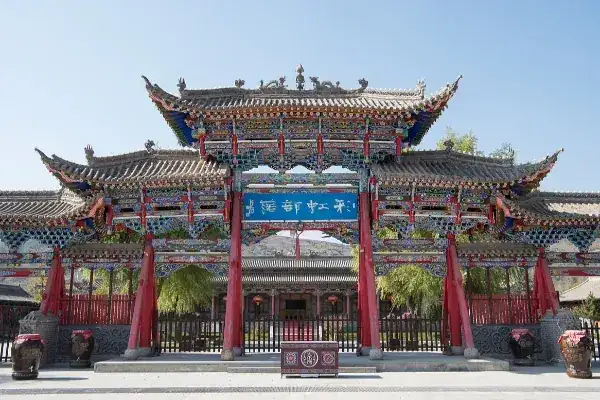
Princess Wencheng Temple is located within Yushu Tibetan Autonomous Prefecture. It is an ancient building with both Tang Dynasty artistic style and Tibetan flat-roof architectural features. It is listed as a national-level protected cultural heritage site. Princess Wencheng Temple is also known as "Shajia Princess Temple."
"Leba Valley" means "beautiful valley" in Tibetan. At the valley entrance is the historical and cultural site of Princess Wencheng Temple. Inside the valley are more than a dozen rock paintings. The Leba Valley rock paintings mainly feature Buddhas, bodhisattvas, pilgrims, and auspicious animals. There are also more than ten historical sites including Jiegu Monastery, Zhujie Monastery, Lingguo Monastery, and Mani Stone Wall.
Local Specialties
Qinghai Cordyceps sinensis is a specialty of Qinghai Province and a China National Geographic Indication product. Qinghai Cordyceps sinensis contains approximately 25% crude protein, 11.1%–13.6% saturated fatty acids, and 80.2%–82.5% unsaturated fatty acids. It has a wide variety of organic acids, with 12 identified, including stearic acid, palmitic acid, oleic acid, linoleic acid, 14-methylpentadecanoic acid, pentadecanoic acid, hexadecanoic acid, 3-octadecanoic acid, 9-hexadecenoic acid, 14-methylhexadecanoic acid, 9-octadecenoic acid, and 11-eicosenoic acid. The active ingredients include mannitol, adenosine compounds, and Cordyceps polysaccharides. On May 24, 2010, the former General Administration of Quality Supervision, Inspection and Quarantine approved geographic indication product protection for "Qinghai Cordyceps sinensis."
Yushu silverweed cinquefoil root is a specialty of Yushu Tibetan Autonomous Prefecture, Qinghai Province, and a national agricultural product geographic indication. Yushu silverweed cinquefoil root fruits are nearly round or concave at the apex, spindle-shaped, and vary in size. The surface is brown with longitudinal wrinkles. It is hard and brittle, with a flat cross-section, whitish in color, with alternating yellow and white concentric rings. Yushu silverweed cinquefoil root powder is grayish-white with abundant starch granules. On March 31, 2016, the former Ministry of Agriculture of the People's Republic of China officially approved agricultural product geographic indication registration protection for "Yushu silverweed cinquefoil root."
Yushu yak is a specialty of Yushu Tibetan Autonomous Prefecture, Qinghai Province, and a national agricultural product geographic indication. The Yushu yak production area extends 738 kilometers east to west and 406 kilometers north to south at its widest, with a total land area of 203,000 square kilometers, accounting for 28.2% of the province's total area. Yushu yaks have long grown in alpine areas above 4,000 meters elevation, raised under traditional nomadic grazing management. Yushu yaks grow fast, with high slaughter and net meat rates. The carcass muscles are glossy and smooth, the meat is deep red, the fat is pale yellow, and the muscle fibers are clear and resilient, showing distinct marbling. The meat is elastic, moist on the surface, non-sticky, and odorless. Yushu yak meat is delicious, with high protein content, rich amino acids, and complete varieties. On March 31, 2016, the former Ministry of Agriculture officially approved agricultural product geographic indication registration protection for "Yushu yak."
Yushu black highland barley is a specialty of Yushu Tibetan Autonomous Prefecture, Qinghai Province, and a national agricultural product geographic indication. Yushu black highland barley has naked grains that are dark brown, oval, plump, and uniform. It is the main ingredient for processing "tsampa," can be brewed into "highland barley wine" and other beverages, and is also the main raw material for processing various specialty foods such as niangpi. Yushu black highland barley is cold-resistant, drought-resistant, moisture-resistant, and moderately salt-alkali tolerant, with good lodging resistance. Yushu black highland barley has a starch content of >=60%, protein >=10%, dietary fiber >=10%, fat >=1.4%, and also contains niacin, selenium, and minerals, making it highly nutritious. On March 31, 2016, the former Ministry of Agriculture officially approved agricultural product geographic indication registration protection for "Yushu black highland barley."
Famous People
Nima Zhuoma, female, Tibetan, born in October 1962, from Yushu, Qinghai. She began working in August 1981 and joined the Communist Party of China in April 1985. She holds a university degree from the Central Party School. She currently serves as Vice Chairwoman of the Standing Committee of the Qinghai Provincial People's Congress.
Honorary Titles
On April 12, 2018, Yushu Tibetan Autonomous Prefecture was shortlisted for the "2018 Top 100 Cities for Travel in China."
In December 2018, it received the 2018 Charming China City Annual Charming Cultural Tourism Poverty Alleviation City award.
On December 29, 2018, it was named the sixth batch of National Demonstration Areas (Units) for Ethnic Unity and Progress by the State Ethnic Affairs Commission.
In 2022, it was selected for the "14th Five-Year Plan" "Zero-Waste City" construction list published by the Ministry of Ecology and Environment.
On November 18, 2022, it was named the sixth batch of Ecological Civilization Construction Demonstration Zones by the Ministry of Ecology and Environment.
In January 2024, it was named the 11th batch of National Ethnic Unity and Progress Demonstration Areas and Units.
Travel information can change. Check current opening hours, reservations and entry requirements before you travel.


Traveller discussion
Start the conversation with a helpful tip or a question.