
Qamdo City
Qamdo CityQamdo City (Tibetan: chab mdo), formerly known as "Kham" or "Kemu," also known as Kamba or "Pearl of Eastern Tibet," is a prefecture-level city under the Tibet Autonomous Region. Located in eastern Tibet at the upper reaches of th
Qamdo City
Qamdo City (Tibetan: chab mdo), formerly known as "Kham" or "Kemu," also known as Kamba or "Pearl of Eastern Tibet," is a prefecture-level city under the Tibet Autonomous Region. Located in eastern Tibet at the upper reaches of the Lancang River, at the confluence of three rivers (Ang Qu, Za Qu, Se Qu) and the Lancang River, it is Tibet's eastern gateway. The climate is plateau sub-temperate semi-humid: cold and dry in the northwest, mild and humid in the southeast. Total area: 109,830 square kilometers. As of January 2024, it administers 1 district and 10 counties. As of the end of 2022, the total population was 759,312. Qamdo means "confluence of waters" in Tibetan. It has been a key town in eastern Tibet since ancient times, situated at the junction of Sichuan, Qinghai, and Yunnan, on the route of the Sichuan-Tibet and Yunnan-Tibet highways, and the ancient Tea Horse Road. In 2014, Qamdo Prefecture was abolished and prefecture-level Qamdo City was established. In 2024, the gross regional product was 38.601 billion yuan, up 6.4%.
History
Qamdo has a long history. Neolithic sites (Karuo and Xiao'enda) show human settlement 5,000+ years ago, with millet cultivation, pig domestication, and hunting. During the Tubo period (7th–9th centuries), Qamdo was the location of the "Eastern Women's Kingdom" (Dongnüguo) and the Supi Kingdom. In the 13th century, the Yuan Dynasty (1271–1368) established the Do-Kham Pacification Commissioner's Office. During the Ming Dynasty (1368–1644), the Do-Kham Regional Military Commission was established. During the Qing Dynasty (1644–1912), the area was managed by the Amban and Dalai Lama. In 1950, Qamdo was liberated. In 1960, Qamdo Special District was established. In 2014, Qamdo City was established with Karub District.
Administrative Divisions
Division Details
As of January 2024, Qamdo administers 1 district (Karub) and 10 counties (Jomda, Markam, Gonjo, Baxoi, Zogang, Banbar, Lhorong, Riwoqe, Dengqen, Chagyab), with 28 towns and 110 townships. The city government is seated in Karub District.
Geographical Environment
Location
Qamdo is in eastern Tibet at the upper Lancang River, between 93°6'–99°2' east longitude and 28°5'–32°6' north latitude. It borders Sichuan, Yunnan, Nyingchi, Nagqu, and Yushu Prefecture of Qinghai. Total area: 109,830 square kilometers (8.9% of Tibet's total).
Topography
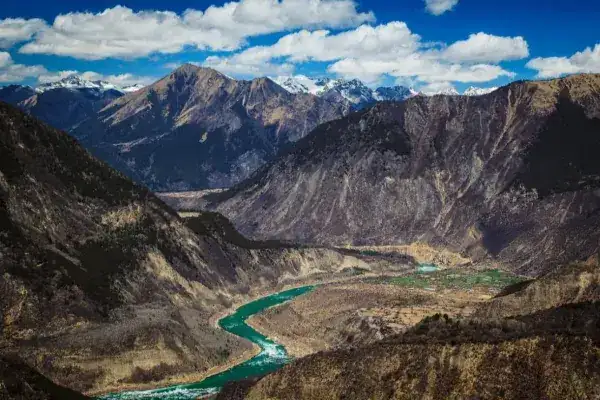
Terrain is higher in the northwest (up to 5,460 m) and lower in the southeast (down to ~3,100 m), averaging above 3,500 meters. The Nyenchen Tanglha main peak reaches 7,111 meters. Three major rivers (Nu, Lancang, Jinsha) flow parallel between three mountain ranges from west to east: Boshula Range-Nu River, Taniantaweng Range-Lancang River, and Damala-Ningjing Range-Jinsha River. The "Three Parallel Rivers" spectacle is formed here.
Climate
Plateau sub-temperate semi-humid climate. Annual average temperature: 7.6°C. Annual precipitation: 400–600 mm. Complex terrain creates "four seasons on one mountain, different weather in ten li" characteristics.
Hydrology
Rivers belong to Pacific and Indian Ocean systems. The Nu River (Salween upper) flows to the Indian Ocean; the Lancang (Mekong upper) and Jinsha (Yangtze upper) flow to the Pacific. Ranwu Lake in the southwest is the source of the Parlung Zangbo (Yarlung Tsangpo system). The three great rivers converge here, creating the "Three Parallel Rivers" wonder.
Natural Resources
Land Resources
Total: 163.01 million mu. Pasture: 84.33 million (51.74%); forest: 44.64 million (27.4%); cultivated: 1.5 mu per capita. 19.7% is temporarily unsuitable for use.
Forest Resources
Tibet's second-largest forest area. Forest area: 3.82 million hectares. Forest coverage: 34.78%. Standing timber: 261 million cubic meters.
Plant Resources
1,200+ medicinal plant species including Cordyceps, Fritillaria, rhubarb, snow lotus, Rhodiola, and saffron. 750+ usable medicinal species. Main tree species: spruce, fir, alpine pine, and various broadleaf species. Rich fungal resources including matsutake and monkey head mushroom.
Animal Resources
17 Class I and 54 Class II nationally protected species. Mammals include macaque, snub-nosed monkey, dhole, musk deer, black bear, brown bear, leopard, snow leopard, lynx, white-lipped deer, and argali. Birds include black stork, golden eagle, vulture, Tibetan snowcock, Tibetan eared pheasant, and blood pheasant. Fish include various Schizothoracin species.
Mineral Resources
37 proven mineral types with 96 occurrences (23 large, 24 medium). Main minerals: gold, silver, copper, iron, chromium, molybdenum, uranium, tin, coal, crystal, marble, and limestone. The Yulong Copper Mine in Jomda County is one of China's two super-large copper mines, with reserves of 6.5 million tons, China's second-largest porphyry copper deposit.
Population
Population Size
According to the Seventh Census (November 1, 2020): 760,966. As of end 2022: 759,312 (males 389,735; females 369,577).
Ethnic Composition
Tibetan: 95%+ of total population, with 41 ethnic groups including Han, Naxi, Dong, Miao, Li, Bai, Tujia, Yao, and Buyi.
Politics
Economy
Overview
Before 1959, Qamdo was under a feudal serf system. After democratic reform in 1959 and post-1978 reforms, the economy transformed from single primitive agriculture to a diversified structure. In 2024, the gross regional product was 38.601 billion yuan, up 6.4%. By industry: primary 4.908 billion, up 11.8%; secondary 14.928 billion, up 7.6%; tertiary 18.765 billion, up 4.3%. Structure: 12.7:38.7:48.6. Per capita GDP: 50,464 yuan, up 14.8%. Fixed-asset investment up 21.2% (private up 17.2%). General public budget revenue: 3.207 billion, up 27.4%. General public budget expenditure: 32.566 billion, up 0.3%.
Primary Industry
Total agricultural output: 7.764 billion yuan, up 12.5%. Grain area: 48,820 hectares. Grain output: 211,000 tons. Livestock inventory: 2,532,300 head (cattle 1,873,800, up 55,000; sheep 370,400, down 12,100). Meat output: 85,600 tons, up 3.0%. Milk: 150,200 tons, up 4.4%.
Secondary Industry
Industrial output: 15.142 billion yuan, up 26.9%. Above-scale: 14.545 billion, up 35.5%. Main products: iron ore 941,300 tons (up 33.0%); cement 4.1041 million tons (up 11.3%); refined copper 4,654.7 tons (down 13.6%); beer 25,843.78 kiloliters (up 16.2%); copper content 159,100 tons (up 39.1%). Construction added value: 7.832 billion, up 0.6%.
Tertiary Industry
Total retail sales: 9.574 billion yuan, up 6.9% (urban 7.499 billion, up 6.8%; rural 2.075 billion, up 6.9%). Total deposits: 53.318 billion, up 4.1%. Total loans: 76.247 billion, up 17.6%.
Social Affairs
Science and Technology
2 national, 5 autonomous region, and 2 municipal innovation platforms. 40 technology-based SMEs, 3 above-scale enterprises, 1 high-tech enterprise. 500+ expert visits covering 138 townships, benefiting 200,000 people.
Education
2 secondary vocational (5,254 students), 23 secondary schools (16,551 high school, 34,952 junior high), 207 primary (84,262), 466 kindergartens (25,121), 1 special education (168). Primary enrollment: 99.93%. Junior high: 100.74%. High school: 91.73%.
Culture
1 mass art center, 2 museums, 1 public library, 11 county art troupes, 138 township cultural stations, 1,051 village cultural venues, 1 professional art troupe (Kham Culture Art Troupe), 1,115 village performance teams. Radio coverage: 99.50%, TV coverage: 99.65%.
Healthcare
1,396 health institutions (3 municipal, 32 county, 138 township, 134 clinics, 12 CDCs, 1,077 village clinics). 4,087 beds (5.3 per 1,000). 4,972 health workers (6.5 per 1,000).
Sports
9 fitness path sets maintained. 52 sports projects submitted. 100% public venue opening rate. 12 municipal competitions (258 sessions, 2,512 athletes). 57 county events (33,858 athletes). First disabled sports meet and worker sports meet held. "Kham BA" basketball league created. Qamdo athletes won 2 golds and other medals at the 14th National Winter Games.
Social Security
Employee medical: 60,000. Urban-rural medical: 684,300. Maternity: 50,800. Unemployment: 36,900. Work injury: 111,900. Urban-rural pension: 376,700. Urban minimum living: 4,559. Rural minimum living: 74,200. 11 centralized care centers, 2 children's welfare homes (674 orphans, 308 fostered). 100% centralized care rate for willing persons and orphans. Lottery sales: 68.43 million yuan.
Transportation
Overview
In 2024: freight 6.618 million tons (down 4.4%); passengers 470,900 (up 38.4%); aviation: 5,168 flights (up 14.5%), 454,600 passengers (up 7.4%), 1,748.30 tons cargo (up 2.9%).
Highways
Road network based on Sichuan-Tibet, Qinghai-Tibet, and Yunnan-Tibet routes. National Highways 317, 318, 214 and Provincial 303, 302. Total mileage: 20,128.334 km (2023).
Aviation
Qamdo Bangda Airport: Can accommodate Boeing aircraft. Routes to Chengdu and Lhasa, 5 weekly round trips. In May 2025, China's first maritime glacier aerial survey was conducted here.
History and Culture
Overview
Qamdo is the birthplace of Kham culture. The Kham people absorbed influences from Yellow River, Ba-Shu, Yangtze, and Yunnan minority cultures, forming a distinctive Kham culture with diverse, multi-ethnic characteristics and strong religious elements. Kham men are known for their bold, passionate, brave, and loyal character.
Kham residences differ by region: pastoral areas use tents (woven yak wool, beautiful and practical); agricultural areas use 2-story earthen-wood structures with storage below and living quarters above.
Three major dance traditions: Dingqen Reba (comprehensive performance art combining speech, song, dance, and acrobatics), Qamdo Drok (Guozhuang circle dance), and Markam Xianzi (dance with ox-horn fiddle). Three painting schools: Meining, Meisha, and Gaxue Gazhi. Jomda County's Boluo Guze woodblock scripture printing is renowned throughout Tibet as the "Hometown of Woodblock Printing."
Origin of the Name
During the Qing Dynasty, the area was called "Chamdo" (Tibetan phonetic). Sichuan Governor Yin Changheng renamed it "Changdu," preserving the Tibetan pronunciation while incorporating "Chang" from his name and "Du" from his title, meaning "City of Prosperity."
Traditional Dress
Kham traditional clothing features handmade woolen and sheepskin robes. Kham men carry waist knives and wear "hero braids" (black or red silk woven into hair, coiled on the head). Kham women's dress is known for luxury, with silk undergarments, otter-fur outer coats, and elaborate jewelry (nine-eyed stone, coral, turquoise, amber), often worth hundreds of thousands to millions of yuan.
Folk Literature
The Epic of King Gesar is the most beloved cultural activity. Qamdo has numerous Gesar-related sites and legends, and the most Gesar bards in Tibet (19 of 39 discovered in 1986). Folk songs, stories, and legends are rich, with 500+ songs collected from one folk artist alone.
Folk Dance
Three major dance traditions: Dingqen Reba (comprehensive art with acrobatics), Qamdo Drok/Guozhuang (circle dance, three types: agricultural, pastoral, monastic), and Markam Xianzi (dance with ox-horn fiddle). The Reba originated in Dingqen, known as the "Hometown of Reba."
Festivals
Tibetan New Year (Losar): Preparations begin in the 12th Tibetan month with barley sprout cultivation and "kema" (butter-barley-sugar mixture) preparation.
Zhongque Festival: Held on the 15th of the 6th Tibetan month in Riwoqe, originating in 1320 to celebrate the completion of Chajema Great Hall. Now a combined religious and trade festival.
Funeral Customs
Nine types: stupa, cremation, sky burial, water burial, earth burial, secondary burial, wall burial, joint burial, and snow burial.
Etiquette
Offering Hada: The most common Tibetan ceremonial gesture for weddings, funerals, festivals, and greetings. White hada symbolizes purity and auspiciousness. Presented with both hands at shoulder height, then extended forward with a bow.
Prostration: Devout Buddhist practice of full-body prostration while reciting the six-syllable mantra "Om Mani Padme Hum."
Honorific Language: Tibetan has three speech levels (common, honorific, most honorific). Adding "la" after a name shows respect (e.g., "Gesang-la").
Guest Etiquette: Host serves barley wine (15–20% alcohol); guest takes three sips, with the host refilling after each, then drinks a full cup. Butter tea is served only after the host presents it to the guest. Gift-giving is important, with return gifts typically doubled in value.
Respect for Elders: Deep-rooted tradition. On New Year's Eve, the eldest eats first; at dawn on New Year's Day, the youngest woman fetches the first water to make butter tea for elders.
Scenic Spots
Overview
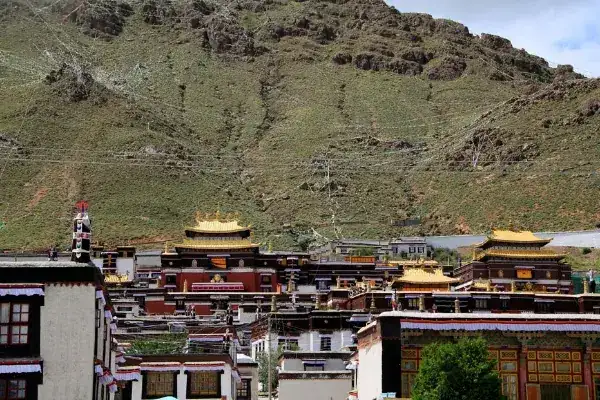
Qamdo is at the core of the Kham region, with the Three Parallel Rivers, alpine scenery, plateau pastures, ancient monasteries, and diverse ethnic culture. 2 national nature reserves, 1 national forest park, 5 national wetland parks, and 1 autonomous region wetland reserve.
Main Scenic Spots
Local Specialties
Overview
Qamdo produces Cordyceps, snow lotus, Rhodiola, saffron, and other plateau medicinal herbs. Fruits include Baxoi "drunken pear." Handicrafts include Tibetan knives, ethnic clothing, and crafts influenced by Tibetan, Han, Mongolian, Naxi, Nepalese, and Indian styles.
Main Specialties
Honorary Titles
Third batch National Ecological Civilization Construction Demonstration City (2019). Rural road management pilot area (2020). National Hygienic City (2021). Tibet Autonomous Region Double Support Model City (2021). National Double Support Model City (2025).
Travel information can change. Check current opening hours, reservations and entry requirements before you travel.
Traveller discussion
Start the conversation with a helpful tip or a question.