
Lhasa City
Lhasa CityLhasa (Tibetan: lha sa; Chinese: Lasa), also known as "Luoxie" and "City of Sunlight," is a prefecture-level city and the capital of the Tibet Autonomous Region. Located in southwestern China, central Tibet Plateau, north of the H
Lhasa City
Lhasa (Tibetan: lha sa; Chinese: Lasa), also known as "Luoxie" and "City of Sunlight," is a prefecture-level city and the capital of the Tibet Autonomous Region. Located in southwestern China, central Tibet Plateau, north of the Himalaya, in the Lhasa River valley plain at 91°06' east longitude and 29°36' north latitude, with an area of 29,640 square kilometers. As of May 2026, Lhasa administers 3 districts and 5 counties. As of the end of 2025, the permanent resident population was 883,000. Lhasa is the political, economic, cultural, and scientific center of Tibet, and a sacred place of Tibetan Buddhism. At 3,650 meters elevation with 3,000+ annual sunshine hours, it is known as the "City of Sunlight." Lhasa is a national historical and cultural city, national comprehensive transportation hub, and an international tourism destination with plateau characteristics. In 2025, the gross regional product was 109.099 billion yuan, with a structure of 3.4:42.9:53.7.
History
In the 1st century BC, tribal alliances formed on the Qinghai-Tibet Plateau. The Lhasa River's ancient name "Ji Qu" appeared, and the area was called "Jixue Wotang" (fertile plain downstream of the Ji Qu River).
By the late 6th–early 7th century, the Yarlung tribe expanded to the Lhasa area. Songtsen Gampo's father Namri Songtsen occupied Lhasa. Songtsen Gampo, described as "brave and strategic," moved the capital from Shannan to Lhasa (called "Luoxie" in Tang records).
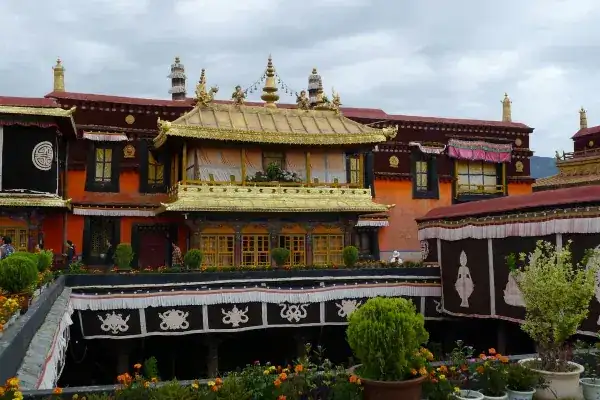
In 633, Songtsen Gampo established the powerful Tubo Dynasty in Lhasa, building palaces, canals, and monasteries. Jokhang Temple was built during this period—legend says goats carried earth to fill a lake (Tibetan: "ra" = goat, "sa" = earth, giving "Rasa," later "Lhasa"). Songtsen Gampo married Tang Princess Wencheng.
In 822, Tang and Tubo representatives held a alliance ceremony at the eastern suburb of Lhasa, carving a stone tablet at Jokhang Temple. In 838, King Langdarma persecuted Buddhism, closing temples and forcing monks to secularize. In 842, he was assassinated at Jokhang Temple, leading to the collapse of the Tubo Empire.
In the Song Dynasty (960–1279), continuous warfare damaged Jokhang and Ramoche temples. The Tshalpa Kagyu school rose in Lhasa. During the Yuan Dynasty (1271–1368), Tshalpa was designated as one of 13 myriarchies.
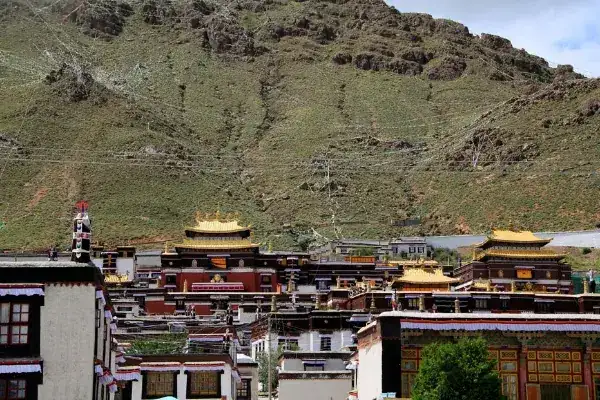
In 1409, Tsongkhapa held the first Great Prayer Festival in Lhasa and founded Ganden Monastery. Drepung Monastery (1416) and Sera Monastery (1419) followed, establishing the Gelug school's three great monasteries.
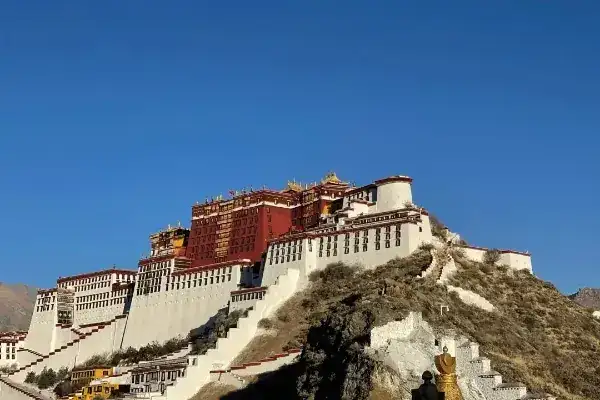
During the Qing Dynasty (1644–1912), Lhasa developed significantly. The Potala Palace was rebuilt, Norbulingka (Summer Palace) was constructed, and the old city formed around Barkhor Street. In 1727, the Qing established the Amban (Imperial Resident) in Lhasa. In 1904, British forces invaded Lhasa.
New China Period
In 1950, the PLA launched the Qamdo Campaign. In May 1951, Tibet was peacefully liberated. In 1960, Lhasa City was formally established. On September 9, 1965, the Tibet Autonomous Region was established with Lhasa as its capital.
Administrative Divisions
Division Details
As of May 2026, Lhasa administers 3 districts (Chengguan, Doilungdeqen, Dagze) and 5 counties (Lhunzhub, Damxung, Maizhokunggar, Nyemo, Qushui), with 16 townships, 33 towns, 21 subdistricts, 99 communities, and 218 villages. The City People's Government is at No. 69 Jiangsu Avenue, Chengguan District.
Geographical Environment
Location
Lhasa is in southwestern China, southeastern Tibet, on the north bank of the Lhasa River (a Yarlung Tsangpo tributary), at 91°06' E, 29°36' N, spanning 277 km east-west and 202 km north-south, with an area of 29,640 square kilometers.
Topography
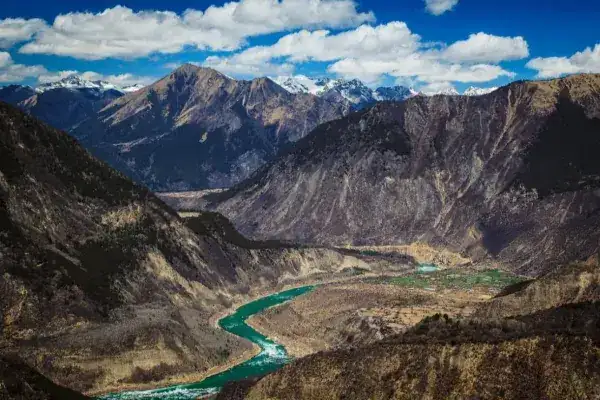
Located on the central Qinghai-Tibet Plateau at 3,650 meters, one of the world's highest cities. Terrain is higher in the north, sloping from east to west. The Nyenchen Tanglha Mountains (highest: 7,117 m) stand 100 km to the north, with Namtso Lake at the northern foot.
Climate
Highland temperate semi-arid monsoon climate with 3,000+ annual sunshine hours (1,800 more than Chengdu, 1,100 more than Shanghai), earning the name "City of Sunlight." Annual average temperature: 7.4°C. Historical maximum: 29.6°C, minimum: -16.5°C. Annual precipitation: 200–510 mm, concentrated June–September with frequent nighttime rain. Frost-free period: 100–120 days.
Hydrology
The Lhasa River, the city's mother river, originates from the southern Nyenchen Tanglha Mountains, flowing 495 km through 7 counties to join the Yarlung Tsangpo at Qushui. Maximum flow: 2,830 m³/s; minimum: 20 m³/s. The river valley has 570,000 mu of cultivated land, making it one of Tibet's main grain-producing areas.
Population
According to the Seventh Census (November 1, 2020): 867,891 (urban 605,511, 69.77% urbanization). Males: 470,353 (54.19%); females: 397,538 (45.81%). As of end 2025: 883,000 (urban 652,000, 73.8%; rural 231,000, 26.2%). Birth rate: 11.33 per mille; death rate: 6.55 per mille; natural growth rate: 4.78 per mille.
Politics
Economy
Overview
In 2025, the gross regional product was 109.099 billion yuan, up 6.7%. By industry: primary 3.704 billion, up 9.3%; secondary 46.848 billion, up 9.9%; tertiary 58.547 billion, up 4.6%. Per capita GDP: 124,018 yuan. Fixed-asset investment up 6.0%. General public budget revenue: 14.493 billion, up 20.1%. General public budget expenditure: 48.579 billion, up 4.4%.
Primary Industry
Main crops: highland barley, wheat, rapeseed. Crop area: 52,400 hectares. Grain area: 29,600 hectares (barley 22,400; wheat 6,900). Grain output: 175,200 tons, up 1.2%. Livestock inventory: 1,310,500 head (large livestock 1,009,900; pigs 10,100). Meat output: 37,300 tons, up 0.7%. Milk: 152,400 tons, up 3.8%.
Secondary Industry
Total industrial added value: 27.161 billion yuan, up 10.8%. Above-scale industrial added value up 16.7% (mining up 26.2%; manufacturing down 10.4%; electricity/heat/gas/water up 10.9%). Construction added value: 19.687 billion, up 8.9%.
Tertiary Industry
Total retail sales: 55.044 billion yuan, up 4.5%. Foreign trade: 5.669 billion yuan, down 12.8% (exports 3.388 billion, down 35.7%; imports 2.281 billion, up 85.1%). Total deposits: 381.312 billion, up 0.4%. Total loans: 398.269 billion, up 11.8%.
Transportation
Highways
A 100 km ring road with 7 tunnels and 27 bridges surrounds the city. Total rural highway mileage: 5,448.08 km. National Highway 109 (Qinghai-Tibet Highway) passes through.
Railways
Qinghai-Tibet Railway (1,956 km total, opened July 1, 2006), Sichuan-Tibet Railway (under construction), and Lhasa-Xigaze Railway. Main stations: Lhasa, Lhasa South, Lhasa West.
Aviation
Lhasa Gonggar Airport: Located in Gonggar County, Shannan, at 3,600 meters elevation. 4E-level with a 4,000 m runway, capable of handling B747 and A340 aircraft. One of the world's highest civilian airports.
Public Transportation
44 bus routes totaling 1,151 km, with 61.5161 million annual ridership. 1,124 taxis and 591 buses.
Social Affairs
Education
5 higher education institutions, 3 secondary vocational, 28 secondary schools, 77 primary schools, 271 kindergartens, 1 special education school. Primary enrollment: 99.99%. Junior high enrollment: 103.08%. Compulsory education consolidation: 99.56%.
Culture
326 art troupes (1 professional, 9 county-level, 316 village performance teams), 19 museums. Radio coverage: 99.7%, TV coverage: 99.81%.
Healthcare
937 health institutions: 38 hospitals, 886 grassroots (21 community centers, 49 township health centers, 191 village clinics, 541 private clinics), 12 professional public health institutions (10 CDCs). 4,444 beds. 11,098 health workers (4,800 physicians).
Sports
181 competition events, 59,000 participants. 2,366 sports venues. 330,000 regular exercisers. Events include New Year climbing, cycling, "village super" football, horse racing, Guozhuang dance competitions, and Tibetan chess.
Social Security
Urban-rural pension: 227,200, up 11,500. Enterprise pension: 176,200, up 4,700. Government pension: 40,700, up 600. Urban-rural medical: 387,600, up 6,100. Employee medical: 173,000, up 7,500. Unemployment: 157,700, up 10,900. Work injury: 227,600, up 14,100. Maternity: 150,600, up 9,400. Urban minimum living: 1,027. Rural minimum living: 5,790. 1,315 supported persons (643 centralized). 67,940 medical assistance recipients.
History and Culture
Festivals
Tibetan New Year: Preparations begin in the 12th Tibetan month. On the first morning, families fetch "auspicious water" from the river. Visits begin on the second day and continue for 3–5 days, with Guozhuang and Xianzi dancing in public squares.
Origin of the Name
"Lhasa" derives from "Rasa" (goat-earth), referring to goats carrying earth to fill a lake for Jokhang Temple's construction. The name "Lhasa" first appeared in 806 AD on the Kaqiong Monastery stele, making it nearly 1,200 years old. The city was built around Buddhist temples, hence "Lhasa" (Place of the Gods/Buddha).
City Symbol
On June 10, 2025, the black-necked crane was officially announced as Lhasa's city bird.
Folk Customs
The new city centers on the Potala Palace and Barkhor Street, extending north to Sera Monastery and west to Doilungdeqen District. The old city around Barkhor Street retains traditional Tibetan architecture, prayer flags, incense smoke, prayer wheels, and traditional clothing.
Cultural Relics
Intangible Cultural Heritage
As of 2021: 167 county-level or above intangible cultural heritage items with 221 inheritors, covering traditional crafts, dance, music, drama, art, folk customs, sports, and medicine.
Scenic Spots
The Potala Palace, Jokhang Temple, and Norbulingka are listed as World Cultural Heritage sites. Other attractions include Drepung Monastery, Sera Monastery, Ramoche Temple, Zongjiaolukang, Tibetan King Tombs, Tsurpu Monastery, Lhasa Mosque, Qugong Ruins, Tibet Museum, Yaowang Mountain, and Barkhor Street commercial area. Geothermal hot springs include Qusang in Doilungdeqen and Dezhong in Maizhokunggar.
Local Specialties
Tibetan handicrafts include wooden bowls, silver bowls, bamboo bowls, traditional textiles, and thangka paintings. Various bone carvings and antique reproductions are also produced.
External Exchange
Consular Institutions
Sister Cities
Honorary Titles
Travel information can change. Check current opening hours, reservations and entry requirements before you travel.
Traveller discussion
Start the conversation with a helpful tip or a question.