
Tieling City
Tieling CityTieling City, known in ancient times as Yinzhou, is a prefecture-level city in Liaoning Province. Located in the northern part of the province on the central Songliao Plain, its terrain generally descends from east to center and
Tieling City
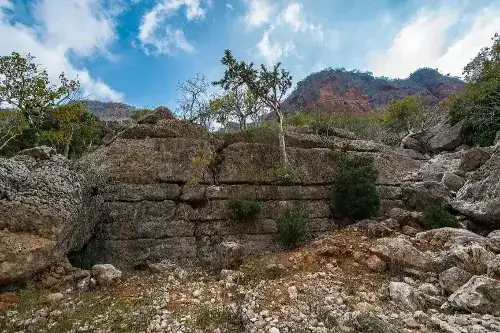
Tieling City, known in ancient times as Yinzhou, is a prefecture-level city in Liaoning Province. Located in the northern part of the province on the central Songliao Plain, its terrain generally descends from east to center and from north to south, with a temperate continental monsoon climate. It borders Shenyang and Fushun cities to the south, Siping City to the north, Qingyuan Manchu Autonomous County and Liaoyuan City to the east, and Faku County, Kangping County, and Tongliao City to the west, covering a total area of 13,000 square kilometers. As of May 2025, Tieling administers 2 municipal districts, 3 counties, and 2 county-level cities. As of end-2024, the permanent resident population was 2.227 million. The province-administered Tieling City was established on September 20, 1984. Cao Xueqin, author of Dream of the Red Chamber, traced ancestral origins beyond the Great Wall to Tieling. Gao E, who completed the novel's final forty chapters, Ming Dynasty Liaodong Commander Li Chengliang, Qing Dynasty poet Nalan Xingde, and writer and Redology scholar Duanmu Hongliang were all Tieling natives. Comedic sketches have made Tieling famous across China, earning it the titles "Hometown of Champions" and "Hometown of Comedy Sketches." With its agricultural resources, coal reserves, and power industry, it has been called "Liaoning's Granary" and "City of Energy." Longshoushan (Dragon Head Mountain) features over 30 cultural sites including the Taiyang Temple, ancient stele forest, and Ciqing Temple, while Chengzishan Mountain City is a national-level protected cultural heritage site. Tieling's rich folk customs and distinctive regional charm have earned recognition as the "Hometown of Quyi Comedy Sketches" and "Hometown of Errenzhuan" (two-person turn). The Yangge opera, created by Tieling residents, has become a new genre in Chinese drama. In 2024, Tieling's GDP reached 77.86 billion yuan (approximately 10.8 billion USD), up 3.8% at comparable prices.
Historical Evolution
During the Xia, Shang, and Western Zhou dynasties, the area belonged to the Sushen (Xishen) people. In the Spring and Autumn and Warring States periods, the south belonged to Liaodong Commandery and the north to Donghu territory. During the Qin and Han dynasties, most of the territory fell under Liaodong Commandery. During the Eastern Han, Three Kingdoms, and Western Jin, the south belonged to Xuantu Commandery while Kaiyuan and Changtu in the north were under Fuyu.
During the Northern and Southern Dynasties, the territory was Khitan land. Under the Sui Dynasty, it was under Goguryeo control. During the Tang Dynasty, the south belonged to the Andong Protectorate and the northwest to the Songmo Governor-General's Office. In 713 CE, the Bohai Da clan renamed the area Fuzhou, which is present-day Tieling. In 917 CE, Emperor Taizu of Liao smelted silver here and renamed Fuzhou to Yinzhou (Silver Prefecture). During the Liao Dynasty, most of the territory belonged to Liaoyang Prefecture under the Tokyo Circuit.
Under the Jin Dynasty, the south belonged to Xianping Prefecture of the Tokyo Route, the west to the Beijing Route, and the northeast to Huining Prefecture of the Shangjing Route. During the Yuan Dynasty, the west belonged to Huichang Route under the Zhongshu Secretariat, and the rest to Xianping Prefecture of Kaiyuan Route.
During the Ming Dynasty, the Tieling Guard was established at Yinzhou. In 1393, it was relocated to the ancient Yinzhou land between Shenyang and Kaiyuan. The south came under the Tieling Guard of the Liaodong Regional Military Commission, the west under the Fuyu Guard, and the north under the Sanwan Guard, with Prince Zhu Song of Han enfeoffed at Tieling-Kaiyuan.
Under the Qing Dynasty, in 1644, forces entered the Great Wall and established generals for Fengtian, Jilin, and Heilongjiang. In 1664, the guard system was replaced with counties; Tieling and Kaiyuan belonged to Fengtian Prefecture. The northeast (Xifeng) was sealed as an imperial hunting ground; the west and north were Khorchin Mongol territory. In 1877, Changtu Department became Changtu Prefecture. In 1907, the Fengtian General was replaced with a provincial governor. By the Qing's end, Tieling, Kaiyuan, Changtu, Kangping, and Xifeng counties belonged to Fengtian Province.
In 1913, a province-county system was implemented. In 1928, Zhang Xueliang implemented the Northeast Flag Change, and in February 1929, Fengtian Province became Liaoning Province. In 1931, the September 18 Incident sparked the War of Resistance Against Japan. In 1932, the puppet Manchukuo regime renamed Liaoning back to Fengtian. During the war, Yang Jingyu led the First Army of the Northeast Anti-Japanese United Army in establishing a resistance base in Tieling.
After the PRC's founding, Tieling belonged to Liaoxi Province. On September 1, 1954, Liaodong and Liaoxi merged into Liaoning Province. The Tieling Commissioner's Office was established on February 8, 1956, and abolished on January 5, 1959, with counties reassigned to Shenyang and Fushun. The Shenyang Commissioner's Office was established on February 12, 1964, and relocated to Yinzhou Town in July 1966. It became the Tieling Regional Revolutionary Committee on December 26, 1968, the Tieling Prefectural Revolutionary Committee in 1970, and the Tieling Prefectural Administrative Office in 1978. The province-administered Tieling City was established on September 20, 1984. In December 1992, Kangping and Faku counties were reassigned to Shenyang City.
Administrative Divisions
As of May 2025, Tieling administers 2 municipal districts (Yinzhou and Qinghe), 3 counties (Tieling, Xifeng, and Changtu), and 2 county-level cities (Diaobingshan and Kaiyuan). The Municipal People's Government is located at No. 28 Jinshajiang Road, Fanhe Town, Tieling County.
Geography and Environment
Location
Tieling is located in northern Liaoning Province on the central Songliao Plain, between 123 degrees 27 minutes and 125 degrees 06 minutes East longitude and 41 degrees 59 minutes and 43 degrees 29 minutes North latitude. It borders Shenyang and Fushun to the south, Siping City (Jilin Province) to the north, Qingyuan Manchu Autonomous County and Liaoyuan City (Jilin) to the east, and Faku County, Kangping County, the Khorchin Left Wing Rear Banner of Inner Mongolia, and Tongliao City to the west. The city spans 134 km east to west and 162 km north to south, with a total area of 13,000 square kilometers (urban area: 638 square kilometers).
Topography
The terrain descends from east to center and north to south, with slightly higher western elevations. Mountains and hills flank both sides while the central Liaohe Plain slopes gently north to south. The eastern low-mountain and hill area (approximately 6,800 square kilometers, 52.3% of the total) is a southern extension of the Changbai Mountains. The western Liaohe low-hill plain (approximately 6,185 square kilometers, 47.7%) is an alluvial plain formed by the Liaohe River and its tributaries. Mountains and hills account for roughly 40% of the total area, plains 45%, and rivers and other features 15%.
Climate
Tieling has a mid-temperate continental monsoon climate: cold, dry winters and warm, rainy summers with abundant sunshine and distinct wet and dry seasons. Annual precipitation is approximately 600 mm; the annual average temperature is 7.9 degrees Celsius; and annual sunshine totals approximately 2,444 hours.
Hydrology
Tieling lies entirely within the Liaohe River Basin, with the main Liaohe River flowing 170 km through the territory. There are 39 rivers with basin areas exceeding 100 square kilometers, including primary, secondary, tertiary, and quaternary tributaries. The city has 96 reservoirs, including four large ones: Qinghe, Chaihe, Nanchengzi, and Zhenziling Reservoirs, all on primary Liaohe tributaries in the east.
Natural Resources
Plant Resources
Tieling has over 1,000 wild vascular plant species across approximately 100 families, including more than 700 medicinal species such as cork tree, Siberian ginseng, ginseng, licorice, and many others used in traditional Chinese medicine.
Animal Resources
The city has over 200 terrestrial vertebrate species, predominantly birds. Mammals include hedgehogs, wolves, sables, badgers, lynx, foxes, and black bears. Birds include sparrows, magpies, cuckoos, wild ducks, eagles, swans, and red-billed gulls. Various fish, amphibians, and reptiles are also present.
Mineral Resources
Tieling has identified 36 mineral types, with 23 currently exploited. Coal is the most abundant, with proven reserves of 2.25 billion tonnes in Diaobingshan City, sufficient for 80 to 100 years of extraction, making Tieling Liaoning's most important energy base. Coalbed gas reserves total 17 billion cubic meters. Non-metallic minerals include 3 billion tonnes of limestone, 10 million tonnes of ceramic clay, over 3 million tonnes of wollastonite, 25 million tonnes of decorative granite, 200 million cubic meters of decorative marble, and 5 million tonnes of magnesite. Metal deposits include copper, iron, lead, zinc, and gold.
Population
Population Size
According to the Seventh National Census (November 1, 2020), the permanent resident population was 2,388,294. As of end-2024, the registered population reached 2.728 million, with 398,000 (14.6%) in urban districts and 2.33 million (85.4%) in counties and cities. The urban population was 1.169 million (42.9%) and rural 1.559 million (57.1%). The birth rate was 3.7 per mille, death rate 9.76 per mille, and natural growth rate negative 6.06 per mille. Those aged 60 and above accounted for 30.6%. The year-end permanent resident population was 2.227 million, with 58.9% urban and 41.1% rural.
Ethnic Composition
Tieling is a multi-ethnic area with 37 ethnic minorities including Manchu, Xibe, Korean, Mongolian, and Hui, totaling 606,000 people, representing 20% of the city's population and 9% of the province's ethnic minority population.
Politics
Current Leadership
Specific leadership information is not provided in the source material.
External Relations
No specific information is provided in the source material.
Economy
Overview
In 2024, Tieling's GDP reached 77.86 billion yuan (approximately 10.8 billion USD), up 3.8% at comparable prices. The primary, secondary, and tertiary industries contributed 15.98 billion yuan (approximately 2.2 billion USD), 20.18 billion yuan (approximately 2.8 billion USD), and 41.71 billion yuan (approximately 5.8 billion USD), growing 3.8%, 0%, and 5.5% respectively, accounting for 20.5%, 25.9%, and 53.6% of GDP. Per capita GDP was 34,674 yuan (approximately 4,800 USD), up 4.7%. (All USD conversions use an approximate rate of 7.2 CNY per USD.)
Fixed asset investment fell 4.2%. General public budget revenue was 5.76 billion yuan (approximately 800 million USD), up 11.5%, with tax revenue at 3.94 billion yuan (approximately 547 million USD). General public budget expenditure was 24.28 billion yuan (approximately 3.4 billion USD), up 2.0%.
Primary Industry
In 2024, grain was planted on 496,500 hectares, producing 4.005 million tonnes, down 3.7%. Rice yielded 284,000 tonnes and corn 3.677 million tonnes. Meat production totaled 568,000 tonnes (down 4.2%), with pork at 336,000 tonnes. Aquatic products reached 21,900 tonnes.
Secondary Industry
Above-scale industrial value-added fell 5.7%. Mining fell 6.6% (37.6% of total), manufacturing fell 5.6% (54.9%), and power, heat, gas, and water production fell 1.3% (7.5%). Major products: raw coal 16.354 million tonnes, electricity 18.07 billion kWh, cement 3.22 million tonnes. Above-scale industrial revenue was 71.48 billion yuan (down 11.5%); total profit was 1.81 billion yuan (up 4.0%). The construction sector's 184 qualified enterprises completed output of 5.47 billion yuan (down 1.5%).
Tertiary Industry
Total retail sales of consumer goods reached 20.65 billion yuan (approximately 2.87 billion USD), flat year-on-year. Above-quota retail sales were 7.10 billion yuan, down 3.7%. Actual foreign investment utilized 2.35 million USD, up 18.7%. Total import and export volume was 6.47 billion yuan (approximately 899 million USD), down 6.7%.
Year-end RMB deposits totaled 271.0 billion yuan (approximately 37.6 billion USD), up 8.2%, with personal deposits at 240.73 billion yuan. RMB loans totaled 82.62 billion yuan (approximately 11.5 billion USD), down 5.6%. Insurance premium income was 5.72 billion yuan (approximately 794 million USD), with life insurance premiums at 3.79 billion yuan and property insurance at 1.93 billion yuan.
Social Affairs
Education
In 2024, Tieling had 79,023 primary school students, 47,085 junior high students, 40,296 senior high students, and 30,335 college and university students. Special education enrolled 425 students.
Culture
As of end-2024, the city had 14 cultural institutions including 4 professional performing troupes, 9 cultural centers, 89 cultural stations, 4 museums, and 61 provincial-level protected cultural heritage sites. It had 10 public libraries with 891,000 volumes. National third-class libraries include the Tieling City Library, Tieling Children's Library, and county libraries for Tieling, Diaobingshan, Changtu, and Xifeng.
Healthcare
As of end-2024, the city had 2,907 health institutions including 96 hospitals, 92 health centers, 8 disease control centers, and 1,718 village clinics. Total medical beds numbered 18,650. Health personnel totaled 20,801, including 6,197 doctors and 7,082 registered nurses.
Social Security
As of end-2024, 674,000 people participated in urban employee basic pension insurance, 907,000 in urban-rural resident pension, and 2.168 million in basic medical insurance. Urban and rural minimum living standards were raised to 713 yuan and 557 yuan per month. The city provided subsistence allowances to 82,400 people, disbursing 428.34 million yuan (approximately 59.5 million USD). It supported 15,000 special hardship individuals and 453 orphans. Disability subsidies of 40.07 million yuan were disbursed to 42,000 beneficiaries.
Transportation
Data
The Beijing-Harbin Expressway, Beijing-Harbin Railway, Harbin-Dalian High-Speed Railway, and National Highway 102 traverse Tieling. The city is about one hour from Shenyang Taoxian International Airport, 430 km from Dalian Port, and 290 km from Yingkou Port.
In 2024, highway freight volume reached 63.35 million tonnes (up 0.8%) and passenger volume 26.12 million (up 7.2%). The city had 2,987 roads totaling 12,024.6 km, including 1,337.6 km of trunk roads and 10,686.9 km of rural roads. Road density was 95.3 km per 100 square kilometers.
Railways
Five state railways totaling 450 km serve Tieling: the Beijing-Harbin Railway, Pingqi Railway, Beijing-Harbin High-Speed Railway, Kaifeng Railway, and Tiefa Railway. Major stations include Tieling, Tieling West, Kaiyuan, Kaiyuan West, Changtu, and Changtu West.
Highways
Tieling's road network, centered on the Harbin-Dalian Highway, connects via expressways to over a dozen major cities including Shenyang, Dalian, Anshan, Fushun, Siping, and Changchun.
Scenic Spots
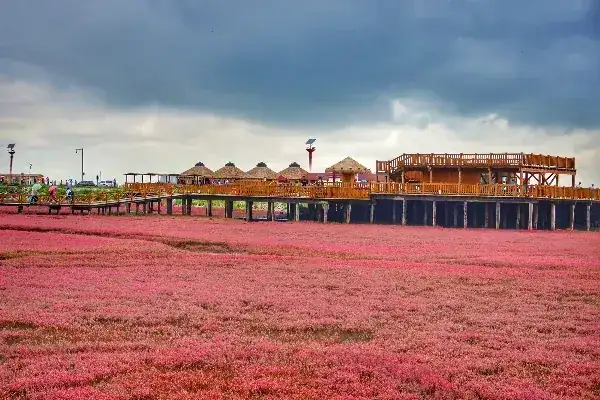
Tieling has 3 National AAAA-level scenic areas: Lianhua Lake National Wetland Park, Diaobingshan Steam Locomotive Museum, and Qinghe Reservoir Tourist Area. Historical "Eight Scenes" sets for Tieling, Changtu, and Xifeng are all located here. The Yuantongsi Pagoda, northern Liaoning's oldest surviving ancient pagoda, Xianzhou Ancient City, and the Yingang Academy where Zhou Enlai studied are all well preserved. The city has 4 national-level protected cultural heritage sites, 4 national intangible cultural heritage items, and 22 A-level and above tourist attractions.
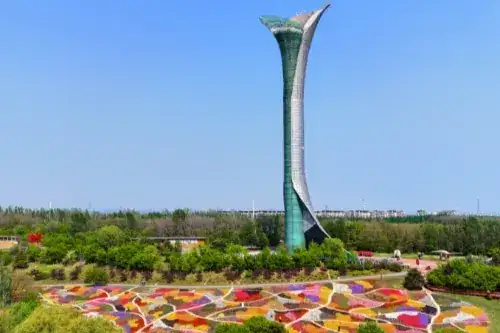
Urban tourism highlights include the Yingang Academy, Tieling finger painting, Red Chamber culture, comedy sketch art, and industrial culture. Natural attractions include the Bailuzhou Wildlife Reserve, Lazishan Forest Park, Zhenziling and Baoxing Reservoirs, and Wujiao Lake. Modern facilities include the Luyuan Ski Resort, Longshan Golf Club, the "Ten-Thousand-Mu Flower Sea" in New Tieling, Taiyangshan Scenic Area, and Tieling Museum.
Famous Local Products
No specific information is provided in the source material.
Notable Figures
No specific information is provided in the source material.
Honorary Titles
In 2019, Tieling was designated as part of the second batch of national agricultural product quality safety counties.
Travel information can change. Check current opening hours, reservations and entry requirements before you travel.

Traveller discussion
Start the conversation with a helpful tip or a question.