
Dalian City
Dalian CityDalian City, also known as Bincheng (Coastal City) and the Capital of Romance, is a prefecture-level, sub-provincial city with independent planning status and a megacity under Liaoning Province. Located at the southernmost tip of
Dalian City
Dalian City, also known as Bincheng (Coastal City) and the Capital of Romance, is a prefecture-level, sub-provincial city with independent planning status and a megacity under Liaoning Province. Located at the southernmost tip of Northeast China, it is surrounded by sea on three sides—bordering the Yellow Sea to the east, the Bohai Sea to the west, facing the Shandong Peninsula across the sea to the south, and backed by the Northeast Plain to the north. Situated in the warm temperate zone of the Northern Hemisphere, it features a temperate monsoon climate with marine characteristics, covering a total area of 12,574 square kilometers. As of October 2025, Dalian administers 7 districts and 1 county, overseeing 2 county-level cities. As of end-2025, the resident population was 7.557 million. Dalian has a long history, developed as early as approximately 6,000 years ago. In the 25th year of the Guangxu reign of the Qing Dynasty (1899), it was first named Dalian. In 1984, it was approved as a coastal open city; in 1985, designated as a city with independent planning status with provincial-level economic management authority; in 1994, elevated to sub-provincial city status. Dalian is a major coastal center city, modern marine city, international comprehensive transportation hub, Northeast Asia international shipping and logistics center, advanced manufacturing base, and international coastal tourism destination. It has been recognized as a National Sanitary City, National Forest City, National Garden City, and National Civilized City, and was listed as a Gamma-level world city by the GaWC in 2018 and 2020. In 2025, Dalian's GDP reached 1,000.21 billion yuan (approximately $141 billion USD), up 5.7% year-on-year—making it the first city in Northeast China to surpass the one-trillion-yuan GDP mark.
History
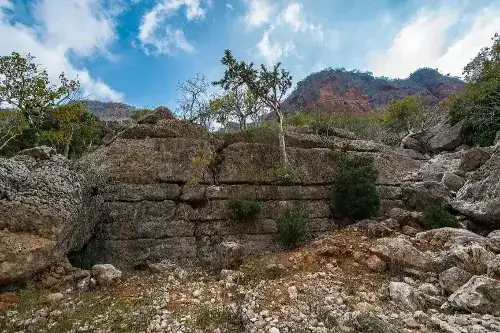
When the Xia Dynasty was founded, the Dalian area was sparsely populated but closely connected to the Shandong Peninsula. During the Bronze Age, early Shang migrations established maritime routes between Penglai and Dalian, fostering economic and cultural exchange. By the late Shang and early Western Zhou periods, numerous dolmens (stone slab tombs) were built—representing the densest, most varied, and most numerous concentration on the Liaodong Peninsula, mainly distributed across Jinzhou District, Pulandian District, Wafangdian City, and Zhuanghe City.
During the Spring and Autumn period, Duke Huan of Qi (r. 685 BCE) promoted large-scale migration to Liaodong and launched military campaigns to protect the State of Yan. After Qi conquered the State of Lai in 567 BCE, refugees fled by sea to the Liaodong Peninsula, significantly increasing Dalian's population and accelerating cultural integration between Shandong and Liaodong. After Duke Huan's death, Liaodong came under the State of Yan's control, marking the transition into the Warring States period (475 BCE).
Under the Qin Dynasty, the area belonged to Liaodong Commandery. During the Western Han, the south fell under Tashi County and the north under Pingguo and Wuci counties. Through the Three Kingdoms, Jin, and Sixteen Kingdoms periods, the area changed hands among various commanderies. In 404 CE, Goguryeo seized Liaodong, establishing fortresses at Beisha City (modern Jinzhou District), Delisi Mountain City, and Chengshan Mountain City. During the Tang Dynasty (from 668 CE), the area fell under the Andong Protectorate. The Liao, Jin, Yuan, and Ming dynasties administered the area under various prefectures and military districts. Under the Qing Dynasty, the south belonged to Ninghai County of Fengtian Prefecture and the north to Fuzhou.
During the Russo-Japanese colonial period, the area was partitioned under Russian and then Japanese administration. After Japan's surrender in August 1945, Dalian ended its colonial rule. The Luda (Lushun-Dalian) area became a special liberated zone under Soviet military administration and CPC leadership. After the PRC's founding, Luda became a centrally administered municipality in 1953, then reclassified as a Liaoning Province city in 1954. In 1981, the State Council approved renaming Luda to Dalian. In 1984, Dalian was granted independent planning status and provincial-level economic management authority. In 1994, it was elevated to sub-provincial city status. In 2026, Dalian became the first city in Northeast China to surpass one trillion yuan in GDP.
Administrative Divisions
Division Evolution
Key administrative changes included the establishment of Lushunkou District (1960), Wafangdian City (1985), Jinzhou District (1987), Pulandian City (1991), Zhuanghe City (1992), and the Jinpu New Area (2014). In 2015, Pulandian was reclassified from a county-level city to a district.
Division Details
As of October 2025, Dalian administers 7 districts (Zhongshan, Xigang, Shahekou, Ganjingzi, Lushunkou, Jinzhou, and Pulandian), 1 county (Changhai), and 2 county-level cities (Wafangdian and Zhuanghe). It also hosts the Jinpu New Area, Free Trade Zone, and High-Tech Industrial Park as national-level open development zones. The municipal government is seated at No. 1 People's Square, Xigang District.
Geographical Environment
Location
Dalian is located on the eastern coast of Eurasia, at the southernmost tip of the Liaodong Peninsula, between 120 degrees 58 minutes to 123 degrees 31 minutes east longitude and 38 degrees 43 minutes to 40 degrees 10 minutes north latitude. The total area is 12,574 square kilometers, of which the urban core covers 2,415 square kilometers.
Topography
The terrain features more mountains and hills than plains, sloping from high north to low south. The Qianshan mountain range extends through the area, with most land consisting of low eroded hills. Karst and marine erosion landforms are well developed.
Climate
Dalian has a warm temperate continental monsoon climate with marine characteristics—mild winters without bitter cold, summers without extreme heat, and four distinct seasons. The annual average temperature is 10.5 degrees Celsius, with annual precipitation of 550 to 950 mm and 2,500 to 2,800 sunshine hours annually. Spring is dry with rapid warming; summers average 22.6 degrees Celsius with maritime moderation; autumn sees rapid cooling and reduced precipitation; winters bring northern winds with little rain or snow, tempered by the ocean's thermal influence.
Hydrology
Dalian has two major river systems draining into the Yellow Sea and Bohai Sea. Major Yellow Sea tributaries include the Biliu, Yingna, Zhuang, Zan, Dasha, Dengsha, Qingshui, and Malan rivers; major Bohai Sea tributaries include the Fuzhou, Liguancun, and Sanshilibao rivers. The Biliu River is the largest, serving as the source for inter-basin water diversion. Total freshwater resources amount to 3.786 billion cubic meters annually.
Natural Resources
Land Resources
Total land area covers 13,792 square kilometers, of which agricultural land (10,610 square kilometers, including 3,874 square kilometers of arable land) accounts for 77%, construction land (1,863 square kilometers) for 13%, and unused land (1,318 square kilometers) for 10%.
Biological Resources
Forest area covers 4,249 square kilometers with 41.5% coverage. Dalian administers 30,100 square kilometers of maritime area with 2,211 km of coastline (1,371 km continental, 65% of Liaoning's total) and 538 islands (85% of the provincial total). Marine biodiversity includes 172 families and 414 species, with seafood delicacies enjoying national and international renown.
Wetland Resources
Total wetland area is 3,583 square kilometers, including 2,421 square kilometers of coastal wetlands. The Dalian Spotted Seal National Nature Reserve was listed under the Ramsar Convention in 2002.
Mineral Resources
Dalian has proven reserves of 44 mineral types across 350 sites, predominantly non-metallic (83.6%). Notable reserves include 9.01 million carats of diamond (100% of provincial and 49.2% of national reserves), plus leading provincial reserves of flux limestone, cement limestone, and glass-grade quartzite.
Population
Dalian's population grew from about 30,000 in 1903 to over 826,907 by 1943, driven by industrial development. The 2020 national census recorded 7.45 million residents. As of end-2025, the resident population was 7.557 million with an urbanization rate of 83.41%. The registered population was 6.078 million, with a birth rate of 4.09 per thousand, death rate of 9.55 per thousand, and natural growth rate of -5.46 per thousand. Dalian is home to 391,000 ethnic minorities (5.8%), representing all 55 recognized minority groups.
Politics
As a sub-provincial city, Dalian exercises provincial-level economic management authority. Its governance structure includes a municipal People's Congress, municipal government, and political consultative conference, operating under the administrative framework of Liaoning Province.
Economy
Overview
In 2025, Dalian's GDP reached 1,000.21 billion yuan (approximately $141 billion USD), up 5.7% year-on-year—the first time surpassing the one-trillion-yuan threshold. By sector: primary industry contributed 66.54 billion yuan ($9.4 billion USD), secondary industry 353.25 billion yuan ($49.8 billion USD), and tertiary industry 580.42 billion yuan ($81.7 billion USD). For comparison, 2024 GDP was 951.69 billion yuan ($133.9 billion USD, up 5.2%) and 2023 GDP was 875.29 billion yuan ($123.3 billion USD, up 6.0%). Per capita GDP in 2024 was 126,185 yuan ($17,770 USD).
In 2025, local general public budget revenue was 74.95 billion yuan ($10.6 billion USD, down 3.3%). Public expenditure was 112.2 billion yuan ($15.8 billion USD), with 86.4% allocated to education, social security, healthcare, and housing. Fixed asset investment fell 17.0%, though high-tech manufacturing investment surged 114.0%.
Primary Industry
In 2025, grain was planted on 269,000 hectares with total output of 1.363 million tons (up 4.0%). Vegetable and edible mushroom production was 2.081 million tons (up 3.6%), fruit 2.193 million tons (up 4.3%), meat 858,000 tons (down 4.9%), and aquatic products 2.873 million tons (up 5.1%).
Secondary Industry
Dalian's industrial sector developed early, with the Lushun Shipyard marking the start of modern industry. Enterprises like Dalian Locomotive, Dalian Shipyard, Wazhou Bearings, and Dahua became incubators for similar national industries. In 2025, industrial value-added above designated size grew 11.7%, with high-tech manufacturing up 13.9%. Key sectors: petrochemicals (up 8.9%), equipment manufacturing (up 15.4%), and mining (up 72.7%). Industrial enterprise revenue reached 844.84 billion yuan ($118.9 billion USD), with total profits of 56.0 billion yuan ($7.9 billion USD, up 21.3%). Construction enterprise revenue was 68.16 billion yuan ($9.6 billion USD, up 1.5%).
Tertiary Industry
In 2025, total retail sales of consumer goods reached 218.08 billion yuan ($30.7 billion USD, up 2.1%), with catering revenue up 2.3%. Total import and export volume was 449.26 billion yuan ($63.3 billion USD, down 0.3%), with exports rising 10.6% to 243.25 billion yuan ($34.3 billion USD). Financial institutions' deposit balances reached 2,135.66 billion yuan ($300.8 billion USD) and loan balances 1,425.38 billion yuan ($200.8 billion USD). Insurance premium income was 51.78 billion yuan ($7.3 billion USD, up 8.6%). Securities trading volume reached 6,517.6 billion yuan ($918 billion USD, up 58.7%).
Social Affairs
Science and Technology
As of end-2025, Dalian hosted 10 national key laboratories, 157 provincial key laboratories, and 114 provincial technology innovation centers. Patent grants totaled 6,118, with 45.93 valid patents per 10,000 people. Technology contract transactions reached 66.03 billion yuan ($9.3 billion USD, up 10.0%).
Education
Dalian has 31 regular higher education institutions with 340,000 undergraduate and 73,000 graduate students (including 11,000 doctoral candidates). It also has 70 vocational schools, 85 high schools, 603 compulsory education schools, and 1,127 kindergartens.
Culture
Dalian has 12 public libraries, 12 cultural centers, 13 state-owned museums, and 10 art galleries. Annual film screenings reached 907,000 sessions with 9.187 million viewers. The city hosted 120 exhibitions with 2.821 million visitors.
Healthcare
Dalian has 5,195 healthcare institutions with 53,522 beds and 90,223 health personnel. Annual outpatient visits reached 52.93 million. Average life expectancy is 82.63 years.
Sports
Dalian is known as a Football City. Dalian Shide won 8 league championships (1994, 1996 to 1998, 2000 to 2002, and 2005). The city has 14,000 sports venues totaling 24.45 million square meters, with 3.28 square meters per capita.
Social Security
As of end-2025, 4.15 million people participated in urban employee pension insurance, 6.389 million in basic medical insurance, and 1.681 million in unemployment insurance. The city has 402 residential social service institutions with 49,400 beds. Minimum living allowances covered 16,000 urban and 30,000 rural residents.
Transportation
Overview
In 2025, total freight transport was 245.353 million tons (highway 179.166 million, waterway 66.127 million, air 60,000 tons). Passenger transport totaled 112.259 million trips. Port cargo throughput was 300 million tons, with container throughput at 5.482 million TEU.
Aviation
Dalian Zhoushuizi International Airport and Changhai Dachangshan Island Airport serve the city. The under-construction Dalian Jinzhou Bay International Airport will replace Zhoushuizi.
Railways
The Harbin-Dalian High-Speed Railway (opened December 2012) runs 904 km at 350 km/h, serving Dalian Station, Dalian North Station, Jinpu Station, and Wafangdian West Station. The Shenyang-Dalian Railway is one of China's six major trunk lines. The Dandong-Dalian Fast Railway (opened 2015) spans 293 km at 200 km/h.
Waterways
Dalian Port covers 346 square kilometers of water area and 15 square kilometers of land area, with container capacity of 16 million TEU. Located at the center of the Northeast Asia economic circle, its core port area spans approximately 18 square kilometers across zones including Dalian Old Port, Ganjingzi, Dalian Bay, and Dayaowan.
Highways
The G15 Shenyang-Dalian Expressway links five major cities. The G11 Hegang-Dalian Expressway connects through Zhuanghe to Dandong. Dalian has 147 bus routes with first buses at 4:00 to 4:30 AM and last buses at 10:00 to 11:50 PM, with 1 to 2 minute intervals during peak hours.
Rail Transit
Dalian Metro operates 6 lines totaling 237.07 km with 99 stations. Line 4 Phase 1 (23.01 km) is under construction. Dalian also maintains its historic tram system.
History and Culture
Origin of the Name
The name Dalian derives from Dalian Bay, first recorded in 1880 when Li Hongzhang, the Beiyang Minister, mentioned Dalian Bay in a memorial about the naval port. One theory holds that Dalian is a phonetic adaptation of Dalniy, Russian for far away, named by Tsar Nicholas when the area was under Russian lease. Under Japanese occupation in 1905, it was officially named Dalian. After liberation, Dalian and Lushun were combined as Luda City in 1949, and in 1981 the State Council approved restoring the name Dalian.
Historical Relics
The Former Site of Lushun Prison (No. 139 Xiangyang Street, Lushunkou District) was built by Russia in 1902 and expanded by Japan to 253 cells. It imprisoned people from China, Japan, Korea, Russia, and Egypt. The Soviet Red Army liberated it in 1945. Designated a national key cultural relic protection unit in 1988.
The Former Site of the Lushun Shipyard (started 1883) was the largest shipyard in China at the time, built for Li Hongzhang's Beiyang Navy. Designated a national key cultural relic protection unit in 2013.
The Former Site of the Yamato Hotel (No. 4 Zhongshan Square, Zhongshan District, built 1909 to 1914) is a Baroque-style Renaissance building. Premier Zhou Enlai stayed here in 1962. Designated a national key cultural relic protection unit in 2001.
The Former Site of the Bank of Korea Dalian Branch (No. 1 Zhongshan Square, built 1918) features a Corinthian colonnade. Designated a national key cultural relic protection unit in 2001.
Intangible Cultural Heritage
Dalian preserves various traditional folk arts, crafts, and cultural practices representing the heritage of the Liaoning coastal region, passed down through generations of local communities.
Scenic Spots
Shopping and Entertainment
Dalian offers diverse shopping districts and entertainment venues, including commercial centers around Zhongshan Square and Xinghai Bay, traditional markets featuring local seafood and crafts, and seasonal festivals such as the Dalian Spring Festival fireworks fair.
Main Scenic Areas
Dalian's major attractions include the coastal scenic belt, Bangchui Island, Xinghai Park, Tiger Beach (Laohutan) Ocean Park, and the Jinshitan (Golden Pebble Beach) National Geological Park. As of 2023, Dalian has 36 nature reserves of various types, including 11 nature reserves, 14 forest parks, 3 scenic areas, 4 national marine parks, and 4 geological parks.
Local Specialties
Dalian is renowned for local delicacies including cherry-flavored pork, sanxian menzi (pan-fried starch cakes with three fresh ingredients), and premium seafood such as sea cucumbers, abalone, and scallops that enjoy national and international reputation.
External Exchange
Consular Institutions
Dalian hosts several foreign consular institutions, reflecting its status as an international port city and Northeast Asia logistics hub. These include consulates and visa offices representing nations across Asia, Europe, and the Americas.
Sister Cities
Dalian maintains sister-city relationships with numerous international cities, fostering exchanges in trade, culture, education, and technology across Asia, Europe, and North America.
Notable Figures
Dalian has produced many prominent figures, particularly in sports—especially football—as well as in science, arts, and public service, contributing to the city's reputation as a center of talent in Northeast China.
City Honors
Dalian has received numerous national honors including National Sanitary City, National Forest City, National Garden City, National Civilized City, and National Intellectual Property Demonstration City. It was listed as a Gamma-level world city by the GaWC in 2018 and 2020, and was named China's Most Competitive Exhibition City for 2024.
Travel information can change. Check current opening hours, reservations and entry requirements before you travel.

Traveller discussion
Start the conversation with a helpful tip or a question.