
Hubei
HubeiChapter One: Provincial OverviewHubei Province, abbreviated as “E,” is situated in central China, in the middle reaches of the Yangtze River, and takes its name from its location north of Lake Dongting. Its territory consists of 56% mo
Hubei
Chapter One: Provincial Overview
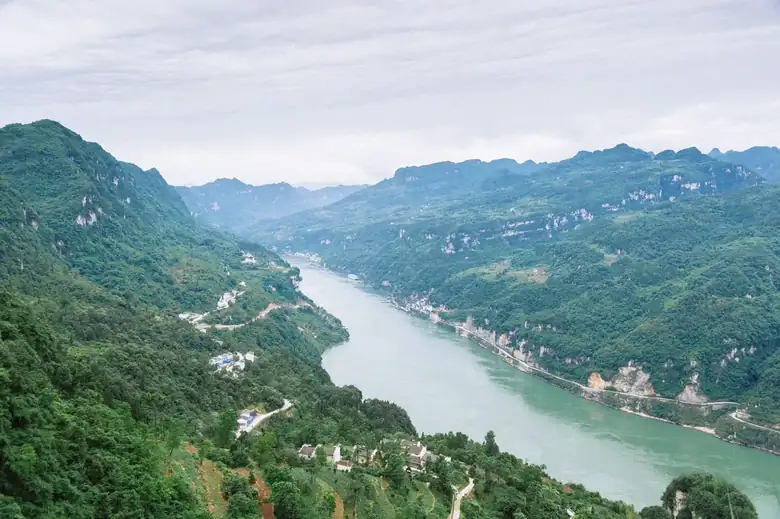
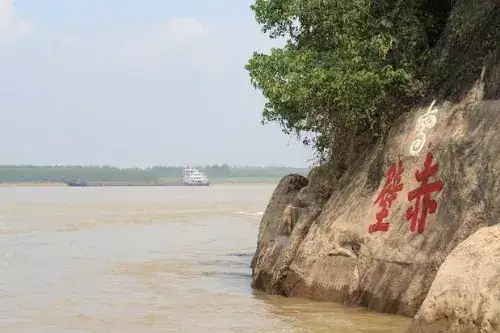
Hubei Province, abbreviated as “E,” is situated in central China, in the middle reaches of the Yangtze River, and takes its name from its location north of Lake Dongting. Its territory consists of 56% mountains, 24% hills, and 20% plains and lakes. Surrounded by mountains on three sides and opening to the river on one, this horseshoe‑shaped geography makes Hubei a natural hub connecting east and west, north and south. To the west lie the Daba, Wuling, and Shennongjia ranges; to the north, the Tongbai Mountains (the southern foothills of the Qinling); to the northeast, the Dabie Mountains; and to the southeast, the Mufu Mountains. The Yangtze—China’s longest river—and its longest tributary, the Han River, converge here, carving out the fertile Jianghan Plain, which has given rise to the ancient saying: “When Huguang (present-day Hubei and Hunan) has a good harvest, the empire is fed.”
Hubei covers a total area of 185,900 square kilometres and has a permanent population of 58.44 million (2023). As a provincial‑level administrative region, it has 12 prefecture‑level cities (including Wuhan, Xiangyang, and Yichang), one autonomous prefecture (Enshi Tujia and Miao Autonomous Prefecture), three county‑level cities directly under provincial administration, and one forest district. The capital, Wuhan, is the only megacity in the middle reaches of the Yangtze and has long been known as the “thoroughfare connecting nine provinces.” It is designated by the State Council as the central city of central China. The sub‑central cities of Xiangyang and Yichang anchor the Han River Ecological Economic Belt and the western section of the Yangtze Economic Belt respectively, acting as twin engines driving the development of northwestern and southwestern Hubei. Meanwhile, cities such as Shiyan, Jingzhou, and Huangshi, each with their distinct industrial identities, together form Hubei’s economic geography of “one core driving, two belts supporting, and coordinated development across the province.”
The most evocative nickname for Hubei is “Jingchu.” Both “Jing” and “Chu” refer to the same ancient state, the State of Chu, which established its kingdom here during the pre‑Qin period, with Jingzhou as its heartland. The provincial abbreviation “E” derives from the fact that the Qing‑era provincial capital, Wuchang, was once the seat of Ezhou Prefecture during the Sui and Tang dynasties. Today, Hubei is still dotted with traces of Chu culture—from the ancient capital of Ji’nan (Ying of Chu), a symbol of the kingdom’s eight centuries of glory, to the numerous Chu tombs scattered across the province, and the folk customs of phoenix worship and reverence for the colour red. All these make “Chu” the first key to understanding Hubei.
Chapter Two: Historical Evolution
The history of Hubei is a grand narrative of rivers and dynasties dancing together. About 5,000 years ago, the Jianghan Plain already hosted Neolithic walled cities such as Qujialing and Shijiahe, whose advanced rice‑farming civilisation and exquisite jade artefacts suggest that the Yangtze basin was also a cradle of Chinese civilisation. In the historical era, the Hubei region was part of “Jingzhou,” one of the Nine Provinces, and during the Shang and Zhou dynasties it served as the southern frontier confronting the Central Plains dynasties.
In the 11th century BCE, the Mi‑surnamed Chu people, starting from the Jing Mountains with meager resources, began their eight‑hundred‑year dynasty. Kings Wu and Wen of Chu successively moved the capital to Ying (present‑day Ji’nan City, Jingzhou), building a great southern power that “covered five thousand li and possessed a million soldiers.” King Zhuang of Chu inquired about the weight of the Zhou bronze vessels, and Qu Yuan poured his heart into Li Sao; the Chu state created bronze, silk, lacquer, philosophy, and literature that rivalled ancient Greece. In 223 BCE, the Qin destroyed Chu and established Nan Commandery, but the Chu lands did not decline. During the Western and Eastern Han dynasties, agriculture and iron‑smelting in Hubei made great strides, and the Lülin Rebellion ignited the flames that overthrew Wang Mang.
From the Wei‑Jin to the Tang‑Song period, Hubei became the core battleground for power struggles between north and south. The Battle of Red Cliffs (208 CE) laid the foundation for the Three Kingdoms; Sun Wu once made Wuchang (present‑day Ezhou) its capital. In the Tang, Hubei was divided among circuits such as Shannan East and Huainan; Xiangyang, at the foot of Mount Xian, became an impregnable military stronghold. In the Song, the Jinghu North Circuit (from which “Hubei” derives its name) had its seat at Jiangling, while Jiangxia (present‑day Wuchang) gradually rose as a southeastern commercial gateway. The Yuan and Ming dynasties established the Huguang Branch Secretariat; Hankou, with its water‑transport advantages, became one of the “four great commercial hubs of the empire” in the mid‑Ming, serving as the grain‑and‑salt transshipment centre.
In the third year of the Kangxi reign of the Qing (1664), Huguang was split, and Hubei was formally established as a province, with Wuchang as its capital. In 1861, Hankou was opened as a treaty port; British, Russian, French, German, and Japanese concessions lined the river, and Hubei was forced into the tide of globalisation. On 10 October 1911, a single gunshot from Wuchang brought an end to a thousand years of imperial rule. Thereafter, the National Revolutionary Army marched north; the Hubei‑Henan‑Anhui and Hunan‑Western Hubei revolutionary bases blazed across the Dabie Mountains and the shores of Lake Hong. During the War of Resistance, the Battle of Wuhan greatly depleted Japanese forces, and the Great Evacuation of Yichang preserved the lifeblood of China’s industry.
Chapter Three: Cultural Heritage
Hubei is a living “dialect island” and a zone of multi‑ethnic convergence. The eastern part of the province belongs to the Huang‑Xiao subgroup of Jianghuai Mandarin, where Chu opera and Wenqu opera thrive. The central Jianghan Plain speaks the Wu‑Tian subgroup of Southwestern Mandarin, the fertile ground for Hubei drum ballads and Mianyang flower‑drum opera. The northwestern Hubei dialect approaches Central Plains Mandarin, while the southeastern corner preserves the Datong subgroup of Gan Chinese. The linguistic and cultural landscape of the mountain minorities is even more colourful: in Enshi Prefecture in southwestern Hubei, the Tujia people have their own language (though nearly extinct, some remnants survive), and Miao is still spoken in certain villages. Overall, Hubei dialects are vigorous and crisp, with rising intonations; ancient Chu words like bufuzhou (literally "refusing to submit to Zhou," meaning "unyielding" or "never admitting defeat") still roll off local tongues, hinting at the stubborn genes of the Chu people.
Seasonal folk customs carry on the spirit of Chu and Han, with the Dragon Boat Festival being the most spectacular. As the hometown of Qu Yuan, Zigui celebrates the festival longer than elsewhere—from the “"First Duanwu" (initial Duanwu Festival)” on the fifth day of the fifth lunar month to the “"Grand Duanwu"” on the fifteenth. Before the dragon‑boat races, rituals of “sacrificing to the river” and “summoning the spirit” are held; the Song of Summoning the Spirit echoes through the gorges, and the festival has been inscribed on UNESCO’s Representative List of the Intangible Cultural Heritage of Humanity. The Tujia “Daughters’ Festival” in Enshi falls on the 12th day of the seventh lunar month, when young men and women gather at markets to sing love songs and find their partners; the wedding laments are deeply moving. In religious belief, a polytheistic mix prevails: Mount Wudang is the sacred site of the Zhenwu Emperor, where the Ming‑era imperial Taoist music “Wudang Monastery Taoist Music” still resonates through the valleys; the Arhat Hall of Guiyuan Temple in Hanyang houses five hundred gilded arhats, and the Chan‑martial fusion of Wuzu Temple in Huangmei is an ancestral temple of the Chan school.
The arts shine with a galaxy of stars. In traditional opera, Hubei has nearly twenty local genres, including Han opera, Chu opera, Huangmei opera, and Jingzhou flower‑drum opera. Han opera is one of the ancestors of Peking opera, with its singing based on xipi and erhuang melodies. Huangmei opera originated from the tea‑picking tunes of Huangmei and later flourished in Anhui. In folk performing arts, “Hubei drum ballads” use cloud clappers and a drum, telling stories in the Huangpi dialect; “Wuhan rod puppetry” features exquisite manipulation and full role types. In arts and crafts, Wuhan Han embroidery features rich colours and uses the “flat gold and clamping” technique to depict dragons and phoenixes; Xiaogan carved paper‑cuts are known for their smooth lines and “knife‑as‑brush” style; Ezhou bronze mirrors have revived the ancient “light‑transmitting mirror” technique of the Chu state. These intangible heritage items (as of 2023, Hubei has 145 national‑level ICH items) together form the genetic map of the region’s culture.
Chapter Four: Architecture and Urban Landscape
Hubei’s architecture is a three‑dimensional chronicle of construction spanning from waterways to mountains. Traditional vernacular dwellings vary markedly with geography: in northeastern Hubei, around Hong’an, stone‑built courtyard houses with high walls and narrow lanes emphasise defence; in the river‑networked Jianghan Plain, dwellings line the riverbanks in strips, with grey‑brick, black‑tiled patio houses and arcaded shopfronts coexisting; the lake‑dyke settlements of Xiantao and Honghu are classic defensive clusters. In the Qingjiang River basin of southwestern Hubei, the Tujia people built “stilted houses” (diaojiaolou) using local timber, perched on slopes beside streams, with the lower floor for livestock and the middle floor for living. The upturned eaves of the hip-and-gable roofs and layered grey tiles blend into the Wuling Mountains.
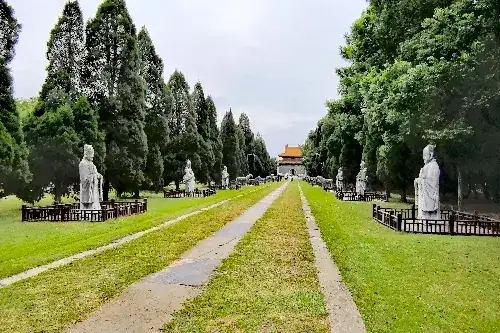
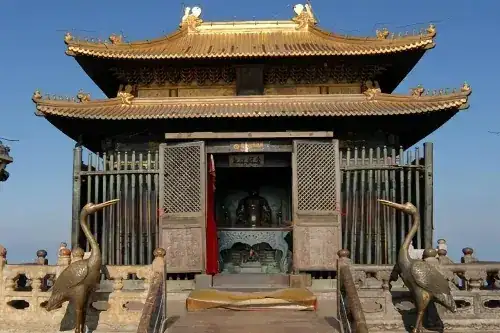
Religious and commemorative buildings dominate the provincial skyline. The ancient building complex of Mount Wudang was a national project of the Yongle Emperor of the Ming, who “built the Forbidden City in the north and constructed Wudang in the south.” Over twelve years, a 70‑kilometre sacred path linked nine palaces, eight temples, and thirty‑six hermitages from the Pure Joy Palace in Junzhou to the Golden Hall on Tianzhu Peak. The stately double‑eaved hip‑and‑gable roof of Purple Cloud Palace and the perilous cliff‑edge Nanyan Palace perfectly embody the Taoist ideal of “immortal mountains and jade pavilions.” Jingzhou city wall is one of the longest‑surviving and most dynasty‑spanning ancient city walls in China, with brick exterior and rammed‑earth core, about 11 kilometres in circumference; visitors can still climb Binyang Tower to overlook the barbican. The Xianling Tomb of the Ming in Zhongxiang is the only imperial tomb with “one mausoleum, two burial mounds”; its winding sacred way and glazed screen walls contain unique funerary symbolism.
Modern architecture records the marks of treaty‑port opening and industrialisation. After 1861, a 3.6‑kilometre concession district was built along Hankou’s riverside avenue; the Hankou Customs House clock tower combines Greek classical and Renaissance styles, while the nearby HSBC, Citibank, and Bakong House (Bargounov Building) form the “Wuhan Bund.” After the Beijing‑Hankou Railway opened, the Dazhimen Railway Station, designed by a French architect, became a rare specimen of modern railway hub architecture. After 1949, the first road‑rail combined bridge—the Wuhan Yangtze River Bridge—became a symbol of national pride with the verse: “A bridge flies north‑south, the natural moat becomes a thoroughfare.” The Three Gorges Dam, a super‑project standing in the Xiling Gorge, offers a unique industrial‑aesthetic experience at its closure memorial park and Tanziling observation deck. Contemporary cities have grown modern axes such as Zhongbei Road and Optics Valley Square on traditional textures; the East Lake Greenway winds through lakes and hills, linking museums, galleries, and wetlands, reshaping the provincial public‑space paradigm.
Chapter Five: Culinary Culture
Hubei cuisine, historically known as “Chu cuisine,” is the first provincial culinary tradition in China to focus on “freshness” as its core flavour. Rooted in the aquatic produce, poultry, and vegetables of the Jianghan Plain, and enriched by surrounding regional influences, it is characterised by “savoury‑umami with a hint of spice, thick sauces, and mastery of steaming and simmering.” Nourished by the “province of a thousand lakes,” Hubei people are exceptionally skilled at preparing aquatic foods: “fish balls with no visible fish” and “meat cakes with no visible meat” exemplify the Chu people’s refined ingredient handling. Seasoning is less spicy than Hunan cuisine, yet combines the numbing of Sichuan and the saltiness of Jiangxi; a bowl of pork‑bone and starchy lotus‑root soup slowly simmered until milky white, fills the room with fragrance.
Among classic dishes, Wuchang fish is a provincial banquet staple; Chairman Mao’s line “Just drank Changsha water, now eating Wuchang fish” made it famous. Steaming best preserves its tender sweetness. Mianyang Three Steamed Dishes (steamed poultry, aquatic products, and vegetables) originated in the Jianghan countryside; the ingredients, coated in starch, are steamed to lock in their original flavours, embodying the Chu tradition of “no feast without steaming.” Pork rib and lotus root soup is Wuhan’s nostalgic symbol; a hot bowl of soup with fried lotus‑root sandwich stuffed with meats on a winter day, with its silky, stringy texture, speaks of the water‑town sentiment. Huangpi Three‑in‑One (fish balls, meatballs, and meat cakes) symbolises reunion and completeness, and is the finale of festive banquets.
The snack scene is equally exciting. Hot dry noodles are the soul of Hubei’s “morning meal” (guozao). Alkaline noodles are blanched, then mixed with sesame paste, pickled radish, and scallions—chewy and elastic. It originated from street‑stall wisdom in Hankou’s Changdi Street in the 1930s. Three‑fresh bean‑skin pancakes are made with mung‑bean batter, wrapped with glutinous rice, minced pork, mushrooms, and bamboo shoots, then pan‑fried until golden and crispy, showcasing Hubei’s talent for combining staple and side dishes. Fried dough rings, heavy‑oil steamed dumplings, and Jingzhou flatbreads form a carbohydrate matrix. Behind the food lies the regional character: the brisk, bold “morning meal” culture—diners can eat on the go, stirring the noodles as they walk and devouring them like a whirlwind, bowl in hand, or squat on a bench at the shop entrance, devouring with gusto. This quick but not flustered yet meticulous rhythm of life is precisely the extension of the thousand‑year‑old commercial spirit of the northern riverbanks, where all directions converge.
Chapter Six: Modern and Contemporary Development
Hubei’s modern destiny has been deeply tied to ports, industry, and technology. After the Second Opium War, Hankou was forced to open as a treaty port in 1861. Britain, Russia, France, Germany, and Japan successively established concessions and over a hundred foreign trading firms and wharves along the river. Tea, silk, and tung oil reached overseas markets via the Han River and the Yangtze; Hankou’s customs revenue once accounted for 40% of the national total, making it China’s second‑largest trading port, deeply embedded in global trade networks. In 1890, Viceroy Zhang Zhidong of Huguang established the Hanyang Iron Works (Asia’s first modern steel plant) and the Hanyang Arsenal, and set up the Wuchang textile, weaving, silk‑reeling, and hemp mills, creating China’s earliest steel‑munitions‑textile industrial complex. The Luhan Railway further made Wuhan a north‑south transport hub.
After the founding of the People’s Republic, Hubei was positioned as a national heavy‑industrial and science‑education base. In 1955, the Wuhan Iron and Steel Works (WISCO) began construction in Qingshan, becoming New China’s first large‑scale integrated steel enterprise; its “1.7‑metre rolling mill” introduction marked the beginning of industrial technology upgrading. The Second Automobile Works (precursor of Dongfeng Motor) was sited in the remote mountains of Shiyan in 1969, giving rise to a supply chain covering Suizhou’s modified vehicles and Xiangyang’s auto parts, making Hubei one of China’s largest automobile production bases. In 1994, the Three Gorges Project officially commenced; this world‑class hydroelectric project transformed Yichang from a small river town into a clean‑energy capital and spurred industrial clusters in power transmission and equipment manufacturing.
After reform and opening‑up, especially since 2010, Optics Valley (Wuhan East Lake High‑tech Zone) has become the banner of Hubei’s transformation. Here, China’s first optical fibre was born, and today it has become the world’s largest R&D and production base for optical fibre and cable, with optoelectronic information industries standing out. Within the province, a “Wuhan R&D + surrounding manufacturing” hub‑and‑spoke pattern has emerged: Wuhan serves as the headquarters economy, science, education, and design centre; Xiaogan contributes aerospace equipment, Tianmen textile machinery, Huangshi printed circuit boards, and Jingzhou petroleum equipment, providing supporting industries; Xiangyang, leveraging its military‑industrial background, focuses on new‑energy vehicles and agricultural machinery; Yichang develops fine chemicals and biomedicine; Enshi and Shennongjia safeguard ecological barriers and develop region‑wide tourism and selenium‑rich food processing. In 2023, Hubei’s GDP reached 5.58 trillion yuan. The five leading industries—optoelectronic information, new‑energy and intelligent‑connected vehicles, life and health, high‑end equipment, and BeiDou—are moving towards the trillion‑yuan mark, completing the historical leap from “bronze‑age Chu smelting” to “chips, screens, terminals, and networks.”
Chapter Seven: Transportation and Travel
Hubei is China’s irreplaceable multi‑dimensional transport hub inland. The ancient “thoroughfare of nine provinces” has evolved from a water‑based advantage into an integrated network of rail, water, road, and air. The railway network, centred on the capital Wuhan, radiates across the province and the nation: the Beijing‑Guangzhou high‑speed railway and the Shanghai‑Wuhan‑Chengdu rapid railway form a “cross” golden skeleton. The three major stations—Wuhan, Hankou, and Wuchang—along with the new Optics Valley station, connect trains in all directions. Within the province, the Wuhan‑Shiyan high‑speed railway, Huanggang‑Huangmei high‑speed railway, and the Zhengzhou‑Chongqing high‑speed railway (Hubei section) have brought Xiangyang, Yichang, Shiyan, and Shennongjia into the national high‑speed network. The expressway system follows a “seven verticals, five horizontals, three rings” pattern, with a total length exceeding 7,800 kilometres, covering every county; from the Enshi Grand Canyon to the Dabie Mountains, you can reach your destination by dusk.
Aviation is equally well developed. Wuhan Tianhe International Airport is the largest air hub in central China, with passenger throughput of nearly 30 million in 2023 and direct international flights to Paris, San Francisco, Dubai, and more. The province also has seven other transport airports, including Yichang Sanxia, Xiangyang Liuji, Enshi Xujiaping, and Shiyan Wudangshan. In 2022, Ezhou Huahu Airport was put into operation as Asia’s first dedicated freight hub, with SF Express building a global “overnight‑delivery” logistics network. The Yangtze Golden Waterway runs through the province for over 1,000 kilometres; container terminals such as Wuhan Yangluo, Yichang Yunchi, and Huangshi Xingang are seamlessly connected to the China‑Europe Railway Express (Wuhan), making Hubei a junction of the Belt and Road and the Yangtze Economic Belt.
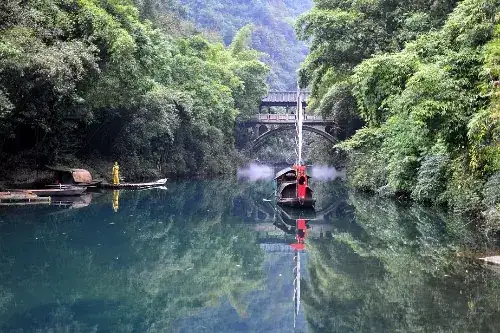
Unique travel experiences often centre on rivers. In Wuhan, you can take a ferry between Zhonghua Road and Jianghan Pass for just 1.5 yuan, enjoying the river breeze and the spectacle of the two rivers converging and the night lights flickering. In Enshi, the Qingjiang Butterfly Cliff boat tour and the “pea‑pod” wooden boats on the Shennong Stream bring you close to the emerald gorges. For self‑drivers, the “Guzhao Water Highway” through the mountains of western Hubei, the “Ten Turnbacks” danger section, or the tourist road around the Danjiangkou Reservoir unfold a landscape painting with every turn of the wheel—making the journey itself the destination.
Chapter Eight: Travel Tips
The best seasons to visit Hubei are spring and autumn. In spring (March–May), the cherry blossoms at Wuhan East Lake, the peach blossoms beneath the ancient city wall of Jingzhou, and the alpine rhododendrons in Shennongjia bloom in succession, with temperatures between 15–25°C, making it most pleasant. In autumn (September–November), the golden rice waves of the Jianghan Plain, the colourful foliage and misty clouds of Wudang Mountain—ideal for hiking, Taoist exploration, and savouring lake delicacies—offer the best seasonal abundance. Summer is hot, but that is precisely the peak season for cooling retreats like Enshi Grand Canyon and Chaotianhou Rafting. In winter, Shennongjia turns into a ski resort, offering a unique southern snow experience.
Your must‑do experiences begin with Wudang Mountain: take one or two days to walk through Taizipo, Purple Cloud Palace, Nanyan, and climb to the Golden Summit for sunrise, witnessing how the temples are embedded on cliffs and exploring Taoist culture. Second, take a “High Gorge and Calm Lake” cruise from the Three Gorges Dam to Fengjie, experiencing the grandeur of “a wonder the world has never seen” from the water. Climb Tanziling to overlook the five‑stage ship locks (advance booking for the free Three Gorges Dam tourist area ticket is recommended). Third, in Enshi Grand Canyon, hike the cliffside plank walkway, see the “Incense Pillar” peak, and explore Tenglong Cave in Lichuan or Pingshan Canyon in Hefeng to discover the mysterious charm of the 30th parallel north. Fourth, visit Shennongjia Forest District to spot golden snub‑nosed monkeys and explore the morning mist of Dajiu Lake—a natural classroom of biodiversity, ideal for summer retreats and winter skiing. Finally, return to the capital Wuhan: cycle along the East Lake Greenway or wander through the old city’s lilong alleys, savouring a bowl of authentic hot dry noodles—the best entry point to understand the vibrant everyday life of Jingchu.
Practical tips: Hubei dialects differ little from standard Mandarin, but in rural areas of Enshi and Yichang, you may encounter Tujia language when speaking with elderly locals; a smile goes a long way. Besides Wuhan, Xiangyang, and Yichang, where hotel choices are abundant, you should book accommodation at least two weeks in advance for peak season at places like Muyu Town in Shennongjia and near Enshi Grand Canyon. Regarding dining, the clay‑pot‑simmered soups may use lard for flavour—vegetarians should inform the staff in advance. Breakfast stalls often use disposable utensils; you may bring your own cup. Special note: Hubei has many lakes and wetlands, so mosquitoes are common in summer; carry insect repellent. The Three Gorges reservoir area there are large temperature differences between day and night, and gusty winds on the river can be chilly; even in midsummer, a light jacket is advisable. For independent travellers, consider purchasing the “Hubei Travel Benefit Card,” which covers over 200 scenic spots including Wudang Mountain and Enshi Grand Canyon—excellent value for money.
Travel information can change. Check current opening hours, reservations and entry requirements before you travel.
Traveller discussion
Start the conversation with a helpful tip or a question.