
Huangling Scenic Area in Shangrao
Huangling Scenic Area is located in the northeastern part of Wuyuan County, Shangrao City, Jiangxi Province. It is a national 5A-level tourist attraction and a typical mountain village with a total area of about 15 square kilometers. The sc
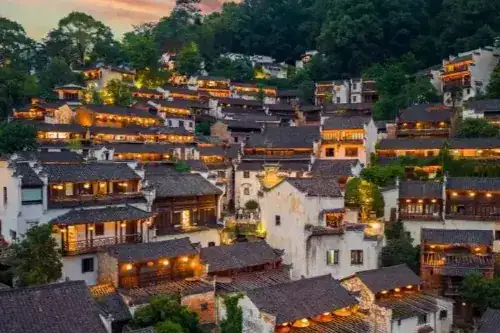
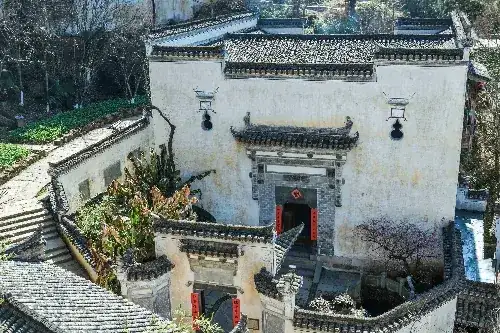
Huangling Scenic Area is located in the northeastern part of Wuyuan County, Shangrao City, Jiangxi Province. It is a national 5A-level tourist attraction and a typical mountain village with a total area of about 15 square kilometers. The scenic area features "autumn sunning" culture, ancient village architecture, and terraced flower seas as its core attractions. Situated at an altitude of about 600 meters, it is surrounded by mountains with steep terrain. The village is built along the mountains, with houses scattered on slopes with a drop of nearly 100 meters. Huangling preserves a large number of Huizhou-style buildings from the Ming and Qing dynasties, with more than 120 ancient buildings, including 36 key protected ones. Most of them are brick-wood structures, characterized by white walls, black tiles, and horse-head walls. The ancient village streets are paved with bluestones, with a total length of about 3 kilometers. Integrating natural landscapes and cultural heritage, the scenic area sees thousands of acres of terraced rapeseed flowers in spring and unique "autumn sunning" landscapes formed by villagers drying crops in autumn, earning it the reputation of "the most beautiful rural symbol of China". It is a rural tourist destination integrating sightseeing photography, folk custom experience, and leisure vacation.
Historical Culture
Huangling Ancient Village was founded in the middle of the Ming Dynasty, with a history of over 500 years. It got its name because "the place is rich in bamboo". Historically, Huangling was an important commercial route node from ancient Huizhou to Raozhou. Villagers mainly made a living by doing business and farming, forming a "seven merchants and three farmers" lifestyle. The prosperous commercial activities left many exquisite mansions and shop buildings, such as Ligeng Hall and Shende Hall in "Tianjie Nine Lanes", which all reflect the imprint of Huizhou merchant culture.
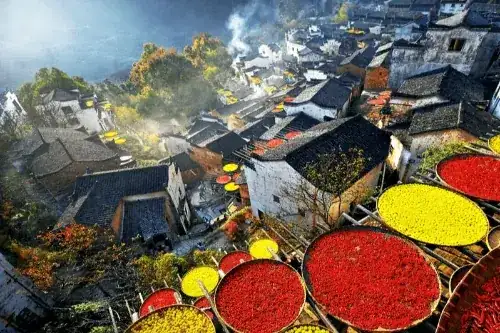
"Autumn sunning" is the most representative folk culture of Huangling, originating from the villagers' wisdom to cope with the limitations of mountainous terrain. Due to the lack of flat land in the village, villagers dry autumn harvest crops such as corn, peppers, and rice on windowsills, drying racks, and roofs around their houses, forming a colorful three-dimensional drying landscape. This custom has continued to this day and has become an extended project of national intangible cultural heritage, attracting millions of tourists every year for viewing and photography.
Huangling also retains rich traditional Huizhou folk customs, such as dragon dance during the Spring Festival, moon appreciation parties on Mid-Autumn Festival, and autumn sunning festival on Double Ninth Festival. Among them, the "Autumn Sunning Culture Festival" is held from September to October every year, featuring activities such as autumn sunning skill displays, folk performances, and farming experiences. In addition, traditional arts such as Huizhou opera and Nuo dance are regularly performed in the scenic area, demonstrating the profound heritage of Huizhou culture.
Main Attractions
Tianjie Ancient Lanes
Tianjie is the core street of Huangling Ancient Village, with a total length of about 700 meters and a width of 3-5 meters. It gets its name because it runs across the village like a market in the sky. On both sides of Tianjie, there are more than 30 buildings from the Ming and Qing dynasties, including shops, teahouses, homestays, ancestral halls, and mansions. For example, Ligeng Hall, with a history of 300 years, has a "three-entry and three-bay" architectural pattern and exquisite wood carvings and brick carvings, which can be called a model of Huizhou-style architecture. The nine lanes of Tianjie connect every household like a spider web. Traditional living facilities such as "public water wells" and "fire-fighting vats" are preserved in the lanes. Tourists can feel the life atmosphere of the ancient village while strolling here. In spring, pear blossoms bloom on both sides of Tianjie, and in autumn, crops dried by every household can be seen set against the ancient buildings, creating a delightful scene.
Autumn Sunning Viewing Platform
Located on the east side of Tianjie, the Autumn Sunning Viewing Platform is the best place to enjoy the "autumn sunning" landscape. It is at an altitude of about 630 meters, covering an area of about 500 square meters. The viewing platform has a wide view, allowing visitors to overlook the drying scenes of the whole village: hundreds of round drying plaques are scattered on the roofs and drying racks, holding red peppers, yellow corn, orange pumpkins and other crops, forming a strong color contrast with the black tiles and white walls. Next to the viewing platform, there is an "Autumn Sunning Workshop" where tourists can experience making specimens of autumn-sunned crops and participating in drying activities to gain an in-depth understanding of the connotation of this folk custom.
Terraced Flower Sea
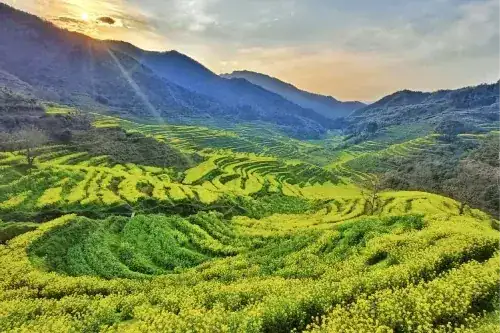
The total area of Huangling terraces is about 2,000 mu, reclaimed in the Ming Dynasty. There are up to more than 300 levels, with the highest altitude of about 680 meters. The terraces undulate with the mountains. In spring (March to April), when the planted rapeseed flowers are in full bloom, they form a rolling golden sea of flowers, forming a beautiful picture with the ancient village buildings. In autumn (October to November), rice is planted, presenting a rural landscape with alternating yellow and green. The scenic area has built a total of about 5 kilometers of sightseeing trails and 3 viewing platforms. Among them, the "No.1 Viewing Platform" can overlook the whole terraced fields, which is a popular spot for shooting sunrises and flower seas.
Leixin Bridge
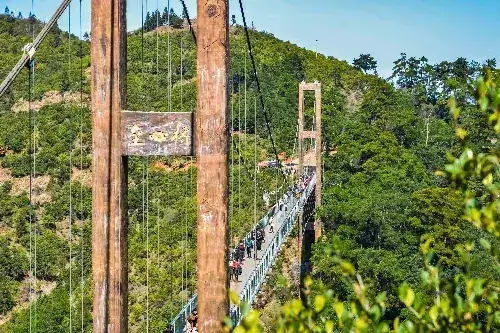
Leixin Bridge is a suspension bridge connecting Huangling Ancient Village and the terraced scenic area, with a total length of 186 meters, a width of 3 meters, and a maximum drop of about 108 meters from the ground. The bridge body adopts a steel cable structure, and the middle part is paved with a glass deck about 40 meters long. Walking on it, you can feel the excitement of viewing the scenery in the air. On both sides of the bridge are dense bamboo forests and steep cliffs. In spring, you can see the terraced flower sea under the bridge, and in autumn, you can enjoy the mountain landscape with layers of forests dyed. It is one of the iconic check-in spots in the scenic area.
Wugui Hall
Wugui Hall is one of the best-preserved Ming Dynasty mansions in Huangling, built during the Jiajing period of the Ming Dynasty (1522-1566). It gets its name because there are five osmanthus trees planted in the courtyard, covering an area of about 600 square meters. The mansion has a "four waters returning to the hall" pattern, consisting of a main hall, a side hall, a garden, a patio, etc. The wood carvings on the doors and windows are exquisite, with themes including flowers and birds, figures, and allusions, reflecting the characteristic of "no wood without carving" in Huizhou-style architecture. The hall displays cultural relics such as ancient Huizhou marriage customs and daily utensils. Tourists can learn about the family culture of the ancient village through real objects and pictures.
Tour Routes
One-Day Tour Route (Core Landscapes)
Take the cable car up the mountain from the tourist center (about 10 minutes). After arriving at the entrance of Tianjie, first visit Tianjie Ancient Lanes (visit buildings such as Ligeng Hall and Wugui Hall, about 1 hour); then go to the Autumn Sunning Viewing Platform to watch and shoot the autumn sunning landscape (experience activities at the Autumn Sunning Workshop, about 1 hour); have lunch at Tianjie Restaurant at noon (about 1 hour); in the afternoon, walk along the trail to the Terraced Flower Sea Scenic Area (enjoy rapeseed flowers in spring, view rice fields in autumn, about 1.5 hours), then walk to Leixin Bridge to experience the glass plank road (about 40 minutes); finally return to Tianjie, buy local specialties (about 30 minutes), and take the cable car down the mountain. The whole journey takes about 6-7 hours, suitable for first-time visitors.
Two-Day Tour Route (In-depth Experience)
Day 1: Visit Tianjie Ancient Lanes and Autumn Sunning Viewing Platform in the morning (same route as above, about 3 hours), have lunch at Tianjie Homestay and check in at noon; hike to the Terraced Flower Sea in the afternoon (about 2 hours), watch the sunset at Leixin Bridge in the evening (about 1 hour), and participate in folk performances on Tianjie at night (such as Huizhou opera, bonfire party, about 1.5 hours). Day 2: Go to the terraced viewing platform to shoot the sunrise in the early morning (about 1 hour), visit the water mouth forest and ancient tree group around the ancient village after breakfast (about 1.5 hours), experience farming activities such as tea picking and tofu grinding (about 1.5 hours), and go down the mountain after lunch. The whole journey allows you to deeply feel the ancient village culture and natural landscape, suitable for photography enthusiasts and leisure tourists.
Travel Suggestions
- The best tourist seasons are mid-March to early April (when rapeseed flowers are in full bloom) and September to October (when the autumn sunning landscape is at its best). It rains a lot in summer, so you need to bring rain gear. It is cold in winter, but there are fewer tourists, allowing you to experience the quiet atmosphere of the ancient village.
- The best times to shoot the autumn sunning landscape are 9:00-11:00 in the morning (with soft light) and 3:00-5:00 in the afternoon (with the setting sun slanting, the colors are rich). It is recommended to shoot the terraced sunrise at 6:30-7:30 in the early morning (spring).
- There are many steps in the scenic area, so it is recommended to wear comfortable sports shoes. Carry a light backpack to store cameras, water and other items. The prices of shops on Tianjie are relatively high, so you can prepare snacks in advance.
- Tourists planning to stay overnight are advised to choose homestays on Tianjie, with prices ranging from 400 to 800 yuan per night. You can experience the tranquility of the ancient village at night, and some homestays have viewing balconies, which are convenient for shooting morning scenes.
Notes
- The cable car up and down the mountain is the main way to enter the core scenic area. You need to confirm the time of the last cable car in advance to avoid missing the downhill shift and getting stranded.
- There are many tourists during the spring rapeseed flower season. It is recommended to travel at off-peak times (such as before 8:00 a.m. or after 4:00 p.m.). When taking photos, pay attention to avoiding crowds and respect other tourists' shooting space.
- When participating in farming experiences and folk activities, you must follow the guidance of the staff. Be careful when touching ancient building components and exhibits. Carving or damaging cultural relics is prohibited.
- The weather in mountainous areas is changeable. Even on sunny days, it is recommended to bring a thin coat to avoid large temperature differences between morning and evening; pay attention to sun protection in summer, and you can wear a hat, sunglasses, and apply sunscreen.
- When buying local specialties (such as Wuyuan green tea, wine-braised fish), it is recommended to choose shops with clearly marked prices, and confirm the shelf life and storage methods before purchasing.
Transportation
- Self-driving: Starting from Nanchang, take Dechang Expressway and transfer to Jiguan Expressway, exit at Wuyuan North, then drive northeast along Provincial Highway S201 for about 39 kilometers, with a driving time of approximately 3.5 hours. Starting from Huangshan, drive southwest along Hangrui Expressway, exit at Wuyuan, then transfer to Provincial Highway S201, with a driving time of about 1.5 hours. Starting from Jingdezhen, take Hangrui Expressway to Wuyuan Exit, then transfer to Provincial Highway S201, with a driving time of around 1 hour. The parking fee standard at the scenic area parking lot is 20 yuan per day for small vehicles and 30 yuan per day for large vehicles.
- High-speed rail/train: Take the high-speed rail to Wuyuan Station. After exiting the station, you can take the scenic area direct bus to Huangling, with a driving time of about 50 minutes, a fare of 20 yuan per person. The departure time is 8:00-17:00, once an hour; you can also take a taxi, with a cost of about 80-100 yuan per car.
- Tourist line: The North Bus Station in Wuyuan County has a tourist line to Huangling, with 6 departures per day at 7:30, 8:30, 9:30, 13:30, 14:30, and 15:30. The driving time is about 1 hour, and the fare is 18 yuan per person.
Opening Hours
Opening hours are 7:30-18:00 (March 1 - November 30); 8:00-17:30 (December 1 - February 28 of the next year). The cable car operating hours are the same as the opening hours of the scenic area. The last uphill cable car time is 17:00 (peak season) and 16:30 (off-season), and the last downhill cable car time is 18:30 (peak season) and 18:00 (off-season).
Tickets
Package ticket: 255 yuan per person (including admission ticket and round-trip cable car).
You can search for the official WeChat public account "婺源篁岭景区" to get the latest news or buy tickets online.
Online Booking
Click here to jump to the Trip.com ticketing platform for ticket purchase.
Photo gallery
Travel information can change. Check current opening hours, reservations and entry requirements before you travel.
Traveller discussion
Start the conversation with a helpful tip or a question.