
Henan
HenanGeographical Location and Provincial LayoutHenan Province is located in the central‑eastern part of China, in the middle and lower reaches of the Yellow River. Its name, meaning "south of the river," derives from the fact that most of
Henan
Geographical Location and Provincial Layout
Henan Province is located in the central‑eastern part of China, in the middle and lower reaches of the Yellow River. Its name, meaning "south of the river," derives from the fact that most of its territory lies south of the Yellow River. Its geographic coordinates are approximately 31°23′–36°22′ N and 110°21′–116°39′ E. It borders Anhui and Shandong to the east, Hebei and Shanxi to the north, Shaanxi to the west, and Hubei to the south. Since ancient times, it has been a strategic thoroughfare connecting east and west, north and south, earning the reputation of "the hinterland of the Nine Provinces and the crossroads of ten provinces."
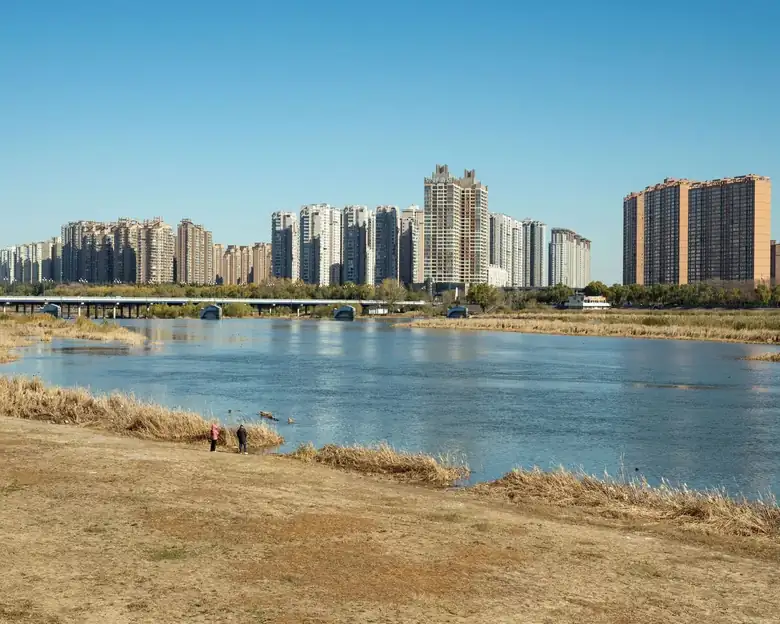
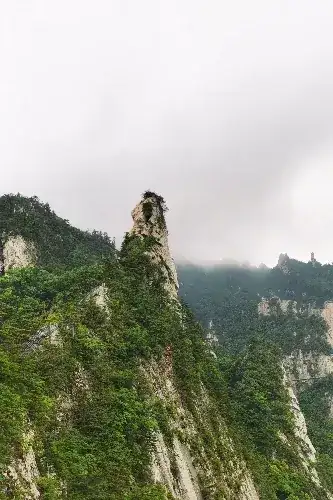
The province's terrain is high in the west and low in the east, with a full range of landforms. The northern, western, and southern borders are ringed by the Taihang, Funiu, Tongbai, and Dabie mountains, forming natural geographical barriers. The central and eastern regions consist of the vast Huang‑Huai‑Hai alluvial plain, an important part of the North China Plain. The Yellow River flows across the north; its repeated course changes over history have shaped extensive alluvial fans and left the remarkable phenomenon of the "hanging river" (where the riverbed is higher than the surrounding land) downstream of Zhengzhou. The Huai River originates in the Tongbai Mountains and flows through the south, with the province spanning four major river systems: the Yangtze, Huai, Yellow, and Haihe. This transitional position between mountains and plains has laid the geographical foundation for Henan as the cradle of Chinese civilisation.
The province covers a total area of 167,000 square kilometres and has a permanent population of approximately 98.72 million (end‑2023), making it the province with the largest registered population in China. Administratively, it has 17 prefecture‑level cities and one directly administered county‑level city, with Zhengzhou as the provincial capital.
If Henan is seen as a miniature China, its internal urban division of labour is a reflection of this diversity: Zhengzhou, as the provincial capital and a national central city, serves as the province's political, economic, transport, and science‑education hub. Luoyang is positioned as a provincial sub‑central city, bearing a rich historical legacy while continuing to develop in advanced equipment manufacturing. Nanyang, with its vast hinterland in southwestern Henan, is also a sub‑central city, focusing on the ecological economy and traditional Chinese medicine. In addition, Kaifeng is known for its Song‑dynasty‑inspired cultural tourism; Anyang has formed distinctive features around the Yin‑Shang civilisation and general aviation; and Xinyang, with its tea culture and ecological advantages, presents a different character of a southern Henan water town. These cities, like a well‑defined jigsaw puzzle, together form the provincial landscape of Henan.
Historical Context
The historical narrative of Henan is almost a condensed history of ancient China. As early as 500,000 years ago, Nanzhao ape‑men thrived here; around 10,000 years ago, in the Neolithic period, this region nurtured the Peiligang culture. During the Yangshao period, ancestors formed large settlements in the Mianchi and Shanzhou areas, with painted pottery reaching its zenith. The Erlitou site in Yanshi, Luoyang—the first capital in China with direct historical documentation (the Xia capital)—features a palace city, bronze workshops, and a turquoise dragon‑shaped artefact that signals the birth of an early state.
The Shang dynasty marked the first peak in Henan's ancient capital history. King Zhongding of Shang moved to Ao (present‑day Zhengzhou); the Zhengzhou Shang city site covers 25 square kilometres, with distinct outer, inner, and palace city structures, and the discovery of primitive celadon vessels has rewritten the history of Chinese ceramics. After King Pangeng moved to Yin (present‑day Anyang), Yinxu served as the late Shang capital for 273 years. The discovery of oracle bone inscriptions here pushes China's documented history definitively back to 1300 BCE. In the Western Zhou, the royal city of Luoyi (present‑day Luoyang) was built; King Cheng "established his residence in the centre of China," and the earliest occurrence of the term "China" (zhongguo) is found in the He Zun inscription. From the Eastern Zhou onward, Luoyang continued as the royal city for over five hundred years, becoming the axial centre where the Hundred Schools of Thought contended.
The Han‑Tang period was the zenith of Henan's ancient capital status. The Eastern Han, Cao Wei, Western Jin, and Northern Wei all established their capitals at Luoyang; the Yongning Temple Pagoda, "nine storeys and a hundred zhang high," was of breathtaking magnificence. Emperor Yang of Sui built the Eastern Capital of Luoyang and excavated the central sections of the Grand Canal—the Tongji and Yongji canals—making Henan a hub for north‑south grain transport. The Tang dynasty made Luoyang the Eastern Capital, paired with Chang'an as the "Two Capitals"; the Shangyang Palace, Mingtang, and Tiantang were among the most magnificent architectural complexes, and the Buddhist statues of the Longmen Grottoes reached their peak during this period. The Northern Song established its capital at Kaifeng, renamed it Dongjing (Eastern Capital), and created a world metropolis where "all corners of the earth converged, and all nations communicated." Zhang Zeduan's Along the River During the Qingming Festival is a vivid freeze‑frame of the bustling market life of Bianliang at that time. After the Yellow River shifted south and the political centre moved north, the status of Henan's cities fluctuated, but its prefectures and counties remained the economic and cultural centres of the Central Plains.
Today, over 50,000 cultural heritage sites are scattered across Henan. The Longmen Grottoes in Luoyang, the Yinxu site in Anyang, and the "Centre of Heaven and Earth" historical monuments in Dengfeng are inscribed on the UNESCO World Heritage List. The Vairocana Buddha of Fengxian Temple at Longmen has gazed over the Yi River for a millennium with its mysterious smile; the oracle bone pits at Yinxu still hold three‑thousand‑year‑old script codes; and the Songyue Pagoda, the Observatory, and the Shaolin Temple Pagoda Forest form irreplaceable sites in the history of Chinese astronomy, religion, and architecture.
Cultural Heritage
The diversity of Henan's culture stems from its geographical position as the "centre of the world." In terms of dialects, the vast majority of the province speaks Central Plains Mandarin, divided into Zhengzhou‑Kaifeng, Luoyang‑Songshan, Nanyang‑Lushan, and Xinyang‑Bengbu subgroups. Tonal values differ slightly between regions, but overall, the dialect has lost its entering tones, distinguishes retroflex from non‑retroflex initials, and has a four‑tone system close to standard Mandarin. In the northwestern areas such as Linzhou and Huixian, influenced by the Jin dialect area, the entering tone is preserved, forming a dialect "enclave." This dialectal pattern reflects Henan's long history of immigration integration and functions as a transport hub and in radiating influence.
In folk traditions, the most vibrant is the temple fair culture. The Taihao Mausoleum Temple Fair in Huaiyang once recorded 820,000 attendees in a single day, setting a Guinness World Record; people worship the legendary ancestor Fuxi, praying for progeny. The Xunxian First‑Month Ancient Temple Fair has continued for a millennium, with stilt‑walking, bamboo‑horse dancing, back‑frame performances, and other folk processions. Wedding and funeral customs preserve many remnants of ancient rites; in western Henan villages, a simplified form of the "six rites" of marriage can still be seen; funerals include inviting a suona band and the custom of "a musical vigil around the coffin (da dai shi)," which blend Confucian values of reverence for the departed with folk musical culture.
In traditional arts, Henan Opera (Yuju) is the largest local opera genre in China. The Xiangfu tune centred on Kaifeng, the Eastern Henan tune of Shangqiu, the Western Henan tune of Luoyang, and the Shahe tune of Luohe each have their own flavour. Representative plays such as Hua Mulan and Mu Guiying Takes Command are household names. Quju and Yuediao, together with Henan Opera, are known as the three major operatic genres of Henan; Quju is simple and melodious, while Yuediao is desolate and heroic, and the portrayal of Zhuge Liang by the great Yuediao master Shen Fengmei is deeply etched in the public's memory. Arts and crafts are dazzling: Jun porcelain, with its kiln‑transformation effect of "one colour in the kiln, myriad colours out," ranks among the five great kilns of the Song dynasty; its production area, Shenhou Town in Yuzhou, still has burning kilns. Ru porcelain pursues the warm, jade‑like celadon glaze; it originated in Ruzhou and Baofeng, with fewer than a hundred pieces surviving. the vibrant, colourful glazes of Luoyang's tri‑colour Tang pottery, the bold lines of Zhuxian Town woodblock New Year paintings, and Kaifeng's fine embroidery are all cultural crystallisations of their locality.
Henan has 125 representative national‑level intangible cultural heritage items and over a thousand provincial‑level items. Shaolin Kung Fu, as a system of Chan‑martial unity, integrates martial arts, Chan, and medicine, and is a living military‑cultural and philosophical heritage. Chen‑style Taijiquan, created by Chen Wangting in Chenjiagou, Wenxian County, Jiaozuo, at the end of the Ming dynasty, has since spawned Yang, Wu (Hao), Wu, Sun, and other schools, with practitioners worldwide. In addition, the Majie Storytelling Festival, a folk performing arts gathering lasting over 700 years, takes place on the 13th day of the first lunar month; thousands of artists bring their drums and zithers to Baofeng, filling the fields with the sound of clappers and strings—a rare "single‑day kingdom of storytelling" in the world.
Architecture and Urban Landscape
Henan's traditional architecture is a history of civilisation written in stone and wood. On the western Henan loess plateaus, sunken courtyard houses form underground villages where "one sees trees but no village, and entering the village one sees no houses"—an ultimate expression of the ancient philosophy of "unity of heaven and man." In the northern Taihang Mountains, the stone houses of Shibanyan Town are built from locally sourced red sandstone, with stone slabs for roofing, blending seamlessly with the cliffs. In the plains, traditional dwellings are mostly post‑and‑beam structures of grey brick and grey tile, either single‑storey or two‑storey quadrangles with a layout of "three visible bays, five hidden bays," emphasising south‑facing orientation and elaborate gate towers. The Kang Baiwan Manor in Gongyi is a model of the large Central Plains estate, with its layout of "cave dwellings against the mountain, buildings along the street, and docks by the river," embodying a philosophy that integrates farming and commerce.
Religious and ceremonial architecture is even more striking. Among the "Centre of Heaven and Earth" historical monuments on Mount Song, the three Eastern Han que (gate towers)—Taishi, Shaoshi, and Qimu—are the oldest surviving above‑ground temple towers in China, their reliefs depicting acrobatics, cuju (ancient football), and other scenes—a stone archive of Han‑dynasty life. The Songyue Pagoda, with its fifteen‑storey densely eaved brick form, pioneered the Chinese densely eaved pagoda style. The Youguo Temple Pagoda in Kaifeng, nicknamed the Iron Pagoda for its iron‑coloured glazed bricks, has stood tall for nearly a thousand years despite earthquakes and floods. The Dengfeng Observatory of the Yuan dynasty is the world's oldest surviving astronomical observatory; Guo Shoujing compiled the most advanced calendar of its time—the Shoushi Calendar—here.
Modern architecture also bears the marks of its era. The Beijing‑Hankou Railway, fully opened in 1906, gave rise to Zhengzhou's commercial port district; the commercial buildings on Dehua Street display a Sino‑Western hybrid style. After the provincial capital moved to Zhengzhou, the 1950s Soviet‑assisted Zhengzhou Textile City and the Second Abrasive Factory—industrial heritage sites with red‑brick workshops and saw‑tooth skylights—became aesthetic symbols of the planned‑economy era. The Erqi Memorial Tower, completed in 1971, with its twin‑tower design, has become Zhengzhou's city emblem. The new‑century Henan Art Centre, inspired by ancient bone flutes and ocarinas, consists of five interconnected ellipsoids that create a flowing, rhythmic form.
In urban fabric, Zhengzhou, as a "city pulled by the railway," has its old town radiating from Erqi Square in a radial road pattern, while the Zhengdong New District adopts a modern CBD plan of rings and radials, with Longhu Financial Island and the Ruyi‑shaped water system creating an iconic landscape. Kaifeng preserves the marvel of "city upon city": beneath today's city walls are layered ancient city ruins from the Ming‑Qing, Song‑Jin, and Tang dynasties. Luoyang's "Heluo thoroughfare" pattern is still discernible; the Dingding Gate site and the Tianjie Avenue axis reveal the ward‑based planning of Sui‑Tang Luoyang. These ancient cities are like living archaeological strata; each page turned reveals the silhouette of a dynasty.
Culinary Culture
Henan cuisine, or "Central Plains cuisine," is guided by the principle of "harmonising the five flavours and balancing quality and taste"—salt, sweet, sour, spicy, and bitter are all moderate, pursuing the original taste of ingredients and a mellow flavour. This corresponds precisely to the moderate and inclusive character of Central Plains culture. The Northern Song capital of Kaifeng was the peak of Henan cuisine; the Dreams of the Glorious Capital of the Eastern Capital lists over 280 dishes, including grilled ribs, jue ming dou zi (cassia seed dumplings), and perilla fish, which have been passed down to this day. Official cuisine and street snacks coexisted. Contemporary Henan cuisine, though not strongly individualistic, blends northern and southern styles: braising, roasting, deep‑frying, quick‑frying, and stir‑frying are all used, with soups and broths given particular attention—as the saying goes, "a singer's voice, a chef's broth."
The classic noodle dish braised noodle soup (huimian) is the homesickness in every Henan person's stomach. A rich, milky broth is made from mutton or beef bones, into which broad, chewy noodles are cooked, along with shredded kelp, shredded tofu, vermicelli, and quail eggs; it is served with coriander and chilli oil—a hearty, soul‑satisfying bowl of soup, noodles, and vegetables. Established restaurants such as Heji and Xiaoji in Zhengzhou each have their own secrets; one bowl tells you the honesty of the Central Plains.
Spicy soup (hulatang) is Henan's morning alarm clock. A base of beef or mutton bone broth is flavoured with more than twenty spices—pepper, Sichuan pepper, cassia bark, and others—and thickened with gluten, wood ear fungus, and daylily, resulting in a thick, spicy, aromatic soup. The two major schools of Xiaoyao Town and Beiwudu offer different characters—one robust, the other milder—and in Zhoukou and Luohe, spicy soup is paired with fried dough sticks or pan‑fried buns, a taste of morning light in countless Henan memories.
Kaifeng soup dumplings preserve the legacy of the Northern Song's "cave‑shaped plum blossom buns": thin skin, generous filling, and eighteen pleats like chrysanthemum petals. The filling contains a broth that must be enjoyed in the ritual: "gently lift, slowly move, first open the window, then drink the soup." Luoyang water banquet is noted for its soups and broths; all twenty‑four courses in the full set are served with soup. The first course, "Peony Swallow Dish," is made from shredded white radish to imitate bird's nest, floating in clear broth with flower‑shaped garnishes like a blooming peony—legend has it that it was created in connection with Empress Wu Zetian. Anyang Daokou roast chicken, as famous as Fuliji roast chicken, is first deep‑fried and then braised; it takes the form of a gold ingot, with the meat falling off the bone and melting in the mouth.
Behind the food lies the Henan people's philosophy of "the middle way": not extreme, not opportunistic, valuing substance and honesty. The high‑carbohydrate diet of the agricultural region has also shaped a resilient, hard‑working group character. Banquets follow the "four‑four" pattern—eight cold and eight hot dishes, with breads and soups in sequence—preserving remnants of traditional ritual. Over a cup of wine, a single "dejin" (satisfying) expresses the deepest identification with simple life.
Modern and Contemporary Development
Henan's modern transition has been a process of balancing the status of a major agricultural province with industrialisation and urbanisation. At the beginning of the 20th century, the intersection of the Beijing‑Hankou and Longhai railways at Zhengzhou rapidly transformed this former county‑level commercial port into a transport hub and cotton‑distribution centre. The 1923 Beijing‑Hankou Railway Workers' Strike (the February 7th Strike), centred on Zhengzhou, resonated across the nation, demonstrating the strength of the early labour movement. After 1949, the state designated Zhengzhou, Luoyang, and Kaifeng as key cities for construction; the Luoyang No.1 Tractor Plant and Luoyang Mining Machinery Plant were among the 156 Soviet‑assisted projects that laid the foundation for Henan's heavy industry. In 1954, the provincial capital moved from Kaifeng to Zhengzhou, further establishing Zhengzhou's central position.
Since reform and opening up, Henan has undergone profound industrial restructuring and urbanisation. In the 1980s, township enterprises emerged; Gongyi, Yanshi, and other areas formed industrial clusters in aluminium processing, wire and cable, and other sectors. In the 1990s, the food industry flourished, giving rise to nationally renowned brands such as Shuanghui, Sanquan, and Synear, gradually making Henan the "kitchen of the nation." In the 21st century, leveraging its transport hub advantages, the province vigorously built the Zhengzhou Airport Economy Zone, attracting Foxconn and other electronics manufacturers; annual smartphone production once accounted for more than one‑seventh of the global total. The establishment of national independent innovation demonstration zones in Zhengzhou, Luoyang, Xinxiang, and others has driven industrial upgrading in biomedicine, new materials, and new energy.
The industrial division of labour among the province's urban clusters is increasingly clear: Zhengzhou, as a national central city, focuses on finance, logistics, commerce, and headquarters economies in electronic information, with the Zhengdong New District and Airport Zone forming dual engines. Luoyang targets equipment manufacturing, high‑end petrochemicals, and new materials, building a national advanced manufacturing base. Nanyang, centred on biomedicine, optoelectronic information, and new energy, is developing as a provincial sub‑centre. Xuchang is strong in power equipment and new‑energy vehicles; Pingdingshan in nylon new materials; Luohe in food processing; Anyang in steel deep‑processing and general aviation; Xinyang in home furnishing manufacturing and green food—each with its own character, forming the "Zhengzhou‑Luoyang‑Xi'an high‑quality development cooperation belt," the southern Henan efficient ecological economy demonstration zone, and the eastern Henan industry‑transfer demonstration zone. In 2023, the province's GDP reached 5.91 trillion yuan; grain output has exceeded 130 billion jin for many consecutive years, firmly establishing the pattern of "when the Central Plains is ripe, the world is fed."
Henan is currently positioned as a nationally important advanced manufacturing base, modern service base, and high‑tech innovation hub, while also aiming to become a "strong cultural province" and continuing to promote ecological protection and high‑quality development in the Yellow River basin.
Transportation and Travel
Henan's provincial transport network, like its geographical location, is the "crossroads" of China's entire transport system. In rail, with the opening of the Puyang‑Zhengzhou section of the Jinan‑Zhengzhou high‑speed railway in 2022, Henan became the first province in China to complete a "asterisk‑shaped" high‑speed rail network centred on Zhengzhou, radiating in eight directions: Beijing, Jinan, Xuzhou, Hefei, Wuhan, Chongqing, Taiyuan, and Lanzhou. Zhengzhou East Station is one of the largest high‑speed rail stations in China, handling over 700 trains daily, with the fastest journey to Beijing taking 2 hours 11 minutes, to Wuhan 1 hour 40 minutes, and to Xi'an 1 hour 50 minutes. Among conventional railways, the Beijing‑Guangzhou and Longhai trunk lines still meet at Zhengzhou, and Zhengzhou North Station is Asia's largest freight marshalling yard, handling goods from all directions.
The expressway network density ranks among the top in the country, with a total length of over 8,000 kilometres, achieving "every county connected by expressway." The Lianyungang‑Khorgas expressway runs east‑west, the Daqing‑Guangzhou expressway runs north‑south, and the Erenhot‑Guangzhou, Beijing‑Hong‑Kong‑Macau, Shanghai‑Xi'an, and Nanjing‑Luoyang national trunk roads criss‑cross the province, forming a two‑hour economic circle centred on Zhengzhou. County and township roads extend to every administrative village, facilitating rural tourism.
In civil aviation, Zhengzhou Xinzheng International Airport is a national aviation hub, a 4F international airport with two runways and T1 and T2 terminals, operating over 200 passenger and cargo routes, including about 40 international cargo routes. Cargo throughput has ranked 6th in the country for many consecutive years, making it an important node of the "Air Silk Road." Regional airports such as Luoyang Beijiao Airport, Nanyang Jiangying Airport, and Xinyang Minggang Airport serve western, southwestern, and southern Henan, alleviating regional aviation demand. In the future, Anyang Hongqiqu Airport and others will further densify the provincial aviation network.
For travellers, the unique experience of travelling in Henan lies in the "compression of time and space": after drinking hulatang (Henan spicy soup) in Zhengzhou in the morning, a high‑speed train of less than half an hour takes you to Luoyang to admire the Longmen Grottoes; at noon, you can taste Kaifeng soup dumplings; by evening, you can reach Anyang Yinxu to feel the origin of Chinese script—in one day, you traverse three thousand years of ancient capitals. If you prefer a slower pace, cycling or driving along the Yellow River ecological corridor, along the flat levee road, with the rushing river on one side and wheat fields and villages on the other, you may also encounter abandoned ferries and old sluice gates—another dimension of time and space.
Travel Tips
Best travel seasons
Spring and autumn (April–May, September–October) are the most pleasant seasons for travelling in Henan. In April, the Luoyang Peony Festival fills the city with blossoms; Wangcheng Park and China National Flower Garden are particularly spectacular. In October, with clear autumn skies, the Kaifeng Chrysanthemum Festival and the colourful autumn foliage of the Taihang and Funiu mountains complement each other. Summer is hot and rainy, but mountain areas such as Laojunshan, Baiyunshan, and Chayashan offer summer retreats. Winter is cold and dry, suitable for indoor festivals such as the Xunxian Temple Fair in the twelfth lunar month and the Majie Storytelling Festival in the first month. For birdwatching on the Yellow River and wetland ecotourism, the period from November to March is best.
Must‑visit attractions/experiences
1. Longmen Grottoes (Luoyang): A UNESCO World Heritage site with over 2,300 caves and niches and more than 100,000 statues along the banks of the Yi River. It is recommended to enter the west side in the afternoon and, at dusk, view the Vairocana Buddha from the east‑side Buddhist worship terrace as it is bathed in holy light, gilded by the setting sun. Plan for about half a day.
2. Shaolin Temple and the "Centre of Heaven and Earth" historical monuments (Dengfeng): In the morning, watch the warrior monks practice at the Shaolin Temple gate, and visit the Pagoda Forest and the First Ancestor's Hall. Then proceed to the Songyue Pagoda, Songyang Academy, and the Observatory—a full day to comprehensively experience this World Heritage site where heaven and man are united. Note that Mount Song is a large area; allow 1–2 days.
3. Qingming Riverside Landscape Garden (Kaifeng): A cultural theme park based on the painting Along the River During the Qingming Festival, featuring a rainbow bridge, market streets, canal transport, Song‑style acrobatics, and live performances. The nighttime water show "The Great Song: Dongjing Menghua" integrates Song lyrics and dance into the night, a captivating experience.
4. Henan Museum (Zhengzhou): With over 170,000 cultural relics, the museum's highlights include the Jiahu bone flute, Fuhao owl zun, and cloud‑pattern bronze jin. The permanent exhibition "The Vast and Magnificent Chinese Civilisation Choosing the Centre to Establish Its Capital" systematically presents the Central Plains civilisation sequence. Allow at least 3 hours; book free tickets in advance.
5. Laojunshan (Luanchuan, Luoyang): The main peak of the Funiu Mountains, said to be where Laozi retreated for cultivation. The golden‑roofed Taoist temple complex in the clouds resembles a heavenly palace; the snowy scene, with its "once‑in‑a‑lifetime feast for the eyes," is a viral social media sensation. Take the two‑stage cable car to the summit and hike the circular boardwalk for about 4 hours.
Practical tips
- Transport connections: High‑speed rail connections between cities are excellent; from Zhengzhou East Station to most other cities takes about 1 hour. Scenic spots are often reachable by tourist buses or intercity buses outside high‑speed rail stations. Luoyang Longmen Station is only 7 kilometres from the Longmen Grottoes, a taxi ride of about 15 yuan.
- Accommodation: In Zhengzhou, choose Jinshui District or Zhengdong New District; in Luoyang, stay in the old city (near Lijing Gate); in Kaifeng, near the Drum Tower night market for convenient night tours.
- Tickets: Many historical sites offer half‑price or free admission for students and seniors. The Henan Museum and Erlitou Xia Capital Museum are free but require booking. Some attractions may limit visitor numbers during peak seasons; it is advisable to book tickets online in advance.
- Special experiences: In Luoyang, you can rent Hanfu and stroll through Luoyi Ancient City; in Dengfeng, you can sign up for a one‑day meditation class; in spring, visit Xinyang's Haotang Village for tea picking and processing.
Cautions
- Dialect communication: Mandarin is entirely feasible in cities, but in rural areas, older people may rely more on their local dialect; use translation apps or ask younger people for help.
- Climate: Spring may bring dust storms, and autumn may have wind; bring a windproof jacket and mask. In summer, protect against heat and carry water.
- Dietary adaptation: Hulatang (a peppery soup) can be hot; ask for "mild" if preferred. Luoyang water banquet dishes are sour and spicy; if this does not suit you, order other local dishes.
- Religious etiquette: When visiting temples and Taoist sites, remain quiet, do not touch ritual objects, and remember to remove your hat when entering main halls.
- Environmental protection: In natural protected areas such as Yellow River wetlands and Taihang Mountains, do not litter and avoid disturbing wildlife.
Travel information can change. Check current opening hours, reservations and entry requirements before you travel.
Traveller discussion
Start the conversation with a helpful tip or a question.