
Hebei
HebeiCity OverviewHebei Province, abbreviated as "Ji," is located in North China, encircling the capital Beijing and bordering the Bohai Sea to the east. It is the only province in China that encompasses plateaus, mountains, hills, plains,
Hebei
City Overview
Hebei Province, abbreviated as "Ji," is located in North China, encircling the capital Beijing and bordering the Bohai Sea to the east. It is the only province in China that encompasses plateaus, mountains, hills, plains, lakes, and coastal areas. The province covers a total area of 188,800 square kilometres and has a permanent population of approximately 74.2 million (2023). Its name, "Hebei," means "north of the Yellow River," while "Ji" derives from the ancient Ji Province of the legendary Nine Provinces, carrying the earliest memories of Chinese civilisation.
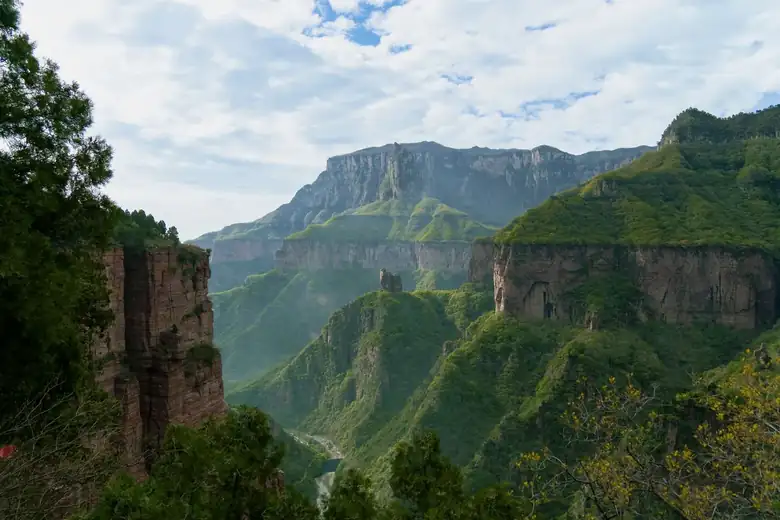
Hebei's territory resembles a wedge embedded in the North China region, with the Yanshan Mountains to the north, the Taihang Mountains to the west, the Bohai Sea to the east, and the Central Plains to the south. The central and southern regions consist of the vast Hebei Plain. This topographical configuration shapes the provincial geographic framework of "between mountains and sea, within the plain hinterland." As the administrative region guarding Beijing and Tianjin, Hebei holds a special position in China's political geography. Its administrative status is that of a province, with its capital at Shijiazhuang.
Within the province, the urban structure displays distinct divisions and differences. The capital, Shijiazhuang, serves as the province's political, economic, scientific, and cultural centre, functioning as a transport hub and a leader in industrial transformation. It has long been known as the "thoroughfare connecting north and south, the throat linking Shanxi and Hebei." The sub‑central city of Tangshan is Hebei's largest economic contributor; leveraging its port and steel industry, it has become a heavy‑chemical industrial base and is hailed as the "cradle of modern Chinese industry." Chengde is a strategic point connecting Beijing, Tianjin, Hebei, Inner Mongolia, and Liaoning. It is renowned for the Mountain Resort and its surrounding temples, a World Heritage site that represents the cultural legacy of the Qing dynasty's second political centre. Baoding, once the capital of Zhili Province, guards the southern gateway to the capital, with a profound historical heritage and a well‑developed modern manufacturing base. The coastal city of Qinhuangdao is a famous seaside tourist destination and an energy export port. Handan and Xingtai preserve the deep cultural legacy of the Zhao kingdom, Cangzhou is known for its martial arts and acrobatics, Zhangjiakou serves as a land transport hub connecting Beijing and Tianjin with Inner Mongolia, and Langfang lies in the Beijing‑Tianjin corridor. Together, these cities form the diverse mosaic of Hebei.
Historical Context
The history of Hebei is a chronicle of guarding the capital and its civilization through the ages. As early as 2 million years ago, the Nihewan ancient human site lit the early campfires of East Asia. Legend has it that the Yellow Emperor fought the Flame Emperor at Banquan and Chi You at Zhuolu; the integration of the three tribes gave birth to Chinese civilisation, and Zhuolu is thus regarded as one of the cradles of Chinese civilisation. During the Shang and Zhou dynasties, southern Hebei was the royal domain of the Shang, with Xingtai once serving as the Shang capital. The states of Yan and Zhao gradually emerged on the stage.
From the Warring States to the Qin and Han dynasties, this was a critical period when Hebei transitioned from a regional culture to the imperial heartland. Among the Seven Warring States, Yan held the north while Zhao occupied the south; Zhao's capital, Handan, and Yan's capital, Ji (in the vicinity of present‑day Beijing), made Hebei the core arena of feudal rivalry. King Wuling of Zhao's reform of "barbarian clothing and mounted archery" not only established Zhao's military strength but also symbolised the integration of nomadic and agricultural civilisations. The Qin dynasty implemented the commandery‑county system, dividing Hebei among commanderies such as Handan and Julu. The First Emperor made several eastern tours and died at the Shaqiu Platform (present‑day Guangzong, Xingtai). During the Western and Eastern Han dynasties, Hebei enjoyed economic prosperity and powerful local clans. It was precisely upon Hebei's powerful families that Liu Xiu relied to raise his troops, establish the Eastern Han, and set his capital at Luoyang. Hebei, as the "home of the emperor," received special attention, as evidenced by the jade burial suits and the Changxin Palace Lamp unearthed from the tombs of vassal states such as Zhongshan and Hejian, showcasing the ultimate craftsmanship and luxury of the Han dynasty.
During the Wei, Jin, and Northern and Southern Dynasties, Hebei entered a peak period of ethnic integration. Cao Wei established its capital at Yecheng (present‑day Linzhang, Handan), making it the political, military, and cultural centre of the north. The construction of the Bronze Sparrow Terrace and the emergence of Jian'an literature made this place a literary sanctuary of its time. Subsequently, the Later Zhao, Ran Wei, Former Yan, Eastern Wei, and Northern Qi all established their capitals at Ye; Buddhist temples multiplied and grottoes were carved, with the Xiangtangshan Grottoes originating here. At the same time, large numbers of northern peoples—Xianbei, Xiongnu, Jie, Di, and Qiang—migrated inward, making Hebei a melting pot of ethnic cohabitation and integration, laying the open foundation for the Sui and Tang empires.
From the Sui‑Tang to the Song‑Yuan dynasties, Hebei's strategic position became increasingly prominent. Emperor Yang of Sui excavated the Grand Canal, with the Yongji Canal running through Hebei, making it a lifeline for north‑south grain transport. Weizhou (present‑day Daming) was once a major Hebei stronghold. The Tang dynasty established the Hebei Circuit; its silk weaving industry flourished, and the ceramics of the Xing and Ding kilns were renowned throughout the empire. The An‑Shi Rebellion originated from Fanyang (present‑day Beijing and northern Hebei), plunging Hebei into a period of separatist military rule and giving rise to the distinctive Heshuo military culture. During the Northern Song, central and southern Hebei became the frontline of the Song‑Liao confrontation. The two dynasties took the Baigou River along the present‑day Baoding‑Xiongxian line as their border. The area was studded with defensive ponds and underground passages; the present‑day Xiong'an New Area was once the site of this "water‑based Great Wall." After the Yuan dynasty established its capital at Dadu (Beijing), Hebei transformed from a frontier stronghold into the hinterland of the capital. The Grand Canal was straightened, and the connection between the capital and Jiangnan became even closer.
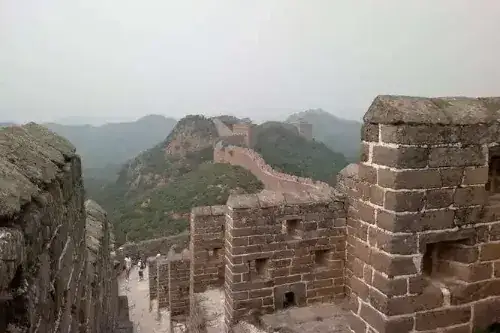
During the Ming and Qing dynasties, Hebei formally became the "environs of the capital," reaching its peak in guarding the imperial power. After the Yongle Emperor moved the capital to Beijing, the Northern Zhili (Beizhili) was established, covering most of present‑day Hebei. The Qing inherited and refined this system, formally establishing Zhili Province, whose jurisdiction included present‑day Hebei, Beijing, and Tianjin, with Baoding serving for a long time as the seat of the governor, and later the governor-general. The Qing emperors developed a system of imperial autumn hunts and conciliatory governance—from the Mulan Hunting Ground to the Chengde Mountain Resort. The Mountain Resort and the Eight Outer Temples became the second political centre for the Qing court to manage ethnic and foreign affairs, and Hebei thus carried the memory of Qing‑era multi‑ethnic governance. At the same time, the canal ports of Cangzhou and Botou enjoyed bustling commercial activity. In modern times, with coastal opening, Tianjin was forced to become a treaty port, profoundly altering Hebei's socioeconomic structure and directly bearing the weight of cultural collision between China and the West, as well as national salvation. In terms of historical sites, Hebei boasts the finest sections of the Great Wall (Shanhaiguan, Laolongtou, Jinshanling), the ancient course of the Grand Canal, the Mountain Resort, the Eastern and Western Qing tombs, the ruins of the Zhao capital at Handan, the Yecheng site, the Beiyue Temple, and numerous other national‑level cultural heritage sites—a veritable open‑air historical museum.
Cultural Heritage
Hebei's cultural map is a vibrant patchwork. Owing to its large geographical span and a history of frequent ethnic interaction, it has developed a diverse and inclusive character. Its dialects, folk customs, and arts each have distinct features; there is no single "Hebei culture," but rather the spirit of the ancient Yan‑Zhao region and the atmosphere of the capital region are reflected everywhere.
Dialect distribution and characteristics: Hebei dialects generally belong to the Mandarin dialect zone, but their internal differences are significant. They can be broadly divided into the Capital Metropolitan subgroup, Baoding‑Tangshan subgroup, Shijiazhuang‑Jinan subgroup, and Cangzhou‑Huimin subgroup. The Capital Metropolitan subgroup, distributed in Langfang, Gu'an, and Zhuozhou, is close to Beijing Mandarin and highly similar to standard pronunciation. The Baoding‑Tangshan subgroup, covering Baoding, Tangshan, and Qinhuangdao, preserves more Middle Chinese entering tones; Tangshan and Baoding dialects are rich in intonation and highly recognisable. The Shijiazhuang‑Jinan subgroup, including Shijiazhuang, Hengshui, Xingtai, and most of Handan, is a transitional zone between Ji‑Lu Mandarin and Central Plains Mandarin, with distinctive local vocabulary such as "zhan" (okay) and "deijinr" (comfortable) in the Shijiazhuang area. The Cangzhou‑Huimin subgroup, spoken in Cangzhou, Huanghua, and eastern Haixing, has a more robust and forceful tone. In addition, parts of Zhangjiakou belong to the Jin dialect area, preserving entering tones and showing cultural affinity with Shanxi. The speech of the Chengde area is considered the main source of standard Mandarin, with local dialects nearly identical to the standard.
Folk traditions: Hebei's festive customs are deep‑rooted, with both localised expressions of traditional Han festivals and unique customs shaped by multi‑ethnic integration. Spring Festival folk performances are especially popular in Hebei: Jingxing Flower Dance, Xushui Lion Dance, and Cangxian Lion Dance are all national‑level intangible heritage items. Around the 15th day of the first lunar month, village folk processions fill the air with drums and gongs. Gaocheng palace lantern making and the associated lantern‑hanging customs have a long history. The "Nine‑Bend Yellow River Formation" lantern festival in Gengle Town, Shexian County, is an extension of Yellow River culture. In wedding and funeral customs, Hebei's rural areas still preserve a strong sense of ritual, such as brides wearing red shoes and stepping over a brazier, while funerals include erecting a tent for vigil, lamenting, and smashing a basin. In the realm of belief, there are both folk cults (widespread devotion to Bixia Yuanjun and Guandi) and numerous religious sacred sites, such as Bailin Temple in Zhaoxian and Linji Temple in Zhengding, which are the ancestral temples of the Linji school of Chan Buddhism. The Liangmatai site in Rongcheng was an important Taoist centre in the Tang dynasty, while Cangzhou's Qiantong City preserves traces of the faith associated with Xu Fu's eastward voyage.
Artistic traditions: Hebei is a major centre for northern Chinese opera and folk performing arts. Hebei Bangzi is the province's main local opera genre, with a high‑pitched, passionate style and profound influence; classic plays such as The Precious Lotus Lantern and The Butterfly Cup are widely loved. Pingju opera originated from the lotus‑fall folk art of eastern Hebei and later developed into a national genre, with masters such as Cheng Zhaocai. Sixian opera is a unique genre in the Shijiazhuang area and is listed as a national intangible heritage. Baoding Laodiao, Weixian Luantan, and Yuxian Yangge opera each have their own flavours. In painting and calligraphy, Hengshui inside‑bottle painting (snuff bottle painting) is exquisitely delicate, with Wang Xisan as a representative. Wuqiang New Year paintings, with their bold colours and exaggerated forms, are representative of northern New Year paintings and are as famous as Yangliuqing prints in Tianjin. Quyang stone carving has been famous since the Han dynasty; the stone lions of the Beiyue Temple and the bas‑reliefs of the Monument to the People's Heroes were both carved by Quyang artisans. Tangshan shadow puppetry (Luanzhou shadow play) and Yuxian paper‑cutting are also world‑renowned folk arts; Yuxian paper‑cutting uses Xuan paper and employs the techniques of negative carving and colour dotting, producing delicate, beautiful works.
Intangible cultural heritage: Hebei is rich in intangible cultural heritage resources. UNESCO Representative List items include Chinese paper‑cutting (Yuxian paper‑cutting, etc.), traditional Chinese sericulture and silk‑weaving techniques (including the Hebei portion), and Taijiquan. The national‑level intangible heritage list includes over one hundred items in Hebei, such as Wuqiao acrobatics, Cangzhou martial arts (Piguaquan, Bajiquan, etc.), Yang‑style Taijiquan, Wu‑style Taijiquan, Hejian Xihe Dagu drumming, Laoting Dagu, Changli Yangge, and Tangshan Huachui (folk wind music). Wuqiao acrobatics is hailed as the "cradle of world acrobatics," and the Wuqiao Acrobatic World is the only acrobatic cultural theme park of its kind. Cangzhou martial arts have many schools, and the city lives up to its name as the "hometown of martial arts." These intangible heritage items embody the cultural character of Hebei people—a combination of strength and gentleness, and competence in both literary and martial arts.
Architecture and Urban Landscape
Hebei's architecture is a material epic forged by geography and history, from the ancient Taihang passes to the coastal Jieshi, from Shang eaves tiles to Qing‑dynasty gardens, presenting a rich spectrum of layers. The traditional architectural style is not singular but unfolds along plains, mountains, and coasts, encompassing both solid, unadorned official architecture and delicate, flexible folk construction.
Traditional architecture can be divided geographically into three lineages. In the western Taihang Mountains, stone dwellings and defensive fortresses predominate, such as Yujia Stone Village in Jingxing and Yingtan Ancient Village in Xingtai. These stone houses are built on the slopes with thick walls and small windows, adapted to cold weather and defence needs. In the central plains, brick‑and‑timber courtyard houses are common; Zhengding, Dingzhou, and other areas preserve typical northern quadrangles—square in layout, with grey bricks and tiles and ornately decorated gate towers, reflecting the standards and simplicity of the metropolitan region. The Zhili Governor's Office in Baoding is a typical Qing‑dynasty official yamen complex, with five courtyards and an imposing presence. The Mountain Resort and Eight Outer Temples in Chengde integrate Han, Mongol, Tibetan, and Uyghur architectural styles; the Golden Pavilion imitates Zhenjiang's Jinshan Temple, while the Potala‑style Putuo Zongcheng Temple imitates the Potala Palace. Together, the resort and temples stand as masterpieces of classical Chinese garden and temple architecture.
Modern and contemporary architecture records Hebei's transition from a closed society to the opening of treaty ports. Tangshan, as the birthplace of modern Chinese industry, preserves the earliest standard‑gauge railway—the Tangshan‑Xugezhuang Railway site—and the early headframes and Western‑style buildings of the Kailuan Coal Mine, displaying the vocabulary of modern industrial architecture. Beidaihe in Qinhuangdao was one of China's four modern summer resorts. From the late 19th century, hundreds of villas in various foreign styles were built; the old villa area blends Victorian, Romanesque, Gothic, and other styles, forming an open‑air architectural museum. Shijiazhuang grew with the railway; the opening of the "Dashi Gate" (Zhengding‑Taiyuan Railway) left behind Sino‑Western hybrid early‑railway hotels such as Zhengta Hotel. Baoding and Zhangjiakou also preserve many late‑Qing and early‑Republican church buildings and commercial guild halls, such as Baoding's West Street and Zhangjiakou's Fort (Baozi Li).
In terms of urban fabric, most ancient cities in Hebei follow a chessboard layout. Zhengding's city wall is well preserved, with Longxing Temple, Lingxiao Pagoda, and the Confucius Temple scattered within; the ancient street pattern is still discernible. Daming Ancient City in Handan and Yuxian Ancient City have a strong military‑stronghold character, with tall walls, a drum tower in the centre, and cross streets leading to the four gates. The urban fabric of the provincial capital, Shijiazhuang, clearly displays the expansion trajectory of a "city pulled by the railway." With the old railway station at its centre, multiple arterial roads radiate outward; old lanes such as Dajing Street and Xiumen Street were later incorporated into the modern grid, creating layers of old and new.
There are many distinctive areas. The Chengde Mountain Resort and surrounding temples are exemplary models of garden and religious architecture. In recent years, Zhengding Ancient City has restored its south gate and Yanghe Tower, and the historical district from Longxing Temple to the south gate concentrates the ancient charm of "three hills unseen, nine bridges without flow." Zhangjiakou's Fort (Baozi Li) was an important fortress town for Sino‑Russian trade during the Ming‑Qing period, containing bank houses and foreign firms in Sino‑Western hybrid buildings. Baoding's West Street and East Street epitomise Zhili culture, with bluestone streets and two‑storey wooden commercial buildings stretching for hundreds of metres. Although Tianjin is a separate municipality, it was once culturally and geographically one with Hebei; the Grand Canal heritage sites in Hebei—such as the Lianzhen Xie Family Dam on the South Canal—also form a vivid canal landscape belt. Another distinctive feature is the cluster of ancient villages at the foot of the Taihang Mountains: Wangjinzhuang in Shexian, Shentou Village in Xingtai, and others, where layered stone terraces and dwellings coexist, creating a "Taihang Mountain Dwelling Scene."
Culinary Culture
Hebei's cuisine, like its culture, combines ruggedness with refinement and simplicity with depth. Influenced by Beijing and Shandong cuisines, and shaped by the province's geographic divisions—mountain, plain, and coast—it is characterised by three flavour zones. Overall, savoury and fragrant flavours dominate, with liberal use of sauces and smoking techniques. Portions are generous and good value, reflecting the boldness of the Yan‑Zhao region and the agricultural civilisation's depth.
Representative dishes and characteristics: Hebei cuisine is often referred to collectively as "Ji cuisine," but with notable internal differences. The central and southern plains have inherited the legacy of official cuisine; represented by Baoding and Shijiazhuang, they emphasise heat control and knife skills, with rich flavours—typified by Zhili official cuisine. The eastern coastal region, centred on Tangshan and Qinhuangdao, excels in seafood, favouring fresh, savoury, and light flavours. The northern mountains, deeply influenced by Mongol and Manchu cuisine, feature notable beef, mutton, and wheat dishes—such as the oat‑based dishes and hotpot of Chengde and Zhangjiakou. Overall, sauce, smoke, and rich broths are the mainstream of Ji cuisine, closely related to Hebei's long‑standing role as the capital region, providing food for various government offices, schools, and travellers.
Classic dishes and snacks are abundant. First and foremost is the donkey meat sandwich, Hebei's most famous snack, represented by Baoding. Flavoured braised donkey meat is stuffed into a freshly baked round flatbread; the meat is red and tender, the bread crisp, and each bite releases rich juices—earning the saying "Heavenly dragon meat, earthly donkey meat." Cangzhou lamb intestine and tripe soup (mutton offal soup) displays a different kind of boldness: lamb bones and meat are simmered to a white broth, with chopped lamb intestines and tripe; the soup is fresh and without gaminess, served with a freshly baked flatbread—a favourite of ordinary people. Xianghe meat pie is a Langfang specialty: two layers of dough wrap a full jin of meat filling, rolled into a thin pancake and fried golden on both sides—pure meat, honest and satisfying. Chengde's Pingquan mutton soup with its sesame‑seed or hanging‑oven flatbread is rich and spicy, perfect for warming the body on cold days. Tangshan chess‑piece pies are small, shaped like chess pieces, with a meat filling, crisp outside and tender inside. Shijiazhuang Wuji buckwheat noodles are pressed from buckwheat and elm‑bark flour, served with an aged broth mixed with sesame oil—a staple home‑style dish of the central Hebei plain. Among speciality dishes, golden‑mane lion fish is a skill‑intensive dish: a carp is fried into a fluffy lion shape and drizzled with a sweet‑and‑sour sauce, representing the refinement of official Hebei cuisine. Li Hongzhang mixed stew originates from the Zhili governor's kitchen, combining sea cucumber, shark fin, chicken, pork tripe, and other ingredients in a single rich pot. Snow cabbage stewed with tofu, braised fish, and crispy braised pork elbow are all traditional home‑style classics.
Dietary customs are permeated by the agricultural calendar and banquet etiquette. Winter brings radishes, summer ginger; garlic is pickled for Laba Festival; and in the twelfth lunar month, meat is stewed for the New Year. Hebei banquets follow the "eight‑eight feast" or "twelve‑eight feast" patterns (eight dishes and eight bowls or more), with cold and hot dishes, meat and vegetables, and dried and fresh fruits all balanced, showing the host's sincerity. The whole‑fish banquets around Baiyangdian and Hengshui Lake, and the steamed seafood of Qinhuangdao, also highlight the freshness of rivers and seas. Drinking customs are strong; Hengshui Laobaigan, Chengde Shanzhuang Laojiu, and Congtai liquor are high‑proof and robust, matching the heroic spirit of Yan‑Zhao.
The regional character behind the food is distinctive. The large portions and low prices reflect the honesty of Hebei people; the common‑person appeal of the donkey‑meat sandwich shows a lack of pretension and a devotion to daily sustenance; and the inclusiveness of "anything in a flatbread" is a projection of Hebei's cultural attitude as a north‑south convergence zone. From a bowl of buckwheat noodles in the Taihang Mountains to a seafood feast by the Bohai Sea, one tastes the generosity of mountains, rivers, and seas, and the resilience of the land.
Modern and Contemporary Development
Hebei's modern and contemporary development history is one deeply shaped by the capital, repeatedly adjusting its functions in service of national strategies. From the opening of treaty ports and the seeds of industrialisation, to the establishment of heavy‑industrial bases during the planned‑economy era, and now to the integrated development of the Beijing‑Tianjin‑Hebei region and industrial transformation and upgrading, Hebei has always played a unique role in China's modernisation process.
Opening of ports and external engagement: Although Hebei did not directly possess treaty ports (Tianjin was the one opened), its modernisation was closely tied to the Tianjin gateway and its own resources. In 1878, the Kaiping Mining Bureau was established, and Tangshan prospered on coal. In 1881, China's first standard‑gauge railway—the Tangshan‑Xugezhuang Railway—was completed and opened, and the earliest railway factory was born in Xugezhuang. Subsequently, Tangshan produced China's first steam locomotive and the first barrel of machine‑made cement (Qixin Cement), making it the birthplace of modern industry. Qinhuangdao Port also opened as a self‑declared port in the late Qing, exporting Kailuan coal and importing foreign goods. During this period, the modern transport network in Hebei began to take shape, with the Beijing‑Hankou, Tianjin‑Pukou, Zhengding‑Taiyuan, and Beijing‑Zhangjiakou railways successively laid. Shijiazhuang rapidly rose as a "city pulled by the railway" at the intersection of the Zhengding‑Taiyuan and Beijing‑Hankou lines. Missionaries and foreign merchants also engaged in the fur trade and cultural‑educational activities in Zhangjiakou, Baoding, and other places, bringing early modern hospitals and schools.
After 1949, Hebei was placed on the track of state‑prioritised heavy industry. The provincial capital shifted from Baoding to Tianjin and finally settled in Shijiazhuang in 1968, with the political centre driving urban development. During the First Five‑Year Plan, several of the 156 key Soviet‑assisted projects were located in Hebei, such as Shijiazhuang North China Pharmaceutical (an antibiotic base) and the Rehe (Chengde) vanadium‑titanium steel project, establishing Shijiazhuang as a pharmaceutical centre. Tangshan gradually developed into a national base for steel, coal, and machinery manufacturing, with steel output long leading the country. Baoding built up manufacturing in film and transformers. Cangzhou's petrochemical industry emerged from the development of the Dagang and Huabei oilfields. Qinhuangdao Port became the main hub for shipping coal from north to south. Huanghua Port also rose at the end of the 20th century. During this phase, Hebei formed an industrial system centred on steel, chemicals, building materials, textiles, and pharmaceuticals, but also sowed the seeds of structural problems—over‑reliance on heavy industry and a "heavy, crude" structure.
The post‑reform‑and‑opening‑up transition has been full of contradictions and efforts. In the 1980s and 1990s, township enterprises flourished in places like Baigou (luggage), Qinghe (cashmere), Anping (wire mesh), and Yongnian (standard parts), forming distinctive private‑sector industrial clusters. At the same time, the disparity within the Beijing‑Tianjin‑Hebei region placed Hebei under a "siphoning" effect, with talent and capital flowing to Beijing and Tianjin, while Hebei bore the pain of steel capacity reduction and air pollution control. In the 21st century, the relocation of Shougang to Caofeidian ushered in the industrial synergy of the Beijing‑Tianjin‑Hebei region. In 2014, the coordinated development of the Beijing‑Tianjin‑Hebei region was elevated to a major national strategy. Hebei's positioning was defined as a "national modern logistics and trade hub, an industrial transformation and upgrading pilot zone, a demonstration zone for new urbanisation and urban‑rural integration, and an ecological support zone for the Beijing‑Tianjin‑Hebei region." In 2017, the Xiong'an New Area was established as a "millennium plan" and a "great national affair," aiming to serve as a concentrated carrying area for Beijing's non‑capital functions and an innovation‑development demonstration zone. The province's economic restructuring continues: Tangshan reduces steel capacity while deploying high‑quality steel and high‑end equipment; Shijiazhuang develops biomedicine and information technology; Langfang leverages Beijing Daxing International Airport for airport‑related economy; Baoding and Cangzhou undertake automobile and parts manufacturing; Zhangjiakou uses wind and hydrogen energy to build a renewable energy demonstration zone. Hebei's current positioning is to accelerate the construction of a strong economic province and a beautiful Hebei, pursuing the path of "new industrialisation, urbanisation, informatisation, and agricultural modernisation" in parallel, and seeking new coordinates in the Bohai Rim economic circle. The division of labour within the province is becoming increasingly clear: the coastal leading development zone (Qinhuangdao‑Tangshan‑Cangzhou), the core area around Beijing and Tianjin (Baoding‑Langfang), the central‑southern functional expansion zone (Shijiazhuang‑Hengshui‑Xingtai‑Handan), and the northwestern ecological conservation zone (Zhangjiakou‑Chengde).
Transportation and Travel
Hebei lies at the transport hub of North China, and since ancient times has been a north‑south thoroughfare. Today, the provincial transport network is extremely dense, with one of the highest expressway densities in the country. Railway trunk lines criss‑cross the province, and the aviation layout is gradually improving. A comprehensive transport system has taken shape, with Shijiazhuang as the centre and Qinhuangdao, Tangshan, Zhangjiakou, Chengde, and others as sub‑hubs. Every journey here is a geographical reading through time and space.
External transport is Hebei's basic advantage. In railways, conventional trunk lines such as Beijing‑Guangzhou, Beijing‑Kowloon, Beijing‑Shanghai, Beijing‑Harbin, Datong‑Qinhuangdao, Shuozhou‑Huanghua, Shijiazhuang‑Taiyuan, Handan‑Changzhi, and Handan‑Jinan cross the province, establishing it as a major corridor for energy transport and passenger traffic. In the high‑speed era, the Beijing‑Guangzhou high‑speed railway runs north‑south, connecting Baoding, Shijiazhuang, Xingtai, and Handan. The Beijing‑Shanghai high‑speed railway passes through Langfang (where it does not have a principal station, though Langfang Station exists) and Cangzhou. The Tianjin‑Qinhuangdao high‑speed railway connects Tangshan and Qinhuangdao to the northeastern network. The Beijing‑Zhangjiakou and Zhangjiakou‑Hohhot high‑speed railways connect Zhangjiakou and link to Inner Mongolia. The Beijing‑Harbin high‑speed railway passes through Chengde into the Northeast. The Shijiazhuang‑Jinan passenger railway and the Shijiazhuang‑Hengshui‑Cangzhou‑Huanghua intercity railway (under construction) are densifying the east‑west corridors. Shijiazhuang Station is an extremely important high‑speed rail hub in North China, offering convenient direct connections to major cities nationwide. Among conventional railways, the Datong‑Qinhuangdao and Shuozhou‑Huanghua lines are heavy‑haul railways for transporting coal from west to east. In expressways, the Beijing‑radiating expressways—Beijing‑Hong‑Kong‑Macau, Daqing‑Guangzhou, Beijing‑Taipei, Beijing‑Kunming, Beijing‑Xinjiang, Beijing‑Tibet, Beijing‑Harbin, and Beijing‑Chengde—all pass through Hebei. Together with the east‑west expressways such as Rongcheng‑Wuhai, Changchun‑Shenzhen, Qingdao‑Yinchuan, and Qingdao‑Lanzhou, they form a dense expressway network covering all counties and above, connecting mountains and coast, plains and plateau.
Aviation is being continuously optimised. The capital's Shijiazhuang Zhengding International Airport is a 4E trunk airport, serving most provincial capitals and key cities, with international routes to South Korea, Russia, and Southeast Asia; it is a vital part of the Beijing‑Tianjin‑Hebei airport cluster. Regional airports such as Tangshan Sannühe, Qinhuangdao Beidaihe, Chengde Puning, Zhangjiakou Ningyuan, and Handan Matou, along with the under‑construction Xingtai Dalian Airport, form a regional network, alleviating travel‑distance anxiety for Hebei travellers. In freight, Hebei relies on its ports to develop sea-land-air multimodal transport capability; Tangshan Port, Qinhuangdao Port, and Huanghua Port handle the national energy export and export-oriented processing‑industry cargo functions.
The provincial transport network offers unique travel experiences. Taking the high‑speed train from Beijing, you can reach Langfang or Baoding in just over half an hour, Shijiazhuang in little more than an hour, and Handan in two hours. This "one‑hour transport circle" seamlessly integrates the Beijing metropolitan area with the Hebei urban clusters. Driving along the Taihang Mountain Expressway, you can appreciate the 600‑kilometre natural and cultural corridor from Yuxian to Shexian, with cliffs, terraced fields, ancient villages, and beacon towers alongside the road. The coastal expressway links the golden beaches of Beidaihe, Tangshan's islands, and Cangzhou's wetlands, presenting another water‑bound landscape. Taking a slow green‑train through Hebei's conventional lines—such as the Chengde‑Xinglong railway—you can see villages dotted among the depths of the Yanshan Mountains. For urban transport, the capital Shijiazhuang has a metro system with Lines 1, 2, and 3 operating in a network, facilitating intracity travel. Other cities have well‑developed bus and taxi systems, with bike‑sharing available in some. If you wish to visit ancient Taihang villages and remote temples, self‑driving or car rental is the best option; the winding mountain roads challenge your driving skills but reward you with magnificent scenery.
Travel Tips
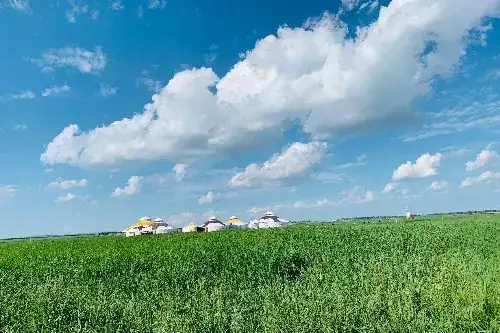
The best travel seasons in Hebei are spring and autumn. From April to May, pear and peach blossoms bloom in the plains, the Taihang Mountains are tinged with fresh green, and the weather is pleasant. From September to October, the skies are clear and high; autumn colours extend from the colourful grasslands of the Bashang Plateau to the red leaves on the Taihang cliffs, and seafood is at its peak—the most enjoyable season of the year. Summer is suitable for coastal escapes; Beidaihe, Nandaihe, and Yue Island in Laoting are good seaside destinations, but the plain cities can be hot. Winter is the time for skiing in Zhangjiakou's Chongli district, or for viewing the snow‑covered Mountain Resort in Chengde—rime ice and frozen lakes present a distinctive northern landscape.
Must‑visit attractions and experiences focus on the province's spiritual landmarks. First, the Chengde Mountain Resort and surrounding temples require a full day: enter the resort in the morning, stroll through the lake area, then climb the "Little Potala" Putuo Zongcheng Temple to experience the Qing emperor's mountain‑dwelling ideals and the grand narrative of ethnic conciliation. Second, Qinhuangdao's Shanhaiguan Pass and Laolongtou—the only place where the Great Wall meets the sea. Stand at Laolongtou and reflect on history, watching the Great Wall and the ocean converge; then relax on the beaches of Beidaihe. Third, a Zhengding Ancient City tour: from the Rear-facing Guanyin of Longxing Temple and the unique Song‑dynasty Mani Hall, to the Chengling Pagoda of Linji Temple, then cycle slowly through the south gate; at dusk, enjoy a bowl of shaomai under Yanghe Tower and experience the everyday life of this "treasure house of ancient architecture." Fourth, a Taihang Mountain ancient pass journey: choose Jingxing County to explore the ancient Qin imperial post road, Yujia Stone Village, and Cangyan Mountain's hanging temple, experiencing the pass culture of the "Eight Taihang Passes." This route also reveals the resilience and wisdom of Hebei people. Fifth, the Grand Canal's Cangzhou section and Wuqiao acrobatics: take a boat or drive along the Cangzhou South Canal to see the Xie Family Dam with its glutinous‑rice‑rammed‑earth construction, then head to the Wuqiao Acrobatic World to watch jar‑balancing, tightrope‑walking, and other acrobatic performances up close, savouring the vitality of folk culture.
Practical tips: Hebei's landscapes vary greatly across the province; check the weather at your destination before setting out. For transport, high‑speed rail connects major north‑south cities, but for trips to the western mountains or remote counties, it is best to arrange car rental or charter in advance. Hebei dishes are generous in portion; order less and add more as needed. Mandarin is universally spoken in Hebei; although some local dialects may be hard to understand, communication is smooth. Accommodation options range from high‑end to budget in cities; in ancient towns or villages, you can experience farm stays, but facilities are relatively simple, so bring your own toiletries. Recommended souvenirs include Wuqiang New Year paintings, Gaocheng palace lanterns, Hengshui Laobaigan liquor, Tangshan bone china, and Yuxian paper‑cuts.
Cautions: Many of Hebei's historical sites and villages are scattered across fields and mountains, and some have not yet been commercially developed. When visiting, respect local residents and do not enter private courtyards without permission. Some sections of the Taihang Mountains are prone to rockfalls in summer; drive with caution. When eating seafood along the coast, pay attention to hygiene and avoid excessive drinking, especially when pairing with baijiu. In winter, the Bashang Plateau and mountain areas are very cold; bring adequate warm clothing. As a core area for air pollution prevention and control in the Beijing‑Tianjin‑Hebei region, air quality can sometimes be poor; sensitive individuals may prepare masks and monitor weather alerts. Parts of the Xiong'an New Area are still under construction; check opening information before visiting. Most museums are closed on Mondays, so plan your itinerary accordingly.
Travel information can change. Check current opening hours, reservations and entry requirements before you travel.
Traveller discussion
Start the conversation with a helpful tip or a question.