
[Tianjin Tourism] Two-day Tianjin itinerary, including transportation, accommodation, food, and attractions.
Taking your kids to Tianjin for summer vacation is a fun and educational experience that also strengthens parent-child interaction. Tianjin blends modern history with contemporary vitality. The European-style architecture of the Five Avenues and the Italian Style Town allows children to directly experience historical changes; the Binhai Library an…
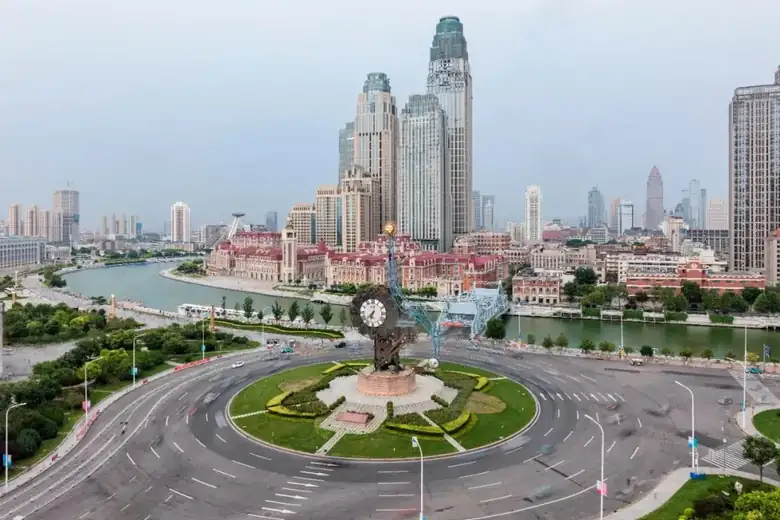
Taking your kids to Tianjin for summer vacation is a fun and educational experience that also strengthens parent-child interaction. Tianjin blends modern history with contemporary vitality. The European-style architecture of the Five Avenues and the Italian Style Town allows children to directly experience historical changes; the Binhai Library and Science and Technology Museum inspire their curiosity and allow them to learn while playing; and the Clay Figurines of Zhang and Yangliuqing New Year Paintings in the Ancient Culture Street preserve intangible cultural heritage. In the evening, take a cruise on the Haihe River to enjoy the dazzling night view, or go clam digging on the beach of Dongjiang Bay to satisfy children's natural desire to connect with nature. The local delicacies like Goubuli steamed buns and Jianbing (Chinese crepes) offer a culinary adventure. Conveniently located and reasonably priced, this trip offers a great value for money, providing children with knowledge, beautiful scenery, and laughter.
Tianjin Transportation Suggestions
High-speed rail (recommended):
From Beijing: The Beijing-Tianjin Intercity High-Speed Railway takes only 30 minutes (Beijing South Station → Tianjin Station/Tianjin West Station), with frequent train services, making it suitable for short-distance travel.
Cities in the Yangtze River Delta such as Shanghai, Nanjing, and Hangzhou: You can take the Beijing-Shanghai High-Speed Railway, which takes about 4-5 hours to reach Tianjin South Station or Tianjin West Station.
For cities in South China such as Guangzhou and Shenzhen: You can take the Beijing-Guangzhou High-Speed Railway and the Beijing-Tianjin Intercity Railway, which takes about 8-10 hours in total.
Advantages: Direct access to the city center (both Tianjin Station and Tianjin West Station are located in the city center), convenient transfer to subway and bus.
airplane:
Tianjin Binhai International Airport (TSN):
Subway: Line 2 goes directly to the city center (about 40 minutes).
Airport bus: There are routes to Tianjin Station, West Station, etc., with fares ranging from 15 to 25 yuan.
High-speed rail intermodal transport: Tianjin West Railway Station has a city terminal where passengers can check in and take the high-speed rail to Daxing Airport (suitable for international flights).
Domestic routes: covering major cities such as Beijing, Shanghai, Guangzhou, Shenzhen, Chengdu, Chongqing, and Xi'an.
International/Regional Routes: Some flights to Japan, South Korea, and Southeast Asia are available.
Self-driving:
Beijing-Tianjin-Hebei region:
Beijing → Tianjin: Beijing-Shanghai/Beijing-Tianjin Expressway, approximately 1.5-2 hours (please note that traffic restrictions apply during morning and evening rush hours).
Hebei (Shijiazhuang/Baoding) → Tianjin: Beijing-Hong Kong-Macau Expressway/Tianjin-Shijiazhuang Expressway, approximately 3-4 hours.
Long-distance road trip (East China/Northeast China):
Shandong/Jiangsu → Tianjin: Beijing-Shanghai/Changchun-Shenzhen Expressway, approximately 5-6 hours.
Liaoning → Tianjin: Beijing-Harbin Expressway + Qinbin Expressway, approximately 6-7 hours.
Precautions:
Traffic restriction policy: Vehicles with license plates from outside Tianjin are restricted from driving during weekday morning and evening rush hours (7:00-9:00 and 16:00-19:00), but are not restricted on holidays.
Free highway access: Passenger vehicles with 7 seats or less can pass for free during holidays such as Spring Festival and National Day.
Charging/Refueling: Tianjin Expressway Service Area provides charging stations and refueling services.
Tianjin travel itinerary
Day 1: Tianjin Railway Station → Jiefang Bridge → Century Clock → Italian Style Street → Bei'an Bridge → Porcelain House → Zhang Xueliang's Former Residence → Zhang Ailing's Former Residence → Jinwan Square
Day 2: Xiaobailou → Five Avenues → Minyuan Square → Xikai Church → Northwest Corner → Ancient Culture Street → Grandpa Diving → Tianjin Eye Jinwan Square
Recommended attractions in Tianjin
Liberation Bridge
Originally named Wanguo Bridge, it was built in 1927. The all-steel structure is operable, with a central arch featuring double rotating flaps. When closed, vehicles can pass; when open, boats can pass. It witnessed the turmoil of the War of Resistance against Japan and the liberation of Tianjin.
Century Clock
Every year-end, this place becomes the heart of the New Year's Eve celebrations, where countless people gather to welcome the new year with the ringing of bells.
Jinwan Plaza
The European-style buildings are arranged in a charming and orderly manner. I definitely want to come back for a second visit at night. The romance and relaxed atmosphere of Tianjin people are fully displayed here.
Tianjin Italian Style Area
The Tianjin Italian Style Area is located in Hebei District, Tianjin. It was originally an Italian concession and was first built in 1902. It is now a national AAAA-level tourist attraction.
In 1900, the Eight-Nation Alliance launched an invasion of China and occupied Tianjin. On June 7, 1902, the Qing government was forced to sign the "Contract of Regulations for the Italian Concession in Tianjin" with Italy, which defined the boundaries of the Italian Concession in Tianjin.
The Italian Concession was located between the Austrian Concession and the Russian Concession in Tianjin, bordered by the Haihe River to the south and the Jinshan Railway to the north. It faced the French Concession and the Japanese Concession in Tianjin across the river, covering an area of 771 mu.
All 137 buildings in the concession were designed by Italian architects, including consulates, barracks, schools, hospitals, churches, stadiums, markets, fire stations, gardens, squares, etc.
In 1945, after the victory of the War of Resistance against Japan, the Italian Concession in Tianjin was returned to the Chinese government. In March 2003, Tianjin began the protective development of the Italian-style buildings in the Italian-style area. In 2009, the Italian-style area officially opened to the public, and the Tianjin Urban Planning Exhibition Hall was completed.
The core area of the Italian Style District extends from Wujing Road in the east to Shengli Road in the west, forming a square area bounded by Wujing Road, Bo'ai Road, Shengli Road, and Jianguo Road. The district boasts a unique streetscape and is the only well-preserved Italian-style architectural complex in Asia.
On September 30, 2024, Zhongshuge, known as "China's Most Beautiful Bookstore," opened at No. 39 Minzu Road in the Italian Style District. Its red brick walls and geometrically beautiful architecture blend seamlessly with the surrounding European-style buildings.
Since its opening, Zhongshuge has attracted a large number of readers to immerse themselves in reading, and its unique interior design has also attracted a large number of tourists to take photos. The daily number of visitors exceeds 20,000.
The Tianjin Italian Style Area is a place that perfectly blends exotic charm, historical heritage and modern leisure, perfectly embodying the urban charm of Tianjin as a "World Architecture Expo".
Bei'an Bridge
After the Bei'an Bridge is lifted into place, a widened bridge will be built on both sides, along with a waterfront platform walkway, and overall architectural and landscape decoration will be carried out. According to experts, the architectural and decorative design takes into account the rich historical and cultural background of the Haihe River banks, combines the structural form of the existing bridge, and draws inspiration from the Pont Alexandre III in Paris, France, adopting a Western classical architectural style.
The sculptures at the bridgeheads of Bei'an Bridge adopt a Western classical style, including four bridgehead statues symbolizing peace in the east, south, west, and north: the Azure Dragon, the White Tiger, the Vermilion Bird, and the Black Tortoise; bronze-embossed "coiled dragon" bridge pier statues; and four female musician statues in different dancing poses on the bridge railing bases. The four female musician sculptures and two coiled dragon sculptures have been installed. The four bronze female musicians are each approximately 2.8 meters tall, each holding a different musical instrument: the ruan, panpipes, pipa, and sheng, striving to highlight classical Chinese charm. The two coiled dragon sculptures adopt a fusion of Chinese and Western styles, with golden dragon heads, bodies, and claws. They coil on both sides of the bridge on the upper and lower reaches of the Haihe River, seemingly rising from the water, lifelike and vivid. The pedestrian and non-motorized vehicle lanes are paved with granite, and the railings are made of vase-shaped stone. The renovated and decorated Bei'an Bridge will become a combination of classical and modern styles, adding a bright link to the new blueprint of the Haihe River.
Porcelain House
Near Heping Road in Tianjin, there is a French-style villa decorated with antique porcelain. Mr. Feng Jicai once personally inscribed the words "Beautiful Porcelain, Unique Building". In 2010, the Huffington Post of the United States selected this "Chinese Ancient Porcelain Museum" as one of the world's fifteen most unique design museums, alongside the Louvre Museum in Paris, the Denver Art Museum in the United States, and the Centre Pompidou.
The historic district is lined with numerous small Western-style buildings. Legend has it that during the Republic of China era, as many as fifteen military governors lived on this street, hence its name, "Governors' Street." The Porcelain House, originally built in the late 1920s, is over 100 years old. It has four floors and a floor area of 4,200 square meters. Initially a bank, it later became the residence of diplomat Huang Rongliang, a native of Wuwei, Anhui, who studied in the United States, attending Columbia University. He served as consul general in New Zealand, Australia, and other countries. After moving to Tianjin, he lived in the French Concession, specifically at No. 72 Chifeng Road, in the Porcelain House. After the liberation, the Porcelain House briefly served as the office of the Tianjin Heping District Administration for Industry and Commerce. After the Administration relocated, the Porcelain House was purchased by businessman Zhang Lianzhi in 2002 for 30 million yuan, who opened a restaurant called Yue Weixian. Later, he had a sudden inspiration to decorate the Porcelain House with his vast collection of porcelain shards, not only for tourism but also to better promote Chinese culture.
✅️Ticket booking:Trip
Further Reading: [Tianjin Porcelain House] Encountering the Beauty of Ancient Porcelain and Understanding the Heart of Craftsmen
Zhang Xueliang's Former Residence
Zhang Xueliang's Former Residence, also known as the Young Marshal's Mansion, is located at No. 78 Chifeng Road, Heping District, Tianjin. It is a three-story building mainly in the Baroque style. Zhang Xueliang lived here from 1924 to 1931. It is now the Zhang Xueliang Former Residence Museum and a national AAA-level tourist attraction.
Zhang Xueliang's former residence was first built in 1921, covering an area of 1,418 square meters. In 1924, Zhang Xueliang purchased it from the French consulate in the name of Zhang Shouyi (Zhang Zuolin's fifth wife). After 1949, Zhang Shouyi went to Hong Kong, and her son Zhang Xuequan managed and rented it out. In 1956, after a renovation of the private property, it came under state management, and in 1960, it was transferred to public ownership. In October 2012, after preservation and development, it opened to the public as a museum, showcasing Zhang Xueliang's life there a century ago.
Further Reading: [Zhang Xueliang's Former Residence] A Complete Guide to Visiting the Zhang Xueliang Former Residence Exhibition Hall, Including Zhang Xueliang's Former Residence, Zhao Yidi's Former Residence, and Shenyang Financial Museum
Zhang Ailing's Former Residence
Eileen Chang, a woman who stunned the world, her talent and legendary life captivated countless people. Because of her, I understood "because I have loved, I am compassionate; because I understand, I am tolerant," and out of admiration for her, I visited Eileen Chang's former residence on a sweltering summer noon.
Eileen Chang's former residence is located at No. 83 Chifeng Road, Tianjin, and is a three-story terraced house. It is said that this is where Eileen Chang lived from the age of two to eight, where she spent a happy period of time and laid the foundation for her lifelong literary career.
Five Avenues
Instantly transported to Europe! This place was once the British concession stadium in 1920, now transformed into a Roman-style circular plaza. 72 Corinthian columns support the red-tiled dome, and the light and shadow corridor makes for stunning photos at every turn!
Tianjin Eye
A giant Ferris wheel, 120 meters high, spans the Hai River and is the world's only Ferris wheel perched on a bridge, giving you a view of London!
Further Reading: [Tianjin Eye Travel Guide] Experience the dazzling Ferris wheel under the night sky of the Haihe River
Xikai Church
The Xikai Church in Tianjin, officially known as the Xikai Catholic Cathedral, is also called the Xikai Church or the Old Xikai Church due to its location. It was built in 1916 (the fifth year of the Republic of China) under the supervision of the French missionary Paul Dupuy. The church's floor plan is in the shape of a Latin cross, with three massive domes, each 45 meters high, arranged in a staggered "品" (pin) shape. All three domes are slightly elongated upwards and covered with green copper plates. The massive domes are supported by wooden structures, and each dome is topped with a bronze cross. The Xikai Church is a protected cultural relic of Tianjin and a historical building under special protection. It is the largest Romanesque building in Tianjin and the cathedral of the Catholic Diocese of Tianjin. In November 2018, the Xikai Church was selected as one of the third batch of 20th-century architectural heritage sites in China.
Further Reading: [Tianjin Tourist Attractions] 10 Recommended Attractions in Tianjin! Each One is Worth Visiting!
Tianjin Accommodation Recommendations
1️⃣Southwest Corner MRT Station:Located in the heart of Tianjin, this area boasts convenient transportation and is surrounded by numerous historical and cultural attractions and shopping centers. The area offers a diverse range of hotels of good quality, making it a great option.
2️⃣ Near Tanggu:Located near the sea, it's perfect for tourists who want to experience the sea breeze and delicious seafood. Most of the hotels here are resort-style, making it an ideal choice for family trips.
3️⃣ Near Yingdaokou:Hotels in this area are affordable, making them perfect for those on a budget. Transportation is convenient, providing easy access to various attractions in Tianjin. You can also enjoy a wide variety of Tianjin cuisine.
Nine Countries Homestay
✅️Special offer booking: Trip
Zhijiang Road: A tranquil oasis of light and shadow amidst the hustle and bustle.
Location: Near the Royal Gardens, with a lively and everyday atmosphere.
Space: Excellent natural light, three floors of exclusive use, picturesque window views.
Experience: This old detached house on Zhijiang Road perfectly embodies the essence of "living away from the world, yet enjoying life in the world".
Nestled deep within an old residential area, surrounded by authentic Tianjin restaurants and supermarkets, this space is separated by only one wall from a completely modern and design-conscious private area. Huge floor-to-ceiling windows bring the lush greenery of century-old trees and sunlight into the interior, creating dappled light and shadow that evokes a Zen-like ambiance.
The guesthouse spans three floors, each with a distinct design style, but all featuring clean lines and modern furniture, creating an interesting contrast with the historical framework of the old house. Whether it's the stylish courtyard shown in the picture or the spacious indoor common areas, you can enjoy the most comfortable modern lifestyle while experiencing the story of the old house.
Munan Boutique Villa B&B
The taste of home under the pomegranate tree
✅️Special offer booking: Trip
Location: Core area of Five Avenues (Munan Road), inside a quiet residential community.
Space: Minimalist color blocking, arched design, pomegranate tree, fully equipped kitchen and bathroom, spacious rooms.
Experience: Hidden in a residential area near Munan Garden, not on a noisy main road, but in the daily life of residents of the Five Avenues.
The red and white bricks on the exterior walls of the old houses are the most common architectural language in the Five Avenues area. What is most precious is the feeling of "home": there is a pomegranate tree at the door, and in autumn, you can look up and see the fruit hanging on the branches, which is full of poetic charm.
Even better, this guesthouse has a kitchen! If you don't want to eat out every meal during the National Day holiday, you can go to the nearby market to buy some fresh ingredients and cook a meal yourself in the old-style house. This kind of "immersive" living experience is the soul of traveling to Tianjin. The room's design is bright and colorful, bringing relaxation and joy.
Machangdao Red and Blue Homestay
Location: Machang Road area, near the University of Foreign Languages, with an artistic and academic atmosphere.
Space: Community fireworks, small, exquisite, simple and modern style, autumn persimmon tree.
Experience: The name "Red and Blue" is as straightforward and full of personality as its design style.
Located in the horse ranch villa area, this small house boasts a striking design. The bright red chandeliers and deep blue wall panels create a powerful visual contrast with the off-white main space, exuding a retro yet avant-garde artistic atmosphere. The modern styling, combined with soft lighting, adds warmth and a resort-like feel to the small room.
The persimmon tree by the entrance is the biggest surprise of autumn. During the National Day holiday, when the persimmons are at their reddest, the old tree, red walls, and blue tones create a scene that looks like an oil painting. The small and exquisite space is perfect for young people who appreciate design and photo opportunities.
Further Reading: [Tianjin Accommodation] Staying in Tianjin: The Tianjin Nights Are Never Over, Sweet Dreams Are Long
Tianjin Food Recommendations
1️⃣【Breakfast Recommendation】
Jianbing Guozi – a breakfast stall near the entrance of the neighborhood (freshly made is the most fragrant, with less sauce).
Everything sandwiched in a flatbread – near Jieyuan Road (generous portions, all you can eat)
Old-fashioned tofu – Zhimeizhai (rich and flavorful broth)
Gaba Cai – Zhengweizhai/Jinmen Zhangji (Local specialty, savory and delicious)
[Steamed Buns] (Suitable for breakfast or dinner)
Zhang Ji Steamed Buns from Tianjin (thin skin, generous filling, the three-delicacy version is recommended)
Avoid: Yifashun (exposed by market regulators for using secondhand leftover food; choose carefully!)
2️⃣【Lunch/Dinner】
Shufengyuan (Hongqiao Branch) – Sichuan Cuisine Fusion with Tianjin Flavors
Guifashun - A long-established halal restaurant
Award-winning restaurant – Traditional Tianjin cuisine (Eight Treasures Tofu, Stir-fried Three Delicacies)
Big Iron Spoon (Yingshui Road Branch) - Must-order Chicken Feet
Enhongde (Gansu Road Main Store) - Strange-Flavored Beef Tenderloin
Yan Chun Lou – Braised Ox Tongue Tail (Rich and Dark Sauce)
Yu De Lai - Stir-fried Squid Tentacles (Sweet, Salty, and Crispy)
Xin Zhu Yi (Bawei Road Branch) - Boiled Fish (Spicy and Delicious)
Guli Hua'er – Xinjiang Flavors (Lamb Skewers, Big Plate Chicken)
Kind tips
Taste: Tianjin cuisine tends to be sweet and salty, and oily. Be careful when ordering purely sweet dishes.
Queues: If the popular restaurant is too crowded, try another one; the taste difference isn't significant.
Transportation: Public transportation and ride-hailing services are more convenient; if you drive, be aware of traffic restrictions.
Choose according to your personal preference, and have a great meal! 🍜
Travel information can change. Check current opening hours, reservations and entry requirements before you travel.

Traveller discussion
Start the conversation with a helpful tip or a question.