
[Nanyue Hengshan Scenic Area Travel Guide] Hengshan Tourism Transportation, Attractions, Food, Accommodation
Mount Heng, also known as Nanyue, is one of the Five Sacred Mountains of China. It is a national key scenic spot, a national 5A-level tourist attraction, a national nature reserve, and a national civilized scenic tourist area. Its 72 peaks are layered and majestic, with the main peak, Zhurong Peak, located in Nanyue District, Hengyang City, Hunan …
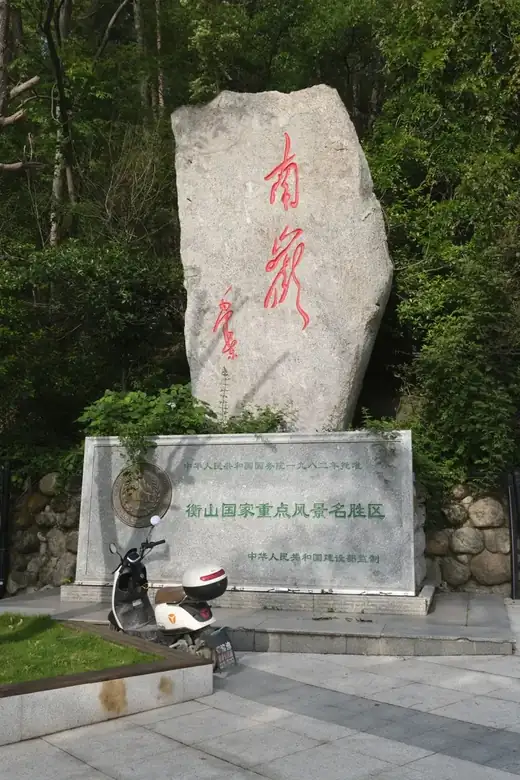
Mount Heng, also known as Nanyue, is one of the Five Sacred Mountains of China. It is a national key scenic spot, a national 5A-level tourist attraction, a national nature reserve, and a national civilized scenic tourist area. With its seventy-two peaks, the mountain range is magnificent and imposing. The main peak, Zhurong Peak, is located in Nanyue District, Hengyang City, Hunan Province. It is renowned as the most beautiful of the Five Sacred Mountains, a religious holy site, a cultural center, and the Longevity Mountain of China.
People summarize the scenic wonders of Mount Heng as the "Four Wonders of Mount Heng" and the "Four Seasonal Scenic Spots," namely:
Four Wonders:The towering Zhurong Peak, the elegant Sutra Repository, the profound Fangguang Temple, and the wondrous Water Curtain Cave;
Four Scenes:Enjoy the flowers in spring, watch the clouds in summer, gaze at the sun in autumn, and appreciate the snow in winter.
Here's a summary of the most frequently asked questions from tourists visiting Nanyue:
Transportation to Mount Heng
How do I get to Mount Heng?
high-speed rail
If your ticket is for Hengshan West High-Speed Railway Station, you can take a direct bus to Nanyue Bus Station for 6 yuan per person. A taxi usually costs around 40 yuan (shared rides are possible). Prices may vary on holidays. The travel time by car is 6 minutes, and by bus it is generally 10 minutes. Please allow more time during holidays.
If you have purchased a ticket to Hengyang East High-Speed Railway Station, you can take a direct bus from Hengyang Central Bus Station to Nanyue Bus Station, or you can take the express bus from Hengyang to Nanyue. If you choose to take a taxi or Didi, please inquire on-site for specific routes and prices.
The specific bus stops are: Nanyue All-Area Tourism Service Center – Nanyue Bus Station – S51 Nanyue Expressway – Hengyang Huayuan Market – Jingzhu Square – Hengyang Central Bus Station. The fare is 15 yuan, and buses run every 20 minutes.
train
If you purchased a ticket to Hengshan Railway Station, there are direct buses to Nanyue Bus Station, costing 8 yuan per person. Prices may vary on holidays and for extra buses. Taxis typically cost around 60 yuan on weekdays and take about 30 minutes (shared rides are possible). During holidays, traffic congestion may cause the journey to take about an hour.
If you have purchased a ticket to Hengyang Railway Station, you can also take a bus or public transport from Hengyang Central Bus Station to Nanyue.
airplane
If you are coming to Nanyue from Changsha Huanghua Airport, you can take the Maglev train from the airport to Changsha South High-speed Railway Station, take the high-speed train for half an hour to Hengshan West High-speed Railway Station, and then take a bus to Nanyue.
If you are coming to Nanyue from Hengyang Nanyue Airport, you can first take the airport shuttle bus to Hengyang Central Bus Station, and then take a bus or public bus to Nanyue.
Driving directions
Vehicles coming from Yuelin Expressway to Yue should exit at Donghu and take Provincial Highway (S333) to Nanma Expressway to reach Nanyue; or exit at Baiguo and take Provincial Highway (S314) to enter and exit Nanyue.
Vehicles coming from the Beijing-Hong Kong-Macau Expressway to Yueyang should pass through the Dayuandu Interchange and then enter and exit Yueyang via the Nanyue Expressway (S51).
Traffic is heavy on National Highway G107. Please maintain a safe distance and drive carefully.
Urban traffic
Up and down stations
There are currently two free bus routes in Nanyue. Route 1 is the most frequently used bus by tourists (running every half hour, and every 10 minutes on weekends and holidays).
Bus stop directions:
Get off at Nanyue Bus Station and board the bus at the Nanyue Archway. Visitors going to the Grand Temple should get off at the West Street Intersection stop and enter through the main gate. Visitors going to the central scenic area should get off at the Visitor Service Center stop to purchase tickets and ascend the mountain. Visitors who enjoy hiking should get off behind the Grand Temple, pass through the Victory Archway, and ascend the mountain; tickets can be purchased at the entrance. Visitors going to the Water Curtain Cave scenic area should also get off at the Grand Temple Back Gate stop and then transfer to the Water Curtain Cave tourist bus (6 yuan/person). Visitors going to Wanshou Square should get off at the Wanshou Square stop.
Transportation within the scenic area
Up and down stations
Visitors taking the scenic area's eco-friendly shuttle bus can purchase tickets on the second floor of the All-for-One Tourism Service Center and board the bus on the third floor. (One-way: 44 yuan/person; Round-trip: 78 yuan/person)
The only mode of transportation from the foot of the mountain to the Halfway Pavilion is the eco-friendly shuttle bus. At the Halfway Pavilion, you can transfer to the cable car or continue up the mountain by shuttle bus. The cable car ticket is included with the eco-friendly shuttle bus ticket; no separate ticket is required.
Visitor Center → Martyrs' Shrine → Banshan Pavilion → Nantianmen, the entire journey takes approximately 50 minutes. From Banshan Pavilion, you can transfer to the cable car, which takes approximately 7 minutes.
Visitors entering the scenic area on foot can choose to ascend the mountain from the Kangjialong ticket office, where the attractions are more concentrated. During holidays, the shuttle buses run frequently and travel at high speeds; for the safety of people and vehicles, it is recommended to use the hiking trails as much as possible.
Nanyue Hengshan Tour Itinerary
Day trip
Nanyue All-Area Tourism Service Center -- Martyrs' Shrine -- Mirror Polishing Platform -- South Heaven Gate -- Zhurong Peak -- Nanyue Grand Temple -- Longevity Cauldron
Two-day tour
Day 1: Nanyue Ancient Town -- Fanyin Ancient Road -- Martyrs' Shrine -- Magu Wonderland -- Mirror Polishing Platform -- Fuyan Temple -- Nantai Temple -- Sutra Repository -- Nantianmen -- Zhurong Peak -- Songlu Street
Day 2: Nanyue Grand Temple -- Longevity Cauldron -- Village Under the Moonlight -- Hongxing Village Cycling Theme Village
Three-day tour
Day 1: Nanyue Ancient Town -- Fanyin Ancient Road -- Martyrs' Shrine -- Magu Wonderland -- Mirror Polishing Platform -- Fuyan Temple -- Nantai Temple -- Sutra Repository -- Nantianmen -- Guangji Temple
Day 2: Zhurong Peak -- Ten-Mile Tea Country -- Erxian Temple -- Fangguang Temple -- Villages Under the Moonlight -- Songlu Street
Day 3: Nanyue Grand Temple -- Zhusheng Temple -- Longevity Cauldron -- Hongxing Village Cycling Theme Village
Visitors planning a trip of three days or more can arrange their own itinerary to experience the slow pace of life in Nanyue, enjoy the scenery, experience the culture, and savor the local cuisine. We especially recommend the following four tour routes, which will surely allow you to experience the true magnificence and grandeur of Nanyue.
1. Zeng Guofan's Pilgrimage Route:Take the Tanheng West Expressway to the Donghu or Baiguo exit, then proceed to Huishuiwan in Wangfeng Township and Hongqi Village in Longfeng Township. From there, pass the Wuyue Temple, the ruins of Ganlu Temple, and the Huixian Bridge ticket station on the back mountain to reach Zhurong Peak. This 10-kilometer-long stone-paved path was built by Zeng Guofan to express his gratitude to the Holy Emperor of Nanyue. This ancient pilgrimage route is well-preserved, offering views of the "Ten-Mile Gallery"—Laolongtan, Renzi Waterfall, Jinniuyin, and Qingyu Stone (also known as the Love Stone). You can truly experience the majestic grandeur of Nanyue and the exhilaration of conquering the highest of the seventy-two peaks. Mao Zedong, along with his brothers, carried their mother to Zhurong Peak to burn incense and make wishes via this ancient path.
2. Zhu and Zhang braved the rain to visit Mount Heng:In early November 1167, Zhu Xi, Zhang Shi, and Lin Yongzhong descended the mountain via the route: Maji (Horse Tracks) – Baidian (Worship Hall) – Fangguang Temple – Xiling (West Ridge) – Nantianmen (South Heaven Gate) – Zhurong Peak – Shangfeng Temple – Fuyan Temple – Nantai Temple. Over seven days, braving the snow, they climbed the mountain, exchanging poems and composing 149 poems, which were compiled into the *Nanyue Changchou Ji* (Collection of Poems and Poems from Mount Heng) (included in the *Siku Quanshu*). This tour route allows visitors to see major attractions in the Fangguang Temple scenic area, including Heisha Pool, Thousand Buddha Cave, Erxian Temple, Lion Rock, the primeval secondary forest, the ruins of Wang Fuzhi's Xumeng Temple, and the vast bamboo forest of Lianhua Peak. Visitors can also savor the boundless expanse of high-mountain organic cloud and mist tea, trace the footsteps of Zhu Xi and Zhang Shi, and find the plaque inscribed "Famous Mountain Under Heaven" by Emperor Huizong of Song.
3. Ancient Buddhist Trail Eco-tourism Route:From the Kangjialong ticket office, follow the stone-paved trail upstream to Huayan Lake and Zhimutan, passing the arboretum and the Martyrs' Shrine. Continue upstream to Magu Bridge and Lingzhi Spring, then west past Zhibo Peak to reach Tianzhu Peak and the Sutra Repository. Walking straight along Magu Wonderland leads to Danxia Temple via Yanxia Tea Garden, and then via cable car to Zhurong Peak at the Emperor's Rock at Nantianmen. Along this route, you'll find yourself amidst the sounds of chanting and babbling brooks; at times, birdsong and fragrant flowers; and at other times, cascading waterfalls and breathtaking views. This route allows you to connect with the beauty of the scenery and escape the noise and bustle of the highway.
4. Zhuling Cave Heaven along Xu Xiake's Ancient Trail:From Nanyue Ancient Town, take a bus to the Water Curtain Cave Scenic Area, then follow the stone-paved path to the Three-Tiered Waterfall and Fushou Lake. From there, cross the Zigai Peak via Sitang to Guangji Temple and Yuwang City to Zhurong Peak. This was the route Xu Xiake planned to take when visiting Hengshan, but due to illness, he turned back at Mituo Temple. This route allows you to appreciate the unique water, rocks, and waterfalls of the Water Curtain Cave, see the "Number One Waterfall Under Heaven" with its "Summer Snow and Clear Thunder" phenomenon, explore 37 cliff carvings from the Tang, Song, Yuan, Ming, and Qing dynasties, and discover the ruins of Mituo Temple, one of the ten major Buddhist monasteries. The recently discovered Tang and Song dynasty stone carving of the "Ode to the Elixir of Immortality" is particularly precious, allowing you to feel the spirit of Zhang Sanfeng's cultivation and the ascension of the Nine Immortals. You might even stumble upon a groundbreaking discovery!
Nanyue Hengshan Scenic Area
Zhu Rong Peak
The highest peak of Hengshan Mountain is 1300.2 meters above sea level.
🔹Sunrise over the Sea of Clouds: Climbing to the summit at dawn to watch the sun rise from the sea of clouds, with its radiant glow, is one of the most magnificent sights in Hengshan.
🔹Zhurong Hall: Dedicated to the fire god Zhurong, it is a sacred place for praying and making wishes, with flourishing incense offerings.
Sutra Repository
The most beautiful forest landscape in Hengshan.
🔹Primitive Forest: Ancient trees reach for the sky, quiet and deep, known as "Xishuangbanna of Nanyue".
🔹Rare plants: rare tree species such as ginkgo and dawn redwood, which are known as "living fossils".
Nanyue Grand Temple
The First Temple in Jiangnan
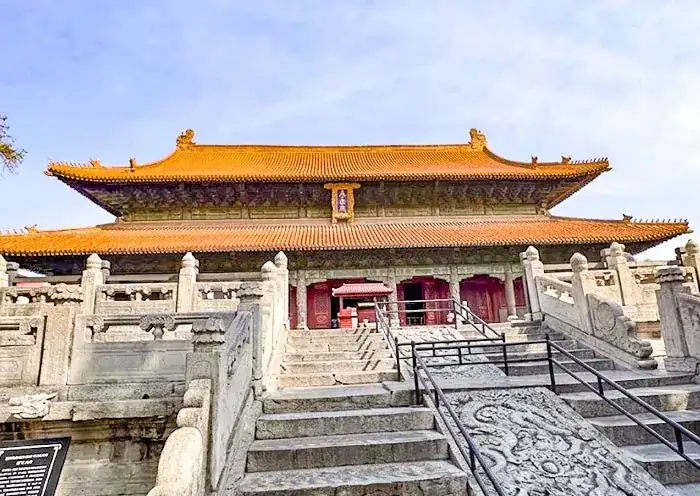
🔹Large in scale: The largest ancient architectural complex in southern China, integrating Buddhist, Taoist, and Confucian cultures.
🔹A sacred place for prayer: Millions of tourists come here every year to burn incense and pray for blessings, especially during the Spring Festival and birthdays, when the incense is extremely popular.
Grinding table
🔹A sacred site of Zen culture and the ancestral home of Zen Buddhism: Legend has it that the Sixth Patriarch Huineng polished a mirror and attained enlightenment here, making it one of the important birthplaces of Zen Buddhism.
🔹Chiang Kai-shek's Former Residence: Chiang Kai-shek once lived here during the Republic of China period, and it is now a historical exhibition hall.
Water Curtain Cave
🔹Hengshan Wonder Natural Waterfall: The waterfall cascades down in front of the cave like a hanging water curtain, providing a cool and pleasant respite in summer.
🔹May you live as long as Mount Nanshan: The four characters "May you live as long as Mount Nanshan" carved on the stone at the entrance of the cave are a symbol of Mount Hengshan as the "Longevity Mountain of China".
Nantianmen
Near Zhurong Peak is the only way to the summit of Hengshan Mountain, where you can take in all the peaks of Hengshan and the sea of clouds.
Martyrs' Shrine
At the foot of Xianglu Peak stands a large ancestral hall built to commemorate the soldiers who died in the War of Resistance against Japan. Built against the mountain, it is lower in the front and higher in the back, and includes a memorial archway, a "July 7th" memorial tower, a tribute monument, a main hall, and other buildings, surrounded by evergreen pines and cypresses.
Fuyan Temple
Located on the eastern slope of Zhibo Peak, it is known as "an ancient temple of six dynasties and the site of the Seven Patriarchs' practice". It is one of the concentration points of ancient culture in Nanyue, and many famous people throughout history have come here to inscribe and compose poems.
Mount Heng (Nanyue)Scenic Area Ticket List
✅️Ticket booking: Trip
Central Scenic Area (Zhurong Peak)
Peak season (May 1st to October 31st): 110 yuan per person;
Off-season (November 1st to April 30th of the following year): 80 yuan per person.
Grand Temple
Peak season (May 1st to October 31st): 60 yuan per person;
Off-season (November 1st to April 30th of the following year): 40 yuan per person.
Water Curtain Cave Scenic Area
30 yuan/person
The Great Cauldron of Longevity of China
30 yuan/person
Ticket discount policy
Those eligible for free admission:Children under 14 years old (excluding 14 years old), senior citizens over 65 years old (including 65 years old), disabled persons, active military personnel, and retired military cadres are exempt from admission upon presentation of valid identification. Religious personnel and their staff belonging to religious sites within the scenic area, as well as religious personnel belonging to the same religion as the religious sites within the scenic area, are exempt from admission upon presentation of valid identification.
Half-price discount recipients:Minors aged 14 (inclusive) to 18 (inclusive), seniors aged 60 (inclusive) to 65 (exclusive), and full-time undergraduate and below students can enjoy half-price discounts upon presentation of valid identification.
PS: Young people from Hong Kong, Macao, and Taiwan who are visiting the mainland can enjoy the same discounted ticket price by presenting valid identification documents such as the "Mainland Travel Permit for Hong Kong and Macao Residents", "Mainland Travel Permit for Taiwan Residents", or student ID.
Nanyue Hengshan cuisine
The mountains and rivers of Nanyue are beautiful, and the ingredients produced there are abundant and delicious. Among these, the most distinctive are the vegetarian dishes of Nanyue. Nanyue is known as the "hometown of vegetarian food."
Nanyue vegetarian cuisine originated in the Eastern Jin Dynasty. Over the past thousand years, the techniques have become increasingly refined, evolving from ordinary vegetarian food to high-end vegetarian banquets. Major temples and restaurants are skilled at preparing it.
The vegetarian feast in Nanyue is described as having "One Fragrant Dish, Two-Flavored Plum (Fermented Beans), Three-Fresh Soup, Four Seasons Green Vegetables, Five-Lamp (Stewed) Feast, Six-Layered Dish, Seven-Story Feast, Eight Big Bowls, Nine Auspicious Dishes, and Ten Varieties." One Fragrant Dish is a single plate of vegetarian dishes. Two-Flavored Plum refers to fermented beans and tofu. Three-Fresh Soup is a soup made with three kinds of fresh vegetables according to the season. Four Seasons Green Vegetables are four different kinds of green vegetables. Five-Lamp Feast consists of five kinds of stewed dishes. Six-Layered Dish typically refers to braised eggplant, stir-fried bamboo shoots, stewed mushrooms, chili oil, dried tofu, and lotus root balls. Seven-Story Feast consists of seven layers of imitation meat, meatballs, steamed buns, gluten, bok choy, magnolia petals, and shiitake mushrooms, resembling a "Family Reunion" or "Lion's Head" meatballs. Eight Big Bowls is a banquet made with eight vegetarian dishes, mimicking a meat feast. Nine Auspicious Dishes are actually a simple meal, with dishes varying according to the season and the number of guests, ensuring the guests are satisfied; hence, it is also called "Auspicious Meal." Ten Delicacies Stew – There are generally two types: one is a vegetarian stew of ten delicacies, called "Mini Ten Delicacies Stew," which is made by stewing together magnolia petals, carrots, white radishes, lilies, cabbage hearts, shiitake mushrooms, water chestnuts, potatoes, bean curd skin, and gluten. Among them, the magnolia petals, carrots, white radishes, water chestnuts, and potatoes are carved into various flower shapes, making it very beautiful.
Another type is a banquet consisting of ten main dishes, typically including seaweed, pearl rice, braised chicken, fried tofu and bamboo shoots, braised eggplant, rock sugar lotus seeds, seven-layered pagoda (a type of herbal dish), eight-treasure rice, roasted mushroom soup, and green vegetables. There are also banquets that mimic a meat feast, consisting of ten large bowls. These ten dishes use a variety of ingredients, are meticulously prepared, and offer a balance of sweet, sour, soft, and crisp textures, including both land and sea vegetarian dishes. Eating this allows one to experience the full flavor of a vegetarian feast. Nanyue vegetarian feasts also feature a unique local style with dozens of dishes such as tofu, toon sprouts, chili peppers, bamboo shoots, and mushrooms, offering a different kind of flavor.
Furthermore, the tofu from Nanyue is exceptionally tender because it is ground with mountain spring water. The resulting fried tofu and dried tofu are incredibly delicious, and the fermented tofu is famous far and wide.
The way of eating bamboo shoots varies depending on the season in Nanyue. In spring, bamboo shoots are eaten. A type of small bamboo shoot called Guanyin bamboo shoot is produced locally in Nanyue and is one of the specialties of Nanyue.
Fresh or dried bamboo shoots from Nanyue are especially delicious when stir-fried with cured or wind-dried pork. Wind-dried pork is usually made around the Laba Festival and is considered the most flavorful.
In spring, there are also mugwort cakes. The locals in Nanyue make them by frying them in oil and then sprinkling them with white sugar; they're fragrant and crispy. Some farmhouses also offer a local snack called "oil cake," which is also worth trying.
In addition, those who are interested can also try the first bowl of food served at banquets in Nanyue. It is usually the first dish served at local banquets. Quail eggs, red dates, sweet potato dumplings, fish balls, egg slices and other ingredients are stacked in layers. Both its appearance and color are very festive.
In Nanyue, breakfast mainly consists of rice noodles. The noodles include the typical Hunan round and flat noodles, but the main type is a round noodle that is thinner and more chewy than Guilin rice. I especially recommend the fish noodles and braised noodles. There are many noodle shops concentrated on Duxiu Road and in the surrounding area, making them easily accessible.
If you're asking what kind of wine to drink in Nanyue, Henghu wine is the top recommendation. It's a type of rice wine that's easy to drink but has a strong aftereffect.
There are many more delicious foods in Nanyue, belonging to the Hunan cuisine series, especially vegetarian dishes and farm-style dishes.
What are the specialties of Nanyue?
Just like the cured pork, wind-dried pork, and Guanyin bamboo shoots mentioned in the Nanyue cuisine, these are also Nanyue specialties.
Away from the dining table, there are also many vegetarian snacks in Nanyue, such as sweet potato chips, dried sweet potatoes, wild berries, sesame candy, etc., all of which are famous local specialties of Nanyue.
High mountain cloud and mist tea is also one of the specialties of Nanyue.
Nanyue Hengshan Accommodation
There are many hotels, guesthouses, inns, and farmhouses to choose from, so you can find the one that suits you best.
Hengshanfang is currently the best guesthouse in Nanyue.
Travel information can change. Check current opening hours, reservations and entry requirements before you travel.

Traveller discussion
Start the conversation with a helpful tip or a question.