
Baoji City
宝鸡市
Origin of the name: The story of "openly repairing the plank road while secretly crossing Chencang" refers to Chencang, which is today's Baoji. Baoji was originally called Chencang, but was renamed Baoji after a "stone rooster crowing" was observed on Jifeng Mountain southeast of the city during the Tang Dynasty. In 757, the rebel army swept towar…
Origin of place name:
The idiom "openly repair the plank road while secretly crossing Chencang" refers to the ancient Chinese strategy of using Chencang as a cover for a strategic maneuver. Chencang, in this story, is today's Baoji. Baoji was originally called Chencang, but was renamed Baoji after a stone rooster was said to crow on Jifeng Mountain southeast of the city during the Tang Dynasty. In 757, rebel forces swept towards the capital Chang'an, forcing Emperor Xuanzong to flee westward. After reaching Chencang, he was cornered in the mountains by the rebels, with no way to escape. The emperor was filled with despair. Unexpectedly, a rooster suddenly appeared, circling and crowing. The situation then changed dramatically; the rebels retreated, and the situation became clear. The rooster later transformed into a stone rooster, standing on Chencang Mountain. The emperor considered the "stone rooster's crowing" an auspicious sign. With the emperor's decree, Chencang was naturally renamed Baoji.
Basic introduction:
Baoji City is an important transportation hub on the Longhai Railway, part of the Eurasian Land Bridge, and is the second largest industrial and commercial city in Shaanxi Province.
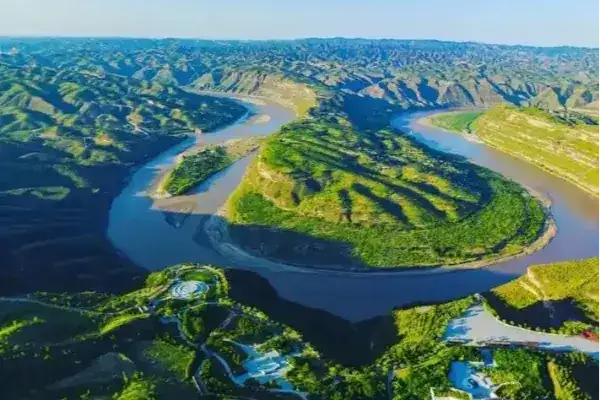
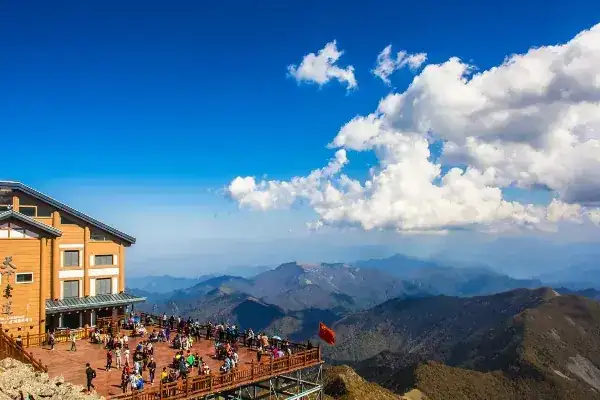
Baoji is located between 107°20' and 108°10' east longitude and 34°40' and 35°08' north latitude. Situated in the western part of the Guanzhong Plain in Shaanxi Province, it borders Xi'an, Xianyang, and Hanzhong in Shaanxi to the east and south, and Tianshui, Longnan, and Pingliang in Gansu Province to the west and north. Baoji is bordered by the Qinling Mountains to the south and west, and the southern edge of the Ordos Plateau to the north. The Wei River flows through the city from west to east. The terrain is mainly plains, with elevations ranging from 450 to 800 meters. Mount Taibai, the main peak of the Qinling Mountains, is located within Taibai County and has an elevation of 3767 meters.
Baoji has a continental monsoon climate with four distinct seasons and abundant sunshine. The city's average annual temperature ranges from 8 to 13 degrees Celsius.
View detailed information about Baoji City >>
Honors Ranking:
In September 2026, it was included in the first batch of provincial-level place name cultural heritage protection list in Shaanxi Province.
In January 2026, it ranked 259th in the overall ranking of overseas online influence of Chinese mainland cities in 2025.
In October 2025, Baoji City's Taibai Mountain-Aoshan sub-plateau outdoor sports destination was included in the first batch of high-quality outdoor sports destination construction areas.
In May 2025, the 2025 China City Charm Ranking was released, with Baoji City ranking 146th (a fourth-tier city).
In April 2025, it was named a national model city (county) for supporting the military and giving preferential treatment to families of servicemen.
In May 2024, the 2024 China City Commercial Attractiveness Ranking was released, with Baoji City ranking 156th.
In January 2024, Baoji City was designated by Beijing as a national experimental zone for collaborative education among schools, families, and society.
In November 2023, it was named one of the third batch of national food safety demonstration cities.
In September 2023, Baoji City was included in the list of cities for the construction of modern circulation strategic pivot cities (functional circulation pivot cities).
View more honors and rankings of Baoji City >>
Historical background:
Historical records indicate that Baoji was "the place ruled by Fuxi, the birthplace of Yandi, and the capital of Huangdi".
During the Xia and Shang dynasties, it belonged to Yongzhou, and during the Western Zhou dynasty, it was part of the royal domain.
During the Spring and Autumn and Warring States periods, the Qin people established Guo County, Yong County, Chencang County, and other counties here.
Historically, the Zhou and Qin dynasties originated here.
In the 11th century BC, Gu Gong Danfu, the ancestor of the Zhou people, led his clan to migrate to Zhouyuan at the foot of Qishan Mountain (now Qishan County and Feng County in Baoji City). This was Qiyi, the earliest capital of the Western Zhou Dynasty, which is more than 3,200 years ago.
In 770 BC, Duke Xiang of Qin was enfeoffed as a vassal lord for his meritorious service in escorting King Ping of Zhou to the east, and was granted land west of Qi, thus establishing the State of Qin.
In the fourth year of Duke Wen of Qin (762 BC), they arrived at "
View detailed historical evolution of Baoji City >>
Travel information can change. Check current opening hours, reservations and entry requirements before you travel.
Traveller discussion
Start the conversation with a helpful tip or a question.