
[One-Day Tour of Prince Gong's Mansion] (Former Private Residence of Heshen) 8 Must-Visit Attractions, Transportation, Route, and Tickets
Prince Gong's Mansion was first built in 1776 (the 41st year of the Qianlong Emperor's reign) and was originally the residence of Heshen, a favorite minister of the emperor. After Heshen was executed and his property confiscated during the Jiaqing Emperor's reign, the mansion was given to Prince Qing, Yonglin. In 1851 (the first year of the Xianfe…
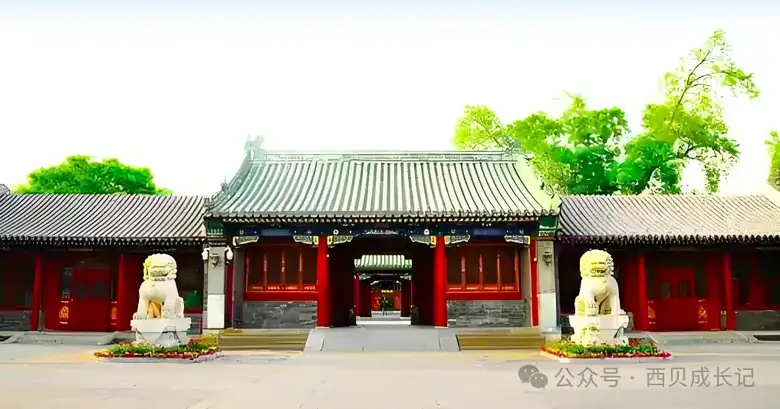
Prince Gong's Mansion was first built in 1776 (the 41st year of the Qianlong Emperor's reign) and was originally the residence of Heshen, a favorite minister of the emperor. After Heshen was executed and his property confiscated during the Jiaqing Emperor's reign, the mansion was given to Prince Qing, Yonglin. In 1851 (the first year of the Xianfeng Emperor's reign), the mansion was transferred to Prince Gong, Yixin, hence the name Prince Gong's Mansion. Prince Gong's Mansion witnessed the rise and fall of the Qing Dynasty, hence the saying, "One Prince Gong's Mansion, half of the Qing Dynasty's history."
Further Reading: [Beijing Travel Guide] Must-see attractions, accommodation, food, and transportation costs in Beijing
Information about Prince Gong's Mansion Scenic Area
- Land area: over 60,000 square meters
- Ticket price: 40 yuan
- ✅️Ticket booking: Trip | Klook
- Opening hours: 8:30~17:00 (Closed on Mondays)
- Museum rating: National Class A
- Scenic Area Rating: AAAAA
- Address: No. 17, Qianhai West Street, Shichahai, Xicheng District, Beijing
- Official website: https://www.pgm.org.cn/
- ✅️Ticket + Guided Tour: Half-day tour of Prince Gong's Mansion, Beijing (morning/afternoon, including ticket, 2.5-hour guided tour)
Transportation to Prince Gong's Mansion
subway:Take Metro Line 6 and get off at Beihai North Station, Exit B (Northeast). Route 1: Walk 200 meters along Sanzuoqiao Hutong; Route 2: Walk 300 meters along Longtoujing Street.
Public transport:Take bus routes 3, 4, 13, 42, 107, 111, 118, 612, or sightseeing bus route 3 and get off at Beihai North Gate Station.
Self-driving:Searching for "Prince Gong's Mansion" on Gaode Maps navigation.
Prince Gong's Mansion Tour Route
1-hour quick tour itinerary
First Palace Gate, Yin'an Hall, Baoguang Room, Xijin Study, Rear Building, Western Gate, Dule Peak, Bat Pond, Fu Character Stele, Fangtang Waterside Pavilion, Yuguan Pass, Arrow Path
2-hour quick tour itinerary
First Palace Gate - Yin'an Hall - Jiale Hall - Baoguang Room - Xijin Studio - Rear Building - Western Gate - Dule Peak - Bat Pond - Anshan Hall - Liubei Pavilion - Bamboo Courtyard - Peony Garden - Yishen Place - Bat Hall - Pingbu Qingyun Road - Yaoyue Terrace - Dicui Rock - Fu Character Stele - Fangtang Waterside Pavilion - Miaoxiang Pavilion - Dragon King Temple - Arrow Path - Ledao Hall - Duofu Pavilion
Half-day in-depth tour itinerary
First Palace Gate - Yin'an Hall - Jiale Hall - Baoguang Room - Xijin Studio - Baoxia - Rear Building - Western Gate - Dule Peak - Bat Pond - Anshan Hall - Liubei Pavilion - Vegetable Garden - Hanging Flower Gate - Bamboo Courtyard - Peony Garden - Yishen Place - Bat Hall - Pingbu Qingyun Road - Yaoyue Terrace - Dicui Rock - Fu Character Stele - Poetry and Painting Boat - Lingdaojing - Fangtang Water Pavilion - Miaoxiang Pavilion - Yuguan Pass - Dragon King Temple - Arrow Path - Ledao Hall - Duofu Pavilion
Heshen Line Tour Route
First Palace Gate - Yin'an Hall - Jiale Hall - Baoguang Room - Xijin Studio - Rear Building - Western Gate - Dule Peak - Bat Pond - Fu Character Stele - Pingbu Qingyun Road - Yaoyue Terrace - Ledao Hall - Duofu Pavilion
Prince Gong Line Tour Route
First Palace Gate - Yin'an Hall - Jiale Hall - Baoguang Room - Xijin Studio - Western Gate - Dule Peak - Anshan Hall - Liubei Pavilion - Vegetable Garden - Bamboo Garden - Yishen Residence - Bat Hall - Yaoyue Terrace - Fangtang Water Pavilion - Miaoxiang Pavilion - Archery Path - Ledao Hall - Duofu Pavilion
Garden and Ancient Building Line
First Palace Gate - Yin'an Hall - Jiale Hall - Xijinzhai - Rear Building - Western Gate - Dule Peak - Bat Pond - Flowing Cup Pavilion - Yishen Place - Bat Hall - Inviting Moon Terrace - Dripping Green Rock - Fangtang Water Pavilion - Miaoxiang Pavilion - Yuguan Pass - Duofu Pavilion
Must-see attractions at Prince Gong's Mansion
The Grand Theater (one of the three wonders)
The Grand Theater in Prince Gong's Mansion, built during the Tongzhi reign (1862-1874), was exclusively for Prince Gong and his relatives and friends to enjoy theatrical performances. This theater is considered a unique, enclosed theater treasure still existing in China, and was respectfully referred to as the "Grand Theater" in official Qing Dynasty documents. Covering an area of 685 square meters, it ingeniously utilizes a three-section, interconnected, enclosed design. Particularly noteworthy is that this theater was constructed entirely of mortise and tenon joints without the use of any iron nails, making it earthquake-resistant.
The grand theater boasts excellent acoustics; even from the farthest corner of the lobby, the lyrics on stage can be heard clearly. This is thanks to its ingenious construction: nine large vats were placed under the hollowed-out space beneath the stage, increasing the resonance and reverberation area.
The two large pillars on either side of the stage, as well as the four walls and ceiling, are all painted with intertwined vines, their lush green leaves and blooming purple flowers creating an atmosphere reminiscent of watching a performance under a wisteria trellis. Twenty large palace lanterns hang from the ceiling, and the floor is paved with blue bricks. Twenty eight-immortal tables, each paired with a grand master's chair, are neatly arranged. The rear wall of the stage features light brown wooden latticework, covered with a dark blue silk fabric, further enhancing the solemn atmosphere of the stage. The stage is approximately 1 meter high and over 10 meters wide, with a table and two grand master's chairs on it, draped with colorful embroidered red cloth. Above the stage hangs a black plaque with gold lettering, bearing the four seal script characters "赏心乐事" (meaning "A Pleasant and Delightful Experience").
Besides being a venue for watching plays, the Grand Theater was also the place where weddings and funerals were held in Prince Gong's Mansion. Today, the Grand Theater still hosts performances, including Peking Opera and Kunqu Opera, with the Prince Gong's Mansion music being the most distinctive.
The "Fu" (福) character stele (one of the three wonders)
The "Fu" (福, meaning good fortune) character stele at Prince Gong's Mansion is a stone tablet rich in historical and cultural significance. The "Fu" character on this stele was written by Emperor Kangxi to pray for his ailing grandmother, Empress Dowager Xiaozhuang, making it extremely precious. According to unofficial historical records, Heshen coveted this auspicious stele and managed to smuggle it out of the palace, embedding it in the stone wall of the Secret Cloud Cave within the Cuijin Garden (later Prince Gong's Mansion) of his own residence. Originally, this stone wall contained a "Shou" (寿, meaning longevity) character, and the "Fu" character on the stele became the dot of that "Shou," making this a feng shui treasure land of "Fu within Shou, and Shou within Fu."
The stele with the character "福" (Fu, meaning good fortune) is about 1 meter high (some say 129 centimeters long) and about 0.6 meters wide (some say 54 centimeters wide). At the center of the stele is a large "福" character, approximately 59 centimeters x 33 centimeters. Above the "福" character is the imperial seal "康熙御笔之宝" (Kangxi Yubi Zhi Bao), further confirming its status as a work of imperial calligraphy.
The entire character "福" (Fu, meaning good fortune) is written with bold and vigorous strokes, its lines flowing smoothly and rounded, conveying a majestic yet lively spirit. Furthermore, its form subtly incorporates the shapes of five characters: "子" (zi, child), "田" (tian, field), "才" (cai, talent), "寿" (shou, longevity), and "福" (fu, good fortune), symbolizing "many children, many fields, many talents, long life, and much good fortune." This is the only "福" in the world that combines all five blessings and longevity, thus it is also known as the "Longevity Blessing" and the "Number One Blessing Under Heaven." Knowledge Quiz: Why wasn't the "福" character stele taken away when Heshen's home was raided?
Rear Building
The rear building, constructed during the reign of Heshen, bears witness to his luxurious lifestyle and wealth accumulation. Stretching over 160 meters east to west (some sources say 156 or 189 meters), it is the longest building among royal residences in China. It contains 111 rooms, commonly known as "99 and a half rooms." The five rooms at the western end, due to their unique layout and design, form a maze-like space, hence the name "Mini Maze." Within the "Mini Maze" is China's only indoor garden landscape.
The upper layer of the rear eaves wall has a total of 88 windows of various shapes, including round, pomegranate, peach, and fan shapes. Each window has a different pattern, and the eaves are also decorated with exquisite brick carvings.
Popular legend has it that the rear building was Heshen's "treasure pavilion." It is said that Heshen designed windows of different shapes in the rear wall to identify the treasures hidden inside; one could tell what was hidden simply by looking at the shape of the window. However, this claim lacks concrete historical evidence and is largely a folk tale.
Yin'an Hall
The Yin'an Hall of Prince Gong's Mansion was first built in 1777 (the 42nd year of the Qianlong Emperor's reign) under the supervision of Heshen. In 1850 (the 30th year of the Daoguang Emperor's reign), Prince Gong, Aisin-Gioro Yixin, was granted this mansion by imperial decree, and the Yin'an Hall became the main hall of the mansion, used for holding important celebrations. It was destroyed by fire in 1921 (the 10th year of the Republic of China), but was carefully rebuilt in 2007, restoring its former glory.
The layout of the Yin'an Hall is clearly stipulated in the *Collected Statutes of the Qing Dynasty*: a prince's residence has seven bays, while a prince of the second rank has five. As the main hall of a prince's mansion, the Yin'an Hall has seven bays, a hip roof covered with green glazed tiles—a unique feature of princely residences. If you observe closely, you'll notice the door studs on the main gate of Prince Gong's Mansion are arranged in a nine-by-seven pattern, 63 in total, also a standard feature of princely residences. (Here I have a question: the Yin'an Hall is technically seven bays wide, but in reality it's only five bays.)
The eaves of the Yin'an Hall are adorned with seven ridge beasts, and the ends of the main ridge are decorated with dragon-head ornaments. The painted decorations of the Yin'an Hall are also extremely exquisite, employing the highest-level techniques in swirling pattern painting, such as gold-carved inkstone and jade-grinding, and dragon brocade paneling. Behind the Yin'an Hall is the Jiale Hall, the shrine of the royal palace, which served as the place of worship for the princes, housing ancestral tablets and other deities, and primarily hosting shamanistic rituals.
Duofuxuan
Duofuxuan was first built during the reign of Heshen and was originally called "Yanxitang". It was the residence of Princess Hexiao after she married Fengshen Yinde. Later, during the reign of Prince Gong, Emperor Xianfeng inscribed the plaque "Duofuxuan" here and renamed "Yanxitang" to "Duofuxuan". It is a five-bay hall with a hip roof covered with gray barrel tiles.
Hanging in the center of the Duofuxuan Hall is a plaque inscribed with the four characters "Tongde Yanli" (同德延厘), written by Empress Dowager Cixi herself as a birthday gift for Prince Gong Yixin on his fiftieth birthday. "Li" (厘) is an alternate form of "Xi" (禧), and Empress Dowager Cixi bestowed this plaque to remind Yixin that only by being of one heart and mind with her could he achieve good fortune and a long and prosperous life.
Above the surrounding walls hang large plaques bearing the characters "福" (fortune) and "寿" (longevity), bestowed by the emperor himself. To the south of the Duofuxuan platform is a wisteria trellis with two ancient wisteria vines that are over two hundred years old. The courtyard where Duofuxuan is located is known as the Wisteria Courtyard.
Baoguang Room
The phrase "Baoguang" originates from the "Discourse on the Equality of Things" in the Zhuangzi. "Bao" means to conceal, and "Baoguang" thus implies hiding one's brilliance from others, a metaphor for concealing one's talents and wisdom. During the reigns of Heshen and Prince Qing, the Baoguang Room served as a reception hall for important guests. According to the "List of Confiscated Property of Heshen" from the Jiaqing era, 26,000 taels of gold were confiscated from a hidden wall in Heshen's residence, and this hidden wall was located in the Baoguang Room.
During the reign of Prince Gong Yixin, Baoguang Room became a secret reception room, mainly used to receive the prince's close relatives and friends. The plaque bearing the inscription "Baoguang Room" in the calligraphy of Emperor Xianfeng still hangs here. In 1937, Fu Jen Catholic University purchased part of the Prince Gong Mansion, which had been mortgaged to the Catholic Church by Prince Gong Puwei, to serve as the university's women's department. Baoguang Room, located on the west side of the mansion, became the university's study.(Note: Prince Gong Yixin passed away on April 10th of the 24th year of the Guangxu Emperor's reign. Yixin's eldest grandson, Bowei, inherited the title of Prince Gong and became the second Prince Gong, also known as "Little Prince Gong".)
Xijinzhai
This is the most famous "Xijinzhai". During Heshen's reign, it was called "Jialetang" and served as the living quarters for Heshen and his wife. At that time, Heshen lavishly decorated Xijinzhai in the style of the Ningshou Palace in the Forbidden City, using a large amount of precious Phoebe zhennan wood and crafting exquisite partitions and decorations. However, this excessive decoration became one of the reasons why Emperor Jiaqing sentenced Heshen to death.
After Heshen was convicted, his residence was bestowed upon Prince Qing, Yonglin, by the Jiaqing Emperor, and "Jialetang" was renamed "Qingyitang." During the reign of Prince Gong Yixin, due to the young age of Prince Pulun of the Yin Prince's Mansion, there was no one to manage the affairs of the mansion. Empress Dowager Cixi ordered Prince Gong Yixin to temporarily manage the affairs of the Yin Prince's Mansion. Taking this opportunity, Prince Gong Yixin brought back the authentic work of the Jin Dynasty scholar Lu Ji, the "Pingfu Tie," from the Yin Prince's Mansion for safekeeping, and stored it in "Qingyitang." Later, during the reign of the young Prince Gong Puwei, to highlight the rarity and prestige of the "Pingfu Tie," "Qingyitang," where it was kept, was renamed "Xijinzhai."
Xijinzhai is famous for its two-story pavilion and exquisite golden nanmu wood partitions. The floor is paved with expensive mottled stones, and the overall architectural style is luxurious and refined. Some people say that a single piece of nanmu wood is worth 2.7 billion yuan, and I really want to go up and slap them twice.
Xijinzhai is speculated by scholars of "Dream of the Red Chamber" to be the prototype of the writing background of the novel because its architectural style is similar to the courtyard layout of the Rongguo Mansion in Cao Xueqin's novel.
Western Gate (one of the three wonders)
The Western-style Gate of Prince Gong's Mansion is the southernmost main gate at the center of the garden. There are two theories regarding its construction date. One theory suggests that Heshen, taking advantage of his position overseeing the construction of the Old Summer Palace, stole the blueprints and built it. The other theory is that it was built by Prince Gong Yixin during the Self-Strengthening Movement, as a symbol of learning from Western culture and technology to save the Qing Dynasty.
The outer inscription of the gate reads "Quiet Embracing Antiquity," while the inner inscription reads "Elegance Embracing Eternal Spring," embodying the realm pursued by the garden's owner. "Quiet" and "elegance" represent two distinct states of being. The Western-style gate is also the only Western-style building within the garden. It is said that at the time, there were only three such gates in Beijing, making it one of the three unique features of Prince Gong's Mansion; the other two are the Grand Theater and the Rear Building.
Frequently Asked Questions
Q: Is admission free for children at the Prince Gong's Mansion? Do I need to make a reservation?
A: Children aged 6 and under (including 6 years old) or under 1.2 meters tall (including 1.2 meters) can visit for free and do not need to make a reservation.
Q: Is the Prince Gong's Mansion in Beijing closed on Mondays?
A: Except for statutory holidays, the museum is closed all day Monday throughout the year. If there are any changes to opening hours due to major events or special circumstances, the official website will announce them in advance.
Q: Can I buy tickets for the Prince Gong's Mansion in Beijing on the day of the visit?
A: Tickets must be purchased in advance to visit Prince Gong's Mansion. Reservations can be made as early as 20:00 ten days in advance.
Q: Which visitors can enter for free?
A: Children aged 6 and under or under 1.2 meters tall can enter for free. Retired cadres can exchange their valid ID for a free ticket at the Visitor Service Center, and disabled persons can exchange their disability certificate for a free ticket.
Q: How many orders and how many tickets can an individual user place?
A: Individual users are limited to five tickets per order. Each user can submit two orders per day.
Q: Do I need to exchange my ticket for a paper ticket after successfully purchasing it?
A: Visitors who made reservations using their second-generation ID cards do not need to exchange for paper tickets. On the day of their visit, they can enter the museum by swiping their original ID card at the ticket gate. On the day of their visit, visitors holding active duty military ID, Mainland Travel Permit for Hong Kong and Macao Residents, Taiwan Compatriot Permit, Residence Permit for Hong Kong, Macao and Taiwan Residents, or passports should exchange their documents for admission vouchers at the General Services Office.
Q: My travel plans have changed, can I get a refund?
A: If you are unable to enter the museum on the day of your visit, please cancel your ticket through the original reservation channel before 4 PM. The ticket price will be refunded to the original channel on the same day, and this will not be considered a no-show. You can still cancel your ticket before 10 PM on the same day, and the ticket price will be refunded to the original channel on the same day, but this will be counted as one no-show. If you need to cancel your ticket after 10 PM, please call our General Services Office (010-83281915). Staff will process your cancellation within 20 working days on the closing day, and this will also be counted as one no-show. If you accumulate 3 no-shows within 60 days, starting from the date of the third no-show, you will be unable to make or purchase tickets again for 60 days.
Q: Can I store my luggage?
A: Yes, the luggage storage point is located in the Visitor Service Center, east of Gate 1 of the Prince Kung's Mansion Museum.
Travel information can change. Check current opening hours, reservations and entry requirements before you travel.


Traveller discussion
Start the conversation with a helpful tip or a question.