
Urumqi City
Urumqi CityUrumqi City (Uyghur: ئۈرۈمچى شەھىرى; English: Urumqi City) is a prefecture-level city and the capital of the Xinjiang Uyghur Autonomous Region. Commonly known as Wushi and formerly called Dihua, it is located in northwest China,
Urumqi City
Urumqi City (Uyghur: ئۈرۈمچى شەھىرى; English: Urumqi City) is a prefecture-level city and the capital of the Xinjiang Uyghur Autonomous Region. Commonly known as Wushi and formerly called Dihua, it is located in northwest China, in the central part of Xinjiang, deep in the Eurasian continent. Situated between 86°37'33"–88°58'24" E longitude and 42°45'32"–44°08'00" N latitude, Urumqi lies at the northern foot of the Tianshan Mountains and the southern margin of the Junggar Basin, with a mid-temperate continental arid climate. As of April 2024, the city administers 7 municipal districts and 1 county, with a total area of 13,800 square kilometers. By the end of 2024, the resident population was 4.1284 million. Spoken languages include Mandarin, Uyghur, and Kazakh.
Urumqi is a key central city in western China designated by the State Council, an international comprehensive transportation hub, and a center for Central and West Asian exchanges, international commerce, and logistics. It is the core area of the Silk Road Economic Belt, known as the "Capital of the Asian Heart" and a major Silk Road hub. Key industries include oil and gas processing, coal and coal chemical industries, green mining, grain and oil, cotton and textiles, organic fruits and vegetables, livestock products, new energy and materials, and cultural tourism. In 2025, Urumqi's GDP reached 465.819 billion yuan (~$64.7 billion USD), a year-on-year increase of 4.5%.
Name Evolution
The name "Urumqi" was recorded as early as 925 CE in a Khotanese Saka document. It derives from Mongolian, meaning "beautiful pasture." In 1765, the Qing Dynasty renamed it "Dihua," commonly called Hancheng (Han City) or Hongmiaozi (Red Temple). In 1954, the Dihua area was renamed Urumqi.
Historical Evolution
Pre-Qin Period
Humans inhabited the area during the Neolithic Age. The ancient Cheshi people were the first to enter the Urumqi region, crossing the Tianshan Mountains from Turpan and establishing the Kingdom of Cheshi Hou (Later Cheshi). During the Warring States period, the area was within the sphere of Cheshi activity.
Qin-Han to Northern and Southern Dynasties
In 60 BCE, the Western Han established the Protectorate of the Western Regions at Wulei (modern Luntai County), marking Xinjiang's formal incorporation into Chinese territory. Urumqi was then located within the territories of the Jie Kingdom and Beilu Kingdom, among the "Thirteen Kingdoms" of the region. During the Eastern Han, Urumqi was part of the Six Kingdoms of Cheshi. In 222 CE, the area came under the jurisdiction of the Wei Dynasty's Western Regions garrison.
Sui-Tang to Song-Yuan Period
During the Sui Dynasty (605 CE), Tiele tribes rebelled against Turkic rule and established their own khanate in the region. During the Tang Dynasty, the area was administered under the Beiting Protectorate. In the 13th century, the Mongol Empire incorporated the region.
Ming-Qing Period
During the Qing Dynasty, Emperor Qianlong launched military campaigns in the region. In 1763, the settlement was officially named "Dihua." The city developed as a military and administrative center for Xinjiang.
Republic of China and Post-1949
After the founding of the People's Republic of China in 1949, Dihua was renamed Urumqi on February 1, 1954. The city developed rapidly as the political, economic, and cultural center of Xinjiang.
Administrative Divisions
As of April 2024, Urumqi administers 7 municipal districts (Tianshan, Saybag, Xinshi/High-tech Zone, Shuimogou, Toutunhe, Midong, and Dabancheng) and 1 county (Urumqi County). The municipal government is headquartered at No. 30 South Lake East Road, Shuimogou District.
Physical Geography
Location and Terrain
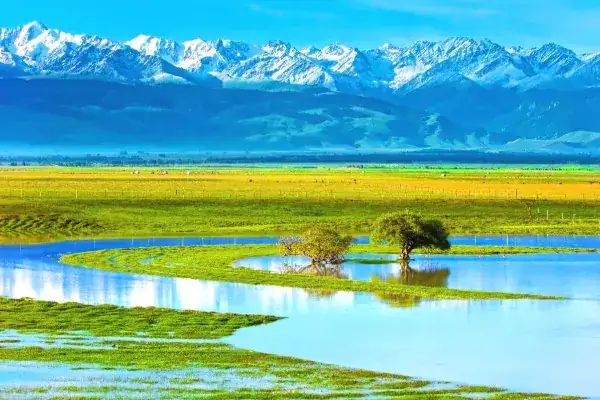
Urumqi is located deep in the Eurasian continent, at the northern foot of the Tianshan Mountains and the southern edge of the Junggar Basin. The terrain descends from southeast to northwest in three steps: mountains (2,500–3,000+ m), intermontane basins and hills (1,000–2,000 m), and plains (below 600 m). The highest point is Bogda Peak at 5,445 m; the lowest is 490.6 m. Mountainous areas account for over 50% of the total area. The average elevation exceeds 2,000 m, with the urban area averaging about 800 m.
Key mountains include Tianger Mountain (the eastern section of the Yilianhabirga Range) and Bogda Mountain. Bogda Peak, perpetually snow-capped at 5,445 m, is visible from the city. Red Mountain (Hongshan), on the east bank of the Urumqi River at the junction of old and new urban areas, is the symbol of Urumqi — its iron-rich sandstone oxidizes to a reddish color, giving it its name.
Climate
Urumqi has a mid-temperate continental arid climate characterized by large temperature differences, low precipitation, long winters, and strong winds in spring and autumn. Annual average precipitation is 277.6 mm. July temperatures average 23.5°C, with an extreme high of 42.1°C; January averages -15.4°C, with an extreme low of -41.5°C. Annual sunshine ranges from 2,489 hours in alpine zones to 3,122 hours in the Dabancheng valley.
Hydrology
Urumqi has 46 rivers belonging to five water systems: Urumqi River, Toutun River, Baiyang River, Alagou, and Chaiwopu Lake. The Urumqi River originates from Glacier No. 1 on the northern slope of Tianger Peak, with an annual runoff of 235 million cubic meters. Chaiwopu Lake, 40 km southeast of the city, covers 30 square kilometers with an average depth of 4.2 m. As of 2000, the city had 32 reservoirs with a total designed capacity of 299 million cubic meters.
Natural Resources
Water Resources
In 2021, Urumqi's total water resources amounted to 1.141 billion cubic meters, with surface water at 1.043 billion cubic meters and groundwater at 571 million cubic meters. Glacier reserves total 7.39 billion cubic meters, with an average annual melt of 123 million cubic meters.
Mineral Resources
Urumqi has identified reserves of 27 mineral types (26.47% of Xinjiang's total), across 83 mining areas. Coal is the dominant resource, with proven reserves of approximately 80.9 billion tons. Other significant minerals include oil shale (402.59 million tons), copper (24,240 tons), and salt.
Biological Resources
Urumqi has 1,097 wild plant species, including protected species such as snow lotus, ephedra, licorice, and fritillary. As of 2023, 329 vertebrate species have been recorded, with approximately 200 observable bird species. Notable protected areas include Chaiwopu Lake National Wetland Park (the 100th national wetland park) and the Tianshan National Forest Park.
Population and Demographics
As of the end of 2024, Urumqi's resident population was 4.1284 million, with an urbanization rate of 97%. The city is home to 52 ethnic groups, with the Han Chinese comprising 74.91% and ethnic minorities 25.09%. Major minority groups include Uyghur, Hui, and Kazakh. Government documents are issued in both Uyghur and Chinese.
Economy
Overview
Urumqi's economy is dominated by the tertiary sector. In 2024, the GDP reached 450.216 billion yuan (~$62.5 billion USD), up 5.3% year-on-year, with a three-sector structure of 0.7 : 29.5 : 69.8. The per capita GDP was 109,632 yuan (~$15,200 USD). Local fiscal revenue was 46.359 billion yuan (~$6.4 billion USD). In 2025, GDP reached 465.819 billion yuan (~$64.7 billion USD), up 4.5%.
Primary Industry
In 2024, total agricultural, forestry, animal husbandry, and fishery output reached 6.657 billion yuan (~$925 million USD). Crop planting area was 714,600 mu, with vegetable output of 897,400 tons and grain output of 71,100 tons. Livestock slaughter totaled 739,400 head, with meat production of 38,700 tons.
Secondary Industry
Petrochemicals and metallurgy form the backbone of Urumqi's secondary industry. In 2024, total industrial value-added reached 110.06 billion yuan (~$15.3 billion USD), up 12.7%. Key growth sectors included electricity (+15.6%), electrical equipment (+26.0%), and chemicals (+22.6%). Construction value-added was 22.731 billion yuan (~$3.16 billion USD).
Tertiary Industry
Urumqi has developed 3 e-commerce demonstration bases (2 national-level, 1 regional) and 21 demonstration enterprises. In 2024, total retail sales of consumer goods reached 123.231 billion yuan (~$17.1 billion USD). Financial institution deposits reached 1,437.206 billion yuan (~$199.6 billion USD), with loans at 1,235.464 billion yuan (~$171.6 billion USD). The city hosts 33 domestic listed companies with a total market capitalization of 426.283 billion yuan (~$59.2 billion USD). In 2025, the tertiary sector grew 5.6%, with transport and logistics up 12.1%.
Economic Development Zones
Urumqi hosts several major development zones:
- Urumqi National High-Tech Industrial Development Zone: Established in 1992 as Xinjiang's first national-level high-tech zone. It covers 243.42 sq km with over 1 million residents and ranked 34th nationally among top 100 districts in 2022.
- Urumqi Economic and Technological Development Zone: Approved in 1994, covering 490 sq km, integrating a national-level development zone, administrative district, international land port, and comprehensive bonded zone.
- Ganquanbao Economic and Technological Development Zone: Established in 2012, focusing on new materials, new energy, and high-end equipment manufacturing.
Social Services
Education
As of 2024, Urumqi has 23 regular higher education institutions with 242,600 enrolled students, 22 secondary vocational schools, 58 regular high schools, 113 junior high schools, and 127 primary schools with 288,300 students. Primary school enrollment rate is 100%.
Healthcare
The city has 1,908 healthcare institutions including 130 hospitals (60 public, 70 private), with 50,600 health professionals and 36,100 hospital beds — averaging 8.74 beds and 4.65 physicians per 1,000 people.
Science and Technology
Urumqi hosts 152 key laboratories (5 national-level) and 169 engineering technology research centers (3 national-level). In 2024, 7,526 patents were granted, including 1,051 inventions.
Culture and Sports
The city has 10 cultural centers, 10 public libraries, 2 museums, and 9,138 sports venues. In 2024, air quality was rated "good" or better for 312 days (85.2%), with PM2.5 concentration down 10.5%.
Transportation
Overview
Urumqi has built an integrated air-rail-road transportation network. In 2024, freight turnover reached 31.379 billion ton-kilometers, and passenger turnover reached 44.35 billion person-kilometers.
Highways
Total highway mileage is 2,958.53 km, including 409.19 km of expressways. Classified highways account for 95.7% of total mileage.
Railways
Urumqi has five railway stations, with Urumqi Station being the terminus of the Lanzhou-Xinjiang High-Speed Railway and the largest passenger station in Xinjiang. The total railway operating mileage reached 9,092.1 km, forming a 2-hour, 3-hour, and 4-hour commuter circle connecting Urumqi with Karamay, Yining, and Korla respectively.
Aviation
Urumqi Tianshan International Airport (renamed from Diwopu International Airport in March 2025) is one of China's five gateway airports, rated 4F with terminals T1–T4. In 2024, it handled 27.766 million passengers and 235,900 tons of cargo.
Public Transit
The city operates 249 bus routes totaling 4,020 km, with 13,514 taxis and 4,350 buses. Urumqi Metro Line 1, opened in 2019, is Xinjiang's first urban rail transit line, running 27.6 km north-south with 21 stations across four central districts. The airport people-mover system began trial operations in April 2025.
Culture and Customs
Cuisine
Urumqi's cuisine features strong Western Region flavors. Signature dishes include lamb skewers, whole roasted lamb, crispy lamb legs, pilaf (called "bola" in Uyghur), and hand-grabbed lamb. Traditional foods include naan (the staple bread of the Uyghur people), baked buns, fried dough twists, and thin-skinned buns. Kumis (fermented mare's milk) is a traditional nomadic beverage.
Ethnic Customs
The Han population primarily eats rice and wheat-based foods and celebrates traditional festivals such as Spring Festival, Lantern Festival, and Mid-Autumn Festival. Uyghur customs follow Islamic traditions, with major festivals including Eid al-Fitr (Roza), Eid al-Adha (Corban), and Nowruz. Hui and Kazakh communities also follow Islamic dietary laws and celebrate similar festivals.
Arts
Traditional performing arts include Xinqu opera, Hunan Huagu opera, Qinqiang, Hebei Bangzi, and Peking Opera. The city hosts the China Xinjiang International Folk Dance Festival and various music festivals.
Tourism
Overview
Urumqi's tourism resources cover 46% of China's 68 basic resource types. In 2023, the city received 106.212 million visitors (including day trips), generating 102.811 billion yuan (~$14.3 billion USD) in tourism revenue.
Major Attractions
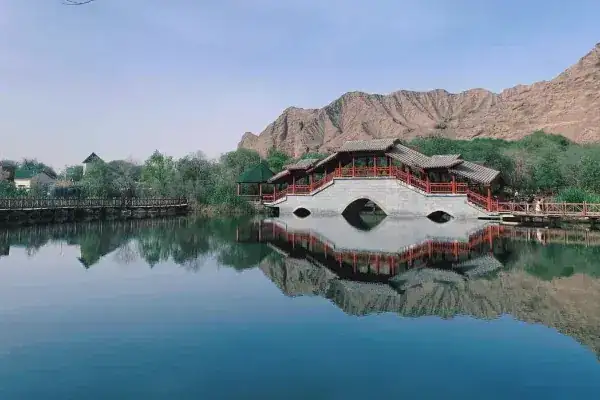
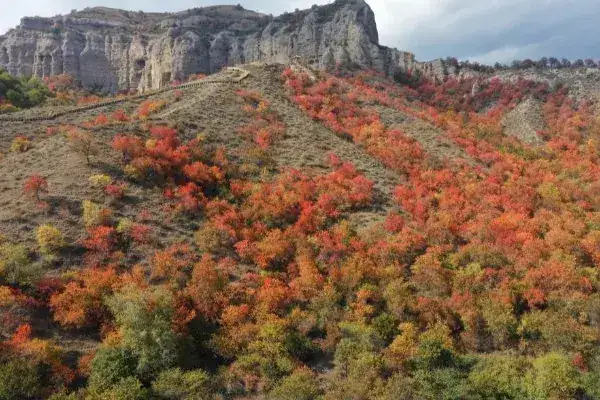
- Tianshan Grand Canyon (AAAAA): Located in Urumqi County, 48 km from the city, covering 1,038.48 sq km. It features the most complete and visually stunning primeval Schrenk spruce forest on the northern slopes of the Tianshan Mountains.
- Shuimogou Scenic Area (AAAA): Located in the eastern suburbs, a 1-km-long canyon with dozens of springs, covering 36 sq km. Includes Red Mountain, Qingquan Mountain, and hot spring sanatoriums.
- Glacier No. 1 (Tianshan No. 1 Glacier): Located at the foot of Tianger Peak at 3,850 m elevation, 130 km from Urumqi — the closest glacier to a city in the world.
- Xinjiang International Grand Bazaar (AAAA): Built in 2003, covering 100,000 sq m with over 3,000 shops. It integrates Islamic culture, architecture, ethnic commerce, entertainment, and dining — one of Xinjiang's most famous tourist landmarks.
- Xinjiang Museum: Founded in 1959, a national first-class museum with over 60,000 artifacts, featuring textiles, paper documents, painted clay sculptures, and ancient mummy specimens.
- Silk Road International Ski Resort: Located 38 km from the city in the Tianshan National Forest Park, a major winter sports venue at 1,800–3,000 m elevation.
- Red Mountain Park (AAAA): Established in 1985, covering 97.5% green coverage with 70+ tree species. Upgraded to an AAAA scenic area in 2006, it is a symbol of Urumqi.
- Asia Continental Geographic Center: Located 30 km southwest of the city, marked by a 22-meter tower at the precise geographic center of the Asian continent.
- Ulaabo Ancient City: A Tang Dynasty site (built 640 CE), 17 km from the city center — the only tax collection city on the northern Silk Road, designated as a national key cultural heritage protection unit.
- Shaanxi Great Mosque: Urumqi's largest mosque, built during the Qianlong-Jiaqing period (~200 years old), blending Han Chinese and minority architectural styles.
- Eighth Route Army Xinjiang Office Memorial: Opened in 1962, a national patriotic education base and national key cultural heritage protection unit.
Local Specialties
Urumqi aggregates specialties from across Xinjiang, including raisins (with seedless white grapes containing up to 60% sugar), jujubes (Hotan jade dates, Ruoqiang dates, Hami dates), walnuts, pistachios, and Hotan carpets known for their distinctive Uyghur artistic patterns.
Intangible Cultural Heritage
As of September 2023, Urumqi has 70 representative intangible cultural heritage projects (3 national-level, 27 regional-level, 40 municipal-level) and 73 representative inheritors. Notable items include gold-and-silver inlay craftsmanship (national-level, since the Shang-Zhou period) and Kazakh animal-imitation dance "Burketbi" (Eagle Dance, regional-level).
Travel information can change. Check current opening hours, reservations and entry requirements before you travel.

Traveller discussion
Start the conversation with a helpful tip or a question.