
Guoluo Tibetan Autonomous Prefecture
Guoluo Tibetan Autonomous PrefectureGuoluo Tibetan Autonomous Prefecture, an autonomous prefecture under Qinghai Province, abbreviated as "Guoluo Prefecture," is located in southeastern Qinghai Province, in the heartland of the Qinghai-Tibe
Guoluo Tibetan Autonomous Prefecture
Guoluo Tibetan Autonomous Prefecture, an autonomous prefecture under Qinghai Province, abbreviated as "Guoluo Prefecture," is located in southeastern Qinghai Province, in the heartland of the Qinghai-Tibet Plateau at the source of the Yellow River. It borders Gannan Tibetan Autonomous Prefecture of Gansu Province and Huangnan Tibetan Autonomous Prefecture of Qinghai Province to the east; Aba Autonomous Prefecture and Garze Tibetan Autonomous Prefecture of Sichuan Province to the south; Yushu Tibetan Autonomous Prefecture of Qinghai Province to the west; and Haixi Mongolian and Tibetan Autonomous Prefecture and Hainan Tibetan Autonomous Prefecture of Qinghai Province to the north. The total area is 76,442.38 square kilometers, with the Prefecture People's Government seated at No. 310 Tuanjie Road, Dawu Town, Maqin County. As of June 2025, Guoluo Prefecture administers 6 counties. As of the end of 2025, the permanent resident population was 224,900. Guoluo Tibetan Autonomous Prefecture is located in the eastern part of the Qinghai-Tibet Plateau, dominated by high mountain areas, with a plateau continental climate. The water system is well-developed, with relatively active hydrodynamic conditions in the province, mainly featuring the Yellow River and Yangtze River (tributaries) water systems. In 1929 (the 18th year of the Republic of China), it came under the direct jurisdiction of Qinghai Province. In 1950, Guoluo District was established as a directly administered district of Qinghai Province. In 1958, the Guoluo Tibetan Autonomous Prefecture People's Committee was stationed in Maicang, Gande County. In 1962, Tongde County was transferred to Hainan Tibetan Autonomous Prefecture, and Maduo County was transferred from Hainan back to Guoluo. Guoluo is at the intersection of Amdo and Khampa cultures, an important part of the Southern Route of the Silk Road and the Tang-Bo Ancient Road. It is the hometown of King Gesar culture in China and a national-level Gesar Culture (Guoluo) Ecological Reserve. The prefecture has Amnye Machen Peak and Nyenbo Yurtse Peak, famous monasteries such as Lhagya and Baiyu, and is included in the Sanjiangyuan Nature Reserve, China's largest nature reserve. In 2025, the gross regional product was 7.315 billion yuan, a year-on-year increase of 4.6% at comparable prices.
History
Guoluo was formerly called Eluo and Golok. In ancient times, it was the land of the Dangxiang Qiang.
During the Tang Dynasty (618–907), Guizhou was established (present-day southern Guoluo), and Shangju, Feng, Yan, Yuan, and other prefectures were also established, later becoming Tubo territory.
During the Song Dynasty (960–1279), it was under the Tubo regime.
During the Yuan Dynasty (1271–1368), it was under the Pacification Commissioner's Office of the Tibetan Routes.
During the Ming Dynasty (1368–1644), it was under the Do-Kham Pacification Commissioner's Office.
During the Qing Dynasty (1644–1912), it was under the Songpan Zhangla Camp.
In 1929 (the 18th year of the Republic of China), it came under the direct jurisdiction of Qinghai Province, and the Guoluo Administrative Inspectorate and the Third Administrative Inspectorate of Qinghai Province were established. In 1946 (the 35th year of the Republic of China), the established institutions were abolished, and the various Guoluo Tibetan tribes continued to be managed by tribal leaders.
In 1950, Guoluo District was established as a directly administered district of Qinghai Province.
In June 1952, the Northwest Military and Political Committee formed the Guoluo Work Team. On August 4, the work team entered Guoluo Jima.
On January 1, 1954, Guoluo District was reorganized as Guoluo Tibetan Autonomous Region (equivalent to a prefecture), with the People's Government stationed at Chalang Monastery. In December, Gande County was established; the autonomous region governed 1 county.
On July 2, 1955, Guoluo Tibetan Autonomous Region was reorganized as Guoluo Tibetan Autonomous Prefecture, with the Prefecture People's Committee stationed in Jimai, Dari County, governing 4 counties: Gande, Jiuzhi, Banma, and Dari (Jiuzhi, Banma, and Dari were newly established in 1955).
In 1957, Maduo County was established from parts of Gande County, stationed at Huangheyan; Maqin County was established from parts of Dari and Gande counties, stationed at Zhongxinzhan (Yigaiqi); the prefecture governed 6 counties.
In 1958, the Guoluo Tibetan Autonomous Prefecture People's Committee was stationed in Maicang, Gande County.
In 1959, the Prefecture People's Committee was moved to Maqin County; Maduo County was transferred to Hainan Tibetan Autonomous Prefecture; Tongde County was transferred from Hainan to Guoluo; Dari County was moved to Jimai; Maqin County was moved from Yigaiqi to Dawu.
In 1962, Tongde County was transferred to Hainan Tibetan Autonomous Prefecture, and Maduo County was transferred back from Hainan to Guoluo.
Administrative Divisions
As of June 2025, Guoluo Prefecture administers 6 counties: Maqin County, Maduo County, Gande County, Dari County, Banma County, and Jiuzhi County, with 8 towns, 36 townships, 21 communities, and 188 administrative villages. The Prefecture People's Government is seated at No. 310 Tuanjie Road, Dawu Town, Maqin County.
Geographical Environment
Location
Guoluo Tibetan Autonomous Prefecture is located in the heartland of the Qinghai-Tibet Plateau at the source of the Yellow River, in southeastern Qinghai Province, between 32°31'–35°40' north latitude and 97°54'–120°50' east longitude. The prefecture seat, Dawu, is 440 kilometers from the provincial capital Xining. It borders Gannan Tibetan Autonomous Prefecture of Gansu and Huangnan Tibetan Autonomous Prefecture of Qinghai to the east; Aba Tibetan and Qiang Autonomous Prefecture and Garze Tibetan Autonomous Prefecture of Sichuan to the south; Yushu Tibetan Autonomous Prefecture to the west; and Haixi Mongolian and Tibetan Autonomous Prefecture and Hainan Tibetan Autonomous Prefecture to the north. The total area is 76,442.38 square kilometers.
Topography and Landforms
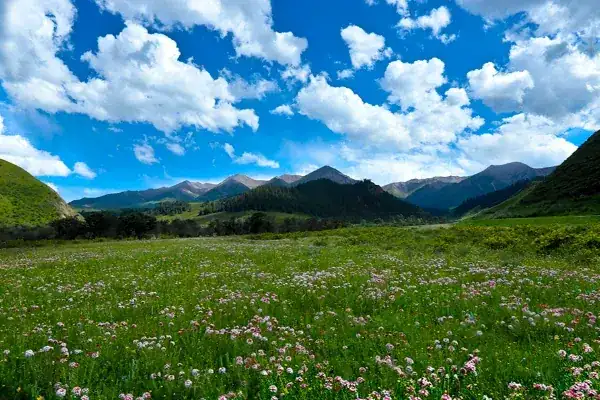
Guoluo Tibetan Autonomous Prefecture is located in the eastern part of the Qinghai-Tibet Plateau, dominated by high mountain areas. About 80% of the area is between 4,000 and 5,000 meters in elevation. The Bayan Har Mountains stretch from east to west, forming the watershed between the Yangtze River and the Yellow River. The terrain slopes from northwest to southeast, with gentle hills in the northwest and steep mountains with deep valleys in the southeast. Amnye Machen Peak in the north is the highest peak at the source of the Yellow River, at 6,282 meters, one of the four sacred mountains of Tibet, majestic and gleaming like jade. Nyenbo Yurtse Peak in the south, at 5,369 meters, is the birthplace of the "Three Guoluo" tribes, with layered peaks and unpredictable snow ridges. The Yellow River flows 882 kilometers through the prefecture, originating from the Zaqu, Yueguzongliequ, and Kariqu rivers at the northern foot of the Bayan Har Mountains, converging at Xingxiu Sea, Zhaling Lake, and Eling Lake, flowing through Maduo, Dari, Gande, and Jiuzhi counties, exiting to Sichuan and Gansu, and re-entering from Maqin County, creating the geological wonder of the Yellow River flowing westward and forming the famous Lhagya Grand Canyon. South of the Bayan Har Mountains, the Niqu River in Dari County enters Sichuan and joins the Yalong River, a tributary of the Yangtze; the Duoke River and Make River in Banma County enter Sichuan and join the Dadu River, also a Yangtze tributary. Dongge Cuona Lake in Maduo County flows through the Tuosuo River in the northwest corner into the Qaidam River and then into South Huoluxun Lake, the only inland basin in the prefecture. The landforms can be roughly divided into three types: mountains, river valleys, and basins.
Climate
Guoluo Tibetan Autonomous Prefecture has an average elevation above 4,200 meters, with atmospheric oxygen content only 60% of sea level. It has a typical plateau continental climate, with significant high-altitude cold and oxygen deficiency, low temperatures, strong solar radiation, and large diurnal temperature ranges. The prefecture is high in elevation and easily affected by cold currents from the north and northwest, with long sunshine hours, relatively high precipitation, high evaporation, and frequent gusty winds. The annual average precipitation is 616.4 mm, the annual average temperature is 0°C, and there is no absolute frost-free period. Due to the high altitude, there are no four distinct seasons, only cold and warm seasons. Winter is long, bitterly cold, dry, with frequent strong winds, snow, and hail; summer is short and cool, with unpredictable warming, rain, and hail, making natural conditions extremely harsh. Precipitation is unevenly distributed: the north is dry and cold, while the relatively moist areas of Banma and Jiuzhi in the southeast have annual precipitation of 662.0–742.1 mm, with about 187 precipitation days per year. Jiuzhi County has the highest precipitation in Qinghai Province.
Hydrology
The water systems in Guoluo Tibetan Autonomous Prefecture are well-developed, with relatively active hydrodynamic conditions. The Bayan Har Mountains divide the area into the Yellow River system to the north and the Yangtze River system (tributaries) to the south, with high mountains, steep slopes, deep gorges, and fast-flowing rivers.
The Yellow River originates from the north side of the Bayan Har Mountains, flowing from Zhaling and Eling lakes in Maduo County eastward through Dari, Gande, Jiuzhi, and Maqin counties. According to the Jimai Hydrological Station, the annual runoff is 3.765 billion cubic meters, with the flood season from July to October accounting for 64.6% of the annual runoff. The maximum monthly runoff (September) is over 10 times the minimum (February). The dry season runs from December to March, accounting for only 8.3% of annual runoff. Major tributaries of the Yellow River system in the prefecture include the Dongke River, Xikequ, Qiemuqu, Shake River, and Dari River, totaling 25 rivers.
The Yangtze River system mainly consists of the upper reaches of the Dadu River and Yalong River. Four first-order tributaries include the Duoke River and Make River in Banma and Dari counties, which flow south into Sichuan and join the Dadu River; the Niqu River in Dari County flows south into Sichuan and joins the Yalong River.
Natural Resources
Water Resources
Guoluo Tibetan Autonomous Prefecture has numerous snow peaks, lakes, and rivers. The water system is significantly influenced by topography, with most exorheic rivers flowing from northwest to southeast, consistent with mountain ranges. Rivers form centripetal drainage systems centered on local lake depressions. River recharge comes from natural precipitation, groundwater, and alpine snow and ice meltwater, with natural precipitation as the primary source. The total water resources are 13.453 billion cubic meters (including 10.053 billion for the Yellow River basin, 2.996 billion for the Yangtze River basin, and 404 million for the eastern Qaidam Basin of the northwestern rivers), with surface water resources of 13.453 billion cubic meters and groundwater resources of 5.55 billion cubic meters.
Plant Resources
Shrub forests are widely distributed throughout Guoluo. Tree species include spruce, cypress, and birch; shrub species include rhododendron, alpine willow, alpine spiraea, and cinquefoil. There are 16 families and over 80 species of trees and shrubs. Over 800 plant species in 60+ families have been recorded, including 200+ forage species, 200+ edible miscellaneous herbs, 300+ inedible miscellaneous herbs, 60+ toxic/harmful species, and 60+ tree and shrub species. Less than 100 high-quality forage species exist but dominate the grassland, accounting for 60%–90% of total vegetation by yield, cover, and abundance. Forage is mainly from Gramineae, Cyperaceae, Leguminosae, and Rosaceae. Over 20 premium forage species include Kobresia capillifolia, Kobresia pygmaea, Kobresia humilis, Carex scabrirostris, Poa crymophila, Poa pratensis, Elymus nutans, Festuca rubra, Festuca sinensis, and others. About 50 good forage species exist, along with 60+ medium and 60+ low-quality species.
Animal Resources
Guoluo has over 20 species of wild mammals and over 30 species of birds. Class I national protected animals include snow leopard, Tibetan wild ass, alpine musk deer, forest musk deer, dhole, and white-lipped deer. Class II national protected animals include blue sheep, Tibetan gazelle, argali, brown bear, red deer, lynx, macaque, otter, Pallas's cat, corsac fox, red fox, Tibetan fox, leopard cat, and stone marten. Amphibians include the giant salamander (Class II protected). Provincial protected animals include black bear, mountain weasel, Siberian weasel, and roe deer. Class I national protected birds include Pallas's fish eagle, Chinese grouse, Tibetan eared pheasant, Chinese monal, steppe eagle, cinereous vulture, saker falcon, and black-necked crane. Class II protected birds include Tibetan snowcock, blue eared pheasant, long-tailed owl, little owl, whooper swan, upland buzzard, common kestrel, northern goshawk, and kite. Provincial protected birds include cormorant, ruddy shelduck, bar-headed goose, great black-headed gull, brown-headed gull, black woodpecker, long-billed lark, and small skylark. Most are distributed across all six counties, with Maduo County having the most.
Mineral Resources
Guoluo has relatively complete mineral resources, including energy, metallic, and non-metallic minerals. 31 types of minerals have been discovered, accounting for 21.38% of the 145 types found in the province, mainly coal, copper, and gold. 11 types are listed in the Qinghai Province Mineral Resource Reserves Summary (as of end of 2015), including 1 energy mineral, 7 metallic minerals, 2 non-metallic minerals, and 1 water-gas mineral. 177 mineral occurrences have been found, accounting for 3.69% of the provincial total of 4,794. These include 2 large deposits (1.13%), 4 medium (2.26%), 5 small (2.82%), 87 mineral prospects (49.15%), and 79 mineralized points (44.63%). Copper and lode gold occurrences are the most numerous, with 35 each.
Population
Population Size
According to the Seventh National Population Census, as of November 1, 2020, the permanent resident population of Guoluo Tibetan Autonomous Prefecture was 215,573.
As of the end of 2025, the permanent resident population was 224,900, an increase of 0.94% from the end of the previous year. By urban-rural division: urban population was 87,800, up 1,900; rural population was 137,100, up 200. The urban population proportion was 39.04% and rural was 60.96%, with an urbanization rate of 39.04%, up 0.49 percentage points.
Ethnic Composition
Guoluo has Tibetan, Han, Hui, Tu, Salar, Mongolian, and other ethnic groups, with Tibetans being the largest proportion. As of June 2024, the total population was 215,000, with Tibetans accounting for 91.8%.
Politics
Economy
Overview
In 2025, the gross regional product of Guoluo Tibetan Autonomous Prefecture was 7.315 billion yuan, up 4.6% at comparable prices. By industry: primary industry added value was 985 million yuan, up 4.8%; secondary industry added value was 1.376 billion yuan, up 12.2%; tertiary industry added value was 4.955 billion yuan, up 2.9%. Per capita GDP was 32,679 yuan. The three-industry structure was 13.5:18.8:67.7, compared to 13.2:17.9:68.9 in the previous year.
In 2025, total fixed-asset investment decreased by 21.9%. Primary industry investment increased by 14.2%; secondary industry investment decreased by 33%; tertiary industry investment decreased by 18.6%. There were 451 projects of 5 million yuan and above, down 19.03%, including 21 projects of 100 million yuan and above, unchanged. The top three growing sectors: accommodation and catering up 229%, manufacturing up 78.5%, and agriculture, forestry, animal husbandry, and fishery up 41.9%. Nine sectors showed negative growth.
In 2025, local general public budget revenue was 354 million yuan, down 13.03%. Tax revenue was 151 million yuan, down 43.62%; non-tax revenue was 202 million yuan, up 46.27%. General public budget expenditure was 12.55 billion yuan, down 10.66%.
Primary Industry
In 2025, total agricultural and pastoral output was 1,167,305,200 yuan, up 4.84%, including: agricultural output of 221,569,000 yuan, up 1.27%; forestry output of 4,438,800 yuan, up 46.01%; animal husbandry output of 906,340,300 yuan, up 5.74%; and professional and auxiliary activity output of 34,957,100 yuan, up 3.36%.
In 2025, grain planted area was 5,728 mu, up 118 mu. Of this: wheat 137 mu, up 14; highland barley 4,854 mu, up 174; potato 473 mu, down 112; beans 264 mu, up 42. Cash crop area was 5,894.85 mu, down 10,775.61 mu. Grain output was 792 tons, down 8.51 tons; oil crop output was 187,400 tons, down 4.97%.
As of the end of 2025, cattle inventory was 967,700 head, down 15,000; sheep inventory was 107,100, down 9,400. Total livestock sold was 377,000 head, up 9,000, with a sales rate of 34.29%. Cattle sold: 309,200, up 2.01%; sheep sold: 67,900, up 4.62%. Total beef and mutton output: 32,200 tons, up 2.23%.
Secondary Industry
In 2025, industrial added value increased by 66.58%. Above-scale industrial added value increased by 72%; below-scale increased by 28.73%. Above-scale manufacturing added value increased by 60%; electricity, heat, gas, and water production and supply added value increased by 72.1%.
In 2025, 5 above-scale industrial enterprises (excluding provincial-reporting enterprises) achieved main business revenue of 1.439 billion yuan, up 85.7%; total profits of 376 million yuan, up 29.7%. By category: electricity, heat, gas, and water enterprises had profits of 373 million yuan; manufacturing enterprises had profits of 3 million yuan.
Tertiary Industry
In 2025, total retail sales of consumer goods were 1.491 billion yuan, up 1.2%. Above-quota retail sales were 549 million yuan, up 1.4%. Urban retail sales were 1.236 billion yuan, up 0.9%; rural retail sales were 255 million yuan, up 2.4%. The urban-rural ratio was 82.90:14.10. Wholesale sales were 419 million yuan, up 1.2%; retail sales were 1.063 billion yuan, up 3.2%; accommodation revenue was 49 million yuan, down 0.3%; catering revenue was 300 million yuan, up 2.2%.
In 2025, total deposits of financial institutions were 13.561 billion yuan, up 9.5% (including household deposits of 4.59 billion yuan, up 5.14%). Total loans were 8.666 billion yuan, up 10.61% (including household loans of 4.31 billion yuan, up 9.36%).
Social Affairs
Education
In 2025, Guoluo had 135 schools of all types, including 69 kindergartens, 45 primary schools, 5 junior high schools, 9 nine-year schools, 3 high schools, 3 secondary vocational schools, and 1 special education school. Total enrollment was 56,931, including 54,792 in-prefecture and 2,139 out-of-prefecture students. In-prefecture: 11,124 preschool, 26,338 primary, 12,257 junior high, 3,075 high school, 4,093 vocational, and 44 special education students. Out-of-prefecture: 1,415 junior high and 715 high school students.
In 2025, total graduates were 14,524, including 5,157 primary and 3,941 secondary. Total teaching staff was 5,569, including 3,575 full-time teachers. Compulsory education consolidation rate was 97.61%; high school completion rate was 70.79%; preschool enrollment rate was 90.09%.
Culture
In 2025, Guoluo had 16 cultural institutions, including 1 art institution, 7 libraries, 7 mass culture institutions, and 1 museum. 6 broadcasting stations, with radio coverage of 98.50% and TV coverage of 98.50%.
Healthcare
In 2025, Guoluo had 78 health institutions (excluding clinics), including 12 county-level or above public hospitals (including 5 Tibetan medicine hospitals), 45 township health centers, 7 disease prevention and control centers, 7 health supervision institutes, and 7 family planning service stations. Total health personnel was 2,038, including 1,842 health technical personnel. Of these: 715 practicing (assistant) physicians, 603 registered nurses, 69 pharmacists, 45 technicians, and 410 uncertified. Total beds: 1,633, including 1,567 in county-level or above hospitals.
Social Security
In 2025, 1,318 new urban jobs were created, 1,599 unemployed were reemployed, 327 difficult-to-employ persons found jobs, 16,175 rural laborers were transferred, 4,167 received skills training, and the urban registered unemployment rate was 1.49%. College graduate employment rate was 98%. Enterprise employee pension insurance covered 23,452, up 8.28%; government institution pension covered 17,364, up 4.35%; urban and rural resident pension covered 112,875, up 0.18%; work injury insurance covered 34,278, up 3.17%; unemployment insurance covered 16,141, up 10.40%; urban employee medical insurance covered 26,295, up 8.75%; urban and rural resident medical insurance covered 186,464, down 0.18%; maternity insurance covered 19,037, up 8.75%.
In 2025, urban minimum living allowance covered 1,928 households with 5,211 people; rural minimum living allowance covered 8,211 households with 26,457 people. 8 welfare institutions cared for 255 people.
Transportation
Highways
In 2025, Guoluo had 39 passenger routes, including 6 inter-provincial (5 adjacent county), 7 inter-city, and 4 inter-county routes; 6 passenger stations (1 first-class, 5 third-class); 29 convenience stations; 56 passenger vehicles (34 scheduled, 22 rural). Passenger volume was 114,600, down 1.6%; passenger turnover was 40.7551 million person-kilometers, down 39%; freight volume was 319,100 tons, up 9.6%; freight turnover was 24.0709 million ton-kilometers, basically unchanged. 7 driver training institutions and 2 comprehensive vehicle performance testing stations.
Railways
The Chengdu-Golm Railway has been included in the National Development and Reform Commission's "Medium- and Long-Term Railway Network Plan." It is a convenient channel connecting Xinjiang, western and southern Qinghai with southwestern and southeastern provinces, primarily for freight with some passenger service. The route starts from Golmud, Qinghai, passes through Dari and Maduo in Guoluo, then Ma'erkang, Wenchuan, and Dujiangyan in Sichuan, and connects to the Chengdu hub.
Aviation
Guoluo Maqin Airport is located in Dawu Town, at an elevation of 3,787 meters. It is a 4C-level plateau branch airport, officially opened on July 1, 2016. The runway is 3,800 meters long, designed for 80,000 passenger throughput, 200 tons of cargo, and 940 aircraft movements. Except for 2022, it has maintained over 100,000 passenger throughput annually. The overall plan (2023 edition) projects: by 2035, 750,000 passengers, 5,000 tons of cargo, and 7,653 aircraft movements; by 2050, 1,700,000 passengers, 8,300 tons of cargo, and 17,347 aircraft movements.
History and Culture
Lhagya Monastery in Maqin County is a national-level protected cultural heritage site. "Nyenbo Yurtse Mythological Legends" and 3 other items are listed as provincial intangible cultural heritage. "De'angsazhi," "Equestrian Tibetan Opera," "Banma Tibetan-Style Watchtower Construction Technique," and "Amnye Machen Mythological Legends" are listed as national intangible cultural heritage.
Scenic Spots
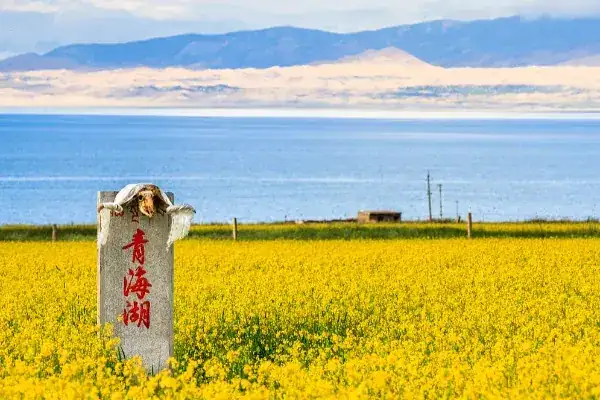
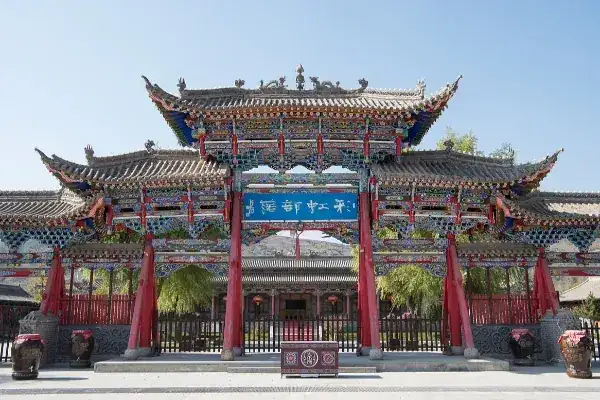
Scenic and historical sites in Guoluo include Lhagya Monastery, Amnye Machen Peak, Baiyun Monastery, and the Yellow River Source Monument (Ox Head Monument). Natural landscapes include Eling Lake, Zhaling Lake, Amnye Machen Snow Mountain, Tuosuo Lake, Mogedewa Ruins, Nyenbo Yurtse, Baiyu Monastery, King Gesar's Lion-Dragon Palace, Mayu Culture Center, the Tang-Bo Ancient Road, and Make River primeval forest.
Lhagya Monastery is located on the north bank of the Yellow River in Lhagya Township, northeastern Maqin County, at the foot of Anni Qungong Mountain (meaning "great peng spreading its wings"), facing west toward the Yellow River.
Amnye Machen Snow Mountain, also known as Maji Snow Mountain or Jishi Mountain, is located in Guoluo, at the eastern end of the Kunlun Mountains. The main peak, Magen Gangri, at 6,282 meters, is one of the famous snow mountains of the plateau, meaning "Grandfather of the Great Snow Mountain through which the Yellow River flows" in Tibetan. Together with Mount Kailash in Tibet, Kawagarbo in Yunnan, and Gadoi Jowo in Yushu, it is one of the "Four Great Sacred Mountains."
The prefecture has magnificent scenery, with the mirror-like Zhaling Lake, Eling Lake, Dongge Cuona Lake, and Xingxiu Sea embedded in Maduo County.
Honorary Titles
In December 2019, the State Ethnic Affairs Commission named Guoluo a "National Ethnic Unity and Progress Demonstration Prefecture."
In November 2022, it was designated as a national forestry carbon sink pilot city.
In October 2023, it was named a seventh batch Ecological Civilization Construction Demonstration Zone.
Travel information can change. Check current opening hours, reservations and entry requirements before you travel.

Traveller discussion
Start the conversation with a helpful tip or a question.