
Huangnan Tibetan Autonomous Prefecture
Huangnan Tibetan Autonomous PrefectureHuangnan Tibetan Autonomous Prefecture, abbreviated as "Huangnan Prefecture," is an autonomous prefecture under Qinghai Province, with its capital seated in Tongren City. It is located at the first bend
Huangnan Tibetan Autonomous Prefecture
Huangnan Tibetan Autonomous Prefecture, abbreviated as "Huangnan Prefecture," is an autonomous prefecture under Qinghai Province, with its capital seated in Tongren City. It is located at the first bend of the nine bends of the Yellow River in southeastern Qinghai Province. It borders Hualong Hui Autonomous County and Xunhua Salar Autonomous County of Haidong City to the northeast; Xiahe, Luqu, and Maqu counties of Gannan Tibetan Autonomous Prefecture in Gansu Province to the southeast; and Guide, Guinan, and Tongde counties of Hainan Tibetan Autonomous Prefecture as well as Maqin County of Guoluo Tibetan Autonomous Prefecture to the northwest and southwest. The terrain is high in the south and low in the north, with a plateau continental climate. The total area of the prefecture is 18,200 square kilometers. As of July 2026, Huangnan Tibetan Autonomous Prefecture administers 1 county-level city and 3 counties. As of the end of 2025, the permanent resident population of Huangnan Tibetan Autonomous Prefecture was 281,200. Huangnan Tibetan Autonomous Prefecture is named for being situated south of the Yellow River; the first bend of the nine bends of the Yellow River turns here, and it is the birthplace of Regong art. As of October 2025, it has 2 items on the Representative List of the Intangible Cultural Heritage of Humanity and 6 national-level intangible cultural heritage items. As of September 2023, there are 21 national A-level scenic areas, including 2 4A-level tourist attractions. On June 12, 2024, the site for Huangnan Civil Airport was officially approved by the Civil Aviation Administration of China. In December 2025, sections of the G0611 Tongren-Sai'erlong (Qinghai-Gansu border) expressway, from Maixiu interchange to Sai'erlong interchange, passed completion inspection, marking the end of Zeku County and Henan Mongolian Autonomous County's history of having no expressway access. In 2025, the gross regional product of Huangnan Tibetan Autonomous Prefecture was 12.417 billion yuan, an increase of 0.7% over the previous year at constant prices.
History
During the Yuan Dynasty (1271–1368), the area was under the jurisdiction of the Pacification Commissioner's Office for Tibetan Areas.
In the third year of the Hongwu era of the Ming Dynasty (1368–1644) (1370), Hezhou Guard was established, and the Bili Chiefdom was reorganized into Bili Thousand Household Office, governing the southern nomadic tribes of Huangnan. In the eighth year of Hongwu (1375), Guide was reorganized as Guide Guard Thousand Household Office, with 10 military settlements (tun) under it, of which 7 were within the current Huangnan area. In the first year of Xuande (1426), the Tongren and Zeku areas came under the governance of the Living Buddha Shari Khamba of Longwu Monastery—the Longwu Nangso administrator—gradually forming a theocratic ruling system in the Regong area. During the Wanli era (1573–1620), the Huangnan area was controlled by Hongsa Batur of the Mongol Tümed tribe.
In the fourth year of the Yongzheng era of the Qing Dynasty (1644–1912) (1726), the Office of the Imperial Resident in Xining was established, and Henan County was placed under its jurisdiction. The Tongren, Jianzha, and Zeku areas successively belonged to Lintao Prefecture, Xining Prefecture, Hezhou Prefecture, and Lanzhou Prefecture of Gansu, administered by Guide Subprefecture and Xunhua Subprefecture respectively.
In 1914, Xining Circuit was established.
In July 1929 (the 18th year of the Republic of China), Qinghai Province was established from Gansu Province, and Tongren County was established from Xunhua County, while Henan County was placed under direct provincial jurisdiction. In 1937 (the 26th year of the Republic of China), the provincial government established the Seventh Inspectorate in Longwu Town, governing Tongren and Tongde counties. In 1940 (the 29th year of the Republic of China), most of the Tongren and Zeku county areas were subordinate to the Seventh Inspectorate of Qinghai Province. The Henan area continued under the old Qing Dynasty system, governed by the Mongol Prince, while the Jianzha area was under the jurisdiction of Guide County.
In 1949, the Huangnan area was liberated. On September 22, the Tongren County People's Government was established.
On March 17, 1952, the Tongren Tibetan Autonomous District (county-level, renamed to county in July 1953) was established. On July 3, the Jianzha Tibetan Autonomous District was established from Guide County (county-level, renamed to county in July 1953), and Zeku County was established from Tongren County.
On September 30, 1953, the State Council approved the establishment of Huangnan Tibetan Autonomous Region (prefecture-level), with the People's Government seated at Longwu Monastery in Tongren County, governing Jianzha, Tongren, and Zeku counties. It was formally established on December 22.
In October 1954, Henan Mongolian Autonomous District was established (county-level, renamed to autonomous county in June 1955).
On May 22, 1955, the Huangnan Tibetan Autonomous Region of Qinghai Province was renamed Huangnan Tibetan Autonomous Prefecture in accordance with the Constitution.
In January 1959, with the approval of the State Council, Xunhua Salar Autonomous County and Henan Mongolian Autonomous County, originally under direct provincial jurisdiction, were placed under the administration of Huangnan Prefecture.
In December 1962, Xunhua Salar Autonomous County was restored to direct provincial jurisdiction.
In 1964, Henan Mongolian Autonomous County, originally under direct provincial jurisdiction and entrusted to Huangnan Tibetan Autonomous Prefecture, was renamed Henan Mongolian Autonomous County.
In 1987, Lijia Gorge Administrative Committee (county-level) was established.
In 2002, the Lijia Gorge Administrative Committee was abolished.
Administrative Divisions
As of July 2026, Huangnan Tibetan Autonomous Prefecture administers 1 county-level city and 3 counties: Tongren City, Jianzha County, Zeku County, and Henan Mongolian Autonomous County. The Prefecture People's Government is seated at No. 10 Xiaqiong Middle Road, Longwu Town, Tongren City.
Geographical Environment
Location and Boundaries
Huangnan Tibetan Autonomous Prefecture is located at the first bend of the nine bends of the Yellow River in southeastern Qinghai Province, between 100°34′–102°23′ east longitude and 34°03′–36°10′ north latitude. It borders Hualong Hui Autonomous County and Xunhua Salar Autonomous County of Haidong City to the northeast; Xiahe, Luqu, and Maqu counties of Gannan Tibetan Autonomous Prefecture in Gansu Province to the southeast; and Guide, Guinan, and Tongde counties of Hainan Tibetan Autonomous Prefecture as well as Maqin County of Guoluo Tibetan Autonomous Prefecture to the northwest and southwest. The prefecture spans 175 kilometers from east to west and 235.3 kilometers from north to south, with a total area of 18,200 square kilometers, accounting for 2.61% of the province's total area.
Topography and Landforms
Huangnan Tibetan Autonomous Prefecture is situated in the transition zone from the Qinghai-Tibet Plateau to the Loess Plateau, featuring a pattern of "five mountains, one valley, and four plateaus." It is located in the northeastern corner of the Qingnan Plateau. The geological structure belongs to the South Qinling Fold Belt of the Qinling Fold System. The southern part is a single east-west structural belt, primarily a medium-high mountain structural area shaped by ancient glacial erosion. The northern part features northwest-trending folds and fractures. The terrain is divided by Maixiu Mountain, with an elevation difference of up to 1,670 meters between north and south, exhibiting transitional and diverse topographic features.
Climate
Huangnan Tibetan Autonomous Prefecture has a plateau continental climate. Its climatic characteristics include: simultaneous rain and heat seasons, with obvious differences between dry and wet seasons; insufficient heat, short frost-free period, high precipitation variability, and uneven spatial and temporal distribution; long sunshine hours, strong solar radiation; long, cold, and dry winters, short and cool summers; and frequent hazardous weather. The annual average temperature ranges from 6.6°C to 8.5°C; the southern area has a relatively higher temperature deviation, with an annual average temperature of -0.9°C to 0.3°C. The annual average temperature for the entire prefecture ranges from -0.9°C to 8.5°C. Precipitation is unevenly distributed in time and space, with large interannual variability, showing a gradual increasing trend. The average annual precipitation is 308.4 mm in Jianzha County, 549.4 mm in Henan County, 409.1 mm in Tongren City, and 492.4 mm in Zeku County. The annual average precipitation for the entire prefecture ranges from 329.0 to 505.0 mm. The annual sunshine hours range from 2,506.1 to 2,688.2 hours. The frost-free period ranges from 14 to 173 days, with 147–173 days in the northern warm zone and 14–21 days in the southern low-temperature zone. The annual evaporation ranges from 1,231.6 to 1,697.0 mm.
Hydrology
Huangnan Tibetan Autonomous Prefecture has 156 rivers and more than 1,500 springs, including 8 major rivers: the Yellow River, Longwu River, Zequ River, Tao River, Baqu River, and others. The average annual surface water runoff is 2.98 billion cubic meters, with groundwater resources of 2.116 billion cubic meters, and total water resources by district of 4.333 billion cubic meters.
Natural Resources
Hydropower Resources
Huangnan Tibetan Autonomous Prefecture has more than 60 rivers of various sizes. The Longwu River, running north-south through the prefecture, is 144 kilometers long, with a theoretical hydropower potential of 220,500 kilowatts, capable of supporting 15 cascade hydropower stations (6 have been built). The Yellow River flows along the northern and southern edges of the prefecture, with the northern section about 70 kilometers long, capable of supporting 3 large and medium-sized power stations, and the southern section about 90 kilometers long, with a developable hydropower potential of 830,000 kilowatts. The rivers available for development include the Yellow River, Longwu River, Zequ River, and Tao River, with a theoretical hydropower potential of 3.088 million kilowatts, of which the Yellow River accounts for 2.42 million kilowatts, the Longwu River 368,000 kilowatts, the Zequ River 72,000 kilowatts, and other rivers 228,000 kilowatts.
Mineral Resources
Huangnan Tibetan Autonomous Prefecture is located in the Tongde-Zeku Indosinian mercury, arsenic, copper, lead, zinc, gold (antimony, tungsten, bismuth, tin), decorative granite, and limestone metallogenic belt. There are more than 50 types of minerals, 285 mineral occurrences, 15 energy mineral sites, 171 metallic mineral sites, 92 non-metallic mineral sites, and 7 water-gas mineral sites. The dominant minerals are gold, copper, lead, zinc, and mineral water.
## Biological Resources
Huangnan Tibetan Autonomous Prefecture has wildlife species including snow leopard, leopard, alpine musk deer, red deer, blue sheep, serow, lynx, Pallas's cat, and argali. There are approximately 90 families, 480 genera, and 1,370 species of seed plants, including 36 families, 71 genera, and 144 species of woody plants in families such as Pinaceae, Cupressaceae, and Salicaceae. Medicinal resources are divided into 3 categories—plant medicines, animal medicines, and mineral medicines—totaling 710 species. Wild medicinal plants include Cordyceps sinensis, rhubarb, snow lotus, and puffballs.
Population
According to the Seventh National Population Census, as of November 1, 2020, the permanent resident population of Huangnan Tibetan Autonomous Prefecture was 276,215.
As of the end of 2025, the permanent resident population of Huangnan Tibetan Autonomous Prefecture was 281,200, a decrease of 1,000 from the end of the previous year. By urban-rural division, the urban population was 132,600 and the rural population was 148,600, with the urbanization rate of the permanent resident population at 47.16%, an increase of 1.2 percentage points from the end of the previous year.
Huangnan Tibetan Autonomous Prefecture is a multi-ethnic area, with 23 ethnic groups including Tibetan, Mongolian, Han, Hui, Tu, Salar, and Bonan.
Politics
Economy
Overview
In 2025, the gross regional product of Huangnan Tibetan Autonomous Prefecture was 12.417 billion yuan, an increase of 0.7% over the previous year at constant prices. By industry, the primary industry added value was 3.139 billion yuan, up 5.2%; the secondary industry added value was 2.775 billion yuan, down 7.7%; the tertiary industry added value was 6.504 billion yuan, up 1.4%. The three-industry structure was adjusted from 23.6:24.7:51.7 in the previous year to 25.3:22.3:52.4. The per capita gross regional product was 44,078 yuan, an increase of 0.8% over the previous year.
In 2025, the general public budget revenue of Huangnan Tibetan Autonomous Prefecture was 518 million yuan, an increase of 5.3% over the previous year. Of this, tax revenue was 283 million yuan, up 2.0%; non-tax revenue was 235 million yuan, up 9.6%. General public budget expenditure was 9.785 billion yuan, up 1.7%. Of this: general public service expenditure was 916 million yuan, up 1.5%; education expenditure was 1.403 billion yuan, up 9.1%; social security and employment expenditure was 1.696 billion yuan, up 3.0%; and medical and health expenditure was 826 million yuan, up 10.5%.
In 2025, fixed-asset investment of 5 million yuan and above in Huangnan Tibetan Autonomous Prefecture decreased by 45.9% compared to the previous year. By industry, primary industry investment decreased by 49.7%; secondary industry investment decreased by 50%; tertiary industry investment decreased by 40.2%. The proportions of the three industries were 11.6:42.5:45.9.
Primary Industry
In 2025, the total planted area of grain crops in Huangnan Tibetan Autonomous Prefecture was 120,100 mu, a decrease of 3,019 mu year-on-year, down 2.5%. Of this: wheat was 55,600 mu, down 2.7%; highland barley was 47,000 mu, down 0.5%; coarse grains 5,893 mu, down 1.1%; beans 3,459 mu, down 19.9%; and potatoes 7,241 mu, up 2.5%. The planted area of cash crops was 165,900 mu, an increase of 11,700 mu, of which oil crops occupied 85,400 mu, up 15.8%; vegetables 9,100 mu, down 11.2%; Chinese herbal medicines 8,500 mu, down 2.0%; and other crops 62,800 mu, up 2.0%.
In 2025, grain output of Huangnan Tibetan Autonomous Prefecture was 30,700 tons, an increase of 486 tons, up 1.6%; total oil crop output was 9,400 tons, up 18.5%; vegetable output was 13,100 tons, down 19.1%.
As of the end of 2025, the prefecture had 919,300 cattle, up 1.2%; 772,300 sheep, down 3.8%; 2,900 pigs, down 32.5%; and 370,000 poultry, down 4.3%.
In 2025, the prefecture sold 796,900 head of various livestock, down 7.4%. Of this, 317,300 cattle were sold, up 5.6%; 407,800 sheep, down 9.2%.
In 2025, total meat output was 40,800 tons, up 3.9%; milk output was 31,800 tons, down 1.6%.
Secondary Industry
In 2025, the total industrial added value of Huangnan Tibetan Autonomous Prefecture was 1.945 billion yuan, down 4.4% from the previous year. Above-scale industrial added value decreased by 16.7%. Among above-scale industries, by category: mining added value increased by 16.9%, manufacturing added value decreased by 3.7%, and electricity, heat, gas, and water production and supply added value decreased by 17.5%.
In 2025, there were 21 qualified construction enterprises in the prefecture, with total construction output of 720 million yuan, down 21.0%. Signed contract value was 1.127 billion yuan, down 20.9%. Of this, newly signed contracts were 502 million yuan, down 43.8%; carried-over contracts were 625 million yuan, up 17.6%. Building construction area was 94,100 square meters, down 30.9%; newly started building area was 82,400 square meters, down 4.3%.
Tertiary Industry
In 2025, the wholesale and retail added value of Huangnan Tibetan Autonomous Prefecture was 348 million yuan, up 3.4%; transportation, warehousing, and postal services added value was 69 million yuan, up 4.1%; accommodation and catering added value was 260 million yuan, up 3.2%; financial industry added value was 460 million yuan, down 6.8%; real estate added value was 515 million yuan, down 5.5%; for-profit services added value was 633 million yuan, up 5.0%; and non-profit services added value was 4.169 billion yuan, up 2.4%.
In 2025, total retail sales of consumer goods in the prefecture were 1.929 billion yuan, up 1.2%. By scale, above-quota consumer goods retail sales were 450 million yuan, down 11.4%; below-quota retail sales were 1.479 billion yuan, up 5.6%. By consumption type, commodity retail sales were 1.6 billion yuan, up 1.0%; catering revenue was 330 million yuan, up 2.1%.
As of the end of 2025, RMB deposits of all financial institutions in the prefecture totaled 18.17 billion yuan, up 4.3%. Of this: household deposits were 7.891 billion yuan, up 5.0%; non-financial enterprise deposits were 1.414 billion yuan, up 14.1%. RMB loans totaled 11.564 billion yuan, up 6.6%. Of this: household loans were 7.086 billion yuan, up 13.3%; non-financial enterprise and government organization loans were 4.477 billion yuan, down 2.6%.
In 2025, original insurance premium income of insurance companies in the prefecture was 279 million yuan, up 3.6%. Of this: life insurance premiums were 34 million yuan, down 10.5%; property insurance premiums were 245 million yuan, up 5.6%; health and accident insurance premiums were 13 million yuan, up 18.2%. Total insurance claims paid were 174 million yuan, down 12.1%. Of this: life insurance claims were 10 million yuan, up 11.1%; property insurance claims were 164 million yuan, down 13.2%; health and accident insurance claims were 2.6 million yuan, down 10.3%.
Social Affairs
Science and Technology
In 2025, Huangnan Tibetan Autonomous Prefecture secured and implemented 13 science and technology projects, with total investment of 3.9 million yuan. Five scientific and technological achievements at or above the provincial/ministerial level were obtained. 52 patents were authorized. At year-end, there were 2 weather radar observation stations and 14 seismic stations.
Education
In 2025, the gross enrollment rate of preschool education in Huangnan Tibetan Autonomous Prefecture was 98.6%, the consolidation rate of compulsory education was 97.6%, and the completion rate of high school education was 75.7%. The prefecture had 262 schools of all types with 68,671 students, including: 77 primary schools with 31,199 students; 18 secondary schools with 19,636 students; 165 kindergartens with 14,085 students; and 1 special education school with 120 students. During the year, secondary vocational schools enrolled 504 students, graduated 1,171, with 3,631 students; regular secondary schools enrolled 6,971, graduated 6,483, with 19,636 students; primary schools enrolled 4,909, graduated 4,882, with 31,199 students. The total number of teaching staff was 6,053, including 4,465 full-time teachers.
Culture
As of the end of 2025, Huangnan Tibetan Autonomous Prefecture had 20 art performance troupes, including 11 folk art troupes and 1 professional art troupe. There were 5 cultural centers, 33 cultural stations, 5 public libraries, and 3 museums.
Healthcare
As of the end of 2025, Huangnan Tibetan Autonomous Prefecture had 351 medical and health institutions, including 4 general hospitals, 5 traditional medicine hospitals, 1 chronic disease prevention institution, 5 disease prevention and control centers, 5 health supervision institutes, 1 blood collection institution, 5 maternal and child health and family planning service centers, 37 township health centers, and 287 village clinics. There were 2,368 hospital beds and 3,246 health workers (including temporary staff), of which 2,861 were health technical personnel (including temporary staff).
Sports
In 2025, Huangnan Tibetan Autonomous Prefecture held over 40 mass sporting events at or above the county level, including the New Year's Day City Run (36th edition), Double Ninth Mountain Climbing Race, Paralympic Games, Football Association Cup, and Workers' Basketball Tournament. It hosted the 8th Ethnic Minority Traditional Sports Games of Qinghai Province, and organized the "Beautiful Qinghai·Plateau Football" Super League and "QingBA" Huangnan division. The 8th "Five-Color Divine Arrow" International Ethnic Traditional Archery Invitational attracted 145 teams and over 2,300 athletes from 25 countries and regions. Key sports infrastructure projects were implemented, including the upgrade of the Huangnan Prefecture Stadium, Huangnan Prefecture National Fitness Center, Jianzha County National Fitness Center, Henan County Sports Park, and Zeku County Sports Park, bringing the per capita sports venue area to 3.9 square meters.
Social Security
As of the end of 2025, the number of people covered by pension insurance in Huangnan Tibetan Autonomous Prefecture was 185,371, a decrease of 3,003 from the end of the previous year. Of this: 25,853 were covered by basic pension insurance for enterprise employees, up 1,073; 141,565 were covered by basic pension insurance for urban and rural residents, down 4,295; 17,953 were covered by pension insurance for government institutions, up 267. The number of people covered by medical insurance was 251,208, up 514. Of this: 30,361 were covered by urban employee medical insurance, up 1,117; 220,847 were covered by urban and rural resident medical insurance, down 603. Unemployment insurance covered 17,250 people, up 284. Work injury insurance covered 46,926 people, up 1,224. Maternity insurance covered 17,399 people, up 654.
As of the end of 2025, 2,941 households with 4,665 people received urban resident minimum living allowance, and 12,755 households with 41,956 people received rural resident minimum living allowance. The urban resident minimum living allowance standard was 708 yuan per person per month.
As of the end of 2025, the prefecture had 18 residential social elderly care service institutions with 1,051 beds.
Transportation
The Suihua-Shenyang Highway and Zhangye-Wenchuan Expressway run through the prefecture. The Sichuan-Qinghai Railway is under construction. Sections of the Tong-Sai Expressway opened to traffic in 2025, ending the history of Zeku County and Henan Mongolian Autonomous County having no expressway access and improving regional transportation connectivity. As of March 2023, 17 long-distance passenger routes and 22 public bus routes were in operation, with urban-rural buses covering 208 administrative villages, a coverage rate of 79.38%, benefiting 245,000 people. There were 27 passenger bus stations, 2 water transport enterprises, 2 docks, 2 passenger routes, and 27 vessels. On June 12, 2024, the site for Huangnan Civil Airport was officially approved by the Civil Aviation Administration of China, marking the official start of preliminary work for the airport's construction.
As of the end of 2025, the total highway mileage in the prefecture was 6,097 kilometers, including 35 kilometers of expressway. There were 997 commercial vehicles, including 354 freight vehicles of 4.5 tons and above.
History and Culture
Huangnan Tibetan Autonomous Prefecture is the birthplace of Regong art. Regong culture is rich, diverse, and profound, mainly including natural culture, religious culture, historical culture, art culture, and folk culture. Its natural culture is distinctive, religious culture is well-developed, and it is the center of Tibetan culture in the Amdo region, with significant influence throughout the Tibetan area. It has also produced a number of remarkable monks and academic masters in Tibetan history. Art culture is represented by Regong art painting (thangka), sculpture, appliqué (duixiu), and traditional Tibetan opera, with Regong painting and appliqué being particularly renowned at home and abroad. In terms of historical culture, Huangnan carries thousands of years of civilizational development.
As of October 2025, Huangnan Tibetan Autonomous Prefecture had 2 items on the Representative List of the Intangible Cultural Heritage of Humanity (Regong Art and Huangnan Tibetan Opera), 6 national-level intangible cultural heritage items (Regong Art, Regong June Festival, Huangnan Tibetan Opera, Tu Nianwu, Heri Stone Carving Technique, and Tongren Block Printing Technique), 11 provincial-level intangible cultural heritage items, 13 national-level inheritors, and 22 provincial-level inheritors. There were 8 national-level master craftspeople. There were 409 ancient cultural sites, 4 national-level protected cultural heritage sites, and 41 provincial-level protected cultural heritage sites.
Scenic Spots
As of September 2023, Huangnan Tibetan Autonomous Prefecture had 21 national A-level scenic areas, including 2 4A-level tourist attractions (Regong National Historical and Cultural City Tourist Area and Zeku Heri Ecological Tourist Area) and 19 3A-level tourist attractions.
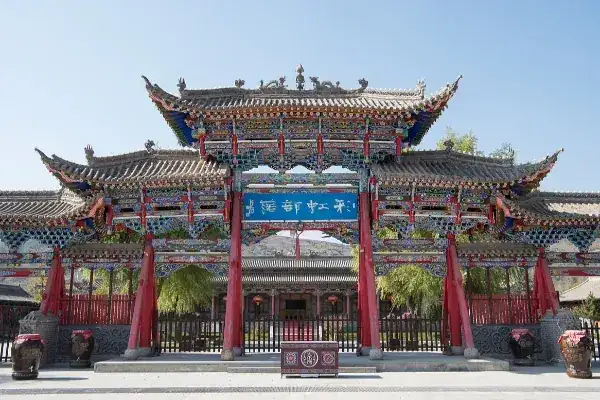
Major natural and cultural attractions include: Kanbula National Forest Park in Jianzha County, Lijia Gorge Dam and reservoir scenery, Tongren Historical and Cultural City, Regong art, the large-scale scroll painting "Chinese Tibetan Culture and Art Panorama" included in the Guinness World Records, Longwu Monastery of Tibetan Buddhism, Nanzong Nunnery, Maixiu primeval forest scenery, Heri Stone Sutra Wall in Zeku, the Holy Lake and Fairy Cave in Henan, and the southern Qinghai grasslands.
Honorary Titles
On June 1, 2020, designated as a 2020 demonstration city for the concentrated and contiguous protection and utilization of traditional villages.
On September 29, 2020, designated as a "pilot area for deepening the reform of rural highway management and maintenance systems" by the Ministry of Transport and the Ministry of Finance.
On December 25, 2020, selected for the "first batch of national cultural and tourism consumption pilot cities."
On October 12, 2021, named as the fifth batch of national ecological civilization construction demonstration zones by the Ministry of Ecology and Environment.
Travel information can change. Check current opening hours, reservations and entry requirements before you travel.



Traveller discussion
Start the conversation with a helpful tip or a question.