
Baiyin
BaiyinBaiyin City, also known as the "Copper City," is a prefecture-level city under Gansu Province. Located in northwest China along the upper Yellow River in central Gansu, it sits at the junction of Shaanxi, Gansu, Ningxia, and Qinghai.
Baiyin
Baiyin City, also known as the "Copper City," is a prefecture-level city under Gansu Province. Located in northwest China along the upper Yellow River in central Gansu, it sits at the junction of Shaanxi, Gansu, Ningxia, and Qinghai. The terrain is elevated in the north and south, lower in the center, characterized by bedrock mountains and intermontane basins. The climate belongs to the northwestern margin of the southeast monsoon zone, with a total area of approximately 20,100 square kilometers. As of April 2023, Baiyin administers 2 districts and 3 counties. As of the end of 2024, the permanent population stood at 1.4801 million. Established as a county-level city in June 1956 and upgraded to a prefecture-level city in April 1958, Baiyin serves as the core area of the Greater Lanzhou Economic Zone and deputy center of the Lanzhou-Baiyin Economic Circle. The Beijing-Lanzhou High-Speed Railway, Baolan and Ganwu railways, and the Jingzang, Qinglan, Dingwu, and Wuma expressways traverse the city. Historically an important node on the golden section of the Silk Road, Baiyin features Silk Road relay stations, Great Wall beacon towers, and grotto murals. The Yellow River Stone Forest, a 4A-level national geopark, is hailed as a "natural wonder of China." In 2025, Baiyin's regional GDP reached 78.923 billion yuan (approximately $10.9 billion), growing 6.4% year-on-year at constant prices.
Historical Evolution
During the Xia, Shang, and Western Zhou dynasties, the area was inhabited by the Qiangrong peoples. In the Spring and Autumn and Warring States periods, the Yuezhi tribe occupied parts of the region before the Xiongnu pushed southward, forcing the Yuezhi westward. In 214 BCE, Qin General Meng Tian drove the Xiongnu northward, incorporating the area east of the Yellow River into the Qin Empire. In 114 BCE, during the Western Han, Anding Commandery was established with Zuli and Chunyin counties—marking the beginning of county-level administration in the region.
Over the following centuries, the area changed hands among numerous regimes. In 376 CE, the Former Qin established Pingliang Commandery, the first in the region. In 548 CE, the Western Wei established Huizhou, the first prefecture-level administration. During the Sui dynasty (581 CE), Huining County was formally established. The Tang dynasty reorganized the area several times before it fell to the Tibetan Empire in 763 CE. During the Northern Song, the area became a frontier between Song and Western Xia forces. The Jin (Jurchen) dynasty seized it in 1130, and the Mongol conquest (1227–1236) brought the entire region under the Mongol Empire. The Ming dynasty established military garrisons in 1369, and the Qing reorganized the administration into Jingyuan and Huining counties under Gongchang Prefecture.
In the modern era, the three counties of Huining, Jingyuan, and Jingtai were liberated in August–September 1949. Baiyin was established as a county-level city in June 1956, upgraded to a prefecture-level city in April 1958, dissolved in October 1963, and re-established in August 1985, comprising Jingyuan, Huining, and Jingtai counties plus Baiyin and Pingchuan districts.
Administrative Divisions
Administrative History
Baiyin was established as a county-level city in June 1956 and upgraded to a prefecture-level city in April 1958. After several reorganizations—including the transfer of Jingyuan County in 1960, the restoration of Gaolan and Jingtai counties in 1961, and the establishment of a suburban district in 1962—the city was dissolved in October 1963. It was restored in August 1985, with Pingchuan District carved out of Jingyuan County, comprising three counties (Jingyuan, Huining, Jingtai) and two districts (Baiyin, Pingchuan).
Administrative Details
As of April 2023, Baiyin administers 2 districts and 3 counties: Baiyin District, Pingchuan District, Huining County, Jingyuan County, and Jingtai County—encompassing 9 subdistricts, 53 towns, and 16 townships. The municipal government is seated at No. 1 Guangchang Road, Baiyin District.
Geography
Location and Extent
Baiyin is located along the upper Yellow River in the arid central region of Gansu Province. It borders Ningxia Hui Autonomous Region (Zhongwei and Guyuan) to the east, Pingliang City to the southeast, Dingxi City to the south, Lanzhou City to the west, Wuwei City to the northwest, and Alxa Left Banner of Inner Mongolia to the north. Geographic coordinates range from 103°33'–105°34'E and 35°33'–37°38'N, covering 21,200 square kilometers.
Topography
Baiyin lies at the northwestern margin of the Longxi Loess Plateau and the transitional zone where the eastern Qilian Mountains meet the Tengger Desert. The terrain is predominantly mountainous, with elevations from 1,275 to 3,321 meters. The Yellow River flows through the city for 258 km, entering from the southwest and exiting at Heilang Gorge in the northeast, with a basin area of 14,710 square kilometers.
Climate
Baiyin's climate transitions from mid-temperate semi-arid to arid. Annual average temperature ranges from 6 to 9°C, with precipitation of 180–450 mm concentrated in July–September. Annual evaporation reaches 1,500–1,600 mm, up to 4.5 times precipitation, with Jingtai County reaching 3,390 mm. The city has four distinct seasons, abundant sunshine, mild summers, and tolerable winters.
Hydrology
Baiyin falls within the Yellow River basin, the Hexi Corridor Shiyang River basin, and the Wei River basin.
Natural Resources
Water Resources
The Yellow River flows through the city for 258 km, accounting for 58% of its Gansu section. Total water resources amount to 38.716 billion cubic meters—38.619 billion surface water and 0.97 billion groundwater—with usable volume of 32.9 billion cubic meters.
Animal Resources
The city hosts approximately 140 species of wild terrestrial vertebrates across 21 orders and 47 families, including 22 species under national second-class protection and 33 under provincial protection. Domestic livestock includes pigs, sheep, cattle, horses, donkeys, camels, and poultry. Wild animals include deer, Mongolian gazelle, roe deer, badgers, wolves, and foxes.
Plant Resources
Baiyin's tree species comprise 43 families, 78 genera, and over 310 species. Three nationally protected rare plants include desert poplar, saxaul, and Ammopiptanthus mongolicus. The region cultivates wheat, corn, rice, potato, and various legumes, along with 115 medicinal plant species across 39 families and 92 genera.
Mineral Resources
Baiyin's mineral deposits form two metallogenic belts: the southern belt (copper, lead, zinc) from Mayaxueshan to the Baiyin mining area, and the northern belt (coal) from Shoulushan to the Quwu Mountains. The city has identified 53 mineral species with 33 having proven reserves. Indium, thallium, zeolite, marble, and ceramic clay rank first in the province. A total of 137 mineral occurrences include 10 large, 7 medium, and 120 small deposits.
Population
As of the end of 2024, Baiyin's permanent population was 1.4801 million, down 8,000 year-on-year. The urban population of 900,100 yielded a 60.81% urbanization rate. The birth rate was 7.78 per thousand, death rate 9.22 per thousand, and natural growth rate −1.44 per thousand. The population is predominantly Han Chinese, with 36 ethnic minorities totaling 35,207 (2.1% of the population), of which the Hui people account for 87.8%.
Politics
The municipal government operates under the CPC Baiyin Municipal Committee, with the People's Congress as the legislative body and the Political Consultative Conference as the advisory body. The director of the Municipal Science and Technology Bureau is Zhang Tao, and the director of the Municipal Commerce Bureau is Zhang Chunyan.
Economy
Overview
In 2025, Baiyin's regional GDP reached 78.923 billion yuan (approximately $10.9 billion), growing 6.4% at constant prices. In 2024, the GDP totaled 74.287 billion yuan (approximately $10.3 billion), up 5.5%. The primary, secondary, and tertiary industries contributed 12.306 billion yuan (approximately $1.7 billion), 28.608 billion yuan (approximately $3.9 billion), and 33.373 billion yuan (approximately $4.6 billion), growing 6.2%, 8.8%, and 2.8% respectively, accounting for 16.57%, 38.51%, and 44.92% of GDP. Per capita GDP was 50,055 yuan (approximately $6,900), up 6.2%.
Fixed asset investment grew 9.3%. General public budget revenue reached 4.013 billion yuan (approximately $554 million), up 4.2%, with tax revenue of 2.615 billion yuan (approximately $361 million). General public budget expenditure totaled 22.339 billion yuan (approximately $3.1 billion), up 2.4%, with livelihood-related spending at 82.9%.
Primary Industry
In 2024, total crop planting area was 594,340 hectares. Grain output reached 1.0024 million tons (up 1.41%), vegetable production 1.6619 million tons (up 11.62%), and Chinese medicinal herbs 100,400 tons. Livestock production totaled 167,000 tons of pork, beef, and mutton (up 6.08%), with pig, sheep, and poultry inventories of 840,900, 2.4658 million, and 7.3505 million head respectively.
Secondary Industry
Total industrial value added reached 22.853 billion yuan (approximately $3.2 billion), up 11.8%, with above-scale industrial value added growing 16.8%. Key sectors: non-ferrous metals up 35.4%, coal up 13.3%, chemicals up 10.2%. Above-scale industrial profits reached 3.561 billion yuan (approximately $491 million), up 62.9%. Construction added value of 5.773 billion yuan (approximately $797 million), with 258 qualified enterprises.
Tertiary Industry
In 2024, wholesale and retail trade value added reached 4.804 billion yuan (approximately $663 million), up 7.2%; transportation and postal services 2.968 billion yuan (approximately $410 million), up 7.1%; finance 4.11 billion yuan (approximately $567 million), up 0.1%; and real estate 4.037 billion yuan (approximately $557 million), up 2.2%.
Total retail sales reached 21.8 billion yuan (approximately $3.0 billion), up 5.4%. Import and export volume reached 16.684 billion yuan (approximately $2.3 billion), up 48.3%. Financial institutions' outstanding deposits reached 133.241 billion yuan (approximately $18.4 billion), with outstanding loans of 102.403 billion yuan (approximately $14.1 billion). Insurance premium income totaled 3.323 billion yuan (approximately $458 million).
Social Services
Science and Technology
As of the end of 2024, the city had 8 provincial-level technology innovation centers. It registered 80 scientific achievements, authorized 965 patents (including 115 invention patents), and held 742 valid invention patents—4.99 per 10,000 people.
Education
The city had 29 senior high schools (37,656 students), 98 junior high schools (58,179 students), 430 primary schools (118,692 students), and 272 kindergartens (44,566 children). There were 10 secondary vocational schools (8,159 students) and 3 special education schools (272 students). Preschool gross enrollment was 96.93%, junior high enrollment 100%, and senior high gross enrollment 96.83%. A total of 14,240 students were admitted to higher education institutions.
Culture
The city operated 5 broadcasting stations with radio coverage at 98.91% and television coverage at 99.83%. Cultural facilities included 36 professional art troupes, 6 cultural centers, 6 public libraries, 10 museums, 5 memorial halls, 790 cultural squares, and 735 rural bookstores.
Healthcare
Baiyin had 1,378 medical institutions, including 24 hospitals, 74 township health centers, 52 community health centers, 724 village clinics, and 7 disease prevention centers. Medical institutions had 9,545 beds and 12,991 health professionals, including 4,182 licensed physicians and 5,605 registered nurses.
Sports
The city had 6,220 sports venues covering 3.8272 million square meters. Over 7,568 social sports instructors were active, with 39.7% of the population regularly exercising. The city won 51 medals, including 17 gold.
Social Security
As of the end of 2024, 1.1106 million people participated in basic pension insurance and 1.507 million in basic medical insurance. A total of 12,318 urban households (28,282 individuals) and 28,383 rural households (77,508 individuals) received minimum living allowances, with 221 million yuan (approximately $30.5 million) and 283 million yuan (approximately $39 million) disbursed respectively. The city operated 121 community elderly care facilities and 567 mutual-aid facilities.
Transportation
Overview
The Jingzang Expressway traverses the city. National Highways 109 and 247 are undergoing reconstruction. In 2024, the city handled 3.1912 million passenger trips and 115.4167 million tons of freight, with freight turnover of 19.57 billion ton-kilometers.
Highways
The Jingzang, Qinglan, Dingwu, and Wuma expressways, along with National Highways 109, 247, 309, 312, 338, and 341 and Provincial Highways 217 and 209, form an extensive road network. The S35 Jingli Expressway has been incorporated into Gansu's "Three New Expressway Corridors" plan.
Railways
The Baolan and Ganwu railways run through the city. The Yinlan (Yinchuan-Lanzhou) High-Speed Railway opened in 2022, with four stations: Baiyinnan, Jingyuannan, Pingchuanxi, and Beitan. Sea-rail intermodal international freight trains operate regularly.
Aviation
The Baiyin General Aviation Airport occupies 245.32 mu (approximately 16.35 hectares), featuring a landing pad, taxiway, and apron with 8 helicopter positions. Seven buildings total 6,352 square meters, including a hangar, business building with control tower, dormitory, and power center.
History and Culture
Overview
Baiyin's cultural heritage encompasses legends of Fuxi and Nuwa, traces of Yu the Great's flood control, Neolithic painted pottery, the Great Wall, Silk Road crossings, the Red Army's Long March victory meeting at Huining, and the city's industrial mining tradition.
Ethnic Groups
Centuries of ethnic integration have shaped local customs. Agriculture and pastoralism coexist within households. Culinary traditions include Jingyuan lamb meat, influenced by Mongolian and Hui customs. Housing combines Central Chinese tile-roofed houses, Shaanbei-style cave dwellings, and nomadic tents.
Drama
Qinqiang opera is the dominant theatrical tradition, supplemented by Meihu opera and shadow plays. The ancient stage in Longchuan Village, Huining County, built in 1369, is the city's earliest known theatrical venue.
Dialects
Local dialects primarily belong to the Zhongyuan (Central Plains) Mandarin and Lanyin Mandarin groups.
Cuisine
Traditional dishes include Da Roumian (large meat noodles), Suan Lanrou (sour stewed pork), Jin Si Bing (golden thread pancake), Shuichuan long noodles, Jingyuan lamb meat, Dongwan donkey meat, Jiaotuan (stirred dough), Huangmi Sanfan (yellow millet porridge), and Mafu Baozi (hemp-roti buns). Wedding banquets traditionally use the "Eight Bowls and One Plate" format, while funerals feature the "Da Zahui" (grand hodgepodge) served individually.
Religion
Major religions include Islam, Buddhism, Taoism, Christianity, and Catholicism.
Intangible Cultural Heritage
Baiyin has 147 municipal-level, 19 provincial-level, and 2 national-level intangible cultural heritage items.
Cultural Relics Protection Units
As of the end of 2024, Baiyin had 1,293 cultural heritage protection units, comprising 4 national-level, 30 provincial-level, and 31 municipal-level sites.
Scenic Spots
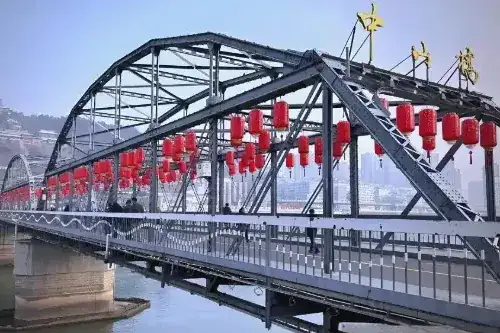
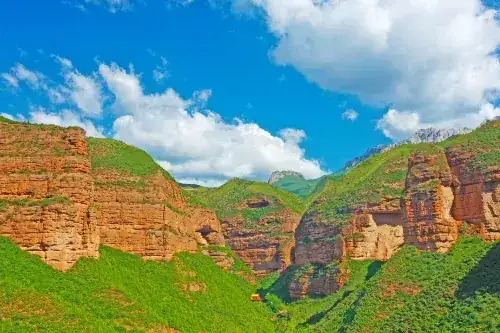
Baiyin's tourism follows a "one belt, two wings, one line" pattern. The belt follows the Yellow River corridor, featuring the Jingtai Yellow River Stone Forest (a national geopark), Yellow River Daxia, and Jingyuan Yellow River Scenic Park. The two wings comprise the northwest (Jingtai) and southeast (Huining) areas, with Shoulushan, Changlingshan, Tiemushan, Quwushan, and Hasishan mountains plus the Huining Red Army Meeting Memorial. The line follows the Silk Road, with attractions including Dalachi ancient city, Guocheng Post, Faquan Temple, Si'erwan Grottoes, and Wufosi (Five-Buddha Temple).
Special Products and Cuisine
Special Products
As of 2022, Baiyin had 6 certified National Geographic Indication products, 18 certification trademarks, and 10 agricultural geographic indication products. Featured items include Huining small grains, Jingtai Tiaoshan pears, Jingyuan dry-sand watermelon, Jingyuan goji berries, Jingyuan lamb meat, and Huining flaxseed oil. Several products were certified as A-grade green foods by the Ministry of Agriculture.
Cuisine
Traditional specialties include Da Roumian, Suan Lanrou, Jin Si Bing, Shuichuan long noodles, Jingyuan lamb meat, Dongwan donkey meat, Jiaotuan, Huangmi Sanfan, Biandou Mian, and Mafu Baozi.
Notable Figures
Baiyin has produced numerous notable historical and contemporary figures across politics, military affairs, culture, and science.
Current Leadership
The director of the Baiyin Municipal Science and Technology Bureau is Zhang Tao. The director of the Baiyin Municipal Commerce Bureau is Zhang Chunyan.
Honors and Titles
Baiyin has received numerous national and provincial honors, including: National Resource-Exhausted Transformation City; National Civilized City Nominee; National Circular Economy Demonstration City; National Intellectual Property Pilot City; National Smart City Pilot; National New Industrialization Demonstration Base; National Green Agriculture Demonstration Zone; and National Torch Program Non-ferrous Metal New Materials Industry Base. In 2018, it was listed among the "100 Cities for Travel in China" and designated a National Youth Campus Football Reform Pilot Zone. In 2020, Baiyin was named a National Sports Consumption Pilot City and National Double Support Model City. In 2021, it was designated a National Health City and National Ethnic Unity Progress Demonstration Zone. In 2023, it was named a Gansu Provincial Food Safety Demonstration City. In April 2025, Baiyin was again selected as a National Double Support Model City.
Sister Cities
Travel information can change. Check current opening hours, reservations and entry requirements before you travel.
Traveller discussion
Start the conversation with a helpful tip or a question.