
Yan'an City
Yan'an CityYan'an City, abbreviated as "Yan," is a prefecture-level city under Shaanxi Province and a sub-center city of the province. It is located in the northern part of Shaanxi Province, bordered by Yulin to the north, connected to the
Yan'an City
Yan'an City, abbreviated as "Yan," is a prefecture-level city under Shaanxi Province and a sub-center city of the province. It is located in the northern part of Shaanxi Province, bordered by Yulin to the north, connected to the three cities of Xianyang, Tongchuan, and Weinan in the Guanzhong region to the south, separated from Linfen and Lüliang City of Shanxi Province by the Yellow River to the east, and adjacent to Qingyang City of Gansu Province to the west. The city has a total area of 37,000 square kilometers. As of March 2026, Yan'an City administers 2 districts, 10 counties, and manages 1 county-level city. As of the end of 2025, the permanent resident population of Yan'an City was 2,218,200. The terrain of Yan'an is higher in the northwest and lower in the southeast, with an average elevation of about 1,200 meters. It has a plateau continental monsoon climate, with the northern part belonging to a semi-arid region and the southern part to a semi-humid region. During the Shang Dynasty, Yan'an belonged to the territory of the Guifang state. During the Qin and Han dynasties, Yan'an was part of Shangjun Commandery, with its administrative seat at Fushi. In the first year of the Wude era of the Tang Dynasty (618 CE), Yan'an Commandery was renamed the Yanzhou General Governor's Office, administering the three counties of Fushi, Fenglin, and Yanchuan, and overseeing the three prefectures of Nanping, Beiwu, and Dongxia. In the fourth year of the Yuanyou era of the Song Dynasty (1089 CE), Yanzhou was elevated to Yan'an Prefecture. The Ming and Qing dynasties maintained the establishment of Yan'an Prefecture. In the second year of the Republic of China (1913), the Yan'an area belonged to Yulin Circuit. In September 1937, the Chinese Communist Party established the Shaan-Gan-Ning Border Region, and in October, the Yan'an Municipal Government was established. In May 1949, the Northern Shaanxi Administrative Region was established. In May 1950, the Yan'an Subdistrict Administrative Supervision Commissioner's Office of Shaanxi Province was established, and in October of the same year, it was renamed the Yan'an Commissioner's Office of the Shaanxi Provincial People's Government. In 1972, the Yan'an urban area was renamed Yan'an City. In November 1996, the State Council approved the abolition of the Yan'an Prefecture and the establishment of Yan'an City, with the original county-level Yan'an City renamed Baota District, and Yan'an City administering 1 district and 12 counties. Yan'an City is a national-level Northern Shaanxi Cultural Ecological Protection Zone. In 2025, the GDP of Yan'an City was 237.217 billion yuan (approximately US$33.2 billion), an increase of 4.3% over the previous year. The three-sector industrial structure was 10.9:53.4:35.7.
Historical Evolution
Archaeological discoveries show that approximately 30,000 years ago, late Homo sapiens known as the "Huanglong Man" already inhabited the area of Yan'an City.
Around the 13th century BCE, Yan'an belonged to the independent state of Guifang. Emperor Wuding of the Shang Dynasty once launched a large-scale military campaign against Guifang.
Yan'an was the dwelling place of the White Di tribe, a nomadic and hunting ethnic group. Chong'er, a prince of the Jin state, once lived in exile among the White Di for 12 years, residing in the Yan'an area.
Most of Yan'an belonged to the State of Wei.
Yan'an was part of Shangjun Commandery, with its administrative seat at Fushi.
During the reign of King Zhaoxiang of Qin, the Qin state established Gaonu County in the Yan'an area, with the county seat at Yinjiagou east of present-day Yan'an city. This was the beginning of city-building in Yan'an, and the city walls survive to this day.
After Qin unified the six states, the great general Meng Tian led 300,000 troops north to attack the Xiongnu, and later supervised the construction of the Great Wall and the Qin Straight Road.
During the reign of Emperor Wu of Han, large-scale migration and military colonization were carried out, leading to unprecedented development of the agricultural economy in northern Shaanxi and other areas, earning it the name "New Qinzhong" (meaning as prosperous as the Guanzhong region).
Yan'an was occupied by the Qiang and Hu peoples.
In the third year of the Yixi era (407 CE), Helian Bobo of the Xiongnu Tiefo tribe established the Great Xia state. He built Fenglin City east of Yan'an (present-day Zhoujiawan Village, Lijiaqu Town, Baota District).
The names of Yanzhou and Yan'an first appeared in the Book of Sui. The Treatise on Geography records that Yan'an Commandery was established as Dongxia Prefecture during the Northern Wei, and renamed Yanzhou during the Western Wei.
In the second year of the Daye era (606 CE), Fucheng Commandery was established in southern Yan'an, later renamed Shangjun Commandery, administering five counties (Luojiao, Neibu, Shanchuan, Fucheng, and Luochuan).
In the first year of the Wude era (618 CE), Yan'an Commandery was renamed the Yanzhou General Governor's Office, administering the three counties of Fushi, Fenglin, and Yanchuan, and overseeing the three prefectures of Nanping, Beiwu, and Dongxia. Shangjun Commandery was renamed Fuzhou, administering six counties: Luojiao, Luochuan, Shanchuan, Fulu, Neibu, and Fucheng.
The Yan'an area belonged to the Yongxing Military Circuit, where Yanzhou, Fuzhou, Danzhou, and Fangzhou were established. During this period, wars between the Song and Western Xia were frequent, and renowned Song Dynasty officials including Pang Ji, Fan Yong, Han Qi, and Fan Zhongyan defended against enemies here.
In the fourth year of the Yuanyou era (1089 CE), Yanzhou was elevated to Yan'an Prefecture.
The Zhangwu Military Command was established.
Yan'an Circuit was established.
Yan'an Prefecture was re-established.
At the end of the Ming Dynasty, a great peasant uprising broke out in northern Shaanxi, with peasant leaders such as Gao Yingxiang, Li Zicheng, and Zhang Xianzhong operating throughout the Yan'an area.
Continuing the Ming Dynasty's administrative system, Yan'an Prefecture was maintained.
During the Shunzhi reign, it administered three prefectures (Fuzhou, Suide Prefecture, and Jia Prefecture) and 16 counties (Fushi, Ansai, Ganquan, Anding, Bao'an, Yichuan, Yanchuan, Yanchang, Qingjian, Luochuan, Zhongbu, Yijun, Mizhi, Wubu, Shenmu, and Fugu).
During the Yongzheng reign, the three prefectures were placed under direct provincial jurisdiction, and the prefecture administered eight counties (Fushi, Ansai, Ganquan, Anding, Bao'an, Yichuan, Yanchuan, and Yanchang).
During the Qianlong reign, Dingbian and Jingbian counties were added.
During the Tongzhi reign, the Shaan-Gan Muslim uprising army and the Western Nian Army led by Zhang Zongyu rebelled against the Qing within Yan'an territory, and Zuo Zongtang led the Xiang Army into the region to suppress them. The last Nian Army force, led by Yuan Dakui, was suppressed at Yongning Mountain, marking the final failure of the Nian Army movement in China.
At the end of the Qing Dynasty, the Qing government established the Yanchang Petroleum Official Factory and drilled the first oil well on the Chinese mainland in Yanchang County.
In 1913, the two prefectures of Yan'an and Yulin were abolished.
In 1914, Yulin Circuit was established.
In 1920, the administrative seat was moved to Fushi County (present-day Baota District, Yan'an City).
In 1928, Yulin Circuit was abolished, and counties were placed under direct provincial jurisdiction.
In 1935, an administrative supervision district was established. In the same year, the Shaan-Gan Border Region and the Northern Shaanxi Soviet Area established Shaan-Gan Province and Northern Shaanxi Province.
In May 1936, Shaan-Gan Province was renamed Shaan-Gan-Ning Province.
In January 1937, the CPC Central Committee moved into Yan'an, and the use of the name Fushi County was discontinued.
On September 6, 1937, the Shaan-Gan-Ning Border Region Government was established, and in November it was called the Shaan-Gan-Ning Special District.
In January 1938, it was again called the Shaan-Gan-Ning Border Region.
In August 1942, the Shaan-Gan-Ning Border Region Government established Wuqi County, subordinate to the Sanbian Subdistrict.
In November 1942, the Yan'an Subdistrict was established, administering Yan'an City and nine counties: Yan'an, Ansai, Zhidan, Yanchuan, Yanchang, Gulin, Ganquan, Fu County, and Zichang.
In February 1948, the Huanglong Subdistrict was established, with its office stationed in Luochuan.
On May 5, 1949, the Yan'an Subdistrict was abolished, and the Northern Shaanxi Administrative Region was established, with the administrative office stationed in Yan'an, administering seven counties — Yan'an, Yanchang, Yanchuan, Zichang, Ansai, Zhidan, and Ganquan — and four subdistricts: Yulin, Suide, Sanbian, and Huanglong.
People's Republic of China
On October 1, 1949, the People's Republic of China was founded, and Yan'an belonged to the Northern Shaanxi Administrative Region of the Shaan-Gan-Ning Border Region.
On January 19, 1950, the Northwest Military and Political Committee was established in Xi'an, the Shaan-Gan-Ning Border Region fulfilled its mission, and the Yan'an Prefecture was initially established.
In 1967, the Yan'an Prefecture institutions were paralyzed.
In 1968, the Yan'an Prefecture Revolutionary Committee was established.
In September 1969, it was renamed the Yan'an Region.
In 1978, the Yan'an Regional Administrative Office was established.
On January 8, 1997, the Yan'an Region was converted to Yan'an City, becoming a prefecture-level city with districts under provincial jurisdiction.
Administrative Divisions
Division Evolution
In October 1950, the Yan'an Prefecture administered 12 counties: Yan'an, Yanchang, Ansai, Zhidan, Wuqi, Ganquan, Junxian, Luochuan, Yichuan, Huangling, Yijun, and Huanglong.
In October 1956, Yanchuan and Zichang counties from the Suide Prefecture were transferred to the Yan'an Prefecture. The Yan'an Prefecture then administered 14 counties: Yan'an, Yanchang, Yanchuan, Zichang, Ansai, Zhidan, Wuqi, Ganquan, Junxian, Luochuan, Yichuan, Huangling, Yijun, and Huanglong.
In December 1958, seven counties — Yanchuan, Ansai, Ganquan, Fu County, Yijun, Huanglong, and Wuqi — were abolished, and their territories were merged into seven counties: Yanchang, Yan'an, Zhidan, Zichang, Yichuan, Luochuan, and Huangling.
In September 1961, Yanchuan, Ansai, Ganquan, Fu County, Yijun, Huanglong, and Wuqi were restored to county-level status, and the Yan'an Prefecture again administered 14 counties.
In 1964, the State Council approved the renaming of Fu County (formerly written with a different character) to Fu County.
In March 1972, the county-level Yan'an City was established, separate from Yan'an County. The Yan'an Region administered 1 city and 14 counties.
In August 1975, Yan'an County was abolished, and its territory was merged into Yan'an City.
In October 1983, Yijun County was transferred to Tongchuan City. The Yan'an Region then administered Yan'an City and 12 counties: Yanchang, Yanchuan, Zichang, Ansai, Zhidan, Wuqi, Ganquan, Fu County, Luochuan, Yichuan, Huanglong, and Huangling.
On January 8, 1997, the Yan'an Region was converted to Yan'an City, and the former county-level Yan'an City was renamed Baota District. Yan'an City administered 1 district and 12 counties, namely Baota District, and Yanchang, Yanchuan, Zichang, Ansai, Zhidan, Wuqi, Ganquan, Fu County, Luochuan, Yichuan, Huanglong, and Huangling.
In October 2005, Wuqi County was renamed Wuqi County (with a character revision).
In 2016, Ansai was converted from a county to a district.
In July 2019, Zichang was converted from a county to a county-level city.
Current Administrative Division
As of March 2026, Yan'an City administers 2 districts, 10 counties, and manages 1 county-level city. There are a total of 21 subdistricts, 87 towns, and 9 townships. The Yan'an Municipal People's Government is stationed in Baota District.
Physical Geography
Location and Territory
Yan'an City is located in the northern part of Shaanxi Province, in the middle reaches of the Yellow River, and in the central-southern part of the Loess Plateau. It is bordered by Yulin to the north, connected to the three cities of Xianyang, Tongchuan, and Weinan in the Guanzhong region to the south, separated from Linfen and Lüliang City of Shanxi Province by the Yellow River to the east, and adjacent to Qingyang City of Gansu Province to the west. It lies between 35°21′—37°31′ north latitude and 107°41′—110°31′ east longitude, with a total area of 37,000 square kilometers. It is 371 kilometers south of the provincial capital Xi'an.
Geological Structure
The geological structure of Yan'an is simple, without large-scale intense folds or faults. On the eastern monocline, there are continuous small warps, arranged in a wavelike pattern from east to west. From Yichuan to Lijiahe in Luochuan County is the first step belt; from Mizhi and Yanchuan to Dingpan in Yichuan County is the second step belt; from Yongping to Chafang in Fu County is the third step belt; from Zhao'an in Ansai District to Laorencang in Ganquan County is the fourth step belt. Yan'an, from northeast to south through Laoshan, is situated on the third step belt, while the area north of Yan'an and Zaoyuan Chuan is on the fourth step belt.
Yan'an has no old rock systems exposed from before the Mesozoic era; it is primarily composed of Mesozoic sedimentary rock systems. The rock layers become progressively newer from east to west, generally striking north-south or slightly northeast, consistently dipping westward at a very gentle angle of about 1°—3°. Near Yan'an, the rock layers are nearly horizontal, with slight local undulations. Tertiary rock layers lie unconformably or pseudoconformably over the Mesozoic. Quaternary loess rock systems deeply and extensively cover the older rock layers throughout the city. Rock outcrops only appear in deeply incised river valleys or in mountain ridge areas that have undergone strong denudation.
Topography and Landforms
Yan'an is located in the middle reaches of the Yellow River and belongs to the loess plateau hilly-gully region. The landscape of Yan'an is dominated by the loess plateau and hills. The terrain is higher in the northwest and lower in the southeast, with an average elevation of about 1,200 meters. The Baiyu Mountain in the north has an elevation of 1,600—1,800 meters, with the highest point at the summit of Baiyu Mountain in Wugucheng Town, Wuqi County, at an elevation of 1,809.8 meters. The lowest point is at Hou'er Chuan in Jiyi Town, Yichuan County, at an elevation of 388.8 meters, with a relative elevation difference of 1,421 meters. The northern part is dominated by loess ridges and mounds with gullies, accounting for 72% of the total area; the southern part is dominated by loess tableland gullies, accounting for 19% of the total area; rocky mountains account for 9% of the total area. The Ziwu Ridge in the west, running north-south, forms the watershed between the Luo River and the Jing River, and is one of the bedrock mountains rising above the loess plateau, with an elevation of 1,500—1,600 meters and a main peak of 1,687 meters. The Huanglong Mountain in the east, generally extending north-south, has an elevation of 1,500 meters, with its main peak (Daling) at 1,788.7 meters. The Laoshan in the central part, running northwest-southeast, has an average elevation of 1,400 meters, with its main peak (Dadunliang) at 1,464 meters. The Huanglong Mountain and Laoshan are collectively known as the Liangshan Mountains, forming the backbone of the terrain in the Yan'an area.
Climate Characteristics
Yan'an has a plateau continental monsoon climate, with the northern part belonging to a semi-arid region and the southern part to a semi-humid region. Winters are cold and dry with a long duration; springs see rapid temperature rises with variable weather, prone to frost, and often accompanied by strong winds, sandstorms, and floating dust, with frequent spring droughts; summers are warm with concentrated rainfall, occasionally interspersed with summer droughts, frequent thunderstorms, and occasional hail; autumns see rapid temperature drops, frequent fog, early frost, and overcast rainy weather. The diurnal temperature range is large, with the annual average diurnal range across the region being 11.1—14.9°C, largest in Fu County and smallest in Luochuan. During the year, the diurnal range is largest from April to June, averaging 15—16°C, and smallest from July to September, averaging 11—12°C.
The annual average temperature of Yan'an City is 9.9°C, with an annual average maximum temperature of 17.7°C and an annual average minimum temperature of 4.1°C. The hottest month (July) has an average temperature of 23.2°C, and the coldest month (January) has an average temperature of -5.4°C. The extreme maximum temperature is 41.5°C (June 22, 2005), and the extreme minimum temperature is -28.7°C (December 26, 2002). The annual average precipitation is 524.8 mm, with the maximum daily precipitation being 195.3 mm (July 4, 2002). The annual number of days with precipitation of at least 0.1 mm is 79.1 days, and the annual number of days with precipitation of at least 50 mm is 7.8 days. The highest annual precipitation was 772.8 mm (2013), and the lowest was only 346.1 mm (1997). Precipitation is mainly concentrated from May to September, with the maximum monthly average precipitation occurring in July at 119.0 mm.
Sunshine, Wind Speed and Direction
The annual sunshine duration of Yan'an City is 2,408.9 hours, with the most in May at 246.0 hours and the least in September at 167.1 hours. The annual sunshine percentage is 55%, with a maximum of 62% in December and a minimum of 46% in September. The annual average wind speed is 1.5 m/s, with a maximum wind speed of 17.9 m/s from the north-northwest (NNW), recorded on July 12, 2017. The most frequent annual wind directions are north-northwest and calm (NNW, C).
The four seasons in Yan'an are defined as spring from March to May, summer from June to August, autumn from September to November, and winter from December to February. Spring is dry with little rain, temperatures rise rapidly, and the climate is variable, with strong winds and blowing sand. Intra-seasonal precipitation accounts for 17% of the annual total. The average temperature in March is 4.5°C, and in May it is 16.9°C, with a maximum of 36.5°C. When strong cold air invades, the minimum temperature can drop to around 0°C, causing frost.
Summer is hot and rainy, with intra-seasonal precipitation of 312.3 mm, accounting for 57% of the annual total. The weather is mostly convective, sometimes accompanied by hail. The monthly average temperature within the season ranges from 21.1 to 22.9°C, with July being the hottest at 22.9°C. The maximum temperature within the season is 39.7°C, with no prolonged extreme heat periods.
Autumn sees rapid cooling, is humid, and has frequent overcast, rainy, and foggy weather. September has 11—12 precipitation days, and fog days in September and October account for half of the annual total. The first frost occurs from late September to early October, and the soil begins to freeze in early November.
Winter has little rain and snow, is clear and dry and cold, with frequent northwest winds. Intra-seasonal precipitation is only 13 mm, accounting for 4% of the annual total. January is the coldest month, with an average temperature of -6.4°C, an extreme minimum temperature of -25.4°C, and an average relative humidity of 54—60%.
Water Systems and Hydrology
All rivers within Yan'an City belong to the Yellow River system. The main rivers are the North Luo River, Yan River, Qingjian River, Shiwang River, and Fenchuan River, forming a dendritic drainage network. The Laoshan-Huanglong Mountain range serves as the watershed: the Yan River and other rivers on the eastern side flow directly into the Yellow River, while the North Luo River and other rivers on the western side flow south out of the region and into the Wei River. The annual average total water runoff is 1.338 billion cubic meters.
The Yellow River enters the region at Majiaqian Village, Dayu Subdistrict, Yanchuan County, and flows south along the eastern boundary through Anhe, Luozishan, and Nanhegou in Yanchang County, exiting at Hou'er Chuankou in Yichuan County. It flows for 183 kilometers within the region, with an average annual flow of 950 cubic meters per second. The river is deeply incised with many gorges. The riverbed has a large gradient with a total drop of 470 meters, providing abundant hydropower resources.
The North Luo River, also known as the Luo River, originates from the southern foot of Baiyu Mountain in Dingbian County, Shaanxi Province. It flows from northwest to southeast, entering the region at Toudaochuan in Wuqi County, and passing through Zhidan, Ganquan, Fu County, Luochuan, and Huangling counties before exiting into Weinan City, Shaanxi Province, where it joins the Wei River. The river is 385 kilometers long within the region, with a total drainage area of 17,948 square kilometers, including 62 tributaries with drainage areas exceeding 100 square kilometers. It is a second-order tributary of the Yellow River.
The source elevation is 1,506.21 meters, and the mouth elevation is 325.61 meters, with a total drop of 1,180.51 meters. The average river gradient is 1.95 per mille. The river valley is about 400 meters wide, with the upstream section being 40 meters wide and the widest point in the middle reaches at 1,502 meters. The average flow is 19.96 cubic meters per second, with an annual average runoff of 629.4 million cubic meters. In 1966, the Luochuan Jiaokou station recorded a maximum flood peak flow of 3,880 cubic meters per second. The annual sediment transport is 79.72 million tons, with a sediment transport rate of 2,528 kg/s. Major tributaries include the Shilao River, Zhoushui River, Hulu River, Jushui River, Yuni River, and Xiangu River.
The Yan River originates from Zhoushan in Tianciwan Town, Jingbian County, Shaanxi Province. It flows from northwest to southeast through Ansai and Yan'an, joining the Yellow River at Liangshui'an, Leichi Town, Yanchang County. The total length is 286.9 kilometers, with 248.5 kilometers within the city. The total drainage area is 7,725 square kilometers. The Yan River system has 22 tributaries with drainage areas exceeding 100 square kilometers, forming a fan-shaped drainage system prone to flooding. In 1977, the Ganguyi station recorded a maximum flood peak flow of 9,050 cubic meters per second. The annual sediment transport is 81.77 million tons, with a sediment transport rate of 2,593 kg/s.
The Qingjian River originates from Zhoujiacan Village, Lijiacha Town, Zichang City, and flows east through Majiabian, Zichang City, into Zhejiaping Town, Qingjian County, Shaanxi Province. It then enters Yanchuan County from Hejiawan, Qingjian, flows southeast through Majiahe, and joins the Yellow River at Dacheng, Qiankunwan Town. The total length is 169.9 kilometers, with a drainage area of 4,078 square kilometers; within the city, the river is 96 kilometers long with a drainage area of 3,577 square kilometers. Major tributaries include Zhongshanchuan, Yongpingchuan, and Tuojiachuan River. The river valley is relatively wide in the upper and middle reaches, and narrow in the lower reaches with a large gradient change (8.73 per mille). The annual average flow is 5.21 cubic meters per second, with an annual runoff of 164.38 million cubic meters. In 1959, the Yanchuan station recorded a maximum flood peak flow of 6,090 cubic meters per second. The annual sediment transport is 56.43 million tons, with a sediment transport rate of 1,789 kg/s.
Also known as the Fenchuan River, it originates from Jiulongquan at the eastern foot of Laoshan, flows east through Yichuan County, and joins the Yellow River southeast of Xigou Village. The total length is 112.5 kilometers, with a drainage area of 1,781 square kilometers and a hydropower potential of 6,800 kW. Tributaries are concentrated in the upstream section, with four tributaries having drainage areas exceeding 100 square kilometers: Songshulinchuan, Nanchuan (Linzhenchuan), Jiulongquanchuan, and Guxianchuan. The main stream has an average flow of 1.46 cubic meters per second, with an annual runoff of 46.18 million cubic meters. In 1977, the Yichuan Xinshihe station recorded a maximum flood peak flow of 1,120 cubic meters per second.
Also known as the Xianchuan River, it originates from the northern foot of Huanglong Mountain, flowing south from its source to Yichuan, then turning east at Qiulin to join the Yellow River. The total length is 99 kilometers, with a drainage area of 2,354 square kilometers, and is a first-order tributary of the Yellow River. The section from the source to Getai is the upstream, with a narrow valley and swift water, averaging a gradient of 10.53 per mille. The section from Getai to Yichuan is the middle reaches, with a valley width of 160—300 meters, the widest point at 645 meters, and an average gradient of 7.1 per mille. The downstream section has a valley width of 20—40 meters, the widest point at 175 meters, and an average gradient of 11.74 per mille. Major tributaries include the Xichuan River, Jiaochuan River, Xiao Nanchuan, Da Nanchuan, and three other rivers. The annual average flow is 3.18 cubic meters per second, with an average runoff of 100.3 million cubic meters. In 1964, the Dacun station recorded a maximum flood peak flow of 772 cubic meters per second. The average annual sediment transport is 5.43 million tons, with a sediment transport rate of 172 kg/s.
Soil Types
The soils of Yan'an City, from south to north, are sequentially: luvisol, cinnamon soil, calcareous cinnamon soil, primitive cinnamon soil, clay black Heilu soil, yellow tower soil, Heilu soil, Huangmian soil, sandy black Heilu soil, and sandy loam Huangmian soil. Scattered in valley channels are new alluvial soil, Chao soil, bog soil, and paddy soil. Based on soil distribution patterns, they can be divided into horizontal distribution and regional distribution.
Heilu soil is mostly distributed on the loess tableland surfaces in the south and on the second and third terraces of valley channels in the north, with scattered occurrences on ridge-mound watershed saddles. Cinnamon soil is distributed in the Huanglong Mountain area south of the Ziwu Ridge in western Huangling County and the line of Laohuliang, Taoshuyao, and Caojiashan in Yichuan County, covering a total of 6.096 million mu, accounting for 11.1% of the total soil area. Loutu soil is distributed in the Baimatan and Baiyuchuan areas of southeastern Huanglong County and the Jiyichuan area of Yichuan County. Huangmian soil is distributed in all counties of the region, covering a total of 43.2134 million mu, accounting for 78.9% of the total soil area. Red soil, used for cultivation or growing forest grass, covers 3.124 million mu, accounting for 5.7% of the total cultivated area. Purple soil is distributed at the lower incised slope toes of riverbeds and along the Yellow River banks in six counties including Zhidan, Ansai, Yanchang, Fu County, Yichuan, and Huanglong, covering an area of 198,700 mu. Aeolian sandy soil is a young soil developed on sandy parent material under wind action, mainly distributed on the windward slopes north of Duikou in Changcheng Township, Wuqi County. New alluvial soil covers an area of 732,000 mu, accounting for 1.3% of the total soil area, distributed on river floodplains and low terraces on both banks. Chao soil is distributed on first-level terraces and low flat valley land on both river banks. Paddy soil is distributed in valley flatlands in Yan'an, Ganquan, Fu County, and Huangling counties. Bog soil, formed under long-term water-saturated conditions, covers only 13,000 mu, distributed in low-lying valley lands in Yan'an, Fu County, Yichuan, and Luochuan counties.
Natural Disasters
Natural disasters that cause significant harm to agricultural production and national economic development in Yan'an City include drought, flooding, hail, and frost damage. Among these, drought covers large areas, lasts long, and occurs frequently. From 1951 to 1988, over 38 years, Yan'an City experienced 160 droughts of varying degrees, averaging 4.6 times per year. The maximum was 6 times (1960), and the minimum was 2 times (1961 and 1967), with an average drought period of 209 days. Of the 160 droughts, 30 were severe droughts, accounting for 19% of the total; 85 were moderate droughts, accounting for 53%; and 45 were mild droughts, accounting for 28%.
Flooding is mostly caused by rainstorms, with a few caused by prolonged overcast rain. From 1951 to 1985, rainstorms occurred 28 times over 35 years, averaging 0.8 times per year, with a maximum of 4 times (1978); prolonged overcast rain occurred 117 times, averaging 3.3 times per year. The maximum was 8 times (1964), and the minimum was 1 time (1955).
Hail disasters occur frequently, over a wide area, and cause significant damage in Yan'an City. From 1955 to 1989, a total of 148 hail events occurred within Yan'an City, averaging 4.2 times per year. Within a year, hail can occur from April to November. 83% of hail events are concentrated from June to September, with June having the most, accounting for 40% of the total. The earliest date was April 3 (1959), and the latest was November 1 (1981). Within a day, hail mainly occurs between 12:00 and 17:00, accounting for 85% of the total, with hail concentrated between 14:00 and 15:00 accounting for about half. Frost damage, insect pests, epidemics, and earthquakes have all occurred in Yan'an's history, causing very serious harm.
Natural Resources
Water Resources
Yan'an City has uneven spatial and temporal distribution of water resources, with concurrent resource-based, engineering-based, and quality-based water shortages, making it a typical water-deficient city. In 2022, the total water resources of Yan'an City were 1.335 billion cubic meters, with total water consumption of 319 million cubic meters, including 98 million cubic meters for domestic use, 108 million cubic meters for industrial use, and 101 million cubic meters for agricultural use. In 2023, the total water resources of Yan'an City were 1.335 billion cubic meters, with total water consumption of 322 million cubic meters, including 102 million cubic meters for domestic use, 102 million cubic meters for industrial use, and 103 million cubic meters for agricultural use. The water consumption per 10,000 yuan of GDP was 17.3 cubic meters per 10,000 yuan.
Land Resources
As of December 31, 2019, the cultivated land area of Yan'an City was 253,500 hectares (3.8021 million mu). Of this, paddy fields covered 500 hectares (8,000 mu), accounting for 0.21%; irrigated land covered 4,500 hectares (67,300 mu), accounting for 1.77%; and dry land covered 248,500 hectares (3.7268 million mu), accounting for 98.02%. Five districts and counties — Wuqi County, Zhidan County, Zichang City, Ansai District, and Baota District — had larger cultivated land areas, accounting for 60.25% of the city's total cultivated land. Cultivated land on slopes of 2 degrees or less (including 2 degrees) covered 17,900 hectares (268,600 mu), accounting for 7.06% of the city's total; land on slopes of 2—6 degrees (including 6 degrees) covered 42,700 hectares (640,800 mu), accounting for 16.85%; land on slopes of 6—15 degrees (including 15 degrees) covered 88,600 hectares (1,328,300 mu), accounting for 34.94%; land on slopes of 15—25 degrees (including 25 degrees) covered 44,900 hectares (672,900 mu), accounting for 17.70%; and land on slopes above 25 degrees covered 59,400 hectares (891,500 mu), accounting for 23.45%.
Orchard land covered 209,100 hectares (3.1363 million mu). Of this, fruit orchards covered 190,200 hectares (2.8524 million mu), accounting for 90.95%; other orchard land covered 18,900 hectares (283,900 mu), accounting for 9.05%. Orchard land was mainly distributed in Luochuan County, Yanchuan County, and Yichuan County, accounting for 48.38% of the city's total orchard land.
Forest land covered 2,595,400 hectares (38.9289 million mu). Of this, arbor forest land covered 1,697,800 hectares (25.466 million mu), accounting for 65.41%; shrub forest land covered 420,700 hectares (6.3093 million mu), accounting for 16.21%; and other forest land covered 476,900 hectares (7.1536 million mu), accounting for 18.38%. Three districts and counties — Fu County, Baota District, and Zhidan County — had larger forest land areas, accounting for 35.33% of the city's total forest land.
Grassland covered 477,400 hectares (7.1626 million mu). Of this, natural pasture grassland covered 460,500 hectares (6.9086 million mu), accounting for 96.45%; artificial pasture grassland covered 50 hectares (700 mu), accounting for 0.01%; and other grassland covered 16,900 hectares (253,300 mu), accounting for 3.54%. Grassland was mainly distributed in three districts and counties — Wuqi County, Zichang City, and Yanchang County — accounting for 58.51% of the city's total grassland.
Wetlands covered 4,100 hectares (62,200 mu). Of this, Yan'an City only had inland tidal flats covering 4,100 hectares (62,200 mu). Wetlands were mainly distributed in four districts and counties — Baota District, Yanchang County, Zhidan County, and Wuqi County — accounting for 69.85% of the city's total wetlands.
Urban, rural, and industrial-mining land covered 72,000 hectares (1.0806 million mu). Of this, urban land covered 4,100 hectares (61,000 mu), accounting for 5.65%; designated town land covered 9,900 hectares (148,800 mu), accounting for 13.77%; village land covered 47,000 hectares (704,900 mu), accounting for 65.23%; mining land covered 10,300 hectares (154,900 mu), accounting for 14.33%; and scenic and special land covered 700 hectares (11,000 mu), accounting for 1.02%.
Transportation land covered 47,000 hectares (705,100 mu). Of this, railway land covered 1,100 hectares (16,600 mu), accounting for 2.35%; highway land covered 13,400 hectares (199,900 mu), accounting for 28.35%; rural roads covered 32,200 hectares (483,600 mu), accounting for 68.59%; airport land covered 300 hectares (4,600 mu), accounting for 0.65%; and pipeline transportation land covered 20 hectares (400 mu), accounting for 0.06%.
Water areas and water conservancy facility land covered 24,800 hectares (372,700 mu). Of this, river water surface covered 18,200 hectares (273,900 mu), accounting for 73.49%; lake water surface covered 9 hectares (100 mu), accounting for 0.03%; reservoir water surface covered 3,000 hectares (45,700 mu), accounting for 12.26%; pond water surface covered 2,600 hectares (38,400 mu), accounting for 10.30%; ditches covered 400 hectares (5,300 mu), accounting for 1.42%; and hydraulic construction land covered 600 hectares (9,300 mu), accounting for 2.50%. Four districts and counties — Wuqi County, Zichang City, Ansai District, and Yanchuan County — had larger water area, accounting for 45.49% of the city's total water area and water conservancy facility land.
Mineral Resources
Yan'an City is rich in natural resources. As of March 2024, it had petroleum reserves of 1.38 billion tons, coal resource reserves of 110 billion tons, total natural gas resources exceeding 300 billion cubic meters with prospective reserves of 20 trillion cubic meters, purple sand clay of 200 million tons, coalbed methane of 19.2 billion cubic meters, and rock salt reserves of 111.3 billion tons, making it an important national energy succession base.
Yan'an City has coal reserves of 75 billion tons, mainly distributed in six counties and districts: Huangling, Zichang, Baota, Yanchuan, Fu County, and Yanchang. The coal-bearing strata are the Triassic Yanchang Group Wayaopu Formation (known as the Wayaopu Coal Series) and the Middle Jurassic Yan'an Formation. There are 19 coal production sites, including 5 large-scale, 4 medium-scale, and 10 small-scale sites. By the end of 1994, the city's cumulative proven coal reserves were 3.196701 billion tons, with predicted reserves of 4.31646 billion tons, accounting for 4.62% of the province's coal reserves, ranking third. Since the reform and opening up, coal production in Yan'an City has flourished, with output increasing year by year. From 1949 to 1999, the city cumulatively produced 87.67 million tons of raw coal, reaching a maximum of 5.95 million tons in 1996. Since 1998, the state has carried out industrial policy adjustments, and the coal industry has implemented well closures and production reductions. By the end of 2001, the number of coal enterprises in the city had decreased to 137, and raw coal output had dropped to 3.5 million tons.
Zichang City in Yan'an, as a nationally key coal-producing area, is the richest coal area with the best Triassic coal-forming conditions in Shaanxi Province. The Zichang City mining area has coal geological reserves of 2.894 billion tons and proven reserves of 2.388 billion tons. The coal is characterized by extra-low ash, extra-low sulfur, extra-low phosphorus, and high calorific value, making it a high-quality coal for coking, gasification, liquefaction, fuel power, and chemical industry, known as "natural chemical refined coal" and "optimal coking coal."
Yan'an is rich in petroleum resources. Among its 13 counties and districts, 11 including Ansai, Zichang, Yanchuan, and Yanchang have petroleum resource distribution. During the 12th Five-Year Plan period, Yan'an City's crude oil production remained above 16 million tons, crude oil processing volume remained around 10 million tons, and the value added of the petroleum industry accounted for about half of the local GDP. Yan'an has transformed its energy development approach, shifting from single extraction to comprehensive utilization, increasing the local conversion rate of oil and gas resources, and building comprehensive coal-oil-gas utilization projects.
Yan'an is the birthplace of China's petroleum industry. The first oil well on the Chinese mainland is located in Yanchang County, Yan'an City, with over a century of petroleum development history. "Yanchang Petroleum" has been awarded the title of China Well-Known Trademark.
The Qilicun Oil Production Plant of Yanchang Oilfield is the first oil well on the Chinese mainland. By the end of 2020, Yanchang Oilfield had proven petroleum geological reserves of over 3 billion tons. Based on current reserves and production, the oilfield can sustainably maintain production of 10 million tons for over 30 years.
On July 20, 2022, the launch ceremony for Yanchang Petroleum's 15 billion cubic meters/year natural gas capacity enhancement construction and the commissioning of the Fu County-Ganquan 1 billion cubic meter natural gas project were held in Fu County. According to the construction plan, from 2022 to 2025, Yanchang Petroleum will add over 40 billion yuan (approximately US$5.6 billion) in investment, build 3 new purification plants, and put over 2,500 gas wells into production, reaching a cumulative capacity of 15 billion cubic meters/year by the end of 2025, achieving the goal of doubling natural gas capacity.
The Fu County-Ganquan 1 billion cubic meter natural gas project commissioned this time is an important component of the 15 billion cubic meters/year natural gas capacity enhancement construction plan. It is a key construction project of Shaanxi Province in 2022, with a total investment of 1.8 billion yuan (approximately US$252 million), building 1 purification plant and putting 274 gas wells into production, with a planned capacity of 840 million cubic meters/year and a purification processing capacity of 1 billion cubic meters/year.
In 2022, Yan'an City produced 8.82 billion cubic meters of natural gas. In 2023, it produced 9.95 billion cubic meters of natural gas, an increase of 9.2% over 2022.
The Yan'an area has 7 iron ore occurrences, distributed in Zichang, Ansai, Yan'an, Fu County, and other counties. These are sedimentary siderite deposits found in the Middle Jurassic Yan'an Formation, Anding Formation, and Upper Triassic Yongping Formation. The ore bodies are thin and low-grade, making them difficult to exploit.
Forest and Grassland Resources
Yan'an's natural forest areas are located in the southwestern part of the city. As of December 2016, the total natural forest area was 18.93 million mu, accounting for 75.1% of the city's total forested area, with a standing tree stock volume of 66.112 million cubic meters, accounting for 88.4% of the city's total tree stock volume. There are 474 species of woody plants, including 175 tree species and 299 shrub species. The natural forest coverage area mainly fluctuates around the main ridges of the Qiaoshan and Liangshan mountain ranges. Near the mountain ridges, the elevation is relatively high, the terrain is steep, transportation is inconvenient, and the land is barren, making it unsuitable for human habitation and poor for farming. Even during historical periods of high population, a certain amount of natural vegetation was preserved along the rocky mountain areas and steep sections of the two main mountain ridges, serving as the seed bank for existing forest vegetation. Yan'an's natural arbor forests are dominated by oak species, covering an area of 9.9598 million mu, accounting for 64.6% of the natural arbor forest area. This is followed by Chinese pine, covering 1.2548 million mu, accounting for 8.1% of the natural arbor forest area. Other species, in descending order, include birch, poplar, Chinese arborvitae, hardwood, softwood, and lacquer tree, with smaller proportions. As of February 2023, Yan'an City's forest coverage rate had increased to 53.07%, total standing tree stock volume had grown to 86.966 million cubic meters, newly added Natural Forest Protection public welfare forest area reached 4.693 million mu, cumulative reduced timber harvest stock volume was 16.53 million cubic meters, and the Natural Forest Protection area reached 38.406 million mu. The forest resource area and stock volume achieved "dual growth," making a tremendous contribution to the historic transformation of Yan'an's landscape from yellow to green and the overall improvement of the ecological environment.
Biological Resources
As of December 2023, Yan'an City has 264 species of terrestrial wild animals and 1,478 species of seed plants, including 12 species under national Class I key protection, 25 species under national Class II key protection, and 13 species under provincial key protection. The number of North Chinese leopards, a national Class I protected wild animal in the Ziwu Ridge forest area of Yan'an City, has increased to over 110, making it the most densely populated area of wild North Chinese leopards known in China to date. The brown eared pheasant population in the Brown Eared Pheasant National Nature Reserve has reached over 2,800. The distribution range of musk deer continues to expand, and migratory birds such as black storks, grey herons, egrets, and mallards have become resident birds.
Red Fox, Brown Eared Pheasant, Grey Heron
Image source:
Politics
Population
As of 00:00 on November 1, 2020, the permanent resident population of Yan'an City was 2,282,581. Compared with 2,187,009 in the sixth national census of 2010, it increased by 95,572, a growth of 4.37%, with an average annual growth rate of 0.43%. Among the city's permanent resident population, males numbered 1,192,560, accounting for 52.25%; females numbered 1,090,021, accounting for 47.75%. The sex ratio of the city's permanent resident population (males per 100 females) decreased from 110.71 in the sixth national census of 2010 to 109.41. Among the city's permanent resident population, the population aged 0-14 was 481,349, accounting for 21.09%; the population aged 15-59 was 1,445,797, accounting for 63.34%; the population aged 60 and above was 355,435, accounting for 15.57%, of which the population aged 65 and above was 235,166, accounting for 10.30%. Compared with the sixth national census of 2010, the proportion of the population aged 0-14 increased by 4.27 percentage points, the proportion aged 15-59 decreased by 10.41 percentage points, the proportion aged 60 and above increased by 6.14 percentage points, and the proportion aged 65 and above increased by 3.92 percentage points.
As of the end of 2025, the permanent resident population of Yan'an City was 2,218,200, with an urbanization rate of 64.05%; the birth rate was 4.57 per mille, and the death rate was 7.27 per mille.
Economy
Overview
In 2023, Yan'an City achieved a GDP of 228.024 billion yuan (approximately US$31.9 billion), an increase of 1.8% over the previous year at constant prices. Of this, the primary industry value added was 24.013 billion yuan (approximately US$3.4 billion), up 4.5%; the secondary industry value added was 139.108 billion yuan (approximately US$19.5 billion), up 0.1%; and the tertiary industry value added was 64.903 billion yuan (approximately US$9.1 billion), up 3.7%. The three-sector industrial structure was 10.5:61.0:28.5. The per capita GDP was 100,695 yuan (approximately US$14,083), an increase of 2.0% over the previous year at constant prices. The non-public economy achieved a value added of 68.314 billion yuan (approximately US$9.6 billion), accounting for 30.0% of GDP.
In 2024, Yan'an City achieved a GDP of 238.336 billion yuan (approximately US$33.3 billion), an increase of 5.5% over the previous year at constant prices. Of this, the primary industry value added was 24.578 billion yuan (approximately US$3.4 billion), up 4.0%; the secondary industry value added was 130.935 billion yuan (approximately US$18.3 billion), up 7.1%; and the tertiary industry value added was 82.823 billion yuan (approximately US$11.6 billion), up 3.9%. The three-sector industrial structure was 10.3:54.9:34.8. The per capita GDP was 105,700 yuan (approximately US$14,770), an increase of 6.0% over the previous year at constant prices. The non-public economy achieved a value added of 72.210 billion yuan (approximately US$10.1 billion), accounting for 30.3% of GDP. At the end of the year, the total number of market entities reached 256,800, including 65,200 enterprises, 184,800 self-employed businesses, and 6,741 farmers' professional cooperatives. A total of 29,500 new market entities were added during the year, including 7,200 new enterprises, 22,100 new self-employed businesses, and 181 new farmers' professional cooperatives.
In 2025, the GDP of Yan'an City was 237.217 billion yuan (approximately US$33.2 billion), an increase of 4.3% over the previous year at constant prices. Of this, the primary industry value added was 25.885 billion yuan (approximately US$3.6 billion), up 4.0%; the secondary industry value added was 126.669 billion yuan (approximately US$17.7 billion), up 4.3%; and the tertiary industry value added was 84.663 billion yuan (approximately US$11.8 billion), up 4.2%. The three-sector industrial structure was 10.9:53.4:35.7. The per capita GDP was 106,200 yuan (approximately US$14,840), an increase of 5.3% over the previous year at constant prices. The private economy achieved a value added of 83.568 billion yuan (approximately US$11.7 billion), accounting for 35.2% of GDP.
Fixed Asset Investment
In 2025, the fixed asset investment of Yan'an City (excluding cross-city projects and rural households) decreased by 6.1% compared to the previous year. Of this, primary industry investment decreased by 20.4%, secondary industry investment decreased by 6.5%, and tertiary industry investment decreased by 2.9%.
In 2025, the total fiscal revenue of Yan'an City was 54.696 billion yuan (approximately US$7.6 billion), down 3.6%, of which local fiscal revenue was 17.397 billion yuan (approximately US$2.4 billion), up 0.2% on a comparable basis; fiscal expenditure was 51.588 billion yuan (approximately US$7.2 billion), down 8.0%.
In 2025, the per capita disposable income of all residents of Yan'an City was 34,950 yuan (approximately US$4,889), up 5.5%. The per capita disposable income of urban residents was 47,051 yuan (approximately US$6,580), up 4.9%; the per capita disposable income of rural residents was 18,759 yuan (approximately US$2,624), up 6.0%; and the urban-rural income ratio was 2.51:1.
Primary Industry
In 2025, Yan'an City had 9 provincial-level and above modern agricultural industrial parks, 176 municipal-level and above agricultural industrialization leading enterprises, and 30,400 family farms. Thirty-four brands were included in the national catalog of famous, special, and high-quality new agricultural products. The total output value of agriculture, forestry, animal husbandry, and fishery for the year was 46.253 billion yuan (approximately US$6.5 billion), up 3.9% over the previous year, of which: agricultural output value was 40.842 billion yuan, up 3.9%; forestry output value was 768 million yuan, up 4.3%; animal husbandry output value was 3.585 billion yuan, up 4.6%; fishery output value was 124 million yuan, up 5.0%; and agricultural, forestry, animal husbandry, and fishery services output value was 933 million yuan, up 4.5%.
In 2025, the grain sown area of Yan'an City was 2.2721 million mu, up 0.7%; total grain output was 759,900 tons, up 1.1%. Vegetable planting area was 448,100 mu, up 2.9%; vegetable output was 1.5444 million tons, up 4.3%. Apple orchard area was 3.321 million mu, down 0.4%; apple output was 5.2799 million tons, up 5.6%. Pig inventory was 459,200 head, up 0.3%; pig slaughter was 683,800 head, up 9.5%; sheep inventory was 768,800 head, up 9.3%; sheep slaughter was 474,100 head, down 4.6%; cattle inventory was 67,300 head, down 1.1%; cattle slaughter was 32,700 head, up 16.5%; milk output was 3,519 tons, up 7.6%; poultry egg output was 24,800 tons, down 9.5%; and total meat output from pigs, cattle, sheep, and poultry was 72,300 tons, up 9.4%.
Secondary Industry
In 2025, the value added of industrial enterprises above designated size in Yan'an City grew by 5.4%. By sector, mining grew by 8.1%, manufacturing grew by 1.2%, and the production and supply of electricity, heat, gas, and water decreased by 2.2%. The main product output of industrial enterprises above designated size showed "five increases and two decreases": raw coal was 61.619 million tons, up 8.8%; crude oil was 14.1194 million tons, up 0.2%; crude oil processing volume was 9.9426 million tons, up 1.2%; natural gas was 13.052 billion cubic meters, up 9.8%; and cigarettes were 306,100 cases, up 4.8%. LNG was 2.1407 million tons, down 8.1%; and power generation was 34.656 billion kWh, down 4.3%.
In 2025, the total output value of the construction industry in Yan'an City was 15.692 billion yuan (approximately US$2.2 billion), down 3.2%. A total of 29.750 billion yuan (approximately US$4.2 billion) in construction contracts were signed during the year, up 14.0%. Building construction area was 4.778 million square meters, up 20.1%.
Tertiary Industry
In 2025, the value added of the service industry in Yan'an City grew by 4.2%. By major sector: wholesale and retail grew by 2.6%, transportation, warehousing, and postal services grew by 2.4%, accommodation and catering grew by 2.9%, finance grew by 4.5%, real estate grew by 2.9%, and other services grew by 6.4%. In 2025, the operating revenue of key service enterprises above designated size was 7.250 billion yuan (approximately US$1.0 billion), up 7.8% over the previous year. Of this, loading, unloading, and warehousing grew by 2.1%; culture, sports, and entertainment grew by 10.5%; software and information technology services grew 2.6-fold; water conservancy, environment, and public facility management grew by 91.7%; and residential services, repair, and other services grew by 16.3%.
In 2025, Yan'an City achieved total retail sales of consumer goods of 42.623 billion yuan (approximately US$6.0 billion), up 6.2% over the previous year. Of this, retail sales of units above designated size were 22.062 billion yuan (approximately US$3.1 billion), up 8.5%. Retail sales of goods realized through public networks were 848 million yuan, up 1.1-fold. By consumption type, retail sales of goods above designated size were 20.446 billion yuan, up 9.4%; and catering revenue above designated size was 1.616 billion yuan, down 1.5%.
In 2025, the total import and export value of Yan'an City was 3.188 billion yuan (approximately US$446 million), up 34.9%. Of this, imports were 2.870 billion yuan (approximately US$401 million), up 45.5%; and exports were 319 million yuan (approximately US$44.6 million), down 18.5%.
In 2025, Yan'an City had 414 investment promotion projects with a total investment of 135.886 billion yuan (approximately US$19.0 billion). There were 203 newly signed contract projects with a total investment of 35.317 billion yuan (approximately US$4.9 billion), including 87 modern energy chemical industry cluster projects, 29 advanced equipment manufacturing and new materials industry cluster projects, and 51 apple and specialty food industry cluster projects. There were 203 projects under construction, with a 100% contract project coverage rate. A total of 208 projects were completed during the year, and 211 projects were continued from previous years. There were 7 foreign direct investment contract projects, with foreign direct investment of 11.32 million US dollars in the current year. The actual utilized funds for investment promotion projects were 24.588 billion yuan (approximately US$3.4 billion), up 12.8%.
In 2025, the total business volume of the postal industry in Yan'an City was 1.141 billion yuan (approximately US$159 million), up 25.6%; postal letter business was 338,400 pieces, parcel business was 23,200 pieces, express delivery volume was 77.4703 million pieces, up 36.1%; and express delivery revenue was 642 million yuan (approximately US$90 million), up 6.0%. Mobile phone users reached 3.0774 million, 5G mobile phone users reached 2.0659 million, and fixed internet broadband access users reached 1.1901 million. Telephone penetration was 155.7 per 100 people, and mobile phone penetration was 135.0 per 100 people.
In 2025, Yan'an City received a total of 50.0141 million domestic tourists, up 5.7%; total tourism expenditure was 41.308 billion yuan (approximately US$5.8 billion), up 8.4%.
As of the end of 2025, the balance of domestic and foreign currency deposits of financial institutions in Yan'an City was 281.177 billion yuan (approximately US$39.3 billion), up 6.9%, an increase of 18.150 billion yuan from the beginning of the year. The balance of domestic and foreign currency loans of financial institutions was 211.641 billion yuan (approximately US$29.6 billion), up 7.8%, an increase of 15.325 billion yuan from the beginning of the year, of which: short-term loans were 26.165 billion yuan, down 19.9%; and medium- and long-term loans were 175.312 billion yuan, up 13.1%.
As of the end of 2025, Yan'an City had 35 insurance institutions of various types, including 19 property insurance institutions and 16 life insurance institutions. The original insurance premium income for the year was 5.587 billion yuan (approximately US$781 million), up 0.9%, of which: property insurance business income was 1.745 billion yuan, up 1.1%; and personal insurance business income was 3.842 billion yuan, up 0.8. Total claim expenditure for the year was 2.664 billion yuan (approximately US$373 million), up 3.4%, of which: personal insurance business claims and payments were 1.550 billion yuan, up 6.2%; and property insurance claim expenditure was 1.114 billion yuan, down 0.3%.
Transportation
Overview
As of the end of 2025, Yan'an City completed passenger transport volume of 9.8149 million person-trips and passenger turnover of 916 million person-kilometers; completed freight transport volume of 46.900 million tons and freight turnover of 59.73 billion ton-kilometers. There were 386 village-passenger transport vehicles, 1,403.04 kilometers of trunk highway in good condition, with a good road rate of 86.12%. County and township roads achieved an annual average of 2,736.63 kilometers in good condition, of which: county-level roads were 1,415.13 kilometers with a good road rate of 71.1%; and township-level roads were 1,321.50 kilometers with a good road rate of 66.6%. The total mileage of graded highways within the city was 18,100 kilometers, and the expressway mileage within the city was 1,111 kilometers.
Highways
By the end of the 13th Five-Year Plan period, the total highway mileage of Yan'an City reached 21,036 kilometers, including 943 kilometers of expressways, 3,058 kilometers of ordinary national and provincial trunk highways, and 17,035 kilometers of rural roads. In expressway construction, six routes totaling 293 kilometers were completed and opened to traffic: the Huangling-Yan'an Second Channel, Wuding Expressway, Suide-Yan'an section of the Yan'an Expressway, Zichang to Yaodian, Qingjian to Zichang Yan'an section, and Huanglong to Pucheng Yan'an section. By the end of the 13th Five-Year Plan, the expressway mileage reached 943 kilometers, achieving the goal of expressway access to every county. In national and provincial trunk highway construction, the Yellow River Coastal Sightseeing Road, Yan'an-Yanchang Expressway connection line, Yan'an North bypass, Wanhua connection line, and airport connection line were completed and opened to traffic. In rural road construction, efforts were focused on building "Four Good Rural Roads" to support rural revitalization in the new era. In 2020, Yan'an City adopted local conditions and precise measures, using various methods such as scheduled bus service, public transit extension, and reservation-based custom service, enabling all 1,784 administrative villages in the city to achieve 100% bus access.
Railways
In 1973, the state decided to build the Xi'an to Yan'an railway, officially named the "Xi-Yan Railway," with a designed total length of 334 kilometers. In August 1992, the first passenger train pulled by a steam locomotive departed from Yan'an Station, ending the history of Yan'an having no railway. On July 1, 2005, the T43/46 train made its inaugural run from Yan'an to Beijing West, giving Yan'an City the first pair of high-grade express trains from a non-provincial-capital city to Beijing. At the end of 2010, the Baotou-Xi'an electrified railway opened, supporting Yan'an's red tourism. At 14:40 on July 1, 2012, the "Harmony" EMU train departed from northern Shaanxi's Yan'an, traveling toward Xi'an at 160 kilometers per hour, giving Yan'an City its first EMU train service.
On May 1, 2021, construction began on the Xi'an to Yan'an high-speed railway (abbreviated as "Xi-Yan HSR"), with a total length of 299 kilometers and a design speed of 350 km/h. The high-speed railway passes through five districts and counties of Yan'an City — Huangling County, Luochuan County, Fu County, Ganquan County, and Baota District — with stations at each, and opened for operation on December 26, 2025. The Xi-Yan HSR is the first high-speed railway in the northern Shaanxi revolutionary old base area and is an important component of the Baotou (Yinchuan)-Haikou high-speed railway corridor in China's high-speed railway network. Together with the Xi'an-Chongqing HSR under construction, it forms a major north-south corridor and is an important part of Shaanxi Province's "mi"-shaped high-speed railway network backbone, as well as a key construction project during the 14th Five-Year Plan period. After the line is completed and put into operation, the travel time from Xi'an to Yan'an will be reduced from 2.5 hours to about 1 hour.
On November 5, 2023, the Yan'an to Yulin high-speed railway (abbreviated as "Yan-Yu HSR") officially began construction. The Yan-Yu HSR project has a total line length of 238.74 kilometers, with 82.22 kilometers in Yan'an and 156.52 kilometers in Yulin, at a speed of 350 km/h. Six new stations will be built along the route: Yan'an New District, Yanchuan, Qingjian North, Suide West, Mizhi North, and Yulin South. The project has a total investment of 47.22 billion yuan (approximately US$6.6 billion), a construction period of 5 years, and is expected to be completed and open to traffic by the end of 2028. The project is an important component of the Baotou (Yinchuan)-Haikou corridor in China's "Eight Vertical and Eight Horizontal" high-speed railway network. After completion, it will be of great significance for enhancing Shaanxi's comprehensive hub function and promoting coordinated regional development.
To accommodate the introduction of high-speed railway lines, the Yan'an Station renovation and expansion project is also being accelerated simultaneously. As of June 11, 2024, Yan'an Station had completed all underground structure construction, completed 1.57 million cubic meters of cutting earthwork excavation, completed 810,000 cubic meters of cutting stonework excavation, and the main structure of the wind and rain canopy had been fully completed, with the remaining roof panels being installed. The four new station platforms totaled 1,170 meters, of which 968 meters were completed, a completion rate of 82.74%. After the renovation and expansion, Yan'an Station will become the first integrated high-speed and conventional rail passenger station in the northern Shaanxi region, making travel more convenient for residents of the old base area.
Aviation
Yan'an Airport was originally built in January 1936. After the peaceful resolution of the Xi'an Incident in January 1937, it was taken over by the Red Army along with Yan'an city. On October 1, 1958, New China's civil aviation established a station at the original Yan'an Dongguan Old Airport and opened civil flights. At the end of 1980, the terminal and flight operations were relocated entirely to Yan'an Dong Ershilipu Airport. On October 14, 2003, in accordance with the State Council's policy on civil aviation airport decentralized management reform, Yan'an Airport was transferred from the Civil Aviation Northwest Regional Administration to the Western Airport Group for management. In June 2009, the State Council and the Central Military Commission officially approved the relocation and reconstruction of Yan'an Dong Ershilipu Airport. In August 2009, the trial section of the Yan'an Airport relocation project began, and in July 2013, formal construction commenced. In October 2017, the Civil Aviation Administration issued a document naming the new airport "Yan'an Nanniwan Airport." On November 8, 2018, Yan'an Nanniwan Airport was completed and successfully put into operation with the transfer.
Yan'an Nanniwan Airport is located on the hilltop of Shangjiagou, Liulin Town, Baota District, southwest of Yan'an city center, 13 kilometers from the city center. It was designed to military Class II and civil 4C standards, with a runway 3,000 meters long and 45 meters wide, an apron with 6C1B seven parking positions, a terminal building area of 13,000 square meters, equipped with 4 boarding bridges, capable of 24-hour navigation support, and able to support operations of A321-200, B737-900 and below aircraft models. The near-term target year is 2025, with an annual passenger throughput of 725,000.
In coordination with urban development, Yan'an City has promptly added bus routes, extended operating hours, and improved bus quality, making travel more comfortable for citizens. To facilitate public travel, since the construction of the new district, 15 bus routes have been planned and opened, with 73 vehicles in operation, 150 stops, and a total route length of 357.4 kilometers. After the new airport opened, 4 airport bus routes were launched, covering major areas of Yan'an city. Yan'an City has also promoted the "Yi Bus" bus query app, which accurately provides real-time information on vehicles and stops, facilitating passenger waiting.
Yan'an Ershilipu Airport
Social Affairs
Science and Technology
In 2025, Yan'an City had 304 various science and technology plan projects, including 126 provincial-level and 178 municipal-level projects. The total transaction value of technology contracts was 1.911 billion yuan (approximately US$267 million). There were 1,414 technology-based small and medium enterprises, 642 science and technology talent think tank members, and 598 science and technology innovation research and development platforms, including 9 national-level, 84 provincial-level, and 505 municipal-level platforms. A total of 995 patent authorizations were granted during the year, with 161 valid invention patents.
Education
As of the end of 2025, Yan'an City had 304 primary and secondary schools of various types, including 110 regular secondary schools and 194 regular primary schools. There were 178,400 students in regular secondary schools and 181,000 students in regular primary schools. Regular secondary schools had 16,500 full-time teachers, and regular primary schools had 13,900 full-time teachers. There were 6 special education schools with 425 students. There were 347 kindergartens with 53,700 children enrolled.
Culture
As of the end of 2025, Yan'an City had 13 performing arts groups, 14 cultural centers, and 14 public libraries, with a collection of 1,627,900 books and a total circulation of 1,576,800 person-visits. During the year, the Yan'an Daily had a subscription of 45,000 copies and was published in 363 issues. Television stations broadcast 19,000 hours of television news and 53,600 hours of radio news. The "Xuexi Qiangguo" Yan'an learning platform had 13.887 million subscriptions and 633 million reads. The "I Am Yan'an" app had accumulated 13.4168 million downloads and 45,900 published issues since its launch. There were 26 cinemas, with 24,500 public welfare film screenings, achieving 100% coverage of administrative villages. The city's radio and television network achieved 100% coverage at the county and township levels, with 267,400 digital television users, including 9,500 newly developed users during the year. The comprehensive population coverage rate of television programs was 99.98%, and the comprehensive population coverage rate of radio programs was 99.98%.
Sports
As of the end of 2025, Yan'an City had 9,106 sports venues with an area of 6.1746 million square meters; 135 national fitness guidance stations and 6,966 social sports instructors; 2,318 national fitness paths, 195 indoor gyms, and 45% of the city's total population regularly participating in physical exercise. The city had 410 sports lottery sales outlets, with total sports lottery sales of 772 million yuan (approximately US$108 million), raising 44.39 million yuan in public welfare funds.
Health
As of the end of 2025, Yan'an City had 2,360 health institutions (including clinics, health centers, and infirmaries), including 217 hospitals and township health centers; 17,000 beds, of which hospitals and township health centers had 15,600 beds; 21,300 health technical personnel, of which hospitals and township health centers had 16,900; and the city had 1,664 village clinics. The coverage rate of harmless sanitary toilets in rural areas was 86.0%.
Social Security
In 2025, the number of participants in the basic pension insurance for urban and rural residents in Yan'an City was 1,032,000; the number of participants in the basic pension insurance for urban employees was 156,000; the number of participants in unemployment insurance was 271,200; the number of participants in work-related injury insurance was 352,200; the city added 16,000 new urban employees; the number of participants in basic medical insurance was 2,135,600, of which 406,200 were in employee basic medical insurance; and the number of participants in maternity insurance was 381,200.
As of the end of 2025, Yan'an City had 2 social welfare homes with 538 beds; 35 elderly care service institutions with 4,778 beds. During the year, there were 10,500 urban minimum livelihood guarantee households covering 18,800 people, with a guarantee standard of 680 yuan per month; and 48,000 rural minimum livelihood guarantee households covering 91,200 people, with a guarantee standard of 6,000 yuan per year.
Environmental Protection
In 2025, the average comprehensive index of ambient air quality in Yan'an City was 2.81, with 325 days of good urban ambient air quality. The average concentration of inhalable particulate matter (PM10) was 43 micrograms per cubic meter, the average concentration of fine particulate matter (PM2.5) was 21 micrograms per cubic meter, and the proportion of surface water meeting or exceeding Class III water quality standards (at national monitoring sections) reached 100%. The Yan'an Environmental Protection Information Network published 2,614 pieces of information of various types.
History and Culture
Overview
Yan'an is a famous historical and cultural city with a long history, both one of the birthplaces of the Huaxia nation and a sacred place of the Chinese revolution. As early as 5,000 years ago, the cultural ancestor Xuanyuan Huangdi (Yellow Emperor) rose along the banks of the Jushui River in Yan'an, initiating the glorious and splendid civilized history of the Chinese nation. For over 1,300 years from the Sui and Tang dynasties through the Ming and Qing dynasties, Yan'an was consistently the seat of commanderies, prefectures, circuits, and prefectural governments, serving as the political, military, economic, and cultural center of the northern Shaanxi region. Yan'an is also a sacred place of modern Chinese revolution. Mao Zedong, Zhou Enlai, Liu Shaoqi, Zhu De, and other revolutionaries of the older generation lived and fought here for 13 years, leading the nationwide War of Resistance Against Japanese Aggression and the War of Liberation. From here, the Chinese revolution set out toward national victory, and Yan'an was thus hailed as the beacon of the Chinese revolution and the cradle of the People's Republic of China, designated as one of the nation's "three major" education bases.
Origin of the Place Name
During the Qin and Han dynasties, Yan'an belonged to Shangjun Commandery, with its administrative seat at Fushi. During the reign of King Zhaoxiang of Qin, the Qin state established Gaonu County in the Yan'an area, with the county seat at Yinjiagou east of present-day Yan'an city. The names of Yanzhou and Yan'an first appeared in the Book of Sui. The Treatise on Geography records: Yan'an Commandery was established as Dongxia Prefecture during the Northern Wei, and renamed Yanzhou during the Western Wei. Fushi was established in the third year of the Daye era, along with the establishment of Yan'an Commandery.
Cuisine
In southern Yan'an, people primarily eat wheat flour, while in the north, coarse grains are the main staple. Yan'an is rich in beans, which became a major food source during the grain shortages of the 1960s. After the Third Plenary Session of the Eleventh Central Committee of the Chinese Communist Party, urban residents primarily consumed wheat flour and rice, while rural residents ate both summer and autumn grains.
Customs
Since ancient times, Yan'an has been a strategic frontier. To avoid the ravages of war, local people preferred cave dwellings, which over time became a custom. After the founding of the People's Republic of China, urban and rural residents still predominantly lived in cave dwellings, with few living in houses. From the late 1970s, urban living conditions began to change noticeably, with newly built houses of various styles, shell structures, and even four- to five-story buildings increasing year by year. However, in the vast rural areas, people still primarily lived in cave dwellings. Yan'an's cave dwellings are divided into earthen, stone, and brick types. Earthen cave dwellings are the oldest, typically built by leveraging the terrain, selecting areas with good soil quality, leveling the cliff face, and then excavating. This type of cave dwelling saves labor and materials and can be dug by oneself, so in earlier times most families lived in earthen cave dwellings. A few wealthy families, to make the cave face more solid and aesthetically pleasing, used brick or stone for the facade, known as "interface cave dwellings." With social development and progress, people gradually moved from high mountains to gentler slopes, building large numbers of stone or brick cave dwellings in relatively flat areas, thus forming terraced rows of cave dwelling clusters. Former Residence of Mao Zedong
In the early years of the Republic of China, most ordinary people in Yan'an wore a white towel wrapped around their heads year-round (commonly called a "lamb belly towel"), with the knot tied on the forehead. In hot weather it could be used to wipe sweat, and in cold weather to keep warm. They also liked to tie a wide cloth belt around the waist and wear a red cloth embroidered belly band next to the skin. They went barefoot in cloth-soled stitched shoes. Women mostly wore Chinese-style buttoned jackets and trousers, with waist aprons, leg bindings, and embroidered shoes. Men and women had distinct styles, each with its own characteristics, with rustic, simple, and practical dress.
Art
Yan'an is a sacred place of the Chinese revolution and the starting point of New China's literature and art. The literary and artistic works of the Yan'an period were born in the crucible of blood and fire. After the full-scale outbreak of the War of Resistance Against Japanese Aggression, large numbers of patriotic artists and educated youth, inspired by the Chinese Communist Party's call for national salvation and the anti-Japanese national united front, flocked to Yan'an. They formed the backbone of Yan'an's resistance literature and art, creating a large volume of novels, poetry, prose, spoken dramas, operas, dance dramas, living newspaper dramas, yangge operas, and other original works, most of which drew their content from the vibrant reality of life.
In July 1938, the Lu Xun Academy of Art and Literature created and staged the three-act opera "Rural Song," reflecting rural life — the first large-scale opera on the Yan'an stage. In March 1939, Xian Xinghai, in collaboration with the poet Guang Weiran, completed the composition of the "Yellow River Cantata" in six days and six nights while ill. The work premiered at the Northern Shaanxi Public School auditorium and was later performed again at the music evening celebrating the first anniversary of the Lu Xun Academy of Art and Literature, with Xian Xinghai himself conducting a chorus of over 100 people. In May 1940, Mao Dun and his family made the long journey to Yan'an, living in an earthen cave dwelling on the eastern hill of the Lu Xun Academy of Art and Literature. At the invitation of all the academy's faculty and students, he taught literature courses, discussed his creative experience, and enthusiastically guided students in literary creation and improving their literary cultivation. In October 1940, the Party Central Committee arranged for Mao Dun to work in Chongqing. Shortly after arriving in Chongqing, he used his life in Yan'an as material to create and publish such celebrated prose works as "Ode to the White Poplar," "On Scenery," and "Reminiscences of the Lu Xun Academy of Art and Literature." On New Year's Day 1940, "Sunrise" was staged in Yan'an, with newspaper reports noting that the eight-day run attracted nearly 10,000 audience members.
The Shaan-Gan-Ning Border Region Masses Drama Troupe, abbreviated as the "Masses Drama Troupe," long persisted in using Qinqiang Opera, Meihu Opera, and other forms easily accepted by the masses to promote resistance and production, insisting on performing rural cultural shows in the border region. Since its establishment, the troupe has adhered to the philosophy of serving the people with literature and art. Their production of "The Little Cowherd" was one of the most popular plays among the people. During the eight years of the war of resistance, they toured more than 20 counties and nearly 200 villages and towns in the Shaan-Gan-Ning Border Region, giving over 1,400 performances — averaging one show every two days — becoming a very active and influential arts performance troupe in the border region. At the same time, as large numbers of cultural figures and patriotic youth gathered in Yan'an, they established numerous literary and artistic organizations under the leadership of the CPC Central Committee. According to incomplete statistics, from November 1936 to May 1942, over 100 literary and artistic organizations were successively established in Yan'an and the Shaan-Gan-Ning Border Region.
Intangible Cultural Heritage
Cloth Applique Art — Great Turn of the Big Dipper at the Yellow River
Regional Symbols
At the 29th meeting of the Standing Committee of the Fourth People's Congress of Yan'an City, Shaanxi Province, the review report on the "Proposal of the Yan'an Municipal People's Government on Determining the City Tree and City Flower of Yan'an City" was adopted. Cypress and apple trees became the city trees of Yan'an, and the Shandandan flower and peony became the city flowers.
The Shandandan flower is closely associated with the passionate Yan'an years and the honest Yan'an people. The Shandandan flower symbolizes the spark of revolution and the Yan'an Spirit. Peonies have a long history in Yan'an. According to research by Beijing Forestry University, Yan'an's wild peonies have a history of 1 to 2 million years and are the ancestors of China's cultivated wild peonies. Shandandan Flower
Cypress is the main native tree species for returning farmland to forest and greening barren mountains in Yan'an City, and it is also the primary tree species reflecting Yan'an's good ecological environment. The Huangdi Hand-Planted Cypress, preserved in Huangling and unique in China, has a history of 5,000 years. It is Yan'an's uniquely charismatic image ambassador and cultural-historical calling card, and also the first tree planted by humans in China. Apple trees are one of the most important economic tree species in Yan'an, distributed in all 13 counties and districts of the city, with a planting area of 3.45 million mu, over 100 million trees, annual output of 2.8 million tons, and output value exceeding 10 billion yuan (approximately US$1.4 billion). "Yan'an Apples" have high domestic visibility, and apple trees have greatly promoted farmers' income growth, rural economic development, and ecological environment improvement. The planting area will be further expanded. Cypress
Language
The Yan'an dialect is a transitional dialect between the "Jin dialect" centered on Taiyuan, Shanxi, and the "Guanzhong dialect" (belonging to Central Plains Mandarin) centered on Xi'an. The dialect can be roughly divided into three zones. Centered on the Yan'an urban area, including Zaoyuan, Hezhuangping, Nianzhuang, Dingzhuang, Liangcun, Qinghuabian, Yuanlongsi, Ganguyi, Yaodian, Liqu, Chuankou, Qiaogou, Wanhua, Songshulin, Nanniwan, and Madongchuan, is one zone speaking standard Yan'an dialect; Guanzhuang and Linzhen in the south form another zone, with a phonological system close to the Yichuan dialect; and Guantun, Xiaping, Zhangping, and Panlong in the north form a third zone, whose prominent feature is that it preserves far more entering tone characters than the Yan'an urban dialect, and the ancient voiced initial consonants of oblique tones are pronounced as unaspirated voiceless sounds.
Scenic Spots and Historic Sites
Overview
Yan'an is a sacred place of the Chinese revolution, a national base for patriotism education, revolutionary tradition education, and Yan'an Spirit education, and an outstanding tourist city of China. The tourism resources of Yan'an City are primarily based on "Two Sacred Sites and Two Yellow Rivers." As of March 2024, there are 8,545 historical sites, 445 revolutionary sites (168 in urban areas and 277 in counties), 40 national key cultural heritage protection units, 211 provincial key cultural heritage protection units, and 68,995 collected cultural relics within Yan'an. It is one of the first batch of famous historical and cultural cities announced by the State Council.
As of the end of 2024, Yan'an City had 4 national 5A-level tourist attractions, namely the Huangdi Mausoleum Scenic Area, Yan'an Revolutionary Memorial Site Scenic Area, Yellow River Hukou Waterfall Tourist Area (Shaanxi section), and Yanchuan Yellow River Qiankun Bay Scenic Area; 8 national 4A-level tourist attractions; and 50 national 3A-level tourist attractions. There were 39 star-rated hotels, including 10 four-star hotels, 28 three-star hotels, and 1 two-star hotel.
Important Attractions
External Exchange
Notable Figures
Honorary Titles
Travel information can change. Check current opening hours, reservations and entry requirements before you travel.
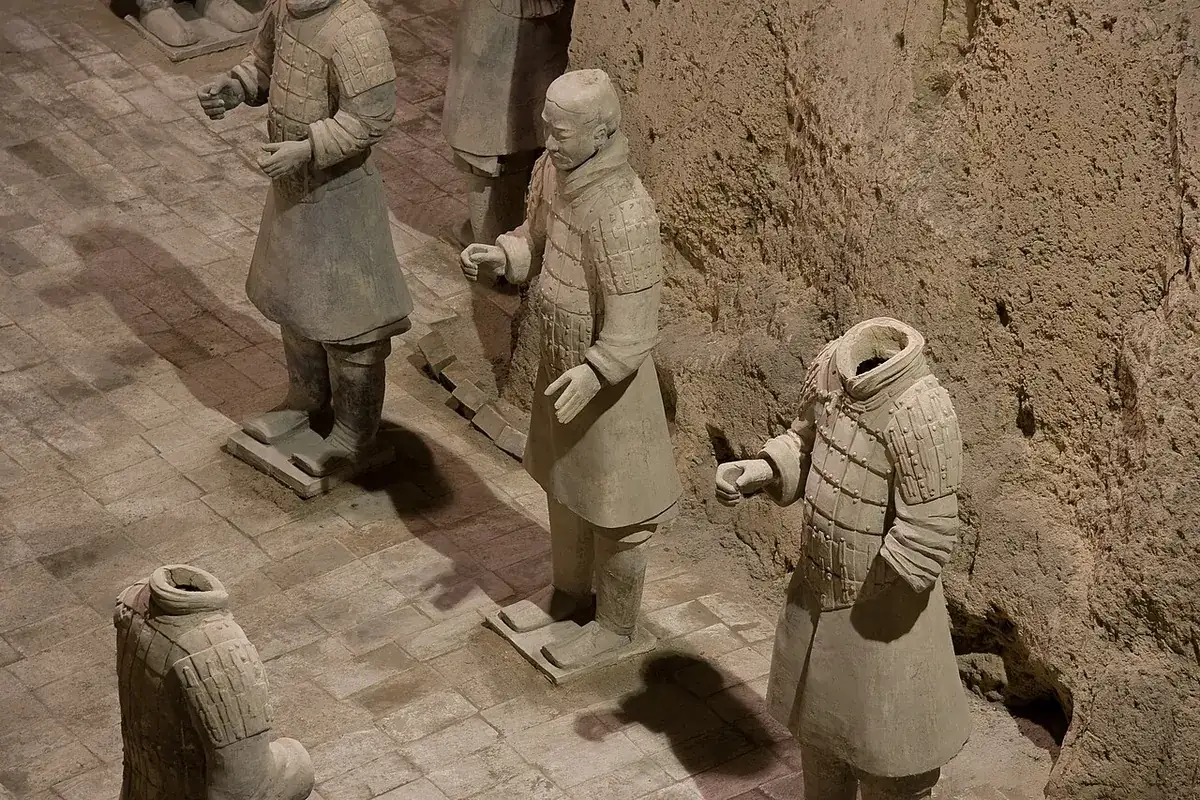
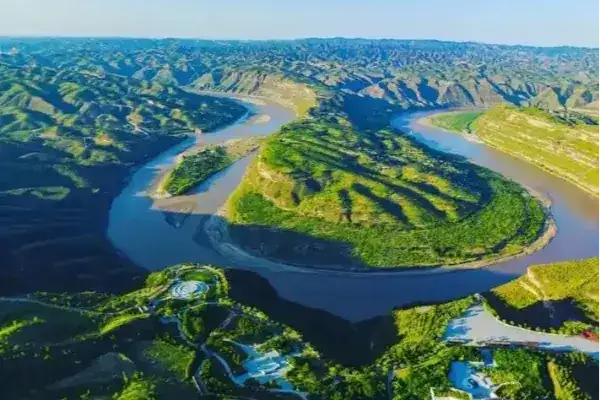
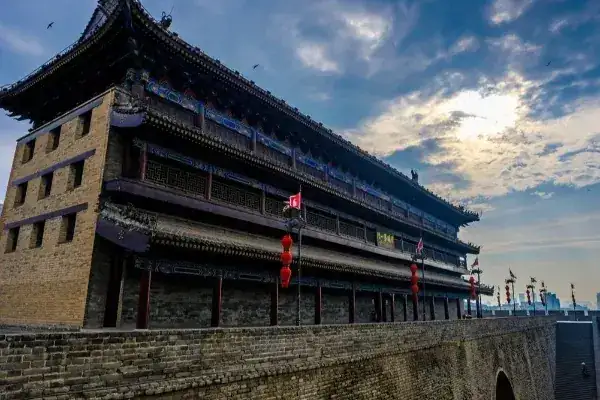
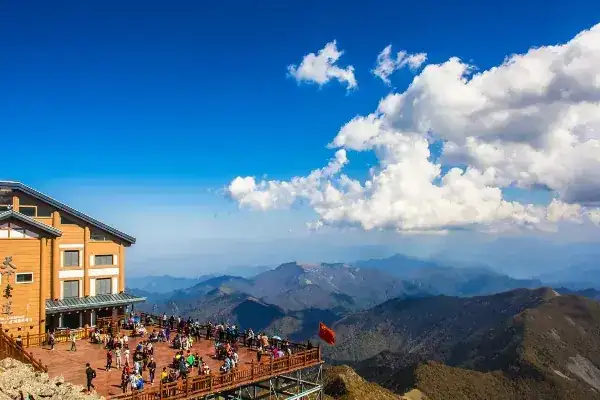
Traveller discussion
Start the conversation with a helpful tip or a question.