
Xi'an City
Xi'anXi'an City, also known as Chang'an and Haojing, is the capital of Shaanxi Province, a sub-provincial city, a megacity, and the core city of the Xi'an metropolitan area. Located in the heart of the Guanzhong Plain in Shaanxi, it is boun
Xi'an
Xi'an City, also known as Chang'an and Haojing, is the capital of Shaanxi Province, a sub-provincial city, a megacity, and the core city of the Xi'an metropolitan area. Located in the heart of the Guanzhong Plain in Shaanxi, it is bounded by the Yellow River to the east and the Qinling Mountains to the south. The terrain of the city is higher in the south and lower in the north, dominated by plains and mountains, with a warm temperate semi-humid continental monsoon climate. The total area of the city is 10,108 square kilometers. As of the end of 2025, it administers 11 municipal districts and 2 counties, with a permanent population of 13.2363 million. The Wei, Jing, Feng, Lao, Jue, Hao, Chan, and Ba rivers flow around Xi'an, all belonging to the Yellow River system. Xi'an is the starting point of the "Silk Road," one of the birthplaces of Chinese civilization and the Chinese nation, one of the first nationally designated historical and cultural cities, and a holder of the title "World Historic City" (designated by UNESCO in 1981), on par with ancient cities such as Rome, Athens, and Cairo. Chang'an culture is an important component of Chinese culture. There are five national 5A-level tourist attractions within Xi'an: the Emperor Qinshihuang's Mausoleum Site Museum, the Huaqing Palace Cultural Tourism Scenic Area of Shaanxi, the Xi'an Giant Wild Goose Pagoda and Tang Paradise Scenic Area, the Xi'an City Wall and Beilin (Forest of Steles) Historical and Cultural Scenic Area, and the Daming Palace National Heritage Park. Xi'an has over 3,100 years of urban history and over 1,100 years as a national capital, with 13 dynasties (Western Zhou, Qin, Western Han, Xin, Eastern Han, Western Jin, Former Zhao, Former Qin, Later Qin, Western Wei, Northern Zhou, Sui, and Tang) establishing their capitals here. The Lantian Ape Man site in Xi'an yielded a human skull cap dating back 1.63 million years. On May 20, 1949, Xi'an was liberated. On June 19, 1954, Xi'an became a city under the direct administration of Shaanxi Province. In January 2018, the "Guanzhong Plain Urban Agglomeration Development Plan" proposed to "build Xi'an into a national central city." On January 22, 2025, the State Council approved: "Xi'an is the capital of Shaanxi Province, an important central city in the western region, a national historical and cultural city, an international comprehensive transportation hub city, and a national center for scientific research and education." In March 2026, it was selected as one of the first cities approved to create a national new industrialization demonstration zone. In 2025, Xi'an's regional GDP was 1,390.267 billion yuan (approximately US$193.1 billion), an increase of 4.7% over the previous year at constant prices.
Name Evolution
During the Western Zhou dynasty, Xi'an was called "Fenghao." "Fenghao" was the combined name of Fengjing and Haojing, built separately by King Wen of Zhou and King Wu of Zhou. In 202 BC, after Liu Bang established the Western Han dynasty, he made Xi'an his capital and named it "Chang'an," meaning "lasting peace and stability." In 9 AD, the Grand Marshal Wang Mang proclaimed himself emperor and renamed the capital Chang'an as "Chang'an" (with a different character meaning "constant peace"). In 582 AD, Emperor Wen of the Sui dynasty ordered the construction of a new capital, Daxing City, on the site of present-day Xi'an, southeast of the Han dynasty Chang'an City. After the Tang dynasty established its capital in Chang'an, it renamed the Sui Daxing City as Chang'an City and carried out renovations and expansions.
In the early Yuan dynasty, the name Jingzhao Prefecture was used. In the 16th year of the Zhiyuan era (1279 AD), Jingzhao Prefecture was renamed Anxi Road. In the 1st year of the Huangqing era (1312 AD), Anxi Road was renamed Fengyuan Road. After the establishment of the Ming dynasty, Zhu Yuanzhang renamed Fengyuan Road as "Xi'an." Since then, the name "Xi'an" has been in continuous use. In the 2nd year of the Republic of China (1913), the Beiyang government promulgated the "Decree on Unifying the Organization of Central Directly Administered Special Administrative Offices and Local Administrative Offices at All Levels," stipulating the "abolition of prefectures and establishment of circuits," and the area was called Chang'an County.
Historical Evolution
Pre-Qin Period
As early as one million years ago, the Lantian Ape Man lived and multiplied here; during the Yangshao culture period 7,000 years ago, early inhabitants lived here and the rudiments of city walls emerged.
During the Xia dynasty, the territory of present-day Xi'an included the State of Hu (in present-day Huyi District) and the State of Luo (in present-day Zhouzhi County). In the 2nd year of Qi of Xia (approximately 21st century BC), Qi of Xia defeated the Hu clan (an ancient state name, in present-day Huyi District) at Gan (north of present-day Huyi District Ganting Subdistrict).
During the Shang dynasty, the territory of present-day Xi'an included the states of Fang, Feng, Chong (in present-day Huyi District and Chang'an area), Hu (in present-day Lantian County), Hao (in present-day Huyi District), Li (in eastern present-day Lintong District), and others. In the 19th year of King Zhou of Shang (approximately 11th century BC), Ji Chang, King Wen of Zhou, conquered Chong (an ancient state in the area of present-day Chang'an and Huyi District). The following year, he built Fengjing on the west bank of the Feng River and moved his capital there from Zhouyuan in Qishan. Another year later, he ordered his heir Ji Fa to build Haojing on the east bank of the Feng River. The two capitals, Feng and Hao, were collectively called Zongzhou.
In the 11th year of King Wu of Zhou (approximately 11th century BC), King Wu Ji Fa conquered the Shang dynasty and established the Zhou dynasty, known historically as the Western Zhou. During the Western Zhou period, Xi'an was called "Fenghao." "Fenghao" was the combined name of Fengjing and Haojing, built separately by King Wen of Zhou and King Wu of Zhou. The vassal states in this area during the Western Zhou included the State of Du (near present-day Yanta District Ducheng Village) and the State of Han (in present-day Weiyang District).
Qin, Han to Southern and Northern Dynasties
In the 26th year of Qin Shi Huang (221 BC), the First Emperor of Qin unified China, and King Ying Zheng of Qin proclaimed himself the First Emperor. He standardized writing, currency, and weights and measures. He implemented the commandery and county system, dividing the country into 36 commanderies. The position of Neishi was established to govern the counties of the capital region, and the present-day Xi'an administrative area was under its jurisdiction. In the 1st year of Ziying, King of Qin (206 BC), Liu Bang's army reached Bashang (east bank of the Ba River), and the Qin dynasty fell.
In the 2nd year of Liu Bang, King of Han (205 BC), Liu Bang traveled from Nanzheng to Liyang. The Guanzhong region was divided into three commanderies: Zhongdi, Weinan, and Heshang, with most of the Xi'an area belonging to Weinan Commandery. In the 5th year of Emperor Gaozu of Han (202 BC) in February, Liu Bang ascended the throne as Emperor Gao of Han. In May, he established his capital in Guanzhong, temporarily stationed at Liyang. In the 7th year of Emperor Gaozu (200 BC), the capital was moved from Liyang to Chang'an. From 194 BC to 190 BC, the city walls of Chang'an were completed.
In the 3rd year of the Jushe era of Han (8 AD), Wang Mang ascended the throne as Son of Heaven and changed the dynastic name to Xin. The following year, Chang'an was renamed Chang'an (with different characters meaning "constant peace"). In the spring of the 4th year of Xin Shijianguo (12 AD), Chang'an was designated as the western capital and Luoyang as the eastern capital. In the 4th year of Xin Dihuang (23 AD), the Green Forest Army captured Chang'an, Wang Mang was killed by Du Wu, and the Xin dynasty fell.
In the 2nd year of Gengshi of Liu Xuan (24 AD), Liu Xuan moved his capital from Luoyang to Chang'an. In the 1st year of Jianwu (25 AD), Liu Xuan surrendered to the Red Eyebrow Army, and the Eastern Han used Chang'an as its western capital. In the 1st year of Chuping (190 AD), the Grand Commandant Dong Zhuo coerced Emperor Xian, Liu Xie, to move the capital from Luoyang to Chang'an; Dong Zhuo was killed by Lu Bu in 192 AD. In the 16th year of Jian'an (211 AD), Cao Cao led his army to attack Zhang Lu in Hanzhong, reached Chang'an, occupied Guanzhong, and left the general Xiahou Yuan stationed in Chang'an. In 218 AD, Cao Cao attacked Shu Han and entered Chang'an. In 311 AD, the Han emperor sent troops to capture Chang'an, appointing Liu Yao as Inspector of Yongzhou to garrison Chang'an; in 312 AD, a branch administrative office was established in Chang'an; in 316 AD, Liu Yao attacked Chang'an. With the city running out of food, Emperor Min of Jin surrendered and was killed the following year; the Western Jin dynasty fell.
In 319 AD, the Han emperor Liu Yao moved his capital from Puzi (present-day Xi County, Shanxi) to Chang'an; in 350 AD, the Great Chanyu and King of Three Qin, Fu Jian of the Di people, proclaimed himself Grand General of the Northern Expedition of Jin, defeated the Later Zhao general Wang Lang and Sima Du Hong, and entered Chang'an; in 351 AD, Fu Jian proclaimed himself Heavenly King and Great Chanyu in Chang'an, with the dynastic name Da Qin, known historically as the Former Qin; in 386 AD, Yao Chang ascended the imperial throne in Chang'an, with the dynastic name Da Qin, known historically as the Later Qin, and renamed Chang'an as Chang'an (with different characters); in 417 AD, the Eastern Jin Grand Commandant Liu Yu led a northern expedition, entered Chang'an through the Pingshuo Gate, Yao Hong surrendered, and the Later Qin fell; in 431 AD, the Northern Wei re-established Yongzhou, renamed the Jingzhao Governor's Office as Jingzhao Commandery, moved the administrative seat to Bacheng, and restored Chang'an's name; in 535 AD, Yuwen Tai enthroned Yuan Baoju, Prince of Nanyang, as Emperor Wen of Western Wei, with Chang'an as the capital; in 557 AD, Yuwen Tai's son Yuwen Jue replaced Western Wei in Chang'an, proclaiming himself Heavenly King and changing the dynastic name to Zhou, becoming Emperor Xiaomin of Northern Zhou; Western Wei fell.
Sui, Tang to Song and Yuan Periods
In the 1st year of Kaihuang (581 AD), Yang Jian, Prime Minister of Northern Zhou and Prince of Sui, ascended the imperial throne in Chang'an, establishing the Sui dynasty, known as Emperor Wen of Sui. In the 3rd year of Kaihuang (583 AD), Emperor Wen moved the capital from Chang'an City to Daxing City, renamed Wannian County as Daxing County, and the administrative seats of Chang'an and Daxing counties were moved from Chang'an City to Daxing City's Changshou Ward (near present-day Yanta District Jiangjiazhai) and Xuanyang Ward (northern section of Yanta Road in present-day Beilin District), respectively. In the 13th year of Daye (617 AD), Li Yuan assembled forces of 200,000 troops to capture Daxing City and enthroned Yang You, Prince of Dai, as Emperor, known as Emperor Gong of Sui.
In the 1st year of Wude (618 AD), Li Yuan proclaimed himself emperor at the Taiji Hall of Daxing City, establishing the Tang dynasty, known as Emperor Gaozu of Tang. He renamed Daxing City as Chang'an City, Jingzhao Commandery as Yongzhou, and Daxing County as Wannian County. In the 9th year of Wude (626 AD), Prince of Qin Li Shimin, along with Zhangsun Wuji, Yuchi Jingde, and others, shot and killed his brother Crown Prince Jiancheng and his brother Prince of Qi Yuanji and their sons at the Xuanwu Gate of the Chang'an palace city, known as the Xuanwu Gate Incident. Gaozu became Retired Emperor and passed the throne to Li Shimin, known as Emperor Taizong of Tang. In the 15th year of Tianbao (756 AD), the rebel forces of An Lushan captured Tongguan, and Emperor Xuanzong fled to Chengdu; soon after, the rebels captured Chang'an.
In the 1st year of Kaiping of Later Liang (907 AD), Jingzhao Prefecture was renamed Da'an Prefecture, administering 14 counties including Chang'an, Wannian, Zhaoying (present-day Lintong District, Xi'an), and Liyang. The jurisdiction covered approximately the present-day Xi'an City, extending east to Weinan City, west to Xingping and Zhouzhi County, north to Sanyuan County, and south to Ningshan and Zhashui County northern areas (approximately 20,000 square kilometers), subordinate to the Yongping Army. In the 1st year of Tongguang of Later Tang (923 AD), Da'an Prefecture was renamed Jingzhao Prefecture, called the Western Capital. The Jingzhao Prefecture of Later Jin was subordinate to the Jinchang Army, that of Later Han to the Yongxing Army, and Later Zhou followed the previous system, with no changes in jurisdiction. In the 1st year of Changxing of Later Tang (930 AD), the Western Capital garrison commander An Zhongba raised funds to repair the Giant Wild Goose Pagoda, completed in three years; in the 3rd year of Tianfu of Later Jin (938 AD), the Western Capital was abolished and the Jinchang Army was established, with Chang'an still serving as Jingzhao Prefecture; in the 2nd year of Qianyou of Later Han (949 AD), Later Han forces entered Chang'an, and Guo Congyi lured and killed Zhao Siwan and over 300 others in Chang'an.
The Northern Song established Jingzhao Prefecture, initially subordinate to the Guanxi Circuit, then to the Shaanxi Circuit in the 3rd year of Zhidao (997 AD), and reassigned to the Yongxing Army Circuit in the 5th year of Xining (1072 AD). In the 1st year of Daguan (1107 AD), it was elevated to a Grand Military Governor's Office, and in the 4th year (1110 AD), it reverted to Jingzhao Prefecture, administering 13 counties including Chang'an, Fanchuan (renamed from Wannian County in the 7th year of Xuanhe), and Hu, with a jurisdiction covering approximately present-day Xi'an (excluding Zhouzhi County) and extending north to Jingyang County, west to Xingping City, and south to Zhen'an County (approximately 21,000 square kilometers). In the 8th year of Tianhui of the Jin dynasty (1130 AD), Chang'an was occupied, and Jingzhao Prefecture was maintained, administering 12 counties including Chang'an, Xianning, and Lantian, with the jurisdiction increased compared to the Northern Song's Jingzhao Prefecture to include the eastern part of present-day Zhouzhi County (approximately 23,000 square kilometers). In the 2nd year of Huangtong (1142 AD), the Yongxing Army Circuit was renamed the Jingzhao Prefecture Circuit, to which Jingzhao Prefecture belonged. In the 1st year of Zhenyou (1213 AD), Fengxiang, Mei County, and Zhouzhi (present-day Zhouzhi) were assigned to it; Hancheng County was renamed Zhenzhou, Mei County was renamed Meizhou, and Zhouzhi County was renamed Hengzhou, making it eight prefectures and 12 counties. From the Five Dynasties onward, the administrative seat of Jingzhao Prefecture was moved to Zhihui Street in Chang'an City (west side of the social road intersection on the northern side of the eastern section of present-day West Main Street).
During the Yuan dynasty, in the 3rd year of Mongol Taizong (1231 AD), Jingzhao Prefecture was maintained, subordinate to the Jingzhao Prefecture Circuit, and in the 3rd year of Zhongtong (1262 AD), it was subordinate to the Shaanxi-Sichuan Branch Secretariat. In the 9th year of Zhiyuan (1272 AD), Kublai Khan enfeoffed his third son Manggala as Prince of Anxi, and established a princely administrative office in Jingzhao Prefecture City, with Jingzhao Prefecture subordinate to it. In the 16th year of Zhiyuan (1279 AD), Jingzhao Prefecture was renamed Anxi Road Chief Military Commission. In the 23rd year of Zhiyuan (1286 AD), Anxi Road was placed under the Shaanxi Branch Secretariat. In the 1st year of Huangqing (1312 AD), Anxi Road was renamed Fengyuan Road. Fengyuan Road administered one office (Registry Office) and 11 counties (including Chang'an, Xianning, and Lantian), with prefectures overseeing 15 counties (Tong Prefecture overseeing Dali County, Chaoyi County, Heyang County, etc.), totaling 26 counties. The administrative seat remained on the west side of the social road intersection on the northern side of the eastern section of present-day West Main Street. The prefectural city was renamed Fengyuan City.
Ming and Qing Periods
In March of the 2nd year of Hongwu of the Ming dynasty (1369 AD), Fengyuan City was occupied, Fengyuan Road was abolished, and Xi'an Prefecture was established, from which Xi'an derived its name. In the early Ming dynasty, Xi'an Prefecture administered 6 prefectures and 31 counties, with its jurisdiction extending east to Tongguan, west to Wugong, north to Tongguan, and south to Zhen'an, covering approximately the present-day Xi'an City, Xianyang City, Tongchuan City (excluding Yijun County), and the areas of Weinan and Shangluo cities (approximately 57,000 square kilometers). In 1643, Li Zicheng attacked Xi'an City, destroyed the main gate tower of the east gate and the arrow tower of the south gate, renamed Xi'an Prefecture as Chang'an Prefecture, and called it the Western Capital.
In the 2nd year of Shunzhi of the Qing dynasty (1645 AD) in January, Xi'an Prefecture was occupied, and following the Ming system, Xi'an Prefecture was established with its administrative seat at the former site of the Ming Xi'an Prefecture, subordinate to the Shaanxi Provincial Administration Commission. In the 3rd year of Kangxi (1664 AD), it was placed under the Left Administration Commission, and later reassigned to the Shaanxi Administration Commission. During the Qianlong era, circuit-level inspection zones were established under the province, and Xi'an Prefecture belonged to the Xi-Qian-Fu Circuit. Qing-era Xi'an Prefecture administered 15 counties, one independent department, and two sub-prefectures, with its jurisdiction reduced to the area east to Weinan City, west to Zhouzhi County, north to Tongchuan City, and south to Ningshan County (approximately 18,000 square kilometers).
Republic of China Period
In the 17th year of the Republic of China (1928 AD), Xi'an was established as a city for the first time, with its jurisdiction limited to the area within the Xi'an city walls and the four suburban gates originally belonging to Chang'an County, existing for only two brief years. In May 1930, the National Government promulgated the new "City Organization Law," which raised the standards for city establishment; Xi'an's population of less than 200,000 did not meet the criteria. On November 8, the Shaanxi Provincial Government ordered the abolition of Xi'an's city status, and the jurisdiction reverted to Chang'an County. In 1935, Shaanxi Province gradually established administrative supervision districts. In October 1938, the 9th and 10th Administrative Supervision Districts were established. Chang'an, Lintong, Lantian, Huxian, Gaoling, and five other counties within present-day Xi'an were subordinate to the 10th Administrative Supervision District (headquartered in Xianyang), while Zhouzhi County was subordinate to the 9th Administrative Supervision District (headquartered in Baoji). In 1944, the city was re-established, and the municipal district system was also created. On September 1, the municipal government was formally established as a city under Shaanxi Province. Meanwhile, the various counties within present-day Xi'an continued to exist, successively subordinate to the Guanzhong Circuit and relevant administrative supervision districts. On August 1, 1947, the National Government, in a passive position in the civil war, for political and military needs, explicitly elevated Xi'an to a municipality directly under the Executive Yuan of the National Government, making it one of 12 Yuan-administered municipalities in the country. In December of the same year, the Ministry of Interior approved "Hao" as the abbreviation for Xi'an. On May 20, 1949, Xi'an was liberated, and on the 25th, the Xi'an Municipal People's Government was proclaimed, belonging to the Shaanxi-Gansu-Ningxia Border Region as a municipality.
After the Founding of New China
On May 20, 1949, Xi'an was liberated, and on the 25th, the Xi'an Municipal People's Government was proclaimed, belonging to the Shaanxi-Gansu-Ningxia Border Region as a municipality. On January 19, 1950, the Shaanxi-Gansu-Ningxia Border Region was abolished and the Northwest Military and Political Committee was established, with Xi'an as the northwest capital, led by the Northwest Military and Political Committee as a municipality of the Northwest Administrative Region. On January 27, 1953, the Northwest Military and Political Committee was reorganized into the Northwest Administrative Committee, and Xi'an followed under the Northwest Administrative Committee. On March 12, 1953, the Government Administration Council of the Central People's Government ordered Xi'an to be changed from a municipality of the Northwest Administrative Region to a centrally administered municipality, making it one of 12 central municipalities in the country. On June 19, 1954, the Central People's Government Council decided to abolish the Northwest Administrative Committee, Shaanxi Province was placed under central administration, and Xi'an was changed from a central municipality to a city under Shaanxi Province. In October 1984, Xi'an was designated by the State Council as a city with separate state planning; in 1992, it was approved as an inland open city; in 1994, it was approved as a national comprehensive supporting reform pilot city and a sub-provincial city. In 2018, with the approval of the State Council, the "Guanzhong Plain Urban Agglomeration Development Plan" was issued, explicitly proposing to build Xi'an into a national central city. In October 2024, the State Administration for Market Regulation and the National Data Bureau jointly issued the "Notice on Carrying Out Pilot Programs for Opening Credit Regulatory Data to Platform Enterprises to Promote the Standardized and Healthy Development of the Platform Economy," proposing to carry out pilot work on opening credit regulatory data to mobile payment platform enterprises in eight cities including Xi'an, Shaanxi. On January 5, 2025, the high-speed rail long-distance route between Hong Kong West Kowloon Station and Xi'an North Station was opened. On January 17, 2025, the State Council approved in principle the "Xi'an Territorial Spatial Master Plan (2021-2035)" reviewed and approved by the Ministry of Natural Resources. Xi'an city nightscape.
Administrative Divisions
As of April 2024, Xi'an administers 11 districts, 2 counties, 7 national and provincial-level key development zones, and manages one national-level new area on behalf of the province. The municipal government is located at No. 109, Fengcheng 8th Road, Weiyang District, Xi'an, Shaanxi Province. Xi'an administrative division map.
Physical Geography
Location and Extent
Xi'an is located in northwestern China, in the central part of the Guanzhong Plain in the Yellow River basin, between 107 degrees 40 minutes and 109 degrees 49 minutes east longitude and 33 degrees 42 minutes and 34 degrees 45 minutes north latitude. It is bounded to the east by the Ling River and the Ba River source mountains, bordering Weinan City, Shangzhou District of Shangluo City, and Luonan County; to the west by the Taibai Mountains and the Qinghua loess tableland, bordering Mei County and Taibai County; to the south by the main ridge of the Northern Qinling Mountains, bordering Foping County, Ningshan County, and Zhashui County; and to the north by the Wei River, crossing the Wei River to the northeast, bordering Xianyang urban area, Yangling District, and the counties (cities) of Sanyuan, Jingyang, Xingping, Wugong, Fufeng, and Fuping. The jurisdiction extends 204 kilometers east to west and 116 kilometers north to south, with a total area of 10,108 square kilometers. Xi'an location map.
Climate
Xi'an has a warm temperate semi-humid continental monsoon climate with distinct cold, warm, dry, and wet seasons. Winters are cold with little wind, frequent haze, and little rain or snow; springs are warm, dry, windy, and highly variable; summers are hot and rainy with pronounced summer droughts, frequent thunderstorms, and strong winds; autumns are cool with rapidly dropping temperatures and noticeable autumn rains. Based on climate data analysis from the past 30 years (1991-2020), the annual average temperature is 13.5 to 14.9 degrees Celsius. The coldest month is January, with an average temperature of -1.2 to 0.7 degrees Celsius, and the hottest month is July, with an average temperature of 26.9 to 27.8 degrees Celsius. The annual extreme minimum temperature was -21.2 degrees Celsius (Lantian, December 28, 1991), and the annual extreme maximum temperature was 43.3 degrees Celsius (Chang'an, June 17, 2006). Annual precipitation is 506.1 to 690.3 millimeters, with the maximum annual precipitation of 954.9 millimeters (2003, Lintong) and the minimum annual precipitation of 277.6 millimeters (2013, Xi'an). The maximum daily precipitation was 138.9 millimeters (2007, Gaoling), with July and September being the two distinct precipitation peaks. Annual sunshine hours range from 1,679.9 to 2,062.6 hours.
Geology
The geological structure of Xi'an spans two major units: the Qinling geosynclinal fold belt and the North China Platform. During the Yanshan Movement approximately 130 million years ago, the great fault along the northern foot of the Qinling Mountains was formed, traversing the city. Since the late Tertiary period about 3 million years ago, the neotectonic movement of the Qinling geosynclinal fold belt south of the great fault has been extremely active, with the mountain body tilting upward to the north and downward to the south, creating the Qinling Mountains. At the same time, the Wei River graben north of the great fault, belonging to the North China Platform, continued to subside, and under the combined action of aeolian loess cover and Wei River alluviation, the Wei River Plain was formed.
The stratigraphic distribution of Xi'an, arranged by geological age, is as follows: Archean (approximately 2.5 billion years ago) distributed in the southeastern hills of Mount Li; Proterozoic (approximately 2.4 billion to 570 million years ago) distributed in the southeastern hills of Mount Li and the Qinling Mountains, one of the main exposed strata in Xi'an; Cambrian-Ordovician (approximately 570 million to 440 million years ago) with two systems within Xi'an, one along the main ridge of the Qinling Mountains and the other in the deep Qinling Mountains from Laoxiancheng to Changping in southwestern Zhouzhi County; Devonian (approximately 400 million to 350 million years ago) distributed in the Qinling Mountains within Zhouzhi County; Carboniferous (approximately 350 million to 200 million years ago) distributed in the Qinling Mountains along the Zhouzhi-Huyi District line; Tertiary (approximately 67 million to 2.5 million years ago) distributed in the Mount Li area, southeastern hills of Mount Li, and the eastern loess tableland area, mostly buried under Quaternary sediments, exposed only in deeply incised valleys or at mountain edges; Quaternary (from approximately 2.5 million years ago to present) is the most widely exposed stratum on the Xi'an surface, accounting for about 65% of the total area, with the Wei River Plain almost entirely covered by Quaternary deposits.
Topography and Landforms
The landforms of Xi'an include four basic types: plains, loess tablelands, hills, and mountains. Xi'an is higher in the south and lower in the north, with a striking elevation difference. The Qinling Mountains stretch across the southern border, with the main ridge forming the boundary between Xi'an and southern Shaanxi. The ridge elevation is 2,000 to 2,800 meters, descending in a wavelike pattern from west to east, with Taibai Peak at the southwestern end reaching 3,771.2 meters, the highest peak in central China. The Wei River Plain has an elevation of 400 to 700 meters, with the lowest point at the Wei River bed in the northeast at 345 meters. The Xi'an urban area is built on the second terrace of the Wei River Plain. Xi'an topography map.
The Wei River, the largest tributary of the Yellow River, traverses the Guanzhong Plain, also known as the Wei River Plain. The Wei River Plain within Xi'an covers an area of 3,722.4 square kilometers, accounting for 37.29% of the city's total area. Based on geomorphic origins and morphological features, the plains within Xi'an are divided into three sub-level geomorphic units: the Wei River main stream alluvial plain, the Wei River tributary valley plain, and the piedmont diluvial plain.
The loess tablelands of Xi'an are mainly distributed in Lintong, Lantian, and Chang'an District east and south of the Xi'an urban area, with a small distribution in the southwestern Qinling piedmont of Zhouzhi County. The area is 645 square kilometers, accounting for 6.46% of the city's total area. The main tablelands within Xi'an include: Bailu Tableland, Shaoling Tableland, Shenhe Tableland, and Bali Tableland.
Hilly landforms are mainly distributed in Lantian County and Lintong District east and south of Mount Li, covering an area of approximately 740 square kilometers, accounting for 7.41% of the city's total area.
The mountainous areas of Xi'an include the northern slope of the Qinling Mountains and Mount Li, covering an area of 4,875.6 square kilometers, accounting for 48.84% of the city's total area. These landforms were formed by block uplift during neotectonic movements, followed by fluvial erosion and weathering. Based on their distribution and formation processes, they are divided into three sub-level geomorphic units: Mount Li, the Qinling Mountains, and the Taibai Mountain ancient glacial alpine area.
Hydrology and Water Conservancy
Xi'an has been known since ancient times as having "eight rivers surrounding Chang'an," with a dense river network including 55 major rivers such as the Wei, Jing, Ba, Chan, Feng, Jue, Hei, Lao, Shichuan, and Ling rivers, of which 36 have catchment areas exceeding 100 square kilometers. The vast majority of rivers flow from south to north through the Wei River Plain into the Wei River. Rivers with basin areas exceeding 1,000 square kilometers include the Hei, Ba, and Feng rivers. The combined basin area of these three rivers accounts for 82.37% of the total area. Xi'an's groundwater reserves are estimated at 1.991 billion cubic meters. Ideal water source bases have also been developed.
As of July 2022, Xi'an has 83 reservoirs and 8 mountain ponds, including 4 large and medium-sized reservoirs and 79 small reservoirs (including 2 in the Xi-Xian New Area), with a storage capacity of 108 million cubic meters, accounting for 95% of the city's reservoirs by number and 25.3% of the total storage capacity, involving seven districts and counties and the Xi-Xian New Area.
In December 2001, the main project of the Hei River Water Control Hub was completed, supplying 400 million cubic meters of water to Xi'an annually, forming a daily water supply capacity of 1.2 million tons. Combined with groundwater resources, the urban daily water supply capacity reached 1.72 million tons, basically meeting the needs of urban production and domestic water use.
On June 18, 2023, the Han-to-Wei River Diversion Project, one of the national 172 major water conservation and supply projects, passed the water delivery stage inspection and met the conditions for water delivery. The Han-to-Wei River Diversion Project is a major water conservancy infrastructure project to break through the water resource bottleneck of Shaanxi Province and achieve spatial equilibrium of water resource allocation. It is also the largest water conservancy livelihood project in Shaanxi's history. The project spans the Yangtze and Yellow River basins, diverting water from the Han River basin in southern Shaanxi to the Wei River basin in Guanzhong, with a total water receiving area of 14,000 square kilometers and a beneficiary population of 14.11 million.
Soil
The soil distribution of Xi'an forms two distinctly different zones: the northern Wei River Plain, represented by yellow-brown soil and cinnamon soil, and the southern Qinling Mountains, represented by yellow-brown earth and brown earth. According to the soil survey from 1980 to 1986, the city has 12 soil types, 24 soil subtypes, 50 soil genera, and 181 soil species.
Cinnamon soil, also known as "liver mud," is a natural soil mainly distributed in the Qinling low mountains below 1,200 meters elevation, Mount Li, and the tops of piedmont alluvial fans, as well as on plain terraces and loess tablelands. It covers an area of 2.2999 million mu, accounting for 16.18% of the city's total soil area.
Lou soil is the most important agricultural soil in Xi'an, widely distributed on the second and third terraces of the Wei River Plain and loess tablelands, covering an area of 2.6868 million mu, accounting for 18.9% of the city's total soil area.
Brown earth is a natural soil distributed in the Qinling Mountains at elevations of 1,200 to 2,400 meters, covering an area of 4.5715 million mu, accounting for 32.17% of the city's total soil area, and is the main soil of the Qinling Mountains.
Dark brown earth is also a natural soil, distributed above the brown earth zone in the vertical soil belt of the Qinling Mountains, along ridges at elevations of 2,400 to 3,000 meters, covering an area of 353,500 mu, accounting for 2.49% of the city's total soil area.
Paddy soil is a hydromorphic soil formed from other soil types under long-term rice cultivation with periodic flooding irrigation and fertilization, mainly distributed in the floodplains and terraces of the Feng and Hao rivers and the area west of Luzhen on the northern piedmont of the Qinling Mountains, covering an area of 276,900 mu, accounting for 1.95% of the city's total soil area.
Young agricultural soil formed from loess parent material through cultivation and maturation is distributed on all levels of terraces and loess tablelands of the Wei River Plain, covering an area of 1.3476 million mu, accounting for 9.48% of the city's total soil area.
Red clay soil is the main soil type in hilly and gully regions, covering an area of 476,200 mu, accounting for 3.35% of the city's total soil area, mostly distributed in the southeastern hills of Mount Li, with sporadic distribution on remnant piedmont tablelands.
Purple soil within Xi'an covers an area of 86,700 mu, accounting for 0.61% of the city's total soil area, mostly distributed in the southeastern hills of Mount Li, with sporadic distribution along the Ba River in Baqiao District.
Agricultural soil formed from modern river sediment parent material through cultivation and maturation covers an area of 1.2142 million mu, accounting for 8.54% of the city's total soil area, distributed on piedmont alluvial fans and the floodplains and first terraces of various rivers.
Agricultural soil developed on recent river sediment parent material under the combined action of groundwater and cultivation maturation covers an area of 801,300 mu, accounting for 5.64% of the city's total soil area, mostly distributed in the floodplains and low-lying areas of the first terraces of the Wei River and its tributaries.
Swamp soil within Xi'an covers an area of 4,200 mu, accounting for 0.03% of the city's total soil area, distributed in butterfly-shaped depressions and closed valley lowlands along the middle and lower reaches of rivers in Lintong, Lantian, and other counties.
Subalpine meadow soil is distributed in the high mountain area of Taibai Mountain in the Qinling range at elevations of 3,000 to 3,767 meters, covering an area of 93,900 mu, accounting for 0.66% of the city's total soil area.
Natural Disasters
The main meteorological disasters in Xi'an include drought, high temperatures, strong winds, sand and dust, lightning, hail, heavy rain, low-temperature freezing damage, prolonged overcast rain, fog, and haze.
Drought is the most frequent natural disaster in Xi'an, occurring to varying degrees every year. The distribution of drought shows a clear trend of less in the south and more in the north, lighter in the south and more severe in the north. Summer droughts occur most frequently, followed by spring and autumn droughts. Consecutive drought years are rare, while consecutive drought months are more common. Waterlogging is another major natural disaster in Xi'an. From April to October each year, high temperatures and abundant precipitation make prolonged overcast rain and heavy rain likely.
In August 2020, widespread heavy rain in Xi'an caused flooding in multiple areas. On August 3, Zhouzhi County experienced heavy rain with a maximum daily precipitation of 53.4 millimeters. Regional stations recorded heavy rain on 6 days with 29 station occurrences, with the maximum daily precipitation of 111.3 millimeters at Beilun, Yanliang (August 6). Short-duration heavy rainfall caused flooding of varying degrees in 5 districts and counties of Xi'an, including Lintong, Yanliang, Huyi, Zhouzhi, and Lantian, affecting 51 towns (subdistrict offices).
Sudden geological disasters in Xi'an include four types: landslides, collapses, debris flows, and ground subsidence. Landslides are mainly distributed in the Qinling piedmont, Qinling mountain area, and loess tableland edges, totaling 351 occurrences. Collapses are mainly distributed in loess tablelands and the Qinling piedmont, totaling 179 occurrences. Debris flows are mainly developed in the Qinling mountain area, Mount Li area, and loess ridge-valley gullies, totaling 19 occurrences. Ground subsidence is distributed along loess tableland edges, totaling 7 occurrences. Progressive geological disasters include ground fissures and land subsidence. According to survey and research findings, Xi'an's urban area has 14 ground fissures and 4 secondary ground fissures, distributed over an area of approximately 250 square kilometers, with a total length of over 160 kilometers.
Natural Resources
Water Resources
Xi'an is in a region with severe water resource scarcity. As of September 2023, the per capita surface water resource availability was 408.45 cubic meters, approximately 4.5% of the world's per capita amount, 16.7% of the national per capita amount, 32.1% of Shaanxi Province's per capita amount, and 65.6% of the Yellow River basin's per capita amount. Surface water resources are not only insufficient in total but also subject to drastic inter-annual variations and uneven intra-annual distribution. Groundwater resources are severely over-exploited. According to a survey by the Shaanxi Hydrological Team No. 1, within the 1,648 square kilometer area covering the urban area and Chang'an District, the annual exploitable groundwater volume is 627 million cubic meters, while the actual annual extraction reaches 690 million cubic meters, an over-exploitation of 63 million cubic meters. In particular, in the urban area and suburbs, where urban water source wells and agricultural irrigation wells are concentrated, the annual over-extraction is 221 million cubic meters, leading to the continuous abandonment of agricultural motor-pumped wells.
Land Resources
According to the results of the national land survey published in 2022, Xi'an has 141,232 hectares of cultivated land, including 256 hectares of paddy fields, 99,490 hectares of irrigated land, and 41,486 hectares of dry land; 58,257 hectares of orchard land, including 46,005 hectares of fruit orchards and 12,253 hectares of other orchard land; 153,998 hectares of urban, rural, industrial, and mining land; 25,801 hectares of transportation land; 18,251 hectares of water areas and water conservancy facilities; 12,225 hectares of grassland; 589,648 hectares of forest land; and 5,992 hectares of wetland.
Mineral Resources
The stratigraphic development in Xi'an is complex. As of May 2023, 47 types of mineral resources have been discovered, including 21 metallic minerals, 22 non-metallic minerals, 2 energy minerals, and 2 other minerals. Most metallic and non-metallic minerals are distributed in the southern Qinling mountain area. The plain area north of the Qinling Mountains has favorable geological conditions for storing geothermal water, with an area of approximately 780 square kilometers suitable for geothermal development in the urban area alone, and exploitable geothermal hot water reserves of 539 million cubic meters.
Biodiversity
As of May 2023, Xi'an's natural vegetation has not been directly affected by Quaternary continental glaciation, preserving several Tertiary relict plants such as ginkgo, Tetracentron, Cercidiphyllum, and Paliurus. The Qinling Mountains vertically distribute natural vegetation types from high to low elevations, including alpine shrub meadows, coniferous forests, mixed coniferous and broad-leaved forests, and deciduous broad-leaved forests. The natural vegetation is rich in wild plant resources, with 138 families, 681 genera, and 2,224 species of wild plants, making it one of China's important gene banks for seed plants. The Wei River Plain is mainly composed of cultivated plant types such as field crops, vegetables, orchards, and urban greenery. As of November 2023, Xi'an's forest resources are concentrated in the Qinling mountain area, accounting for approximately 94.59% of the city's total forest area, with more in the west than in the east. Western Zhouzhi County accounts for 55.6% of the city's total forest area, with a timber stock of 14,925,700 cubic meters, accounting for 67.06% of the city's total timber stock. Tetracentron, Paliurus, Ginkgo.
As of May 2023, Xi'an's wild animal resources are mainly distributed in the Qinling Mountains, with 55 species of mammals and 177 species of birds, including rare animals such as the giant panda, golden snub-nosed monkey, takin (Qinling subspecies), serow, Chinese giant salamander, black stork, white-crowned long-tailed pheasant, blood pheasant, and golden pheasant. Golden pheasant, Giant panda, Golden snub-nosed monkey, View more.
As of July 2020, Xi'an has 5 nature reserves (Zhouzhi National Nature Reserve, Zhouzhi Laoxiancheng National Nature Reserve, Hei River Rare Aquatic Wildlife National Nature Reserve, Shaanxi Hei River Wetland Provincial Nature Reserve, and Xi'an Jing-Wei Wetland Provincial Nature Reserve), with key strengthened protection for rare aquatic wildlife such as the golden snub-nosed monkey, giant panda, and Brachymystax lenok, as well as wild bird resources and animal and plant habitats. This has effectively protected Xi'an's forest and wetland ecosystems, providing a good environment for animals and plants, and the populations of species such as giant pandas, golden snub-nosed monkeys, and takins have grown.
Zhouzhi National Nature Reserve
The Zhouzhi National Nature Reserve is located in southern Zhouzhi County, covering an area of 903,000 mu. It was established in 1982 and designated as a national nature reserve in 1988. The Zhouzhi Nature Reserve is primarily dedicated to the protection of the rare golden snub-nosed monkey. The reserve has dense forests with a forest coverage rate of 90.5%, with abundant Broussonetia poplar and willow favored by golden snub-nosed monkeys, and pine-flower bamboo and arrow bamboo favored by giant pandas and takins. With numerous streams and a suitable climate, the annual average temperature is 6.4 degrees Celsius, the extreme maximum temperature is 29.7 degrees Celsius, the extreme minimum temperature is -19 degrees Celsius, and the annual precipitation is 1,000 millimeters, making it suitable for the habitat and reproduction of golden snub-nosed monkeys.
Politics
Population
Population Size
As of the end of 2023, Xi'an had a permanent population of 13.0782 million. Of these, the male population was 6.6752 million, accounting for 51.04%; the female population was 6.4030 million, accounting for 48.96%. The sex ratio was 104.25 (males per 100 females). The urban population was 10.4469 million, with an urbanization rate of 79.88%. There were 107,500 births, with a birth rate of 8.22 per thousand; 102,800 deaths, with a mortality rate of 7.86 per thousand; and a natural growth rate of 0.36 per thousand. According to the data from Shaanxi Province's Seventh National Population Census, the population aged 0-14 accounted for 15.65%; the population aged 15-59 accounted for 68.33%; and the population aged 60 and above accounted for 16.02%.
At the end of 2024, Xi'an's permanent population was 13.1676 million, an increase of 89,400 from the end of the previous year. Of these, the male population was 6.7097 million, accounting for 50.96%; the female population was 6.4579 million, accounting for 49.04%. The sex ratio was 103.90 (males per 100 females). The urban population was 10.5907 million, with an urbanization rate of 80.43%. There were 113,500 births, with a birth rate of 8.62 per thousand; 103,000 deaths, with a mortality rate of 7.82 per thousand; and a natural growth rate of 0.80 per thousand.
At the end of 2025, Xi'an's permanent population was 13.2363 million, an increase of 68,700 from the end of the previous year, including a permanent urban population of 10.7227 million. The urbanization rate of the permanent population was 81.01%, an increase of 0.58 percentage points from the end of the previous year.
Ethnic Composition
Xi'an is a region with scattered mixed minority populations, with all 56 ethnic groups represented. The overall distribution pattern is characterized by wide dispersion with small concentrations, and ethnic minorities are mainly concentrated in the four districts of Lianhu, Xincheng, Beilin, and Yanta, with prominent characteristics of urban ethnic work. According to the Seventh National Population Census data, the minority population is 132,151, accounting for 1.02% of the city's total population, and more than half of the provincial minority population. There are 2 minority groups with populations exceeding 10,000: the Hui ethnic group with 77,851 people, accounting for 58.91% of Xi'an's minority population, and the Manchu ethnic group with 11,864 people. There are 8 minority groups with populations between 2,000 and 10,000: Mongolian (6,951), Tibetan (5,123), Tujia (4,903), Uyghur (3,816), Miao (3,443), Zhuang (3,173), Yi (2,276), and Korean (2,088). There are 2 minority groups with populations between 1,000 and 2,000: Dong (1,179) and Bouyei (1,119). The overall distribution shows wide dispersion with small concentrations, with ethnic minorities mainly concentrated in the four districts of Lianhu, Xincheng, Beilin, and Yanta, with prominent characteristics of urban ethnic work.
Language
Qinqiang opera, prevalent in Guanzhong and other northwestern regions, is also known as Luantan, or "Bangzi opera," and commonly called "Guangguangzi." Shaanxi dialect, a branch of the Central Plains Mandarin represented by the Guanzhong dialect, or Xi'an dialect, has been deeply influenced by Standard Mandarin but still retains some ancient pronunciations and word usages.
The Xi'an dialect belongs to the Central Plains sub-group of Northern Mandarin, specifically the Guanzhong division. It is the dominant dialect of the Guanzhong division and even of the central and western regions of China and the entire Chinese dialect system. It can be divided into seven local dialects: the urban dialect, Zhouzhi dialect, Huxian dialect, Chang'an dialect, Lantian dialect, Lintong dialect, and Gaoling dialect. Its main features include: ancient entering-tone characters with fully voiced initials merge into the yangping (rising) tone, while other entering-tone characters merge into the yinping (level) tone; it has a large number of reduplicated words; it has reversed-order words, split-sound words; and it has internal inflection.
Religious Beliefs
Xi'an has all five major religions, with a long history, deep cultural heritage, and numerous renowned venues and figures of far-reaching influence. As of April 2023, Xi'an had 457 registered religious activity venues, nearly 1,900 registered and filed religious professionals, 19 religious organizations (6 at the municipal level and 13 at the district/county level), and 2 additional social organizations with religious backgrounds. There were 28 religious activity venues listed as cultural relic protection units at or above the municipal level (10 national-level key cultural relic protection units, 12 provincial-level key cultural relic protection units, and 6 municipal-level key cultural relic protection units).
Economy
Overview
Xi'an's pillar industries include electronic information, automobiles, aerospace, high-end equipment, new materials and new energy, food, and biomedicine.
In 2024, Xi'an's regional GDP was 1,331.778 billion yuan (approximately US$185.0 billion), an increase of 4.6% over the previous year at constant prices. Of this, the primary industry's value added was 32.013 billion yuan, up 3.4%; the secondary industry's value added was 387.396 billion yuan, up 4.1%; and the tertiary industry's value added was 912.369 billion yuan, up 4.8%. The three industries accounted for 2.40%, 29.09%, and 68.51% of the regional GDP, respectively. Per capita regional GDP reached 101,485 yuan, up 3.9%. The value added of the non-public economy accounted for 51.2% of the regional GDP.
In 2024, Xi'an's consumer price index rose 0.3% over the previous year. Of this, consumer goods prices fell 0.1%, and service prices rose 1.1%. New commercial residential sales prices rose 2.9%, while second-hand residential sales prices fell 5.6%.
In 2024, Xi'an's general public budget revenue was 100.237 billion yuan (approximately US$13.9 billion), up 5.3% over the previous year, of which tax revenue was 71.496 billion yuan, up 3.9%. General public budget expenditure was 156.174 billion yuan, down 9.8%.
In 2024, Xi'an held 42,899 high-value invention patents, up 19.5% over the previous year. There were 33 high-value invention patents per 10,000 people. Among industrial enterprises above designated size, the value added of the computer, communications, and other electronic equipment manufacturing industry grew 6.9%. Among service enterprises above designated size, the revenue of scientific research and technical services grew 6.3%.
In 2024, Xi'an's industrial enterprise technological transformation investment grew 37.5% over the previous year. Among industrial enterprises above designated size, new energy vehicle production was 1,124,300 units, up 14.3%. Charging pile production was 628,300 units, up 26.3%. Solar cell production was 81.8011 million kilowatts, up 61.4%. 3D printing equipment output was 545 units, up 41.9%. Integrated circuit wafer production was 8.854 million pieces, up 36.7%. Among enterprises (units) above designated size, retail sales realized through public networks reached 90.143 billion yuan, up 7.9%.
In 2024, Xi'an's per capita disposable income was 45,082 yuan, up 5.3% over the previous year. By place of residence, urban per capita disposable income was 53,678 yuan, up 4.9%; rural per capita disposable income was 21,185 yuan, up 6.9%. The urban-rural income ratio was 2.53, narrowing by 0.05 from the previous year. The city's per capita living consumption expenditure was 28,313.9 yuan, up 3.3%. By place of residence, urban per capita living consumption expenditure was 32,154.6 yuan, up 3.3%; rural per capita living consumption expenditure was 17,637.1 yuan, up 2.4%.
In 2024, Xi'an's fixed asset investment grew 0.2% over the previous year. Of this, industrial investment grew 1.1%, infrastructure investment fell 7.5%, and real estate development investment grew 8.5%. Large-scale equipment renewal was vigorously promoted. Equipment and instrument purchase investment grew 6.2%; industrial enterprise technological transformation investment grew 37.5%, accounting for 6.9% of fixed asset investment, up 1.9 percentage points. Investment in livelihood areas continued to increase. Investment in transportation, warehousing, and postal services grew 3.2%; investment in electricity, heat, gas, and water production and supply grew 75.9%; and education investment grew 17.2%.
In 2025, Xi'an's regional GDP was 1,390.267 billion yuan (approximately US$193.1 billion), an increase of 4.7% over the previous year at constant prices. Of this, the primary industry's value added was 33.280 billion yuan, up 3.6%; the secondary industry's value added was 397.037 billion yuan, up 4.8%; and the tertiary industry's value added was 959.950 billion yuan, up 4.6%. The three industries accounted for 2.39%, 28.56%, and 69.05% of the regional GDP, respectively. Per capita regional GDP reached 105,308 yuan, up 4.1%. The private economy's value added accounted for 50.5% of the regional GDP.
In 2025, Xi'an's consumer price index rose 0.5% over the previous year. Of this, consumer goods prices fell 0.1%, and service prices rose 1.3%. New commercial residential sales prices fell 3.7%, and second-hand residential sales prices fell 7.2%.
Primary Industry
In 2024, Xi'an's grain sown area was 3.8536 million mu, up 0.1% over the previous year; vegetable sown area was 1.1374 million mu, up 2.5%; orchard fruit planting area was 709,500 mu, down 2.2%; and oil crop sown area was 62,900 mu, up 4.1%. Annual grain production was 1.433 million tons, maintaining above 1.4 million tons for five consecutive years. Of this, summer grain production was 717,200 tons and autumn grain production was 715,800 tons. Orchard fruit production was 1.1006 million tons, up 4.8%; meat production was 53,300 tons, up 3.2%; milk production was 70,100 tons, down 15.5%; and poultry egg production was 50,400 tons, up 3.2%.
In 2025, Xi'an's grain sown area was 3.8555 million mu, up 0.1% over the previous year; vegetable sown area was 1.1725 million mu, up 3.1%; orchard fruit planting area was 702,100 mu, down 1.0%; and oil crop sown area was 64,000 mu, up 1.8%. Annual grain production was 1.4151 million tons, remaining above 1.4 million tons. Of this, summer grain production was 699,300 tons and autumn grain production was 715,800 tons. Vegetable production grew 3.2% over the previous year, orchard fruit production grew 1.7%, meat production grew 2.6%, milk production fell 17.2%, and poultry egg production fell 1.0%.
Secondary Industry
Xi'an focuses on six major industries as the core of its industrial economic development: electronic information manufacturing, automobiles, aerospace, high-end equipment, new materials and new energy manufacturing, food, and biomedicine.
In 2024, Xi'an's industrial value added above designated size grew 6.5% over the previous year. Ten-billion-yuan enterprises made outstanding contributions. 15 enterprises with output exceeding 10 billion yuan achieved combined output growth of 10.2%, driving 5.3 percentage points of growth in total industrial output above designated size. Over 60% of industries achieved output growth. Among 36 major industry categories, 22 industries achieved positive total output growth, a growth rate of 61.1%. Railway, shipbuilding, aerospace, and other transportation equipment manufacturing grew 9.7%; computer, communications, and other electronic equipment manufacturing grew 0.6%; and electrical machinery and equipment manufacturing fell 1.7%. New quality productive forces accelerated. The supporting role of pillar industries strengthened, with the six pillar industries of automobiles, electronic information, high-end equipment, aerospace, new materials and new energy, food, and biomedicine achieving total output growth of 4.6%, 0.2 percentage points higher than the growth rate of total industrial output above designated size. Products representing new quality productive forces grew rapidly: new energy vehicle production grew 14.3%, civilian drones grew 2.9 times, charging piles grew 26.3%, solar cells grew 61.4%, 3D printing equipment grew 41.9%, and integrated circuit wafers grew 36.7%. A total of 406 new industrial enterprises above designated size were added during the year.
In 2025, Xi'an's industrial value added above designated size grew 5.7% over the previous year. Of this, railway, shipbuilding, aerospace, and other transportation equipment manufacturing grew 8.4%; special equipment manufacturing grew 7.6%; general equipment manufacturing grew 6.7%; electricity, heat production and supply grew 4.4%; and pharmaceutical manufacturing grew 0.6%. The combined value added of the three hundred-billion-yuan industries of automobile manufacturing, electrical machinery and equipment manufacturing, and computer, communications, and other electronic equipment manufacturing grew 6.6%. Equipment manufacturing value added grew 6.6%.
Tertiary Industry
Xi'an's tertiary industry includes services, tourism, finance, and other sectors, providing services in retail, catering, transportation, real estate, education, healthcare, culture, and entertainment.
In 2024, Xi'an's wholesale and retail trade value added was 108.436 billion yuan, up 3.8% over the previous year; transportation, warehousing, and postal services value added was 57.982 billion yuan, up 7.4%; accommodation and catering value added was 26.104 billion yuan, up 2.9%; financial industry value added was 126.864 billion yuan, up 1.9%; real estate value added was 114.959 billion yuan, up 1.5%; and other services value added was 464.983 billion yuan, up 6.3%. Annual revenue of service enterprises above designated size was 469.537 billion yuan, up 7.1% over the previous year. Of this, leasing and business services grew 23.0%; water conservancy, environment, and public facility management grew 7.2%; information transmission, software, and information technology services grew 1.0%; and culture, sports, and entertainment grew 1.7%.
In 2024, Xi'an's total retail sales of consumer goods were 491.508 billion yuan, up 2.2% over the previous year. Of this, retail sales of consumer goods by units above designated size were 277.110 billion yuan, flat compared to the previous year. Retail sales of goods realized through public networks by units above designated size grew 7.9%. The trade-in policy to promote consumption had a strong driving effect. Retail sales of new energy vehicles, smartphones, and class 1 and 2 energy-efficiency household appliances and audio-visual equipment above designated size grew 27.0%, 78.2%, and 25.2%, respectively. Health and upgraded consumption demand continued to be released. Retail sales of Chinese and Western medicines, communication equipment, sports and entertainment goods, and books, newspapers, and magazines above designated size grew 17.2%, 30.4%, 13.0%, and 7.9%, respectively. A total of 1,655 new trading units above designated size were added during the year.
In 2024, Xi'an's total postal business volume was 17.561 billion yuan, up 40.7% over the previous year. The postal industry handled 1.733 billion delivery items, up 42.8%, of which express delivery volume was 1.519 billion items, up 49.5% on a comparable basis. Total telecommunications business volume was 19.194 billion yuan, up 16.4%. At year-end, there were 19.1991 million mobile phone users and 7.5978 million fixed internet broadband access users.
In 2024, Xi'an's total import and export value was 411.799 billion yuan (approximately US$57.2 billion), up 14.5% over the previous year. Of this, total export value was 277.577 billion yuan, up 18.9%; and total import value was 134.223 billion yuan, up 6.2%. Key foreign trade regions showed good growth momentum. Imports and exports with Belt and Road Initiative partner countries grew 23.6%, accounting for 58.1% of total import and export value. Imports and exports with South Korea, Hong Kong (China), ASEAN, and RCEP countries grew 25.1%, 24.6%, 11.8%, and 13.9%, respectively. New foreign trade products grew and expanded. Mechanical and electrical product exports grew 20.6%, high-tech product exports grew 13.1%, and electric passenger car exports grew 4.1 times. Inland port hub construction accelerated. The China-Europe Freight Train (Xi'an) operated 4,985 services, up 25.1%; transporting 5.628 million tons of goods, up 21.1%, of which 2.3 million tons were goods from the Shaanxi region.
At the end of 2024, Xi'an's financial institutions had foreign and domestic currency deposit balances of 3,688.647 billion yuan, up 8.1% from the end of the previous year, of which RMB deposit balances were 3,654.264 billion yuan, up 8.1%. Foreign and domestic currency loan balances were 3,827.949 billion yuan, up 7.7%, of which RMB loan balances were 3,811.669 billion yuan, up 7.7%. At the end of 2024, there were 63 domestic listed companies, with total share capital of 91.184 billion shares and total market capitalization of 1,107.922 billion yuan. The annual total securities trading volume in the securities market was 11,529.634 billion yuan, up 17.7% over the previous year.
At the end of 2024, Xi'an had 71 insurance institutions. Annual original insurance premium income of the insurance industry was 72.481 billion yuan, up 6.4% on a comparable basis over the previous year. Of this, property insurance premium income was 14.726 billion yuan, up 4.3%; and personal insurance premium income was 57.755 billion yuan, up 6.9%. Original insurance claim payments were 27.315 billion yuan, up 15.6% on a comparable basis. Of this, property insurance claim payments were 9.465 billion yuan, up 3.6%; and personal insurance claim payments were 17.849 billion yuan, up 23.2%.
In 2025, Xi'an's wholesale and retail trade value added was 113.652 billion yuan, up 4.4% over the previous year; transportation, warehousing, and postal services value added was 60.900 billion yuan, up 6.2%; accommodation and catering value added was 27.006 billion yuan, up 2.7%; financial industry value added was 131.645 billion yuan, up 5.7%; real estate value added was 115.213 billion yuan, up 2.1%; and other services value added was 497.631 billion yuan, up 4.9%. Annual revenue of service enterprises above designated size was 497.241 billion yuan, up 2.8% over the previous year. Of this, leasing and business services grew 5.4%; and information transmission, software, and information technology services grew 1.7%.
In 2025, Xi'an's total retail sales of consumer goods were 572.121 billion yuan, up 5.3% over the previous year. By consumption type, commodity retail was 520.043 billion yuan, up 5.7%; and catering revenue was 52.078 billion yuan, up 1.2%.
In 2025, Xi'an's total import and export value reached 498.79 billion yuan (approximately US$69.3 billion), up 21.1% over the previous year, exceeding the national import and export growth rate by 17.3 percentage points. Of this, exports were 349.26 billion yuan, up 25.8%; imports were 149.53 billion yuan, up 11.4%; and the trade surplus for the period was 199.73 billion yuan. Xi'an maintained trade relations with over 210 countries and regions, with import and export growth achieved with over 150 countries and regions. Imports and exports with Belt and Road Initiative partner countries reached 267.78 billion yuan, up 11.6%, accounting for 53.7% of the city's total import and export value, demonstrating the open vitality of the Silk Road starting point city. High-tech product exports were 217.3 billion yuan, up 26.3%, accounting for 62.2% of total export value. "New three categories" product exports were 54.42 billion yuan, up 31.4%, accounting for 15.6% of total export value. Mechanical and electrical product imports were 109.55 billion yuan, up 16.1%, accounting for 73.3% of the city's total import value. Foreign-invested enterprises continued to serve as the "main engine" of foreign trade, with imports and exports of 310.25 billion yuan, up 29.1%, raising their share to 62.2%.
Economic Functional Zones
As of the end of 2023, Xi'an has 7 national and provincial-level key development zones: the Xi'an High-tech Industries Development Zone, the Economic and Technological Development Zone, the Qujiang New District, the Chanba Ecological District, the Yanliang National Aviation Industrial Base, the National Civil Aerospace Industrial Base, and the International Port District, and manages one national-level new area, the Xi-Xian New Area.
Social Undertakings
Education
As of the end of 2025, there were 63 regular institutions of higher education (undergraduate and junior college), with 854,400 enrolled students and 233,400 graduates. There were 43 graduate training institutions, with 206,300 enrolled students and 53,900 graduates. There were 536 regular secondary schools, with 683,100 enrolled students and 189,000 graduates. There were 57 vocational high schools, with 69,500 enrolled students and 23,500 graduates. There were 1,173 primary schools, with 1,018,900 enrolled students and 157,800 graduates. There were 335,500 children in preschool education.
Healthcare
At the end of 2023, Xi'an had 7,713 medical and health institutions of various types, an increase of 301 from the end of the previous year, including 395 hospitals, an increase of 8. There were 141,100 health technical personnel, up 8.2%, including 51,600 licensed (assistant) physicians and 64,100 registered nurses. Medical and health institutions had 89,600 beds, up 10.4%, including 83,300 hospital beds. The annual total number of medical visits was 79.8502 million.
At the end of 2024, Xi'an had 8,142 medical and health institutions of various types, an increase of 429 from the end of the previous year, including 390 hospitals. There were 149,400 health technical personnel, up 5.9%, including 55,700 licensed (assistant) physicians and 67,400 registered nurses. Medical and health institutions had 93,600 beds, up 4.5%, including 86,900 hospital beds. The annual total number of medical visits was 83.4852 million.
As of the end of 2025, Xi'an had 8,302 medical and health institutions of various types, including 393 hospitals. There were 152,000 health technical personnel, up 1.5% from the end of the previous year, including 58,000 licensed (assistant) physicians and 67,900 registered nurses. Medical and health institutions had 90,900 beds, including 84,400 hospital beds. The annual total number of medical visits was 87.0164 million.
Media
Xi'an's mainstream media includes the Xi'an Newspaper Media Group (Xi'an Daily) and Xi'an Broadcasting and Television Station (Group). Since 2022, Xi'an Broadcasting and Television Station has completed a comprehensive rebranding of its news and comprehensive channel, urban channel, business information channel, film channel, Silk Road channel, as well as news radio, music radio, traffic and tourism radio, information radio, and variety radio, upgrading 37 programs and launching 27 new programs. It has launched a batch of livelihood programs reflecting Xi'an's development and focusing on people's lives, such as "12345," "Life Should Go Up," and "Business Live," as well as a batch of culturally distinctive radio programs such as "Xi'an Listens to Me," "Scholarly Chang'an," and "Xi'an Stories." It has created programs such as "Silk Road Literature and Art," "Full Color of Movies," "Fan Sports," and "Golden Autumn Life," and broadcast a batch of TV dramas and films including "Striking the Midstream," "Mountain and Sea Affection," and "The Long March."
Science and Technology
As of 2023, Xi'an had 2 national-level engineering technology research centers, 34 national-level technology business incubators, and 39 municipal-level and above new-type R&D institutions. There were 69 academicians of the two academies (Chinese Academy of Sciences and Chinese Academy of Engineering). During the year, 28,400 outstanding regional talents and practical reserve talents were certified. A total of 64,400 technology contracts were certified and registered, with a technology contract transaction value of 390.005 billion yuan. At year-end, there were 12,500 national-level high-tech enterprises and 15,000 technology-based small and medium-sized enterprises. The annual patent authorization was 51,145, including 19,464 invention patent authorizations, up 13.6% over the previous year. PCT patent applications were 509. At year-end, there were 92,080 valid invention patents, up 24.3% from the end of the previous year. There were 71.53 valid invention patents per 10,000 people, up 25.1%.
In 2025, Xi'an's patent authorizations were 45,387, including 24,999 invention patent authorizations, up 18.9% over the previous year. PCT patent application acceptances were 455. At year-end, there were 124,675 valid invention patents, up 17.5% from the end of the previous year. A total of 7,820 municipal science and technology plan projects were implemented during the year, up 2.7% over the previous year, of which 4,328 were high-tech projects, up 2.8%. At year-end, there were 70 academicians of the two academies. The number of municipal high-level talents grew 37.1% from the end of the previous year.
Cultural Undertakings
As of the end of 2025, Xi'an had 139 museums and 428 cultural relic protection sites at all levels. There were 16 public libraries with an annual total circulation of 5.7011 million visits. At year-end, there was 1 mass art center, 13 cultural centers, and 16 art performance troupes. During the year, 580 exhibition and event activities of various types were held, including 52 international and 126 national-level events. Exhibition and conference attendance was 3.3954 million visits, up 8.8%. Revenue of cultural and related industry enterprises above designated size was 85.188 billion yuan, up 2.1%.
Sports
As of 2023, Xi'an had 51 sports venues, an increase of 18 from the end of the previous year. The total sports venue area was 1.3013 million square meters. During the year, Xi'an athletes won 126 medals in various international and domestic competitions. A total of 800 mass sports events at or above the county level were held. 210 new (updated) national fitness trails were built, with 33,800 social sports instructors and 1,902 morning and evening exercise sites at year-end.
At the end of 2024, Xi'an had 59 sports venues, an increase of 8 from the end of the previous year. During the year, Xi'an athletes won 122 medals in various international and domestic competitions. 840 new (updated) national fitness trails were built. At year-end, there were 36,900 social sports instructors and 1,902 morning and evening exercise sites.
As of the end of 2025, Xi'an had 65 sports venues, an increase of 6 from the end of the previous year. During the year, athletes won 138 medals in various international and domestic competitions. At year-end, there were 39,200 social sports instructors and 1,903 morning and evening exercise sites.
Environmental Protection
In 2023, Xi'an's air quality composite index was 5.00. The annual average PM2.5 concentration decreased 6.5%, and the annual average nitrogen dioxide concentration in ambient air decreased 2.6%. The equivalent sound level of regional environmental noise was 55.3 decibels, up 0.9 decibels; the equivalent sound level of road traffic noise was 65.8 decibels, down 0.2 decibels. All 6 national assessment sections and 12 provincial-level basin compensation assessment sections in Xi'an met or exceeded assessment requirements, with the Hei River entering the Wei and the Ba River estuary, two national assessment sections, meeting the Class II surface water standard for three consecutive years. All 4 water source sites included in national assessment met assessment requirements, and the water quality of urban centralized drinking water source sites all met assessment requirements, with a 100% compliance rate. The safe utilization rate of contaminated farmland reached 100%. The carbon emission intensity reduction rate was 4.87%.
In 2025, Xi'an had 274 days of good air quality. The annual average concentration of fine particulate matter (PM2.5) decreased 7.9% over the previous year, and the annual average nitrogen dioxide concentration in ambient air decreased 3.2%. The equivalent sound level of regional environmental noise was 53.8 decibels, down 0.1 decibels; the equivalent sound level of road traffic noise was 65.6 decibels. The water quality compliance rate of the city's main drinking water sources was 100%.
Social Security
As of 2023, Xi'an had 9.5681 million participants in basic pension insurance. Of these, 6.3163 million participated in urban enterprise employee basic pension insurance, 3.0781 million in unemployment insurance, 3.4727 million in work injury insurance, and 10.7949 million in basic medical insurance, including 4.6160 million in employee basic medical insurance (including maternity insurance) and 6.1789 million in urban and rural resident basic medical insurance. There were 184 residential elderly care service institutions with 29,600 beds, housing 11,100 people. Urban minimum livelihood guarantee recipients numbered 13,500 households and 18,300 individuals, with 210 million yuan in minimum livelihood allowances distributed; rural minimum livelihood guarantee recipients numbered 28,800 households and 71,600 individuals, with 609 million yuan in minimum livelihood allowances distributed. 8,828 people received rural extreme poverty assistance and support, with 184 million yuan in support funds distributed.
At the end of 2024, Xi'an had 9.8596 million participants in basic pension insurance, including 6.6187 million in urban enterprise employee basic pension insurance. There were 3.3167 million participants in unemployment insurance. There were 3.6638 million participants in work injury insurance. There were 11.0736 million participants in basic medical insurance, including 4.8629 million in employee basic medical insurance (including maternity insurance) and 6.2107 million in urban and rural resident basic medical insurance. At the end of 2024, there were 225 residential elderly care service institutions with 35,400 beds, housing 13,300 people. Urban minimum livelihood guarantee recipients numbered 13,300 households and 17,500 individuals, with 214 million yuan in minimum livelihood allowances distributed; rural minimum livelihood guarantee recipients numbered 28,900 households and 68,600 individuals, with 610 million yuan in minimum livelihood allowances distributed. 9,227 people received rural extreme poverty assistance and support, with 194 million yuan in support funds distributed.
Transportation
Overview
Xi'an is located at the center of China's land territory and at the junction of the two major economic regions of central and western China, serving as the gateway from the northwest to the Central Plains, North China, and East China. In 2023, Xi'an completed a total transportation investment of 25.928 billion yuan, exceeding the annual investment plan by 19.48%. Nine national and provincial projects, including the airport Phase III, Xi'an East Station, Xi'an-Shiyan, and Xi'an-Yan'an, as well as four municipal key projects including National Highway 210, Donglin Road, and Xihu Road, were efficiently advanced.
In 2024, Xi'an's total freight transport volume was 305.5240 million tons, up 2.7% over the previous year; freight transport turnover was 60.356 billion ton-kilometers, up 0.3%. Total passenger transport volume was 176.8373 million trips, up 16.4%; passenger transport turnover was 39.933 billion passenger-kilometers, up 21.5%. At year-end, the motor vehicle fleet numbered 5.7352 million vehicles, an increase of 437,900 from the end of the previous year, including 5.2067 million private vehicles.
Since 2025, Xi'an has opened 4 new international all-cargo routes to Milan, Madrid, Tbilisi, and Debrecen, with a cumulative total of 52 all-cargo routes reaching 47 hub cities in 19 countries worldwide. The China-Europe Freight Train Xi'an Assembly Center has continued to strengthen its inland cargo organization capacity, opening 26 domestic assembly lines, with the "+Western Europe" assembly system forming a network. Railway operation processes have been further optimized, with train assembly and distribution time compressed from 8.5 days to 4.4 days, and in-station operation time reduced from 889 minutes to 302 minutes, effectively promoting cost reduction and efficiency improvement of the China-Europe Freight Train (Xi'an).
Highways
As of 2022, Xi'an's total highway mileage was 13,474 kilometers. In 2023, Xi'an completed the transfer of 110 kilometers of newly added national highways, with the pavement technical condition index of ordinary trunk highways reaching 89.7 and the excellent road rate of 94.93%, ranking third in Shaanxi Province. The annual investment in trunk highway maintenance projects was 267 million yuan, with an overall quality sampling pass rate of 97.4%. The G210 Fengyu mountain section project was fully completed. The automated detection mileage of rural road pavement technical conditions increased from 4,777 kilometers in 2022 to 8,050 kilometers, with a detection rate of 75%. Chang'an Avenue and Gancao Road were selected as "Top Ten Most Beautiful Rural Roads in Shaanxi Province." Yanliang District passed the provincial review as a "Four-Good Rural Road" demonstration county, and Zhouzhi County passed the national-level "Four-Good Rural Road" demonstration county creation. Meanwhile, the Xi'an Highway Bureau proactively opened 12 service areas (parking areas) and 6 overload inspection stations, providing free grain-drying space and vehicle water refilling services. Xi'an highway.
Railways
During the "13th Five-Year Plan" period, Xi'an's railway network totaled 601 kilometers, including 224 kilometers of high-speed rail. The "mi"-character high-speed rail network began to take shape, with the Xi'an-Chengdu and Xi'an-Yinchuan high-speed rails opening, achieving direct high-speed rail connections between Xi'an and Yinchuan, Lanzhou, Chengdu, and other cities. Railway projects from Xi'an to Weinan, Ankang, Yulin, Shenmu, and Hancheng were completed. In 2022, Xi'an's annual railway passenger dispatch was 25.69 million trips, and annual railway freight dispatch increased against the trend to 6.451 million tons. Starting February 28, 2023, three railway stations under the China Railway Xi'an Bureau Group were officially renamed: the former "Xi'an West Station" was renamed "Lianhu Station," the former "Epang Palace Station" was renamed "Xi'an West Station," and "Xi'an South Station" was renamed "Yinzhen Station."
Xi'an Station was established in 1934 and completed its first expansion in 1986. The 1986 Xi'an Railway Station had a building area of 32,982 square meters, an actual waiting area of 7,900 square meters, and could accommodate 7,000 people. On December 31, 2021, the second expansion project of Xi'an Station was fully completed and put into operation. The station was expanded from 6 platforms and 11 tracks to 9 platforms and 18 tracks, with a building area of 322,000 square meters, a nearly tenfold increase. The waiting area was 24,969 square meters, accommodating 16,000 people, or up to 49,000 in emergency situations, with an annual passenger dispatch capacity of 48 million. Xi'an Railway Station.
Xi'an North Station is a major node station in China's high-speed railway network's "eight vertical and eight horizontal" plan, with the largest numbered platforms in China, adopting an "upper entry, lower exit, elevated waiting" passenger distribution model. It is located at the intersection of the north-south and east-west trunk lines of China's railway network, handling transportation tasks for the Zhengzhou-Xi'an, Datong-Xi'an, Xi'an-Chengdu, and Yinchuan-Xi'an high-speed rail lines. Xi'an North Station.
On November 30, 2022, Xi'an East Station officially began construction. Xi'an East Station is located in the central business core area of Xi'an's High-Speed Rail East City, and is a comprehensive transportation hub integrating high-speed rail, conventional rail, subway, and bus. The station has a total scale of 13 platforms and 27 tracks, including 5 platforms and 9 tracks for the Xi'an-Chongqing high-speed section, 4 platforms and 8 tracks for the Xi'an-Wuhan high-speed section, and 4 platforms and 10 tracks for the Xi'an-Ankang conventional section, with a reserved intercity section, and supporting facilities including an EMU depot, running lines, and conventional rail storage yard. The total building area of Xi'an East Station is 394,000 square meters, including a 100,000-square-meter station building, with a roof adopting an undulating, staggered diamond-shaped design and a facade using dynamic curved lines. Xi'an East Station construction site.
Xi'an West Station, formerly known as Epang Palace Station, is located in Nantaozhuang Village, Fengdong New City, Xi-Xian New Area, Shaanxi Province, on the western side of the urban area, approximately 18 kilometers in a straight line from the Bell Tower in central Xi'an, and about 10 kilometers from the western outer edge of the urban area (western boundary of Fengxi New City, Xi-Xian New Area). It serves as the "auxiliary station" among the "four main, one auxiliary" passenger transport hubs of the Xi'an railway hub.
Aviation
Xi'an is home to one-quarter of China's domestic aviation research and production capabilities. The Xi'an Yanliang Aviation Base, the main body of the Xi'an aviation cluster, is known as "China's Aviation City" and has the most concentrated aviation resources in China, with the only complete aviation industry chain in the country. The aviation industry's output value has grown at an average annual rate of 20%, reaching 35.8 billion yuan in 2023. According to plans, by the end of the "14th Five-Year Plan" period, Xi'an's aerospace industry scale will reach 280 billion yuan. As of 2023, Xi'an had 108 international routes. The annual number of international flights was 6,389. Xi'an Xianyang International Airport.
Xi'an Xianyang International Airport is the core airport of the Western Airport Group, the provincial capital airport of Shaanxi Province, and an important civil airport in western China. The airport is 47 kilometers from central Xi'an and is a 4F-class civil airport. As of June 2024, it has 3 terminal buildings with a total area of over 400,000 square meters and 2 distant parallel runways, capable of accommodating the world's largest passenger aircraft, the A380. Additionally, there is the Xi'an Aerospace Base Airport.
Public Transportation
The Xi'an Rail Transit Group Co., Ltd. was established in November 2005 as a state-owned enterprise directly under the Xi'an Municipal Government, responsible for the construction, operation management, resource development, and investment and financing of Xi'an's urban rail transit system. As of June 2024, the company had 12 departments, 1 center, and 7 subsidiaries, with 15,000 employees.
Xi'an was the first city in northwest China and the 14th in the nation to have its urban rail transit construction plan approved, and the 13th to begin construction and open rail transit operations. As of December 2025, a total of three rounds and five construction plan approvals covering 12 lines and 422.21 kilometers had been obtained. 12 lines totaling 422 kilometers have been built and are in operation, with a maximum single-day passenger flow of 4.917 million trips (April 30, 2024). Xi'an rail transit network map.
In 2023, Xi'an newly opened and adjusted 51 bus routes, including 9 new community bus routes, reaching a cumulative total of 21, addressing the bus-metro transfer needs of over 10,000 residents in 243 communities. Over 60 customized bus routes were opened, with bus routes connecting the main urban area and the Wei River North and Xi-Xian regions, promoting the realization of Xi'an-Xianyang public transit card sharing and preferential treatment.
History and Culture
Overview
Xi'an served as the capital for 13 dynasties beginning with the Western Zhou. Xi'an folk customs have widely absorbed cultural practices from other regions and even foreign lands, while also cyclically influencing and spreading to broader regions. Xi'an has formed unique cultural characteristics in cuisine, customs, and arts. In terms of diet, it mainly consists of noodles, steamed buns, and the like. Xi'an folk customs are one of the sources of Chinese folk customs. Xi'an is also one of the important birthplaces of Chinese literature and art.
Cuisine
Xi'an's daily meals mostly consist of noodles, steamed buns, porridge, corn grits, and soup; in the city, there are also many people from Henan and southern China, so stewed dishes, spicy soup, rice, stir-fried dishes, and poultry, fish, and meat are also commonly consumed. Commonly eaten noodles include over 20 varieties such as oil-splashed noodles, fried sauce noodles, Lishui noodles, rice noodles, braised noodles, and fried noodles. Steamed buns are also a daily staple for Xi'an residents, and depending on the preparation method or additional ingredients, they can be made into over 10 types including oil rolls, oil towers, date flower cakes, and vegetable rolls. Whether in urban or rural areas, Xi'an residents frequently eat porridge, mainly including rice porridge, millet porridge, and sorghum rice porridge. Xi'an residents also grind corn kernels into fine grits called corn grits, slowly cooked over low heat to a bright golden color, appetizing even without side dishes.
Xi'an's specialty foods include: cured meat in a bun (roujiamo), sheep blood soup, sweet-scented osmanthus persimmon cake, and water basin mutton.
Customs
Xi'an's favorable natural environment, diverse ethnic integration, and deep historical and cultural heritage have shaped its rich folk customs, with distinctive characteristics of timeliness, regionalism, and inheritance. As early as 5,000 years ago during the Yangshao culture Banpo period, Xi'an folk customs began to emerge. In a sense, Xi'an folk customs are one of the sources of Chinese folk customs. Its material production customs and social life customs, including clothing, food, housing, and transportation, social families, life rituals, religious beliefs, and festival celebrations from the Zhou, Qin, Han, and Tang periods, have been inherited and passed down through many changes with social development.
A folk proverb says, "Shehuo entertains the gods, incense entertains the people." The annual Shehuo parade during the deity-welcoming and thanksgiving festival in Xi'an originated from ancient customs of dispelling epidemics, praying for blessings, seeking good fortune, and welcoming spring and deities. Historical records show that Shehuo activities were popular in Xi'an during the Western Han, Sui, Tang, and Song-Ming periods. The Shehuo face paintings, melodies, lyrics, and performance patterns passed down to the present mostly date from the Ming and Qing dynasties. Shehuo in the Xi'an area is concentrated around the Lantern Festival on the 15th day of the first lunar month. The Xi'an City God Temple, Dongyue Temple, Medicine King Temple, Houtu Palace, and the Earth God Temples, City God Temples, Mountain God Temples, Dragon King Temples, Fire God Temples, and Goddess Temples in various counties also feature Shehuo performances during temple fairs. Shehuo can be classified by time into "daytime Shehuo" and "nighttime Shehuo," with some performances suitable for both day and night. Shehuo performance.
Arts
Xi'an is one of the important birthplaces of Chinese literature and art. As early as the Neolithic Age, 6,000 to 7,000 years ago, the Banpo people created the exquisite painted pottery basin with human face and fish motifs, demonstrating superb sculptural and painting arts. The establishment of the Western Zhou capital at Fenghao gave birth to the brilliant bronze culture, with literature, music, dance, and sculpture representing the highest achievements of Chinese slave-society culture and art.
Xi'an's literary creation has a long history. The "Zhou Documents" section of the "Book of Documents," China's earliest political treatise, and most poems in the "Classic of Poetry," China's earliest poetry anthology, were born in the Western Zhou capital of Fenghao or the capital region. During the Spring and Autumn and Warring States periods, the "Qin Strategies" section of the "Strategies of the Warring States" was a masterpiece of pre-Qin prose. During the Sui and Tang dynasties, literary creation flourished, with many famous works in poetry, prose, and fiction. During the Song, Yuan, Ming, and Qing periods, Xi'an also produced notable prose and poetry. During the Republic of China period, vernacular literature emerged in Xi'an. After the founding of the People's Republic of China, Xi'an achieved great accomplishments in novels, prose, poetry, reportage, and literary criticism.
Over the 2,000 years from the mid-11th century BC to the early 10th century AD, Xi'an's musical and dance arts were brilliant, representing the highest achievements of these two art forms in China at the time. During the more than 1,000 years after Xi'an lost its capital status, ancient Chang'an music remained relatively active, while dance art was nearly nonexistent. After the founding of the People's Republic of China, especially after reform and opening up, Xi'an's musical and dance arts inherited ancient cultural traditions, infused with the spirit of the times and the breath of life, re-emerging with brilliance, becoming among the most dynamic and charming art forms.
Xi'an has the reputation of being a "hometown of drama." During the Western Zhou Fenghao period, Xi'an already saw wrestling competitions and jester performances. After the founding of the People's Republic of China, Xi'an added new theatrical genres including Yue opera, spoken drama, children's drama, opera, and dance drama. Local and imported theatrical genres in Xi'an intermingled and complemented each other, performing both traditional plays and creating, adapting, and performing modern plays, making Xi'an's theatrical stage a vibrant scene. In 1984, Xi'an held its first Drama Festival. In 1990, Xi'an had 14 provincial and municipal theatrical performance troupes with over 2,500 directors, actors, musicians, and stage design personnel. From 1950 to 1990, Xi'an's theatrical performance troupes participated in various national and Shaanxi provincial performances, with 35 plays winning awards.
City Symbols
The city tree of Xi'an is the Chinese scholar tree (Sophora japonica). On August 29, 1986, the Xi'an Municipal People's Government officially named the Chinese scholar tree as the city tree and designated May 4-10 each year as City Tree and Flower Care Week. Xi'an city tree, Chinese scholar tree.
The city flower of Xi'an is the pomegranate flower, also known by various names including Anshiliu, Tulin, Tianjiang, Ruoliu, Danruo, and Shanliye. The pomegranate flower has been endowed with wishes for good fortune, longevity, and prosperity. As the pomegranate has many seeds, it symbolizes a flourishing family and national prosperity. The pomegranate can be enjoyed for both its flowers and fruits, with 5 to 7 petals, single or double, with complete flowers being gourd-shaped or tubular and incomplete flowers being trumpet-shaped. Xi'an city flower, pomegranate flower.
Cultural Relic Protection Units
Intangible Cultural Heritage
As one of the important birthplaces of Chinese civilization, as of May 6, 2024, Xi'an has 1 world-level intangible cultural heritage item, 12 national-level intangible cultural heritage items, 123 provincial-level intangible cultural heritage items, and 229 municipal-level intangible cultural heritage items.
Xi'an Drum Music, also called Xi'an Ancient Music, Chang'an Ancient Music, or Chang'an Drum Music (called "Xianghui" in Zhouzhi County), is mainly popular in the urban and rural areas of the ancient capital of Xi'an, roughly covering Xi'an's urban area, Chang'an, Zhouzhi, and other places. Xi'an Drum Music is divided into three schools: Buddhist, Daoist, and secular. The Buddhist school plays at a higher pitch, with representative music societies including Xianmi Temple, Dongcang, Xicang, and Dajichang, and famous artists including Cheng Jinlin, Cheng Tianxiang, Liang Zhenyuan, Zhao Gengchen, and Yang Jiazhen. The Daoist school plays at a lower pitch and pursues technical embellishment, with representative music societies including the City God Temple and Yingxiang Temple, and famous artists including An Laixu and Meng Qingzhen. The secular school plays at a high, vigorous, and passionate pitch with rich folk colors, with representative music societies including Hejiaying Village in Chang'an District and the East and South Jixian villages in Zhouzhi County, and famous artists including Wen Ming, Wang Shuntang, Zhang Youming, He Yongzhen, and He Shengzhe. As of 2012, Xi'an Drum Music was one of the most completely preserved large-scale folk music genres discovered in China. In May 2006, Xi'an Drum Music was included in the first batch of the national intangible cultural heritage list, and in September 2009, it was inscribed on the Representative List of the Intangible Cultural Heritage of Humanity. Xi'an Drum Music.
Lantian Puhua Water Assembly Music
Lantian Puhua Water Assembly Music is a folk wind and percussion music that has been passed down for over a thousand years in the Puhua Town area of Lantian County, Xi'an, specifically used for Buddhist ceremonies, charitable events, and sacrificial rituals. Water Assembly Music originated in the Sui dynasty and flourished in the Tang dynasty. It is a folk music genre that evolved when Tang dynasty court music was passed to the common people and fused with folk music, bearing Tang dynasty stylistic characteristics. Based on the content and form of performance, it is divided into procession music (played while moving) and seated music (played during indoor sutra chanting). As of October 2017, Lantian County had two Water Assembly Music orchestras with over 100 performers, combining elderly, middle-aged, and young members, including veteran artists over 60 and teenagers as young as a dozen years old. On May 20, 2006, Lantian Puhua Water Assembly Music was approved by the State Council for inclusion in the first batch of the national intangible cultural heritage list. Lantian Puhua Water Assembly Music.
Zhouzhi Qiliang Village Papermaking Craft
Qiliang Village papermaking originated in the late Eastern Han dynasty and flourished during the Western and Eastern Jin dynasties. At that time, Qiliang Village was located in the Wuzu Palace of the Han Shanglin Garden and served as the imperial paper workshop. The raw material used for papermaking is entirely the bark of the paper mulberry tree (scientific name: Broussonetia kazinoki) from the Qinling Mountains. The papermaking process involves 36 major procedures and 72 minor procedures, including bark stripping, water soaking, lime water immersion, bark steaming, washing, bark removal, bark treading, bark shaking, bark tying, water immersion, washing, treading, cutting, pounding, pulping, paper scooping, pressing, sun-drying, water conservation, and paper peeling. The papermaking tools are numerous and varied; for example, the bamboo screen used for scooping paper alone requires over a dozen procedures to make. The screen material must be solid bamboo, drawn to half a millimeter in thickness, fried in cooking oil, and connected with horsehair thread. Yellow clay is used for weights; the frame must be made of dried autumn wood, otherwise the scooped paper would be defective; the paper pressing stone and stacking stone must be finely carved by stonemasons. In 2011, the Qiliang Village papermaking craft was published in the third batch of Shaanxi Province's intangible cultural heritage list. Qiliang Village "panda paper" finished product.
Museums
As of June 2024, Xi'an had 132 museums.
Scenic Spots
Overview
In 2023, Xi'an received 278 million domestic and international tourists, up 33.1% over the previous year; and achieved total tourism revenue of 335.039 billion yuan (approximately US$46.5 billion), up 65.0%. As of January 2024, Xi'an had 91 A-level scenic spots, including 5 AAAAA-level, 27 AAAA-level, 48 AAA-level, and 11 AA-level.
Xi'an is one of the first batch of China's Outstanding Tourist Cities. Its cultural heritage is characterized by high resource density, good preservation, and high-grade sites. Among the 155 basic types in China's tourism resource survey, Xi'an's tourism resources account for 89. There are 72 imperial mausoleums around Xi'an, including the mausoleum of the "First Emperor Through the Ages," Qin Shi Huang, the ruins of four great capitals of the Zhou, Qin, Han, and Tang dynasties, 11 Western Han imperial mausoleums and 18 Tang dynasty imperial mausoleums, and over 700 ancient buildings including the Big and Small Wild Goose Pagodas, the Bell and Drum Towers, and the ancient city walls.
As of March 2023, Xi'an has two items and six sites inscribed on the World Heritage List: the Terracotta Army of the Mausoleum of the First Qin Emperor, the Giant Wild Goose Pagoda, the Small Wild Goose Pagoda, the Daming Palace Site of Tang Chang'an City, the Weiyang Palace Site of Han Chang'an City, and the Xingjiao Temple Pagoda.
Important Attractions
External Exchange
Consular Institutions
Sister Cities
As of July 2024, Xi'an has established sister city relationships with 40 cities in 33 countries.
Cooperative Alliances
On December 29, 2020, Xi'an became one of the first Chinese cities in the Lancang-Mekong Tourism City Cooperation Alliance.
Notable Figures
Important Honors
Xi'an is located in the central part of the Guanzhong Plain and is an international metropolis and national central city explicitly designated by the state for development. It has been awarded the titles of National Hygienic City, National Garden City, Best City Image in China, Best International City Image in China, Happiest City in China, and National Civilized City.
Travel information can change. Check current opening hours, reservations and entry requirements before you travel.
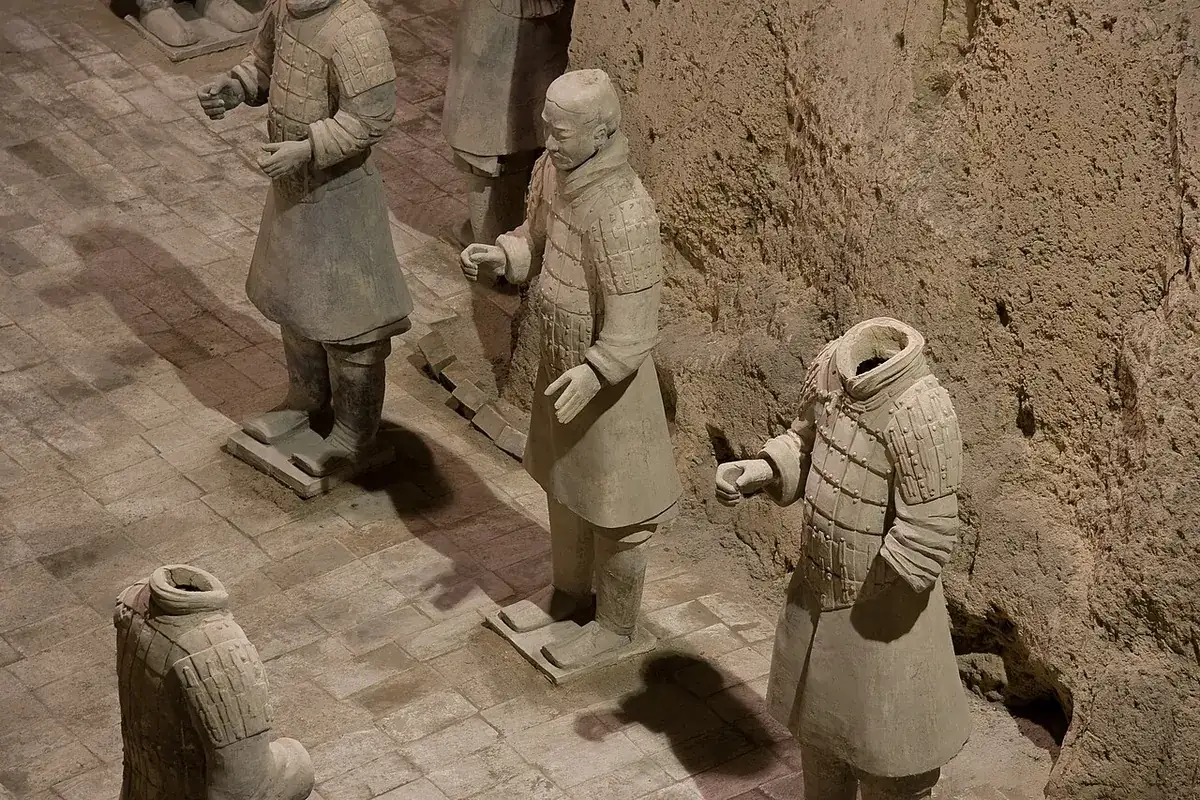
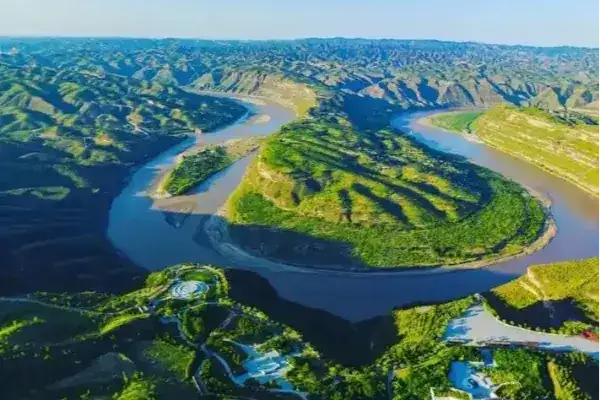
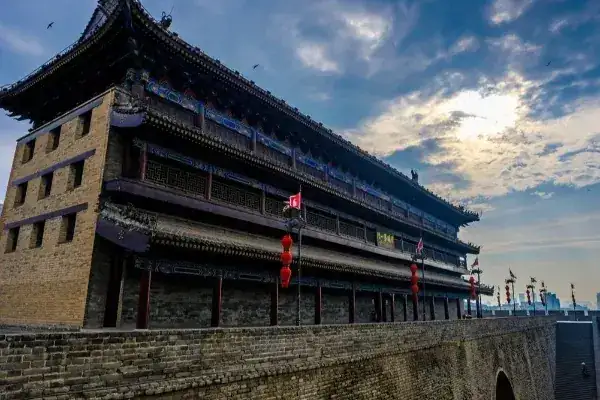
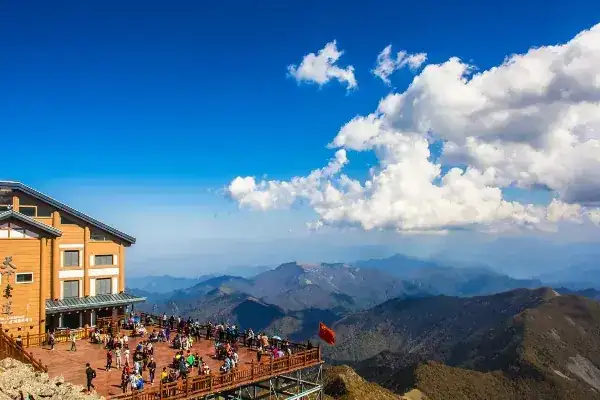
Traveller discussion
Start the conversation with a helpful tip or a question.