
Chaozhou
ChaozhouChaozhou Municipality, abbreviated as "Chao" and also known as Fengcheng (Phoenix City), is a prefecture-level city in Guangdong Province and one of the four cities of the Chaoshan region. It is a renowned hometown of overseas Chine
Chaozhou
Chaozhou Municipality, abbreviated as "Chao" and also known as Fengcheng (Phoenix City), is a prefecture-level city in Guangdong Province and one of the four cities of the Chaoshan region. It is a renowned hometown of overseas Chinese and a gateway city of eastern Guangdong. Located at the easternmost point of Guangdong Province, it administers three districts and counties: Xiangqiao, Chao'an, and Raoping, with a land area of 3,160 square kilometers. The permanent resident population is 2.576 million, with approximately 2.7 million Chaozhou expatriates abroad. In 413 AD, the Chaozhou area first established a commandery-level administration. In 591 AD during the Sui Dynasty, Yi'an Commandery was reorganized into Chaozhou, from which the name derives. In 1991, Shantou Municipality was divided into three prefecture-level cities: Shantou, Chaozhou, and Jieyang, with Chaozhou elevated to prefecture-level city status. Chaozhou is an important revolutionary base, one of the birthplaces of Chaoshan culture, and a UNESCO City of Gastronomy. It holds 36 honors including National Famous Historical and Cultural City and China's Porcelain Capital. In 2025, Chaozhou's regional GDP reached 145.217 billion CNY (approximately $20.4 billion USD), up 4.7% year-on-year at constant prices.
Etymology
In 591 AD, Chaozhou was established within Yi'an Commandery, marking the origin of the name. The name derives from its proximity to the South China Sea, meaning "the isle of tides, where tidal waters ebb and flow."
Historical Evolution
Pre-Qin Period
Archaeological evidence shows human habitation in the Chaozhou area dating back over 10,000 years. Around 8,000 years ago, ancient humans lived on this land. During the Shang and Zhou dynasties, the "Fubin people" created the Fubin Culture, marking Chaozhou's entry into the Bronze Age and agricultural civilization.
Qin, Han to Southern and Northern Dynasties
In 214 BC, the Qin Dynasty established Jieyang County under Nanhai Commandery, the earliest administrative division in eastern Guangdong. In 204 BC, Zhao Tuo established the Nanyue Kingdom. In 111 BC, Emperor Wu of Han conquered Nanyue. In 331 AD, the Eastern Jin Dynasty created Haiyang County. In 413 AD, Yi'an Commandery was established, governing five counties. The Liang Dynasty later established Yingzhou, from which the alternative name "Guying" derives.
Sui, Tang to Song and Yuan Periods
In 591 AD, Chaozhou was formally established. During the Tang Dynasty, the name was briefly changed to Chaoyang Commandery (742–758 AD). In 819 AD, the literary figure Han Yu was demoted to serve as prefect of Chaozhou, where he restored the prefectural school, funded education, and organized crocodile-clearing campaigns. In 1279 AD, Chaozhou came under Yuan rule and was redesignated as Chaozhou Circuit.
Ming and Qing Dynasties
In 1369 AD, the Ming Dynasty changed Chaozhou Circuit to Chaozhou Prefecture. New counties were progressively established, growing from 4 to 11 by the late Ming. In 1476 AD, Raoping County was established. The Qing Dynasty maintained this system, with 9 counties by 1738 AD, unchanged until the dynasty's end.
Modern Period
In 1858, following the Second Opium War, Shantou Port was designated as a treaty port, officially opening in 1860. As Shantou grew into eastern Guangdong's political and economic center, the term "Chaoshan" emerged. In 1914, Haiyang County was renamed Chao'an County. In 1927, the East River Revolutionary Base Area was established, commanding the Red Eleventh Army with 3,000 troops and a soviet population of 2 million. A secret red transportation line operated from Shanghai through Hong Kong, Shantou, Chao'an, and Dabu to the Central Soviet Area, escorting over 200 party leaders including Zhou Enlai and Liu Shaoqi.
Modern Era
After 1949, the Chaozhou area successively belonged to the Chaoshan Special District, Shantou Special District, and Shantou Municipality. In 1953, Chaozhou City was established. In 1958, it was merged into Chao'an County. In 1979, Chaozhou City was restored. In 1983, Chao'an County was merged into Chaozhou City. In December 1991, a major reorganization divided Shantou into three prefecture-level cities, with Chaozhou elevated to prefecture-level status, governing Xiangqiao District, Chao'an County, and Raoping County. In 2013, Chao'an County became Chao'an District. In October 2023, Fengxi Township was restored under Chao'an District.
Physical Geography
Chaozhou is located at the easternmost point of Guangdong Province, in the middle and lower reaches of the Hanjiang River, with coordinates from 116°20′E to 117°11′E and 23°26′N to 24°14′N. As of March 2024, it covers 3,693 square kilometers including 533 square kilometers of sea area, with a 136-kilometer coastline. The city has a subtropical marine monsoon climate with an annual average temperature of 21.7°C and rainfall of 1,714.4 millimeters. Mountains and hills account for 65% of the total area, with the Fenghuang Mountains' main peak reaching 1,497.8 meters, the city's highest. The water system centers on the Hanjiang River system. Chaozhou is one of South China's most seismically active areas, designated as a seismic intensity zone of 8 degrees.
Natural Disasters
Chaozhou is frequently struck by typhoons. From 1957 to 1988, 75 typhoons affected the city, averaging 2.4 per year. In 2022, Typhoon Chaba caused tornadoes (EF1–EF2) and waterlogging.
Natural Resources
Chaozhou has abundant water resources, with exploitable amounts of 1.13 billion cubic meters. The Third National Land Survey recorded 18,378.64 hectares of cultivated land and 156,723.35 hectares of forest. As of 2023, 26 mineral types have been discovered across 87 sites. The forest coverage rate is 59.48%. The city has 314 terrestrial wildlife species including 10 national first-class protected species, and 2,093 wild plant species. There are 32 nature protected areas covering 21,400 hectares.
Marine Resources
Raoping County is Chaozhou's only coastal county, home to Chaozhou Port, a national first-class open port. 471 fish species have been identified in Raoping waters, with four major aquaculture bases: marine cage farming, prawns, eels, and shellfish.
Administrative Divisions
As of March 2024, Chaozhou administers 2 districts and 1 county: Xiangqiao District, Chao'an District, and Raoping County. The municipal government is located on Fengchun Road.
Population
The Seventh National Census recorded a permanent resident population of 2,568,387, with males at 50.85%. The population aged 60 and above accounted for 19.17%, reflecting an aging trend. As of the end of 2023, the registered population was 2.7367 million with 2.5762 million permanent residents (65.1% urbanization). The She people are the only indigenous minority, with 2,871 registered She people. The Chaozhou dialect (Teochew) belongs to the Southern Min dialect subgroup, has 8 tones, and preserves archaic phonological features absent in modern Mandarin.
Religion
As of 2005, Chaozhou had Buddhism, Catholicism, and Christianity, with 181 religious venues and 47,847 believers. Chao'an District maintained 55 registered venues as of 2019.
Politics
The Chaozhou Municipal People's Government administers the city under the standard Chinese governance structure with the Municipal Party Committee and Municipal People's Congress.
Economy
Since the Eastern Jin Dynasty, Chaozhou has been the economic center of eastern Guangdong. The city has nine strategic industrial clusters including frontier new materials, clean energy, offshore wind power, smart sanitary ware, biomedicine and health, and modern logistics. In 2024, Chaozhou achieved a regional GDP of 140.283 billion CNY (approximately $19.7 billion USD), up 3.7%. Per capita disposable income was 29,446 CNY (approximately $4,130 USD). Dancong tea is the primary agricultural pillar, with 276,900 mu of tea plantations producing 32,600 tons valued at 8.195 billion CNY (approximately $1.15 billion USD). Chaozhou is the world's largest daily-use porcelain export base, with industrial technology upgrade investment surging 57.0% in 2024. Total import and export volume reached 28.295 billion CNY (approximately $3.97 billion USD), up 11.7%. Financial institution deposits reached 218.321 billion CNY (approximately $30.6 billion USD) and loans 93.962 billion CNY (approximately $13.2 billion USD).
Tertiary Industry
Chaozhou's cultural-tourism integration continues strengthening. In 2023, Chaozhou was designated a UNESCO City of Gastronomy and included in the second batch of National Cultural Heritage Protection and Utilization Demonstration Zones. During the 2024 Spring Festival, the city received 5.13 million tourists. Total retail sales reached 52.250 billion CNY (approximately $7.33 billion USD), up 2.3%.
Economic Development Zones
Chaozhou New District covers 13 sub-districts across all three districts, with its core being the Hanjiang River New City. As of 2023, it had 49 key projects with total investment of approximately 51.22 billion CNY (approximately $7.18 billion USD).
Key Enterprises
Huafeng Group, founded in 1998, is a leading LPG importer and distributor in China, ranked among China's top 500 petrochemical enterprises. Guangdong Hybribio Biotechnology, founded in 2003, is a domestic developer of nucleic acid molecular diagnostic products and co-established the China HPV Database.
Social Services
As of 2023, Chaozhou had 1 higher education institution, 33 senior high schools, 110 junior high schools, 495 primary schools, and 698 kindergartens. The city had 2,205 medical institutions with 7,986 beds. Chaozhou Central Hospital, founded in 1922, is the city's only Grade III Class A comprehensive hospital. The city granted 8,850 patents in 2023 and had 266 high-tech enterprises. It has 4 public libraries, 11 museums, and 17 national-level intangible cultural heritage projects.
Social Security
As of 2023, 350,900 people participated in urban employee basic pension insurance and 1.1432 million in urban-rural resident pension insurance. The city had 3 social welfare homes and 14 township-run senior care homes.
Transportation
Chaozhou is an important node on the ancient Maritime Silk Road, with 4 expressways, 17 national and provincial highways, 3 railway lines, and 4 railway stations. Chaozhou Port has 2 coastal port areas with 14 berths. In 2023, freight transport totaled 26.3503 million tons and port cargo throughput 16.3325 million tons. Highway mileage reached 5,538 kilometers, ranking third in density in Guangdong. Jieyang Chaoshan Airport, a 4E-level regional hub, is 17 kilometers from downtown.
Public Transit
In 2021, bus ridership was 9.48 million passenger trips across 83 routes totaling approximately 1,300 kilometers. The city has 12 bus terminals and 20 off-street public parking lots with approximately 4,117 spaces.
Culture and Humanities
Chaozhou has over 1,600 years of history, known as the "Famous State of Mountains and Seas" and "Showcase of Central Plains Classical Culture." Chaozhou cuisine originated in the Tang Dynasty and reached its zenith in the Ming Dynasty; in 2023, Chaozhou became a UNESCO City of Gastronomy. Chaozhou Gongfu tea, a "living fossil" of ancient Chinese tea culture, was inscribed on the national intangible cultural heritage list in 2008. Chaoshan folk customs preserve traditions including the Yulan Festival and deity processions, with the largest held at Qinglong Temple. Traditional architecture follows the principle "Chaozhou houses are built like imperial palaces." Chaozhou ceramics, produced since the Tang Dynasty, are famed as "white as jade, thin as paper, bright as a mirror, resonant as a chime." Chaozhou embroidery is one of China's four famous embroidery styles. Teochew Opera, formed in the Ming Dynasty, is one of China's oldest local opera genres. The white champaca is the city flower and the royal poinciana the city tree.
Intangible Cultural Heritage
As of March 2024, Chaozhou has 139 municipal-level and above intangible cultural heritage projects, including 17 national-level (ranking 2nd in the province) and 47 provincial-level, with 22 national-level and 77 provincial-level representative inheritors.
Scenic Spots
Chaozhou has 1,345 immovable cultural relics including 9 national key cultural heritage protection units. The city has developed six tourism brands: ancient city, rural, ecological, coastal, red (revolutionary), and industrial tourism. There are 14 AAA-level and above scenic spots, 11 star-rated hotels, 62 travel agencies, and 212 guesthouses.
Major Attractions
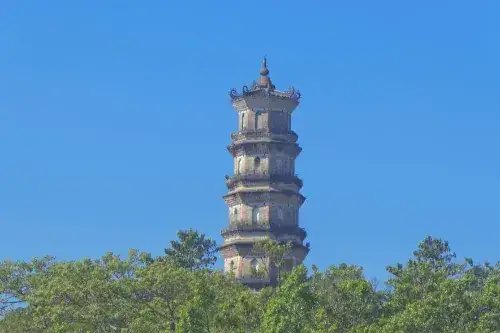
Guangji Bridge, spanning the Hanjiang River, was first built in 1171 AD and by 1530 AD formed the unique "eighteen shuttle boats and twenty-four piers" pattern combining beam, pontoon, and arch bridge elements. It pioneered the world's opening-and-closing bridge design. The Han Yu Memorial Shrine, built in 999 AD, is China's oldest and best-preserved memorial to the Tang Dynasty literary figure Han Yu. Kaiyuan Temple and Archway Street are among the city's most iconic cultural landmarks. The Green Sun Ecological Tourism Resort and the Danfu Collection are notable AAAA-level attractions. Xiangpu Village, founded in 1262 AD, is one of eastern Guangdong's best-preserved ancient fortified villages. The Maozhi Meeting Memorial Hall commemorates the historically significant Maozhi Meeting during the Nanchang Uprising.
International Exchange
Chaozhou has sister city relationships with Bangkok (2005), Paris's 13th arrondissement (2009), San Francisco (2013), and Yeoju, South Korea (2024). Domestically, it partnered with Xiamen (2013) and Liuzhou (2018).
Notable Figures
Chaozhou has produced numerous historical figures, including Han Yu, the Tang Dynasty literary giant who served as prefect, and Chen Yuanong, the Tang Dynasty general who pioneered the development of Zhangzhou.
Honors and Titles
Chaozhou holds 36 city honors including National Famous Historical and Cultural City, China's Porcelain Capital, and China's first Capital of Arts and Crafts. In 2023, it was designated a UNESCO City of Gastronomy, and the Chaozhou Ancient City was selected for the second batch of National Cultural Heritage Protection and Utilization Demonstration Zones.
Travel information can change. Check current opening hours, reservations and entry requirements before you travel.
Traveller discussion
Start the conversation with a helpful tip or a question.