
Zhongshan City
Zhongshan CityZhongshan City, formerly known as "Xiangshan," is a prefecture-level city in Guangdong Province, China. Located in the central-southern part of the province at the Pearl River outlet, it was known as one of the "Four Little Ti
Zhongshan City
Zhongshan City, formerly known as "Xiangshan," is a prefecture-level city in Guangdong Province, China. Located in the central-southern part of the province at the Pearl River outlet, it was known as one of the "Four Little Tigers of Guangdong" in the 1980s-90s. It is a central city of the Pearl River Delta, an important node city of the Guangdong-Hong Kong-Macao Greater Bay Area, and part of the western Pearl River Estuary metropolitan circle. Zhongshan's pillar industries include electronic information, electrical machinery, and textile/apparel; emerging industries focus on equipment manufacturing; specialty industries include food/beverages and packaging/printing. It borders Guangzhou's Nansha District and Foshan's Shunde District to the north, Jiangmen and Zhuhai to the west and southeast, and faces Shenzhen and Hong Kong across the Lingdingyang. The administrative area is 1,783.85 square kilometers with 15 towns and 8 sub-districts. As of end-2025, the permanent population was 4.5723 million. The terrain is predominantly plains, higher in the center and lower at the edges, with subtropical monsoon climate and a dense river network of 13 external rivers and 1,041 internal waterways. Originally Xiangshan County established in 1152 under Guangzhou Prefecture, it was renamed Zhongshan in 1925 to commemorate Sun Yat-sen and elevated to a prefecture-level city in 1988. Zhongshan boasts deep cultural heritage—Xiangshan culture embodies the main features of Cantonese (Guangfu) culture—and is the birthplace of Sun Yat-sen and other historical figures. In 2011, it was designated a National Famous Historical and Cultural City. In 2025, the city achieved a regional GDP of 426.056 billion yuan (approximately US$60 billion), up 3.8% year-on-year.
Name Evolution
Anciently called Xiangshan, the area was an isolated island in the Lingdingyang at the Pearl River mouth. The Song Dynasty compendium Taiping Huanyu Ji states: "It abounds in divine flowers, hence the name Xiangshan (Fragrant Mountain)." It was also named for its abundant agarwood (chenxiang) production. During the Southern Song Dynasty, agarwood from Wugui Mountain was a tribute item and important diplomatic gift, requiring port transshipment—giving rise to fragrance-related place names including Xiangzhou, Xiangjiang, and Xianggang (Hong Kong). In 1925, it was renamed Zhongshan in memory of Sun Yat-sen.
History
Pre-Qin Period
Ancient Xiangshan was an isolated island whose territory covered the mountainous area around Wugui Mountain and Fenghuang Mountain, from the Shiqi urban area to Macao. Over 5,000 years ago, indigenous Yue people fished and hunted here. During the Spring and Autumn and Warring States periods, it belonged to the Bai Yue maritime islands, inhabited by the Nanyue people including ancestors of the Zhuang, She, and Li ethnic groups.
Qin, Han to Northern and Southern Dynasties
In 214 BCE, the area belonged to Nanhai Commandery. In 111 BCE, it became part of Panyu County. In 331 CE, it came under Dongguan Commandery, and during the Northern and Southern Dynasties, was transferred to Dongguan Prefecture.
Sui, Tang to Song, Yuan, Ming, Qing Dynasties
In 590 CE, the area came under Bao'an County. In 757 CE, Dongguan County established Wenshun Township and Xiangshan Town on the island. By 1082, Xiangshan Fort was established under Dongguan. In 1152, Xiangshan was upgraded to a county under Guangzhou, maintained through the Yuan, Ming, and Qing dynasties.
Republic of China Period
In 1912, Guangdong abolished Guangzhou Prefecture, and Xiangshan County came under direct provincial jurisdiction. After Sun Yat-sen's death on March 12, 1925, the county was renamed Zhongshan on April 15 that year. In 1929, it was designated a national model county until 1937.
After the Founding of the People's Republic of China
After October 1949, it remained Zhongshan County under Foshan Area jurisdiction. Administrative changes followed through the 1950s. In September 1980, the county government was restored. On December 22, 1983, the State Council approved establishing Zhongshan as a county-level city, and on January 7, 1988, elevated it to a prefecture-level city under Guangdong Province.
Natural Geography
Location and Boundaries
Located between 22°11′-22°47′N and 113°09′-113°46′E, the city covers 1,784 square kilometers. The city center is 86 km north of Guangzhou, 65 km southeast to Macao, and 52 nautical miles by water to Hong Kong.
Climate
Subtropical monsoon climate with abundant sunshine (1,755 hours/year average) and rainfall. Average annual temperature is 23°C (January 14.6°C, July 29°C). Extremes: 39.1°C (2005) and -1.3°C (1955). Annual precipitation averages 1,927.9 mm, concentrated April-September.
Geology
The geological structure belongs to the central Guangdong depression of the South China fold system, with exposed strata dominated by Cenozoic Quaternary deposits and some Paleozoic and Mesozoic strata.
Topography and Landforms
Terrain resembles a raised fist—narrow north-south, short east-west. Plains cover 68%, mountains 25%, rivers 7%. Wugui Mountain, the principal range, covers 300 square kilometers with its peak at 531 meters—the city's highest point.
Hydrology
Three of the Pearl River's eight major outlets—Modao Gate, Heng Gate, and Hongqi Li—pass through the city. There are 13 external rivers, 1,041 internal waterways (2,016 km total), and 54 reservoirs with 88.6 million cubic meters total capacity.
Soil
Five soil types, 10 subtypes, 23 genera, and 36 species. Main type is lateritic red earth. Plains and tidal flats account for 68% of the area.
Natural Disasters
Main hazards: typhoons, frost, cold rain, torrential rain, with secondary landslides and waterlogging. As of April 2018, there were 60 collapse sites and 69 landslide sites, threatening 2,062 people with potential losses of 368.1 million yuan (approximately US$51.8 million). In 2023, Typhoon Sula brought up to 209.8 mm accumulated rainfall.
Natural Resources
Water Resources
In 2023, total water resources were 1.877 billion cubic meters (1.817 billion surface, 278 million groundwater).
Land Resources
As of end-2022: 110,800 mu cultivated land, 258,300 mu orchard land, 461,100 mu forest land, 952,000 mu urban/industrial land, and 718,300 mu water area.
Mineral Resources
Seven mineral types identified; only granite, sand, and refractory clay are developed. Peat in Zhangjiabian has ~10% oil content. Building materials include oyster shells, granite from Wugui Mountain, and kaolinite.
Biological Resources
298 wild terrestrial vertebrate species (including 45 nationally protected species) and 1,751 vascular plant species. Wugui Mountain hosts 40,000 wild agarwood trees—about 50% of China's total. Zhongshan was named "China's Hometown of Agarwood" in 2011.
Solar Energy Resources
Average annual solar radiation of 445,155.4 joules/cm² makes Zhongshan one of Guangdong's richer solar radiation areas.
Administrative Divisions
15 towns, 8 sub-districts, 1 national-level development zone (Zhongshan Torch High-tech Industrial Development Zone), 1 economic cooperation zone (Cuiheng New Area), 150 villages, and 131 communities. Government seat: No. 1 Songyuan Road, East District.
Population
Population Size
End-2025 permanent population: 4.5723 million, urbanization rate 87.95%, birth rate 7.35‰, death rate 3.93‰, natural growth 3.42‰. End-2024 registered (hukou) population: 2.2211 million.
Ethnic Groups
Predominantly Han (4.0808 million in 2020), with 51 ethnic minorities totaling 336,500. The largest is Zhuang (186,900), followed by Yao, Tujia, Miao, Dong, and Bouyei.
Language
Cantonese (Yue) dialect spoken by 84% of the population, including Shiqi, Shatian, Sanjiao, and Guzhen sub-dialects. Min dialect in Shaxi, Dachong, and Sanxiang. Hakka in Wugui Mountain Sub-district, Shenwan, and southern Tanzhou.
Religious Beliefs
Three main religions: Buddhism, Catholicism, and Christianity. Daoist influence permeates folk shrine and funeral customs. Religious activities resumed from 1979 after the Cultural Revolution.
Politics
Economy
Overview
One of the Greater Bay Area's "9+2" cities. Pillar industries: electronic information, electrical machinery, textile/apparel. In 2025, regional GDP reached 426.056 billion yuan (approximately US$60 billion), up 3.8%. In 2024: primary industry 9.6 billion yuan (approximately US$1.35 billion, +2.6%), secondary industry 212.414 billion yuan (approximately US$29.9 billion, +6.0%), tertiary industry 192.31 billion yuan (approximately US$27.1 billion, +1.3%).
Primary Industry
Agriculture centers on rice, with cash crops including vegetables, fruits, and ornamental plants. Aquaculture features grass carp, snakehead, and whiteleg shrimp. In 2024, total agricultural output value was 15.733 billion yuan (approximately US$2.2 billion, +3.3%), with aquatic products reaching 418,300 tons.
Secondary Industry
In 2024, industrial value-added above designated size grew 5.4%. Advanced manufacturing grew 6.6% (51.2% share), high-tech manufacturing grew 10.8% (16.4% share).
Tertiary Industry
The information industry is a key pillar. January-November 2024 service enterprise revenue grew 3.3%, with internet services up 56.4%. Retail sales grew 0.5%; fixed-asset investment declined 2.6% while industrial investment grew 10.9%.
Social Services
Science and Technology
End-2023: 39,700 patent grants (including 2,921 invention patents, +50.6%), 186 PCT applications. End-2022: ~2,864 high-tech enterprises, 378 provincial and 1,024 municipal R&D centers.
Education
End-2023: 56,900 higher education students, 211,300 secondary school students, 378,200 primary students. Primary enrollment rate 100%, college entrance exam admission rate 96.9%.
Culture
11 municipal cultural/heritage institutions, 1 public library (7.21 million volumes). The Zhongshan Memorial Library (est. 1935), a national first-class library, reopened in 2019 with a 482 million yuan (approximately US$67.9 million) new facility of 72,067 square meters. The Sun Yat-sen's Former Residence Memorial Museum in Cuiheng Village (est. 1956) is a national first-class museum and AAAAA attraction.
Healthcare
1,517 medical institutions including 69 hospitals (12 tertiary, 25 secondary), 31,855 health personnel, and 16,683 beds.
Sports
10,888 sports venues. Athletes won 132 gold, 113 silver, 150 bronze medals in 94 competitions.
Environmental Protection
1,761 km of new sewage pipelines built in 2023; treatment capacity raised to 2.165 million tons/day. Air quality ranked 15th among 168 cities nationwide. Sponge city construction received the province's only Grade-A rating.
Social Security
End-2023: 2.0253 million in urban pension insurance, 1.9978 million in basic medical insurance, 1.9415 million in work injury insurance.
Transportation
Overview
At the Greater Bay Area's geometric center with four ports (Zhongshan, Xiaolan, Shenwan, Huangpu). Container throughput 1.13 million TEUs—Zhongshan Port ranks national top 10. Six railway stations serve the city.
Highways
"Four-vertical, five-horizontal" expressway network. Total highway mileage 3,307.4 km (density 185.4 km/100 km²). July 2024-May 2025: 25.21 million tourist visits (+26.94%), tourism revenue 21.644 billion yuan (approximately US$3.0 billion, +23.47%).
Railways
Served by Shenzhen-Jiangmen Railway and Guangzhou-Zhongshan-Zhuhai-Macao High-Speed Railway. Zhongshan Station opened January 7, 2011, on the Guangzhou-Zhuhai Intercity Railway.
Water Transport
"One port, five areas" pattern. Zhongshan Port is a national Class I port with feeder relationships to three international hub ports.
Public Transportation
"Public transit priority" strategy: 17 rapid transit lines, 20 express lines, 600 new electric buses, 900 smart shelters. Cross-city routes planned to Shenzhen.
Historical Culture
Overview
A National Famous Historical and Cultural City. Xiangshan culture embodies Cantonese (Guangfu) culture's main features. The city has 5 national intangible heritage items, 3 national key heritage sites, and 22 provincial sites. Cantonese immigrants entered the Pearl River Delta via Zhuji Alley (Nanxiong) during Tang-Song times. Xiangshan produced 138 jinshi scholars through the Qing Dynasty. Notable cultural traditions include wok-ear architecture, the Xiaolan Chrysanthemum Fair (since 1814), the mulberry-dike-fish-pond farming system, the Lingnan School of Painting, piaose parades, the Drunken Dragon dance, and Cantonese opera.
Regional Symbols
City flower: chrysanthemum. City tree: phoenix tree (Delonix regia), designated December 19, 2016, symbolizing passionate aspiration and heroic spirit.
Cultural Heritage Sites
National key sites: Sun Yat-sen's Former Residence, Chadong Chen Family Ancestral Hall Complex, former Zhongshan Memorial Middle School. Provincial sites include residences of Lu Haodong, Yang Yin, and Cheng Junhai.
Intangible Cultural Heritage
Five national items: Zhongshan Saltwater Songs, Dragon Dance (Drunken Dragon), Dragon Dance (Liufang Cloud Dragon), and the Xiaolan Chrysanthemum Fair.
Cuisine and Specialties
Birthplace of Cantonese cuisine; awarded "China's Cantonese Cuisine Famous City" in 2011. Signature dishes include braised squab, crispy grass carp, and "Nine Great Bowls" banquet. Huangpu Cured Meats (60+ varieties) is a national geographical indication product. Shiqi Squab dates to 1915. Zhu Xiang Yuan Almond Cake won gold at the 1935 Honolulu International Food Exhibition. Shaxi Herbal Tea (est. 1885) is a "China Time-Honored Brand" with national intangible heritage status.
Scenic Spots
Overview
29 national A-level attractions: 1 AAAAA, 3 AAAA, 23 AAA, 2 AA. Themes include Sun Yat-sen heritage, redwood culture, pottery, lantern culture, and folk customs.
Key Attractions
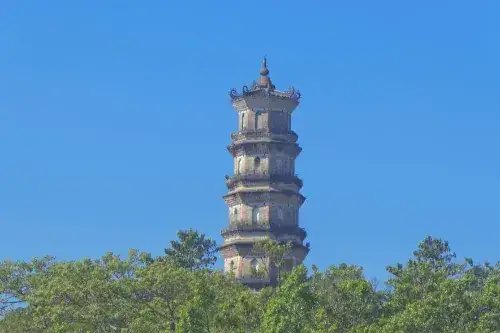
Sun Yat-sen's Former Residence (Cuiheng Village, 1892, 340 sqm) combines Chinese and Western styles; Sun Yat-sen was born here in 1866. The Zhongshan Museum (est. 1984, new facility 2022, 24,832 sqm) features garden-style layout. Zhongshan Zhan Garden (est. 1998) is Lingnan's largest private garden, famous for filial piety culture. Sun Wen West Road Pedestrian Street features "Nanyang style" colonial-arcade architecture, rated a national tourism block in 2023.
External Relations
Notable Figures
Major Honors
Travel information can change. Check current opening hours, reservations and entry requirements before you travel.
Traveller discussion
Start the conversation with a helpful tip or a question.