
Shanwei
ShanweiShanwei City is a prefecture-level city in Guangdong Province, located on the southeastern coast of Guangdong at the southern foot of Lianhua Mountain, on the eastern shore of the Pearl River Delta, and bordering the South China Sea
Shanwei
Shanwei City is a prefecture-level city in Guangdong Province, located on the southeastern coast of Guangdong at the southern foot of Lianhua Mountain, on the eastern shore of the Pearl River Delta, and bordering the South China Sea to the south, separated from Taiwan Province by a strip of water. It covers a total area of 4,865.05 square kilometers, with a mainland coastline of 455.2 kilometers (11.1% of the provincial total). The continental shelf area (within 200-meter depth) covers 23,900 square kilometers, 4.5 times the land area. As of the end of 2024, the resident population was 2.7011 million. Shanwei has a rich revolutionary history as the birthplace of China's first Soviet regime and the Hailufeng revolutionary base, one of 13 national red revolutionary bases. The city blends Minnan, Chaoshan, Hakka, and Cantonese cultures into the distinctive "Hailufeng culture." In 2025, Shanwei's regional GDP reached 154.63 billion yuan (approximately US$21.2 billion), a year-on-year increase of 4.2%.
Origin of the Name
The name "Shanwei" is often mistakenly assumed to relate to Shantou geographically. In fact, Shanwei was originally called "Shanmei" (meaning "beautiful beach heights"), as "shan" refers to the elevated part of a beach and the area was renowned for its beautiful coastal scenery. The similar pronunciation of "mei" (beautiful) and "wei" (tail) eventually led to the name "Shanwei." After the city's establishment, the homophone "shan" (good/kind) gave rise to the alternative name "Shanmei" (Kind and Beautiful).
Historical Development
Shanwei's territory historically belonged to Haifeng County. During the pre-Qin period, the area was inhabited by the Baiyue people. In 331 CE, Haifeng County was established under Dongguan Commandery. During the Sui and Tang dynasties, it belonged to Xunzhou. In the Song dynasty, over 200,000 people settled in the Hailufeng region, forming the Hakka ancestral settlement pattern. In 1731, Lufeng County was established by partitioning three districts from Haifeng. During the Republic of China period, Peng Pai led the Hailufeng peasant revolutionary movement, establishing China's first county-level Soviet regime in 1927. The Hailufeng people sustained armed struggle for seven years.
After the Founding of the PRC
After 1949, Haifeng and Lufeng were administered under various prefectures. On January 7, 1988, the State Council approved the establishment of Shanwei City as a prefecture-level city, incorporating the newly created Chengqu (urban district), Luhe County, and the existing Haifeng and Lufeng counties. In 1995, Lufeng was upgraded to a county-level city. In 2011, the Shenshan Special Cooperation Zone was established, and since 2017 it has been managed primarily by Shenzhen.
Administrative Divisions
As of July 2024, Shanwei City administers 1 district, 2 counties, and 1 county-level city (Lufeng), plus 4 management zones or functional areas.
Natural Geography
Shanwei is located on the southeastern coast of Guangdong at the southern foot of the Lianhua Mountain range, bordering Jieyang to the east, Huizhou to the west, the South China Sea to the south, and Meizhou and Heyuan to the north. The terrain features mountains in the north, hills and tablelands in the center, and coastal plains in the south. The highest peak is Lianhua Mountain at 1,337.3 meters. The city has a subtropical monsoon climate with distinct marine characteristics. Average annual temperatures range from 22.9 to 23.7 degrees Celsius, with abundant rainfall concentrated in the flood season (April to September). Major rivers include the Luohe, Huangjiang, Wukan, and Chishi river systems. Pinqing Lake, located in the city center, is the largest coastal lagoon on the Chinese mainland and the second largest in Asia.
Natural Disasters
Shanwei is one of Guangdong's three major rainstorm centers and is frequently affected by tropical cyclones. Seasonal droughts in autumn, winter, and spring are common. In 2022, the city experienced its strongest May rainfall in 20 years, with 16 rounds of heavy rain and 5 typhoons causing direct economic losses of 180.67 million yuan (approximately US$24.8 million).
Natural Resources
The city has abundant water, land, biological, and marine resources. Total water resources amount to 8.563 billion cubic meters. Forest coverage reaches 49% with 216,000 hectares of forest. Over 1,800 plant species and 328 vertebrate species have been recorded. Marine resources are particularly rich, with 860+ species of marine organisms and 881 islands (ranking first in the province). The coastline of 455.2 kilometers ranks second in Guangdong.
Mineral Resources
Shanwei is situated on the Wuyi metallogenic belt. Twenty-eight mineral types have been discovered across 69 locations. Major metallic minerals include tin (with 77,919 tons of identified reserves), copper, molybdenum, lead, zinc, and iron. Non-metallic resources include construction-grade granite (719 million cubic meters of reserves), kaolin, and ceramic clay. Geothermal and mineral water resources are also present.
Politics
The municipal government of Shanwei is led by the Mayor and the Communist Party of China Shanwei Municipal Committee Secretary. The city's political structure follows the standard Chinese prefecture-level governance framework.
Population
As of the end of 2024, the resident population was 2.7011 million, with an urbanization rate of 59.92%. The registered population was 3.5271 million. The city is home to 43 ethnic groups, with minority populations totaling approximately 11,000. The primary dialects are Fulao (spoken by about 2.65 million), Hakka (600,000), and Cantonese (40,000). Approximately 80% of residents can speak Mandarin.
Religion
Four religions are practiced in Shanwei: Buddhism, Taoism, Catholicism, and Christianity, each with a distinct history of dissemination across the city's districts and counties.
Economy
In 2024, Shanwei achieved a regional GDP of 150.089 billion yuan (approximately US$20.6 billion), growing 4.0% year-on-year. The industrial structure was 13.7:28.9:57.4 (primary:secondary:tertiary). Per capita GDP reached 55,667 yuan (approximately US$7,817). The primary industry (agriculture, forestry, animal husbandry, and fishery) generated 34.627 billion yuan in output. The secondary industry (industry and construction) grew 3.7%. The tertiary industry dominated at 86.154 billion yuan.
Tertiary Industry
The tertiary sector leads Shanwei's economy. In 2024, wholesale and retail trade reached 21.298 billion yuan, transportation and logistics grew 52.7%, and modern services reached 40.413 billion yuan. Total retail sales of consumer goods reached 50.577 billion yuan (approximately US$6.9 billion). Total imports and exports were 18.66 billion yuan. Financial institution deposits reached 121.014 billion yuan, with loans at 124.562 billion yuan.
Economic Functional Zones
The Shenshan Special Cooperation Zone, China's first special cooperation zone, is located in western Shanwei and managed by Shenzhen. Covering 460.41 square kilometers with a population of 66,800 (2021), it serves as the eastern gateway to the Guangdong-Hong Kong-Macao Greater Bay Area.
Social Affairs
Education
In 2024, total enrollment across all educational levels was 623,100 students. The primary school enrollment rate reached 100%, and the senior high school gross enrollment rate was 97.4%. South China Normal University's Shanwei Campus opened in September 2021, the first "Double First-Class" university campus in eastern, western, and northern Guangdong.
Science and Technology
In 2024, 2,457 patents were granted (down 15.0%), including 168 invention patents (up 42.4%). The city had 140 high-tech enterprises and 255 municipal enterprise R&D centers.
Culture
The city has 5 public libraries (1.52 million volumes), 8 museums, and 4 performing arts troupes. Radio and TV coverage both reach 99.88%. The Shanwei Museum, opened in 2020, covers 2,000 square meters with 1,200 square meters of exhibition space.
Healthcare
Shanwei has 1,618 health institutions including 46 hospitals and 1,068 village clinics, with 16,404 health professionals and 12,195 beds.
Environmental Protection
Shanwei's air quality ranked first in Guangdong for ten consecutive years, with 359 days of good air quality (98.1%) in 2024. The city has 37 sewage treatment plants with a daily capacity of 629,500 tons, and 100% harmless treatment of municipal solid waste.
Social Security
As of 2024, 361,300 people participated in urban employee pension insurance, and 2.3652 million in basic medical insurance. The city provided 561,100 medical assistance visits and maintained urban and rural minimum living standard programs serving 86,200 people.
Transportation
Shanwei's transportation network comprises railways, highways, and waterways. Total highway mileage reaches 6,040.41 kilometers, including 251.99 kilometers of expressways. The Xiamen-Shenzhen Railway (opened 2013) and the Guangzhou-Shantou and Shantou-Shantou high-speed railways (both opened 2023, designed for 350 km/h) serve the city. Major ports include Shanwei Port, one of China's first 16 ports opened to foreign trade. In 2024, freight transport reached 50.5893 million tons (up 34.6%) and passenger transport 10.5488 million (up 8.6%).
Public Transportation
The city operates 933 fully electric buses across 107 routes, totaling 2,902 kilometers, served by 18 charging stations.
Historical Culture
Shanwei is a crossroads of Minnan, Chaoshan, Hakka, and Cantonese cultures, forming the distinctive Hailufeng culture. It is known as the "Hometown of Chinese Folk Culture and Art." The city is divided into two cultural regions: the Hailufeng cultural area (city proper, Haifeng, and Lufeng, speaking Fulao) and the Hakka cultural area (Luhe County). The cuisine blends Chaoshan, Cantonese, and Hakka styles, featuring seafood, soups, and sweets. Notable local foods include caiguo (vegetable rice cakes), beef pancakes, mackerel balls, and Luhe lei cha (pounded tea). The city is a famous overseas Chinese hometown with over 1.4 million overseas Chinese and compatriots in Hong Kong, Macao, and Taiwan.
Intangible Cultural Heritage
Shanwei has 9 national-level and 30 provincial-level intangible cultural heritage items. Notable traditions include the Haifeng Qilin Dance, Rolling Golden Dragon Dance (originating from the Northern Song dynasty), and Zhengzi Opera (with over 600 years of history and 2,600+ traditional plays).
Scenic Spots
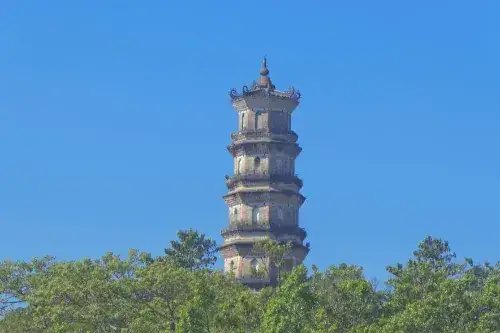
Shanwei boasts 17 national A-level tourist attractions. The "Eight Sceneries of Shanwei" include Red Square Spark, Xuanwu Mountain Echoes, Jinxiang Silver Beach, and Lianhua Mountain. The city received 4.8725 million overnight visitors with total tourism revenue of 6.71 billion yuan (approximately US$920 million) in 2021.
Major Attractions
Key attractions include:
- Fangfan Pavilion: Built in 1515 to commemorate Song Dynasty patriot Wen Tianxiang
- Jinxiang Silver Beach: An 8-kilometer S-shaped beach with unique rock formations and historical carvings
- Xuanwu Mountain Tourist Area (AAAA): Featuring Yuanshan Temple, built in 1127 CE, with over 1,000 cultural relics
- Red Bay Tourist Area (AAAA): Known as the "Qilin Horn of Eastern Guangdong," with 72 kilometers of coastline
- Red Palace and Red Square (AAAA): The site of China's first county-level Soviet government, established by Peng Pai in 1927
- Lianhua Mountain Resort (AAAA): Featuring the "First Peak of Eastern Guangdong" at 1,337.3 meters
- Fengshan Ancestral Temple (AAAA): Center of Mazu culture in eastern Guangdong, with a 16.83-meter Mazu stone statue
Famous People
Shanwei has produced many notable figures including Peng Pai (revolutionary leader), Xie Fei (statesman), Chen Jiongming (military leader), Ma Sicong (violinist), Peng Shilu (nuclear submarine designer), and Huang Xuhua (academician and submarine designer).
External Exchange
In 2009, Shanwei established a sister-city relationship with Deli Regency, North Sumatra Province, Indonesia. In 2022, a counterpart cooperation program between Shanwei and Shenzhen was established under the national revolutionary old area development plan.
Honorary Titles
Shanwei has been awarded the titles of "Hometown of Chinese Folk Culture and Art," "Hometown of Chinese Water Birds," and "Hometown of Chinese Green Plums," among others.
Travel information can change. Check current opening hours, reservations and entry requirements before you travel.
Traveller discussion
Start the conversation with a helpful tip or a question.