
Zhaoqing City
Zhaoqing CityZhaoqing City is a prefecture-level city in Guangdong Province, located in the central-western part of the province. It borders Foshan, Yunfu, and the Guangxi Zhuang Autonomous Region, with a total area of 14,900 square kilomet
Zhaoqing City
Zhaoqing City is a prefecture-level city in Guangdong Province, located in the central-western part of the province. It borders Foshan, Yunfu, and the Guangxi Zhuang Autonomous Region, with a total area of 14,900 square kilometers. As of late 2024, the permanent population was 4.1338 million. Zhaoqing has a recorded history of over 2,230 years, known as the "Capital of Chinese Inkstones." The Qin Dynasty established Sihui County here, one of Guangdong's four earliest counties. The Northern Song Dynasty (1118 CE) officially named it Zhaoqing Prefecture, meaning "the beginning of auspicious celebration." In 2025, Zhaoqing's GDP reached 297.484 billion yuan (approximately US$41.6 billion), up 3.1% at constant prices.
History
Human activity in the Zhaoqing area dates back approximately 140,000 years. In 214 BCE, the Qin conquered the Baiyue and established Sihui County. The Sui Dynasty (589 CE) created Duanzhou, and the Northern Song Dynasty (1118 CE) renamed it Zhaoqing Prefecture. During the Ming and Qing dynasties, Zhaoqing served as the seat of the Governor-General of Guangdong and Guangxi. In January 1988, Zhaoqing was established as a prefecture-level city. In 1994, four counties were separated to form the new Yunfu prefecture-level city.
Administrative Divisions
Zhaoqing administers 3 municipal districts (Duanzhou, Dinghu, Gaoyao), 4 counties (Guangning, Deqing, Fengkai, Huaiji), and 1 county-level city (Sihui), plus 3 functional zones: Zhaoqing High-tech Zone, Zhaoqing New Area, and the Guangdong-Guangxi Cooperation Special Pilot Zone.
Natural Geography
Location
Zhaoqing lies along the middle reaches of the Xijiang River, with the Tropic of Cancer crossing through its territory, between 22°47'-24°24'N and 111°21'-112°52'E. Total area is 14,900 square kilometers (8.31% of Guangdong).
Climate
Southern subtropical monsoon humid climate. Annual average temperature 21.8°C; annual rainfall 1,652.6 mm, with 77% concentrated in April-September.
Geology
Complex geological structure with strata from the Sinian (1.9 billion years ago) to the Quaternary. Major orogenies include Caledonian, Hercynian, Indosinian, and Yanshanian.
Topography
Mountainous landscape with mountains, basins, hills, and alluvial plains. Mountains and hills account for 81% of the area. Highest peak Dachou Ding reaches 1,626 meters. Karst formations create the Seven Star Crags and other features.
Hydrology
The Xijiang River and Beijiang River, both part of the Pearl River system, flow through the city. The Xijiang River's runoff ranks second nationally after the Yangtze. The city has 26 medium-sized reservoirs.
Soil
Nine soil types with lateritic red soil accounting for nearly 70% of the area, reflecting the subtropical climate and hilly terrain.
Natural Disasters
Major disasters include rainstorms, typhoons, strong convection, cold spells, and droughts. In April 2024, heavy rainfall impacted 7,224 people. In September 2024, Typhoon Yagi prompted emergency response measures.
Natural Resources
Water Resources
In 2022, total water resources amounted to 16.82 billion cubic meters, up 60.7% year-on-year. Per capita water usage was 408 cubic meters.
Land Resources
Total land area is 1,489,100 hectares, including 1,349,600 hectares of agricultural land and 110,020 hectares of forest.
Mineral Resources
Sixty mineral types discovered across 486 sites. Gold reserves (92.17 tonnes retained) account for over 70% of the provincial total. Niobium-tantalum reserves rank first in Guangdong.
Biological Resources
Zhaoqing is one of Guangdong's most biodiverse regions, with 3,134 vascular plant species and 440 terrestrial vertebrate species. The Dinghu Mountain Nature Reserve, established in 1956, was China's first nature reserve and a UNESCO World Biosphere Reserve since 1979.
Politics
Zhaoqing's governance follows the standard Chinese prefecture-level city administrative structure under the Municipal Party Committee and Municipal People's Government.
Population
Population Size
As of late 2023, permanent population was 4.1317 million, with 53.09% urbanization rate. Birth rate 8.2‰, death rate 7.3‰. Registered population was 4.5805 million in late 2024.
Ethnic Groups
Han Chinese constitute the majority. There are 39 ethnic minority groups with over 69,000 people. The Xiashuai Zhuang-Yao Ethnic Township in Huaiji County is the city's only ethnic township.
Languages
Cantonese is spoken by over 90% of the population. Hakka dialect is prevalent in Sihui. Some residents in Huaiji and Fengkai speak Zhuang and Biao languages. Mandarin is increasingly used in education.
Religious Beliefs
Major religions include Buddhism, Taoism, Catholicism, Christianity, and Islam. In 2022, there were 10 religious organizations, 40 temples and churches, and 38,900 believers.
Economy
Overview
Zhaoqing is the largest city by area in the Greater Bay Area and the only one bordering the greater southwest. The city has a "4+4" manufacturing system: four dominant industries (new energy vehicles, electronic information, biomedicine, metal processing) and four specialty industries. In 2024, GDP reached 291.785 billion yuan (approximately US$40.8 billion), up 2.2%. Per capita disposable income was 33,869 yuan (approximately US$4,740).
Primary Industry
A major agricultural city for the Greater Bay Area. In 2024, agriculture, forestry, animal husbandry, and fishery output reached 80.145 billion yuan (approximately US$11.2 billion), up 3.8%.
Secondary Industry
Hosts major projects including XPeng Motors and CATL. In 2024, advanced manufacturing grew 3.4% and high-tech manufacturing grew 0.7%, while overall industrial value-added declined 1.6%.
Tertiary Industry
Focuses on technology services, finance, creative design, and e-commerce. In 2024, consumer retail totaled 120.611 billion yuan (approximately US$16.9 billion), up 1.8%. General public budget revenue reached 18.895 billion yuan (approximately US$2.6 billion), up 7.0%.
Economic Functional Zones
Zhaoqing High-tech Zone (established 1998, 98 sq km) had a GDP of 26.908 billion yuan in 2023. Zhaoqing New Area (established 2012, 115 sq km) had a GDP of 8.588 billion yuan. The Guangdong-Guangxi Cooperation Special Pilot Zone focuses on new energy, electronics, and health food industries with 2,069 registered enterprises.
Transportation
Overview
Comprehensive network integrating railways, highways, aviation, and water transport. Cross-city commuting between Guangzhou-Foshan-Zhaoqing reached 418,000 people in 2024, ranking first in the Greater Bay Area.
Highways
14,378 km of roads including 695 km of expressways. In 2023, highway freight transport reached 77.49 million tonnes, up 9.8%.
Railways
Four operating lines: Nanning-Guangzhou and Guiyang-Guangzhou high-speed railways, Guangzhou-Foshan-Zhaoqing intercity, and Guangzhou-Maoming railway. New lines under construction will enable one-hour access to major Bay Area cities by 2027.
Aviation
Construction began in 2024 on the Pearl River Delta Hub (Guangzhou New) Airport, 22 km from the city center. Total investment: 41.939 billion yuan (approximately US$5.9 billion). Expected completion: 2027.
Water Transport
Zhaoqing Port is one of China's 28 major inland ports. The Xijiang River section meets Class I (3,000-tonne) standards. In 2023, waterway freight reached 22.63 million tonnes, and port throughput was 50.5 million tonnes.
Public Transportation
In 2023, the city added 2 micro-circulation bus routes and 136 customized routes. All 1,255 administrative villages now have bus access.
Social Services
Education
In 2023, 23 schools and 9 kindergartens were newly built or expanded. Nine-year compulsory education retention rate: 99.41%. High school gross enrollment rate: 96.90%.
Healthcare
3,267 medical institutions with 38,290 staff and 21,527 beds. Total outpatient visits reached 30.676 million. County-level medical communities ranked first provincially.
Science and Technology
7,348 patents granted in 2023 (up 18.4%), including 781 invention patents. The city has 1,516 high-tech enterprises and 249 provincial-level or above innovation platforms.
Culture
9 public libraries (all national Class I), 16 museums, and 10 broadcasting stations. Radio and TV coverage both 100%.
Sports
Hosted over 50 events including the National Athletics Grand Prix. Athletes won 17 national, 6 Asian, and 2 world championships.
Environmental Protection
Air quality met standards on 354 days (97.0%). All drinking water sources met Class III standards with 100% compliance. Urban sewage treatment rate: 99.69%.
Social Security
As of late 2023, 4.0156 million people participated in basic medical insurance and 2.612 million in pension insurance programs. The city had 89 residential social service institutions with 8,700 beds. Registered volunteers reached 886,000.
Culture and Humanities
Overview
Zhaoqing is a birthplace of Lingnan indigenous culture, Xijiang River culture, and Guangfu culture, and one of the earliest areas where Central Plains and Lingnan cultures converged.
Ancient Guangxin Culture
Guangxin (present-day Fengkai and Wuzhou) was a political and cultural center of Lingnan during the Han Dynasty, serving as a key intersection of the maritime and overland Silk Roads and the earliest hub connecting Lingnan with the Central Plains.
Xijiang River Culture
Characterized by the integration of indigenous and Central Plains cultures, Han and minority cultures, and mountain and waterway cultures. It developed with Southern Yue culture as its foundation and Central Plains culture as its dominant element.
Guangfu Culture
Formed in the Guangzhou Prefecture region by Han migrants who moved south through Zhuji Alley in Nanxiong during the Tang and Song dynasties. It is the most influential branch of Lingnan culture.
Ethnic Minority Culture
The Xiashuai Zhuang-Yao Ethnic Township features distinctive traditions including folk songs, spring ox dances, tea-picking dances, bamboo pole dances, and the Ox King Festival.
Cultural Relics
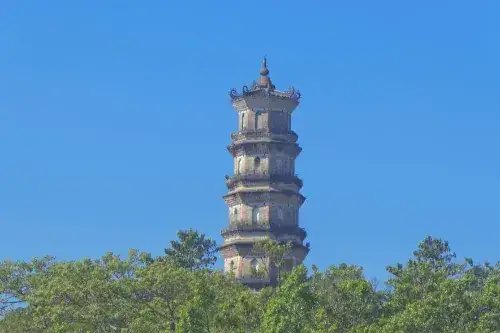
Zhaoqing has 2,539 registered immovable cultural relics (5th in the province), including 6 national-level sites. The Seven Star Crags Cliff Inscriptions (from 727 CE) are the best-preserved cliff inscription group in South China. The Song Dynasty City Wall (built 1053 CE, 2,801-meter circumference) is Guangdong's only fully preserved ancient city wall.
City Symbols
City tree: white orchid tree (Michelia alba). City flowers: lotus and frangipani. City bird: Hwamei (Garrulax canorus).
Scenic Spots
Overview
One of the first batch of China's Outstanding Tourism Cities, with over 300 cultural sites. As of July 2024: 3 5A-level attractions (Star Lake, Seven Star Crags, Dinghu Mountain), 8 4A-level, and 34 3A-level attractions.
Important Attractions
Key attractions include the Seven Star Crags (karst landscapes and cliff inscriptions), Dinghu Mountain (China's first nature reserve and UNESCO biosphere reserve), Star Lake (national wetland park), the Song Dynasty City Wall, and the Longmu Ancestral Temple. The Duan Inkstone, crafted in Zhaoqing for over 1,300 years, is renowned as the finest of all inkstones.
Cuisine and Specialties
Local specialties include Guangning wontons, Huaiji Gangping rice noodles, tea oil chicken, Zaocheng (stuffed glutinous rice dumplings), mountain stream fish, Deqing zhugao noodles, and Tanka rice cakes.
Notable Figures
Notable historical figures include Chen Qin and Chen Yuan (Han Dynasty scholars), Six Patriarch Huineng (founder of Southern Zen Buddhism), Bao Zheng (Song Dynasty paragon of integrity), and Matteo Ricci (who drew the first Chinese world map in Zhaoqing). Modern figures include Li Xiongcai (Lingnan painting master), Wu Dayou (father of Chinese physics), and Ye Ting, whose Independent Regiment was established in Zhaoqing as the first regular army directly led by the Chinese Communist Party.
Important Honors
Designated a National Famous Historical and Cultural City, National Civilized City, National Ecological Civilization Construction Demonstration City, and one of China's Top 100 Advanced Manufacturing Cities, recognized as the "Capital of Chinese Inkstones."
External Exchanges
Domestic Exchanges
Active exchanges with cities across China, particularly within the Greater Bay Area and Guangdong-Guangxi cooperation framework.
International Exchanges
Trade connections to Belt and Road Initiative countries and RCEP member states. In 2023, total import and export volume reached 37.198 billion yuan (approximately US$5.2 billion).
Travel information can change. Check current opening hours, reservations and entry requirements before you travel.
Traveller discussion
Start the conversation with a helpful tip or a question.