
Jiangmen City
Jiangmen CityJiangmen City, a prefecture-level city under Guangdong Province, also known as Wuyi (Five Counties) and Siyi (Four Counties), is located in the central-southern part of Guangdong Province in the lower reaches of the Xijiang Riv
Jiangmen City
Jiangmen City, a prefecture-level city under Guangdong Province, also known as Wuyi (Five Counties) and Siyi (Four Counties), is located in the central-southern part of Guangdong Province in the lower reaches of the Xijiang River and on the western bank of the Pearl River Delta. The terrain is low in the north and high in the west, dominated by low mountains and hills. It borders Zhongshan and Zhuhai to the east, Yangjiang to the west, Foshan and Yunfu to the north, and faces the South China Sea to the south, with a land area of 9,535 square kilometers and a maritime area of 4,880.47 square kilometers. As of March 2026, Jiangmen administers 3 districts and manages 4 county-level cities. As of the end of 2025, the permanent population was 4.8285 million. During the Zhizheng era of the Yuan Dynasty (1360–1370), a commercial market settlement formed on the western bank of the Xijiang River outlet, known as Jiangmen Market. In 1925, it became a province-administered city. In 1970, it was downgraded to a county-level city under Foshan's jurisdiction. In 1975, it was restored as a prefecture-level city. Jiangmen has a long history and profound cultural heritage, with its distinctive Wuyi culture and overseas Chinese hometown culture. Over 5.3 million overseas Chinese, compatriots from Hong Kong, Macao, and Taiwan are spread across 145 countries and regions worldwide, earning it the reputation as "China's Capital of Overseas Chinese." Jiangmen is an important gathering place for Cantonese people and a representative city of Cantonese culture, known as "China's Foremost Overseas Chinese Hometown." It is a key node city in the Guangdong-Hong Kong-Macao Greater Bay Area, an advanced manufacturing base, and a "new growth pole on the western bank of the Pearl River," serving as a vital corridor from the Greater Bay Area to western Guangdong and the greater southwest. The city boasts rich tourism resources, including the World Cultural Heritage Kaiping Diaolou and Ancient Villages, Bird Paradise immortalized by writer Ba Jin, Guifeng Mountain National Forest Park, Shangchuan and Xiachuan Islands among Guangdong's "Ten Most Beautiful Islands," Chikan Ancient Town as a "Famous Historical and Cultural Town of China," and Gulao Water Town as a "Lingnan Water Town." In 2023, it was classified as a Tier-3 city. In 2025, Jiangmen's regional GDP reached 429.4 billion yuan (approximately US$60.5 billion), growing 2.8%. The three-industry structural ratio was 8.7:43.1:48.2. Per capita GDP was 88,983 yuan (approximately US$12,458), up 2.7%.
History
The name Jiangmen first appeared in the early Ming Dynasty work Shupo Collection, in a preface for the "Jiangmen Farewell Painting" written by Li Zhen. During the late Yuan to early Ming Dynasty (c. 1360–1370), a commercial settlement formed on the western bank of the Xijiang River outlet, called Jiangmen Market. During the Wanli reign of the Ming Dynasty, it belonged to Xinhui County's Longxi Township. Under the Qing Dynasty, it was opened as a trading station for foreign vessels in 1897 and officially designated as a treaty port in 1902 with a customs house established, then known as Jiangmen Port.
During the Republic of China era, it became a province-administered city on November 26, 1925, was reorganized as a town under Xinhui County in 1931, and reverted to a town under Xinhui County's Second District in 1945. After the founding of the People's Republic of China, Jiangmen was liberated on October 23, 1949. It was established as a prefecture-level city in 1951, downgraded to county-level in 1958, reassigned to various prefectures, and restored as a prefecture-level city in 1966 and again in 1975. In 1983, Jiangmen adopted a city-administering-county system, overseeing five counties: Xinhui, Taishan, Kaiping, Enping, and Heshan. Between 1992 and 1994, these counties were successively reclassified as county-level cities under provincial jurisdiction, with the Guangdong Provincial Government entrusting Jiangmen to administer them. In 2002, Xinhui was converted from a city to a district.
Administrative Divisions
As of March 2026, Jiangmen administers 3 districts—Pengjiang, Jianghai, and Xinhui—and manages 4 county-level cities: Taishan, Kaiping, Heshan, and Enping. The municipal government is headquartered at No. 1 Baisha Avenue West, Pengjiang District.
Geography
Location and Boundaries
Jiangmen is located in the central-southern part of Guangdong Province, in the lower reaches of the Xijiang River and the western Pearl River Delta. It borders Shunde District of Foshan, Zhongshan, and Doumen District of Zhuhai to the east; Yangdong District and Yangchun of Yangjiang to the west; Xinxing County of Yunfu, Gaoming and Nanhai Districts of Foshan to the north; and faces the South China Sea to the south, adjacent to Hong Kong and Macao. The city has 561 islands with a total area of 249.971 square kilometers. The total area is 9,506.92 square kilometers, with a mainland coastline of 414.8 kilometers, approximately one-tenth of the provincial total.
Topography
The terrain is low in the north and high in the west, dominated by low mountains and hills covering over 4,400 square kilometers (46.8% of total land). The highest peak is Tianlu Mountain in the northwest at 1,250 meters. River alluvial and delta plains cover over 4,880 square kilometers (51.90%), mostly fertile farmland. The geological strata span from Sinian to Quaternary periods, with Quaternary strata being the most widely distributed.
Climate
Jiangmen has a subtropical monsoon climate with mild temperatures, abundant rainfall, and ample sunshine. The frost-free period exceeds 360 days with no snow year-round. The average annual temperature is approximately 22°C, with a 14–15°C difference between the coldest month (January) and hottest month (July). Annual accumulated temperature above 10°C exceeds 8,000°C, providing rich thermal resources.
Hydrology
Jiangmen's rivers belong to the Pearl River Delta and western Guangdong coastal river systems, with 25 rivers having catchment areas exceeding 100 square kilometers. The main rivers are the Xijiang and Tanjiang rivers. The Xijiang, a transit river in the northeast, has an average annual runoff of approximately 107.8 billion cubic meters. The Tanjiang originates from Niuweiling Mountain in Yangjiang, flows west to east through Enping, Kaiping, Taishan, Heshan, and Xinhui, and exits at Yamen, with a basin area of 6,026 square kilometers and a main stream length of 248 kilometers. The Jinjiang Reservoir, a large-scale reservoir, was built on the upper Tanjiang.
Natural Resources
Water Resources
Jiangmen's water resources exceed provincial and national averages, with an average annual rainfall of 2,078 mm (118.07% of the provincial average and 320.68% of the national average). The total water resource is 12 billion cubic meters. As of 2016, the city had 2,349 water storage projects with a total capacity of 2.462 billion cubic meters. The theoretical hydropower potential is 423,700 kilowatts, with 255 small hydropower stations built and a total installed capacity of 131,800 kilowatts.
Land Resources
Jiangmen's soils are predominantly lateritic red earth, with fertile alluvial plains in river valleys and deltas. As of 2016, total land area was 950,500 hectares, with construction land at 115,100 hectares (12.11%), agricultural land at 771,200 hectares (81.14%), and unused land at 64,200 hectares (6.75%).
Plant Resources
Jiangmen has 183 families, 618 genera, and 1,184 species of vascular plants, including nationally protected species such as purple bauhinia, white cinnamon, and Chinese fir. Forest coverage reaches 46.29% with timber volume of 22.74 million cubic meters.
Animal Resources
Jiangmen has over 100 species of mammals, 400+ bird species, 100+ snake species, and 200+ insect species. Twenty-four species are under national key protection, including the national first-class protected python and second-class protected pangolin, small civet, mandarin duck, goshawk, black-winged kite, and three-lined box turtle. The coastal waters are a major distribution area for mollusks and crustaceans in Guangdong Province.
Population
As of the end of 2025, Jiangmen's permanent population was 4.8285 million, with an urbanization rate of 69.99%, up 0.93 percentage points. The registered population was 4.0317 million. The city has 45 ethnic minorities, with the Zhuang, Tujia, and Miao being the most numerous, though their populations are relatively dispersed.
Politics
Current Leadership
The current municipal leadership comprises the Party Secretary, Mayor, and other senior officials of the Jiangmen Municipal People's Government.
Sister Cities
Jiangmen has established sister city relationships with six overseas cities, including Riverside (USA), Mesa (USA), Milpitas (USA), Oakland (USA), Ararat (Australia), and Honiara (Solomon Islands), with over 10 additional friendly exchange partner cities.
Economy
Overview
In 2025, Jiangmen's regional GDP reached 429.391 billion yuan (approximately US$60.5 billion), up 2.8%. The primary industry added value of 37.556 billion yuan (up 5.3%), secondary industry 185.068 billion yuan (up 1.5%), and tertiary industry 206.767 billion yuan (up 3.5%). The three-industry structural ratio was 8.7:43.1:48.2. Per capita GDP was 88,983 yuan (approximately US$12,458), up 2.7%. The city had 813,300 business entities, with 120,500 private enterprises and 668,500 individual businesses. Annual local general public budget revenue was 32.485 billion yuan (approximately US$4.6 billion) and expenditure 46.254 billion yuan (approximately US$6.5 billion). Fixed asset investment decreased 25.6% year-on-year, with industrial investment accounting for 58.8% of total fixed asset investment.
Primary Industry
In 2025, the total output value of agriculture, forestry, animal husbandry, and fishery was 69.07 billion yuan (approximately US$9.7 billion), up 5.8%. Grain production reached 1.015 million tons, fruit 594,000 tons (up 10.9%), and aquatic products 1.072 million tons (up 7.3%). Total meat production was 385,000 tons. The total agricultural machinery power was 1.94 million kilowatts at year-end.
Secondary Industry
In 2025, above-scale industrial enterprises numbered 3,870, with value-added growing 3.4%. Advanced manufacturing value-added grew 6.9%, accounting for 43.1% of above-scale industrial value-added. High-tech manufacturing grew 15.8%, and equipment manufacturing grew 13.6%. Total profits of above-scale industrial enterprises reached 22.492 billion yuan (approximately US$3.2 billion), up 37.7%. The construction industry achieved a total output value of 57.049 billion yuan, up 2.3%, with 432 qualified general contracting and professional contracting enterprises.
Tertiary Industry
In 2025, wholesale and retail trade added value of 25.999 billion yuan (up 3.0%), accommodation and catering 8.608 billion yuan (up 1.8%), finance 26.62 billion yuan (up 4.7%), and real estate 20.406 billion yuan (up 0.2%). Total retail sales of consumer goods reached 130.795 billion yuan (approximately US$18.4 billion), up 2.0%. Total import and export value was 197.77 billion yuan (approximately US$27.8 billion), up 3.2%, with exports of 169.17 billion yuan and imports of 28.6 billion yuan. Trade with Belt and Road partner countries reached 93.31 billion yuan, up 8.7%. Actual utilized foreign investment was 4.194 billion yuan. Financial institution deposits reached 807.882 billion yuan (approximately US$113.8 billion) and loans 682.887 billion yuan (approximately US$96.2 billion). The city had 16 listed companies with a market capitalization of 229.4 billion yuan. Tourism revenue was 32.685 billion yuan (approximately US$4.6 billion), with 28.6527 million visitor arrivals, up 12.5%.
Social Affairs
Education
As of 2025, higher education enrollment was 51,900 with 133,500 enrolled students and 54,000 graduates. Secondary schools had 332,500 students, primary schools 363,900 students, and kindergartens 112,700 children. Primary school enrollment rate was 100%, and junior high advancement rate was 97.91%.
Science and Technology
As of 2025, Jiangmen had 1,893 high-tech enterprises, 623 provincial-level innovation platforms, and 445 provincial engineering technology research centers. Valid invention patents totaled 9,505, with 14,084 patents authorized. Professional technical personnel numbered 286,400.
Cultural Affairs
Jiangmen has 8 public cultural centers, 8 public libraries with 5.342 million books, and 10 museums with 78,800 collections. Notable cultural venues include the Wuyi Overseas Chinese Museum, Wuyi Library, and Jiangmen Cultural Center. National first-class libraries include Wuyi Library, Pengjiang District Library, Xinhui Jingtang Library, Taishan Library, and Kaiping Library.
Healthcare
As of 2025, Jiangmen had 2,166 medical institutions including 60 hospitals, with 27,650 beds and 47,041 staff. There were 15,047 practicing (assistant) physicians and 19,213 registered nurses.
Sports
Jiangmen has 34 sports venues and 43 municipal sports associations. Athletes from Jiangmen won 1 championship, 6 runner-ups, and 1 third place in international competitions; 13 championships in domestic competitions; and 39 championships in provincial competitions. Annual sports lottery sales totaled 1.171 billion yuan.
Social Security
In 2025, 52,636 new urban jobs were created. Per capita disposable income was 44,524 yuan (approximately US$6,270), up 3.5%. Urban residents' per capita disposable income was 51,434 yuan, and rural residents' was 29,101 yuan. Per capita consumption expenditure was 28,136 yuan. Pension, unemployment, and work injury insurance funds had total revenue of 40.825 billion yuan (approximately US$5.7 billion). The city had 5 social welfare homes and 37 eldercare homes.
Environmental Protection
In 2025, Jiangmen's air quality compliance rate (AQI) reached 92.3%, the best since the implementation of new environmental quality standards in 2012. All air quality indicators met national secondary standards. All 15 surface water monitoring sections achieved excellent water quality, with 100% compliance for drinking water sources. Nearshore water quality excellent ratio reached 75.1%. Urban noise levels met national standards, with daytime regional environmental noise averaging 57.2 decibels. Urban sewage treatment capacity was 1.275 million tons per day, and municipal solid waste harmless treatment rate was 100%.
Transportation
Overview
Jiangmen is strategically positioned in the Greater Bay Area, approximately 100 km from both the Guangzhou-Foshan and Shenzhen-Hong Kong metropolitan areas. With the 2024 opening of the Shenzhen-Zhongshan Link and the Huangmaohai Cross-Sea Passage, travel time to Shenzhen, Hong Kong, and Macao is under one hour. In 2025, water and land freight volume was 158 million tons, and port cargo throughput was 97.15 million tons, up 3.6%.
Highways
Jiangmen has built 13 expressways totaling 616 km, enabling 60-minute access to Guangzhou and Macao, 45 minutes to Shenzhen, and 80 minutes to Hong Kong. Total road mileage is 10,345 km, with 681 km of expressways and a road density of 108 km per 100 square kilometers. Civilian motor vehicle ownership reached 1.2694 million, including 135,800 new energy vehicles (up 38.4%).
Railways
Jiangmen is a comprehensive transportation hub on the western Pearl River. Jiangmen Station is Guangdong's fourth-largest railway station with 8 platforms and 20 tracks, offering direct service to Beijing, Hong Kong, Wuhan, and Zhengzhou. Jiangmen North, Jiangmen South, and Dahuai stations serve freight. Total railway operating mileage is 220 km.
Shipping
Jiangmen has 282 commercial berths, including 6 berths of 10,000+ ton class and 2 berths of 50,000+ ton class. It operates 5 national first-class ports and 6 second-class ports, with major ports including Jiangmen Port, Xinhui Port, Taishan Port, and Enping Port. The city owns 253 commercial transport vessels.
Aviation
Jiangmen is within 90 minutes of five international airports. Two general aviation airports are planned during the 14th Five-Year Plan period, including Enping General Airport.
Public Transit
As of 2016, Jiangmen operated 1,274 buses across 228 routes, including 334 pure electric buses, 437 LNG clean-energy buses, and various hybrid models.
History and Culture
Overview
Jiangmen sits at the confluence of the Xijiang River and its tributary Pengjiang River. The hills of Penglai Mountain north of Pengjiang and Yandun Mountain to the south face each other like a gate, giving the city its name ("Jiangmen" meaning "river gate"). Historically under Xinhui County's jurisdiction, Jiangmen became a major commercial center in the Xijiang River basin during the early Ming Dynasty.
Jiangmen is an important gathering place for Cantonese people and a representative city of Cantonese culture. Its districts and county-level cities—Xinhui, Jianghai, Pengjiang, Taishan, Kaiping, Enping, and Heshan—all possess deep Cantonese cultural roots. Xinhui is a historically and culturally famous city in the Cantonese region. Taishan was the first port for Cantonese emigrants going abroad and is one of the birthplaces of Cantonese culture. Kaiping's history and culture share the same roots as Cantonese culture, and as the most famous overseas Chinese hometown, it became an important force for the overseas spread of Cantonese culture.
The Cantonese people were primarily formed by migrants from the Central Plains and Jiangnan regions who moved to the Pearl River Delta during the Tang and Song dynasties. Before the Battle of Yamen, branches of the Southern Song imperial Zhao family had already settled in the surrounding areas, giving rise to "imperial clan villages" such as Xialu Village and Cixi Village in Gujing Town, Xinhui District, and Fushi Village in Taishan. Historical records show that over more than 200 years between the Song and Yuan dynasties, 153 surnames from Zhuxi Alley migrated southward in over 130 waves. In the first year of the Shaoxing era of the Southern Song, Luo Gui led 97 families of 37 surnames from Zhuxi Alley to Liangxi Village in Pengjiang District, making it the "second Zhuxi Alley"—a key transit point for Central Plains migrants continuing to the Pearl River Delta and overseas.
The wok-ear house (huo'erwu) is a typical representative of Cantonese architecture, traditionally built only by families with scholarly or official merit. The Kaiping Diaolou, a distinctive type of Cantonese residential architecture, flourished in the 1920s with over 3,000 towers at its peak. Built by overseas Chinese returning with wealth to protect their families from bandits, these fortified towers represent a unique fusion of Chinese and Western architectural styles.
Jiangmen's cultural heritage encompasses the Lingnan qin (zither) school, the Lingnan painting school with deep ties to the Wuyi region, and Heshan lion dance art. The Jiangmen School, also known as the Lingnan School, was a philosophical school of mind founded by the renowned Ming Dynasty philosopher Chen Xianzhang, who was the only Guangdong scholar enshrined in the Confucian Temple. The region also preserves rich folk traditions including piaose (floating color parade), dragon boat racing dating to the Qing Dynasty, and various temple festivals such as the North Emperor Festival and Hongsheng Festival.
Dialects
The Jiangmen dialect, known as Siyi or Wuyi speech, belongs to the Cantonese dialect group and is a distinctive part of the overseas Chinese hometown culture. While Wuyi speech is prevalent in most areas, standard Cantonese (Guangzhou dialect) is commonly used in broadcasting and television. Mandarin has become increasingly common with economic development. Hakka dialect is used in Hakka communities in Heshan (Gonghe and Hecheng), parts of Xinhui's mountainous areas, Taishan (Chixi and Doushan), and Kaiping's northeastern Shuijing area.
Cultural Heritage
Jiangmen has 1,770 designated immovable cultural relics and 239 cultural heritage protection units at various levels, including 5 national-level and 50 provincial-level sites. There are 229 intangible cultural heritage projects, including 8 national-level and 26 provincial-level items. Xinhui palm-leaf craft, with over 1,600 years of history, was listed as a national intangible cultural heritage in 2008 and won a gold medal at the 1915 Panama Pacific International Exposition.
Cuisine and Specialties
Wuyi cuisine belongs to the Cantonese culinary tradition with its own distinctive characteristics. As an overseas Chinese hometown, Wuyi cuisine has significant international influence. Since 2018, Jiangmen has implemented the "Cantonese Chef" project and the "Wuyi Cuisine" Rainbow Plan. Notable specialties include Gujing Roast Goose from Xinhui's Gujing Town, a famous Cantonese dish with over 700 years of history, said to be made using a Southern Song imperial court recipe.
Tourist Attractions
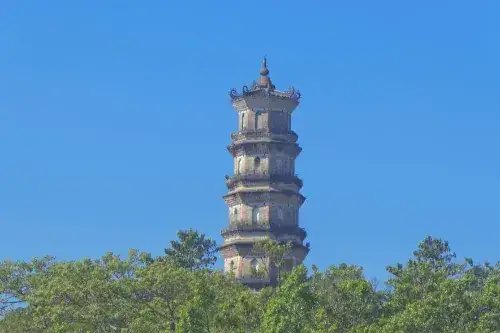
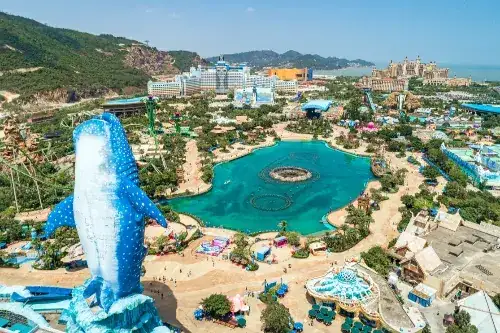
Jiangmen is a "China Excellent Tourism City" and a UN World Tourism Organization sustainable tourism observation point. It boasts the World Cultural Heritage Kaiping Diaolou and Villages and the Memory of the World heritage "Qiaopi (Overseas Chinese Remittance) Archives." Enping is the first designated "China Hot Spring Hometown." The city has 11 provincial-level tourism-characteristic towns and villages, 28 provincial-level key cultural heritage protection units, and 3 provincial-level forest parks.
Notable Figures
Jiangmen is the hometown of many historical figures, including Ming Dynasty philosopher Chen Xianzhang, reform pioneer Liang Qichao, "Uncle of the Nation" Chen Shaobai, China Zhi Gong Party founder and renowned overseas Chinese leader Situ Meitang, academic master Chen Yuan, China Aviation Pioneer Feng Ru, epidemic prevention pioneer Wu Liande, China's first airship designer Xie Zuantai, "Father of Chinese Microwave" Lin Weigan, and botanist Chen Huanyong. Pioneering figures from Jiangmen include "Father of Chinese Oil Painting" Li Tiefu, China's first news photographer Sha Fei, and "Father of Chinese Bodybuilding" Zhao Zhuguang.
The city produced numerous outstanding military and political figures, including diplomat Wu Tingfang, Taiwan pacifier Zhang Qiguang, and anti-Japanese war generals. The Wuyi region is known as a "hometown of academicians," having nurtured 33 academicians—despite occupying less than one-thousandth of China's total area—including Chen Yuan, Liang Sicheng, Liang Siyong, and Liang Sili. Jiangmen is also renowned as a "hometown of martial arts," where the Choy Lee Fut and Wing Chun styles originated and spread widely overseas. During the Yuan, Ming, and Qing dynasties, 565 military juren (provincial graduates) came from Jiangmen, with 533 in the Qing Dynasty alone. Additionally, Jiangmen is famous as a "hometown of film and television stars," having nurtured over 120 well-known entertainers, including "Father of Chinese Film" Li Minwei, China's first movie queen Hu Die, "Mother of Chinese Dance" Dai Ailian, Cantonese opera master Hongxiannü, Hollywood's first Chinese-American actress Anna May Wong, and internationally acclaimed superstars Chow Yun-fat, Andy Lau, Tony Leung, and Donnie Yen.
Honors and Awards
In August 2019, China Customs magazine ranked Jiangmen 41st among the "Top 100 Foreign Trade Cities of China" for 2018. In June 2020, Jiangmen was selected as one of the first batch of national demonstration areas for rule-of-law government construction.
Travel information can change. Check current opening hours, reservations and entry requirements before you travel.
Traveller discussion
Start the conversation with a helpful tip or a question.